
Review · BERLIN HISTORY TOURS
Berlin: Cold War History and Berlin Wall Guided Walking Tour
Berlin’s Cold War story is easiest to grasp on foot, where a quiet street or remaining strip of wall can reveal how sharply the city was once divided. This three-hour walk links major sites with the human stories behind escape attempts, border crossings, political tension, and the wall’s eventual fall.
I especially like the strong historical structure, moving from the postwar division of Germany to the wall’s construction and collapse. I also like the guides’ storytelling style. Eugen, Cieran, and Paul have been singled out for clear explanations, personal family photographs, and patient answers to difficult questions.
The main drawback is that much of the tour takes place beside active city streets. Traffic noise can make some explanations harder to hear, and Berlin’s winter weather can be rough. Wear good shoes, dress for the forecast, and stay close to the guide.
Key points to know before you go
- A three-hour Cold War walk: The route covers several central sites, ending with the longest stop at the Berlin Wall Memorial.
- Personal stories matter here: Guides such as Eugen and Cieran use escape stories, family photographs, and human details alongside political facts.
- The Berlin Wall Memorial gets 75 minutes: This is the most substantial stop and gives you time to understand how the border worked.
- Checkpoint Charlie is famous but reconstructed: It remains an important symbol, though the original crossing structure is not fully preserved.
- Expect city walking, not a museum tour: You move between outdoor locations, with some explanations near traffic.
- Good value at $31: For three hours with a live local historian, the price is fair, especially if Berlin’s postwar story is new to you.
Why this walk helps explain divided Berlin
Berlin’s Cold War history can feel scattered. A wall segment here, a checkpoint sign there, and a few plaques do not always explain how the pieces fit together. This tour gives you a timeline and places the landmarks inside it.
You begin beside the Brandenburg Gate, at Ebertstraße 24, outside Hopfingerbräu. From there, the guide sets up the larger story: Germany’s defeat in the Second World War, the division of Berlin among the victorious powers, and the uneasy relationship between the Soviet Union and the Western Allies.
That background matters. Without it, the Berlin Wall can look like a simple barrier built overnight. You need to understand the rising tension between East and West, the movement of people out of East Germany, and the pressure placed on the divided city before the wall went up.
I like this approach because it connects political decisions to ordinary lives. The tour does not treat the Cold War as a list of dates. It focuses on what division meant for families, workers, students, and people who tried to cross the border.
More History Walking Tours in Berlin
- Berlin: History of the Third Reich Guided Walking Tour
★ 4.7 · 791 reviews - Berlin Historical Highlights Walking Tour
★ 4.9 · 657 reviews - Berlin Private Complete History All Day Walking Tour
★ 5.0 · 474 reviews
Brandenburg Gate: starting with a national symbol
The Brandenburg Gate is the natural place to begin. Today, it is one of Berlin’s most photographed sights and a symbol of German unity. During the city’s division, however, it sat beside the border and became part of the visual language of a divided Berlin.
The opening stop lasts about 15 minutes. That is enough time to orient yourself without using up too much of the walking tour. Your guide can explain how the gate’s meaning changed over time and why it became such a powerful image during the Cold War.
This is also a practical meeting point. The guide meets you outside Hopfingerbräu, next to the gate, so arrive with a little time to locate the restaurant and group. The tour returns to the same general starting point at the end.
A remaining wall section on Niederkirchnerstrasse
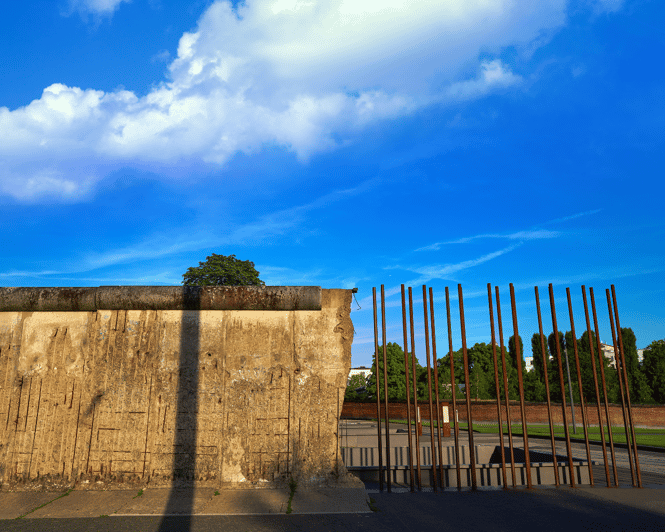
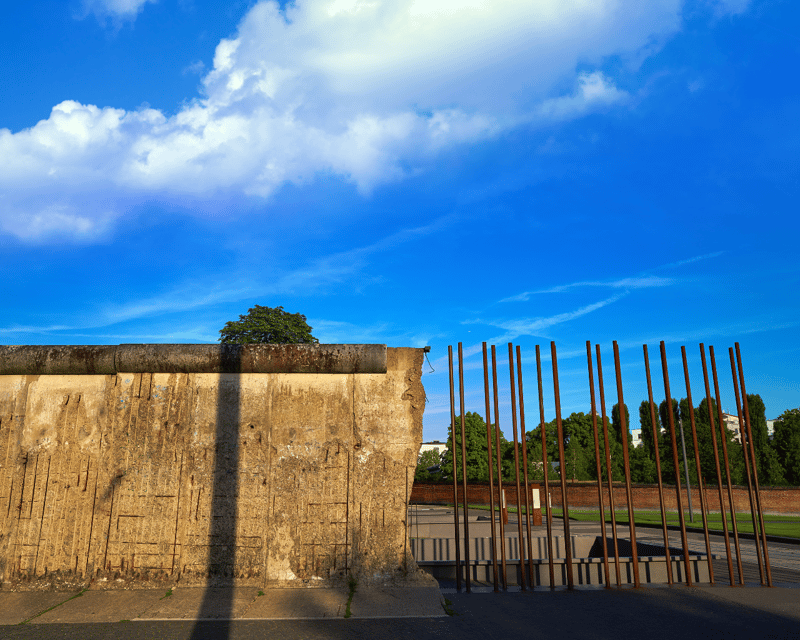
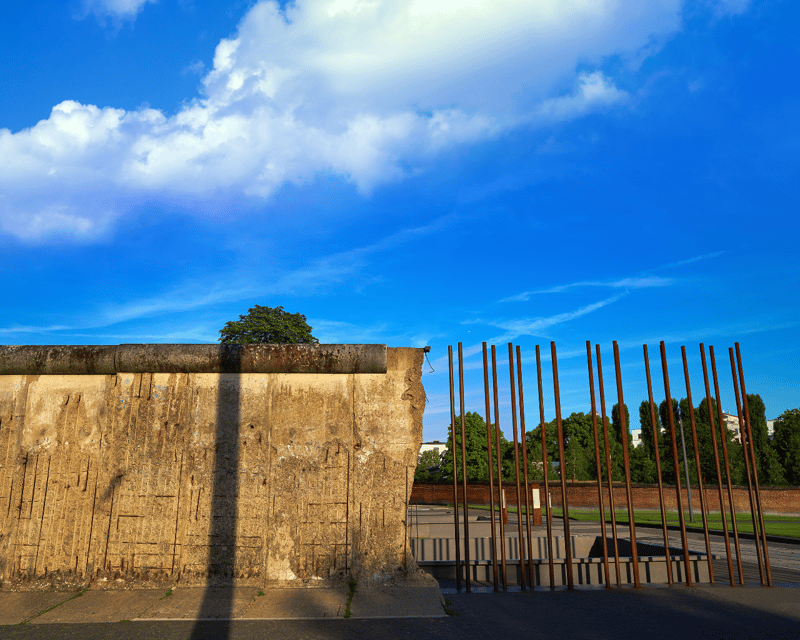
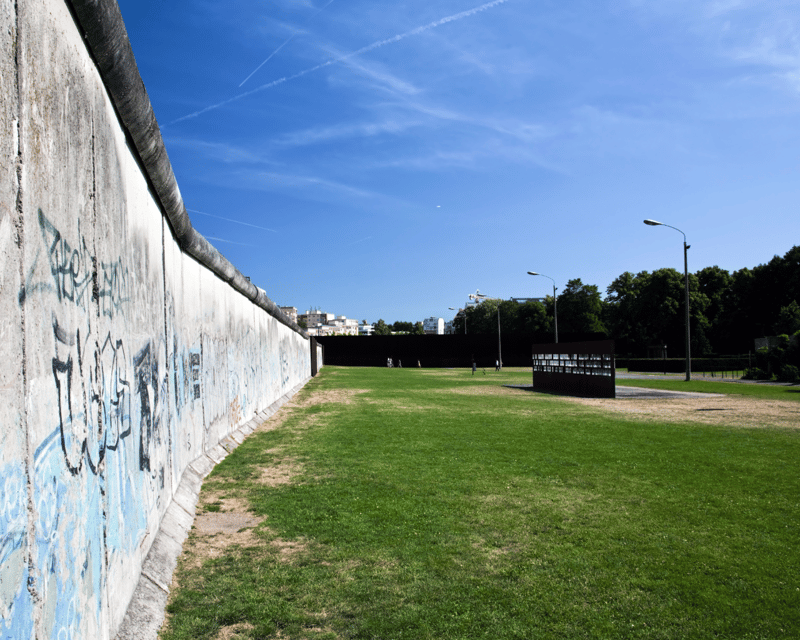
The route includes a 200-meter stretch of the former Berlin Wall along Niederkirchnerstrasse. This is one of the more useful wall remnants because it helps you see the barrier as a physical structure rather than a vague idea from a history book.
You can look closely at the surviving section while the guide explains how the border system developed. The wall was not simply one thin line. It formed part of a wider security zone, with controlled access and serious consequences for anyone attempting to cross.
The planned stop here lasts around 25 minutes. That gives the guide room to discuss construction, border controls, and the way the wall cut through streets and neighborhoods. It also gives you time to take in the contrast between the old border site and present-day central Berlin.
The exact character of the stop depends on the group and the day. You should expect an outdoor explanation rather than a long indoor display, so bring a coat or rain layer in poor weather.
The Topography of Terror and Potsdamer Platz
The tour then visits the Topography of Terror for about 15 minutes. The site focuses on Nazi persecution and state terror, rather than the Cold War alone. Its place in this route helps you see that Berlin’s postwar division followed an earlier period of dictatorship, war, and destruction.
That connection is valuable. The Cold War did not begin in isolation. It grew out of the political and military settlement after the Second World War. A good guide can show how the collapse of Nazi Germany left the Allies sharing control of a ruined country while holding very different ideas about its future.
Potsdamer Platz receives another 15-minute visit. Before the war, it had been a major city center. During Berlin’s division, the border passed through an area that later became associated with an empty strip between East and West. Its modern buildings make the old division harder to picture, which is exactly why the guide’s explanation helps.
These shorter stops work as links in the story. They are not full museum visits, and the tour does not promise extended time inside exhibitions. Instead, you get a quick site explanation before moving on to the major border locations.
More History Walking Tours in Germany
- Berlin: Charité Hospital Walking Tour of Medical History
★ 4.9 · 276 reviews - Berlin Private Half-Day Walking Tour: Discover the German Capital’s History
★ 5.0 · 244 reviews - Berlin History Walking Tour with a French-Speaking Guide
★ 5.0 · 240 reviews - The History of Berlin: WWII PRIVATE Walking Tour With Locals
★ 5.0 · 209 reviews
Checkpoint Charlie, the most famous crossing
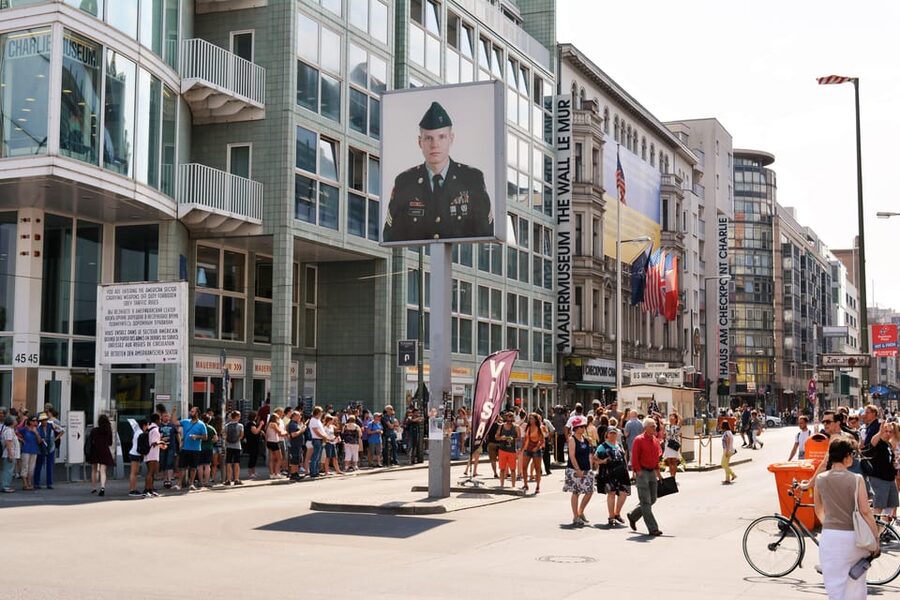
Checkpoint Charlie receives about 25 minutes of guided attention. It was the best-known crossing between East and West Berlin and remains one of the city’s most recognizable Cold War names.
The site is important, but you should set your expectations correctly. Much of its fame comes from its role as a symbol. The present-day checkpoint booth is a reconstruction, and the surrounding area has changed considerably. You will not find the full border installation as it once operated.
That does not make the stop pointless. The value is in the explanation of what happened here and why this crossing became so prominent. Your guide can place the site within the wider network of border points and explain the tension between Soviet and Western forces.
This is also where the personal side of the tour can be especially effective. The guides are expected to tell stories of daring escapes and explain what daily life felt like on either side of the divide. Cieran, for example, has used family photographs connected to the wall, while Eugen has been noted for linking individual stories to the larger political picture.
Traffic can be a problem here. The area is busy, and you may need to concentrate to hear every word. If your guide turns toward the group while speaking, stand where you can see and hear clearly. One useful tip is to stay near the middle of the group rather than drifting behind for photographs.
The Berlin Wall Memorial is the heart of the tour
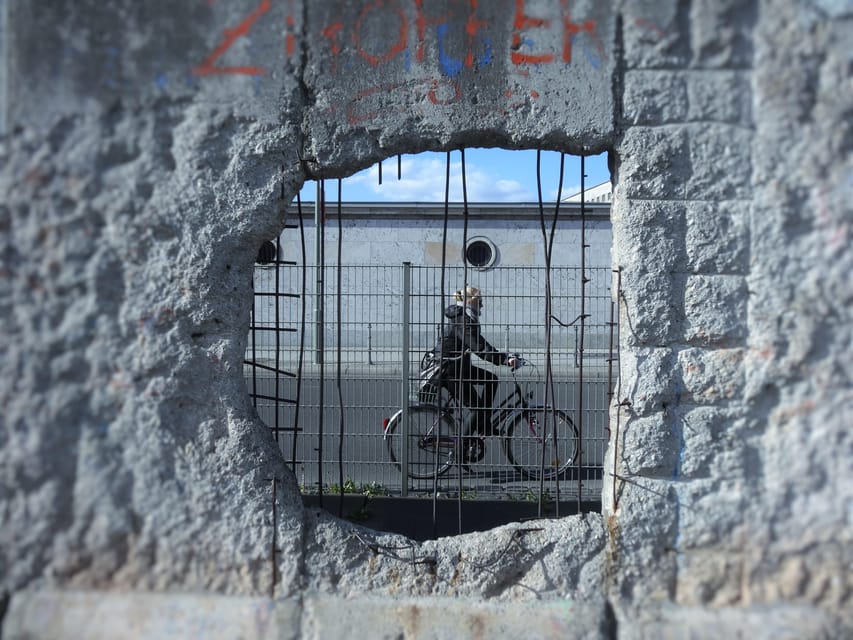
The final major stop is the Berlin Wall Memorial, where you spend roughly 75 minutes. This is the point where the tour shifts from seeing isolated remains to understanding how the border operated across a real stretch of the city.
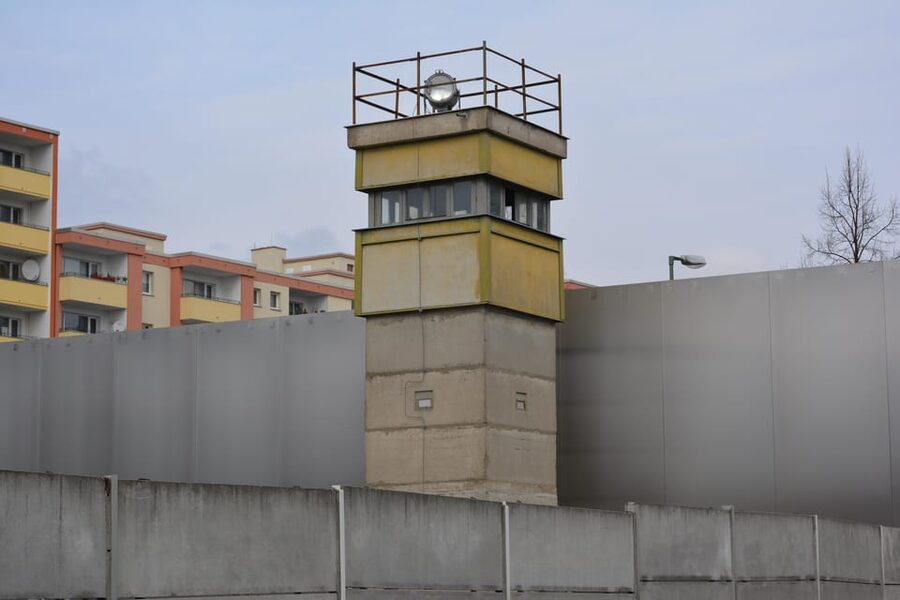
The memorial commemorates the division of Berlin and the people who died as a result. It helps explain the wall as a system of barriers, controlled spaces, watch positions, and restricted movement. The physical setting gives the guide more room to show how the border affected streets, buildings, and families.
For me, this long final stop is one of the tour’s best features. You have enough time to ask questions and revisit ideas from earlier in the walk. The guide can explain why people tried to escape, what dangers they faced, and why the East German government believed such a severe border was necessary.
The memorial also helps you understand why the wall’s fall was so important. It was not only the opening of a crossing. It marked the breakdown of a political system and the end of a division that had shaped Berlin for decades.
The experience can be moving, but the tone is not presented as simple drama. The strongest guides bring care and restraint to stories of deaths, failed escapes, and families separated by the border. Eugen has been described as especially good at showing how events developed, when they happened, and why they mattered.
What the guides add to the experience
The guide is the main reason to choose this walk instead of visiting the sites alone. Berlin’s Cold War landmarks are spread across the center, and a map can show you where they are without explaining what connects them.
The best moments come when the guide moves from a date to a person. Stories of escape routes, border risks, and family separation make the wall easier to understand. You also get a chance to ask questions, which is useful if you know the basic outline but want to clear up confusing details.
Several guides have been identified by name in recent bookings. Eugen has been noted for detailed storytelling and a friendly manner. Cieran has kept the group engaged even in heavy snow and has shared family photographs. Paul has been singled out for strong command of the Cold War story.
Names can change depending on the date, so you should not book solely to meet one particular guide. The consistent feature is the live guide in English or German, rather than a recorded commentary.
One practical issue is sound. A Swedish-speaking visitor noted that traffic sometimes competed with the guide’s voice and suggested standing facing the group when explanations begin. That is good advice for everyone, especially if you have hearing difficulties.
Walking conditions, timing, and accessibility
The tour lasts three hours and is conducted on foot. The route includes several outdoor stops, so comfortable shoes are essential. You should also dress for the weather rather than assuming central Berlin will be mild.
The activity is listed as wheelchair accessible. Since the tour moves through city streets and public sites, it is still sensible to confirm current conditions when booking if you have specific mobility needs.
The pace should suit most people who can walk through central Berlin for three hours with regular stops. This is not a fast sightseeing sprint, but it is still more active than a coach tour. The stops break up the walking, and the final 75-minute visit provides the most time for discussion.
Winter deserves special attention. A guide has kept the group going through heavy snow, but cold weather can affect your ability to listen and concentrate. Gloves, a warm coat, and shoes with good grip will make the experience much easier.
Is $31 a fair price?
At $31 per person, this is a sensible price for a three-hour guided walk with a local historian. You are paying for the route, the explanations, and the ability to ask questions at each major site. There are no separate museum admissions included, but the experience is mainly outdoors and focused on interpretation.
The value is strongest if you are new to Berlin’s twentieth-century history. You could walk past Brandenburg Gate, Checkpoint Charlie, and Potsdamer Platz on your own, but you would miss much of the political connection between them.
If you already have a strong understanding of the Cold War and have visited the Berlin Wall Memorial, the tour may feel less essential. Even then, the personal stories and guide-led route could add useful detail.
Flexible booking also helps. You can cancel up to 24 hours before the start for a full refund, and you can reserve now and pay later. Starting times vary, so check availability against your plans rather than building your day around an assumed departure.
Who should book this Berlin walk?
I would recommend it to first-time visitors who want a clear introduction to Berlin’s division. It also suits history-minded families, students, and anyone who finds political history easier to understand when tied to real streets and buildings.
It is a good choice if you want more than photographs at Checkpoint Charlie. The guide gives that famous site context and spends more time at the Berlin Wall Memorial, where the subject becomes more personal and serious.
You may want a different format if you dislike walking, need a quiet setting for every explanation, or prefer to explore museums at your own pace. Traffic noise and changing weather are genuine factors.
For most people, the three-hour length is well judged. The route covers enough ground to build a story without turning the day into an all-day history lesson.
Should you book it?
Book this tour if you want Berlin’s Cold War story explained by a person who can connect political events with individual lives. The strongest reasons are the 75-minute visit to the Berlin Wall Memorial, the useful sequence of central sites, and guides such as Eugen, Cieran, and Paul, who bring personal detail to the subject.
Skip it only if you already know the history well and prefer independent museum visits. For $31, this is a fair, focused introduction to divided Berlin, provided you bring good shoes and accept that some explanations take place beside city traffic.
FAQ
Where does the tour begin?
Meet the guide at Ebertstraße 24, outside Hopfingerbräu next to the Brandenburg Gate.
How long does the walking tour last?
The tour lasts three hours and returns to the starting point at Ebertstraße 24.
Which languages are available?
The live tour guide is available in English and German.
Which Cold War sites are included?
The route includes Brandenburg Gate, a remaining Berlin Wall section along Niederkirchnerstrasse, the Topography of Terror, Potsdamer Platz, Checkpoint Charlie, and the Berlin Wall Memorial.
Is the tour wheelchair accessible?
Yes, the activity is listed as wheelchair accessible.
What should I bring?
Bring comfortable shoes and clothing suited to the weather. Since much of the tour is outdoors, warm or waterproof layers may be useful in poor conditions.
More Cold War and Communism Tours in Berlin
- Berlin: Cold War & Berlin Wall History Guided Bike Tour
★ 4.8 · 422 reviews - Berlin: Guided Bike tour of the Berlin Wall and Third Reich
★ 5.0 · 160 reviews - Berlin Wall History Small Group Cycling Tour
★ 4.9 · 152 reviews - Berlin: Historical Sights & Berlin Wall Tour with a Berliner
★ 5.0 · 62 reviews
Newest history tours we have reviewed in Berlin
- Berlin Food & Cultural Tour: Must-Try German & Berliner Classics★ 5.0 · 51 reviews
- Private Tour: Jewish Heritage Walking Tour of Berlin★ 5.0 · 29 reviews
- Small-Group Historical Bike Tour in Berlin★ 4.5 · 103 reviews
- Historic center of Berlin – Tour in Italian★ 5.0 · 143 reviews
- East Berlin Food & History Tour with Eating Europe★ 5.0 · 204 reviews
- Private Berlin WWII and Cold War History Tour with Local Expert Guide★ 5.0 · 28 reviews
- Berlin: Private Bike Tour of the Berlin Wall and Third Reich★ 5.0 · 23 reviews
- Explore Berlin History and Highlights Sightseeing Walking Tour★ 5.0 · 81 reviews
Cold War & Communism Tours, compared.
Communism History and Nuclear Bunker Guided Tour
Read our review →
Prague Communism History and Nuclear Bunker Tour
Read our review →
Cold War & Berlin Wall History Guided Bike Tour
Read our review →
Chisinau: Discover Soviet Heritage of Transnistria
Read our review →
Communist History Tour with House of Terror Option
Read our review →
Guided Bike tour of the Berlin Wall and Third Reich
Read our review →
Browse the lists this tour appears in