
Review · BUCHAREST HISTORY TOURS
Bucharest: Communism and History Guided City Walking Tour
Bucharest’s communist past is not kept behind museum glass. It is written into apartment blocks, vanished neighborhoods, moved churches, grand boulevards, and the enormous Palace of the Parliament. This three-hour walk connects those places to the daily lives of people who queued for food, lived under surveillance, and watched the regime fall in 1989.
I like the way the tour links major sights with ordinary experiences, especially the stop at an old Alimentara grocery store and the short break that lets the story settle. I also like the use of visual aids and personal family memories from guides such as Andreea, Daniela, Mihai, and Octavian. The main drawback is practical: you walk for three hours in all weather, and the route is not suited to people with back problems or wheelchair users.
Key points to know before you book

- See the Parliament from the outside: Learn how Nicolae Ceausescu’s huge seat of power reshaped Bucharest and displaced parts of the old city.
- Start at the Patriarchal Cathedral: The opening stop explains both religion under communism and the political changes that brought the regime to Romania.
- Connect buildings with daily life: Nationalization, food shortages, rationing, and surveillance are explained through places you can still see.
- Walk through the 1989 Revolution: The tour ends in Revolution Square, where the fall of communism and the arrival of democracy are put into context.
- Expect strong storytelling: Guides including Andreea, Daniela, Mihai, and Octavian are praised for clear English, personal examples, photographs, and patient answers.
- Plan for a real walking tour: Wear comfortable shoes, bring weather protection, and remember that the Parliament is an exterior visit only.
Why this Bucharest walk is more than a Parliament photo stop
At $31 per person, this is a good-value introduction to modern Bucharest if you want more than attractive façades and a quick picture of the Parliament. The price covers three hours with an English-speaking guide, roughly 15 stops, a short café break, and a connected explanation of Romania’s communist period.
You are not simply shown a series of buildings. You are told what changed at each place and why those changes mattered. The route covers dictatorship, nationalization, demolition, the Secret Police, ordinary food shopping, and the 1989 Revolution. That range gives you a useful framework for the rest of your time in the city.
The tour is especially useful early in a Bucharest visit. Once you understand why whole areas disappeared, why churches were moved, and why some older buildings sit awkwardly beside grand communist projects, the city becomes easier to read. You may also look at present-day Bucharest differently, since the guide explains how the period still affects Romanian life.
More Cold War and Communism Tours in the world:
- Prague: Communism History and Nuclear Bunker Guided Tour
★ 4.7 · 2,417 reviews - Prague Communism History and Nuclear Bunker Tour
★ 5.0 · 1,742 reviews - Berlin: Cold War & Berlin Wall History Guided Bike Tour
★ 4.8 · 422 reviews
Beginning at the Patriarchal Cathedral
The meeting point is in front of the Patriarchal Cathedral, reached from Piata Unirii metro station by climbing the hill toward the church. Allow enough time for that uphill walk. It is not a difficult approach for most people, but it is worth arriving early rather than reaching the group out of breath.
The cathedral gives the tour a thoughtful opening. The first subject is not only architecture or religion, but the place of the Orthodox Church under communism. You also hear about the political events that allowed the communist regime to take control of Romania.
That opening matters because it prevents the story from becoming a simple account of Ceausescu’s rule. You begin with the wider shift in power and see how public institutions, faith, and national life were affected. The guide then moves the discussion from political change to what happened in Bucharest’s neighborhoods.
Nationalization and the city’s changing homes
The next section passes through a nearby neighborhood where the effects of nationalization can still be understood. Under the communist system, private property was taken into state control, changing who owned homes and how people lived in them.
This is one of the strongest parts of the route because it turns a large political word into something personal. A building can look ordinary, yet its history may involve a family losing its home or several households being placed together. Your guide explains these changes while you walk, using the street itself as evidence.
The route also includes lesser-known stops that connect individual buildings to larger events. That helps keep the experience from becoming a parade of famous sights. You see some of the city’s recognizable landmarks, but you also pause at places you might pass without noticing on your own.
Facing the Palace of the Parliament
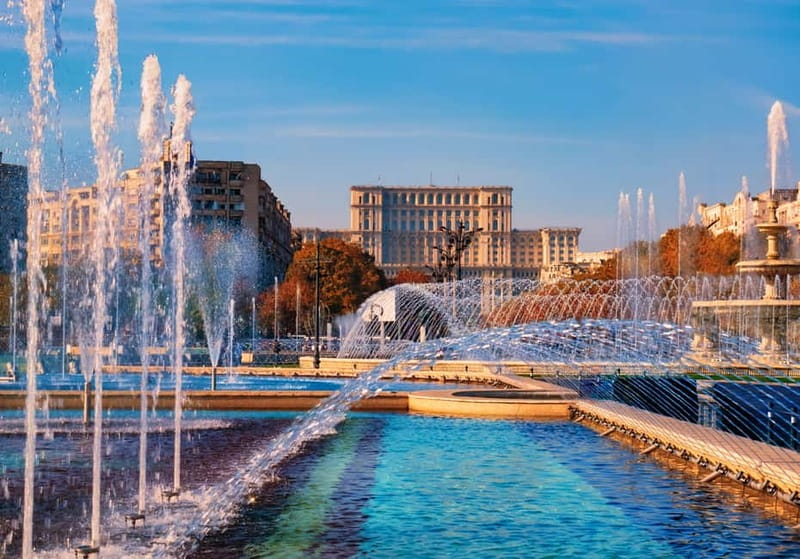
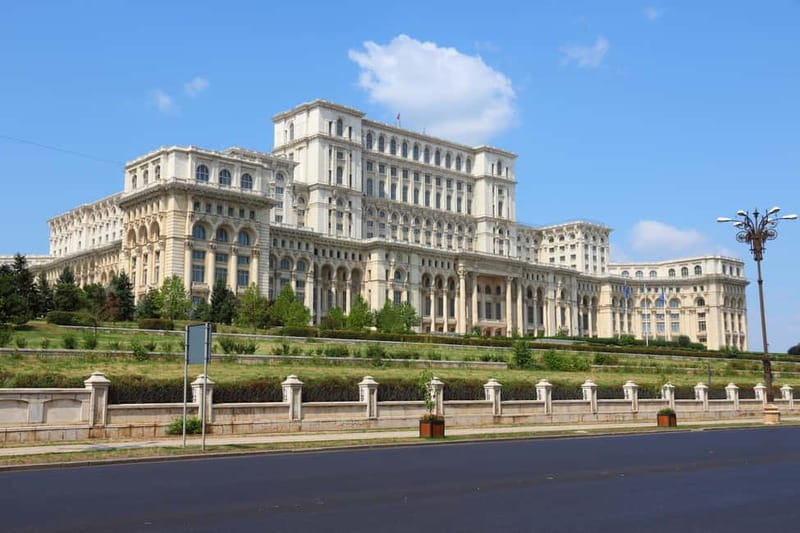
The view of the Palace of the Parliament is the tour’s grandest moment. The building is visited from outside only, so do not book this walk expecting an interior tour of the Parliament.
From the viewing point, the guide explains the construction of this symbol of Ceausescu’s megalomania and the scale of the urban destruction that made it possible. The project required a vast reshaping of central Bucharest. Historic streets, homes, churches, and other buildings were removed or threatened as the regime created its monumental center.
The value here is the explanation, not just the photograph. A quick solo visit can leave you with the impression of a very large government building. With context, you understand how architecture became a political tool and how the project reflected the dictator’s desire for control and grandeur.
The tour addresses what is described as the largest destruction of a European city during peacetime. That is a serious subject, and the guide places it within the human cost of demolitions and forced change. Expect a sober discussion rather than a light sightseeing stop.
More History Walking Tours in the world:
- History and Hauntings of Salem Guided Walking Tour
★ 5.0 · 14,564 reviews - Lisbon: History, Stories and Lifestyle Walking Tour
★ 4.8 · 10,902 reviews - Boston: Freedom Trail History Small Group Walking Tour
★ 5.0 · 6,450 reviews - Historic Charleston Guided Sightseeing Walking Tour
★ 5.0 · 6,216 reviews
Antim Monastery and the buildings that survived
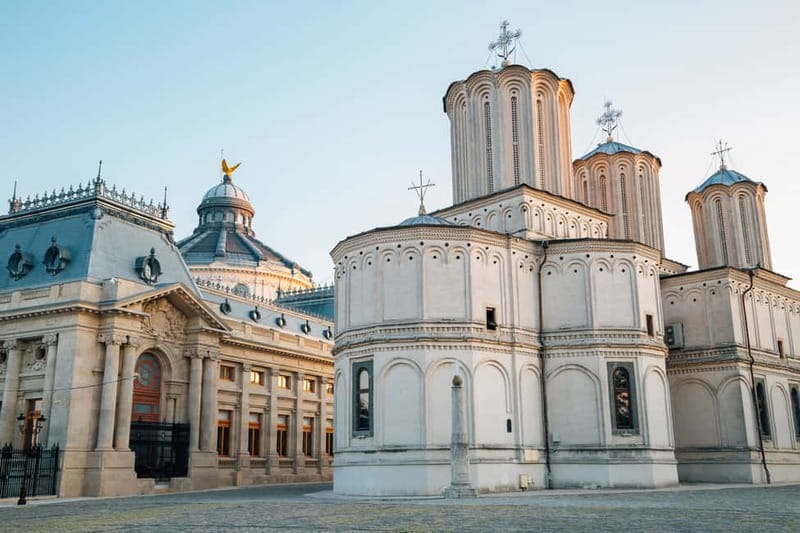
The walk continues to buildings that were moved or protected from destruction. Antim Monastery is the most notable example named on the route. Its inclusion shows that the communist rebuilding program was not simply a matter of putting up new structures. It also involved decisions about which older places could remain and which had to give way.
Antim offers a useful contrast with the Parliament. One represents religious and historic continuity, while the other represents state power and deliberate reinvention. Seeing both during one short walk makes the city’s conflict between old and new much easier to understand.
This portion is also a reminder that Bucharest’s story is not only about what disappeared. Some buildings survived because they were moved, hidden, or otherwise saved. Your guide points out these changes as you go, so pay attention to the relationship between the buildings and the streets around them.
A café break and an old Alimentara
After the first part of the walk, you stop briefly at a local café. The break lasts about 15 minutes. Any drink or food you order is at your own expense, so carry a little cash or a payment card if you want something.
This pause is practical as well as social. Three hours of walking and listening can be a lot, and the break gives you time to ask questions or think about what you have seen. Several guides use this moment to discuss other aspects of Romanian history and clarify points raised by the group.
The tour also includes an old Alimentara grocery store, where the focus shifts to ordinary living conditions. This is where rationing, shortages, and the challenge of feeding a family become more concrete. You may receive a communist-era snack, and one guide has used a rum-flavored biscuit to give the period a taste as well as a story.
That small detail works because food is an immediate way into history. It helps you understand that communism was not only about party speeches and imposing buildings. It affected shopping, meals, household planning, and the choices people made every day.
Calea Victoriei and the machinery of fear
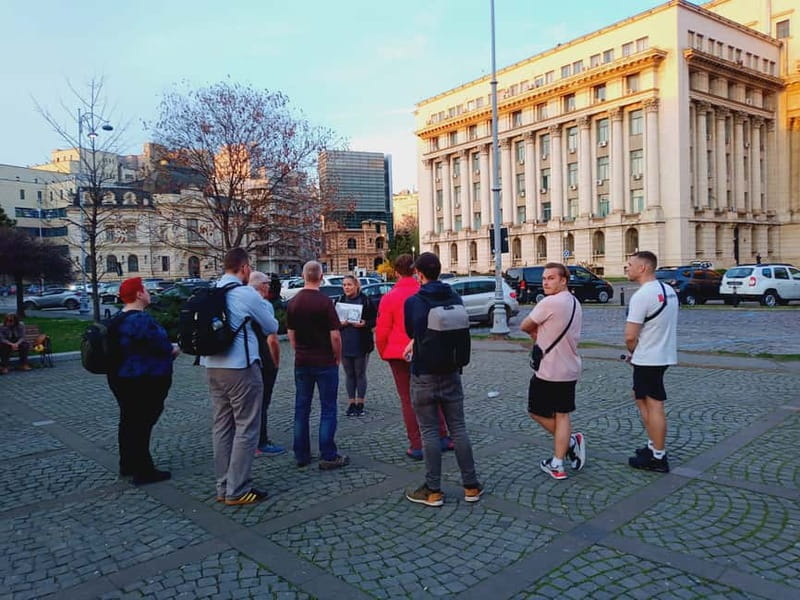
The latter part of the route follows Calea Victoriei, one of Bucharest’s most attractive streets. The pace becomes a normal walking pace, with more time to take in the boulevard and its mix of historic buildings and communist-era reminders.
One stop concerns a former center associated with the Secret Police and the torture of people. The guide explains the role of surveillance and intimidation under the regime. This is an important change of mood after the architectural stops, since it shows how political control operated at street level.
The account is not limited to official institutions. The guides often bring in family memories and personal stories from life during the Cold War period. Andreea is praised for connecting facts to lived experience, while Mihai is noted for sharing what he experienced as a child. These details help you understand the difference between what the state claimed and what people actually faced.
The strongest guides also keep a careful tone. The subject can easily become a simple political lecture, but the best approach is to explain the system and let the evidence speak. The tour aims to show the dangers of dictatorship and the value of democracy without turning every stop into a slogan.
Caru’ cu bere and the city between eras
Caru’ cu bere is one of the named stops along Calea Victoriei. The route passes by this well-known historic restaurant and uses the surrounding area to continue the story of Bucharest’s changing identity.
This section gives you a useful visual contrast. Historic places of social life sit close to buildings and institutions shaped by the communist period. You begin to see Bucharest as a city layered with several eras rather than a place that can be explained by one style or one ruler.
The walk between stops is part of the experience. Ten-minute stretches give the guide time to connect one event to the next, while you see the city at ground level. This is not a bus tour where the streets blur past a window. You have time to notice walls, entrances, squares, and the way old and new structures meet.
Revolution Square and the end of the regime
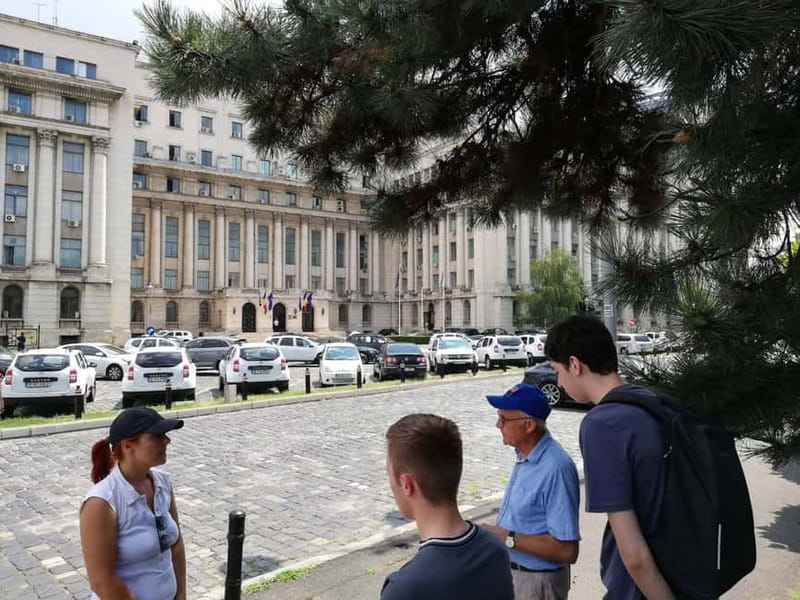
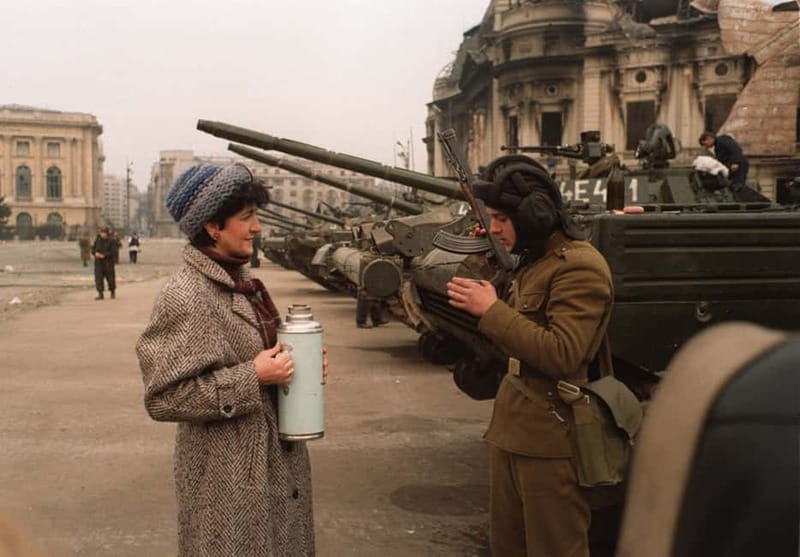
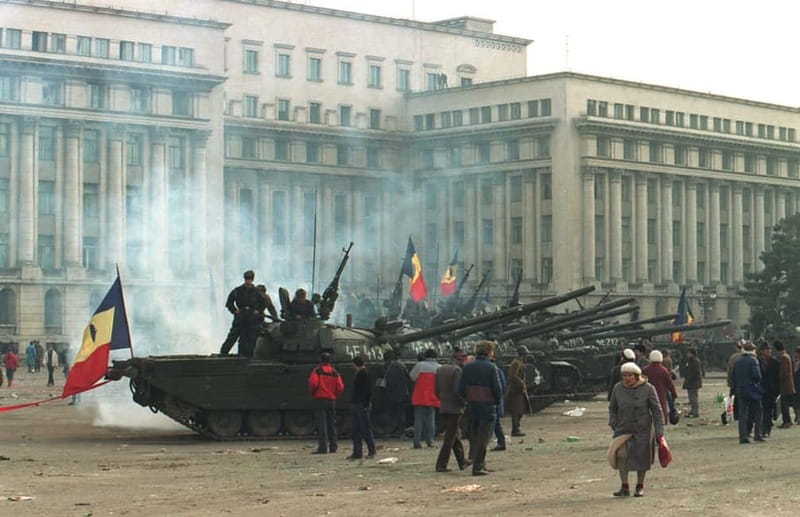
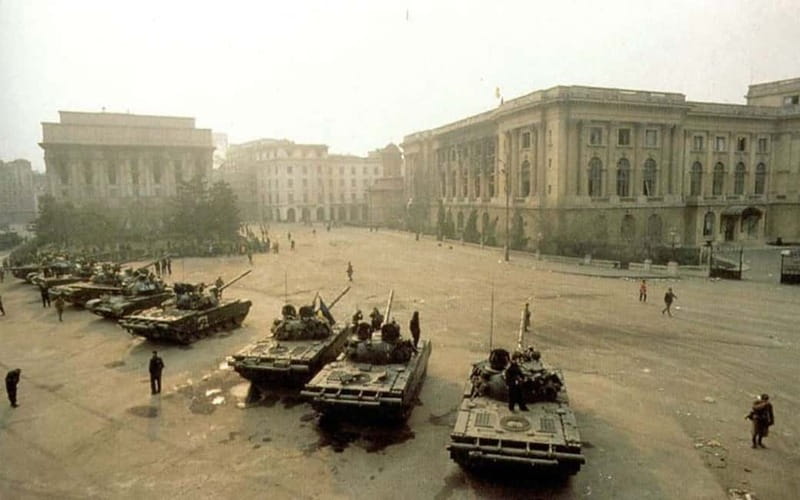
The final stop is Revolution Square, where the tour explains the events of 1989 and the beginning of democracy. This is the natural ending because the earlier subjects lead directly toward the collapse of the communist system.
The guide tells the story of the Revolution and explains how the regime ended. You also hear about the uncertainty surrounding the move from dictatorship to democracy. The square is more meaningful after you have learned about the system that preceded those events.
For many people, this is the emotional high point. The tour has moved from political control and food shortages to the moment when the old order broke apart. It also brings the story into the present by explaining why the communist years still leave a mark on Romanian society.
The tour finishes in Revolution Square, so you can continue exploring central Bucharest from there. No hotel pickup or drop-off is included, but the start and end points are central enough to fit into a day of sightseeing.
Guides, pace, and the learning style
The experience is offered in English, with guides including Andreea, Daniela, Mihai, Octavian, and others. Their styles vary, but the strongest qualities are clear explanations, good English, patience with questions, and an ability to mix dates with personal stories.
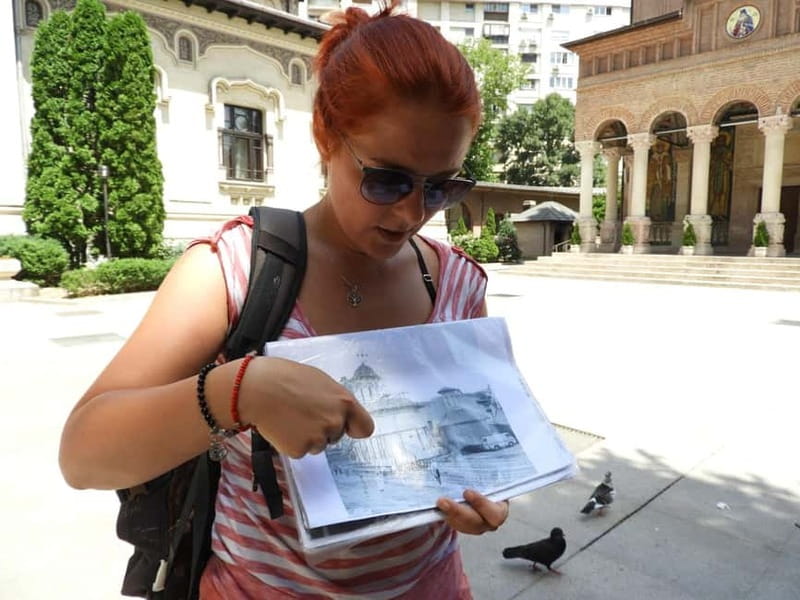
Daniela is praised for using visual aids and making difficult material easy to follow. Octavian is described as friendly, well prepared, and willing to spend time on questions. Andreea is noted for her passion, personal examples, and suggestions for other places to visit and eat.
The walking pace is generally comfortable, with a rest stop halfway through. Still, this is a three-hour outdoor activity. You may be standing while listening, crossing streets, and walking over uneven or sloped sections. Comfortable shoes are essential.
The tour runs in rain or shine. Heavy rain, snowstorms, extreme wind, or extreme heat can lead to cancellation or rescheduling, but ordinary poor weather does not automatically stop it. Bring an umbrella or raincoat when needed. One guide has even carried extra umbrellas for the group, but you should not rely on that.
Who will get the most from this experience
I would choose this walk if you are interested in twentieth-century politics, dictatorship, architecture, or the way big political decisions affect ordinary households. It is also a smart choice if you are visiting Bucharest for the first time and want a clear framework before exploring alone.
Families with older children and teenagers may find the route useful because it connects history to food, homes, school-age memories, and city streets. The subject is serious, but the storytelling keeps it from feeling like a dry lecture.
You should think twice if you want to enter the Parliament, spend most of the time inside, or focus mainly on medieval and royal Bucharest. The Parliament is exterior only, and much of the value comes from listening while walking.
The activity is also not suitable for people with back problems or wheelchair users according to the stated conditions. If mobility is a concern, ask the provider before booking rather than assuming the route can be adapted.
Is the $31 price fair?
For $31, you receive a focused three-hour city walk with an English-speaking guide and around 15 historical points. That is fair value, particularly because the route covers places and personal context you would be unlikely to connect on your own.
The short café stop is included as time, not as a paid drink. Your own coffee or snack costs extra. A communist-style snack is included, which adds a small but memorable touch to the section on shortages and daily life.
The biggest value is the guide’s interpretation. The Palace of the Parliament is free to photograph from outside, but understanding its construction, the demolitions around it, and the lives affected by it is what makes this activity worth paying for.
You can cancel up to 24 hours before the start for a full refund, and you can reserve now and pay later. Those terms are useful if your Bucharest schedule or the forecast is uncertain.
Should you book this Bucharest communist history walk?
Book it if you want to understand Bucharest through its recent past, not just collect photographs of its grandest buildings. The mix of the Patriarchal Cathedral, nationalized homes, Antim Monastery, the Parliament, an old grocery store, Calea Victoriei, the former Secret Police site, and Revolution Square gives you a strong three-hour route.
I would especially recommend booking early in your stay. The tour gives you a better sense of what you are seeing afterward, from plain apartment blocks to grand boulevards and buildings that survived a period of sweeping destruction.
Skip it if you dislike walking outdoors, need step-free access, or want an interior visit to the Parliament. For everyone else, the price, route, and human stories make this one of the more useful ways to understand modern Bucharest.
FAQ
How long is the Bucharest communism walking tour?
The tour lasts three hours.
Where does the tour begin?
It begins in front of the Patriarchal Cathedral. The closest metro station is Piata Unirii, also called Union Square.
Where does the tour end?
The tour ends at Revolution Square in Bucharest.
Is the Parliament building visited inside?
No. The Palace of the Parliament is seen from the outside, with a photo stop and an explanation of its construction and place in communist history.
What language is the tour in?
The live guided tour is conducted in English.
Is food or a drink included?
A communist-style snack is included. Drinks or food you choose to buy during the café break are not included.
What should I bring?
Bring comfortable shoes. You should also prepare for outdoor conditions, since the tour runs in rain or shine unless severe weather makes it unsafe.
Can I cancel the booking?
Yes. You can cancel up to 24 hours in advance for a full refund. You can also reserve now and pay later.
Newest history tours we have reviewed in the world
- Bilbao Historical Tour in small group★ 4.7 · 52 reviews
- Bologna: Street Food Tour in the Historic Center★ 4.8 · 125 reviews
- CEBU: Cebu City Heritage and Uphill Guided Tour★ 4.2 · 31 reviews
- Bishkek : City Tour (History, Architects, Statues & Culture)★ 4.9 · 54 reviews
- Blenheim: Omaka Aviation Heritage Centre Admission Ticket★ 4.9 · 31 reviews
- Berlin: Nazi History Walking Tour★ 4.8 · 33 reviews
- Best of Baku: 4-Hour City Tour Historic and Modern Landmarks★ 4.7 · 63 reviews
- Belfast: Best of Belfast History, Culture & Art Walking Tour★ 4.9 · 158 reviews
Cold War & Communism Tours, compared.
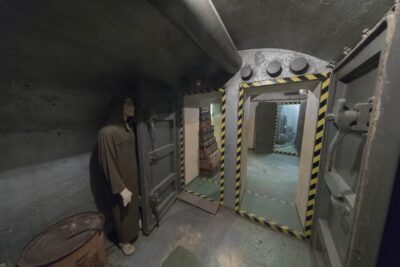
Communism History and Nuclear Bunker Guided Tour
Read our review →
Prague Communism History and Nuclear Bunker Tour
Read our review →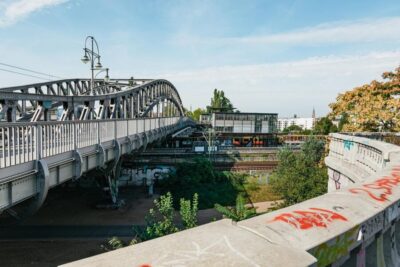
Cold War & Berlin Wall History Guided Bike Tour
Read our review →
Guided Bike tour of the Berlin Wall and Third Reich
Read our review →
Tbilisi old town & soviet heritage – Private driver-guided Tour
Read our review →
Historical Sights & Berlin Wall Tour with a Berliner
Read our review →Browse the lists this tour appears in