
Review · PRAGUE HISTORY TOURS
Prague: World War II and Communist History Tour
Prague’s prettiest streets carry some of Europe’s darkest modern memories. This 2.5-hour walk links the Nazi occupation, Czech resistance, Communist rule, the crushed Prague Spring, and the Velvet Revolution of 1989, turning familiar places into scenes from a dramatic recent past. Operation Anthropoid, the plot to assassinate a leading Nazi security official, is one of the tour’s most gripping chapters.
I like two things especially: the guide builds one continuous story instead of tossing out disconnected dates, and the route takes you beyond the usual postcard Prague. You connect Wenceslas Square, the Jewish Quarter, Municipal House, and Dancing House with the political events that shaped them. The personal stories and local viewpoint also keep the subject human.
The tradeoff is simple: this is a history walk, not a sightseeing tour with a landmark at every stop. Much of the value comes from the guide’s explanation, and some participants have found there are fewer visible memorials than expected. You will also walk for 150 minutes, sometimes with a tram ride used to save time.
Key points to know before you book
- A 20th-century story in one walk: Follow Prague from Nazi occupation through the Communist coup, Prague Spring, Normalization, and the Velvet Revolution.
- Operation Anthropoid takes center stage: Learn where the Nazi head of the security services was assassinated and hear about the Czech resistance response.
- Major Prague sights gain political meaning: The route includes Municipal House, the Jewish Quarter, Dancing House, and Wenceslas Square.
- Guides make or break the experience: Adam, Tony, Zach, Daren, Sean, Kevin, and others have been praised for clear delivery, humor, and strong storytelling.
- Expect history more than monuments: The guide’s words are often more important than what you see at each stop.
- Good value at $34: For 2.5 hours with a live English-speaking guide, the price compares well with many specialist history walks.
Why this tour changes the way you see Prague
Most first visits to Prague focus on medieval streets, castle views, churches, and elegant squares. That is sensible, but it can leave out the period that most shaped modern Czech life. This walk fills that gap.
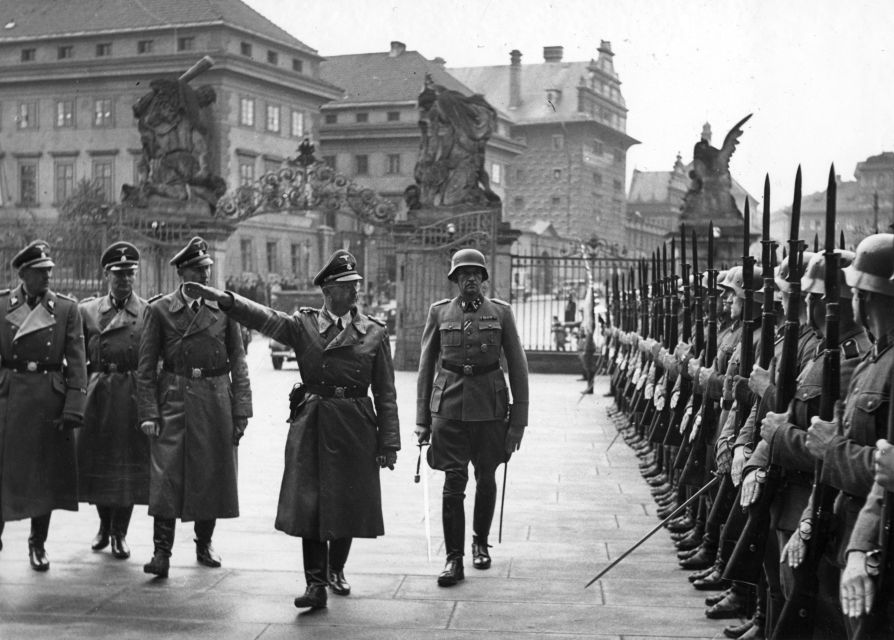
You begin with the Nazi occupation and move through the upheavals that followed. The story covers a country that had been one of Europe’s most industrialized and politically progressive states before the Second World War, then traces how occupation, dictatorship, Soviet influence, and public protest altered daily life.
I like the broad time span. You are not left with a narrow account of one battle or one political leader. Instead, you see how one era led into the next: Nazi rule, the Czech uprising, the Communist takeover, the reform movement of 1968, the long period known as Normalization, and the peaceful revolution that brought Václav Havel and other dissidents into power.
The guide’s job is demanding. The material includes military history, political repression, resistance networks, music, student protest, and ordinary life under Communism. The strongest guides, including Adam, Tony, Zach, Daren, Sean, and Kevin on different dates, have been praised for making this material easy to follow without turning it into a classroom lecture.
More WWII and D-Day Tours in Prague:
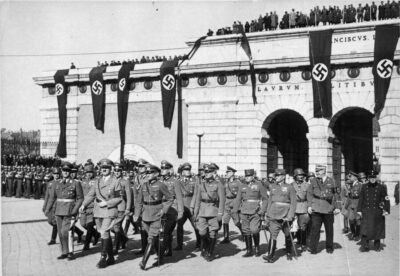
- Vienna: World War II Historical Walking Tour
★ 4.8 · 1,772 reviews - Zagreb: City & History Walking Tour & WW2 Tunnels
★ 4.9 · 1,202 reviews - Pearl Harbor History Remembered Tour from Ko Olina
★ 5.0 · 1,009 reviews
Wenceslas Square and the public face of power
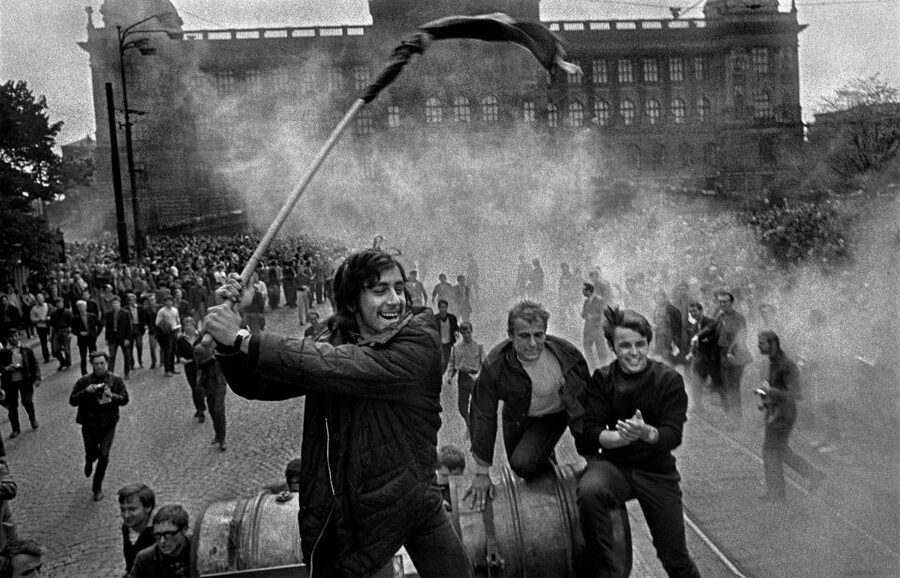
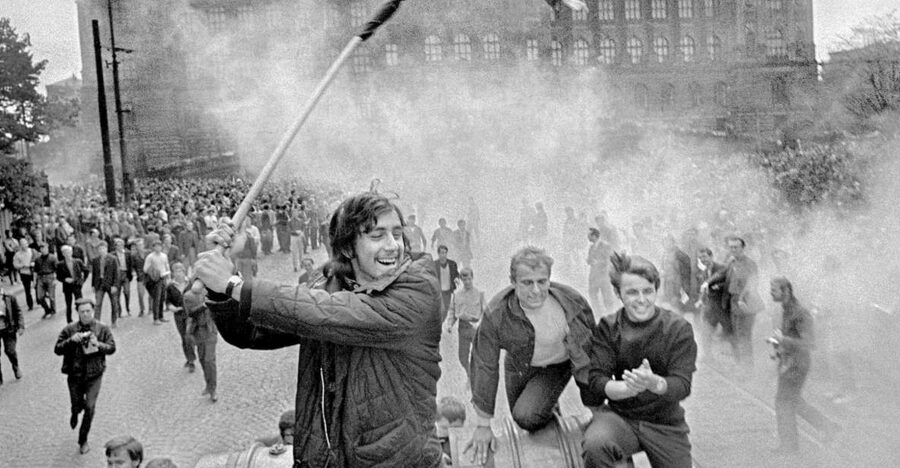
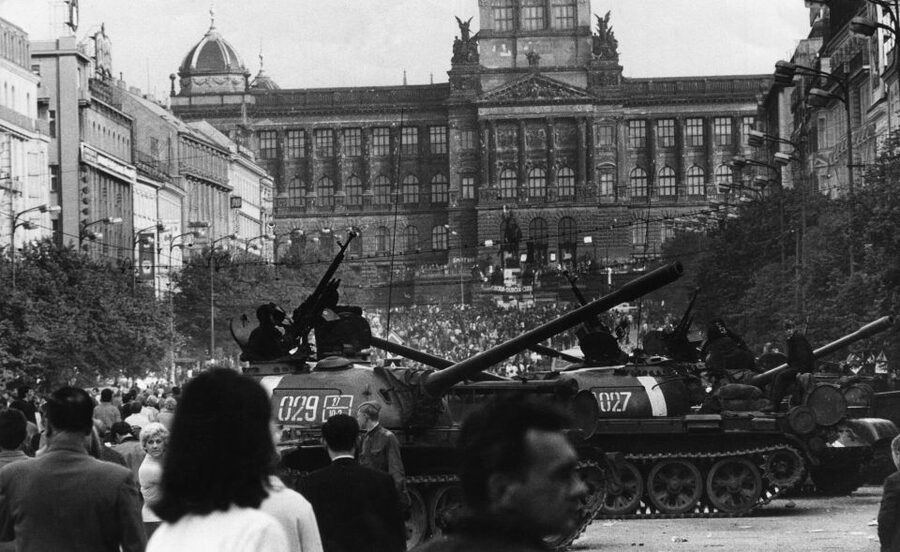
Wenceslas Square is one of the most useful places to discuss modern Czech history because it has repeatedly served as a stage for public events. Here, the guide can connect the square with the Communist era, the Prague Spring, the Soviet-led Warsaw Pact invasion, and the Velvet Revolution.
The square is broad and urban rather than traditionally picturesque. That is part of its value. You can picture crowds gathering here, speeches being made, and political authority being challenged in public.
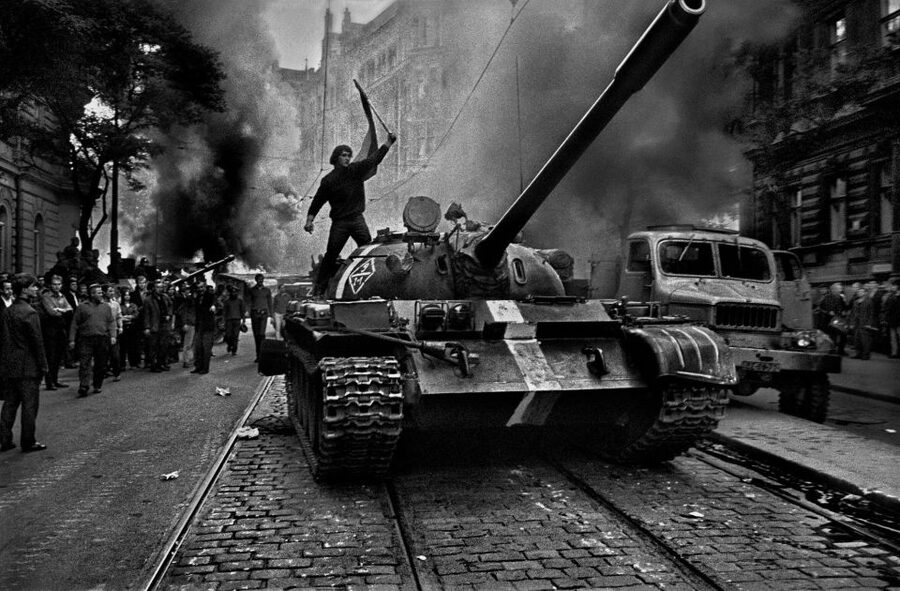
The Prague Spring is a key turning point. In 1968, reformers attempted to create a more open form of socialism. The experiment produced excitement and hope, then ended when Warsaw Pact forces invaded Czechoslovakia. The tour explains the emotional shift from optimism to fear and resignation.
You also hear about the years of Normalization that followed. This was not simply a return to the old system. It was a long period of political control, professional punishment, censorship, and pressure to keep quiet. The guide’s account helps you understand why the Velvet Revolution in 1989 felt so sudden to outsiders but had been building for years.
Municipal House and the road from independence to occupation
Municipal House brings the story back to the political confidence of the early Czechoslovak state. Its grand architecture offers a useful contrast with the darker decades that followed.
The tour uses places like this to explain the wider setting before the Nazi occupation. You learn about the strength of Czechoslovakia as an industrial and democratic state, then about the forces that destroyed that stability.
Do not expect a long interior visit here. The point is mainly historical context and the building’s place in Prague’s public life. If you want a detailed architectural tour, this is not the right product. If you want to understand how modern Prague moved from independence to occupation, the stop works well.
The Jewish Quarter and the weight of occupation
The Jewish Quarter adds a difficult but necessary layer. Prague’s Jewish history reaches far beyond the years covered by this walk, but the Nazi occupation gives the area a direct connection to the destruction of Jewish life across Bohemia and Moravia.
The guide places the occupation in the lives of local people rather than treating it as a list of dates. You hear about Nazi control, fear, resistance, and the way the city was transformed into a place where ordinary choices carried serious risks.
You may already have visited the Jewish Museum or its synagogues separately. This tour is not a replacement for those sites. Instead, it gives the wartime period a political and human frame. That makes it a useful companion to a self-guided visit through the Jewish Quarter.
More Cold War and Communism Tours in Prague:
- Prague: Communism History and Nuclear Bunker Guided Tour
★ 4.7 · 2,417 reviews - Prague Communism History and Nuclear Bunker Tour
★ 5.0 · 1,742 reviews - Bucharest: Communism and History Guided City Walking Tour
★ 4.9 · 918 reviews - Berlin: Cold War & Berlin Wall History Guided Bike Tour
★ 4.8 · 422 reviews
Operation Anthropoid and the assassination plot
The most dramatic section concerns Operation Anthropoid, the Czech plot to assassinate Reinhard Heydrich, a leading Nazi security official. The story brings together exile politics, resistance planning, courage, miscalculation, and brutal retaliation.
The tour explains where the assassination took place and what followed. The subject is disturbing, and the consequences were severe. The story does not end with the attack itself. The Nazi response and the fate of the resistance fighters show the scale of the danger faced by those involved.
Several participants have also visited the Church of Saints Cyril and Methodius and its crypt as part of this history-focused outing. The church is associated with the final hiding place of resistance soldiers. If it is included on your departure, expect a quiet and poignant stop rather than a grand sightseeing moment.
An Operation Anthropoid museum has also been included on some versions of the route. Since routes can vary, it is sensible to confirm the exact stops when booking if the church or museum is the main reason you are interested.
This part of the tour suits anyone who has seen the film Anthropoid or wants more context after watching it. One useful tip is to ask your guide for recommended films on the subject. The tour has prompted past participants to watch Anthropoid and Munich afterward.
Dancing House and the changing city after 1945
Dancing House is one of Prague’s most recognizable modern buildings. Its curved design is a sharp visual break from the city’s Gothic, Baroque, and Art Nouveau landmarks.
In this tour, the building is useful because it helps move the story from wartime Prague toward the postwar political order. The guide can use the surrounding area to explain how the city changed after 1945 and how Communist rule shaped public life and architecture.
This stop may feel less directly connected to a single event than Wenceslas Square or the resistance sites. Its value is wider. It reminds you that political history is not confined to memorials. It appears in the buildings people pass every day, in redevelopment choices, and in the contrast between official ideals and lived reality.
Communism, music, and the story of dissent
The Communist section does not stop with party leaders and government offices. It also covers people who resisted through culture and speech.
You hear about the persecution of the Plastic People of the Universe, an underground rock band whose treatment became a symbol of the regime’s intolerance. Their story helps explain why cultural freedom mattered so much to dissidents. Music, writing, theater, and private gatherings could all become political acts when the state tried to control public expression.
The tour also introduces Charta 77, the dissident declaration associated with Václav Havel and others. The guide explains how a small group of people challenged the government’s failure to respect basic human rights.
This is one of the strongest parts for visitors who want to understand life under Communism beyond the familiar image of gray buildings and shortages. The important question is not only what the government did, but how people adapted, resisted, joked, collaborated, and waited for change.
The Velvet Revolution and Václav Havel
The final chapter is the Velvet Revolution of 1989. Prague’s streets became places of mass protest, public speech, and political change. Václav Havel and an unusual group of dissidents moved from the margins of public life into government.
The guide links the revolution to the decades that came before it. That connection matters. The movement did not appear from nowhere, and its peaceful character was shaped by long years of civic pressure, cultural resistance, and public frustration.
A good guide will also avoid presenting the period as a simple fairy-tale ending. The tour’s strength is its willingness to discuss political compromise, public disappointment, and the less tidy parts of the transition. You leave with a better sense of why the Velvet Revolution mattered and why its legacy still invites debate.
How the walking pace and route feel
The tour lasts 150 minutes, so you should expect a steady walk rather than a short stroll around one square. The route moves through different parts of central Prague and may use a tram to save time. On one occasion, a tram ticket was arranged for the group.
That detail matters if you are planning a tightly packed day. The tour has sometimes run longer than the stated time, so do not schedule a restaurant reservation or train departure immediately afterward.
You need comfortable shoes. Prague’s central streets can be tiring after several hours, and the guide stops to speak at several points. The walk can work in cold weather or rain, but bring suitable clothing. A guide continued effectively through heavy rain on one departure, though your comfort will depend on the season and your own tolerance.
Small groups can make a real difference. With fewer people, you can ask questions and hear the guide more easily. Group size is not guaranteed, but some departures have felt close to a private tour.
The guides and the storytelling style
The strongest feature of this experience is the live guide. Names associated with especially well-received departures include Adam, Tony, Zach, Daren, Analisa, Sean, Kevin, Amanda, and others.
The praise has been consistent in a few specific areas: clear English, strong command of the subject, humor used at the right moments, and the ability to turn facts into stories. Zach, for example, has been described as gradually building the account of Czech statehood, Nazi occupation, and Communist life. Tony has been praised for answering questions and keeping the material moving.
Guide quality can naturally vary from one date to another. Still, the format gives a good guide room to adapt the story to the group. You can ask about films, restaurants, bars, politics, or particular events rather than simply listening to a fixed recording.
I would choose this walk early in your Prague stay if recent history matters to you. It can change the way you understand the rest of the city. Afterward, a statue, public square, church, or office building may carry a much clearer political meaning.
Is $34 a fair price?
At $34 per person, the tour offers solid value for a 2.5-hour specialist walk with a live English-speaking guide. You are paying for interpretation rather than admission to a major attraction, so the value depends on how much you want the historical explanation.
The price looks particularly good if you are interested in the Second World War, Communist Europe, resistance movements, or the Cold War. It also compares well with the cost of assembling the same story from separate museums, books, and self-guided walks.
The value is weaker if you mainly want grand interiors, famous viewpoints, or a long list of photo stops. Some locations are important because of what happened there, not because a large memorial or preserved room remains.
Free cancellation up to 24 hours before the start and reserve-now, pay-later booking make it easier to fit the walk into a changing itinerary. The meeting point is at Týnská 639/4 in Prague’s Old Town. Check the start time when booking, since several departures may be available.
Who should book this Prague history walk?
I would recommend it to:
- First-time visitors who want modern Czech history alongside the usual Old Town sights
- Anyone interested in Nazi resistance and Operation Anthropoid
- Visitors who want a clearer picture of life under Communism
- History fans who enjoy political stories and human detail
- People who prefer a live guide to reading plaques and museum labels alone
- Anyone looking for a useful follow-up to a general Prague walking tour
I would hesitate if you dislike walking, want a light sightseeing outing, or prefer every stop to have a major monument or museum entrance. The subject includes execution, persecution, invasion, and political repression, so it is not an easygoing city stroll.
Should you book it?
Book this tour if you want to understand why Prague looks and feels the way it does beyond its medieval center. The best reason to go is the connected story, from Nazi occupation to the Velvet Revolution, told on the streets where those events unfolded.
Choose it early in your visit, wear good shoes, and leave space afterward for reflection. If Operation Anthropoid is your main interest, confirm whether the church or museum is included on your departure. For $34, this is a strong choice for curious visitors who want Prague’s recent past explained clearly, honestly, and with a human voice.
FAQ
How long is the Prague World War II and Communist History Tour?
The walking tour lasts 150 minutes, or 2.5 hours.
What language is the tour conducted in?
The tour is conducted in English with a live English-speaking guide.
Which Prague locations are included?
The tour includes the Municipal House, the Jewish Quarter, Dancing House, and Wenceslas Square. Some departures have also included locations connected with Operation Anthropoid, such as the Church of Saints Cyril and Methodius or an Operation Anthropoid museum.
Does the tour cover the Velvet Revolution?
Yes. The tour explains the Prague Spring, the Warsaw Pact invasion, the years of Normalization, Charta 77, and the Velvet Revolution of 1989, including Václav Havel’s rise to power.
Where does the tour meet?
The meeting point is Týnská 639/4 in Staré Město, Prague 1.
Can I cancel the booking?
You can cancel up to 24 hours in advance for a full refund. Reserve-now, pay-later booking is also available.
Newest history tours we have reviewed in Prague
- Prague: Immersive History Walking Tour and VR★ 4.8 · 73 reviews
- Prague: Plague Doctor Old Town History Walking Tour★ 4.9 · 204 reviews
- Absinthe Tasting Prague: Historic Cellar Experience★ 5.0 · 19 reviews
- Prague: Historic Pubs Tour with Drinks★ 4.9 · 411 reviews
- Prague: Top Sights and Historic Center Introduction Tour★ 4.9 · 1,181 reviews
- Prague: Hop-on Hop-Off Historical Tram Ticket for Line 42★ 4.1 · 1,702 reviews
- Prague Communism History and Nuclear Bunker Tour★ 5.0 · 1,742 reviews
- Prague Historic Pub Tour with Drinks Included★ 5.0 · 2,084 reviews
WWII & D-Day Tours, compared.
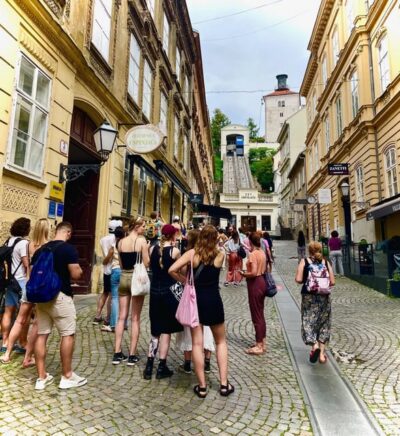
Zagreb: City & History Walking Tour & WW2 Tunnels
Read our review →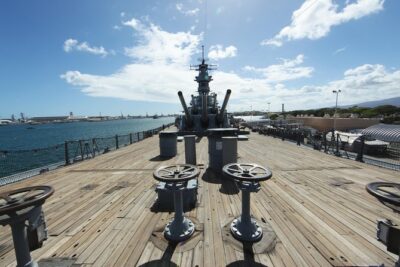
Pearl Harbor History Remembered Tour from Ko Olina
Read our review →
Hiroshima Peace (Heiwa) Walking Tour at World Heritage Sites
Read our review →
Pearl Harbor & USS Arizona Small-Group Tour [Early Access]
Read our review →
Anne Frank and the Jewish History of Amsterdam Private Tour
Read our review →
Browse the lists this tour appears in