Review · BERLIN HISTORY TOURS
Berlin: History of the Third Reich Guided Walking Tour
Berlin’s Nazi past is not tucked away in a single museum. It is scattered across ordinary streets, office blocks, memorials, and empty patches of ground. This two-hour walking tour connects those fragments, helping you understand how the Third Reich gained power, enforced it, and finally collapsed.
I like the route for two reasons: it includes surviving architecture, such as the massive Luftwaffe headquarters, and it explains the machinery behind the dictatorship rather than focusing only on Hitler. I also like the stop at a Soviet memorial, which widens the story to include the huge cost of the Battle of Berlin.
The main drawback is that this is a serious, outdoor tour with plenty of walking and limited physical remains at several stops. You must also buy an AB transport ticket, and the advertised two-hour format may feel brisk if you want long museum visits or detailed time at every site.
Key points
- See intact Luftwaffe headquarters architecture, one of the clearest surviving examples of Nazi state design in Berlin.
- Trace the propaganda and terror apparatus at the former Propaganda Ministry and SS and Gestapo headquarters.
- Visit the former Führer bunker site, where the Nazi regime ended, though the bunker itself is not open as a visitor attraction.
- Pause at a Soviet memorial honoring the 80,000 Soviet soldiers killed during the liberation of Berlin.
- Expect strong storytelling, with guides including Dani, India, Theo, Elizabeth, and others praised for clarity, humor, and command of the subject.
- Plan for outdoor conditions and public transport, with comfortable shoes, weather protection, and an AB ticket essential.
Starting at Brandenburg Gate
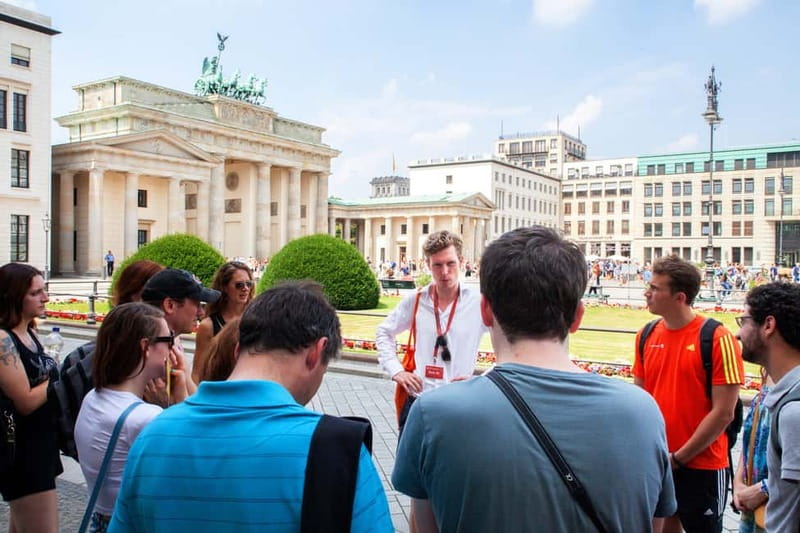
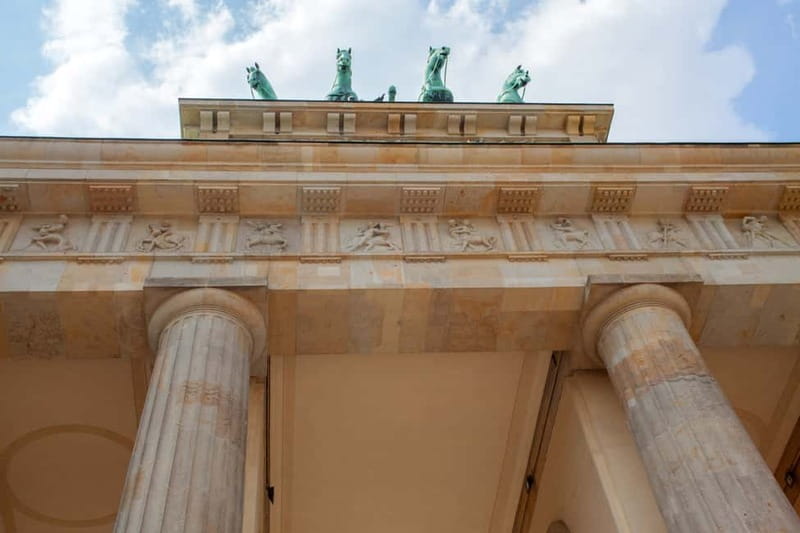
You meet in front of the Starbucks Café near Brandenburg Gate. Look for the tour team in red shirts with red umbrellas. This is a useful meeting point in central Berlin, but give yourself time to find the exact spot because the area around the gate can be busy.
The route begins with the political setting of Berlin rather than a narrow biography of Hitler. That matters. The Nazi story makes more sense when you see how propaganda, government offices, police power, and military authority worked together.
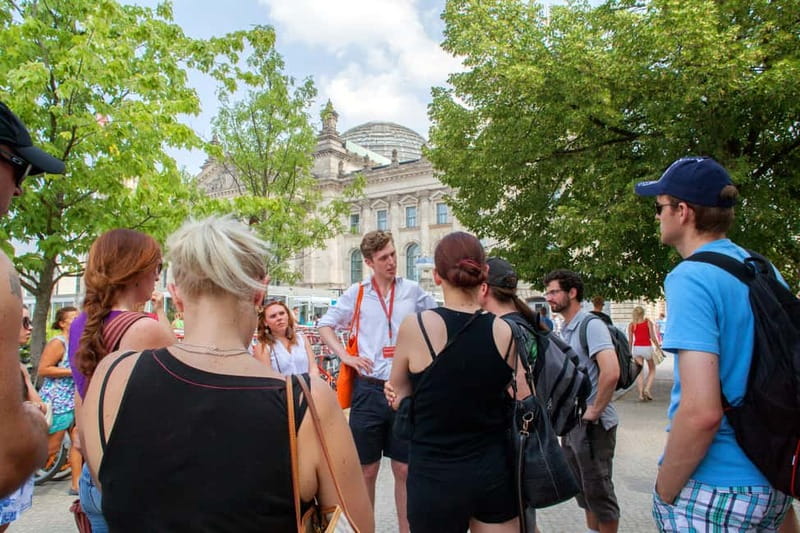
Your guide leads in English, and the quality of the explanation is central to the experience. Guides named Dani, India, Theo, Elizabeth, Marcel, Hannah, and others have been singled out for clear explanations, good pacing, humor, and strong storytelling. The guide can also adjust the route slightly for the group, so the exact order may vary.
More History Walking Tours in Berlin
- Berlin Historical Highlights Walking Tour
★ 4.9 · 657 reviews - Berlin Private Complete History All Day Walking Tour
★ 5.0 · 474 reviews - Berlin: Charité Hospital Walking Tour of Medical History
★ 4.9 · 276 reviews
The Luftwaffe headquarters and Nazi architecture
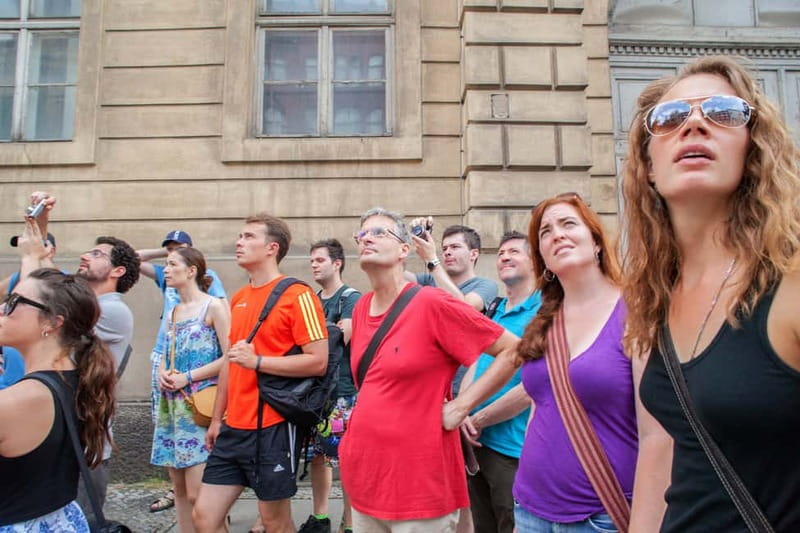
One of the most striking early stops is the former Luftwaffe Air Force headquarters, associated with Hermann Göring. The building survived Allied bombing and remains one of the best examples of Third Reich architecture in Berlin.
You do not need to be an architecture specialist to notice what makes it different. The scale and severe official style were meant to project authority, order, and permanence. Looking at the building while hearing how the Luftwaffe fitted into the Nazi state gives the architecture a political meaning.
This is one of the tour’s strongest stops because the evidence is still visible. Many Berlin sites connected with the Nazi era were destroyed, altered, or rebuilt. Here, you can look at a substantial surviving structure while your guide explains what it represented.
The limitation is that this is primarily an exterior viewing point within a walking route. If you want an interior architectural tour, this experience may not satisfy you. Its value comes from the explanation and the connection to the wider story.
How propaganda became a tool of control
The next important location is the former Propaganda Ministry of Joseph Goebbels. Before the war, the building was Berlin’s Press Office. The Nazis converted it into the center of their propaganda system.
This stop helps answer a question that many history tours skip: how did the Nazis maintain control after taking over the government? The answer involved more than speeches. Control of news, public messaging, political language, and access to information helped shape what people saw and believed.
I like this part because it moves beyond the familiar names and symbols of the period. You begin to see dictatorship as a system of offices and routines, not just as the work of one leader. The setting also makes clear how close these centers of power were to one another in central Berlin.
Do not expect a dramatic museum room or a preserved propaganda display at every stop. Much of the experience depends on listening carefully outdoors. If your interest is in political history, this section can be especially useful. If you mainly want military sites, it may feel less immediate.
The SS and Gestapo headquarters
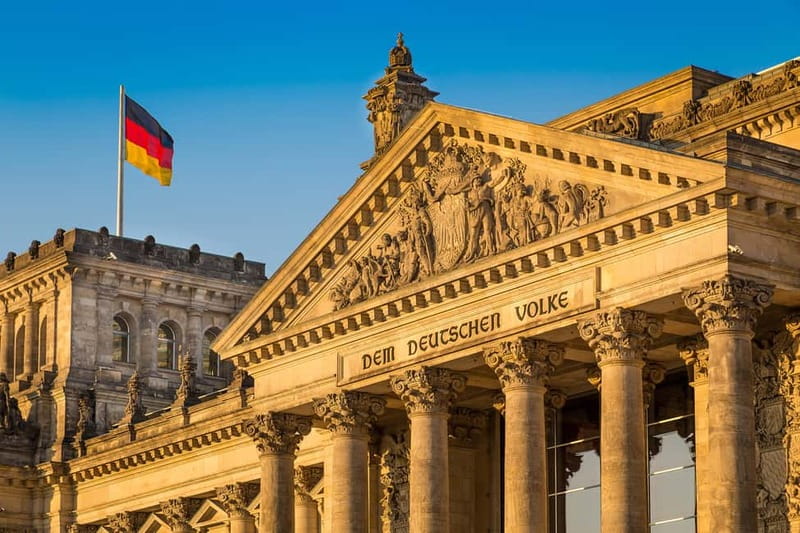
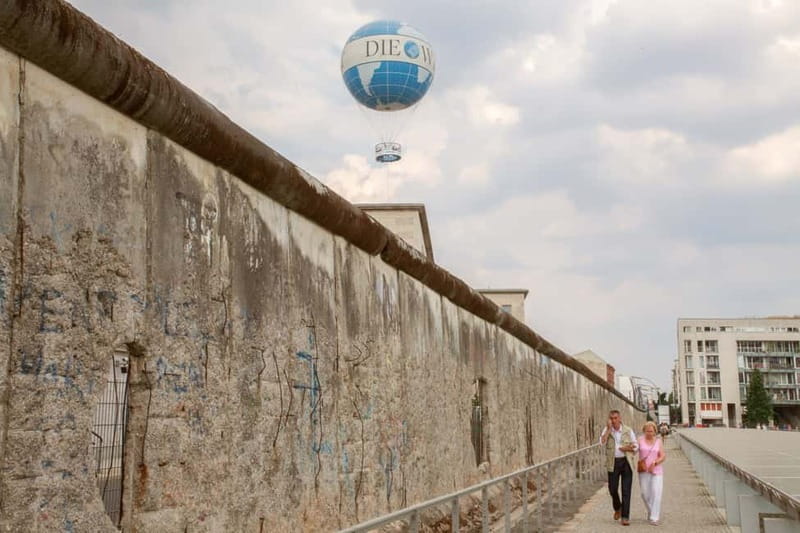
The route continues to the former address of the SS and Gestapo, once one of the most feared places in Nazi Germany. The area, formerly Prinz-Albrecht-Straße, also contains one of the few remaining stretches of the Berlin Wall.
That combination is important. You are looking at two different dictatorships and two separate periods of repression in the same part of the city. The guide places the Nazi police system in context, then helps you understand how fear was organized through interrogation, surveillance, imprisonment, and political terror.
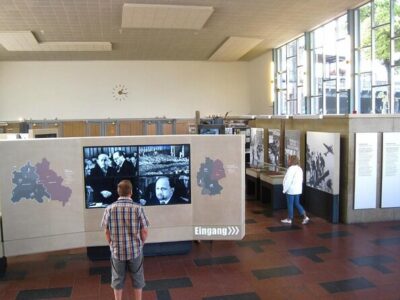
Basement remains from the former buildings have been converted into an exhibition documenting the Nazi rise to power. Entrance fees are not included, so check the arrangements for your date if you want to spend time inside. The walking tour itself gives you the historical framework, while the exhibition can provide more visual evidence and detail.
This part of the route can be emotionally difficult. The subject is not softened, and the tour deals with persecution and state violence directly. That seriousness is appropriate, but you should not expect a light sightseeing walk. The guides generally use humor only to keep the group engaged, not to make the subject trivial.
More History Walking Tours in Germany
- Berlin Private Half-Day Walking Tour: Discover the German Capital’s History
★ 5.0 · 244 reviews - The History of Berlin: WWII PRIVATE Walking Tour With Locals
★ 5.0 · 209 reviews - Berlin: Historic Center Walking Tour with a Real Berliner
★ 5.0 · 134 reviews - Berlin: Nazi History Walking Tour
★ 4.8 · 33 reviews
A Soviet memorial and the Battle of Berlin
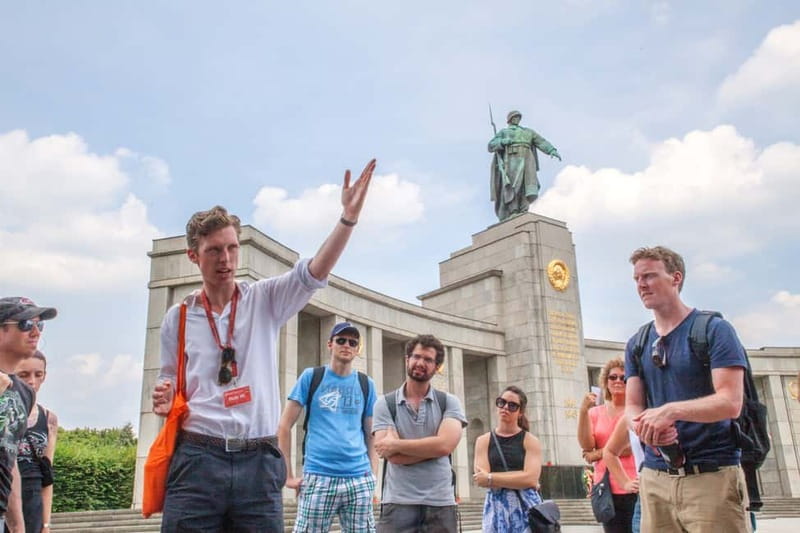
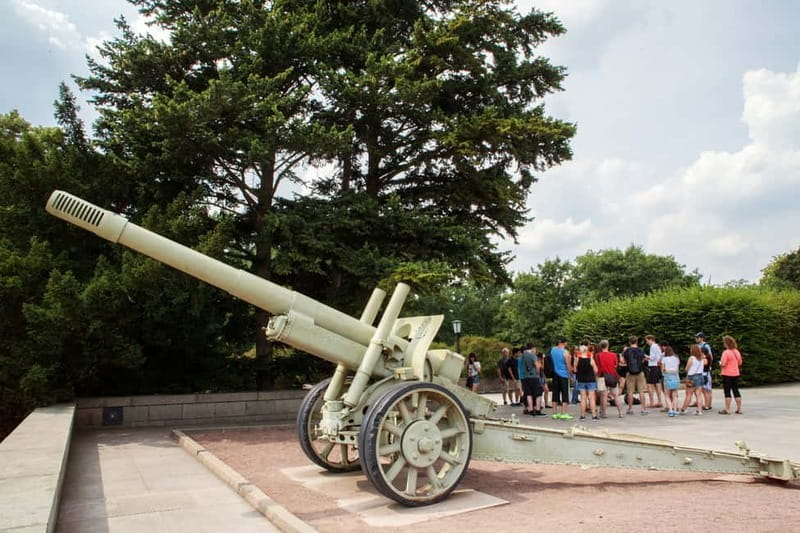
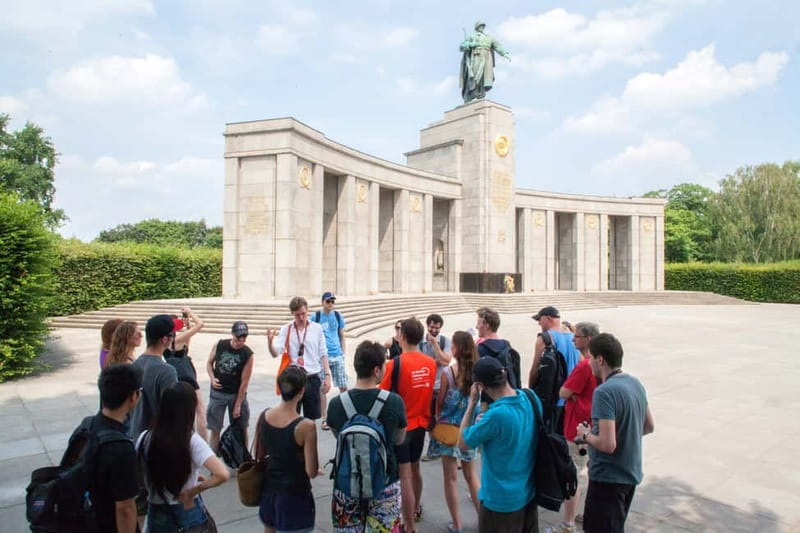
A stop at one of Berlin’s Soviet memorials shifts attention to the final battle. More than 80,000 Soviet soldiers died while fighting to liberate the city from Nazi rule. At the memorial, two artillery pieces and two tanks remain as silent reminders of that campaign.
This stop adds balance to the route. A tour focused only on Nazi offices can become too centered on the perpetrators and their institutions. The memorial reminds you of the military cost of ending the regime and of the people who fought their way into Berlin.
The guide explains the Battle of Berlin in relation to the collapse of Nazi Germany. You are not simply looking at military hardware. You are considering what it meant for the city to become the final battlefield of a war that had devastated much of Europe.
The memorial stop also gives the group a pause from office buildings and political history. Since the tour is outdoors, the atmosphere can change sharply with the weather. Bring a coat in colder months and water in warm weather. One practical break is built into the route, which helps on a walking tour dealing with such heavy material.
The former bunker site
The final major stop is the location of Hitler’s former bunker. This is where he ended his life as Soviet forces closed in, and where the Nazi regime reached its final days.
The site is easy to misunderstand if you expect an underground attraction. The bunker is not presented as an open ruin or a dramatic memorial interior. You stand above the former location and use the surrounding streets and the guide’s explanation to picture what happened there.
That restraint is useful. The stop avoids turning a place connected with dictatorship into a shrine. It also shows how ordinary the location can appear today, which makes the contrast with its historical importance more unsettling.
Your guide explains the final collapse of Nazi Germany and the events that opened the way toward peace in Europe. Because this is the last part of the route, the tour has moved from the rise of the regime through propaganda and terror to military defeat and collapse.
Why the guide makes or breaks the tour
This experience depends heavily on the person leading it. The route contains important locations, but several are buildings or open areas that need explanation. A strong guide turns a plain facade into evidence of how power worked.
Dani has been praised for answering a constant stream of questions and for explaining the rise of the Third Reich in chronological order. India has been described as passionate, clear, and easy to follow, especially when explaining how the Nazis came to power. Theo is known for combining historical detail with an approachable manner, while Elizabeth has been praised for explaining difficult material in a simple, organized way.
These names are examples, not a promise of your guide. Staff assignments change. Still, the repeated pattern is clear: the best experience comes from a guide who can connect facts, locations, and cause and effect.
Group size can vary. Some departures have been small, while others have been larger and split between guides. A group of around a dozen people is comfortable for questions and keeping close to the guide. A bigger group can make it harder to hear, especially on a noisy street, though an experienced guide can manage it well.
What the two-hour format really gives you
At $30 per person, the tour offers good value if you want a clear introduction to Berlin’s Nazi-era geography. You are paying mainly for the guide’s interpretation and for a carefully linked route, not for a long list of included admissions.
The two-hour duration suits a first visit or a packed Berlin schedule. It gives you a strong framework without taking half a day away from other sights. You can then decide if you want to return to the Topography of Terror exhibition area or spend more time with other memorials and museums on your own.
There is a small wrinkle in the supplied experience details: it is described as a two-hour tour, while some past comments refer to three or four hours. Treat the timing as approximately two hours and allow extra time for the break, public transport, group size, and the guide’s chosen route.
You also need to purchase an AB transport ticket. That cost is separate from the $30 tour price. The route is described as a walking tour, but transport is part of the practical plan, so do not arrive assuming that the tour price covers every movement between stops.
Who should book it
I would recommend this tour to you if you want to understand how the Nazi regime operated, not simply photograph famous locations. It is particularly useful for first-time visitors, history students, families with older children, and anyone who wants a chronological explanation of Berlin’s wartime center.
Children up to age 13 can join free, though the local operator may ask for identification. The subject matter is serious, so parents should decide if their children are ready for discussions of dictatorship, persecution, war, and mass death.
The tour is wheelchair accessible, but the amount of walking and the outdoor setting still make comfortable clothing important. Wear shoes you can walk in for two hours, and prepare for rain or cold. One past participant specifically advised wrapping up well in winter, sensible advice for a route with several outdoor stops.
You may prefer a museum visit instead if you want long periods indoors, extensive original objects, or a quieter pace. You may also want another option if you already know Berlin’s Nazi history in detail and would rather study one site closely.
Should you book this Berlin history walk?
Book it if you want a focused, affordable introduction to the Nazi-era center of Berlin and value a good storyteller. The strongest parts are the surviving Luftwaffe headquarters, the explanation of propaganda and police power, the Soviet memorial, and the final stop above Hitler’s bunker.
Do not book it expecting a bunker tour or a series of grand preserved interiors. Much of the power comes from standing in ordinary-looking places and learning what happened there. With a strong guide, that approach can be more thought-provoking than a collection of spectacular ruins.
At $30, it is a fair choice for the context it provides. Bring an AB ticket, wear comfortable shoes, leave room for a short break, and approach the subject with patience. If your guide is as engaging as Dani, India, Theo, or Elizabeth have been on past departures, this can become one of the most useful history lessons in your Berlin visit.
FAQ
How long is the Berlin Third Reich walking tour?
The stated duration is two hours. The route includes a break, and the exact timing or order may vary slightly according to the guide and group.
What language is the tour conducted in?
The tour is conducted in English with a live guide.
Where does the tour meet?
Meet in front of the Starbucks Café near Berlin’s historic Brandenburg Gate. The local tour team wears red shirts and uses red umbrellas.
Is public transportation included in the tour price?
No. You need to purchase an AB transport ticket separately.
Are entrance fees included?
No. Entrance fees are not included. The route includes locations such as the former SS and Gestapo headquarters area and its basement exhibition, so check what you wish to enter during your visit.
Can children and wheelchair users join?
Children up to age 13 may join free, though valid identification may be requested. The tour is listed as wheelchair accessible.
More WWII and D-Day Tours in Berlin
- Vienna: World War II Historical Walking Tour
★ 4.8 · 1,772 reviews - Zagreb: City & History Walking Tour & WW2 Tunnels
★ 4.9 · 1,202 reviews - Pearl Harbor History Remembered Tour from Ko Olina
★ 5.0 · 1,009 reviews - Hiroshima Peace (Heiwa) Walking Tour at World Heritage Sites
★ 5.0 · 872 reviews
More WWII and D-Day Tours in Germany
- Berlin: Guided Bike tour of the Berlin Wall and Third Reich
★ 5.0 · 160 reviews - Eagle’s Nest-Berchtesgaden-Obersalzberg Private Half Day WWII Historical Tour
★ 5.0 · 64 reviews
Newest history tours we have reviewed in Berlin
- Berlin: Nazi History Walking Tour★ 4.8 · 33 reviews
- Berlin: Urbex Abandoned Places & History Tour★ 4.8 · 18 reviews
- Berlin: History and Sightseeing with Kids (Free for Kids)★ 4.9 · 19 reviews
- Berlin: Historical Sights & Berlin Wall Tour with a Berliner★ 5.0 · 62 reviews
- Berlin (E)Bike Tour Historical Highlights in Small groups★ 4.5 · 24 reviews
- East Berlin Food & History Tour with Eating Europe★ 4.8 · 20 reviews
- Berlin: Historic Center Walking Tour with a Real Berliner★ 5.0 · 134 reviews
- Berlin: Guided Craft Beer & Cultural Tour With Snacks★ 5.0 · 68 reviews
WWII & D-Day Tours, compared.
Zagreb: City & History Walking Tour & WW2 Tunnels
Read our review →
Pearl Harbor History Remembered Tour from Ko Olina
Read our review →
Hiroshima Peace (Heiwa) Walking Tour at World Heritage Sites
Read our review →![Pearl Harbor & USS Arizona Small-Group Tour [Early Access]](https://media.myhistoryguide.com/wp-content/uploads/pearl-harbor-uss-arizona-small-group-tour-early-access-400x267.jpg)
Pearl Harbor & USS Arizona Small-Group Tour [Early Access]
Read our review →
Anne Frank and the Jewish History of Amsterdam Private Tour
Read our review →
Anne Frank and Amsterdam Jewish History Walking Tour
Read our review →