
Review · PRAGUE HISTORY TOURS
Absinthe Tasting Prague: Historic Cellar Experience
The striking part of this Prague tasting is the setting: you sample absinthe below a 15th-century courtyard, not in a generic bar room. I like the 10 different pours because they let you compare styles instead of judging absinthe from one dramatic sip. I also like the small maximum of 12 people, which gives guides such as Tomáš, Thomas, and Lucas room to explain the details.
The main thing to consider is the narrow focus. This is a spirit tasting, not a broad Czech food tour, and the 10 samples add up to about 2.5 full shots. That is manageable for most adults, but the tasting still demands moderation, and the cellar is not suitable for wheelchair users.
Key points at a glance
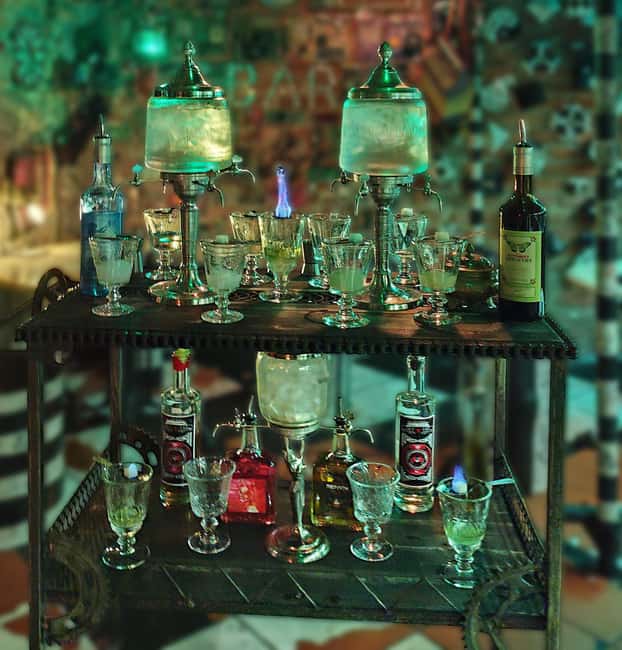
- Ten absinthes from four countries: Compare Bohemian, Czech, French, and Swiss examples in one sitting.
- Four styles in the glass: The tasting includes blanche, verte, rouge, and macerated absinthes.
- Two preparation methods: See how water changes the drink and creates the cloudy louche effect.
- A 15th-century setting: Green Devils Absinthe Bar occupies a cellar in the historic Ungelt courtyard near Týn 637/7.
- A small English-speaking group: The maximum is 12 people, with a 90-minute schedule and a 3 PM start.
- A useful amount of alcohol: Ten 1-centiliter samples total about 10 centiliters, or roughly 2.5 standard full shots.
Entering Green Devils in the Ungelt courtyard
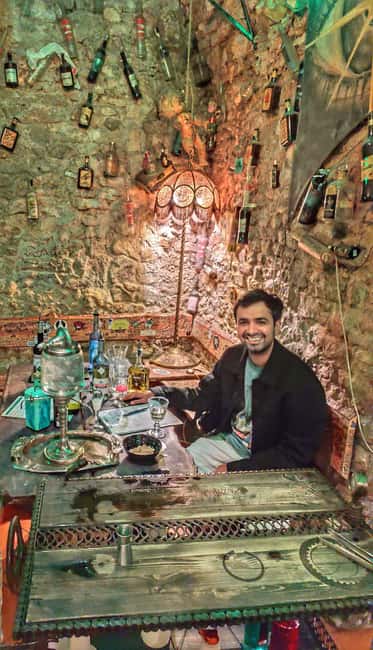
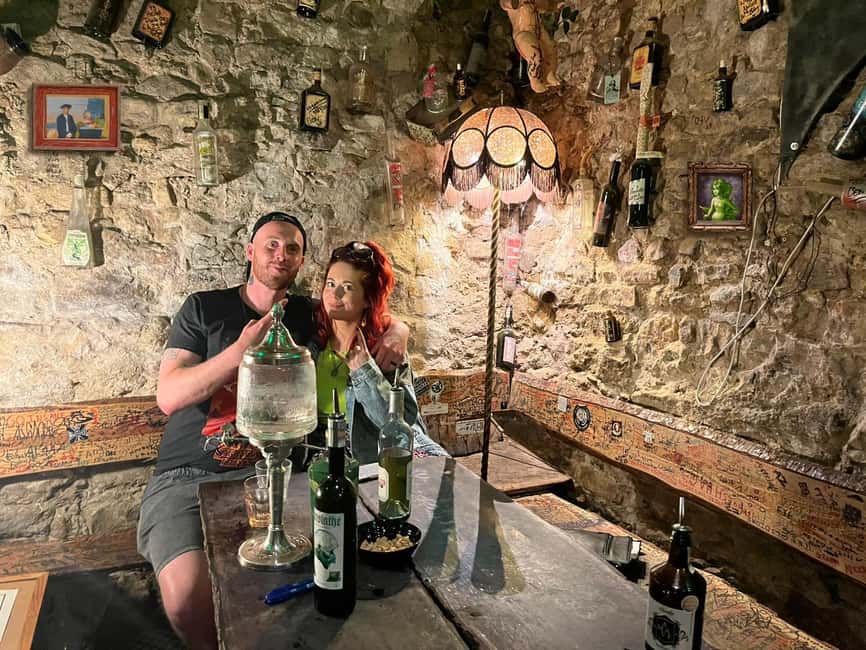
You meet at Green Devils Absinthe Bar, at Týn 637/7 in central Prague. The bar sits inside the Ungelt courtyard, a fitting place for a drink with such a long trail of legends and rituals.
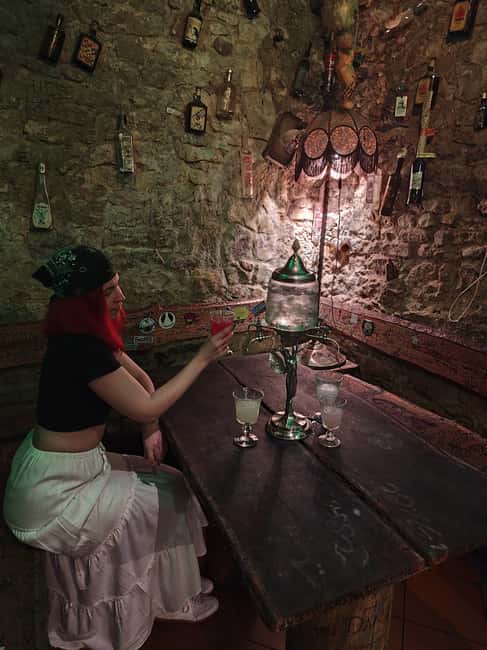
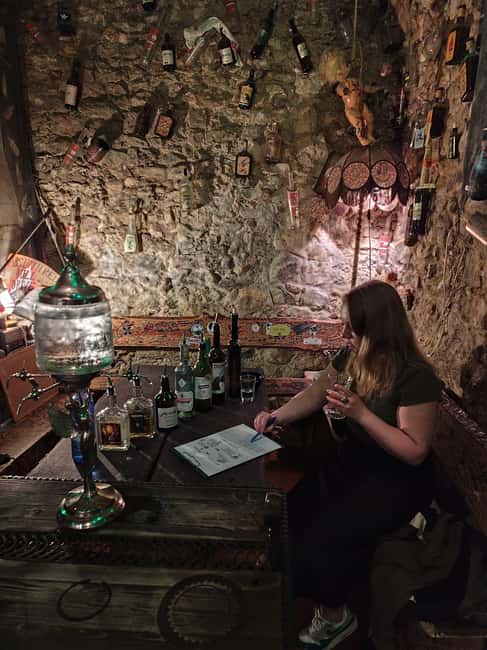
The cellar matters here. A room with old stone, low ceilings, and centuries of use gives the tasting a sense of place that a modern cocktail lounge could not provide. The setting does not replace the content, but it gives the subject a proper home. You are learning about a drink associated with old cafés, artists, herbal bitters, and the famous Green Fairy mythology while sitting in a space built long before modern tourism.
You should arrive five minutes early. The tasting begins at 3 PM sharp, and a late arrival may mean missing the opening explanation. That is worth taking seriously because the first part sets up the terms used later, including the differences between styles, production methods, and preparation rituals.
The experience runs about 90 minutes, though the stated range is 75 to 105 minutes. That small variation makes sense for a tasting with questions. A quiet group may finish closer to the short end, while a group interested in production or absinthe lore may use the full time.
More History Tours in the world:
- New York City: American Museum of Natural History Ticket
★ 4.5 · 15,447 reviews - History and Hauntings of Salem Guided Walking Tour
★ 5.0 · 14,564 reviews - Colosseum: Underground and Ancient Rome Tour
★ 4.7 · 12,691 reviews
Starting with the Green Fairy, without the usual myths
The introduction covers absinthe’s history, production, rituals, legends, and Green Fairy mythology. This is useful because absinthe often arrives with more rumor than clarity. You get a chance to separate the actual drink from the theatrical reputation built around it.
The session is not simply ten quick tastes placed in front of you. The guide explains what you are drinking and why each sample belongs in the lineup. That structure helps first-time drinkers. Instead of asking yourself if you like absinthe in general, you can ask more useful questions: Do I prefer a lighter blanche? Does a verte offer more herbal character for my taste? How does a rouge compare with a macerated style?
The guides named in the experience include Tomáš, Thomas, and Lucas. Their role is important because absinthe can seem confusing when you first encounter terms such as distilled, macerated, blanche, and verte. A good explanation gives each pour a purpose, and the small group allows you to ask about anything that puzzles you.
The English-language format also makes this a practical choice for international visitors. You do not need prior knowledge of absinthe, and the relaxed tone is designed for curious newcomers as well as people who already collect or study spirits.
Ten samples, four countries, and several different styles
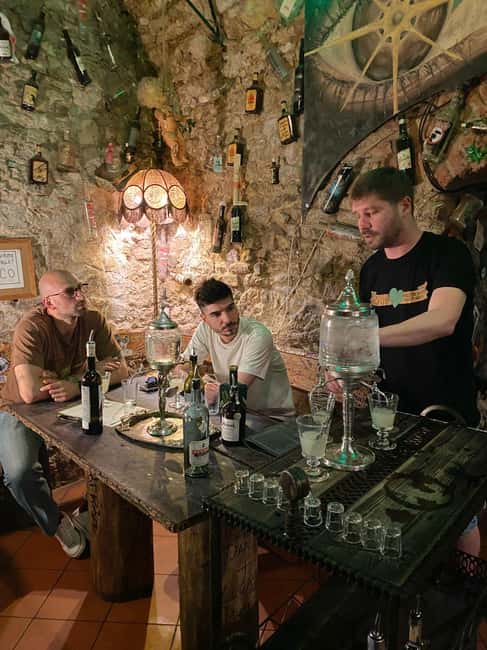
The tasting includes 10 absinthes, each served in a 1-centiliter portion. The selection draws from Bohemia, Czechia, France, and Switzerland, giving you a useful cross-section rather than a single local interpretation.
You will encounter:
- Blanche absinthes
- Verte absinthes
- Rouge absinthes
- Macerated absinthes
- Distilled examples
- Two absinthes made in the Bohemian style
The program describes eight of the samples as distilled and two as Bohemian-style absinthes. The exact order may depend on the guide and the group, but the point is comparison. Each small pour gives you another reference point for aroma, color, herbal character, and the effect of water.
The 1-centiliter size is a sensible choice. Ten large measures would turn an educational tasting into a poor afternoon decision. Here, the portions are small enough for you to focus on the character of each sample, especially since water is used with every one.
Do not expect every absinthe to taste alike. The labels and colors offer clues, but they do not tell the whole story. The guide’s explanation helps you understand why a blanche looks different from a verte, why a rouge has its color, and how maceration fits into the production story.
For a newcomer, this range is the main value of the session. Buying one bottle gives you one opinion. Here, you can compare 10 examples before deciding which styles appeal to you. If you already know absinthe, the country mix gives you a chance to test familiar assumptions.
Watching the louche effect change the drink
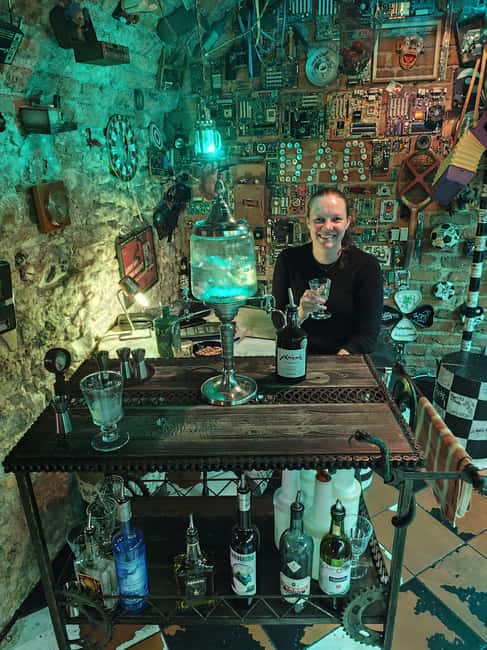
Water is included with every tasting, and the guide demonstrates the louche effect. This is the moment when clear absinthe turns cloudy as water mixes with the spirit’s oils. It is one of the drink’s most recognizable visual rituals, but the demonstration is more useful when you see it happen across several different samples.
You will also see two traditional preparation methods. The point is not just ceremony. The way absinthe is prepared changes how you approach it, how slowly you drink it, and how you notice the aromas as water opens the spirit.
The louche effect gives the session a small piece of theater, but it is not empty theater. It shows that absinthe is often intended to be diluted rather than swallowed neat. Watching the transformation also makes the production discussion easier to understand because you can see the oils react in the glass.
If you have come expecting a fiery, syrupy shot, this tasting may reset your expectations. One early assessment of the drink is that it is not quite what people expect, and that is a useful warning. Absinthe is not simply a stronger version of anise liquor. The samples may differ sharply, and the ritual slows the process enough for you to taste those differences.
Same streets, a different century:
- Lisbon: History, Stories and Lifestyle Walking Tour
★ 4.8 · 10,902 reviews - London Small Group Tour of Historical Pubs
★ 5.0 · 10,422 reviews - Prague: Oldtown, Medieval Underground & Dungeon History Tour
★ 4.3 · 10,277 reviews - Charleston’s Old South Carriage Historic Horse & Carriage Tour
★ 5.0 · 10,023 reviews
Why the small group improves the session
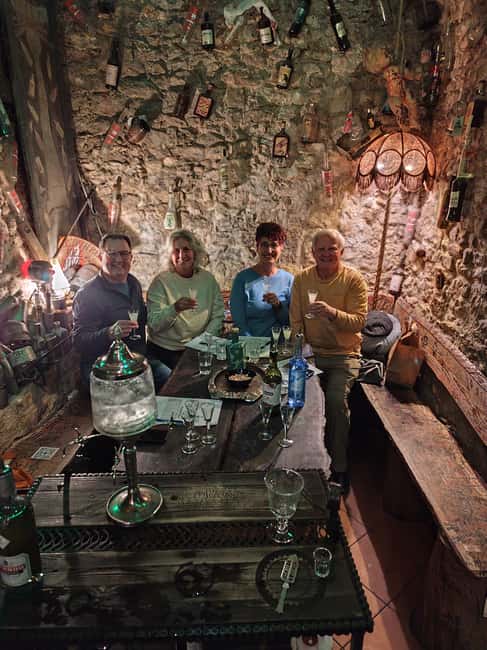
The maximum group size is 12. That is small enough for a personal atmosphere without turning the tasting into a private lesson.
A small group matters most during the explanations. You can hear the guide clearly, watch the preparation at close range, and ask a question without interrupting a large room. If you are new to absinthe, you may want to ask about the cloudy color, the serving method, or the difference between styles. A group of 12 keeps those questions manageable.
There is also a social benefit. You are sharing a table and a subject that many people know only through legend. The relaxed format makes it easier to compare impressions without feeling that you need to sound like a spirits expert.
The tradeoff is that the quality of the session depends partly on the guide and the group’s pace. If everyone wants a long discussion, the 90 minutes may feel full. If you prefer to sample quietly, the explanations could feel more extensive than expected. The available guide feedback points to strong explanations from Tomáš, Thomas, and Lucas, but your own pace will still depend on the people booked into your time slot.
The cellar is part of the experience, not just a backdrop
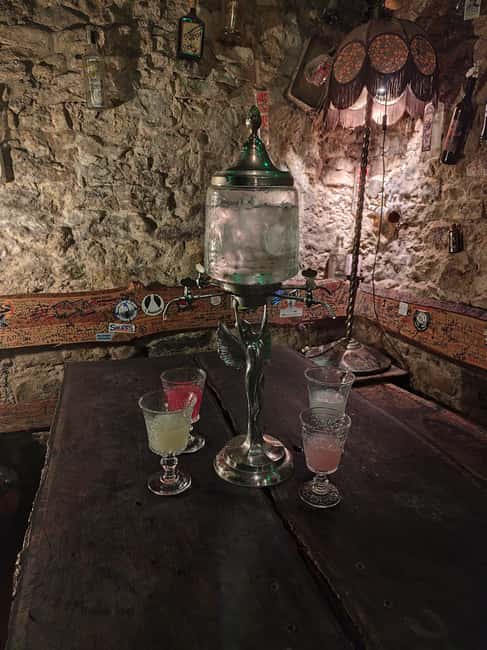
Prague has no shortage of places to drink. The cellar helps this tasting earn its place in your schedule because it connects the drink to the city’s older built environment.
Green Devils Absinthe Bar is inside the Ungelt courtyard, in the center of Prague. That makes the meeting point convenient for a day of sightseeing around the Old Town. You do not need to travel to the edge of the city for a specialized activity, although you should still allow time to find the courtyard and reach the cellar before the exact start time.
The bar itself is worth noting after the formal tasting. You may stay for an additional drink once the session ends, or buy a bottle to take home. Those purchases are not part of the $62 price, so treat them as optional extras rather than part of the core value.
The cellar will appeal most to you if you enjoy places with atmosphere and a visible sense of age. If you care only about technical tasting notes, the room will be less important. For most people, though, the old cellar adds character without distracting from the spirit lesson.
Is $62 a fair price?
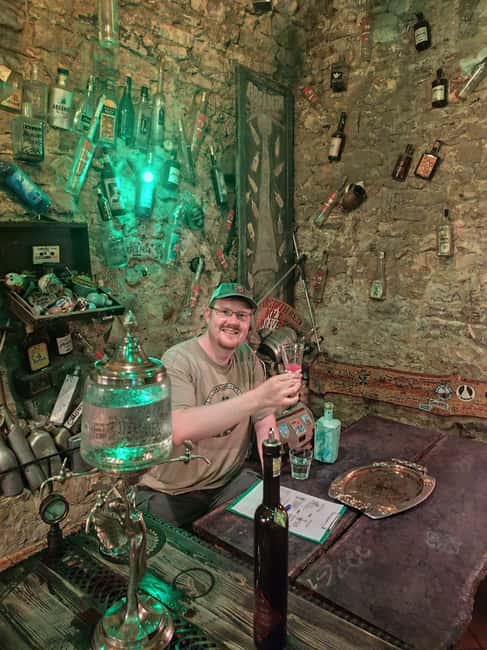
At $62 per person, this is not a cheap bar stop. It is also more than you would pay for a single absinthe and a casual explanation. The value comes from the breadth of the lineup, the guide’s instruction, the two serving demonstrations, and access to a specialized setting.
You receive 10 tastings, each 1 centiliter, plus water and commentary. The total alcohol is about 10 centiliters, or approximately 2.5 full shots. That is a reasonable amount for a 90-minute session, particularly because the point is comparison rather than rapid drinking.
I see the price as fair if you would otherwise spend money experimenting with several bottles or visiting a specialist bar without knowing what to order. The session lets you sample Czech, Bohemian, French, and Swiss examples in one place. It also gives you a better basis for choosing a bottle afterward.
The value is weaker if you are not interested in absinthe itself. The setting is appealing, but the main event remains a focused spirit lesson. You are paying for depth in one subject, not for a general introduction to Czech drinks or Prague culture.
The reserve-now-and-pay-later option can help if you are still arranging your Prague schedule. Free cancellation is available up to 24 hours before the activity for a full refund. Those terms are useful, but the more important planning detail is the fixed 3 PM start.
Who should book this Prague tasting?
I would recommend it to several kinds of visitors:
- You are curious about absinthe but have never tasted it properly.
- You enjoy spirits, cocktail rituals, or production methods.
- You want a small indoor activity in central Prague.
- You like historic interiors and unusual local experiences.
- You want to compare several bottles before buying one.
- You enjoy guided tastings more than unstructured bar visits.
It is also a good choice for a pair or small group with different levels of interest. A newcomer can learn the basics, while an absinthe fan can pay attention to the differences among countries and preparation styles.
I would be more cautious if you dislike herbal or anise-like spirits, want a large meal-based activity, or prefer to avoid alcohol entirely. Children under 18 cannot participate, and the cellar is not suitable for wheelchair users.
Practical advice before you go
Arrive five minutes early and plan around the fixed 3 PM start. The introduction is part of the session, so arriving late may mean losing the context that makes the later samples easier to understand.
Do not schedule the tasting as a quick stop between tightly timed attractions. The normal length is 90 minutes, with the actual session sometimes lasting between 75 and 105 minutes. Add time if you plan to stay for another drink or browse bottles afterward.
The activity is guided in English. Water is included, and every sample is prepared with water to show the louche effect. You do not need to bring special equipment or prior knowledge.
Most important, pace yourself. Ten small samples sound modest, and the total is only about 2.5 full shots, but the session is still alcohol-centered. Eat sensibly before arriving, pay attention to the water provided, and avoid treating the tasting as a race.
My verdict on the Green Devils experience
This is a focused, atmospheric introduction to absinthe rather than a general Prague sightseeing stop. The strongest features are the 10-sample comparison, the clear look at two preparation methods, the English-speaking guides, and the 15th-century cellar.
The experience earns its price when you value explanation and variety. You are not just ordering one drink and hearing a few myths. You are tasting several styles from four countries, watching the louche effect, and learning how production and serving choices affect the final glass.
I would book it if you want an unusual Old Town activity with real content behind it. I would skip it if absinthe is not your kind of drink or if the $62 price feels high for a specialized tasting. For curious adults who enjoy spirits, history, and old Prague interiors, the Green Devils cellar offers a memorable way to meet the Green Fairy on more informed terms.
FAQ
Where does the absinthe tasting take place?
It takes place at Green Devils Absinthe Bar inside the historic Ungelt courtyard in central Prague. The listed meeting address is Týn 637/7.
How long does the experience last?
The scheduled duration is 90 minutes. The actual session may run between 75 and 105 minutes.
How many absinthes will I taste?
You will taste 10 absinthes. Each serving is 1 centiliter, for a total of about 2.5 full shots.
Which countries are represented?
The selection includes absinthes from Bohemia, Czechia, France, and Switzerland.
Is the tasting offered in English?
Yes. The experience includes a live guide in English.
Can children or wheelchair users take part?
Children under 18 cannot participate. The experience is not suitable for wheelchair users.
Newest history tours we have reviewed in the world
- Bilbao Historical Tour in small group★ 4.7 · 52 reviews
- Bologna: Street Food Tour in the Historic Center★ 4.8 · 125 reviews
- CEBU: Cebu City Heritage and Uphill Guided Tour★ 4.2 · 31 reviews
- Bishkek : City Tour (History, Architects, Statues & Culture)★ 4.9 · 54 reviews
- Blenheim: Omaka Aviation Heritage Centre Admission Ticket★ 4.9 · 31 reviews
- Berlin: Nazi History Walking Tour★ 4.8 · 33 reviews
- Best of Baku: 4-Hour City Tour Historic and Modern Landmarks★ 4.7 · 63 reviews
- Belfast: Best of Belfast History, Culture & Art Walking Tour★ 4.9 · 158 reviews
Prague History Tours, compared.
Oldtown, Medieval Underground & Dungeon History Tour
Read our review →
Prague Old Town, Medieval Underground and Dungeon Historical Tour
Read our review →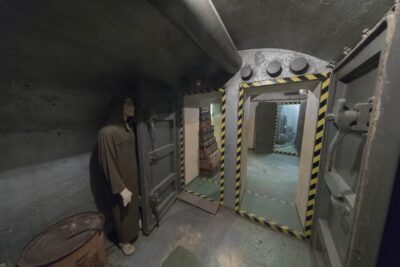
Communism History and Nuclear Bunker Guided Tour
Read our review →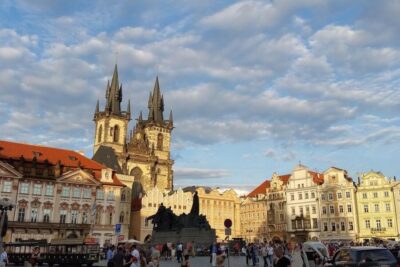
Historic City Center Bus Tour with Top Sights
Read our review →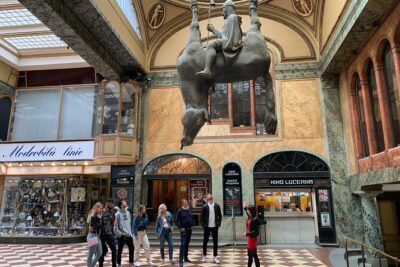
Prague Historic Pub Tour with Drinks Included
Read our review →
Prague Communism History and Nuclear Bunker Tour
Read our review →
Hop-on Hop-Off Historical Tram Ticket for Line 42
Read our review →
Top Sights and Historic Center Introduction Tour
Read our review →Browse the lists this tour appears in