
Review · PRAGUE HISTORY TOURS
Prague Communism History and Nuclear Bunker Tour
Prague’s medieval center gets most of the attention, but this tour takes you into the city’s far more recent and unsettling past. You’ll trace the 1968 Soviet invasion, the 1989 Velvet Revolution, and daily life under communism before entering a nuclear bunker four floors underground.
I like the mix of street-level sites and a preserved bunker, since it gives the history a physical setting. I also like the personal approach of guides such as Stan, Pavel, Lada, and Karl, several of whom share memories of growing up under communism. The main caution is that guide quality can vary, and the tram journey and long explanations may feel slow if you want a tightly packed sightseeing tour.
Key points to know before booking
- The bunker is the tour’s main event: You spend about an hour inside a Cold War shelter and museum beneath Prague.
- The walking route connects major political events: See the former secret police building, the Velvet Revolution Memorial, Národní třída, and Wenceslas Square.
- Personal stories add weight: Some guides, including Stan and Lada, draw on their own experiences of life under communism.
- Allow 2 hours 20 minutes: Transport to the bunker forms part of the experience, and the timing can shift by 10 to 15 minutes.
- Prepare for stairs and confined spaces: The tour is not suitable for people with mobility difficulties, serious heart issues, or claustrophobia.
- The price is reasonable for the package: At $45.16, you are paying for a live guide, transport, the bunker entrance, and a photo booklet with a survival guide.
Why Prague’s communist past deserves a closer look
This is not a tour about grand palaces or old church towers. It deals with the years when Czechoslovakia lived under a communist government aligned with Moscow, and it focuses on the people, buildings, and public spaces tied to that period.
That recent past can be harder to understand than Prague’s older history. The streets look modern, and much of the visible evidence has disappeared or been repurposed. A good guide helps you connect an ordinary square or office building with the fear, protest, censorship, and political change that once shaped daily life there.
The tour covers events from the Soviet invasion of August 1968 through the Velvet Revolution of 1989. It also touches on Alexander Dubček, Václav Havel, the secret police, and the experience of growing up behind the Iron Curtain.
I find the subject especially useful if you already know the broad outline of the Cold War but want to understand how it affected Czech people. The strongest guides do not simply recite dates. They explain how political decisions reached into ordinary life, then add personal memories that make the period easier to grasp.
More Cold War and Communism Tours in the world:
- Prague: Communism History and Nuclear Bunker Guided Tour
★ 4.7 · 2,417 reviews - Bucharest: Communism and History Guided City Walking Tour
★ 4.9 · 918 reviews - Berlin: Cold War & Berlin Wall History Guided Bike Tour
★ 4.8 · 422 reviews
Starting at Malé Náměstí in Prague’s Old Town
The meeting point is inside a passage at Malé Náměstí 459/11, about 20 meters to the right of Hotel U Prince. This is a central Old Town location, but the ticket office is inside the passage rather than directly on the square, so give yourself time to find the doorway.
The tour begins with a short introduction before moving through central Prague. The full experience lasts about 2 hours and 20 minutes, though the timing can vary by 10 to 15 minutes depending on group size.
The group limit is 26 people. That is large enough to provide a lively mix of questions and viewpoints, but small enough for a guide to speak with the group rather than address a crowd. A smaller group can make a real difference at street stops and inside the bunker, where space is limited.
You should arrive ready to walk. Comfortable shoes matter more than smart clothes, and the route includes steps, ramps, and uneven movement through the bunker.
StB holding cells and the shadow of the secret police
One early stop focuses on the former secret police building and its holding cells. The StB, or State Security, was Czechoslovakia’s communist-era secret police. This is where the tour shifts from broad political history to the machinery used to monitor and intimidate people.
The connection to Václav Havel adds a strong human element. Havel later became president, but before that he was a playwright, dissident, and critic of the communist system. His story helps show how opposition could grow from cultural life and civic protest, not only from formal political parties.
You will spend about 10 minutes here, so do not expect a long museum visit. The value comes from the guide’s explanation and from being shown a place that is easy to overlook when walking through central Prague alone.
This stop also sets the tone for the rest of the tour. Communism was not only a set of official slogans and government policies. It involved surveillance, arrests, pressure on families, and choices about how openly people could speak.
The Velvet Revolution Memorial at Národní třída
The Velvet Revolution Memorial recalls the demonstrations of 1989 that helped bring communist rule to an end in Czechoslovakia. Národní třída was a key site during the movement, and the memorial marks the place where students and other protesters were beaten by police on November 17, 1989.
The tour combines the memorial with a stop along Národní třída, allowing the guide to explain the political events and the public response. The peaceful nature of the revolution is important, but the word peaceful should not make it sound gentle. The protests followed years of control and frustration, and the police crackdown became a turning point.
You spend roughly 10 minutes at the memorial and another 10 minutes on Národní třída. That is enough for context and questions, but not enough for a long lecture. If your guide is one of the more personal storytellers, this is likely to be one of the most memorable parts of the walking route.
I like this section because the history is still tied to a normal working street. You are not looking at an isolated monument. You are standing in a place where public pressure, fear, and political change collided.
More Battlefield and Military History Tours in the world:
- 2-Hour Gettysburg Battlefield Guided History Bus Tour with a National Park Guide
★ 4.5 · 2,201 reviews - Guided Savannah Civil War History Walking Tour
★ 5.0 · 492 reviews - Ghost Tour: History and Haunts – Family Friendly – Best in Gettysburg
★ 4.5 · 378 reviews - Barcelona: The Spanish Civil War Historical Walking Tour
★ 4.9 · 239 reviews
Wenceslas Square and the August 1968 invasion
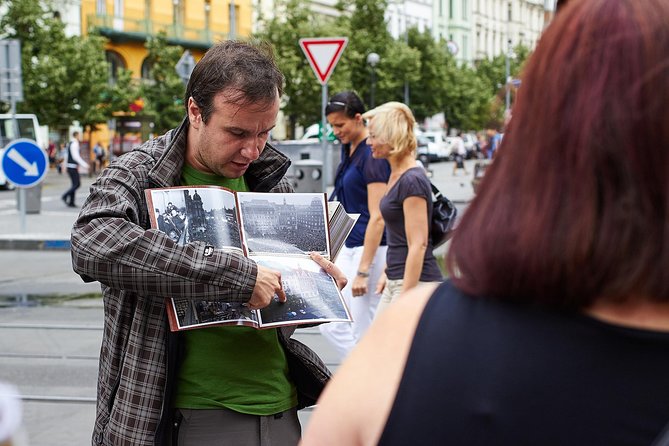
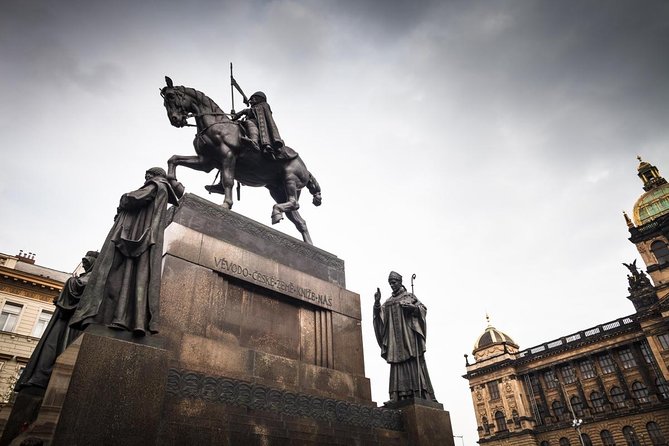
Wenceslas Square is the setting for the tour’s discussion of the Soviet-led invasion of August 1968 and the reform movement associated with Alexander Dubček.
Dubček promoted what became known as socialism with a human face, an attempt to loosen censorship and introduce reforms while keeping a socialist system. The Soviet Union and its allies viewed the reforms as a threat, and Warsaw Pact forces entered Czechoslovakia in August 1968.
The square has long been a stage for public demonstrations, and its size makes it easier to picture how political events could unfold in full view of the city. The guide explains the invasion and its effects on Czech society, including the end of the reform period and the years of political tightening that followed.
This stop is another short one, lasting about 10 minutes. The quality depends heavily on the guide. A clear explanation of Dubček, the invasion, and the later period of normalization can give you a useful framework for the rest of the tour. A less focused presentation may leave you wishing for more dates and detail.
Olšanské náměstí and Prague’s socialist architecture
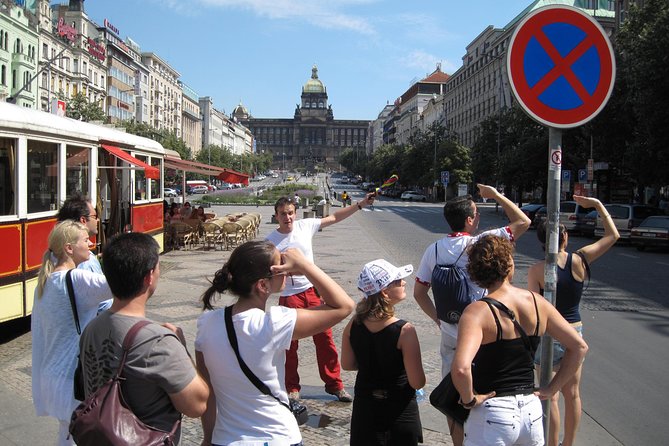
The route continues to Olšanské náměstí, in a former workers district. Here you see original buildings from the 1970s, including the concrete architecture associated with the socialist era.
This is a useful change of pace. Political events can feel abstract, while architecture shows how an ideology appeared in everyday life. Housing, public buildings, and neighborhoods were planned for a society that emphasized workers, industry, and state control.
Do not expect a polished monument or a major sightseeing attraction. The point is to notice ordinary buildings and understand what they represent. This is also one of the places you might easily miss without a guide, since it does not fit the usual Prague sightseeing route.
The stop lasts about 10 minutes, and the group then continues toward the bunker by public transport. Transport is included, so you do not need to arrange a separate tram ticket for this part of the experience.
Riding to the nuclear bunker
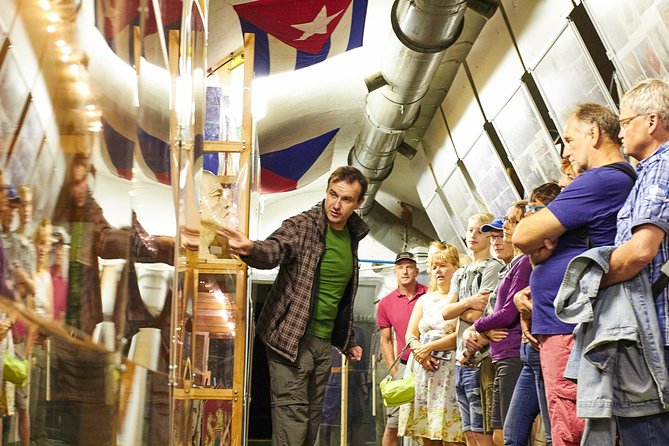
The journey to the bunker is part of the tour, not simply a transfer. It gives the guide more time to explain the Cold War and lets you see parts of Prague beyond the historic center.
There is a practical trade-off here. Some people enjoy the tram ride as part of the local experience, while others may feel that a substantial portion of a 2-hour-20-minute tour is spent getting to and from the bunker. One critical account put the tram journey at nearly 45 minutes, so you should not book this expecting two hours of nonstop walking and exhibits.
The transport also explains why the tour works as a combined experience. The central sites provide political and social context, while the bunker offers a physical example of Cold War fear and preparation. Taken together, they create a broader picture than either part would provide alone.
Going four floors underground into the bunker
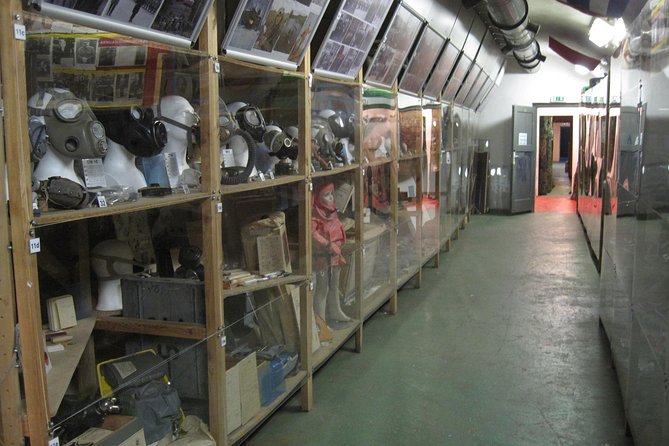
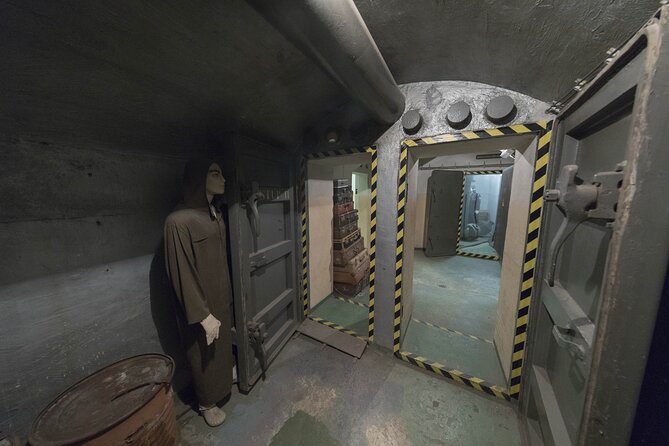
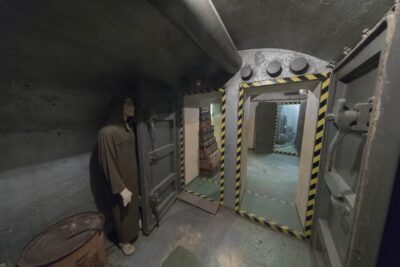
The Prague Nuclear Bunker Communism and Cold War Museum takes up about an hour of the experience. You descend four floors underground into a shelter built for the possibility of nuclear conflict.
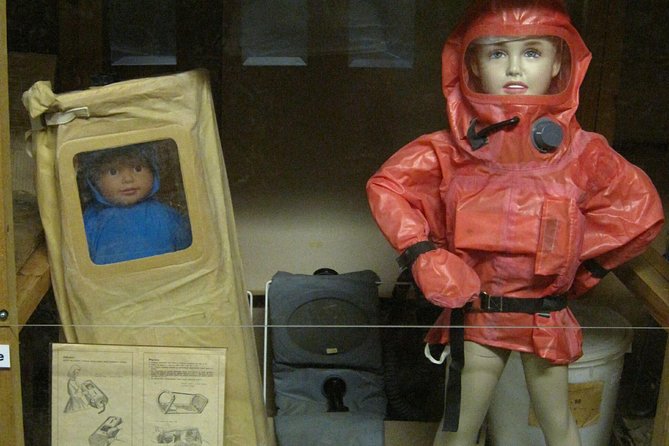
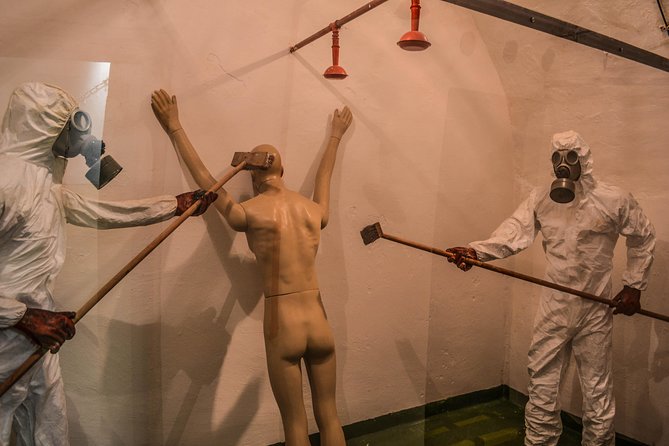
Inside, you may see mannequins, Cold War objects, and displays connected with communist-era life. The setting is stark and practical rather than polished. Expect stairs, ramps, and tight underground areas. Photos are allowed, but video recording requires special permission.
The bunker is not a large, modern museum with extensive interactive displays. That matters when deciding if it is right for you. The appeal comes from the physical space, the atmosphere, and the chance to stand inside a structure designed for a frightening possibility.
Some people will find the display collection a little uneven, especially if they want a detailed museum treatment of Czech political history. You may also wish for more explanation of individual objects. A strong guide can bridge that gap by explaining what the bunker was for and how Cold War fears shaped public thinking.
The shelter also puts the era’s contradictions in view. Governments prepared for nuclear war while ordinary people were told to trust official systems. Survival instructions, emergency equipment, and underground rooms show how seriously the threat was treated, even though the protection such places offered was limited.
The hour underground can feel sobering. This is not a light attraction added to a city walk. The subject includes political repression, invasion, exile, and the possibility of mass destruction.
How much the guide affects your experience
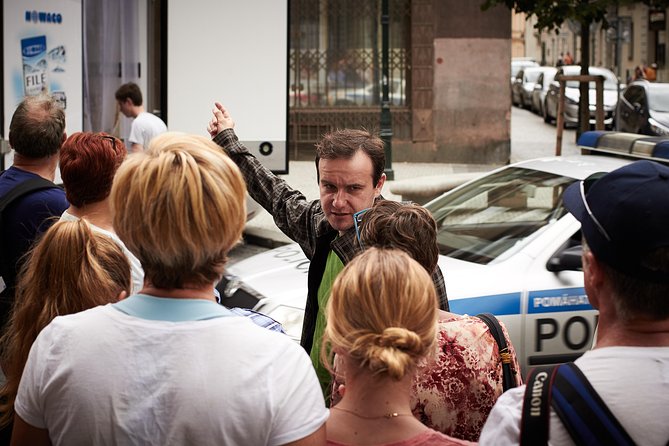
The guide is the most important variable on this tour. Guides named in the experience include Stan, Pavel, Lada, Karl, Tom, and Ladislav, and the strongest descriptions of the tour center on their humor, passion, and personal memories.
Stan is praised for combining historical facts with stories from his own life and comments on current events. Pavel is described as friendly and entertaining, while Lada is known for giving the tour a personal and authentic feel. Other guides, including Karl and Ladislav, are described as warm and energetic.
Those personal accounts can make the tour much more meaningful. Hearing about life under communism from someone who lived through it gives the subject a human scale that a textbook cannot provide.
Still, you should be prepared for a guide-led experience rather than a fixed audio presentation. Some guides may spend too long on side topics or repeat points. Others may present communism in a strongly critical way without giving enough detail about policy, social life, or the way ordinary people adapted.
That is not a reason to dismiss the tour, but it is a fair limitation. If you want a highly academic treatment with carefully balanced political analysis, you may find the presentation uneven. If you want a direct, personal account tied to real places, the format works better.
Is $45.16 a fair price?
At $45.16 per person, the price is fair if you value the guide and the bunker visit. Your fee includes the English live guide, entry to the nuclear bunker museum, transport to and from the bunker, and a photo booklet with a bunker survival guide.
The tour also covers several sites in one outing, which saves you the work of finding them and understanding their connections. You are paying for interpretation as much as admission.
The value drops if you mainly want to visit a bunker. The underground museum itself occupies about an hour, and the rest of the time is divided among short street stops, explanations, and transport. You can also find other bunkers in the Czech Republic, so this is not the only possible Cold War site.
I would call the tour a good buy for history-minded visitors who want a guided introduction to Prague’s communist era. It is less attractive for anyone seeking a quick attraction, a large museum collection, or a tour with no transport time.
Who should book this experience?
I would recommend it to you if you enjoy recent history, political change, personal stories, and places that do not appear on the standard Prague route. It also suits visitors who want help understanding the Czech perspective on 1968, 1989, and life under communist rule.
Families with school-age children may find the subject useful, but the experience is not intended for the smallest children. You must speak the language selected for the tour, and translation during the tour is not permitted.
You should skip it if you have serious mobility limits, difficulty with stairs or ramps, claustrophobia, serious heart problems, or a high-risk pregnancy. The operator also does not allow people under the influence of alcohol or drugs, pets, smoking, disruptive behavior, bachelor parties, or costumed groups.
The tour has a maximum of 26 people, so book early if you want a specific departure. Online tickets can be booked up to 30 minutes before the start, but once the group leaves, joining is not guaranteed.
Final call: book it for context, not just the bunker
Book this tour if you want a grounded introduction to Prague’s communist past and appreciate guides who connect public events with personal experience. The best version of the experience includes sharp stories from guides such as Stan, Pavel, or Lada, followed by the striking descent into the bunker.
Do not book it expecting a large museum, a fully academic lecture, or two hours of uninterrupted sightseeing. The tram ride takes time, the street stops are brief, and the bunker displays may feel basic.
For the right audience, the combination works well. You see where political change happened, hear how it affected ordinary people, and then enter a shelter built for the worst fears of the Cold War. That makes this a worthwhile Prague activity for curious history fans who are comfortable with walking, stairs, and a serious subject.
FAQ
How long does the Prague Communism History and Nuclear Bunker Tour last?
The tour lasts approximately 2 hours and 20 minutes. The timing can vary by 10 to 15 minutes depending on group size.
Where does the tour begin?
It begins inside the passage at Malé Náměstí 459/11, about 20 meters to the right of Hotel U Prince in Prague’s Old Town.
Where does the tour end?
The tour ends at Malé Náměstí 459/11, the same central location where it begins.
Is transport included?
Yes. Transport to and from the nuclear bunker is included in the tour price.
Is the tour conducted in English?
An English live guide is included when English is the selected tour language. You must speak the selected language, and translating for other languages during the tour is not permitted.
How much time is spent inside the bunker?
The visit to the Prague Nuclear Bunker Communism and Cold War Museum lasts about one hour.
Is the tour suitable for people with mobility issues?
No. The tour is not suitable for people with walking disabilities or mobility issues. It includes stairs and ramps, particularly in the bunker.
Can I cancel for a full refund?
Yes. You can cancel at least 24 hours before the local start time for a full refund. Cancellations or changes made within 24 hours are not refunded or accepted.
Newest history tours we have reviewed in the world
- Bilbao Historical Tour in small group★ 4.7 · 52 reviews
- Bologna: Street Food Tour in the Historic Center★ 4.8 · 125 reviews
- CEBU: Cebu City Heritage and Uphill Guided Tour★ 4.2 · 31 reviews
- Bishkek : City Tour (History, Architects, Statues & Culture)★ 4.9 · 54 reviews
- Blenheim: Omaka Aviation Heritage Centre Admission Ticket★ 4.9 · 31 reviews
- Berlin: Nazi History Walking Tour★ 4.8 · 33 reviews
- Best of Baku: 4-Hour City Tour Historic and Modern Landmarks★ 4.7 · 63 reviews
- Belfast: Best of Belfast History, Culture & Art Walking Tour★ 4.9 · 158 reviews
Cold War & Communism Tours, compared.
Communism History and Nuclear Bunker Guided Tour
Read our review →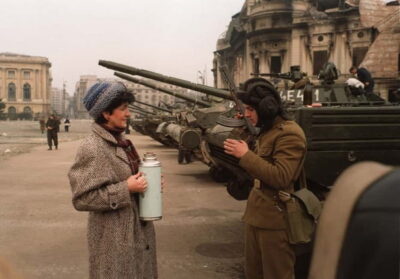
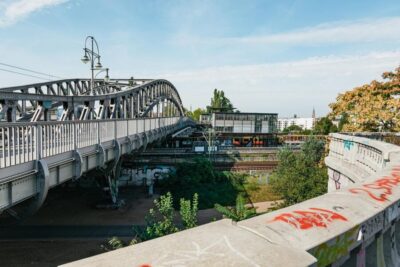
Cold War & Berlin Wall History Guided Bike Tour
Read our review →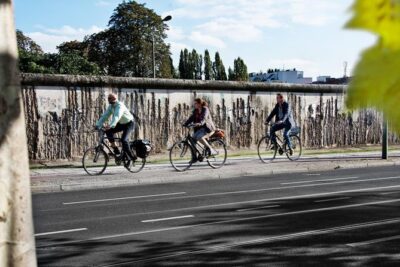
Guided Bike tour of the Berlin Wall and Third Reich
Read our review →
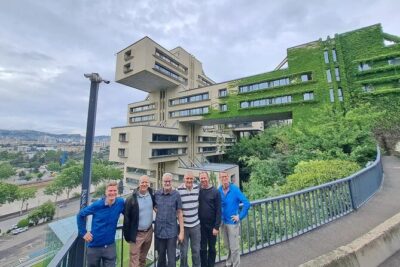
Tbilisi old town & soviet heritage – Private driver-guided Tour
Read our review →
Historical Sights & Berlin Wall Tour with a Berliner
Read our review →Browse the lists this tour appears in