
Review · BERLIN HISTORY TOURS
Berlin: Historical Sights & Berlin Wall Tour with a Berliner
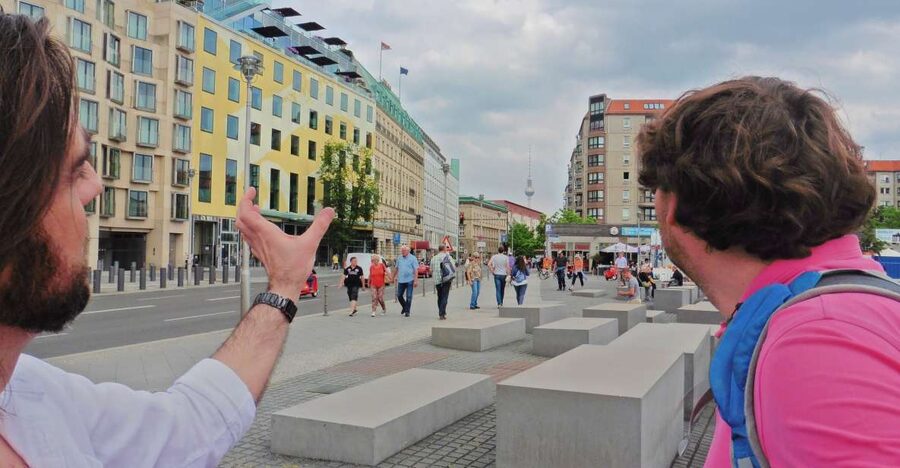
Berlin’s past comes into sharp focus on this two-hour walk from Brandenburg Gate to Checkpoint Charlie. You’ll hear why the gate was cut off from West Berlin for 28 years, follow traces of the Wall, and learn how a tense 1961 confrontation nearly pushed the Cold War toward war.
I like the small group of no more than 10 people, which gives you a better chance to ask questions. I also like the local angle: guides Carlo and Carlos have shared personal memories of growing up in Berlin, adding human detail to the political story. The main consideration is the language: the tour is listed with a German-speaking guide, so confirm that it suits you before booking.
Key points at a glance
- Brandenburg Gate sets the scene: Learn why this famous monument became a symbol of division and reunification.
- The Wall comes with escape stories: Your guide explains how people tried to leave East Berlin and what the border meant in daily life.
- Checkpoint Charlie closes the story: Hear about the 1961 tank confrontation between American and Soviet forces.
- Personal Berlin memories add depth: Carlo and Carlos have used their own experiences of growing up in Berlin to explain the city’s divided years.
- A compact route covers major sights: In two hours, you see the Brandenburg Gate, Reichstag, Hotel Adlon, Berlin Wall remains, and Checkpoint Charlie.
- The price is reasonable for a focused walk: At $43 per person, you are paying for a guide-led history lesson rather than museum admission or transport.
Why this two-hour route works
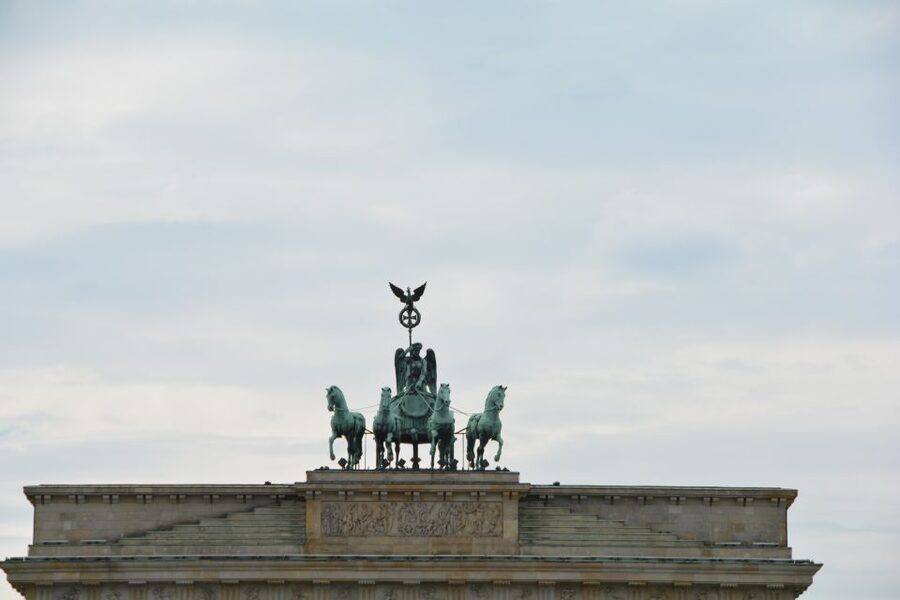
This tour is built around one clear story: how Berlin was divided, controlled, and finally reunited. Instead of sending you across the city by bus or stopping for long indoor visits, it links several central sights on foot.
That focus matters. Berlin’s Cold War story can feel scattered when you visit monuments one at a time. Here, the route gives each stop a place in the larger picture. Brandenburg Gate introduces the city’s political symbolism. The Wall section brings the division down to street level. Checkpoint Charlie finishes with one of the most dangerous moments of the Cold War.
The pace should suit you if you want a strong introduction without giving up half a day. Two hours is enough to cover the major points, but it also means the guide must keep moving. You should not expect long museum visits, extensive time inside the Reichstag, or a detailed look at every remaining Wall site.
The group limit of 10 is a real advantage. You can usually hear the guide more easily than in a large walking group, and personal questions are more practical. This is especially useful in Berlin, where a simple question about a street corner can lead to a useful explanation of how the border worked.
More Cold War and Communism Tours in Berlin:
- Berlin: Cold War & Berlin Wall History Guided Bike Tour
★ 4.8 · 422 reviews - Berlin: Guided Bike tour of the Berlin Wall and Third Reich
★ 5.0 · 160 reviews - Berlin Wall History Small Group Cycling Tour
★ 4.9 · 152 reviews
Starting at Brandenburg Gate
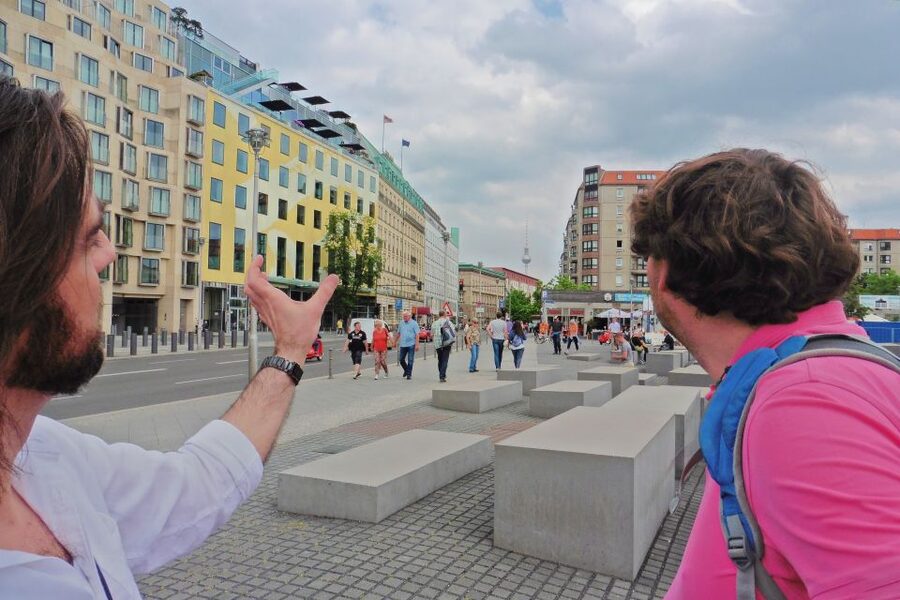
Meet at the exit of S+U Brandenburger Tor station, exit B, in the direction of Pariser Platz and Straße des 17. Juni. Look for the guide carrying the Get Your Guide, You in Berlin flag.
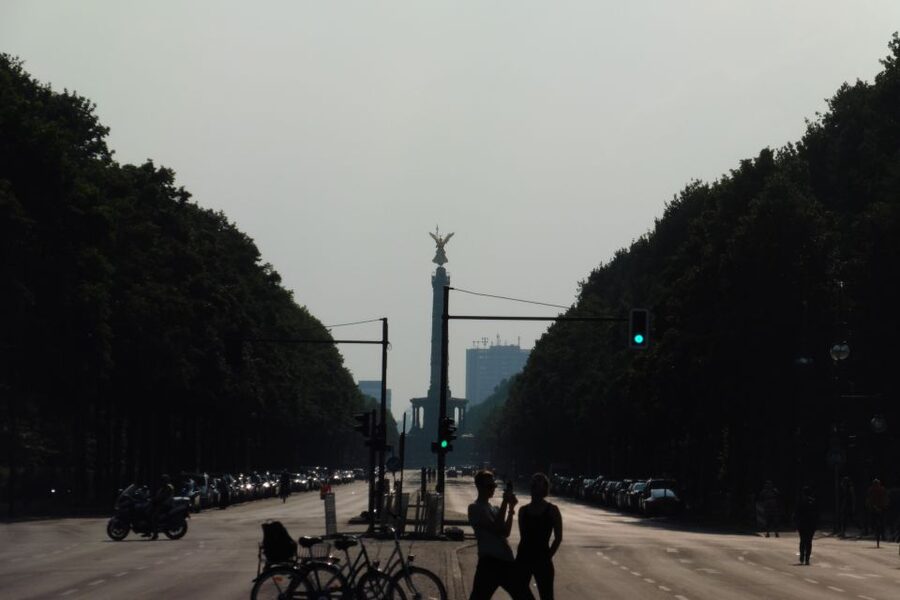
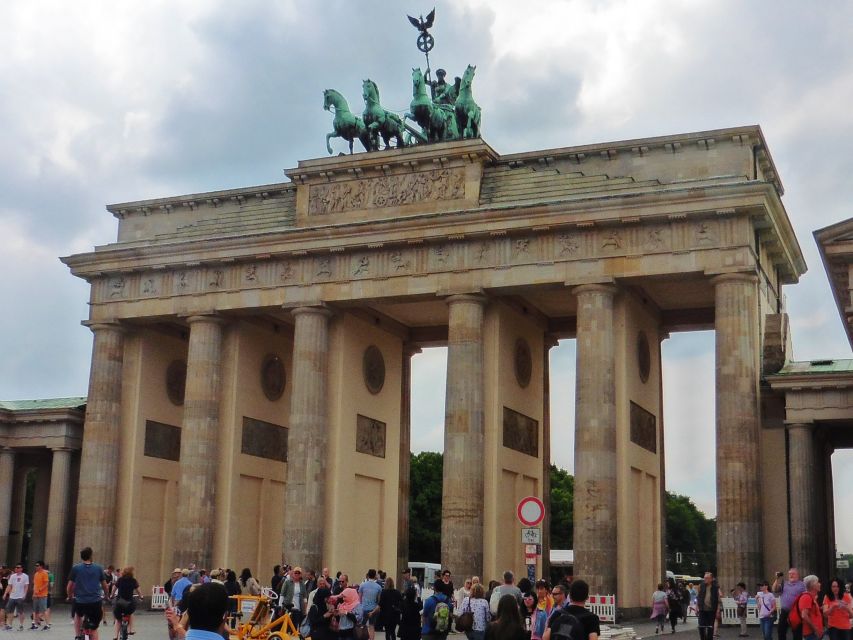
The tour begins at Brandenburg Gate, one of Berlin’s most familiar sights. It is easy to treat the gate as a grand photo stop, but its role in the city’s modern story is far more interesting. During the Cold War, it sat beside the border and became inaccessible to ordinary people on both sides. The gate was isolated for 28 years.
Your guide explains how the monument changed meaning over time. It was once associated with Prussian power, then became a symbol of a divided city, and later gained fresh meaning when Germany reunited. That shift is one of the best reasons to start here. You are not just looking at a handsome landmark. You are seeing a place whose political meaning changed with Berlin itself.
Give yourself enough time to reach the meeting point. The instructions name a specific station exit and direction, so following those details will save you from wandering around Pariser Platz looking for the group. You should also wear shoes and clothing suited to walking outdoors, since the tour runs in all weather and on public holidays.
Walking the former border and Berlin Wall route
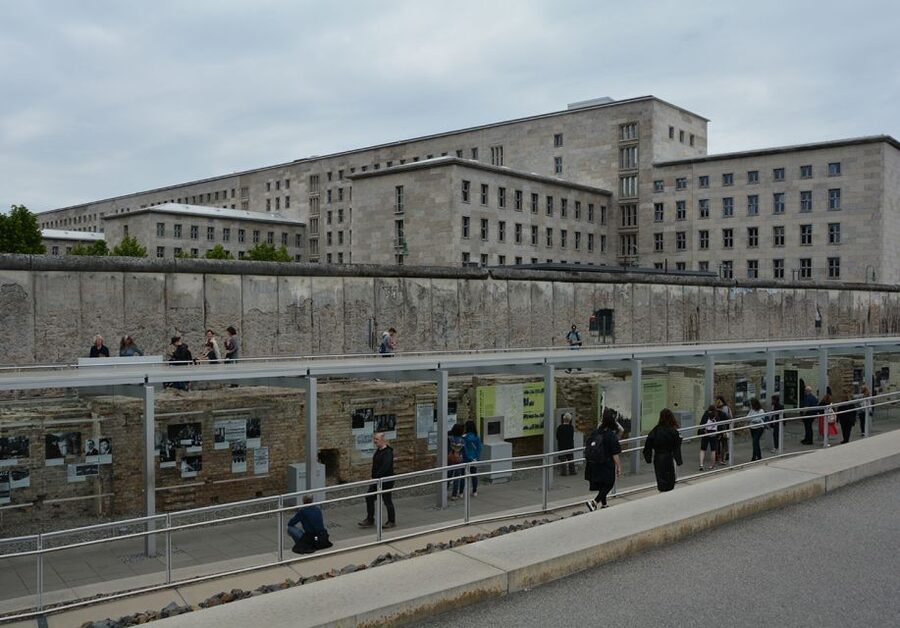
From Brandenburg Gate, the walk follows the former border between East and West Berlin. The Berlin Wall is no longer intact across the city, so this part of the tour is less about seeing one huge continuous barrier and more about understanding how the border once cut through ordinary streets and famous landmarks.
Your guide points out remaining sections and explains what the Wall meant in practice. Berlin was not simply split into two neighborhoods. Movement, work, family life, and access to the rest of the country were all shaped by the border.
The escape stories are likely to be the most gripping part of the walk. You hear about attempts to get out of East Berlin and the risks involved. These stories give the Wall a human scale. Political phrases such as front city and island of freedom can sound abstract in a book, but they become easier to understand when tied to people trying to cross, families separated by the border, and a city surrounded by East German territory.
The exact Wall remains you see may not feel as visually dramatic as a full preserved barrier. That is the main limitation of this section. Berlin’s Wall story is often told through fragments, markings, memorials, and street plans. You are relying on the guide to connect those pieces. On this tour, the guide’s explanation is the point, not simply the view.
Reichstag and the political heart of Berlin
The route includes a walk past the Reichstag, Germany’s national parliament. The tour does not include a visit inside, so you should think of this as a contextual stop rather than a building tour.
The Reichstag helps connect Berlin’s older political story with its divided and reunited years. Seeing it alongside Brandenburg Gate and the former border gives you a sense of how close major symbols of German government were to the Wall.
This stop is also a useful reminder that the tour covers more than Cold War hardware. Berlin’s division was political and military, but it also affected the institutions and symbols of the country. Your guide can place the Reichstag within that wider story while keeping the walk moving.
If you want to tour the parliament interior or see its famous glass dome, you will need a separate visit. The two-hour route does not provide that time or admission.
More History Tours in Berlin:
- Berlin: 3-Hour World Heritage Cruise to Potsdam
★ 4.5 · 1,569 reviews - Berlin: History of the Third Reich Guided Walking Tour
★ 4.7 · 791 reviews - Berlin: Berlin Charité Guided History Tour
★ 4.4 · 660 reviews - Berlin Historical Highlights Walking Tour
★ 4.9 · 657 reviews
Hotel Adlon and the changing city around it
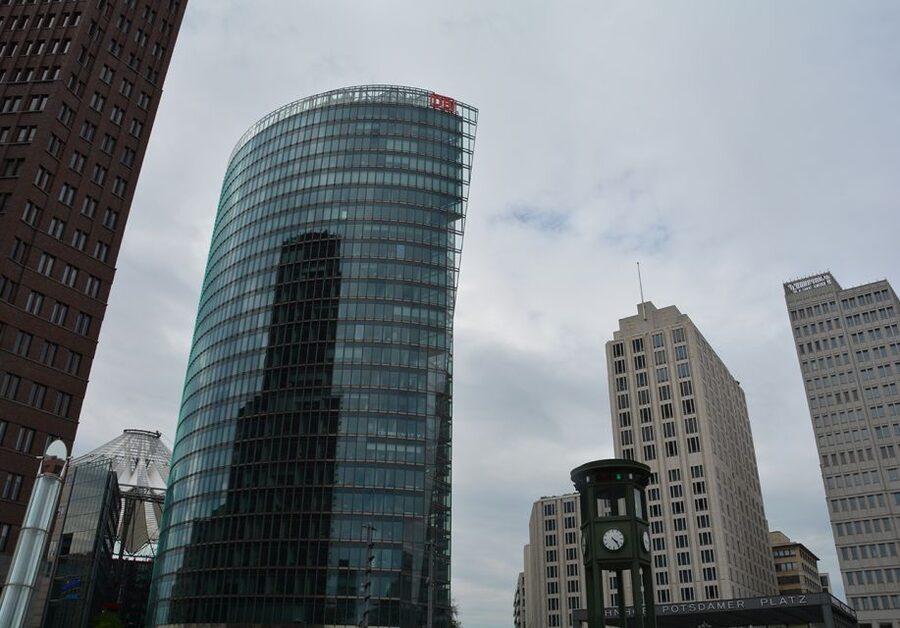
The walk also passes Hotel Adlon Kempinski Berlin, near Brandenburg Gate. The hotel offers a different view of the city from the stark story of walls, checkpoints, and escape attempts.
Its location helps you notice how much Berlin has changed since reunification. The area around Brandenburg Gate is now one of the city’s polished central districts, yet only a short time ago the gate and nearby streets were part of a restricted border zone.
This contrast is useful. Berlin’s past is not confined to one memorial or museum. It sits beside modern hotels, government buildings, shopping streets, and busy public spaces. A guide can show you how the same area carried very different meanings in different periods.
Again, this is a sightseeing stop from outside. The tour is not a hotel visit, and you should not expect time to go indoors.
Checkpoint Charlie and the crisis of 1961
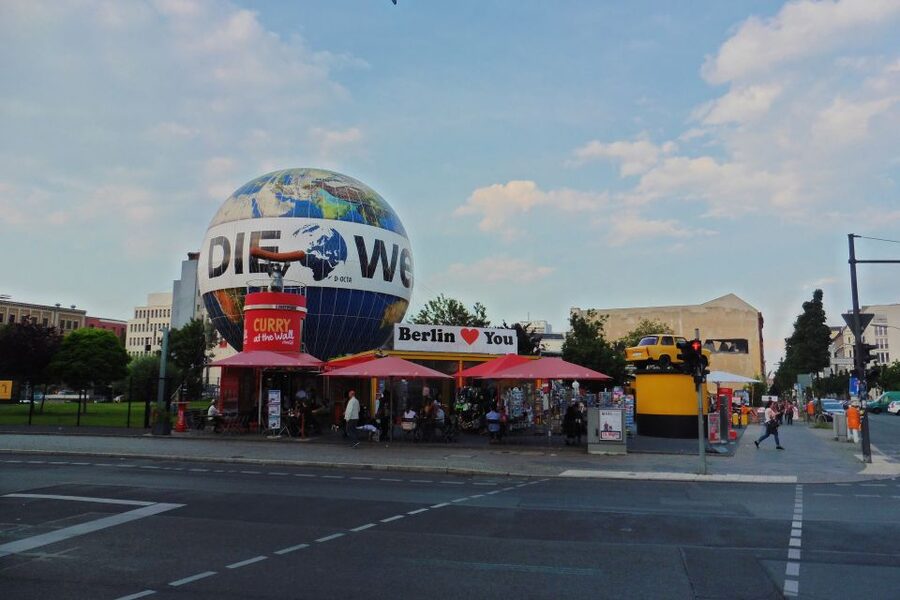
The tour finishes at Checkpoint Charlie, the former Allied crossing between East and West Berlin. It is one of the city’s best-known Cold War locations and one of its most debated sights.
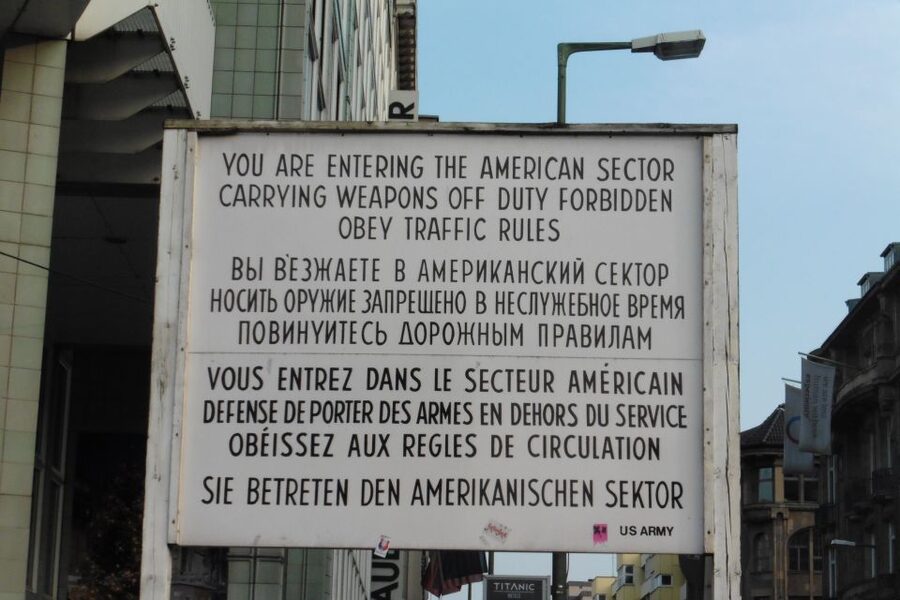
Your guide tells the story of a confrontation here in 1961 that nearly ignited a much larger war. American and Soviet forces faced each other during a tense dispute over access through the divided city. The incident is a sharp example of why Berlin was called the front city. A dispute over one crossing could become a confrontation between nuclear powers.
Checkpoint Charlie is a good place to end because it brings together many of the tour’s themes: military pressure, competing political systems, restricted movement, and the danger of miscalculation. You can take a photo at the famous checkpoint site, then continue exploring from this central location after the tour ends.
There is also a practical warning. Checkpoint Charlie can feel more like a busy tourist stop than a quiet memorial. The reconstructed guard booth and surrounding commercial activity do not tell the whole story. You get more from the site when you understand the 1961 confrontation and the role of the crossing, which is why the guide’s explanation matters more than the photo itself.
The value of a Berliner’s personal memories
The strongest feature of this experience is the local guide perspective. Reviews identify guides Carlo and Carlos, and describe personal stories about growing up in West Berlin and living through the city’s divided era. Those accounts can add a layer that a standard fact-only tour may miss.
A personal memory does not replace historical evidence, and you should still expect the guide to explain the broader timeline. But it can help you picture the emotional texture of the period. A child growing up in West Berlin did not experience the Cold War as a chapter in a textbook. The Wall was part of the view, the border shaped daily life, and Berlin’s position as an isolated Western enclave affected how people understood their own city.
The supplied information identifies German as the tour language. Several comments are written in German and praise the guides’ clear explanations, personal stories, and ability to answer questions. If you need an English tour, check the current language options before paying. Do not assume that the phrase certified multilingual guide guarantees English on this particular departure.
Is $43 a fair price?
At $43 per person, this is a fair price if you want a guided introduction to Berlin’s 20th-century history. You are paying for a small group, a professional city guide, and a carefully connected route through central landmarks.
The value is strongest when you are new to Berlin or when you want help making sense of the Wall’s remains. The tour gives you a framework that can improve later visits to museums and memorials. You will know why Brandenburg Gate mattered, what Checkpoint Charlie represented, and how the Wall shaped the city.
The price is less appealing if you only want photographs. All the main sights are accessible independently, and the tour does not include museum entry, transport, food, or a visit inside the Reichstag. You are paying for interpretation and local context.
The small group improves the calculation. A 10-person limit is more personal than a large city walk, especially at places where street noise and crowds can make listening difficult. If the guide answers questions well, the experience becomes more than a sequence of facts.
Practical details before you book
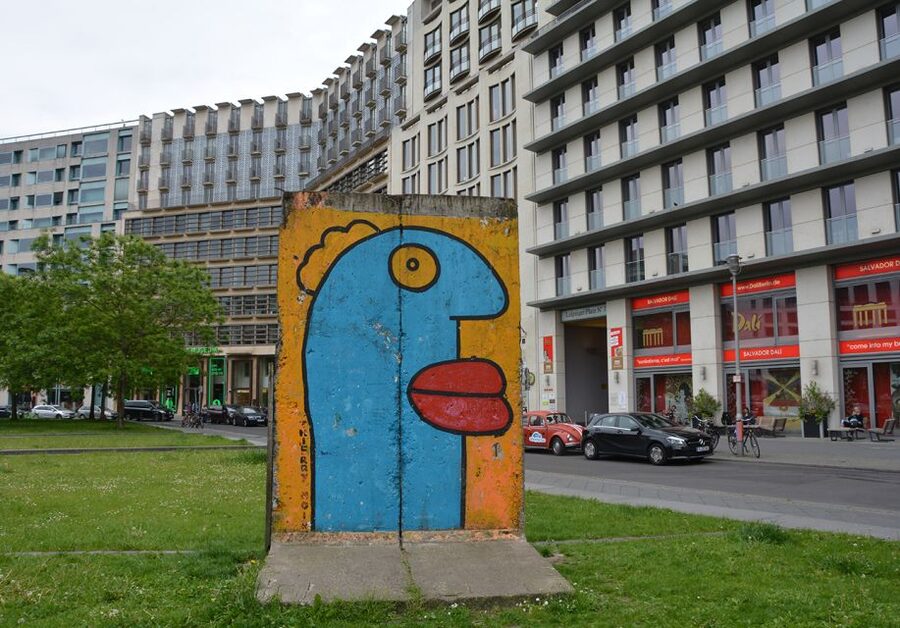
Plan on two hours of outdoor walking. The route includes Brandenburg Gate, the former Berlin Wall line, the Reichstag, Hotel Adlon, and Checkpoint Charlie, ending at Checkpoint Charlie.
The tour runs in all weather and on public holidays, so check the forecast and dress for conditions. Comfortable footwear is essential. Berlin’s central streets are easy to reach, but you will be on your feet for the full experience.
The tour is listed as wheelchair accessible. Since the route is outdoors and moves through central public streets, you may still want to confirm the current route details if you have specific mobility needs.
You can cancel up to 24 hours in advance for a full refund, and the reserve-now, pay-later option lets you keep your plans flexible. Those policies are useful in Berlin, where weather and changing sightseeing plans can affect a walking day.
The tour’s rating is 5 from 62 reviews, with repeated praise for the guides’ explanations, personal experiences, and ability to make the two hours pass quickly. The consistent positive point is not simply the number of sights. It is the way guides such as Carlo and Carlos connect those sights to lived experience.
Who should book this Berlin Wall walk?
I would recommend this tour to first-time visitors who want a clear introduction to Berlin’s divided past. It is also a good fit if you have limited time and want to cover several major sights without spending a full day on a museum program.
History-minded visitors should appreciate the escape stories and the account of the 1961 Checkpoint Charlie confrontation. Families and older children may also find the walking format easier than a long indoor lecture, though the subject matter is serious.
You should choose something else if you need a guaranteed English-language tour, want extensive time at each site, or prefer a quiet memorial experience without commercial activity around Checkpoint Charlie. You should also avoid squeezing this into an already rushed day, since the value comes from listening, not racing between photo stops.
Should you book it?
Book this tour if you want Berlin’s major Cold War sights explained by a local guide, especially one who can add personal memories to the formal history. The small group and focused route make $43 reasonable for a two-hour orientation.
Before booking, confirm the language and remember that this is an outdoor walking tour in every kind of weather. If those points work for you, it is a practical way to understand why Brandenburg Gate, the Berlin Wall, and Checkpoint Charlie still matter.
FAQ
Where does the tour start?
Meet at the exit of S+U Brandenburger Tor station, exit B, in the direction of Pariser Platz and Straße des 17. Juni. Look for the guide with the Get Your Guide, You in Berlin flag.
Where does the tour finish?
The tour finishes at Checkpoint Charlie.
How long does the tour last?
The walking tour lasts two hours.
What language is the tour in?
The activity information lists German as the live tour language. Confirm the available language before booking if you need another language.
Is the tour wheelchair accessible?
Yes, the activity is listed as wheelchair accessible.
What happens if it rains?
The tour runs in all weather and on public holidays. Wear suitable clothing and comfortable shoes for outdoor walking.
Newest history tours we have reviewed in Berlin
- Berlin: Nazi History Walking Tour★ 4.8 · 33 reviews
- Berlin: History and Sightseeing with Kids (Free for Kids)★ 4.9 · 19 reviews
- Berlin: Urbex Abandoned Places & History Tour★ 4.8 · 18 reviews
- Berlin (E)Bike Tour Historical Highlights in Small groups★ 4.5 · 24 reviews
- East Berlin Food & History Tour with Eating Europe★ 4.8 · 20 reviews
- Berlin: Historic Center Walking Tour with a Real Berliner★ 5.0 · 134 reviews
- Berlin: Guided Craft Beer & Cultural Tour With Snacks★ 5.0 · 68 reviews
- Berlin Beers & Battlefields Tour: War History & German Beer★ 4.9 · 29 reviews
Cold War & Communism Tours, compared.
Communism History and Nuclear Bunker Guided Tour
Read our review →
Prague Communism History and Nuclear Bunker Tour
Read our review →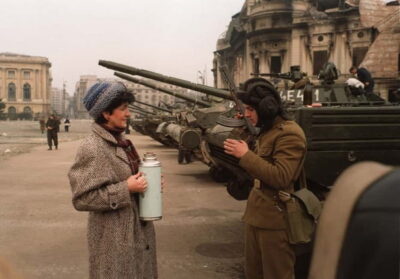
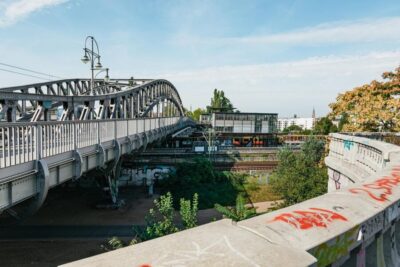
Cold War & Berlin Wall History Guided Bike Tour
Read our review →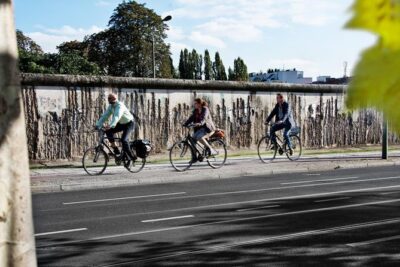
Guided Bike tour of the Berlin Wall and Third Reich
Read our review →
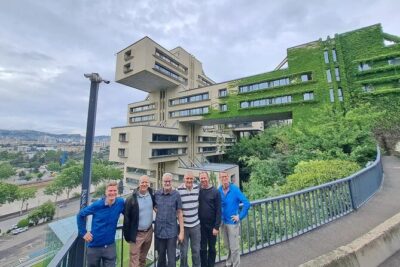
Tbilisi old town & soviet heritage – Private driver-guided Tour
Read our review →Browse the lists this tour appears in