
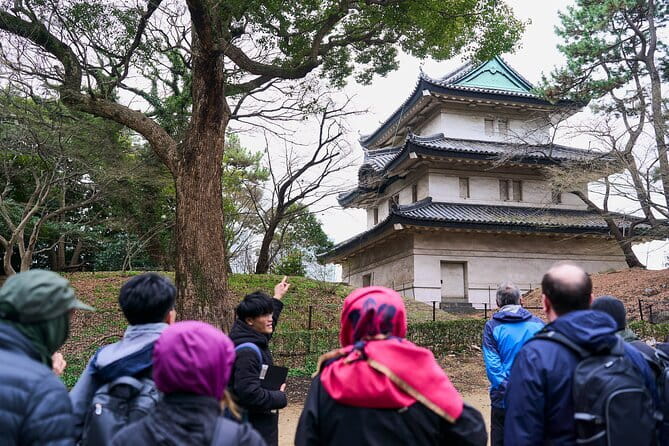
Review · TOKYO HISTORY TOURS
Tokyo Castle & Imperial PalaceーShogun Walking Tour
Tokyo’s Imperial Palace grounds sit in the middle of modern Tokyo, but the old castle walls still tell a sharp story. This two-hour walk follows the remains of Edo Castle, once Japan’s largest fortress, and explains how gates, stone walls, guardhouses, and watchtowers protected the shogun.
I like the clear route through the castle grounds and the way guides such as K, Keiko, Shin, Ai, and Mako bring old maps and pictures to life. I also like the price, about $23.88, which is fair for a live English guide and a focused introduction to samurai and imperial history. The main drawback is that you do not enter the Emperor’s residence, and the tour can feel exposed and tiring in hot weather.
Key points to know before you book
- Edo Castle comes alive through its defenses: Gates, guardhouses, thick stone walls, and watchtowers show how the shogun’s headquarters stayed protected.
- The tour links two eras: You learn about the samurai government of the Edo period and Japan’s continuing imperial system.
- Ninomaru Garden provides a calm finish: Koi ponds, seasonal plants, and carefully arranged scenery offer a welcome change from military history.
- Guides add the real value: K, Keiko, Shin, Ai, Tomo, and others are praised for clear English, humor, pictures, and answers to questions.
- Plan for sun and stairs: Bring water, wear comfortable shoes, and expect steep slopes, stairs, and little shade in places.
- Check the group size carefully: The tour is described as a small group of up to 10, although the booking information also gives a maximum of 60 participants.
Why Edo Castle is the heart of this walk

You may know the Imperial Palace as the home of Japan’s Emperor. That is only part of the story. The grounds also contain the remains of Edo Castle, the seat of the Tokugawa shoguns for more than two centuries.
That change of power is the main thread of the walk. The shogun ruled Japan in practice, while the Emperor remained the symbolic head of the country. Your guide connects these two systems without turning the tour into a lecture, using the castle remains as the classroom.
The word castle can be misleading here. You will not walk through intact palace rooms or climb a preserved medieval fortress. Much of Edo Castle disappeared through fire, earthquakes, war, and later rebuilding. What remains is still impressive: huge stone foundations, formal gates, guardhouses, moats, gardens, and towers.
This is why a guide helps. Without one, you can see beautiful walls and lawns but miss the purpose behind them. A guardhouse becomes more interesting when you understand who stood there, whom they protected, and how movement through the castle was controlled.
More Castle and Palace History Tours in Japan
- Tokyo: Imperial Palace and Shogun Historical Walking Tour
★ 5.0 · 2,251 reviews - Tokyo Castle & Imperial PalaceーShogun Walking Tour
★ 4.7 · 1,068 reviews - Tokyo: Imperial Palace Japanese History Walking Tour
★ 4.9 · 987 reviews
Meeting near Wadakura Fountain Park
The walk begins at Starbucks Coffee near Wadakura Fountain Park in Kōkyogaien, close to Tokyo Station and the Imperial Palace area. The location is near public transportation, and the open park makes it a practical place to gather.
You should arrive with your phone ticket ready. A security check is required to enter the Imperial Palace grounds, so leave knives and alcohol behind. The Emperor’s residence is not open to the public, and this experience is a walk around the accessible historic grounds rather than an interior palace visit.
The tour is conducted in English only. That matters if you are choosing between several palace experiences. The guides are generally praised for clear explanations and friendly delivery, with K receiving particular praise for answering questions and making difficult history easy to follow. Keiko is noted for using laminated images of castle layouts, guard towers, and the royal family. Those simple visual aids can be very useful when the original buildings are no longer standing.
The advertised group size is up to 10 people, which should make it easier to hear the guide and ask questions. The additional booking information gives a maximum of 60 participants, so I would confirm the expected group size before booking if a small group is important to you.
Sakurada Tatsumi Yagura and the castle’s first warning
The first stop is Sakurada Tatsumi Yagura, a surviving turret from the Edo period. It gives you an early look at the practical side of the castle: this was not just a royal residence, but a fortified headquarters designed to control access and protect the shogun.
Your guide explains the security systems that remain visible around the Imperial Palace. The turret is a good opening stop because it puts the scale of the defenses in front of you before the tour moves into smaller guard posts and gates.
You will spend about 20 minutes here, the longest stop on the route. That gives the guide time to explain the castle’s layout and introduce the larger story of Edo, samurai authority, and Japan’s imperial tradition.
Otemon Gate and the logic of layered defense
At Kokyo Otemon Gate, you see massive gates and stone walls from the original castle. The important point is not just their size. It is the way the entrance was arranged to slow, confuse, and control anyone trying to get farther inside.
This is where the tour’s title makes sense. The guide explains why Edo Castle was considered almost impossible to breach. Multiple gates, tight approaches, heavy walls, moats, and guarded passages created layers of protection rather than relying on one barrier.
You spend about 10 minutes here. That is enough for an explanation and photographs, although the stop can feel brief if you are fascinated by Japanese castle design. The walk is not meant to examine every stone in detail. It gives you the larger plan, then moves on to the people who staffed it.
More History Walking Tours in Japan
- Tokyo: Shinjuku Historical Walking Tour & Secret Backstreets
★ 5.0 · 530 reviews - Imperial Palace East Garden and Edo Castle Walking Tour in Tokyo
★ 5.0 · 510 reviews - Asakusa: A Big-picture History Walk to Know Japan
★ 4.6 · 77 reviews - Asakusa: 3.5-hour Big-picture History Walk
★ 4.7 · 39 reviews
Three guardhouses, three levels of samurai life
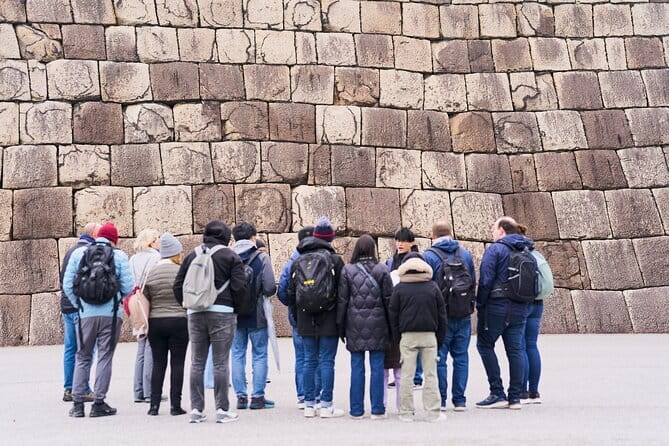
The Constable Guardhouse, Hyakunin Bansho Guardhouse, and Obansho Guardhouse form the historical core of the walk. Each one helps explain the ranking and duties of the samurai who served inside Edo Castle.
The Constable Guardhouse was used by lower-ranking samurai. Your guide discusses who these men were and why this modest building mattered. This is a useful correction to the usual image of every samurai as a powerful warrior or noble lord. Castle security depended on many ranks of workers, each with a defined task.
Hyakunin Bansho was a larger guardhouse where many samurai were stationed. The name points to its association with a large guard force, and the stop focuses on the way these men helped control movement through the castle.
At Obansho, near the inner gate, the discussion turns to higher-ranking samurai and their duties. The progression from one guardhouse to the next helps you understand that rank was built into the castle itself. Where a samurai stood, what gate he watched, and whom he served all reflected his position.
Each stop takes about 10 minutes. That pace works well for a two-hour introduction, but you should expect short explanations rather than long periods for independent study. The value comes from hearing the three locations as one connected lesson.
Fujimi-yagura and the lost main tower
Fujimi-yagura is an old watchtower overlooking the grounds. The guide explains its role and why it was important in the castle’s defensive system. It also gives you another chance to see how much of the original complex has survived above ground.
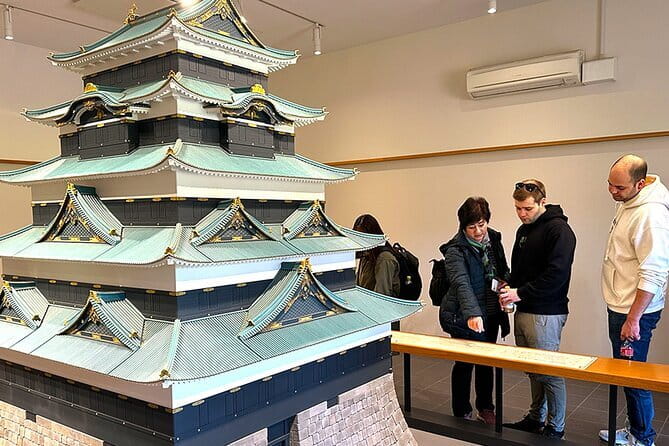
The next stop, at the Kokyo Sannomaru Shozokan, offers a scale model of the former Edo Castle. This may be one of the most useful moments for visual learners. Once you have seen walls, gates, and separate guardhouses, the model helps you picture how they fit together.
There is also a souvenir shop with palace-related goods. This is not a major shopping stop, and the visit is short, about 10 minutes, but the model gives context that the ruins alone cannot provide.
At the Edo Castle Ruin in the East Gardens, you stand on the former site of the castle’s main tower. The guide explains why the tower no longer exists and what remains today. A stone foundation can seem abstract until you understand that it once supported the central tower of one of Japan’s most important castles.
This is a good place to keep expectations realistic. You will not see a towering original keep. You will see the footprint of what was lost, with the guide filling in the missing structure through history and images.
Ninomaru Garden brings a quieter mood
After the gates, guardhouses, and military planning, Ninomaru Garden changes the tone. It is a traditional Japanese garden with seasonal plants and a pond filled with koi.
I like this part because it shows another side of the former castle grounds. Edo Castle was a place of discipline and politics, but it also had carefully designed gardens for beauty and calm. The pond and plantings offer a welcome pause after the more technical explanations of defense and rank.
You spend about 15 minutes here. It is enough to enjoy the garden and take photographs, but not enough for a long, unhurried garden visit. If you care more about Japanese gardens than samurai history, you may want extra time in the Imperial Palace East Gardens after the tour.
The final walk leads toward the ginkgo-lined avenue stretching before Tokyo Station, and the activity returns to the meeting point. The route gives you a useful sense of how the palace grounds sit beside one of Tokyo’s busiest central districts.
What the guides add to the experience

The guide makes the difference here. The locations are free to enter, so you are paying for explanation, structure, and the chance to ask questions.
K is repeatedly praised for clear English, humor, passion, and detailed answers about Japanese history, the royal family, and the city. Keiko is noted for bringing laminated images that make old layouts and towers easier to picture. Shin is praised for his command of the Imperial Palace and Edo-period history, while Ai, Tomo, Yuuki, Anju, Nana, Yuta, Mayuko, and others are described as friendly and engaging.
Those details matter because the route contains many similar-looking walls and buildings. A good guide keeps the walk from becoming a string of names. The best explanations show how the castle worked and why a particular guardhouse occupied its exact position.
The experience is not dependent on one specific guide, but the quality of your tour will naturally depend on who leads it and how comfortable you are with English. One dissatisfied participant found the guide’s English difficult to follow and left early. That appears to be an exception within a very high overall rating, but it is still a fair reason to choose carefully if language clarity is essential.
Is $23.88 a fair price?
At about $23.88 per person, the tour offers solid value if you want historical context. The grounds themselves do not require an admission charge at these stops, so you are not paying for expensive entry tickets. You are paying for a planned route and two hours of live interpretation.
I would especially consider it good value early in a Tokyo visit. The tour gives you a basic timeline of the shogun, samurai, Edo Castle, Emperor, and modern Imperial Palace. That background can make later visits to temples, gardens, museums, and castle towns easier to understand.
It is less valuable if you prefer exploring independently, reading signs, and moving at your own speed. You can visit the gardens without a guide. Also, because the tour does not enter the Emperor’s residence or preserved palace interiors, you should not book it expecting a grand indoor palace tour.
The strong rating, 4.9 from 725 reviews, and 99 percent recommendation indicate consistently good satisfaction. Still, I would judge the value by your interest in history. If you want photos and a quiet garden stroll, a self-guided visit may be enough. If you want the castle defenses and shogun era explained clearly, the fee is modest.
Weather, walking, and practical comfort
This is a walking tour, not a gentle sightseeing loop. You will cover the grounds for roughly two hours and may encounter steep slopes and stairs. Comfortable footwear is important.
Much of the route is exposed to the sun. On hot days, bring water and wear a hat or use an umbrella. One guide handed out sweets and menthol wipes during a very hot tour, but you should not rely on that kind of extra care. Rain is also possible, and one guide continued explaining the grounds in wet weather, so a light rain layer is sensible.
The route suits most people who can walk for two hours, but anyone with trouble on slopes or stairs should take the physical demands seriously. There are no stated health restrictions, yet the practical requirement is simple: you need to keep moving outdoors.
The tour ends back at the meeting point. Free cancellation is available if you cancel at least 24 hours before the start time. Changes or cancellations inside that window are not accepted for a refund, and the cut-off follows Tokyo local time.
Who should book this Imperial Palace walk?
I would recommend it to first-time visitors who want a useful introduction to Tokyo’s political and imperial past. Families can benefit from the short stops and visual aids, especially when a guide such as Nana patiently answers questions or Keiko uses pictures to explain vanished buildings.
It also suits anyone who has looked at Japanese castles and wondered how samurai government actually worked. The route gives you concrete answers through walls, ranks, gates, and watch posts.
I would be more cautious if you want a slow garden visit, an interior palace tour, or a fully private experience. The tour is in English only, includes outdoor walking, and may have a larger group than the small-group description suggests.
Should you book the Shogun Walking Tour?
Book it if you want the Imperial Palace grounds to make sense rather than simply look pretty. The two-hour route covers the strongest remaining pieces of Edo Castle, and the guides add the stories that signs and free maps cannot provide.
Skip it if you are satisfied with a self-guided garden visit or need to enter the Emperor’s residence. For most first-time Tokyo visitors, though, the modest price, central location, focused route, and strong guide feedback make this a sensible history lesson with a pleasant garden finish.
FAQ
Is the tour conducted in English?
Yes. The tour is conducted in English only, and Japanese language support is not available.
How long does the tour last?
The tour lasts approximately two hours.
Does the tour enter the Emperor’s residence?
No. The Emperor’s residence is not open to the public. The tour visits outdoor areas of the Imperial Palace grounds and former Edo Castle.
What should I bring or avoid bringing?
You should bring comfortable footwear, water, and sun protection because the walk includes slopes, stairs, and exposed areas. Do not bring knives or alcohol because a security check is required.
Where does the tour start and finish?
It starts at Starbucks Coffee near Wadakura Fountain Park at 3-1 Kōkyogaien, Chiyoda City, Tokyo. The activity ends back at the meeting point.
Can I cancel for a full refund?
Yes, if you cancel at least 24 hours before the experience begins. Cancellations or changes made less than 24 hours before the start time are not refunded.
More History Walking Tours in Tokyo
- History and Hauntings of Salem Guided Walking Tour
★ 5.0 · 14,564 reviews - Lisbon: History, Stories and Lifestyle Walking Tour
★ 4.8 · 10,902 reviews - Boston: Freedom Trail History Small Group Walking Tour
★ 5.0 · 6,450 reviews - Historic Charleston Guided Sightseeing Walking Tour
★ 5.0 · 6,216 reviews
More Castle and Palace History Tours in Tokyo
- Edinburgh: Edinburgh Castle Guided History Tour with Tickets
★ 4.8 · 9,933 reviews - Madrid Essential: Historic Center, Plaza Mayor & Royal Palace
★ 5.0 · 6,416 reviews - Venice’s Best: Basilica, Doge’s Palace, Gondola & History Gallery
★ 4.5 · 2,478 reviews - Marrakech: Saadian Tombs & Bahia Palace, Medina Guided Tour
★ 4.6 · 1,989 reviews
Newest history tours we have reviewed in Tokyo
- Asakusa: 3.5-hour Big-picture History Walk★ 4.7 · 39 reviews
- Asakusa: A Big-picture History Walk to Know Japan★ 4.6 · 77 reviews
- Tokyo: Nikko World Heritage Private Day Trip Hotel Pick-up★ 4.8 · 145 reviews
- From Tokyo: Nikko World Heritage Sight Full Day Private Tour★ 4.9 · 127 reviews
- From Tokyo: Nikko World Heritage Site Private Full-Day Trip★ 4.9 · 243 reviews
- Tokyo: The Best of Izakaya in Shinjuku Food & Cultural Tour★ 4.9 · 221 reviews
- Tokyo: 3-Hour Bike/E-Bike Tour of the City’s Hidden Gems★ 5.0 · 47 reviews
- Imperial Palace East Garden and Edo Castle Walking Tour in Tokyo★ 5.0 · 510 reviews
Castle & Palace History Tours, compared.

Edinburgh Castle Guided History Tour with Tickets
Read our review →
Madrid Essential: Historic Center, Plaza Mayor & Royal Palace
Read our review →
Venice’s Best: Basilica, Doge’s Palace, Gondola & History Gallery
Read our review →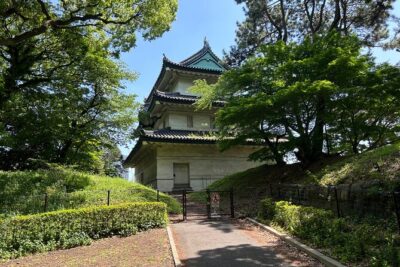
Imperial Palace and Shogun Historical Walking Tour
Read our review →
Saadian Tombs & Bahia Palace, Medina Guided Tour
Read our review →
Charleston historical walking tour with a Professor of History at The Citadel
Read our review →
Abu Dhabi Grand Mosque, Palace, and Heritage Village
Read our review →
Buda Castle District Dark History, Legends and Vampire Night Tour
Read our review →Browse the lists this tour appears in