
Review · LISBON HISTORY TOURS
Lisbon: History, Stories and Lifestyle Walking Tour
Lisbon’s best introduction may be the one that explains how the city’s hills, earthquake, dictatorship, churches, trams, and neighborhood life fit together. This three-hour walking tour connects the major pieces, from Bairro Alto to Alfama, instead of leaving you with a collection of pretty views and disconnected facts.
I like the tram ride and the stop for coffee with a pastel de nata. I also like the range of guides, including Paulo, Ricardo, Beatrice, Anna, João, and Lucie, who bring personal stories and practical tips into the tour. The main consideration is physical: Lisbon is hilly, and this outing includes slopes, narrow lanes, and steps, even though the pace includes regular stops.
Key points at a glance
- Bairro Alto begins the story: Learn how this 16th-century district changed after the 1755 earthquake.
- São Pedro de Alcântara gives you the big picture: Look across Baixa toward the Tagus and the south bank.
- The tram ride adds real Lisbon flavor: The route from the castle area toward Portas do Sol is a useful and memorable part of the tour.
- Alfama brings the city down to street level: Wander narrow lanes tied to fado, local festivals, and Lisbon’s oldest traditions.
- Coffee and pastel de nata are included: It is a small break, but it gives the tour a pleasant local rhythm.
- Guides make the difference: Paulo’s memories of the 1974 revolution and Ricardo’s practical suggestions are examples of the personal angle you may get.
Why this three-hour route works so well
Lisbon can be confusing at first. The city spreads across several hills, and its most interesting districts do not line up in a simple sightseeing route. This tour gives you a useful mental map while showing you the places you are most likely to revisit later.
You begin in Bairro Alto, then move downhill toward Baixa before heading back up toward the castle and Alfama. That pattern means you will walk on uneven streets and tackle some inclines, but the route also builds in pauses for views, churches, explanations, and photographs.
The advertised price is $29 per person. For three hours, a live guide, a tram trip, coffee, and cake, that is good value if you want context rather than just a checklist of sights. You are paying for the guide’s interpretation of Lisbon as much as for the locations themselves.
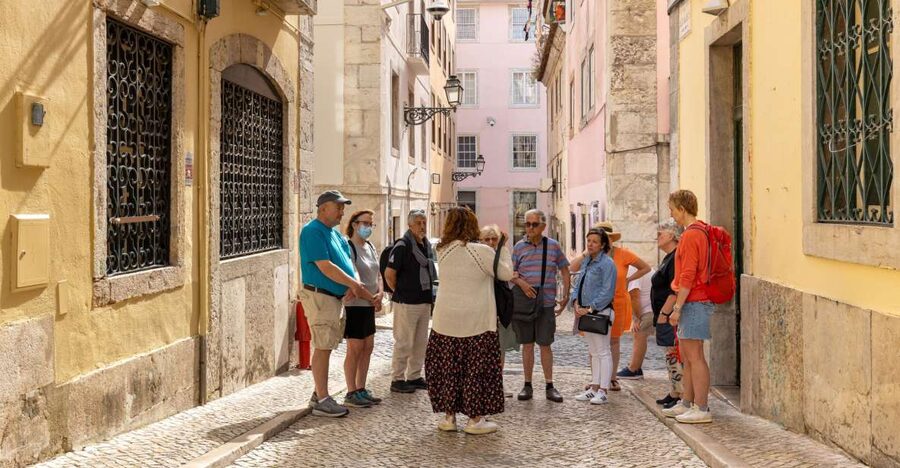
The tour is available as a private or small-group experience, and the guide languages are English, Portuguese, Spanish, Italian, German, and French. A small group should make it easier to hear the guide and ask questions. The large body of feedback attached to the experience gives it a 4.8 rating from 10,902 reviews, with repeated praise for the guides’ humor, local knowledge, and ability to adjust the pace.
More History Walking Tours in Lisbon
- Lisbon: Private Dark History Walking Tour with Drinks
★ 4.8 · 387 reviews - Lisbon Essential Walking Tour: History, Stories and Lifestyle
★ 5.0 · 316 reviews - Historic Walking Tour Through Lisbon’s Oldest Neighborhood
★ 5.0 · 233 reviews
Bairro Alto and the city after the earthquake
Bairro Alto is more than a nightlife district. The tour starts here to explain how Lisbon grew and changed over time, including the area’s connection to the 1755 earthquake.
The district dates from the 16th century. After the earthquake destroyed much of Lisbon, families from Baixa and nearby Bairro districts moved into and helped renew this part of the city. That simple detail helps you see Bairro Alto as a living neighborhood shaped by disaster and recovery, not just a place for evening bars.
This is also a good point to hear the wider story of Lisbon. The best guides connect the physical city to Portugal’s political and social past. Paulo, in particular, has been praised for explaining the city through his own experience of growing up in Lisbon and living through the Carnation Revolution as a child.
You should expect plenty of storytelling here, but not a formal lecture. Guides such as Ana, Beatrice, Ricardo, and João are noted for using humor and answering questions. That matters because Lisbon’s past includes many dates, rulers, religious changes, and architectural styles. A good explanation keeps those details tied to the streets around you.
São Pedro de Alcântara and Lisbon’s postcard view
From the garden of São Pedro de Alcântara, you get one of the tour’s clearest views. Baixa spreads below, with the Tagus and the south bank beyond it.
This is where the city’s hills make sense. You can look across at the slopes, rooftops, churches, and central streets, then understand why Lisbon rewards anyone willing to climb for a viewpoint. Your guide can also help identify the parts of the city you will encounter later.
The stop is not simply for taking photographs. It gives you a visual framework for the rest of the walk. I find that especially useful on a first visit, when Lisbon can feel like a series of steep streets with no obvious center.
The garden is also a welcome pause early in the outing. You will be walking for three hours, so the regular stops help. If you have limited stamina, tell the guide at the start. Several accounts describe the pace as relaxed, with time to stop and accommodate older members of the group, but this remains a hill city tour.
São Roque Church and Lisbon’s Baroque detail
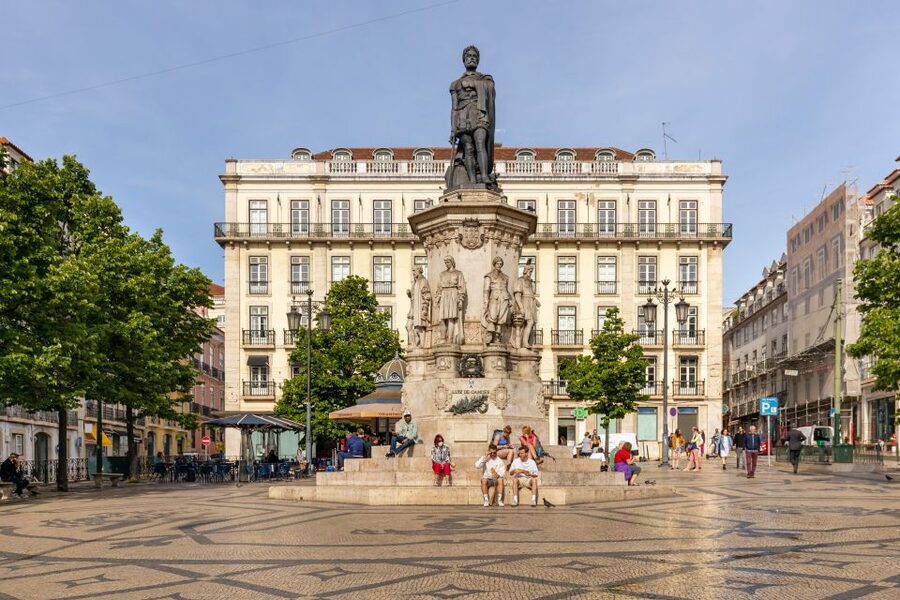
The next major stop is São Roque Church, whose plain exterior hides an ornate interior. The church was built by the Jesuits and contains gilding, tiles, and paintings associated with Mannerist and Baroque styles.
That contrast is worth noticing. From the street, the façade is restrained and austere. Inside, the decoration is far more elaborate. It is a quick lesson in how Lisbon’s churches often reward you for stepping through an unassuming doorway.
The guide helps turn the visit into more than an architectural glance. You will hear about the church’s place in Lisbon and can look closely at the materials and decoration. If churches are not your main interest, the stop still works because it shows how religion, wealth, art, and city life shaped the capital.
Do not expect a long museum visit. This is a walking tour with several stops, not an interior-focused church tour. The benefit is variety: you see a church, a viewpoint, urban streets, ruins, a tram, and a traditional neighborhood in the same morning or afternoon.
More History Walking Tours in Portugal
- Lisbon Fado History Cultural Walking Tour
★ 5.0 · 118 reviews - Porto: Historic City Center Walking Tour
★ 4.7 · 1,172 reviews - Porto: Historical Center Walking Tour
★ 4.8 · 898 reviews - 3-Hour Porto Jewish Heritage Walking Tour with Local Guide
★ 4.5 · 396 reviews
Carmo Convent and the Carnation Revolution
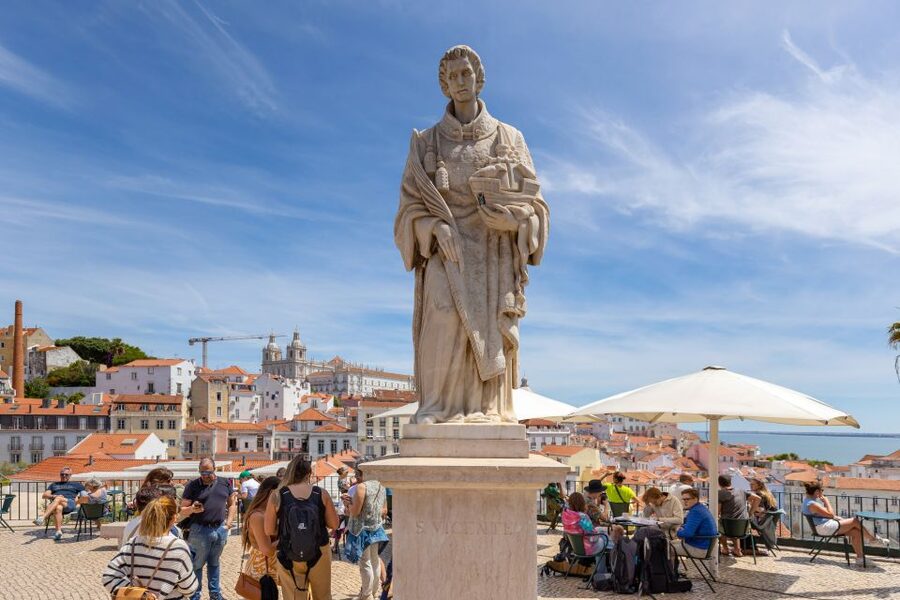
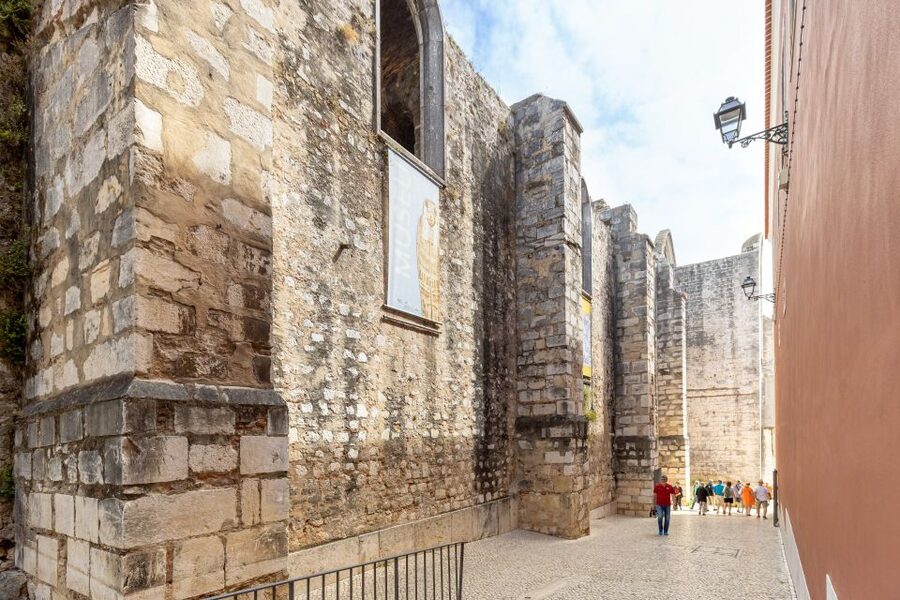
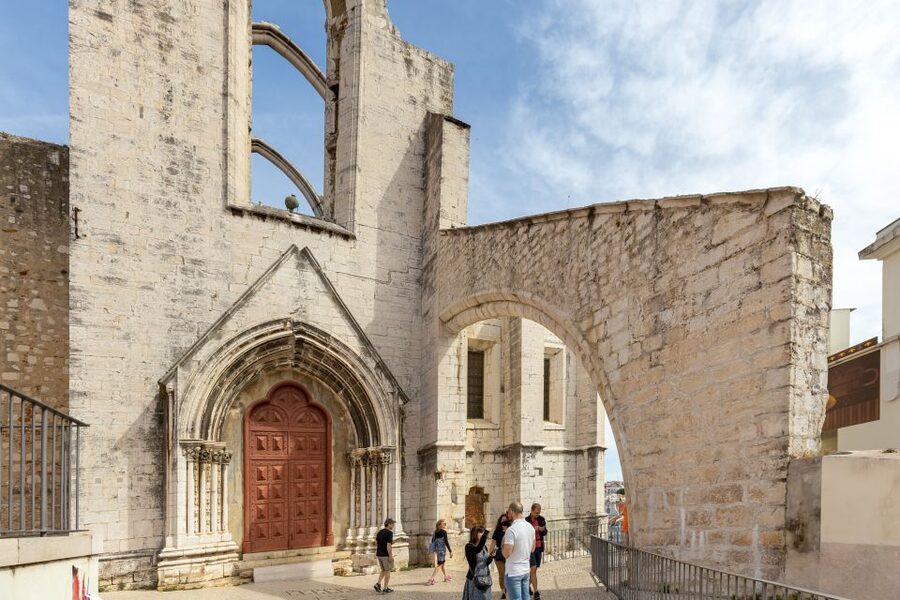
Heading downhill, you reach Carmo Convent and Church. The Gothic ruins are among Lisbon’s most striking sights, but the political story here is just as important as the architecture.
Carmo is linked to the Carnation Revolution of 1974, when Portugal’s long dictatorship came to an end. The revolution began here, making the site a useful place to discuss modern Portuguese history rather than stopping with medieval kings and Moorish rule.
This part of the tour often becomes personal. Some guides can explain the revolution through family or childhood memories. Paulo has spoken about living through that period as a child, while other guides bring the subject to life with clear explanations and local perspective.
I especially like this balance between old stones and recent history. Lisbon is not only a city of tiled façades, yellow trams, and grand churches. It is also a place shaped by dictatorship, political change, and the memories of people who grew up here.
Santa Justa, Baixa, and the short coffee break
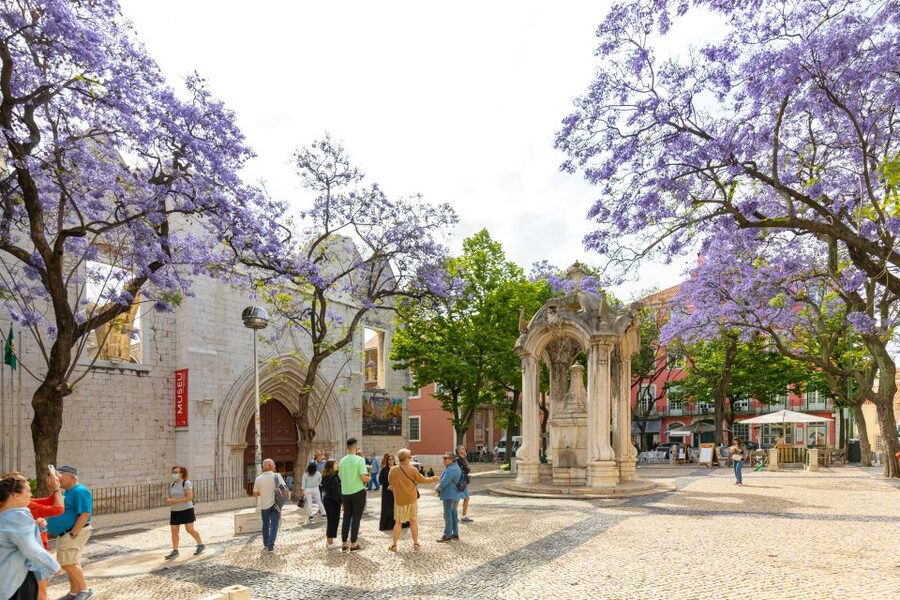
The Santa Justa elevator is one of Lisbon’s most recognizable structures. Built in the Gothic Revival style, it rises above Baixa and offers one of the city’s best viewpoints.
You may not spend a long time riding the elevator itself. The tour is designed to show you the monument and explain its place in central Lisbon, then continue through Baixa. The structure is still worth seeing from below, where its ironwork and height are easy to appreciate.
Baixa is the city center rebuilt after the 1755 earthquake. The grid-like streets offer a sharp contrast to the winding lanes of Alfama, and the guide can explain how the rebuilt center differs from the older districts.
A short break follows, with coffee and cake included. The traditional pairing is a bica, Lisbon’s small espresso, and a pastel de nata. This is one of the tour’s modest pleasures. It gives you a chance to sit, ask questions, and try a familiar Portuguese treat without having to plan a separate café stop.
Vegetarian needs have been handled flexibly, with a guide substituting a vegan spinach snack for a traditional pastry. You should still explain dietary needs when booking or meeting the guide, but this example suggests that the stop can be adapted.
The tram ride toward Portas do Sol
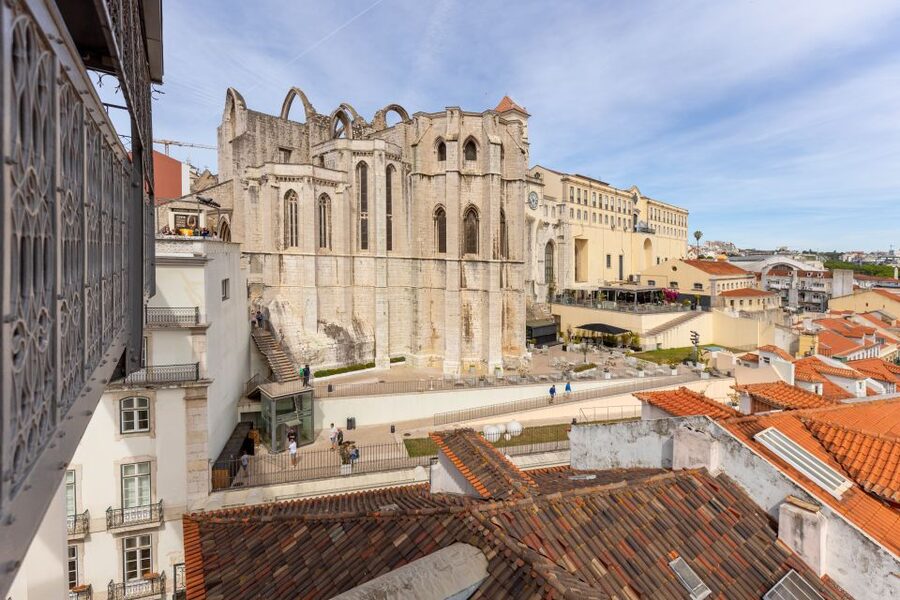
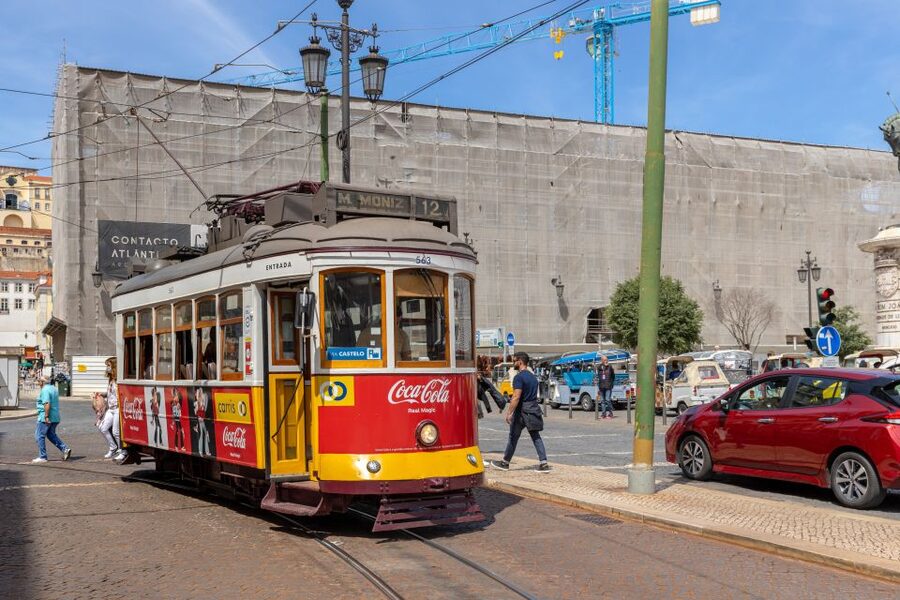
The tram ride is a major reason to choose this outing over a standard walking route. You board for the climb from the castle area toward Portas do Sol, experiencing one of Lisbon’s classic forms of transport while moving into the older eastern districts.
The ride is short, but it changes the pace. After walking through central streets, you get to sit back and watch the city pass from a rattling tram window. It also saves some effort on one of Lisbon’s uphill stretches.
The precise tram experience can change. One outing had to be adjusted because the tram broke down, and heavy rain forced another route change. The guide adapted rather than letting the disruption spoil the day. That flexibility is useful in Lisbon, where weather and transport can affect a tightly timed plan.
The tram can also be crowded. You should keep your group together and listen carefully for the meeting point after getting off. The reward is a genuine part of daily Lisbon life, not a private sightseeing vehicle.
Portas do Sol and the first look at Alfama
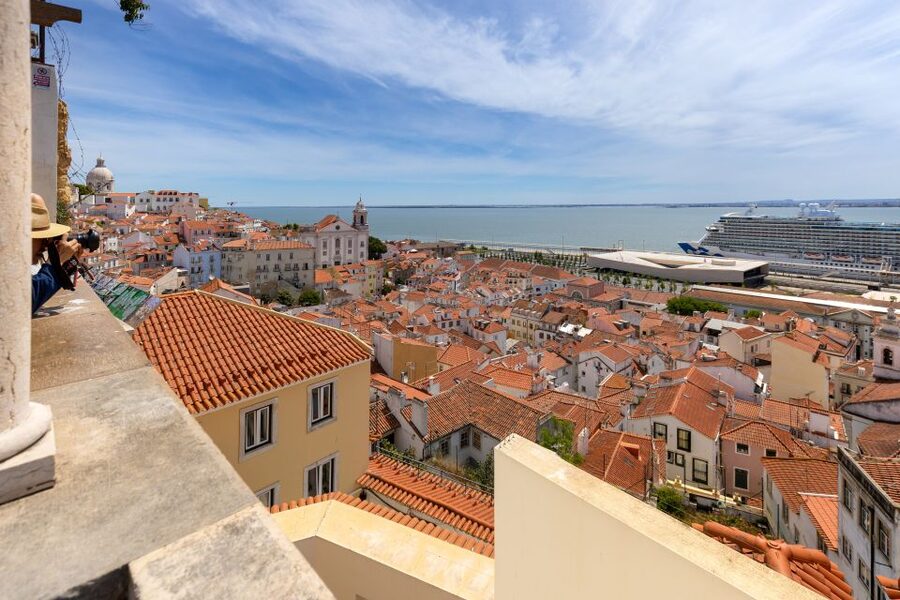
At Portas do Sol, the city opens again. From here you can see the Monastery of São Vicente de Fora, the National Pantheon, and the roofs of Alfama falling toward the Tagus.
This is a strong place to pause because it links several important Lisbon sights. You get a view, a neighborhood introduction, and a chance to understand the slope before walking into the lanes below.
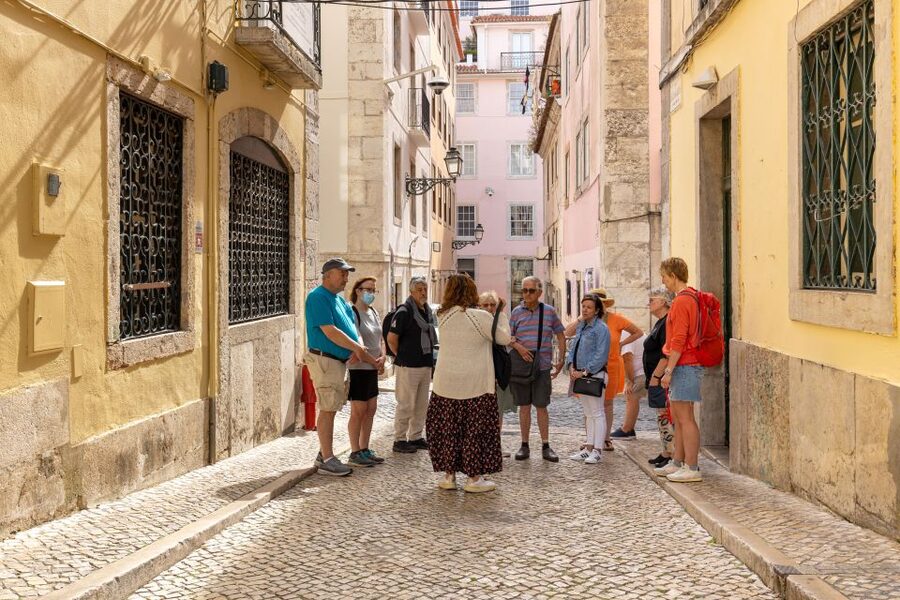
Alfama is the oldest and one of the most traditional parts of Lisbon. Its narrow streets survived the earthquake better than the planned center, so the district feels different from Baixa almost at once. The route leads through lanes and passages rather than broad, regular streets.
You will hear about fado houses and the popular festivals of the saints, especially St. Anthony. These details help you see Alfama as a neighborhood with customs and community life, not just a photogenic maze.
The tradeoff is that the lanes can be uneven and steep. Comfortable shoes are essential. The tour is not a flat city stroll, though the stop-and-start rhythm makes it manageable for many people who are not especially fit.
Lisbon Cathedral and the final historical layer
The tour ends at Lisbon Cathedral, built in 1150, three years after the city was taken back from the Moors. It has been altered over the centuries, so its appearance brings together several architectural styles.
That mixture neatly closes the tour. You have seen how Lisbon changed after the earthquake, how churches reflect different periods, how the dictatorship ended, and how Alfama preserves older street patterns and traditions.
The cathedral is a useful final stop because it sits where several strands of Lisbon’s story meet. You can look at it as a religious building, a survivor of changes and disasters, and a marker of the city’s return to Christian rule.
Since the tour ends here, you can continue exploring the cathedral and Alfama afterward if your schedule allows. The supplied details do not promise an extended interior visit, so think of the tour as an introduction rather than a full cathedral tour.
What the guides add to the experience
The route is solid, but the guide is the heart of it. I would book this tour for the human explanation as much as for the sights.
Paulo is repeatedly praised for storytelling, humor, and his personal connection to the 1974 revolution. Ricardo is noted for combining ancient history, recent events, culture, and practical recommendations. Beatrice is praised for her energy and for adapting to senior members of a group without slowing everyone too much.
Anna has handled rain and a broken tram with calm flexibility. João has been singled out for making a rainy, windy afternoon enjoyable while keeping the walk relaxed. Lucie and Helena are described as warm, clear, and attentive to questions.
Guide assignments can change, so you should not book on the assumption that you will receive one particular person. Still, the range of strong guide names suggests a well-established team rather than a one-person operation.
Who should book this Lisbon tour?
I would choose it at the start of a Lisbon visit. The route gives you orientation, major viewpoints, historic districts, a tram ride, and a taste of local café culture in a single outing. You can then decide where to return for a slower visit.
It suits first-time visitors, solo travelers who want an easy way to meet people, couples, and anyone who prefers stories to silent sightseeing. One person who joined alone found it a good chance to talk with new people, while small groups have benefited from easier conversation with the guide.
It is also a good choice if you want recent Portuguese history included. The Carnation Revolution is not treated as a footnote, and the guides can explain the city through lived experience.
I would hesitate if you need a completely flat route, dislike group transport, or want long interior visits at every church and monument. The three-hour schedule covers a lot, so most stops are interpretive visits rather than extended tours.
Cancellation is free up to 24 hours before the start, and you can reserve now and pay later. The meeting point varies by the option booked, so check that detail carefully before setting out.
Should you book it?
Book this tour if you want a well-rounded first look at Lisbon with real city context, not just a list of landmarks. The tram ride, coffee, pastel de nata, viewpoints, and Alfama walk make the experience feel varied, while the guides add the local stories that maps cannot provide.
At $29, the combination is hard to fault. Just wear good shoes, leave some time after the scheduled three hours in case the route runs long, and accept that rain or a transport problem may require a change of plan. For most first-time visitors, this is a practical and enjoyable way to get your bearings fast.
FAQ
How long is the Lisbon walking tour?
The tour lasts three hours.
How much does the tour cost?
The listed price is $29 per person.
What areas does the tour visit?
The route includes Bairro Alto, Baixa, the Carmo area, Alfama, Portas do Sol, and Lisbon Cathedral.
Is a tram ride included?
Yes. A tram trip is included, with the route described as going from the castle area toward Portas do Sol.
Are coffee and cake included?
Yes. Coffee and cake are included, with the stop commonly featuring a bica and pastel de nata.
What languages are available?
The live guide can speak Portuguese, Spanish, Italian, German, French, or English.
Is the tour private or shared?
Private and small-group options are available.
Does the tour include hotel pickup?
No. Hotel pickup and drop-off are not included.
Can I cancel for a full refund?
Yes. You can cancel up to 24 hours in advance for a full refund.
Newest history tours we have reviewed in Lisbon
- Lisbon Fado History Cultural Walking Tour★ 5.0 · 118 reviews
- Lisbon city tour on history, culture and current topics★ 5.0 · 41 reviews
- Lisbon: Jewish History Tour of Lisbon★ 4.8 · 84 reviews
- Lisbon Jewish Heritage and History – Private Tour Van★ 5.0 · 294 reviews
- Lisbon: Private Dark History Walking Tour with Drinks★ 4.8 · 387 reviews
- Lisbon Essential Walking Tour: History, Stories and Lifestyle★ 5.0 · 316 reviews
- Historic Walking Tour Through Lisbon’s Oldest Neighborhood★ 5.0 · 233 reviews
- Lisbon’s historic old town in a tuk-tuk in German★ 4.9 · 319 reviews
History Walking Tours, compared.
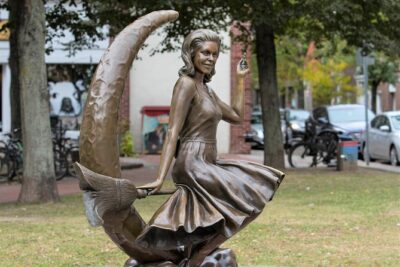
History and Hauntings of Salem Guided Walking Tour
Read our review →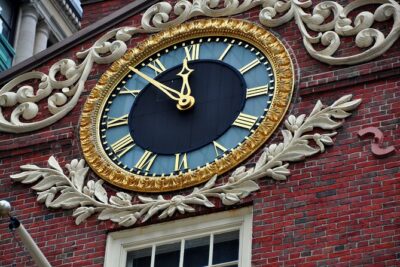
Freedom Trail History Small Group Walking Tour
Read our review →
Historic Charleston Guided Sightseeing Walking Tour
Read our review →
Tapas Walking Tour with Food, Wine, and History
Read our review →
Savannah History and Haunts Candlelit Ghost Walking Tour
Read our review →
A History of Terror – Belfast City Centre Walking Tour
Read our review →
New Orleans Garden District History Walking Tour
Read our review →Browse the lists this tour appears in