
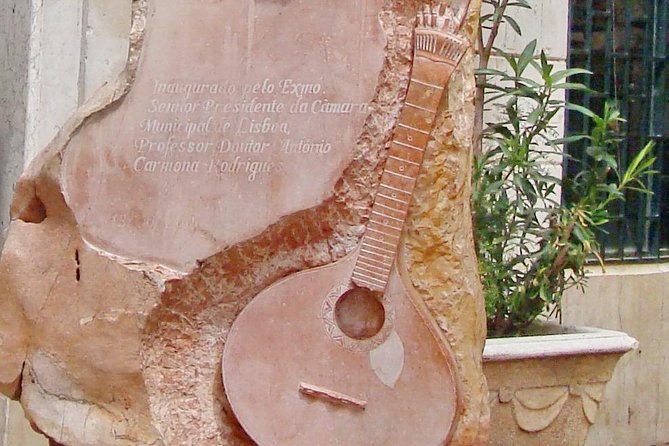
Review · LISBON HISTORY TOURS
Lisbon Fado History Cultural Walking Tour
Lisbon’s fado story begins in the old Mouraria neighborhood, not in a polished concert hall. This evening walk takes you from Rossio into streets many visitors might skip, then uses local places, street art, and neighborhood history to explain how fado took root. I like the small maximum of six people and the focus on the city’s social history, not just its postcard views. The main thing to check is exactly what dinner and the later fado show include, since the detailed route names only the walking stops.
I also like the timing. Starting at 7 p.m. lets you see Mouraria after dark, when a fado evening feels natural rather than forced into a daytime sightseeing schedule. The hills and uneven streets call for moderate fitness, and the tour is best for you if you enjoy stories, conversation, and a slower look at Lisbon rather than a long list of monuments.
Key points to know before booking
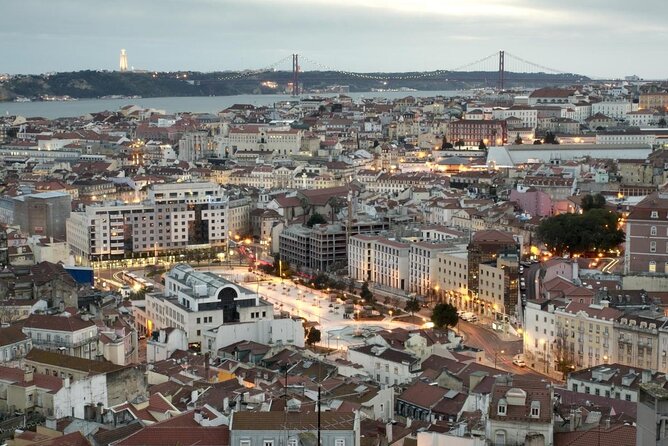
- Mouraria is the heart of the route: Learn how the neighborhood began and how current gentrification is changing it.
- Fado gets a local setting: The walk explains where and how the musical tradition developed before the evening show.
- The group is capped at six: That makes it easier to hear the guide and ask questions in narrow streets.
- The route starts in Rossio and ends by São Cristóvão: You finish in a historic area rather than returning to the original meeting point.
- Dinner is part of the planned evening: Confirm the menu, restaurant, and whether drinks or the fado show are included.
- The price is $34.89 per person: That is fair for a three-hour small-group cultural walk if the meal and show arrangements match your expectations.
Why Mouraria gives this walk its character
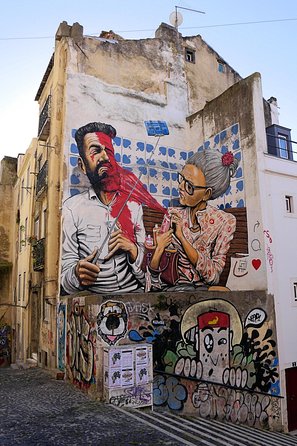
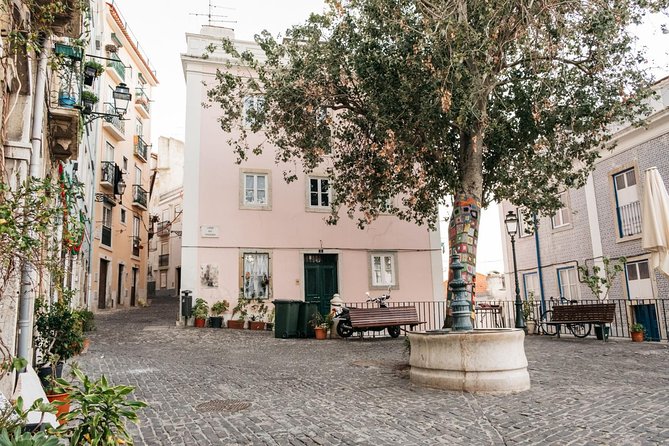
Mouraria is one of Lisbon’s old central neighborhoods, set just north of the Baixa district and close to the castle hill. The name points to the area’s Moorish past, and the narrow streets give the tour its sense of traveling backward through the city.
That does not mean Mouraria is frozen in time. The first stop, Praça Martim Moniz, is used to explain both the neighborhood’s origins and the pressure of modern redevelopment. This is a useful choice. You get the old story, but you also hear about the city as it is now, including the effects of gentrification.
I appreciate that balance. A tour about traditional music can easily turn into a romantic picture of poor neighborhoods and colorful characters. Talking about rising change helps you see the human cost behind Lisbon’s popularity. It also gives you a better way to look at Mouraria after the walk. Some buildings, shops, and public spaces reflect long local roots, while others are shaped by new investment and tourism.
Praça Martim Moniz is also a practical place to begin. It is near public transportation and easier to find than a tiny side street. From there, the group moves into the older fabric of the neighborhood, where a guide can point out details you would likely pass without context.
The stop itself is short, about 15 minutes. That means the square is an introduction, not the main event. You will hear the big ideas here, then follow them into the surrounding streets.
More History Walking Tours in Lisbon
- Lisbon: History, Stories and Lifestyle Walking Tour
★ 4.8 · 10,902 reviews - Lisbon: Private Dark History Walking Tour with Drinks
★ 4.8 · 387 reviews - Lisbon Essential Walking Tour: History, Stories and Lifestyle
★ 5.0 · 316 reviews
Praça Martim Moniz: a useful starting point
At Martim Moniz, expect an explanation of how Mouraria developed and why it matters to Lisbon. The guide’s job here is less about showing a single landmark and more about giving you a framework for the walk.
That makes this section valuable for first-time visitors. If you only visit the grand squares, tiled facades, and riverfront, Lisbon can seem like a series of pretty scenes. Mouraria adds the harder questions: who lived here, how neighborhoods change, and what happens when an old district becomes a major stop on the tourist map.
The tour’s maximum of six people should help. In a large group, a talk in an open square can become a quick speech before everyone is hurried away. With six, you should have room to ask about local life and hear the guide without straining.
The start time is 7 p.m. on Fridays. That suits the subject, but it also means you should arrive ready for an evening on foot. The tour lasts about three hours, and the route includes streets around the hills of central Lisbon. Wear shoes with a good grip, especially if rain has made the paving slick.
Church of São Cristóvão and the story behind the mural
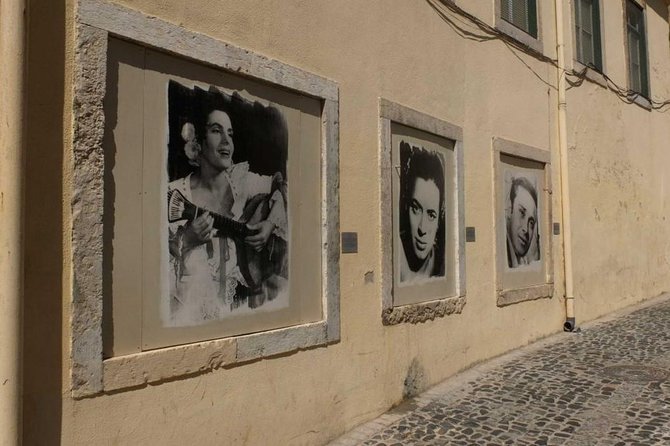
The second named stop is near the Church of São Cristóvão, at Rua São Cristóvão 28. The formal stop is about 10 minutes, but the surrounding area is important because it connects visual culture with fado.
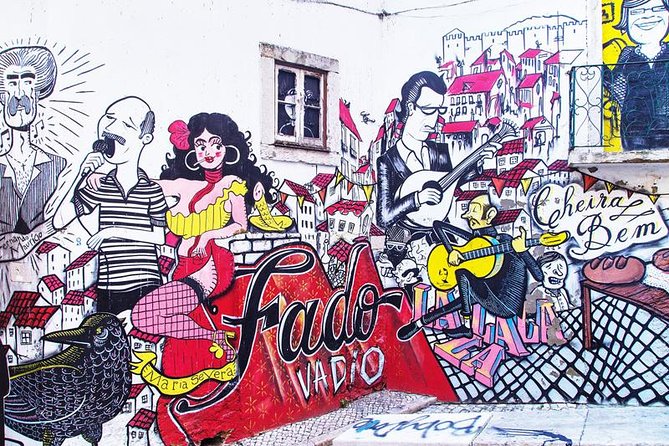
Below the church, the guide explains one of Lisbon’s well-known urban art murals and the story of fado. This is a smart pairing. Fado is not only a style of singing. It is tied to place, memory, working-class life, longing, and the old quarters where people met and performed.
Seeing the subject beside a mural gives you something concrete to look at while the story unfolds. You are not just hearing names and dates. You are standing in a neighborhood connected to the music and looking at a modern public expression of local identity.
The short stop also tells you what kind of walk this is. You should not expect long interior visits or a museum-style lecture. The value comes from the guide’s explanation of the streets, the people associated with them, and the connection between old Lisbon and the fado evening that follows.
The route ends at São Cristóvão rather than returning to Rossio. That is convenient if you plan to remain in the old center afterward, but you should plan your way back before the night is over. The published end point is specific, while the details do not state a return transfer.
Fado makes more sense after the walk
The strongest idea behind this experience is that the walking portion comes before the music. If you go straight to a fado performance, you can enjoy the voices and guitar without knowing much about the world that shaped the songs.
Here, the guide explains where and how fado began, then places the subject in Mouraria. That context can make the later show easier to understand. You may notice the feeling of saudade, the Portuguese idea of longing, in a different way when you have just walked through the old neighborhood connected with the tradition.
The supplied description presents the evening as more than a walk. It includes a delicious dinner and a fado show later in the night. Those elements are central to the value, since $34.89 is not simply the price of a short orientation walk. Still, the available details do not name the restaurant, menu, performer, show length, or exact inclusion terms.
I would confirm those points before paying. Ask if dinner is a full meal or a small tasting, if drinks are included, and if the fado performance is part of the same booking or only suggested afterward. A clear answer will tell you if this is an inexpensive cultural package or mainly a guided neighborhood walk with dinner arranged around it.
More History Walking Tours in Portugal
- Historic Walking Tour Through Lisbon’s Oldest Neighborhood
★ 5.0 · 233 reviews - Porto: Historic City Center Walking Tour
★ 4.7 · 1,172 reviews - Porto: Historical Center Walking Tour
★ 4.8 · 898 reviews - 3-Hour Porto Jewish Heritage Walking Tour with Local Guide
★ 4.5 · 396 reviews
What the guide can add to a small group
The quality of an experience like this depends heavily on the guide. The company has used guides named Telma, João, Inés, and Alfredo on related Lisbon walks. Telma has been described as warm, funny, and good at bringing history to life. João has led walks with detailed historical context and a cheerful manner, while Inés has been praised for linking Portuguese cultural symbols with wider stories.
Those names give you a sense of the guiding team, but they do not confirm who will lead this Friday evening. No guide is assigned in the information provided, so I would not book on the assumption that a particular person will be there.
The small group still matters more than a famous guide name. Six people allow for questions about food, music, neighborhood change, and practical Lisbon tips. Several guides from the company have also been noted for offering suggestions about transport, local food, and bars. That can be useful at the end of your first day in the city, when you still need ideas for the rest of your stay.
The risk is that a walking tour can feel slow if the guide’s delivery does not suit you. One account of a different Lisbon excursion described a hesitant presentation and too much time spent on a pastry stop. That does not predict this fado walk, but it is a reminder to keep your expectations realistic. The advertised route is conversational and story-led, not a tightly timed parade of major sights.
Price, timing, and physical effort
At $34.89 per person, the price is reasonable if you want a guided introduction to Mouraria plus dinner and a fado performance. A private guide would cost much more, while a self-guided walk would cost almost nothing but would not give you the local explanation of fado or the neighborhood’s current changes.
The price is less compelling if the meal and show are not included. Since the detailed information does not spell out those arrangements, this is the main value question to settle before booking. The three-hour duration is long enough for a proper introduction but short enough to fit into a Friday night.
The walk requires moderate physical fitness. Expect Lisbon’s familiar hills, uneven paving, and narrow streets. The information does not promise wheelchair access, a flat route, or a vehicle transfer, so anyone with mobility concerns should ask the operator before booking.
The tour runs on Fridays from 7 p.m. to 10 p.m. That fixed schedule works well for a planned evening, but it gives you little flexibility if you have a late arrival or another dinner reservation. Confirmation arrives at booking, and the tour requires a minimum number of participants. If that minimum is not reached, the operator offers another date or experience, or a full refund.
You can cancel for a full refund up to 24 hours before the start time. Within 24 hours, the payment is not refunded, and changes are not accepted. The cut-off follows Lisbon local time.
Who will get the most from this evening
I would choose this walk if you want to understand Lisbon through one neighborhood and one musical tradition. It suits first-time visitors who prefer local stories to a checklist of monuments, couples looking for an evening activity, and solo visitors who like a very small group.
It also works well for anyone planning to attend fado during a Lisbon stay. The background talk may help you listen with more attention, especially if you are unsure what to expect from the music.
I would be less keen on it for children who need constant movement or for anyone hoping to tour church interiors and major historic buildings. The named stops are short, and the focus is on explanation rather than admissions. It may also disappoint you if you want a full restaurant meal, a large concert, or a broad survey of Lisbon’s sights.
My booking advice

I would book this experience for the neighborhood setting, the small group, and the link between Mouraria and fado. The best part is the chance to hear about Lisbon’s music in the streets where its story is placed, while also confronting the modern changes reshaping the district.
Before booking, confirm three things: the guide assigned to your date, the exact dinner arrangement, and the details of the fado show. If those are included as promised, $34.89 is a good buy for a compact cultural evening. If they are separate or vague, treat the price as payment for the guided walk alone and decide if that still fits your plans.
FAQ
Where does the Lisbon Fado History Cultural Walking Tour begin?
It begins at Rossio Square, Praça do Rossio, 1100-200 Lisboa, Portugal.
Where does the tour end?
The published end point is São Cristóvão, at Rua São Cristóvão 28, 1100-177 Lisboa, Portugal.
How long does the experience last?
The tour lasts approximately three hours, from 7 p.m. to 10 p.m.
On which day does the tour operate?
The listed schedule operates on Fridays.
How many people can join the tour?
The group has a maximum of six participants.
Is the tour suitable for everyone physically?
The activity requires a moderate level of physical fitness. The information does not specify a flat route or accessibility features.
Can I cancel for a full refund?
Yes. You can cancel at least 24 hours before the local start time for a full refund. Cancellations or changes made less than 24 hours before the start time are not accepted for a refund.
More Local Culture and Traditions Tours in Lisbon
- Amsterdam Food and Cultural Tour with Tastings
★ 5.0 · 4,315 reviews - Sevilla Food Tour: Tapas, Wine, History & Traditions
★ 5.0 · 3,468 reviews - Tromsø: Reindeer Camp and Sami Cultural Tour with Lunch
★ 4.7 · 3,326 reviews - Half Day Dominican Republic Cultural Tour : Small Group
★ 4.5 · 1,862 reviews
More Local Culture and Traditions Tours in Portugal
- Lisbon city tour on history, culture and current topics
★ 5.0 · 41 reviews - Taste Funchal: food, wine & cultural tour
★ 5.0 · 906 reviews - Taste Funchal: food, wine and cultural tour
★ 4.8 · 680 reviews
Newest history tours we have reviewed in Lisbon
- Lisbon city tour on history, culture and current topics★ 5.0 · 41 reviews
- Lisbon Jewish Heritage and History – Private Tour Van★ 5.0 · 294 reviews
- Lisbon: Jewish History Tour of Lisbon★ 4.8 · 84 reviews
- Lisbon Essential Walking Tour: History, Stories and Lifestyle★ 5.0 · 316 reviews
- Historic Walking Tour Through Lisbon’s Oldest Neighborhood★ 5.0 · 233 reviews
- Lisbon: Private Dark History Walking Tour with Drinks★ 4.8 · 387 reviews
- Lisbon’s historic old town in a tuk-tuk in German★ 4.9 · 319 reviews
- Private Lisbon-Arrábida Wine Tour: 3 Wineries, Coast & Heritage★ 5.0 · 450 reviews
Local Culture & Traditions Tours, compared.

Amsterdam Food and Cultural Tour with Tastings
Read our review →
Sevilla Food Tour: Tapas, Wine, History & Traditions
Read our review →
Tromsø: Reindeer Camp and Sami Cultural Tour with Lunch
Read our review →
Half Day Dominican Republic Cultural Tour : Small Group
Read our review →
Ultimate Melbourne Walking Tour: History, Laneways & Culture
Read our review →
Tromsø: Sámi Reindeer Sledding and Sami Cultural Tour
Read our review →
Kyoto Gion: 2-Hour Geisha Culture & History Walking Tour
Read our review →
Marrakech Historical and Cultural Tour – Half Day City Tour
Read our review →Browse the lists this tour appears in