
Review · MARRAKECH HISTORY TOURS
Marrakech Historical and Cultural Tour – Half Day City Tour
Marrakech reveals itself best on foot, and this half-day tour takes you from the theatrical energy of Jemaa el-Fna into quieter lanes, palace courtyards, royal quarters, and crowded souks. The route links the city’s major sights with the small details you could easily miss alone, from tile patterns to traditional workshops.
I like the way the tour combines Bahia Palace and the Saadian Tombs with time in the souks, rather than treating the medina as a quick photo stop. I also like the local guiding. Guides including Abdul, Mohamed, Hassan, Ali, and Jaouad have been singled out for clear storytelling, humor, patience, and careful group handling.
The main catch is practical: admission fees are not included, and the Saadian Tombs can develop a long line. If the wait reaches an hour, the group may vote to move on, so you should not book this expecting guaranteed entry to every monument.
Key points to know before you book
- Jemaa el-Fna begins the experience: You meet at Café de France, right beside Marrakech’s famous performance square.
- The tour covers several historic districts: Expect the medina, souks, Kasbah, former Jewish quarter, Bab Agnaou, and royal palace area.
- Bahia Palace gets about an hour: Its gardens, decoration, and palace rooms are the most substantial stop.
- The Saadian Tombs can be difficult to enter: Crowds may create a wait of up to an hour, and the group may choose another activity.
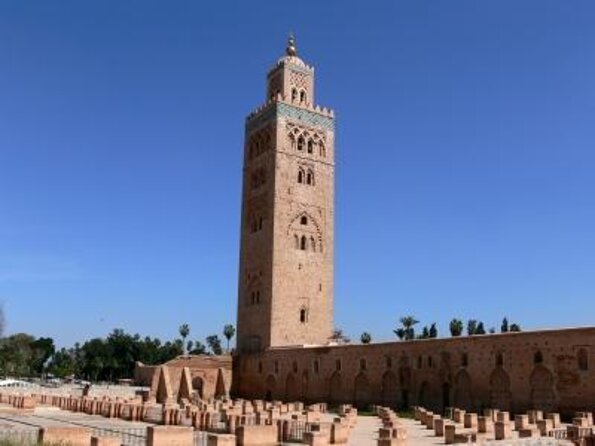
- Koutoubia Mosque is an exterior visit: Admission is free, but the tour does not include entry inside the mosque.
- The $30.94 price is only part of the cost: Bring money for entrance fees, drinks, and any food or shopping you choose to add.
Starting at Jemaa el-Fna and Café de France
Your meeting point is Hôtel Restaurant Café de France on Rue des Banques, beside Jemaa el-Fna. This is a useful place to begin because the square is easy to recognize, but it can also be chaotic when several walking groups gather at once.
Give yourself extra time to identify the correct guide. Finding the group has been a weak point for some people, especially at a busy departure time. The guide may be holding a sign or gathering a group of up to 15, but the meeting area is not a quiet hotel lobby. Ask directly for the Marrakech Guided Experience group if you are unsure.
Jemaa el-Fna itself gets only about 10 minutes in the formal schedule, but it gives you an immediate sense of Marrakech. The square is tied to public performance and daily social life, with storytellers, musicians, acrobats, jugglers, and snake charmers. The exact mix changes, and the square is more enjoyable when you treat this first stop as an introduction rather than a full visit.
The tour ends back at the same meeting point. There is no hotel pickup or drop-off, so you need to arrange your own way to Café de France. The location is near public transportation, which helps if your accommodation is outside the old city.
More Local Culture and Traditions Tours in Morocco
- Private Cultural Tour in Marrakech City
★ 5.0 · 77 reviews - Discover the secrets of the Medina of Fez: guided cultural tour (private)
★ 5.0 · 68 reviews - private VIP half journey of Marrakesh : History & Culture.
★ 4.5 · 64 reviews
Bahia Palace and the art of royal living
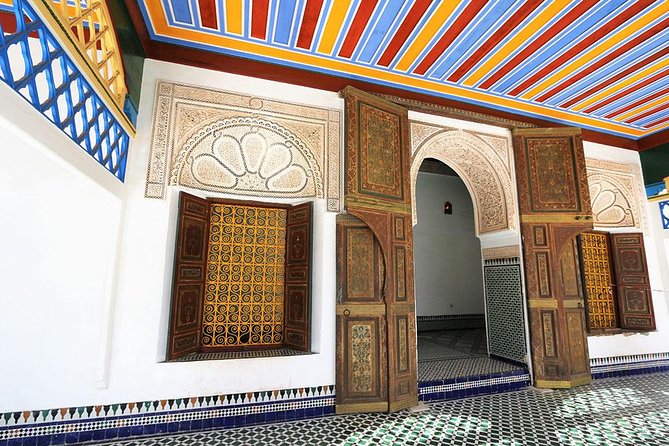
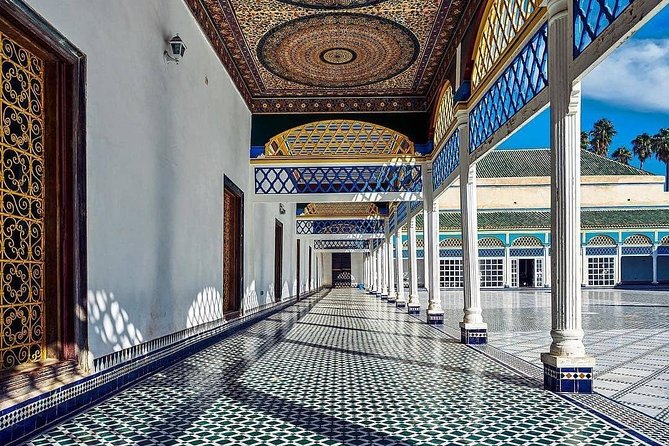
Bahia Palace is the tour’s longest planned stop, with about one hour inside. Built in the late 19th century, it was intended to be one of the grandest palaces of its time. Its name means brilliance, an appropriate label for a place built around decoration, gardens, and formal rooms.
This is where a guide adds real value. You can admire painted ceilings, carved details, tiled surfaces, and courtyards on your own, but a good guide explains how the styles fit together. Guides such as Abdul have explained the meaning of tile colors, the eight-pointed star, and the different architectural influences visible around the city.
Expect the palace to be busy. A guide who knows how to keep a group together is useful here, since it is easy to lose sight of people in courtyards and narrow passageways. Abdul and Abdu have been praised for keeping track of groups in crowded areas and helping people cross busy streets.
Entrance to Bahia Palace is not included. The supplied information notes that many monuments cost about $10 each, so factor this into the price before booking. The exact fee can change, but the larger point is simple: the advertised tour price is not your full sightseeing budget.
For many people, Bahia Palace is the strongest paid stop. It offers enough space and detail to justify a full hour, and the guide’s explanation helps turn attractive decoration into a story about power, family, and palace life. If you are choosing where to spend your limited time, this is the site I would protect.
Through the Jewish quarter and into the Kasbah
The walk continues through historic sections of the medina, including the former Jewish quarter. The route does not present this area as a separate ticketed attraction. Instead, it forms part of the city walk, giving you a look at how Marrakech’s old districts connect.
You then reach the Kasbah, the royal district on the southern side of the medina. This quarter includes the Saadian Tombs and the approach to the Royal Palace. It is a useful contrast to the central souks. Some streets are full of visitors near the major monuments, while nearby shops and lanes can feel much more local and quiet.
This is one of the tour’s better features. You are not simply driven from one famous building to another. You walk between them and get a sense of the old city’s layout. That matters in Marrakech, where the pleasure often comes from the connection between places: a gate, a mosque, a market lane, and a residential street can all appear within a short walk.
The walking is not difficult in the technical sense, but it can be tiring in sun and heat. One person specifically wished the tour had included a short café break. No drinks are included, so carry water and take advantage of any pause the guide offers.
Motorbikes are another concern. The medina lanes are narrow, and motorcycles may pass quickly while trying to get through. Stay close to the guide, avoid walking side by side across the full lane, and listen when the group is asked to move. A good guide makes this easier, but awareness still belongs to you.
Saadian Tombs and the risk of a long queue
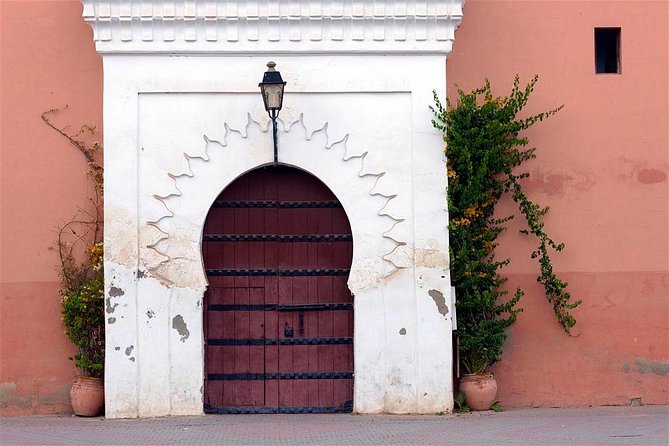
The Saadian Tombs date from the period of Sultan Ahmad al-Mansur and the Saadian dynasty. They were abandoned for centuries before being rediscovered in 1917 through aerial photography and restored by Morocco’s Beaux-Arts service.
The site is known for its decorated burial chambers and the concentrated beauty of the complex. It is smaller than Bahia Palace, but historically important. The planned visit lasts about an hour, and admission is extra.
Here is the key warning: access may be slowed by a long line. The wait can reach an hour, and the group may vote on whether to stay. If most people choose to leave, you may miss the tombs even though they are named as a principal stop.
That does not necessarily mean the guide has failed. The choice is a sensible one for a three-hour outing, especially when the group includes children or people managing the heat. Still, you should understand the tradeoff before booking. A tour that includes a ticket or reserved entry would offer more certainty. This one offers a guided route, but not guaranteed admission at a fixed time.
Some groups have used the waiting time to explore another part of the souks instead. That can be a good replacement if you have already seen the main monuments, but it will disappoint you if the tombs are the main reason you booked.
Same streets, a different century:
- Marrakech: Saadian Tombs & Bahia Palace, Medina Guided Tour
★ 4.6 · 1,989 reviews - Atlas Mountains – Ancient Ait Ben Haddou Day Tour from Marrakech
★ 5.0 · 411 reviews - Fez: Guided Walking Tour of the Historic Medina
★ 5.0 · 359 reviews - Historical Marrakech Walking Tour
★ 5.0 · 198 reviews
Bab Agnaou and the royal entrance

Bab Agnaou is one of Marrakech’s historic gates and dates to the 12th-century Almohad period. Unlike Bab er Robb, which served as an official city entrance, Bab Agnaou led into the royal Kasbah on the southern side of the medina.
The gate is a quick but worthwhile stop because it gives you architectural context for the Kasbah. Look at how the entrance is framed and how its location relates to the royal district. This is exactly the kind of detail that is easy to pass without a guide.
Do not expect a long formal visit here. It is part of the walking route, not a separate attraction with a scheduled hour. If you enjoy city gates, old walls, and the way historic districts are arranged, you will appreciate it. If you want more time at each monument, the route may feel pressed.
Koutoubia Mosque from the outside
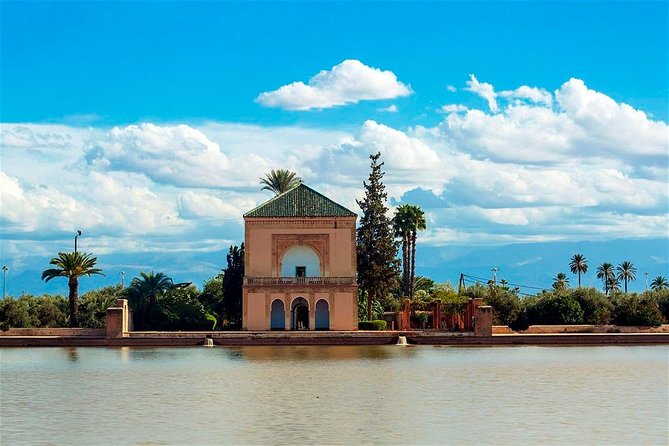
Koutoubia is Marrakech’s largest mosque and one of the city’s defining landmarks. Its name is linked to booksellers, and the mosque has several spellings in English, including Kutubiyya and Kutubiya.
The tour allows about 30 minutes here, with no admission charge. The visit is an exterior look, not an interior tour. That distinction matters because the mosque is an active place of worship and visitors should not assume that a paid sightseeing ticket includes entry.
The minaret and surrounding space provide a useful closing point for the route. Your guide can connect the mosque to the city around it, including the nearby square and medina. It is also a good place for photographs, though the exact amount of time available depends on walking delays and the queue at the tombs.
The souks: workshops, shopping, and sales pressure
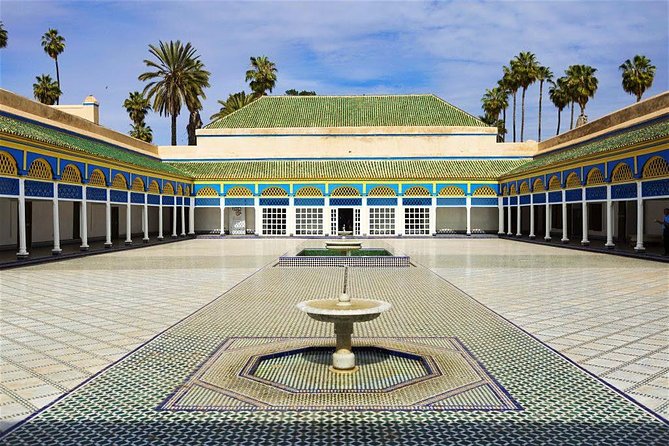
The tour promises access to colorful souks and workshops that can be less familiar to first-time visitors. You may pass areas associated with tinsmiths, dyers, and herbalists, with the guide helping you understand what you are seeing and how the lanes fit together.
This is not a simple shopping excursion. The best part is learning to read the medina: which lanes are commercial, where crafts are produced, and how one trade tends to cluster near another. A guide who lives in the medina, such as Ali, can give the walk a more personal feel and help you avoid getting turned around.
There is one point to handle carefully. Some versions of the route include a stop where argan products and other goods are demonstrated. The demonstration can be interesting, especially if you want to see how argan is processed by hand, but it may also turn into a sales pitch.
You are not required to buy anything. Decide before you arrive how much time you want to spend shopping, and do not feel obliged to purchase tea, oils, spices, or other products. The tour’s value should come from the guide and the city, not from a pressured sale.
What the guides add to the walk
The strongest part of this experience is the human element. Guides named in the tour feedback include Abdul, Abdu, Mohamed, Hassan, Ali, Jaouad, Abdorahim, and Oussama. The quality can vary by departure, but the most praised guides share several habits: they explain rather than simply point, answer questions, watch the group, and use humor to keep a long walk moving.
Abdul is especially associated with stories, cultural explanations, and practical help. Abdu has been noted for engaging a group of 12, remembering where people came from, and keeping the group together in crowded spaces. Hassan has been praised for accommodating a child and allowing time for photographs.
The tour can also work well for solo visitors. One guide offered to take photos for each person or couple, a small courtesy that makes a difference when you are exploring alone. You should still judge the experience as a group tour, not a private conversation. With up to 15 people, questions and photo stops need to be shared.
A guide may also adjust the route when conditions change. If the tombs are overwhelmed, the group may choose the souks instead. That flexibility is useful, but it means the tour is not a rigid guarantee of every scheduled stop.
Price, timing, and what you really pay
At $30.94 per person, the tour is reasonably priced as a guided introduction to Marrakech, especially if you want help finding your way through the medina. The price includes a local professional guide and roughly three hours of walking.
It does not include drinks, monument entrance fees, or transport to and from the meeting point. Add those costs before comparing it with a private guide or a self-guided day. The private upgrade may suit you if you want control over pace, questions, and the decision to wait at the tombs.
Several departure times are available, with morning and afternoon options. Morning is likely the easier choice if you want to limit exposure to the strongest sun, though the supplied information does not promise a cooler route or smaller crowd at a particular hour. Choose the time that leaves room for your wider Marrakech plans.
The tour is generally suitable for most people, and children must be accompanied by an adult. Because it uses narrow lanes, crowded sites, and city streets, you will want comfortable shoes, water, and a willingness to walk at a steady pace.
Who should book this Marrakech walk?
I would recommend it to a first-time visitor who wants a fast orientation to the old city, a guide through the souks, and background at the major historic sights. It is also useful early in a stay, since you can return later to Bahia Palace, Jemaa el-Fna, or the markets at your own pace.
It suits solo visitors, couples, families with older children, and anyone who prefers a guide to handling the medina alone. The group limit of 15 keeps it more manageable than a large coach outing, though it is still a shared experience.
I would hesitate if your main goal is guaranteed entry to the Saadian Tombs, long quiet visits, or a leisurely café break. You may also prefer another option if you dislike shopping stops or want hotel pickup. The private upgrade is worth considering if you have limited time and do not want the group voting on how to handle a queue.
Final decision: a useful first look, with clear limits
Book this tour if you want a compact, affordable introduction to Marrakech’s history and daily life, and you are comfortable with some uncertainty around queues and route changes. The guides can add far more than a map, especially when explaining the souks, tile work, Muslim culture, and the meaning behind the city’s gates and monuments.
Skip it if you need guaranteed access to every listed site or want all costs covered in advance. For most first visits, though, the combination of Bahia Palace, Kasbah streets, Koutoubia Mosque, Jemaa el-Fna, and guided souk time makes this a useful way to get your bearings fast.
The booking includes free cancellation up to 24 hours before the start time. Within 24 hours, refunds are not available, so keep that deadline in mind before committing.
FAQ
How long does the Marrakech historical and cultural tour last?
The tour lasts approximately three hours, although some groups have continued longer depending on queues, walking speed, and route changes.
What sights are included?
The planned route includes Jemaa el-Fna, Bahia Palace, the Saadian Tombs, Koutoubia Mosque, Bab Agnaou, the Kasbah district, historic Jewish quarter, and parts of the souks.
Are entrance fees included?
No. Entrance fees are separate, and many of the monuments cost about $10 each. Drinks are also not included.
Is transportation provided?
No. Pickup and drop-off are not included. The tour starts and ends at Hôtel Restaurant Café de France beside Jemaa el-Fna.
Can I book a private tour?
Yes. You can upgrade to a private tour instead of joining the shared group.
What happens if there is a long line at the Saadian Tombs?
The group may decide whether to wait or continue to another part of the route, such as the souks. Entry to the tombs is therefore not guaranteed if the queue is very long.
Newest history tours we have reviewed in Morocco
- private VIP half journey of Marrakesh : History & Culture.★ 4.5 · 64 reviews
- Private Cultural Tour in Marrakech City★ 5.0 · 77 reviews
- Historical Marrakech Walking Tour★ 5.0 · 198 reviews
- Fez: Guided Walking Tour of the Historic Medina★ 5.0 · 359 reviews
- History and culture with Fes Medina private tour guide★ 5.0 · 56 reviews
- Full-day Historical Meknes Volubilis and Moulay Idriss Tour★ 4.5 · 196 reviews
- Wonderful Day Tour in Fes: A Historical and Cultural Guided Trip★ 5.0 · 53 reviews
- Discover the secrets of the Medina of Fez: guided cultural tour (private)★ 5.0 · 68 reviews
Local Culture & Traditions Tours, compared.

Amsterdam Food and Cultural Tour with Tastings
Read our review →
Sevilla Food Tour: Tapas, Wine, History & Traditions
Read our review →
Tromsø: Reindeer Camp and Sami Cultural Tour with Lunch
Read our review →
Half Day Dominican Republic Cultural Tour : Small Group
Read our review →
Ultimate Melbourne Walking Tour: History, Laneways & Culture
Read our review →
Tromsø: Sámi Reindeer Sledding and Sami Cultural Tour
Read our review →
Kyoto Gion: 2-Hour Geisha Culture & History Walking Tour
Read our review →
Portland Explorer | Maine History, Culture, & 3 Lighthouses Tour
Read our review →Browse the lists this tour appears in