
Review · MOROCCO HISTORY TOURS
Fez: Guided Walking Tour of the Historic Medina
Fez is easier to understand when someone who grew up in the Medina leads you through it. This walk combines the grand details of Bou Inania Madrasa and Al-Attarine Madrasa with ordinary streets, food stalls, workshops, and neighborhoods that are easy to miss on your own. Guides named Abdul, Reda, and Ahmed have led this experience, with Abdul receiving especially warm praise for his personal stories and local connections.
I like the chance to see leather being processed at the traditional tanneries, then meet craftspeople at work rather than simply browse finished goods. I also like the relaxed local-food stops and the way the guide can help you find your way through the maze. The main catch is simple: four hours may be only the starting point. Many walks run five to seven hours, so do not schedule a tight activity afterward.
Key points at a glance
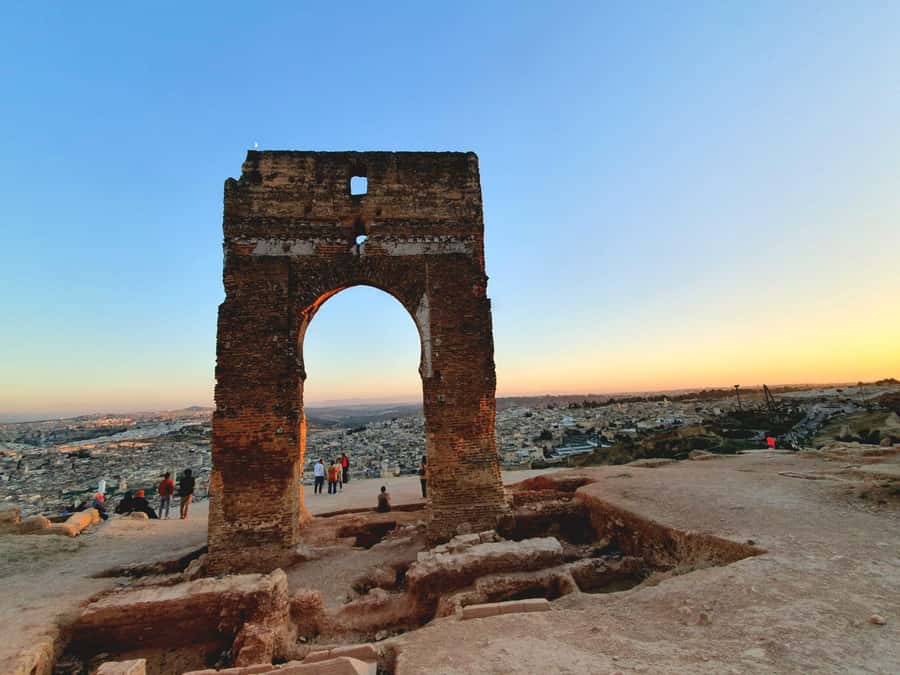
- A local view of the Medina: See major monuments alongside quieter streets and everyday neighborhoods.
- Tanneries and working workshops: Watch leather workers and artisans use traditional methods.
- Food built into the walk: Stop for Moroccan dishes, sweets, fruit, nuts, pancakes, or street food, depending on the day.
- Strong guide presence: Abdul is often the guide, while Reda or Ahmed may lead some departures.
- Good first-day choice: Use the walk to learn the Medina’s layout before shopping or exploring alone.
- Expect a serious walk: Narrow lanes, steps, heat, and long hours on your feet are part of the deal.
Why a local guide changes Fez
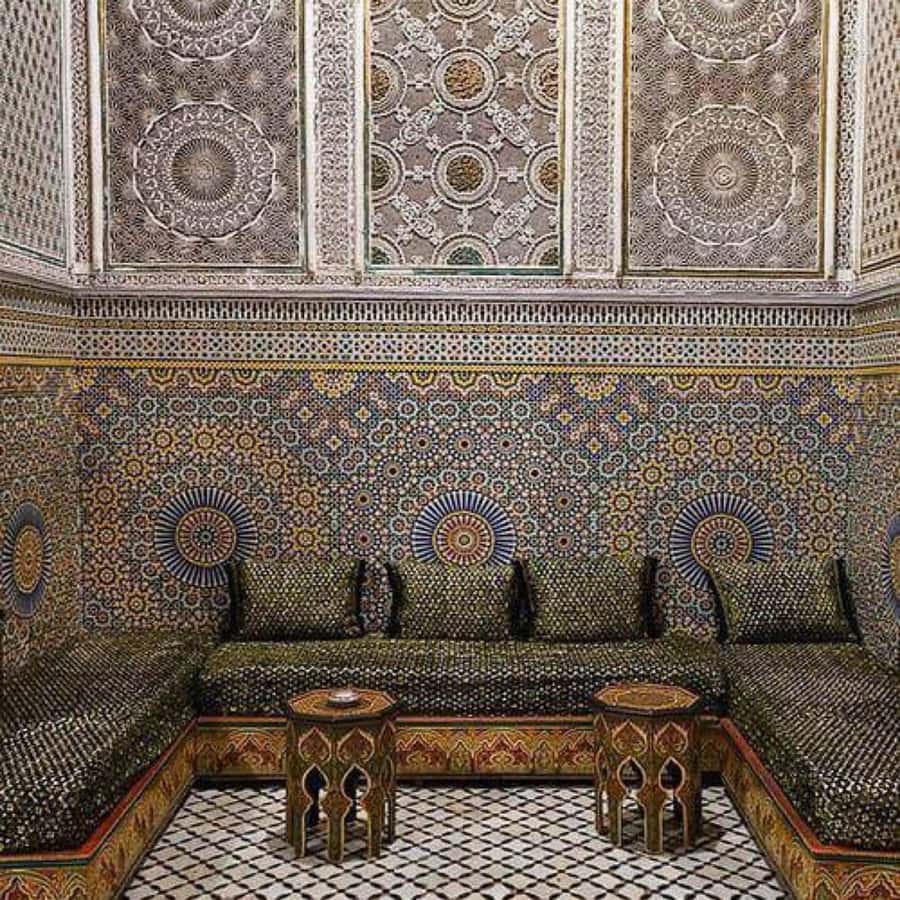
Fez’s Old Medina is not just a collection of sights. It is a working city of lanes, shops, homes, food stalls, schools, prayer spaces, workshops, and busy passages. The route can feel confusing at first, and a map gives you only part of the picture.
A local guide gives meaning to the details around you. A carved doorway becomes part of the story of a religious school. A shop filled with leather goods connects to the long process you have just seen at the tannery. A quiet side street may lead to a neighborhood that most sightseeing routes skip.
Abdul is the guide most often singled out by name. He grew up in the Old Medina and shares stories about his family, his background, and daily life in Fez. The useful part is not simply that he knows dates and facts. He can explain how people use the Medina today, introduce you to people working there, and adjust the route to your interests.
Reda and Ahmed have also led departures. The language choices are English, French, and Spanish. If having a particular guide matters to you, check who is assigned when you book.
More History Walking Tours in Morocco
- Historical Marrakech Walking Tour
★ 5.0 · 198 reviews - Fez: Walking Tour in the Ancient City of Fez
★ 4.8 · 73 reviews - Walking Tangier Tour from ancient Kasba to Bustling Souks
★ 5.0 · 70 reviews
Starting at Bab Guisa
The meeting point is the arch at Bab Guisa. Look for a guide wearing a uniform or holding a sign with the activity provider’s logo. This is a practical place to begin because you meet at the edge of the Medina rather than trying to find a vehicle inside its narrow lanes.
At the start, expect a quick explanation of the plan. The exact order can change with the guide, the pace of the group, shop hours, weather, and what catches your interest. That flexibility is part of the appeal, but it also helps explain why the advertised four hours is not always the final length.
Bring a charged phone, sunscreen, and water. Comfortable shoes matter more than stylish ones here. A sun hat is useful, and an umbrella can help in bright weather or rain. Large bags and luggage are not allowed, and sleeveless shirts are listed as unsuitable for the activity.
Bou Inania and Al-Attarine madrasas
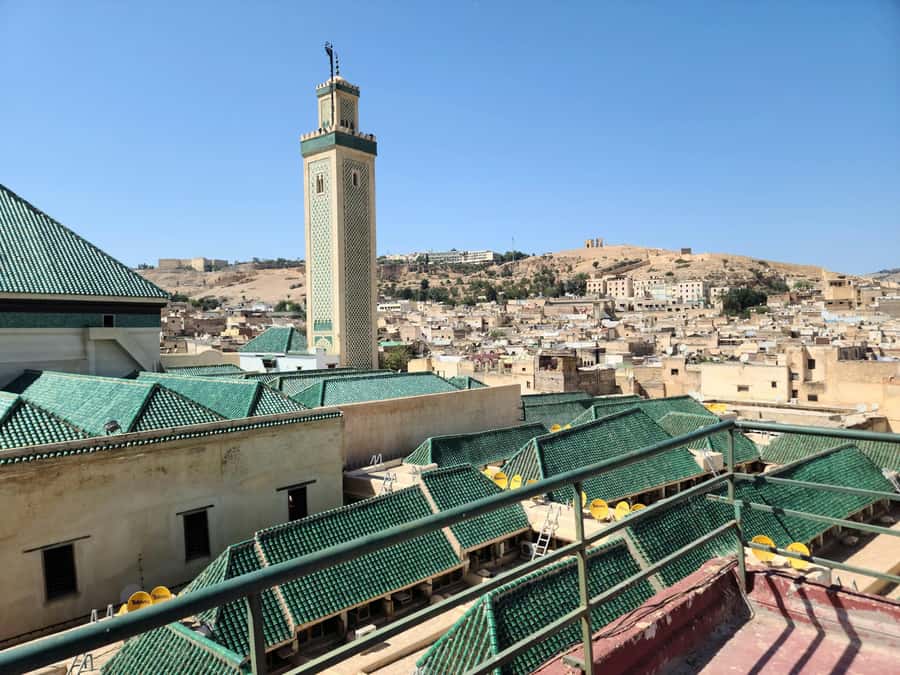
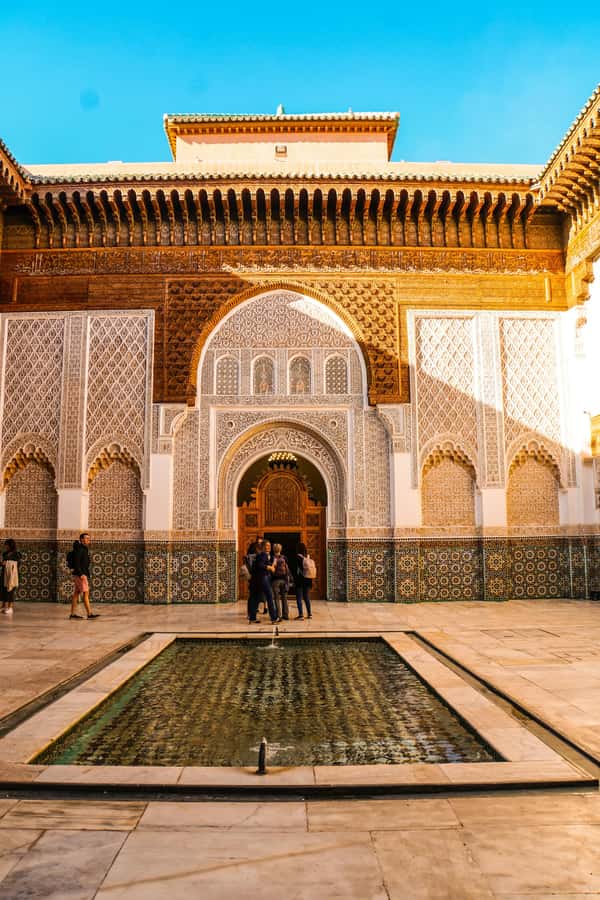
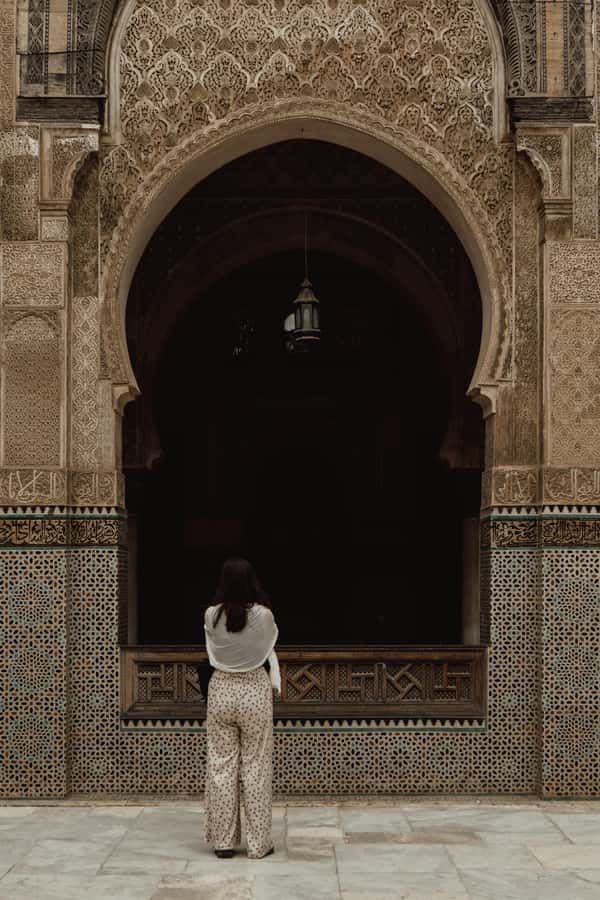
The early part of the walk focuses on important buildings in the Old Medina, including Bou Inania Madrasa and Al-Attarine Madrasa. These are not quick photo stops if you enjoy architecture. The guide explains what you are looking at and places the decoration within Fez’s religious and cultural past.
Pay attention to the surface work: carved plaster, tile patterns, wood, and the careful balance of the courtyards. The buildings reward a slow look, especially after you have walked through plain commercial lanes. Their beauty is not separated from the city around them. They were built into the life of the Medina, close to streets where people still work, shop, and pass through each day.
One useful point is that the walk may not cover every major monument in full. One account specifically notes that the Bou Inania and Al-Attarine madrasas were seen, while other sites such as the tombs were visited independently afterward. If you want a checklist of every landmark, ask your guide early about the exact route.
The strength here is interpretation. You can find the buildings yourself, but a guide helps you notice why their details matter and how they fit into Fez’s wider story.
The traditional tanneries
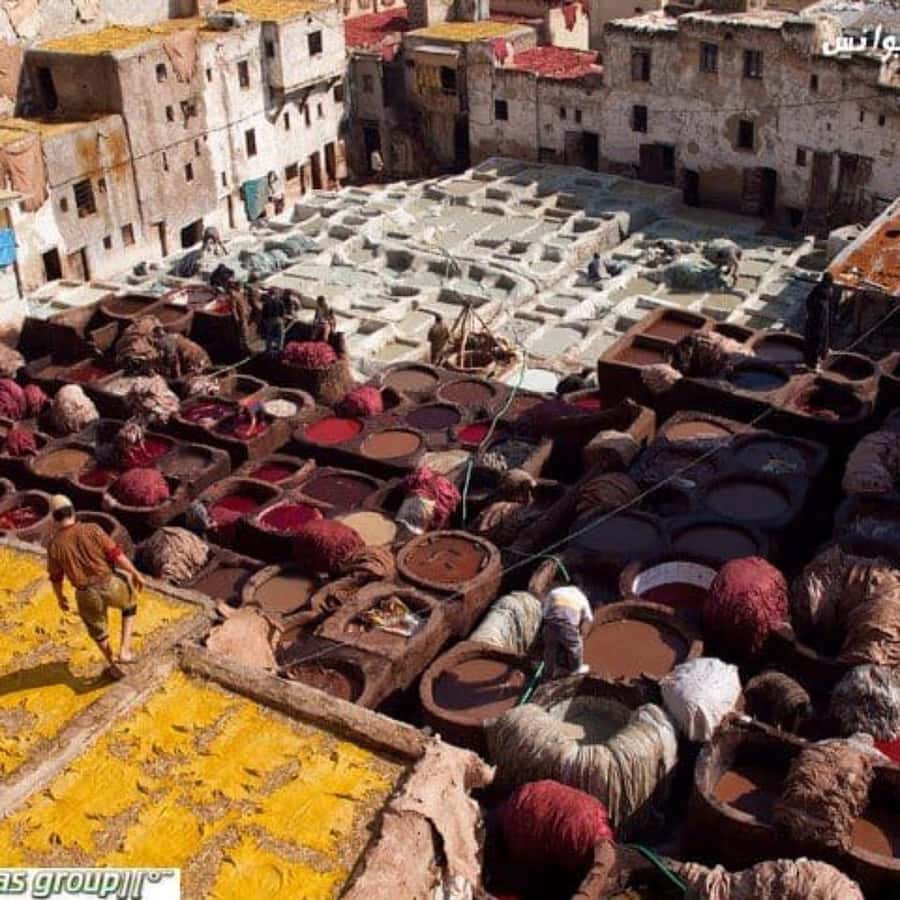
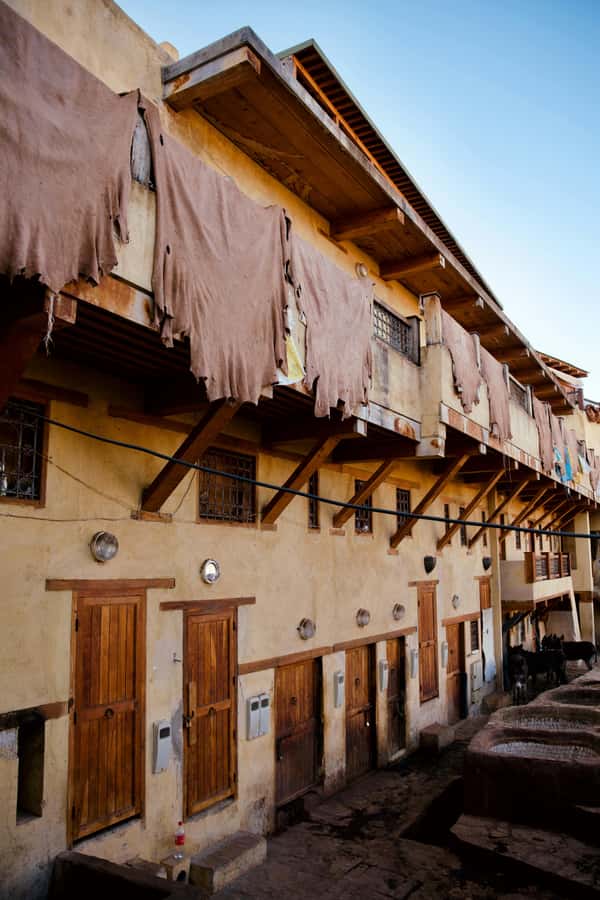
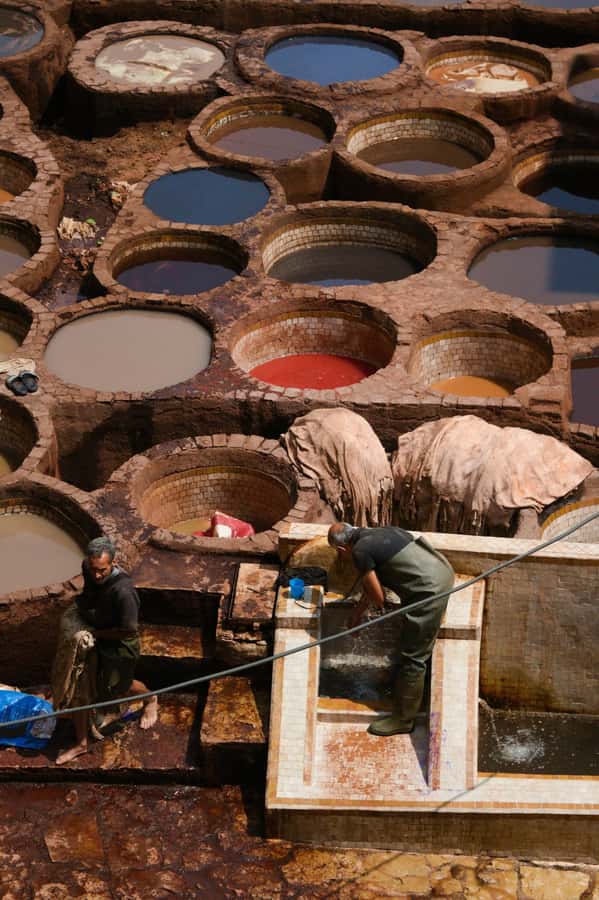
The tanneries are one of the most memorable stops because you see leather production rather than only the finished bags, belts, and slippers sold in shops. Leather has been processed in Fez for centuries, and the work still depends on methods passed down through generations.
You will likely view the working area from a shop or an upper level. The guide explains the stages and points out the labor behind the products. This makes the later workshop visits more useful because you begin to see the difference between a handmade item and a souvenir chosen in a hurry.
There is also a practical side. Tannery visits can involve strong smells, especially in warm weather. The provided advice does not promise that every person will find the stop comfortable. If you are sensitive to odors, take your time and keep your expectations realistic.
The stop can also lead into shopping. That is not automatically a problem, but you should know how you want to handle it. The experience includes shopping time and visits to artisan businesses. Several accounts describe the guide as helpful without making people buy, and some participants chose to purchase goods after seeing how much work goes into them. You are free to look, ask questions, and wait until you have compared quality and price.
More Old Town and Historic Centre Walks in Morocco
- Marrakech: Saadian Tombs & Bahia Palace, Medina Guided Tour
★ 4.6 · 1,989 reviews - Discover the secrets of the Medina of Fez: guided cultural tour (private)
★ 5.0 · 68 reviews - History and culture with Fes Medina private tour guide
★ 5.0 · 56 reviews
Souks, local food, and the pleasure of slowing down
After the historic sites and tanneries, the route moves through souks and local markets. This is where the Medina feels least like a museum. You might see food being sold, crafts being repaired, neighbors greeting one another, and shops serving the people who live nearby.
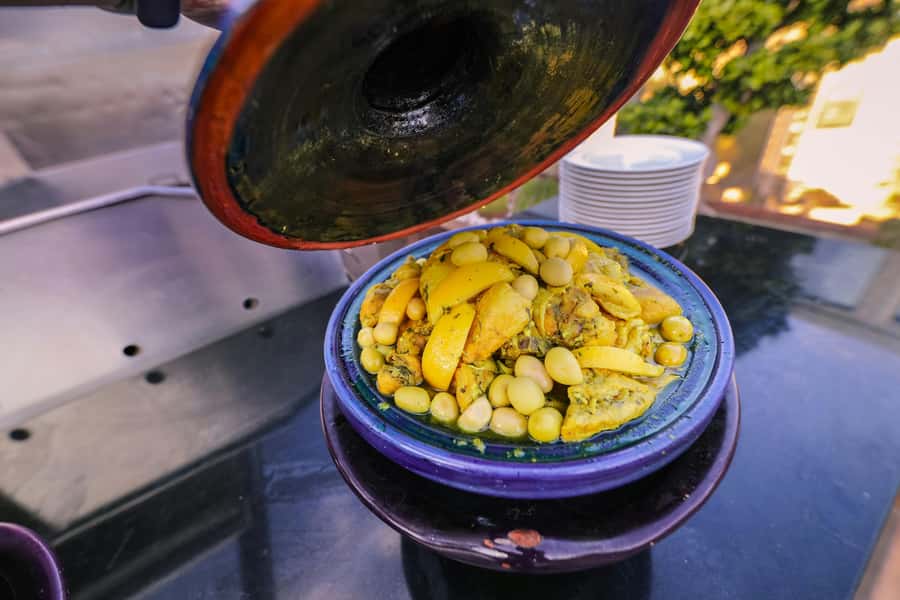
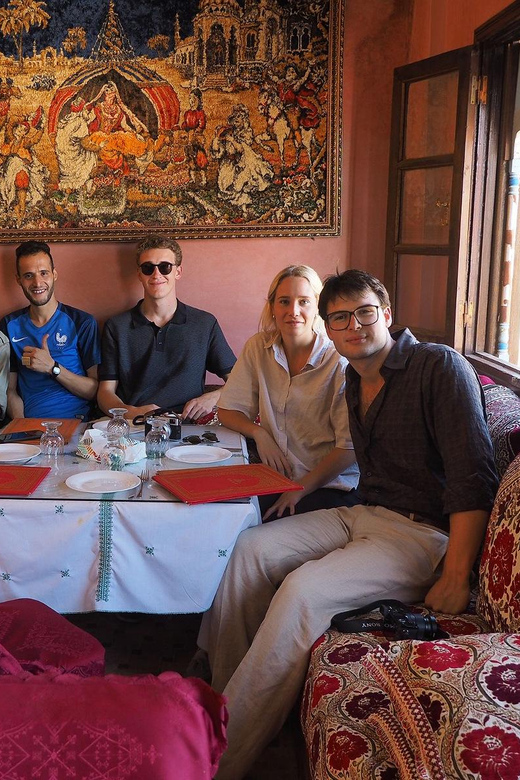
The food portion is flexible. Moroccan lunch at a local restaurant is part of the stated experience, while the day may also include street food or small tastings. Examples described from the walk include Moroccan sweets, nuts, pancakes, fruit, and other local foods. Do not treat this as a formal food tour with a fixed tasting menu. It is better understood as a chance to sample what is available along the route.
I like this arrangement because food becomes part of the city lesson. You learn what people eat while moving through the places where food is bought and prepared. If you have dietary needs, tell the guide at the start, since no special menu is specified.
Shopping time comes after you have seen some of the work behind the goods. That timing is helpful. You can make better choices about leather, metalwork, woodwork, textiles, or other crafts after hearing how they are produced.
Still, keep your bargaining expectations sensible. The guide may help explain prices or negotiate in shops, and one person even received help with fair prices after the walk. That does not mean every item is a bargain or that you should buy anything. The best approach is to ask about materials, compare pieces, and purchase only what you really want to carry home.
Artisan workshops with the workers in front of you
The workshop visits are among the strongest parts of this experience. Instead of walking past closed doors and guessing how something is made, you may enter working spaces and watch artisans make traditional handicrafts.
The exact crafts can vary, but the point remains the same: you see skill, repetition, and time. That changes how you look at an object in the souk. A finished piece may appear simple until you understand the steps behind it.
A guide with local relationships can make these visits more meaningful. Abdul is described as knowing many people in the Medina, and several accounts include conversations with craftspeople rather than a quick stop at a sales counter. The workshops are also presented as places where you can ask questions without being forced to purchase.
You should still expect commercial activity. Workshop owners are showing work they hope to sell, and the route may include shops with strong connections to local makers. That is normal in Fez. The fair way to judge the experience is not to expect shopping to disappear, but to notice whether you have freedom to say no. The available information points to a low-pressure approach, but you should remain a careful buyer.
The less-touristed side of the Medina
The walk is not limited to the best-known lanes. Guides have taken people through quieter parts of the Medina, local markets, viewpoints, and the Andalusian side with few other sightseers around. Some routes have included a school, a family neighborhood, or a glimpse of the guide’s own community.
These details give the tour its strongest sense of place. You are not only hearing about Fez’s past. You are seeing how the city works now, including areas you might not feel confident reaching alone.
Do not expect a perfectly fixed route. A local celebration, a conversation, a food stall, or a request from your group can change the day. One walk even grew to include traditional music and dancing after the guide encountered musicians preparing for a wedding. That kind of moment cannot be guaranteed, but it shows why the experience often runs long.
This is also where you need to use judgment. The Medina has narrow streets, steps, constant activity, and uneven walking conditions. The experience is not suitable for people with mobility impairments. One family managed the route with children and a stroller because the guide adapted carefully, but that should not be taken as a promise that every route will be easy with wheels.
Four hours on paper, much longer in practice
The stated duration is four hours, but the practical expectation should be broader. Some walks last around four and a half or five hours. Others continue for six or seven hours, especially when the group wants more food, shopping, neighborhood views, or conversation.
That can be excellent value if you have the day free. It can also create trouble if you have a train, dinner reservation, or another tour waiting. I would book this early in your Fez stay and leave the rest of the day open.
The walk is active. Strong shoes are essential, and your legs will notice the Medina’s steps and hard surfaces. Summer heat can make the same route feel much tougher, so carry what you need for sun and take breaks when offered.
The guide may finish by returning you to Bab Guisa or by helping you head back toward your hotel. You can also continue exploring the Old Medina on your own. Ask for orientation before separating, especially if you are still learning the route.
What the $22 price really buys
At $22 per person, this is inexpensive for a four-hour guided walk that includes a live guide, walking tour, and workshop visits. Lunch and purchases are not clearly listed as included, so budget separately for food, drinks, and souvenirs.
The value is not just the number of stops. It comes from access, context, and saved time. Without help, you may find the madrasas and souks, but you are less likely to enter working neighborhoods, meet craftspeople, or understand what you are seeing. A guide can also reduce the stress of finding your way through the lanes.
The price is especially appealing for a first visit. You get a basic map of the Medina in your head, a sense of where to shop, and suggestions for food and later exploring. If the walk extends several hours beyond the advertised time, the value improves further, though you should not assume an extra-long day is guaranteed.
The trade-off is that this is not a luxury experience. Hotel pickup and drop-off are not included, group size is not specified, and the route may be energetic and informal. You are paying for local guidance and access to working parts of Fez, not private transport or a polished sightseeing production.
Who should book this Fez walk?
I would choose this experience if you want Fez explained through daily life, crafts, food, and personal stories. It is a good fit for first-time visitors, curious shoppers, families who can manage uneven streets, and anyone uneasy about navigating the Medina alone.
It also suits people who dislike rigid tours. The guide may adapt the route, stop for a question, spend extra time at a workshop, or show you a less familiar neighborhood. That flexibility is a major strength.
I would think twice if you need a guaranteed four-hour finish, dislike shopping stops, have difficulty walking for several hours, or want a tour focused only on formal monuments. In that case, a shorter, more tightly scheduled visit may suit you better.
Should you book it?
Book it if you want the human side of Fez: workshops with people at work, food in local places, neighborhood streets, and a guide who can make the Medina feel less confusing. Abdul is the name most often associated with the experience, while Reda or Ahmed may lead other departures, so confirm the guide if that matters to you.
Wear sturdy shoes, bring a small bag, and leave your schedule open. At $22, this is a strong-value introduction to Fez, provided you are ready for a long, active walk rather than a neat four-hour loop.
FAQ
Where does the Fez Medina walking tour begin?
The meeting point is at the arch of Bab Guisa. Look for a guide wearing a uniform or holding a sign with the activity provider’s logo.
How long does the tour last?
The stated duration is four hours, but the walk can last longer. Some departures have continued for five, six, or even seven hours, so avoid booking another fixed activity immediately afterward.
Which languages are available?
The live tour guide can lead the experience in English, French, or Spanish.
Is hotel pickup included?
No. Hotel pickup and drop-off are not included. You meet the guide at Bab Guisa and finish there or continue exploring the Medina independently.
What should I bring?
Bring comfortable shoes, a sun hat, sunscreen, a camera, an umbrella, and a charged smartphone. You should also bring your passport or an accepted copy of your passport or ID card.
Is the tour suitable for people with mobility impairments?
No. The Medina includes narrow streets, steps, and extended walking, and the activity is not suitable for people with mobility impairments. Large bags and luggage are not allowed, and sleeveless shirts are also listed as unsuitable.
Newest history tours we have reviewed in Morocco
- private VIP half journey of Marrakesh : History & Culture.★ 4.5 · 64 reviews
- Private Cultural Tour in Marrakech City★ 5.0 · 77 reviews
- Historical Marrakech Walking Tour★ 5.0 · 198 reviews
- History and culture with Fes Medina private tour guide★ 5.0 · 56 reviews
- Full-day Historical Meknes Volubilis and Moulay Idriss Tour★ 4.5 · 196 reviews
- Wonderful Day Tour in Fes: A Historical and Cultural Guided Trip★ 5.0 · 53 reviews
- Discover the secrets of the Medina of Fez: guided cultural tour (private)★ 5.0 · 68 reviews
- Walking Tangier Tour from ancient Kasba to Bustling Souks★ 5.0 · 70 reviews
Old Town & Historic Centre Walks, compared.
Madrid Essential: Historic Center, Plaza Mayor & Royal Palace
Read our review →
Live Fado Show with Port Wine in Historic Center
Read our review →
Valencia Old Town Tour with Wine & Tapas in 11th Century Historic Monument
Read our review →
Prague Old Town, Medieval Underground and Dungeon Historical Tour
Read our review →
Cartagena: Historic Center and Getsemaní Shared Walking Tour
Read our review →
Old Town Walking Tour History and Tales in Edinburgh
Read our review →
Philadelphia Old City Historic Walking Tour with 10+ Top Sites
Read our review →Browse the lists this tour appears in