
Review · COLOMBIA HISTORY TOURS
Cartagena: Historic Center and Getsemaní Shared Walking Tour
Cartagena’s past is not tucked away in a museum. It is written into the walls, plazas, churches, street names, music, and everyday life. This 150-minute walk takes you from Plaza Cervantes through the Walled City and into Getsemaní, linking Spanish conquest, African heritage, independence, art, and modern Caribbean culture.
I like the way the route connects major sights with human stories, especially the route through former slave-trading areas and the visit to San Pedro Claver. I also like the practical local advice: guides such as Dani, Legacy, Robert, Álvaro David, and Ingrid add food suggestions, vendor prices, dance steps, and tips for getting around. The main drawback is the heat. You will walk outdoors for two and a half hours, so water, sunscreen, and shade matter.
Key points to know before you book
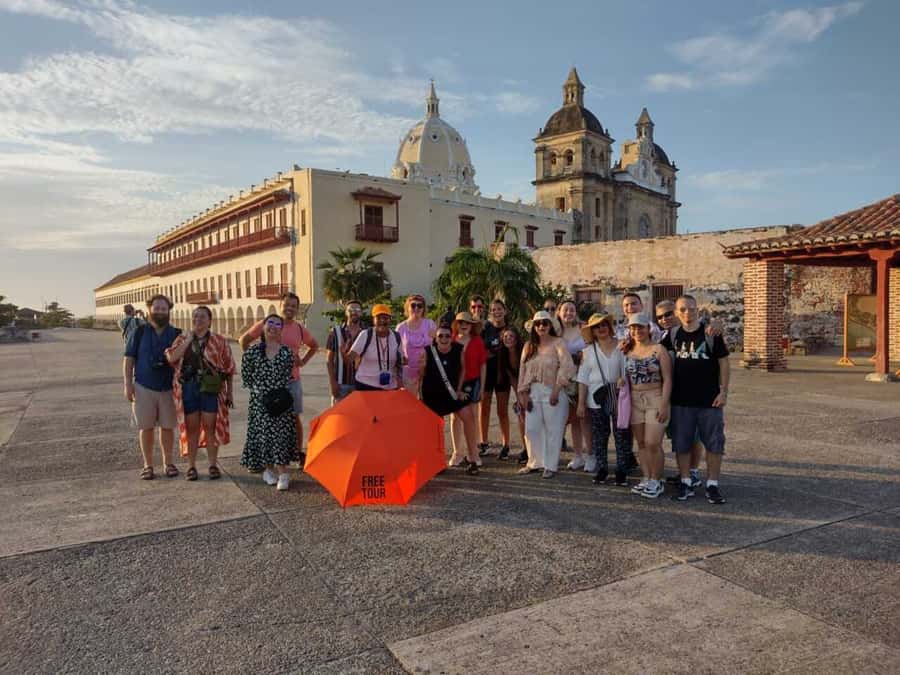
- The route begins at Plaza Cervantes: Meet by the Camellón de Los Mártires, in front of the Clock Tower, and look for the orange umbrella.
- Two very different neighborhoods are included: The first part covers the Walled City, while the final hour explores Getsemaní and its street culture.
- The history is frank: Expect discussion of conquest, enslavement, colonial trade, independence, and the changing social order of Cartagena.
- Guides add local color: Depending on the day, you may be led by Dani, Legacy, Robert, Álvaro David, Ingrid, Rebeca, or another English- or Spanish-speaking guide.
- Music and movement are part of the experience: Salsa, champeta, and occasional dance lessons help explain Cartagena’s African and Caribbean identity.
- The $12 price includes the tip: This is presented as a paid free walking tour, so you do not need to plan an additional guide gratuity.
Why this walk is a smart first look at Cartagena
I would put this tour near the start of a Cartagena visit. It gives you a map in your head, introduces the city’s major public spaces, and explains why the old center looks Spanish but feels unmistakably Caribbean.
The route is not only about pretty balconies and church fronts. You hear how the city developed through conquest, colonial rule, forced labor, trade, piracy, independence, and migration. That wider frame makes later visits to the walls, churches, museums, and plazas more meaningful.
The price is also a strong point. At $12 per person, you receive two and a half hours with a professional guide, covering both the Walled City and Getsemaní. Many paid sightseeing walks cost much more, while many free walking tours expect a tip at the end. Here, the stated tip is already included, which makes your final cost easier to understand.
You should still treat the price as an entry-level city orientation rather than a private tour. The experience is shared, and the guide must keep a group moving through busy public streets. If you want long museum visits, quiet photography time, or a custom route, a private guide would be a better fit.
More Old Town and Historic Centre Walks in the world:
- Madrid Essential: Historic Center, Plaza Mayor & Royal Palace
★ 5.0 · 6,416 reviews - Lisbon: Live Fado Show with Port Wine in Historic Center
★ 4.7 · 4,166 reviews - Valencia Old Town Tour with Wine & Tapas in 11th Century Historic Monument
★ 5.0 · 3,234 reviews
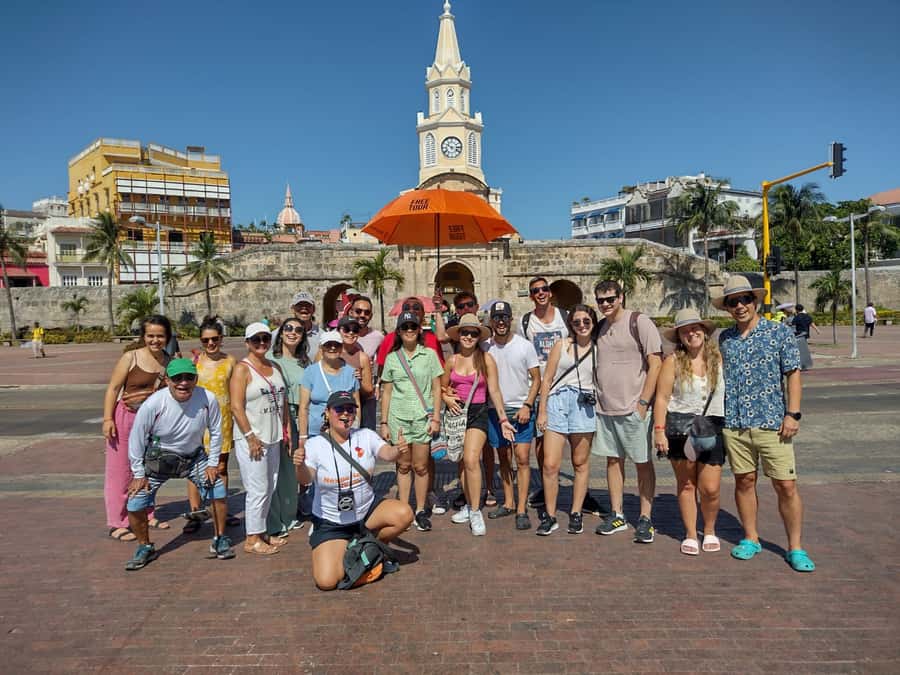
Starting at Plaza Cervantes and the Clock Tower
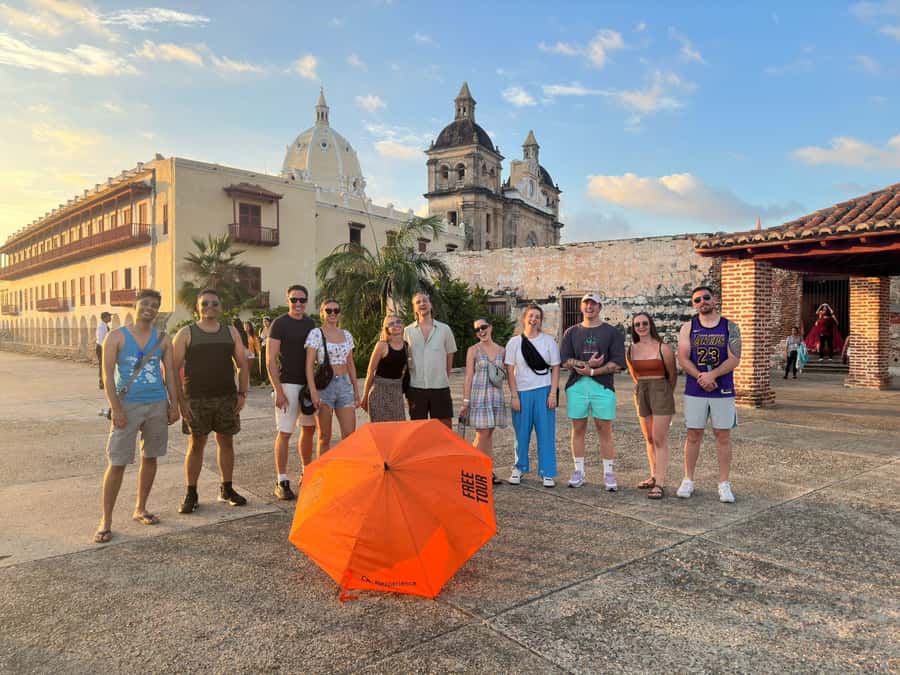
The meeting point is Plaza Cervantes, part of the Camellón de Los Mártires, directly in front of Cartagena’s Clock Tower. Look for the orange umbrella. This is a useful meeting place because the Clock Tower is one of the city’s easiest landmarks to spot.
The opening section introduces the Indigenous people who lived in the region before and during the arrival of the Spanish. That matters because Cartagena’s story did not begin with the colonial buildings you see today. The first part of the walk sets up the layers of people and power that shaped the city.
From there, the route reaches the Clock Tower, known as the Golden Key of Cartagena. The group enters Plaza del Ecuador, formerly associated with the Plaza del Esclavo, then follows streets connected with the history of enslavement, including Porto Carrero and Candilejo.
Pedro de Heredia, the Spanish founder of Cartagena, appears in this early section of the story. The point is not to admire the colonial past without question. The guide connects the city’s grand architecture with the hard systems of labor and trade that made colonial wealth possible.
Following the route of trade and enslavement
The Portal de los Dulces adds a more personal layer to that difficult history. The arcades became associated with women’s commercial activity during the period of slavery, and descendants continue related traditions today.
This is one of the route’s useful qualities. Instead of treating slavery as a subject sealed in the past, the walk shows how work, food, commerce, family, and public space carried parts of that history forward. You get a clearer sense of how African and Caribbean customs became part of Cartagena’s identity.
The old Plaza de la Aduana then brings the discussion to trade. This was a major place for the buying and selling of merchandise, including enslaved people. The Municipal Hall and other important buildings around the square give the guide a chance to explain how government and commerce worked side by side.
You should expect this section to be serious. The tour is designed to explain Cartagena’s painful past, not simply decorate it with legends. That is especially valuable for visitors who want to understand the city beyond its colorful facades.
Art, emeralds, and the city’s public face
The walk also touches several museums. The Museum of Modern Art presents Caribbean and Latin American art from the 1950s onward. The Gold Museum focuses on Indigenous pieces from the Colombian Caribbean, while the Emerald Museum introduces the famous green stones associated with Colombia.
These are mostly exterior stops or orientation points within a walking route, so do not expect a full museum visit during the 150 minutes. Still, they help you decide what deserves a return visit. If Indigenous art, modern art, or emeralds interest you, note the locations and come back when you have more time.
The route also shows how Cartagena presents itself to the world. Gold, emeralds, colonial architecture, and modern art sit within the same compact center, but each reflects a different chapter of the city’s past. The guide’s job is to connect those chapters without turning the walk into a list of dates.
Gabriel García Márquez is part of the cultural backdrop. His writing, including One Hundred Years of Solitude, is used to explain the way memory, myth, sayings, and Caribbean imagination shape the city. You will not be taking a dedicated literary tour, but his presence adds another way to read Cartagena’s streets.
More History Walking Tours in the world:
- History and Hauntings of Salem Guided Walking Tour
★ 5.0 · 14,564 reviews - Lisbon: History, Stories and Lifestyle Walking Tour
★ 4.8 · 10,902 reviews - Boston: Freedom Trail History Small Group Walking Tour
★ 5.0 · 6,450 reviews - Historic Charleston Guided Sightseeing Walking Tour
★ 5.0 · 6,216 reviews
San Pedro Claver and the moral center of the route
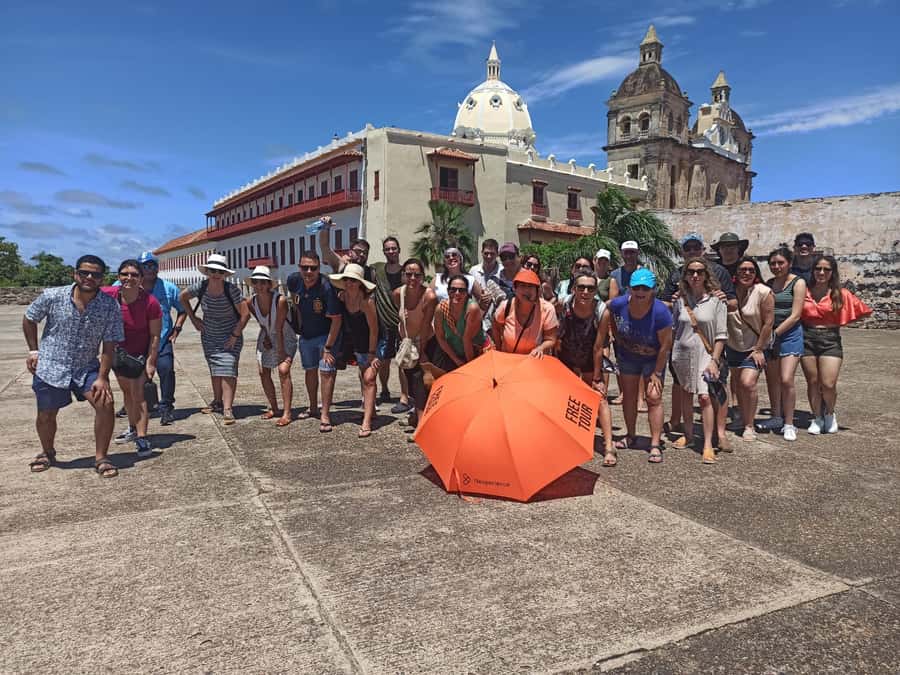
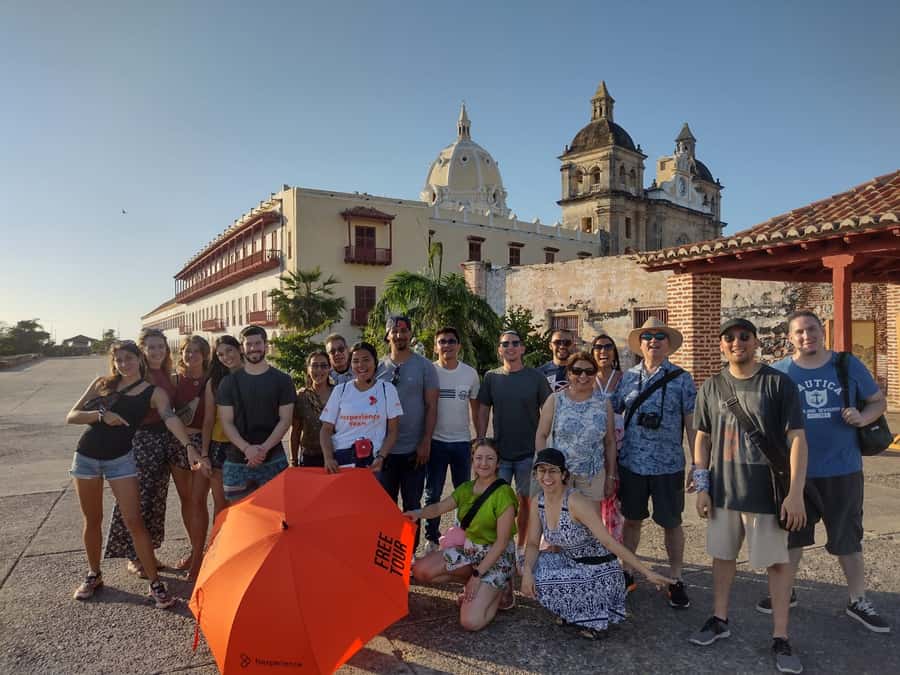
The Church and Monastery of San Pedro Claver offer one of the most important stops. San Pedro Claver is remembered as the Slave of the Slaves because of his work with enslaved people arriving in Cartagena.
The church and museum-monastery also serve as the headquarters of human rights. That connection gives the stop present-day weight. You are not only looking at religious architecture. You are being asked to consider how the city remembers exploitation, resistance, faith, and human dignity.
I particularly like this part of the route because it brings together architecture and ethics. A church can be beautiful, but the surrounding story tells you who had power, who suffered, and who tried to respond. Listen closely here, since it is one of the places where the tour’s historical and modern themes meet.
Cartagena behind the walls at San Ignacio Bastion
At the San Ignacio Bastion, the walk turns toward military history. The bastion was built to protect the Bay of Souls from pirate attacks, and it shows how the Spanish defended this important port.
This is where stories of pirates and corsairs enter the tour. The guide explains the defensive strategy behind Cartagena’s walls, rather than treating the fortifications as simple photo backdrops. You learn why bastions were placed where they were and how the city’s defenses helped protect trade.
The walls are one of Cartagena’s defining sights, but their meaning is easy to miss if you only walk along them at sunset. This tour gives you the basic military context before you return on your own. Bring water and wear comfortable shoes, since much of the experience takes place outside.
Plaza Bolívar, shade, and a pause in the old center
The walk continues to Plaza Bolívar, named for the independence leader Simón Bolívar. The square offers a natural pause point and a chance to refresh before the route moves on.
Independence is one of the three main historical periods covered by the tour, alongside conquest and colony. The guide helps connect the political break with Spain to the older social divisions created during the colonial period.
This is also where the guide’s style can make a major difference. Dani is often praised for mixing facts with humor and dance, while Legacy is known for keeping the group engaged and adding useful city advice. Robert is noted for finding shade and offering restaurant suggestions. Álvaro David is praised for explaining history along with typical street-vendor prices.
Guide assignments can change, so you cannot book a specific personality based on the information provided. Still, the repeated strength of the guide team is clear: expect a lively presentation rather than a dry lecture.
Centennial Park and Cartagena’s small wild residents
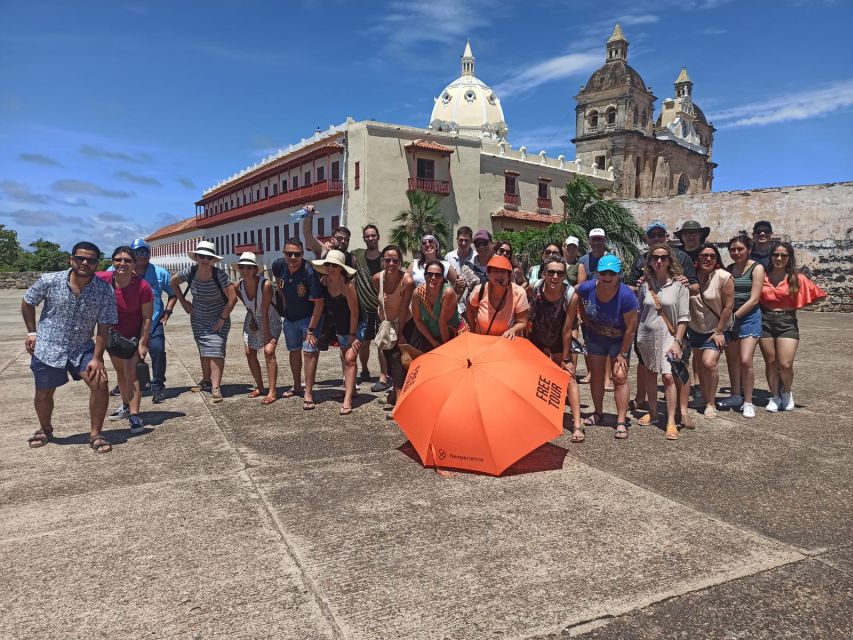
Centennial Park, a former railway station area, provides one of the route’s more surprising changes of mood. It is described as an important green lung for Cartagena and a remnant of tropical dry forest within the city.
Look for sloths, squirrels, and iguanas. The park gives you a break from stone streets and hot walls, with trees that offer shade. It also shows that Cartagena’s character is not limited to colonial architecture and nightlife.
A few practical points matter here. Animals are not guaranteed to appear on every walk, and the park is still part of a public urban route. Treat any wildlife sighting as a bonus, not the main reason to book. The park is valuable even without a perfect sloth sighting because it changes the pace of the tour.
Families can fit this outing into a Cartagena plan. One guide made a point of checking on a two-year-old during the walk, and the route includes shade breaks. Even so, young children may tire in the heat, so plan water and light clothing.
Getsemaní, umbrellas, graffiti, and everyday culture
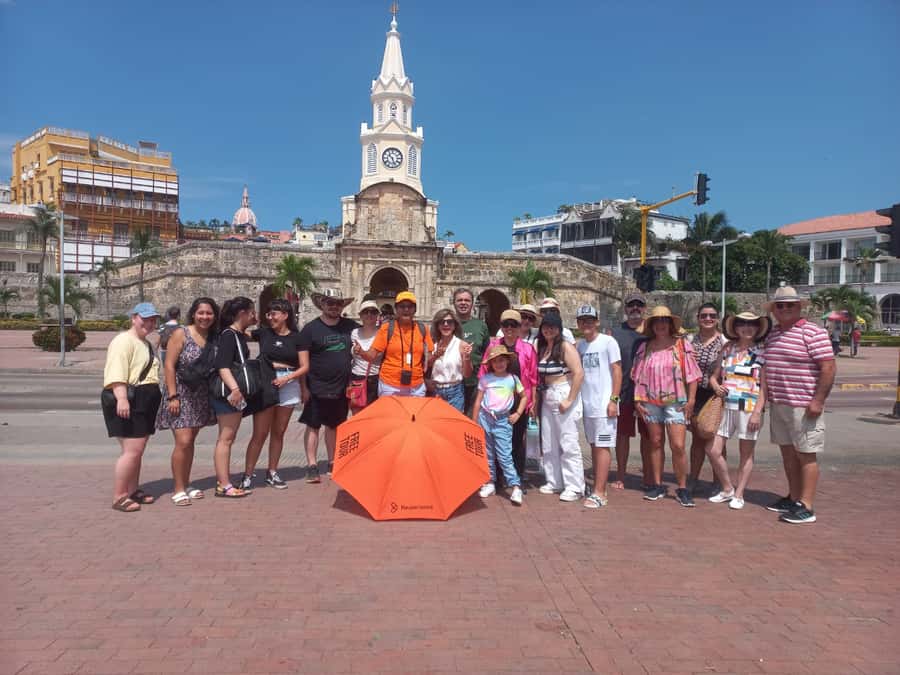
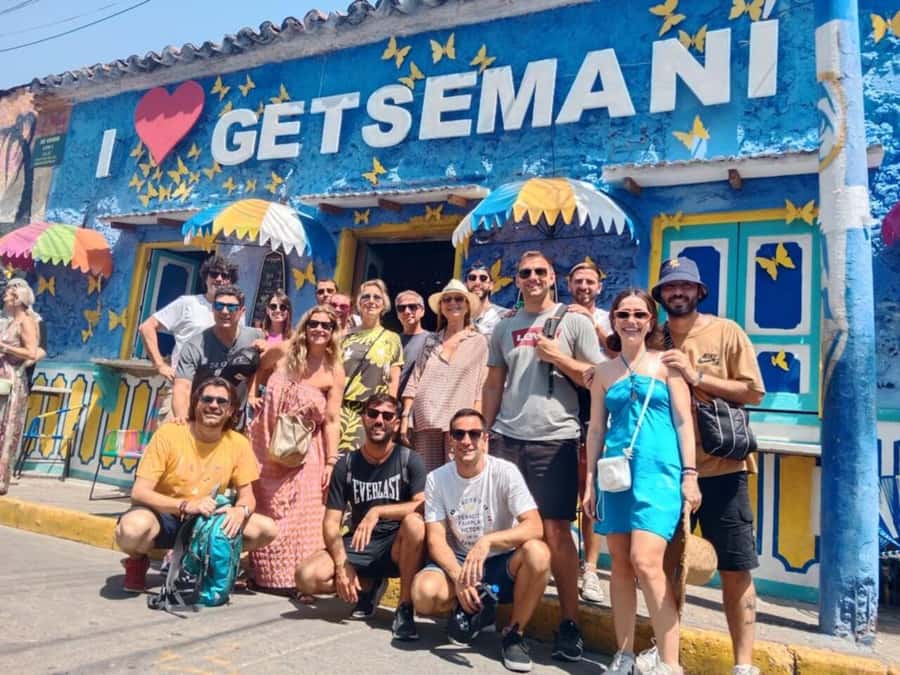
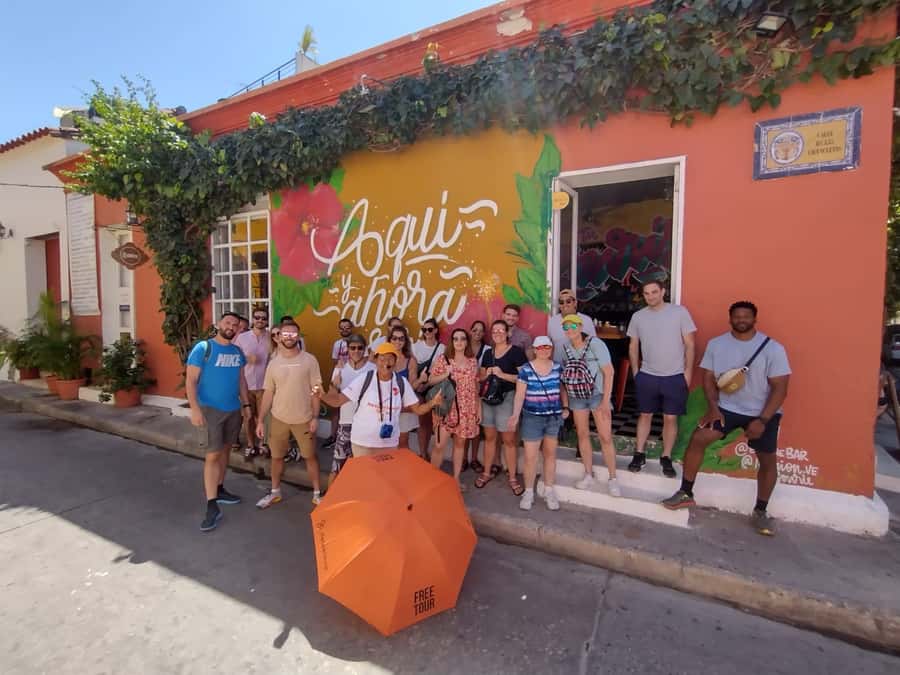
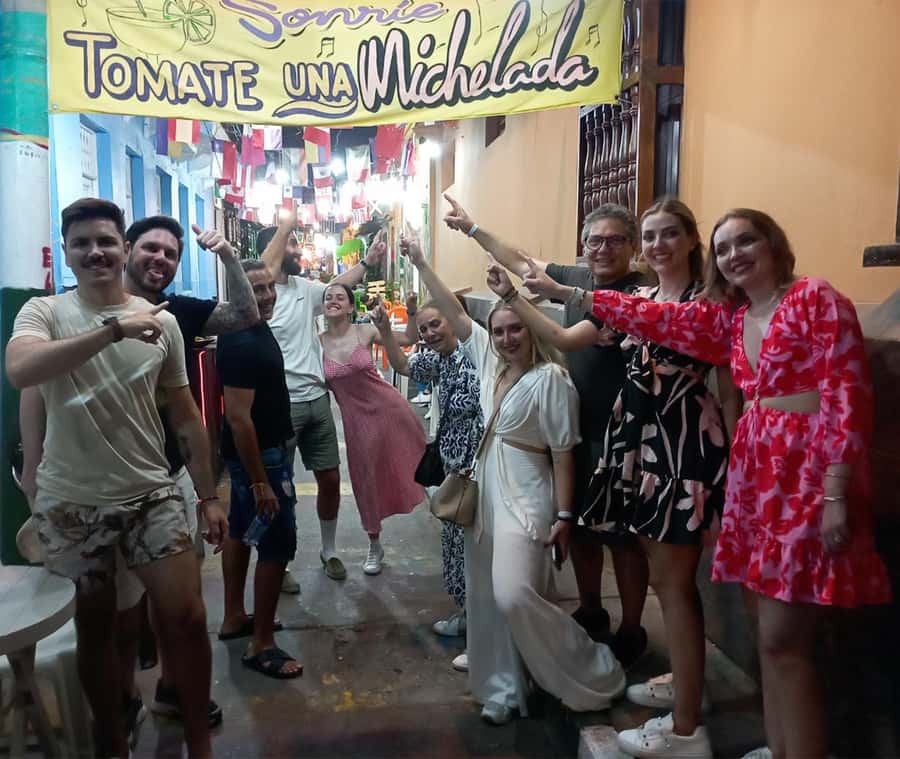
The final hour shifts into Getsemaní, one of Cartagena’s best-known cultural neighborhoods. The change is easy to feel. Instead of focusing mainly on colonial institutions and military defenses, the route highlights street art, colorful architecture, umbrellas, public life, and local customs.
The umbrella corridor is one of the area’s most recognizable photo spots. Graffiti adds another layer, while the architecture shows how older buildings have been adapted for present-day life. The guide explains why the neighborhood matters rather than simply sending you toward the most photographed wall.
This is also where the tour’s theme of a new social order becomes clearer. Getsemaní reflects popular culture, African heritage, neighborhood pride, and a city that continues to change. It helps balance the formal history of the Walled City with a look at how Cartagena expresses itself today.
The route enters Callejón Ancho and finishes on Calle San Juan. The ending comes with salsa and African champeta, two sounds that help explain Cartagena’s Caribbean identity.
Some guides add dance instruction along the way. Dani has taught traditional dances, and one walk included three chances for the group to dance. You should not expect a formal dance class, but you may be asked to join in. That makes the final section more active and memorable, though shy participants may prefer to watch.
Heat, language, pacing, and accessibility
The tour lasts 150 minutes, with about two hours in the Historic Center and one hour in Getsemaní. It is a walking experience with no hotel pickup, drop-off, food, or drinks included.
Cartagena can be hot, especially when the group is stopped in open plazas. Wear comfortable shoes and breathable, weather-appropriate clothes. Sunscreen is essential, and a full bottle of water is sensible even if the guide points out places to refresh.
The guides speak English or Spanish. Most of the English feedback is strongly positive, but one person found that a guide sometimes spoke too quickly. If English is not your first language, tell the guide early that you prefer a slower pace.
The tour is listed as wheelchair accessible. Since the route uses public streets, plazas, and historic areas, it is still sensible to confirm any specific mobility needs when booking.
Rain can affect the mood and comfort of the walk. The tour can continue in wet weather, but bring weather-appropriate clothing and keep your expectations flexible.
Who will get the most from this tour
I would recommend it to first-time visitors, history fans, culture-focused visitors, and anyone who wants more than a photo walk. It is especially useful if you want to understand the connection between Spanish colonial power, African heritage, Indigenous culture, independence, music, and modern Cartagena.
Families can join, and the route offers enough variety to hold attention: animals in Centennial Park, colorful Getsemaní streets, stories of pirates, art, churches, and chances to dance. Still, the historical discussion of slavery and colonial violence may be heavy for very young children.
This is less suited to anyone seeking a quiet, slow stroll. The group must cover a lot of ground and hear a large amount of information in two and a half hours. It is also not the right choice if your main goal is to enter every museum or spend extended time inside San Pedro Claver.
Should you book the Cartagena walking tour?
Book it if you want a low-cost introduction that treats Cartagena as both a beautiful old city and a place shaped by conquest, slavery, resistance, music, and modern neighborhood life. The combination of the Walled City and Getsemaní gives you more range than a tour limited to colonial plazas.
The strongest reasons to go are the guide-led storytelling, the honest treatment of difficult history, the practical food and city advice, and the lively finish with salsa and champeta. At $12, with the guide’s tip already included, the value is good.
Skip it only if heat, long walks, shared groups, or historical discussion are likely to make the experience uncomfortable. For most visitors, I would schedule it early in the stay, carry water, and use the final recommendations to plan the rest of your time in Cartagena.
FAQ
Where does the tour meet?
It meets at Plaza Cervantes, also called the Camellón de Los Mártires, in front of the Clock Tower. Look for the orange umbrella.
How long does the tour last?
The tour lasts 150 minutes. The planned route includes about two hours in Cartagena’s Historic Center and one hour in Getsemaní.
Which areas does the walk cover?
It covers the Walled City, including the Historic Center, and the Getsemaní neighborhood.
What languages are available?
The tour is offered in English and Spanish with a live guide.
Is the guide’s tip included?
Yes. The activity is described as a paid free walking tour, with the tip already included in the $12 price.
Is hotel pickup included?
No. Hotel pickup and drop-off are not included.
Are food and drinks included?
No. You need to arrange your own food and drinks.
What should I bring?
Bring comfortable shoes, sunscreen, comfortable clothing, and clothing suited to the weather. Water is also a practical choice for Cartagena’s heat.
Newest history tours we have reviewed in the world
- Bilbao Historical Tour in small group★ 4.7 · 52 reviews
- Bologna: Street Food Tour in the Historic Center★ 4.8 · 125 reviews
- Blenheim: Omaka Aviation Heritage Centre Admission Ticket★ 4.9 · 31 reviews
- CEBU: Cebu City Heritage and Uphill Guided Tour★ 4.2 · 31 reviews
- Bishkek : City Tour (History, Architects, Statues & Culture)★ 4.9 · 54 reviews
- Berlin: Nazi History Walking Tour★ 4.8 · 33 reviews
- Best of Baku: 4-Hour City Tour Historic and Modern Landmarks★ 4.7 · 63 reviews
- Belfast: Best of Belfast History, Culture & Art Walking Tour★ 4.9 · 158 reviews
Old Town & Historic Centre Walks, compared.
Madrid Essential: Historic Center, Plaza Mayor & Royal Palace
Read our review →
Live Fado Show with Port Wine in Historic Center
Read our review →
Valencia Old Town Tour with Wine & Tapas in 11th Century Historic Monument
Read our review →
Prague Old Town, Medieval Underground and Dungeon Historical Tour
Read our review →
Old Town Walking Tour History and Tales in Edinburgh
Read our review →
Philadelphia Old City Historic Walking Tour with 10+ Top Sites
Read our review →
Saadian Tombs & Bahia Palace, Medina Guided Tour
Read our review →Browse the lists this tour appears in