
Review · LISBON HISTORY TOURS
Lisbon city tour on history, culture and current topics
Lisbon reveals itself best on foot, and this tour gives you a smart route through four very different districts. You begin at Rossio Square, climb toward Chiado and Bairro Alto, then wind through Alfama before finishing beside the Tejo River. Along the way, Santa Justa Elevator and Lisbon’s viewpoints provide the big sights, while the streets between them show how the city really fits together.
I like the small group size, capped at 12, because it gives you a better chance to ask about Portuguese customs, food, and daily life. I also like the practical advice from guides such as Sara, Melina, and Pedro, including restaurant suggestions that can help shape the rest of your stay.
The main drawback is physical: this is a serious walk with uphill stretches, downhill streets, uneven pavement, and pauses at viewpoints rather than a ride between sights. If steep streets are difficult for you, or if rain arrives, this may not be the right introduction to Lisbon.
Key points to know before booking
- Three and a half hours on foot: The route covers Rossio, Baixa, Chiado, Bairro Alto, Alfama, and Praça do Comércio.
- A German-speaking guide: Sara, Melina, and Pedro are among the guides associated with this experience.
- A maximum of 12 people: Small groups make questions and conversation easier.
- Two excellent viewpoints: São Pedro de Alcântara and Santa Luzia give very different looks at Lisbon.
- A local taste along the way: The included treat is a local pastry or liqueur, with pastéis de nata and ginjinha specifically mentioned as possibilities.
- A useful first-day tour: The route gives you a broad sense of Lisbon and practical food and sightseeing tips.
Starting at Rossio, Lisbon’s natural meeting place
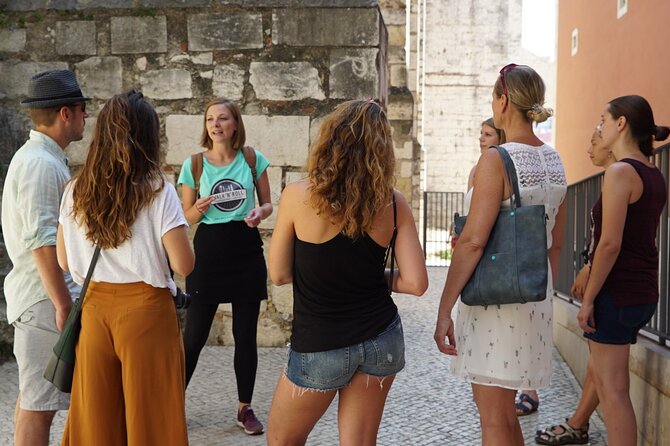
The tour begins at the north fountain of Praça Dom Pedro IV, usually called Rossio. Meet between the statue of the king and the National Theatre, an easy spot near public transportation and one of central Lisbon’s most familiar squares.
Rossio is a good starting point because it sits at the edge of Baixa, Lisbon’s lower town. From here, you can quickly understand the city’s basic shape: the broad, orderly streets of the rebuilt center below, with older hills rising toward Chiado, Bairro Alto, and Alfama.
The first stop is brief, but the guide can set up the main themes of the walk here: Portugal’s past, Lisbon’s neighborhoods, local customs, and current topics. I would book this near the start of your visit if you want the rest of your sightseeing to make more sense.
More Local Culture and Traditions Tours in Portugal
- Lisbon Fado History Cultural Walking Tour
★ 5.0 · 118 reviews - Taste Funchal: food, wine & cultural tour
★ 5.0 · 906 reviews - Taste Funchal: food, wine and cultural tour
★ 4.8 · 680 reviews
Baixa and the Santa Justa Elevator
From Rossio, you move into Baixa. This central district is laid out on a more regular street plan than the older quarters, making it easier to walk and navigate. The short stop here helps you see the contrast between Lisbon’s planned lower town and its hillier old neighborhoods.
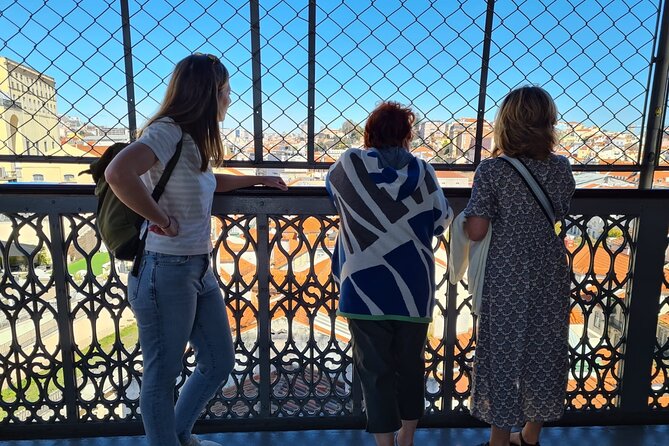
The Santa Justa Elevator is one of the tour’s best visual moments. You first see it from below, where its tall iron structure rises above the surrounding streets. Later, you reach the observation platform for a higher view across Baixa and toward Lisbon Castle.
The experience does not include a ride on the elevator, so you should not book it expecting a dedicated attraction visit. Still, seeing it from both levels is a clever use of the route. You get the landmark, the engineering detail, and the view without spending the tour waiting in line.
Carmo ruins and the literary side of Chiado
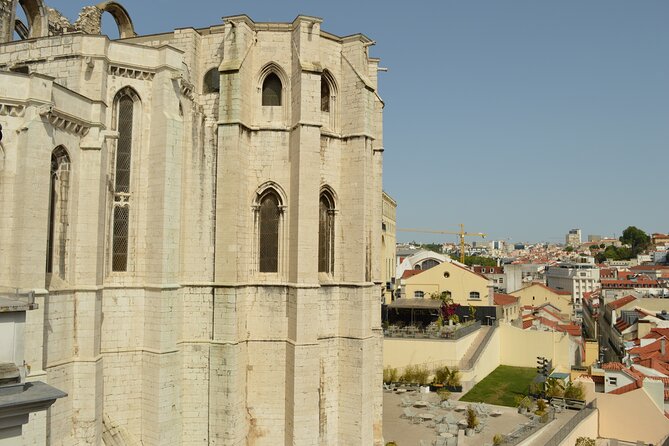
The walk continues to the Carmo Convent ruins. The remains are viewed from outside, with about 15 minutes set aside for the stop. The roofless Gothic structure gives this part of Lisbon a strong sense of age, but the guide’s explanation is what turns a quick look into useful context.
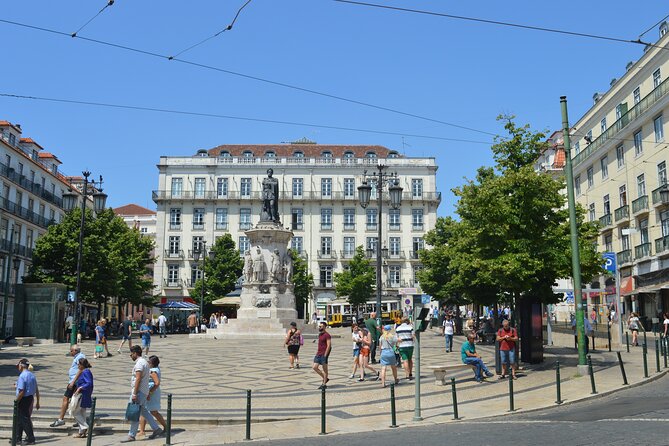
From Carmo, the group enters Chiado, known here as the poets’ quarter. You spend about 20 minutes in the district before reaching Praça Luís de Camões, its largest square, for another pause.
Chiado offers a different mood from Baixa. It is associated with writers, cafés, shops, and Lisbon’s cultural life, while the nearby streets also lead toward the nightlife of Bairro Alto. I like this part of the route because you are not simply ticking off monuments. You are seeing how a district’s literary identity, shopping streets, and social life sit close together.
The tour then passes along Rua Augusta, Lisbon’s main shopping street, for a brief taste of the area. This is not a shopping stop, and that is useful to know. The point is to connect the central streets with the riverfront rather than spend time inside shops.
Climbing Bairro Alto in the daytime
Bairro Alto can feel surprisingly quiet during the day. Its narrow residential streets become much more active after dark, when bars and nightlife take over. On this tour, you see the neighborhood in its daytime form, with the guide explaining how its role changes as evening arrives.
The climb is real, though the itinerary breaks it into manageable sections. You should wear comfortable shoes and keep water with you. Lisbon’s stone pavements can be uneven, and the route includes both uphill and downhill walking.
This is also where the tour gives you a useful local comparison. A neighborhood can look calm in daylight and become a very different place at night. If you plan to return to Bairro Alto after dinner, the daytime walk helps you recognize the streets and understand what you are seeing.
More Local Culture and Traditions Tours in Lisbon:
- Amsterdam Food and Cultural Tour with Tastings
★ 5.0 · 4,315 reviews - Sevilla Food Tour: Tapas, Wine, History & Traditions
★ 5.0 · 3,468 reviews - Tromsø: Reindeer Camp and Sami Cultural Tour with Lunch
★ 4.7 · 3,326 reviews - Half Day Dominican Republic Cultural Tour : Small Group
★ 4.5 · 1,862 reviews
The 40-minute pause at São Pedro de Alcântara
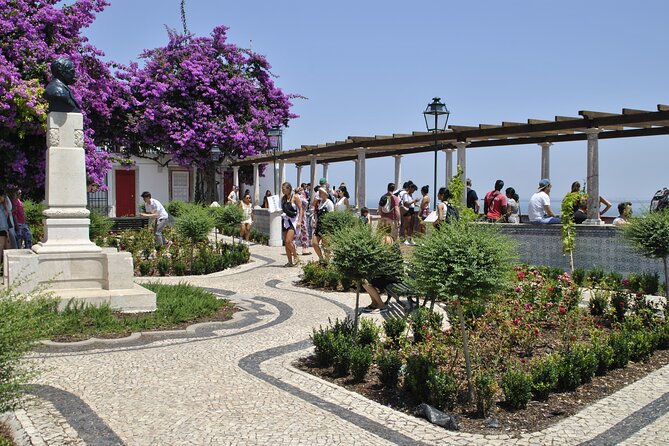
The longest stop comes at Miradouro de São Pedro de Alcântara. You spend about 40 minutes here, taking in the view and having a short break. After the climb through Bairro Alto, that pause matters.
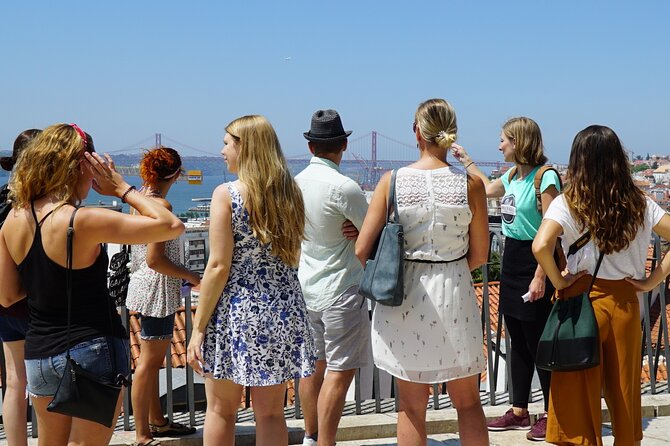
This viewpoint looks across central Lisbon toward the castle and the hills. It is a good place for photographs, but it also lets you connect the route in your head. You have walked up from Rossio and Baixa, and from here you can see the city’s layered slopes rather than just isolated monuments.
The included tasting may happen around this part of the experience or along the route. Depending on the guide and arrangements, you may receive a local pastry or a small taste of liqueur. Several tour descriptions specifically mention pastéis de nata and ginjinha, the sweet cherry liqueur often associated with Lisbon.
Do not treat the tasting as a full snack or meal. It is a small local sample, but it adds a welcome pause and gives the guide an easy way to talk about Portuguese food and drinking customs.
Alfama’s steep lanes and lookout points
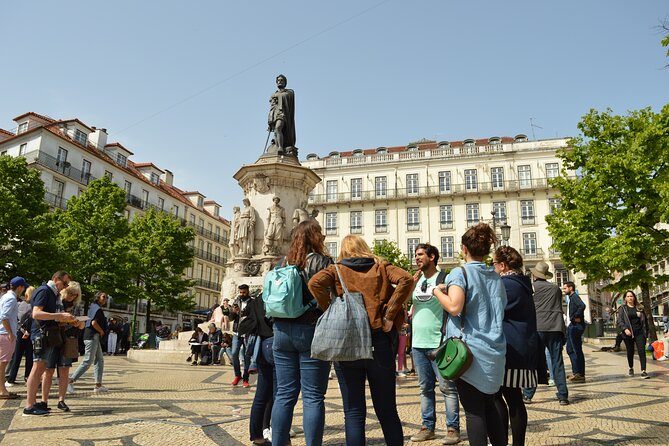
After the central districts, the route moves into Alfama, Lisbon’s oldest quarter. This is where the walking becomes most atmospheric and least predictable. The streets narrow, turn sharply, and rise and fall around old buildings and small residential lanes.
You spend about 30 minutes exploring Alfama, then stop at Miradouro de Santa Luzia. The viewpoint is widely regarded as one of Lisbon’s most beautiful, with views over Alfama and toward the river. It is a different visual experience from São Pedro de Alcântara, which looks across the central city from the opposite side.
The value of having a guide here is less about reaching a famous viewpoint and more about understanding the spaces between it. Without local direction, Alfama can feel like a pleasant maze. With an informed guide, you can connect the winding streets to Lisbon’s older neighborhoods, local life, and the city’s long development.
The route is not designed for people with walking difficulties. The tour provider recommends moderate to good fitness, and that advice should be taken seriously. You do not need to be an athlete, but you should be comfortable walking for several hours over hills and uneven streets.
Ending at Praça do Comércio beside the Tejo
The final stop is Praça do Comércio, also known as Terreiro do Paço. The square opens toward the Tejo River and is framed by grand yellow buildings and the imposing triumphal arch.
Ending here gives the tour a clear finish. You have moved from Rossio through the higher districts and older lanes, then returned to the broad riverfront. It is also a practical place to continue your day, since the square is central and close to other parts of the city.
The tour ends here rather than returning to Rossio. Plan your next activity from Praça do Comércio and allow a little time to orient yourself before setting off. The end point is particularly convenient if you want to continue along the river or explore more of Baixa.
What the guides add to the walk
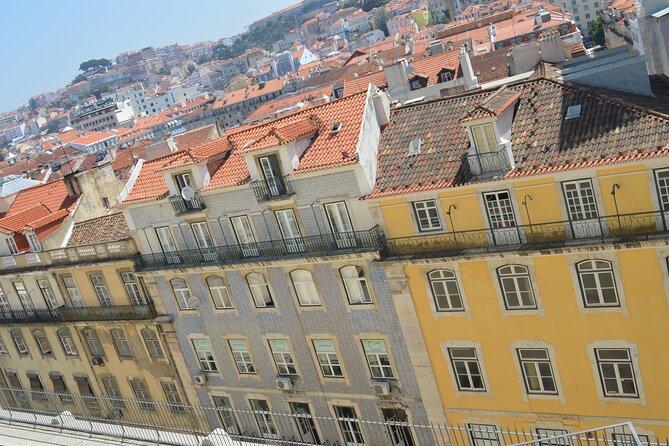
The experience is conducted in German, which makes it a natural choice for German-speaking visitors who want more than a basic list of dates and monuments. Guides named in connection with the tour include Sara, Melina, and Pedro.
The strongest feature is the mix of history and ordinary life. Pedro is described as someone who answers questions and explains both the country and its people. Melina’s style is described as friendly and personal, while Sara is associated with historical background and practical local advice.
You can expect the guides to discuss Portuguese history, culture, and current topics rather than focus only on architecture. The exact balance will depend on your guide and the questions asked by the group, but the format encourages conversation.
The restaurant recommendations are especially useful. Advice at the end of a walking tour can save you from choosing dinner at random in a heavily visited area. Several tour accounts also describe using the suggestions later, so I would keep your phone ready to note names and locations.
Is the $45.86 price good value?
At $45.86 per person, this is not the cheapest way to see Lisbon. You can walk through these districts on your own, and free walking tours are widely available in many cities. The question is what you want included for the price.
Here, you are paying for a German-speaking guide, a carefully arranged 3.5-hour route, a small group of no more than 12 people, a local tasting, and practical recommendations. You are also paying for the judgment needed to connect the districts in a sensible order.
I see the price as fair if you value explanation and personal questions. It is less appealing if you want only photographs of the main sights, prefer to move at your own pace, or plan to spend a long time inside attractions. Admission tickets are not included, and the Carmo ruins are viewed from outside.
The tour is also a good substitute for several hours of planning. Lisbon’s hills and separate neighborhoods can make a first visit feel scattered. A single route through Baixa, Chiado, Bairro Alto, Alfama, and the riverfront gives you a working map for later exploration.
When to take the tour and what to bring
The tour lasts about three and a half hours, so it works best in the morning or early afternoon. Taking it near the beginning of your stay lets you use the restaurant advice and neighborhood orientation afterward.
Bring shoes with solid comfort, a phone or camera, and water. The route includes climbs, uneven pavement, and open viewpoints. Lisbon weather can change, and the experience requires good weather, so check the forecast and keep your schedule flexible.
The meeting point is the north fountain at Rossio, while the end is at Praça do Comércio. There is no private transportation. Public transportation is nearby at the start, but you should arrange your own way to Rossio and plan onward travel from the riverfront.
Free cancellation is available up to 24 hours before the start time for a full refund. Changes or cancellations within 24 hours are not refunded, and poor weather may lead to a different date or a full refund.
Who will get the most from this Lisbon walk?
I would choose this for a first visit, especially if you want history explained in German and prefer a small group. It suits people who enjoy walking through neighborhoods rather than moving between sights by vehicle.
It is also a good fit for independent visitors who still want a local introduction. You can take the guide’s restaurant suggestions, return to a favorite district later, and use the route to plan your own time in Lisbon.
I would think twice if your main goal is to visit the interiors of monuments. The tour focuses on streets, viewpoints, context, and neighborhoods, with no included private transport and no listed admission to the Carmo Convent or Santa Justa Elevator.
The strong overall rating, 100 percent recommendation figure, and 5 out of 5 score from 41 reviews point to a consistently well-liked experience. The praise centers on the guides’ friendly manner, clear explanations, humor, small groups, and useful advice. Those are the parts that matter most when deciding if this tour fits your style.
Should you book this tour?
Book it if you want a lively first look at Lisbon with a German-speaking guide, real neighborhood walking, and time for questions. The route gives you major viewpoints and famous landmarks, but it also shows the quiet daytime side of Bairro Alto and the winding residential character of Alfama.
I would not book it for a slow, flat stroll or a monument-heavy sightseeing day. For most reasonably fit visitors, though, the combination of city history, local tips, a small tasting, and a well-planned route makes $45.86 a sensible investment at the start of a Lisbon stay.
FAQ
How long does the Lisbon walking tour last?
The tour lasts approximately 3 hours and 30 minutes.
What language is the tour conducted in?
The walking tour is conducted in German.
Where does the tour begin?
It begins at the north fountain of Praça Dom Pedro IV, also known as Rossio Square, between the king’s statue and the National Theatre.
Where does the tour end?
The tour ends at Praça do Comércio, also called Terreiro do Paço, beside the Tejo River.
How many people can join the tour?
The group has a maximum of 12 participants.
What Lisbon neighborhoods does the route cover?
The route covers Baixa, Chiado, Bairro Alto, and Alfama. It also includes Rossio Square, Rua Augusta, and Praça do Comércio.
Is food or drink included?
A local pastry or liqueur tasting is included. Pastéis de nata and ginjinha are specifically mentioned as possible tastes.
Are transportation and admission tickets included?
Private transportation is not included. The listed stops are explored from outside or as public spaces, and no attraction admission is listed as included.
Is the tour suitable for people with walking difficulties?
No. The tour requires moderate to good fitness and is not suitable for people with walking difficulties because it includes hills and extended walking.
What happens if the weather is poor?
The experience requires good weather. If it is canceled because of poor weather, you will be offered another date or a full refund.
Newest history tours we have reviewed in Lisbon
- Lisbon Fado History Cultural Walking Tour★ 5.0 · 118 reviews
- Lisbon Jewish Heritage and History – Private Tour Van★ 5.0 · 294 reviews
- Lisbon: Jewish History Tour of Lisbon★ 4.8 · 84 reviews
- Lisbon: Private Dark History Walking Tour with Drinks★ 4.8 · 387 reviews
- Lisbon Essential Walking Tour: History, Stories and Lifestyle★ 5.0 · 316 reviews
- Historic Walking Tour Through Lisbon’s Oldest Neighborhood★ 5.0 · 233 reviews
- Lisbon’s historic old town in a tuk-tuk in German★ 4.9 · 319 reviews
- Private Lisbon-Arrábida Wine Tour: 3 Wineries, Coast & Heritage★ 5.0 · 450 reviews
Local Culture & Traditions Tours, compared.

Amsterdam Food and Cultural Tour with Tastings
Read our review →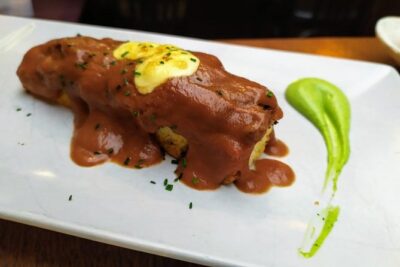
Sevilla Food Tour: Tapas, Wine, History & Traditions
Read our review →
Tromsø: Reindeer Camp and Sami Cultural Tour with Lunch
Read our review →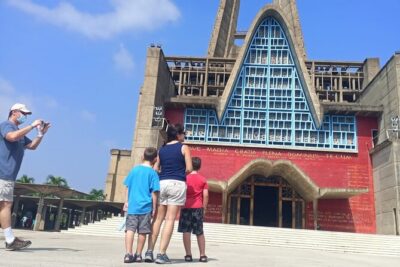
Half Day Dominican Republic Cultural Tour : Small Group
Read our review →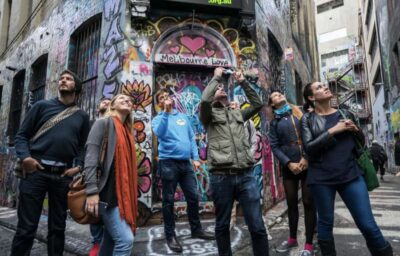
Ultimate Melbourne Walking Tour: History, Laneways & Culture
Read our review →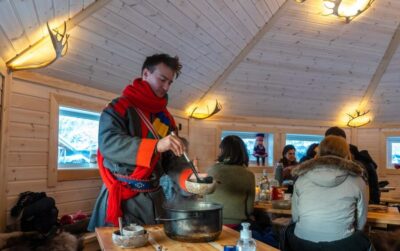
Tromsø: Sámi Reindeer Sledding and Sami Cultural Tour
Read our review →
Kyoto Gion: 2-Hour Geisha Culture & History Walking Tour
Read our review →
Marrakech Historical and Cultural Tour – Half Day City Tour
Read our review →Browse the lists this tour appears in