
Review · LISBON HISTORY TOURS
Lisbon Essential Walking Tour: History, Stories and Lifestyle
Lisbon reveals itself best from the pavement, one hill, viewpoint, church, and tiled lane at a time. This three-hour walk links Bairro Alto, Baixa, and Alfama, with a Tram 28 ride and stories that connect the 1755 earthquake, the Carnation Revolution, fado, and everyday Lisbon life.
I like the strong first-day value: you get the city’s key sights without spending a full day indoors. I also like the human touch, especially when guides such as Ricardo, Beatrice, Paulo, Ana, and Sofia add restaurant, fado, and navigation tips. The catch is simple: this is a hilly walk of nearly four miles for some groups, so comfortable shoes and water matter.
Key points at a glance
- Three historic neighborhoods in one walk: Start in Bairro Alto, cross Baixa, and finish in Alfama.
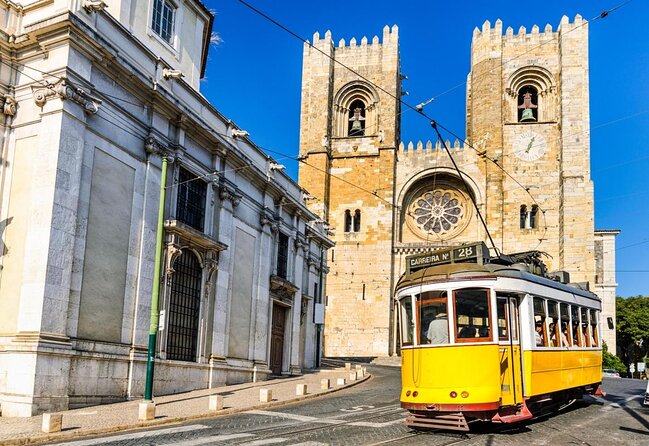
- A useful Tram 28 ride: The tram links the central streets with the Portas do Sol viewpoint and Alfama.
- Big history in small places: San Roque, Carmo, and Lisbon Cathedral each show a different chapter of the city.
- A welcome local break: Coffee and pastry are included in Baixa, with a stop at a local café.
- Small-group format: The maximum group size is 15, enough for personal questions without making the walk feel private.
- Best for a first Lisbon day: You leave with a map in your head and practical ideas for the rest of your stay.
Why this makes a strong first Lisbon tour
Lisbon can be confusing at first. The city spreads over steep hills, its neighborhoods change character quickly, and important sights often sit beside ordinary streets with little explanation. This tour gives you a useful framework before you set off on your own.
You begin in Bairro Alto, look across Baixa from São Pedro de Alcântara, enter the elaborate Church of São Roque, then walk downhill toward Carmo and Santa Justa. After coffee and pastry, the route shifts to the tram and Alfama before ending at Lisbon Cathedral.
That sequence matters. You are not simply collecting monuments. You see how Lisbon rebuilt itself after disaster, how religious power shaped the city, how dictatorship ended, and how old neighborhoods still function today. The walk also gives you several viewpoints, so you can understand Lisbon’s hills instead of merely climbing them.
At $30.25 per person, the tour is priced like an accessible introduction rather than a luxury experience. The guide, tram ride, coffee and pastry, and small group are included. You still pay separately for anything at the Santa Justa elevator, and other food and drinks are not covered.
More History Walking Tours in Lisbon
- Lisbon: History, Stories and Lifestyle Walking Tour
★ 4.8 · 10,902 reviews - Lisbon: Private Dark History Walking Tour with Drinks
★ 4.8 · 387 reviews - Historic Walking Tour Through Lisbon’s Oldest Neighborhood
★ 5.0 · 233 reviews
Bairro Alto and the city rebuilt after 1755
Bairro Alto is a fitting starting point because it helps explain how Lisbon changed. The neighborhood is about five centuries old, and its story includes the movement of families from Baixa and other parts of the city after the 1755 earthquake.
Your guide uses the streets as a history lesson. That is more useful than hearing dates in isolation because you can see the relationship between the hilltop district and the lower city. Lisbon’s steep layout is part of the story, not just a challenge for your legs.
Allow about 15 minutes here. The stop is not meant to cover every corner of Bairro Alto. Instead, it sets up the rest of the walk and gives you a sense of how the city grew, suffered, and renewed itself.
This is also a good point to ask your guide about neighborhoods you may want to revisit later. Guides including Paulo, Ricardo, and Beatrice have been especially good at adding practical suggestions about restaurants, fado, and places to explore after the walk.
São Pedro de Alcântara gives you the first wide view
From Bairro Alto, you pass through the garden at Miradouro de São Pedro de Alcântara. This is one of the tour’s most useful pauses because you can see Baixa spread below and the south bank of the Tagus beyond it.
The viewpoint turns Lisbon’s layout into something you can read. You see why the city feels layered, with high districts, a lower central grid, and the river opening the view to the south.
The stop lasts about 15 minutes, enough for photographs and a short explanation. It is not a long rest, so do not expect the pace to slow for very long. Still, the garden gives your legs a break before the next indoor stop.
São Roque looks plain outside and lavish inside
The Church and Museum of São Roque is one of the tour’s strongest stops. Its exterior is austere, but the interior is full of gilding, tiles, and paintings linked to Mannerist and Baroque design.
The contrast is the point. Lisbon often rewards you for stepping through an unassuming doorway. San Roque was built by the Jesuits and was among the first Jesuit churches in Portugal, as well as one of the earliest worldwide.
Your guide can help you notice details that are easy to miss when you walk in alone. Without context, the decoration may blur into a general impression of gold and ornament. With a good explanation, it becomes evidence of religious power, artistic taste, and the church’s place in Portuguese history.
The stop takes about 20 minutes. That gives you time to look around without turning the tour into a long museum visit. If churches and art are high on your list, this is one of the places that adds real value to the price.
More History Walking Tours in Portugal
- Lisbon Fado History Cultural Walking Tour
★ 5.0 · 118 reviews - Porto: Historic City Center Walking Tour
★ 4.7 · 1,172 reviews - Porto: Historical Center Walking Tour
★ 4.8 · 898 reviews - 3-Hour Porto Jewish Heritage Walking Tour with Local Guide
★ 4.5 · 396 reviews
Carmo connects medieval Lisbon with the 1974 revolution
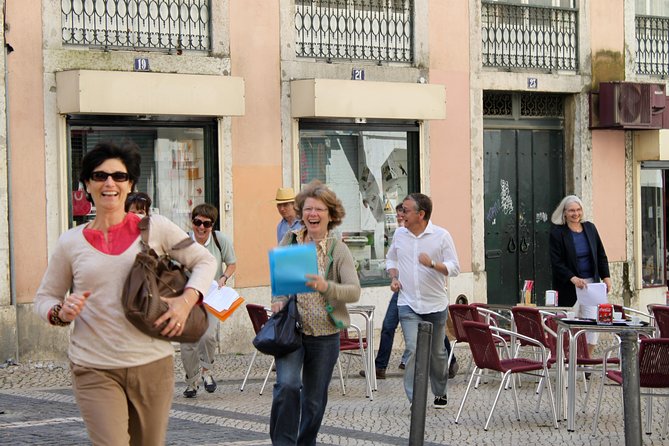
The walk continues downhill to Carmo Convent and Church, where Gothic architecture meets one of Portugal’s most important modern political events. The Carnation Revolution began here in 1974 and ended nearly five decades of dictatorship.
That combination makes Carmo especially effective. You are not only seeing old stone and pointed arches. You are also standing in a place tied to a peaceful change in Portugal’s government.
The church is a reminder that Lisbon’s history is not confined to medieval kings or maritime exploration. The city’s recent past still shapes its public life. A guide who tells the story clearly can turn this short stop into one of the most memorable parts of the walk.
Plan on about 20 minutes. The route is downhill here, but uneven streets and steps can still slow you down. Wear shoes with a firm sole rather than smooth fashion footwear.
Santa Justa is a striking stop, but budget for the viewpoint
The Santa Justa elevator appears as you continue toward the lower city. Built in the Gothic Revival style, it is one of Lisbon’s most recognizable structures and offers one of the city’s best elevated views.
The tour includes the stop, but admission to the elevator is not included. That distinction is worth noting before you book. You can appreciate the structure from below, but accessing its viewpoint may require an extra payment and may depend on the conditions at the time of your visit.
This is a short stop of about 15 minutes. The guide explains its place in the city, then the route moves on. I like that the tour does not spend too long waiting around one attraction, but you should not expect a long visit inside every monument.
Baixa brings coffee, pastry, and a look at daily Lisbon
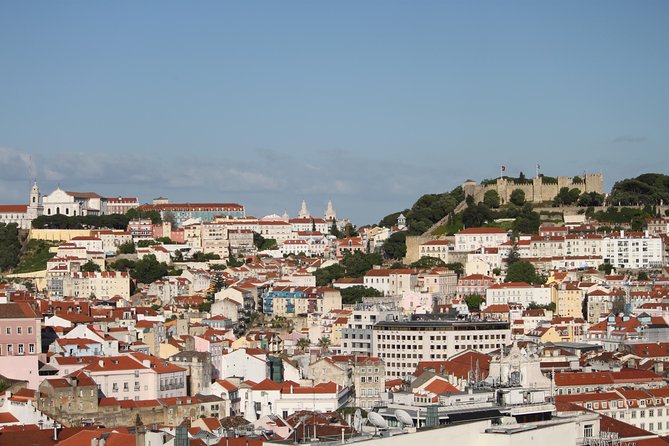
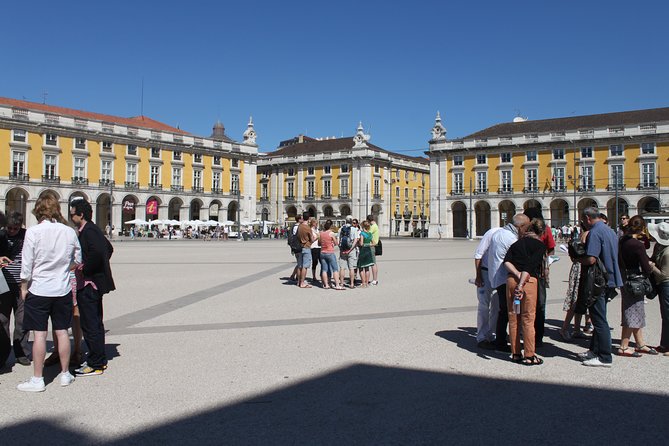
Baixa is the practical center of the route. After the hilltop neighborhoods, you reach the lower city for a coffee and pastry at a local café.
The included break is a smart feature. Three hours of walking through Lisbon’s hills can wear you down, and a short café stop makes the experience feel more like a day in the city than a march between sights. It also gives you a chance to ask questions in a less hurried setting.
A pastel de nata is the natural expectation in Lisbon, and the tour’s food stop is described as coffee with pastry. Some guides, including Beatrice, have also been praised for making this part feel like a proper local pause. The exact pastry or café experience may vary, so do not book this expecting a full meal.
Other food and drinks are not included. If you need more than a small refreshment, plan to buy it yourself.
Praça da Figueira and the Tram 28 connection
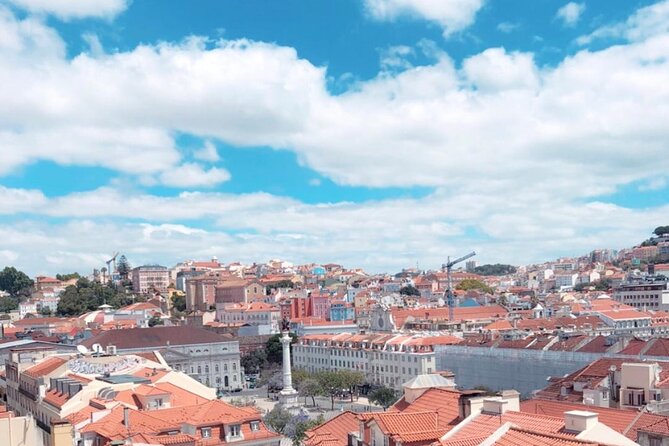
The route continues through Baixa toward Praça da Figueira. This gives you another look at the central city before the group takes a tram uphill toward the Portas do Sol area.
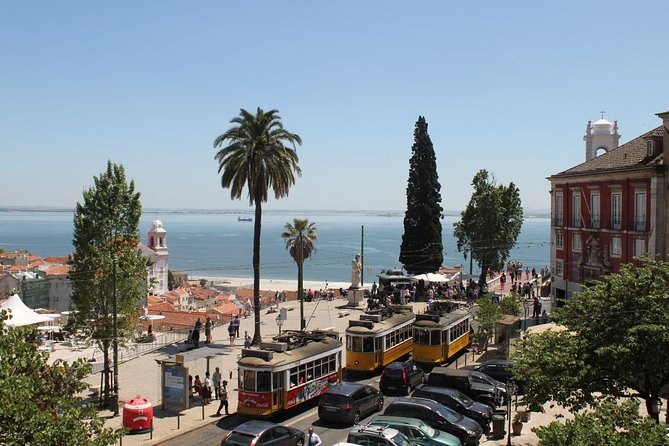
The tram ride is one of the tour’s most appealing features because it saves your legs while showing you how Lisbon’s public transport works. Tram 28 is also closely tied to the city’s image, and riding it with a guide can help you understand where the route fits into the older neighborhoods.
This is not a private tram or a guaranteed empty carriage. The experience takes place within Lisbon’s normal transport system, so conditions can vary. Still, the ride adds a local element that a standard walking loop would miss.
The Praça da Figueira portion and tram connection take about 15 minutes in the stated schedule. Timing can feel tight if the streets or transport are busy, but the small group limit of 15 should make it easier to stay together.
Alfama, fado, and Lisbon’s oldest lanes
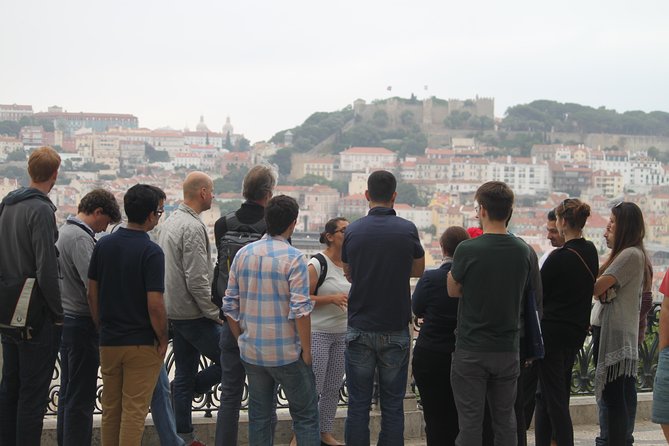
At Portas do Sol, the city opens again. You can see the Monastery of São Vicente de Fora, the National Pantheon, and the rooftops of Alfama dropping toward the Tagus.
Alfama is one of Lisbon’s oldest and most traditional districts. Its narrow streets, fado houses, and popular saint festivals give it a different feel from the ordered streets of Baixa. The route takes you through part of this maze before ending at the cathedral.
This is where the tour’s title, history, stories, and lifestyle, makes the most sense. You hear about fado and local festivals, but you also walk through the kind of streets where those traditions belong. The setting helps you understand that Lisbon culture is not only found in museums or formal performances.
The Alfama section lasts about 20 minutes. That is enough for an introduction, not an exhaustive neighborhood tour. I would use the guide’s advice to mark places you want to revisit later, especially if you hope to hear fado or return for a slower walk.
Lisbon Cathedral completes the historical arc
The tour ends at Lisbon Cathedral, built in 1150, just three years after the city was retaken from the Moors. Over the centuries, the building changed, leaving a mix of architectural styles.
Ending here gives the walk a clear sense of place. You have moved from Bairro Alto’s later urban development through Baixa’s post-earthquake order and into Alfama’s older streets. The cathedral brings the story back to the early Christian city.
The tour ends in Lisbon, but not with a transfer to your hotel. You are responsible for getting to and from the meeting point, and the exact starting and ending arrangements should be checked when booking.
What the guides add to the experience
The guide can make or break a city walk. This experience uses different guides, and the names praised most often include Ricardo, Beatrice, Paulo, Ana, Sofia, Joao, Lucie, and Paolo.
Ricardo is noted for clear historical explanations and strong English. Beatrice is described as organized, attentive, and good at mixing history with practical advice. Paulo and Paolo are associated with warmth, humor, and useful suggestions for restaurants and fado. Ana is praised for knowing the back lanes and keeping the route interesting.
That range tells you what to hope for: a guide who can connect facts to streets, answer questions, and help you plan the rest of your stay. The experience may feel different depending on who leads it. One low rating described unclear explanations and found the walk less rewarding apart from the tram ride, so the guide’s delivery matters.
The group maximum is 15. That is a sensible size for a city walk. It is small enough for questions and large enough to keep the price at $30.25.
Who should book, and who should think twice
I would book this for a first day in Lisbon, especially if you want historical context before exploring on your own. It suits solo visitors, couples, families with older children, and anyone who prefers a guide to help decode the city’s neighborhoods.
It is also a good choice if you have only one day in Lisbon. The route covers several major areas and gives you a useful list of places to return to. The included coffee, pastry, and tram ride add variety to the walking.
Think twice if you have trouble with hills, steps, or several miles on foot. Most people can participate, and service animals are allowed, but the route is not a gentle stroll. Bring water, wear comfortable shoes, and expect uneven city streets.
The tour is offered in multiple languages, with language selection available when booking. It is listed with mobile tickets, public transport nearby, and free cancellation up to 24 hours before the start time. Changes or cancellations inside that window are not refundable.
Should you book this Lisbon walk?
Yes, if you want a useful city orientation with real historical substance. The route is well chosen, the small group keeps it manageable, and the combination of viewpoints, churches, Alfama lanes, a café break, and Tram 28 gives you more variety than a basic sightseeing walk.
Book it early if your dates are fixed, since it is commonly reserved well ahead of time. Choose it for your first Lisbon day, bring good shoes, and treat the guide’s restaurant and fado suggestions as part of the value. Skip it only if you want a slow, private tour or cannot comfortably manage a hilly walk of several hours.
FAQ
How long does the Lisbon Essential Walking Tour last?
The experience lasts about three hours.
What sights are included?
The route includes Bairro Alto, Miradouro de São Pedro de Alcântara, São Roque Church and Museum, Carmo Church and Convent, Santa Justa, Baixa, Praça da Figueira, Alfama, and Lisbon Cathedral.
Is the Tram 28 ride included?
Yes. The tour includes a tram trip as part of the route from the central city toward Portas do Sol.
Is food included?
Coffee and a pastry at a local café are included. Other food and drinks are not included.
Is admission to the Santa Justa elevator included?
No. The tour stops at Santa Justa, but admission is not included.
How many people can join the tour?
The group has a maximum of 15 people.
Newest history tours we have reviewed in Lisbon
- Lisbon Fado History Cultural Walking Tour★ 5.0 · 118 reviews
- Lisbon city tour on history, culture and current topics★ 5.0 · 41 reviews
- Lisbon Jewish Heritage and History – Private Tour Van★ 5.0 · 294 reviews
- Lisbon: Jewish History Tour of Lisbon★ 4.8 · 84 reviews
- Lisbon: Private Dark History Walking Tour with Drinks★ 4.8 · 387 reviews
- Historic Walking Tour Through Lisbon’s Oldest Neighborhood★ 5.0 · 233 reviews
- Lisbon’s historic old town in a tuk-tuk in German★ 4.9 · 319 reviews
- Private Lisbon-Arrábida Wine Tour: 3 Wineries, Coast & Heritage★ 5.0 · 450 reviews
History Walking Tours, compared.
History and Hauntings of Salem Guided Walking Tour
Read our review →
Freedom Trail History Small Group Walking Tour
Read our review →
Historic Charleston Guided Sightseeing Walking Tour
Read our review →
Tapas Walking Tour with Food, Wine, and History
Read our review →
Savannah History and Haunts Candlelit Ghost Walking Tour
Read our review →
A History of Terror – Belfast City Centre Walking Tour
Read our review →Browse the lists this tour appears in