
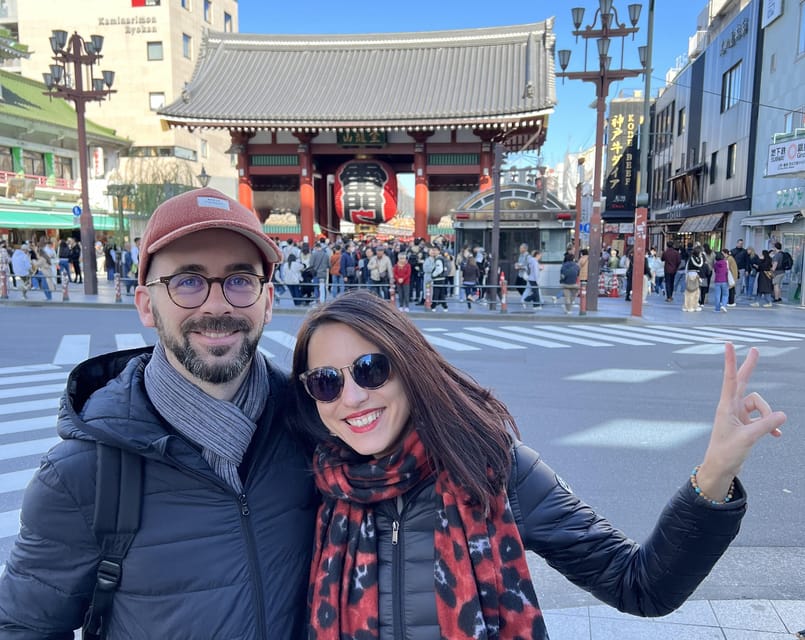
Review · TOKYO HISTORY TOURS
Asakusa: 3.5-hour Big-picture History Walk
Asakusa is where Japan’s big story gets told in small, walkable pieces. This 3.5-hour tour links the Sumida River, Sensō-ji, Asakusa Shrine, old shopping streets, and postwar pub lanes to explain how Japan moved from a closed feudal society to the modern country you see today. Along the way, you’ll sort out the relationship between Shinto and Buddhism, learn why the Netherlands mattered during Japan’s isolation, and see how sacred and secular life share the same neighborhood.
I like the small groups of no more than eight, which leave room for questions and make it easier for a guide to manage crowds. I also like the tour’s range: one hour brings temples and worship, while the later walk brings nostalgic streets, old entertainment districts, and Hoppy Street’s working-class energy. Guides such as Taka, Yasu, Ai, Yoko, and Jun have been singled out for their care, clear English, and strong local explanations.
The main consideration is the pace and amount of walking. You’ll spend 210 minutes on your feet, and the tour runs in all weather. It is not recommended for people with mobility impairments, though the operator asks anyone with mobility concerns to contact them in advance.
Key Points Before You Book
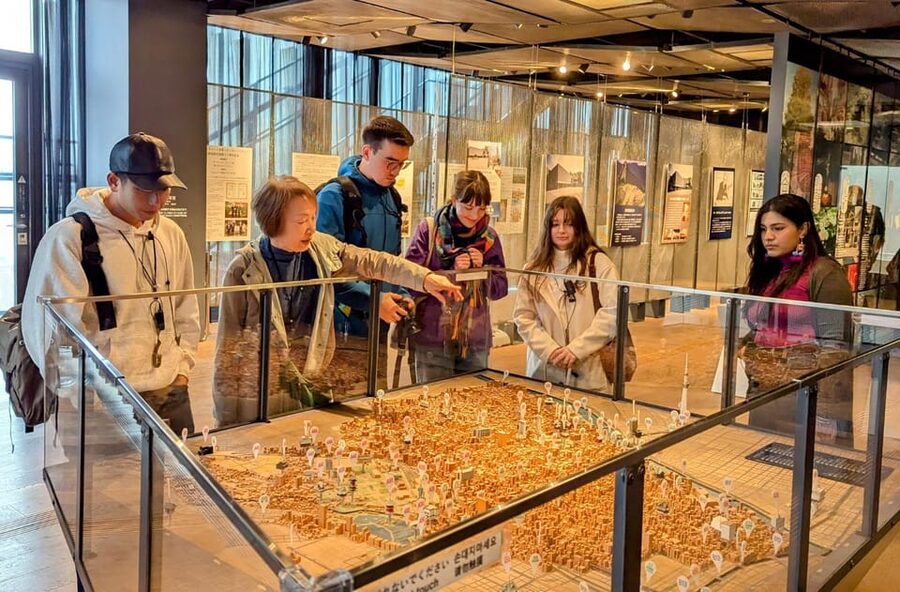
- Japan’s opening to the world gets a clear local setting: Learn how isolation worked, why the Netherlands remained Japan’s trading link, and how Japanese art later influenced French Impressionist painters.
- Shinto and Buddhism are explained together: The tour shows how both traditions have shared worshipers and different roles in daily life.
- Sensō-ji is more than a photo stop: You get time to understand Kaminarimon, Nakamise, Hōzōmon, the temple, and nearby Asakusa Shrine.
- Old entertainment Asakusa comes after the temples: Hoppy Street, Asakusa Mokubakan, and nearby lanes reveal the district’s theater and pub culture.
- Small comforts matter: Headsets are supplied for groups of three or more, traditional snacks and sweets are included, and toilets and rest points can be handled sensibly by the guide.
Why This Walk Gives Asakusa a Bigger Meaning
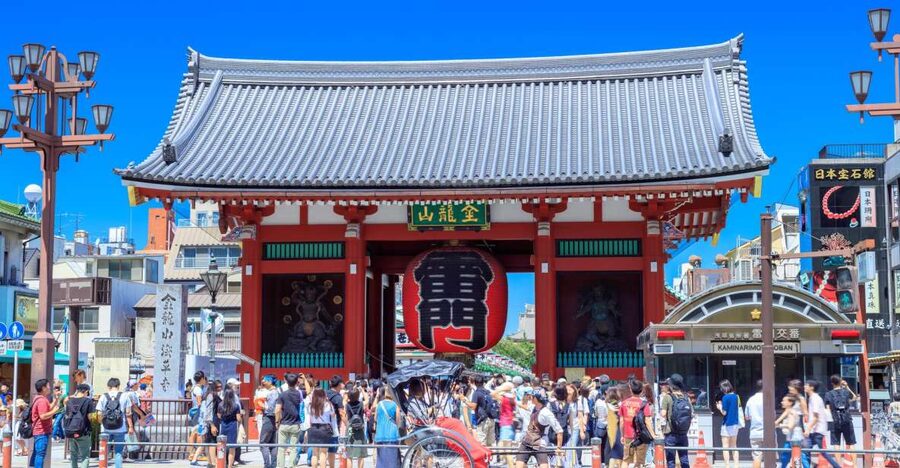
Many Asakusa visits follow a simple path: photograph Kaminarimon, walk Nakamise, enter Sensō-ji, and move on. That route gives you the famous sights, but not always the reason they matter.
This walk uses each stop as a piece of a much larger story. You begin with Japan’s contact with the outside world, move into religion and everyday practice, then finish with entertainment, food, work, and nostalgia. I like that structure because it prevents the tour from becoming a string of disconnected facts.
The guide does not treat the district as a museum frozen in time. You see a living neighborhood where visitors come for worship, shopping, sweets, old-style pubs, and city views. The contrast is the point. Asakusa can feel solemn beside a temple gate and noisy around a narrow pub lane only minutes later.
The tour is conducted in English, with headsets for groups of three or more. That is useful around Sensō-ji, where crowds and street noise can swallow a soft voice. The group limit of eight also helps keep the walk personal rather than turning it into a moving line of people.
More History Walking Tours in Japan
- Tokyo: Imperial Palace and Shogun Historical Walking Tour
★ 5.0 · 2,251 reviews - Tokyo Castle & Imperial PalaceーShogun Walking Tour
★ 4.7 · 1,068 reviews - Tokyo: Imperial Palace Japanese History Walking Tour
★ 4.9 · 987 reviews
Starting Beside Kaminarimon Subway Station
The meeting point is in front of the Burger King beside Exit 4 of Asakusa Station on the Ginza Line, marked G19. You should step outside the exit rather than waiting below ground.
That detail matters in Asakusa, where several railway and subway stations serve the same area and the streets can become confusing at busy times. Give yourself enough time to find Exit 4, especially if you are arriving with luggage or navigating Tokyo’s station signs for the first time.
The tour begins at 2-chōme-20-6 Kaminarimon and then moves toward the river. Wear comfortable shoes, bring water, and dress for the forecast. Vending machines are available, but carrying a bottle is still the simplest choice.
Tokyo Cruise Asakusa Pier and the River View
The first guided stop is Tokyo Cruise Asakusa Pier, with about 15 minutes devoted to the area. This gives you a useful orientation before entering the temple district.
The river helps explain Asakusa’s role as a place connected to movement, trade, and city life. It also gives the guide a natural way to place the neighborhood within Tokyo rather than treating it as an isolated tourist quarter.
This is a short stop, so do not expect a long riverside visit. Its value comes from the introduction. You begin to see Asakusa as a historic gateway and urban district, not simply the address of one famous temple.
A Rooftop View at the Asakusa Culture Tourist Information Center
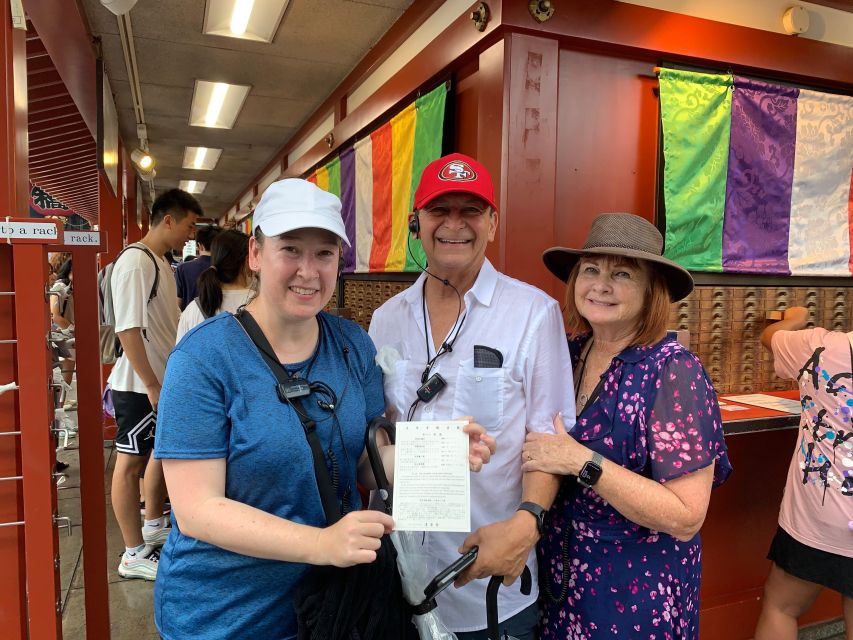
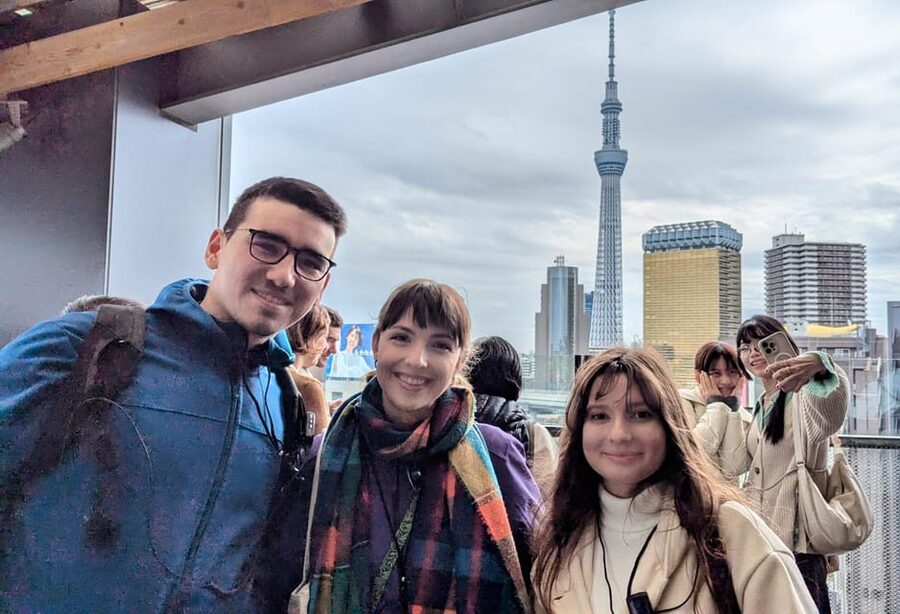
You then spend around 30 minutes at the Asakusa Culture Tourist Information Center. The building itself is an architectural talking point, and its upper level offers a view across the district.
This is one of the smartest stops on the route. From above, you can understand the relationship between the temple precinct, shopping streets, river area, and modern Tokyo skyline. One guide also used the view to explain Tokyo Skytree, including the Japanese number reading roku-san-yon for its 634-meter height.
I especially like this stop early in the walk. You get a map in your head before the streets become crowded. The view also reinforces one of the tour’s main ideas: old Japan and modern Japan are not separate worlds in Asakusa. They sit side by side.
More History Walking Tours in Tokyo:
- Tokyo Castle & Imperial PalaceーShogun Walking Tour
★ 5.0 · 724 reviews - Tokyo: Shinjuku Historical Walking Tour & Secret Backstreets
★ 5.0 · 530 reviews - Imperial Palace East Garden and Edo Castle Walking Tour in Tokyo
★ 5.0 · 510 reviews - Asakusa: A Big-picture History Walk to Know Japan
★ 4.6 · 77 reviews
Kaminarimon and Nakamise Shopping Street
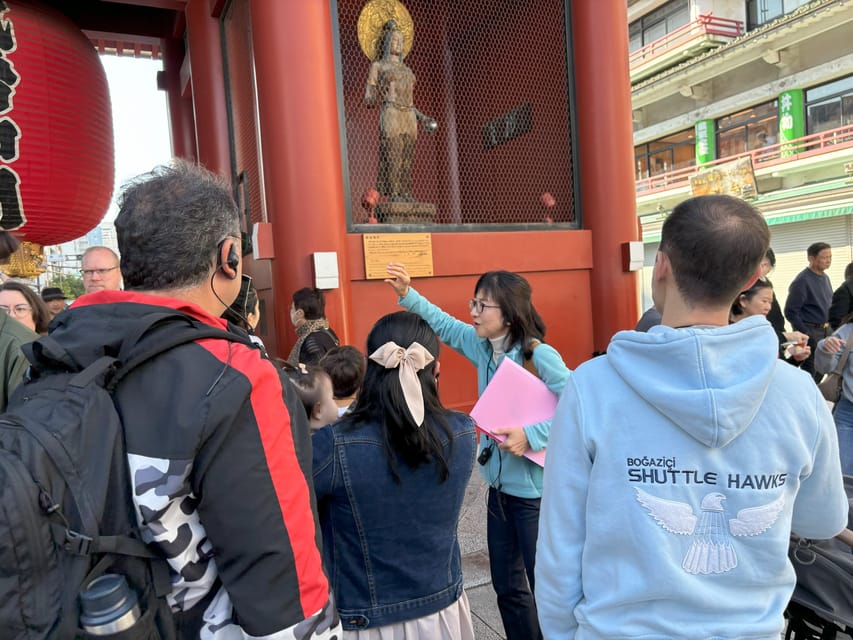
Kaminarimon, or the Thunder Gate, is the grand entrance to Sensō-ji. The gate’s giant lantern and guardian figures make it one of Tokyo’s best-known photo locations, but the guide’s explanation gives the place more weight than a quick snapshot.
From there, you walk along Nakamise Shopping Street for roughly 30 minutes. The street leads toward the temple and is lined with traditional snacks, sweets, souvenirs, and small shops. The included selection of freshly made Japanese traditional snacks and sweets fits naturally here.
Nakamise can be crowded, especially at popular times. You should expect a busy commercial street, not a quiet old lane. That is not a flaw, but it does mean you may have less freedom to stop wherever you like. The guide helps by explaining what you are seeing and keeping the group together.
The shopping street also opens the door to a useful historical question: how did Japan’s old customs survive while the country changed so sharply? The tour connects today’s snacks and shopfronts with the older Edo-period character of the area.
Hōzōmon, Sensō-ji, and the Two Religious Traditions
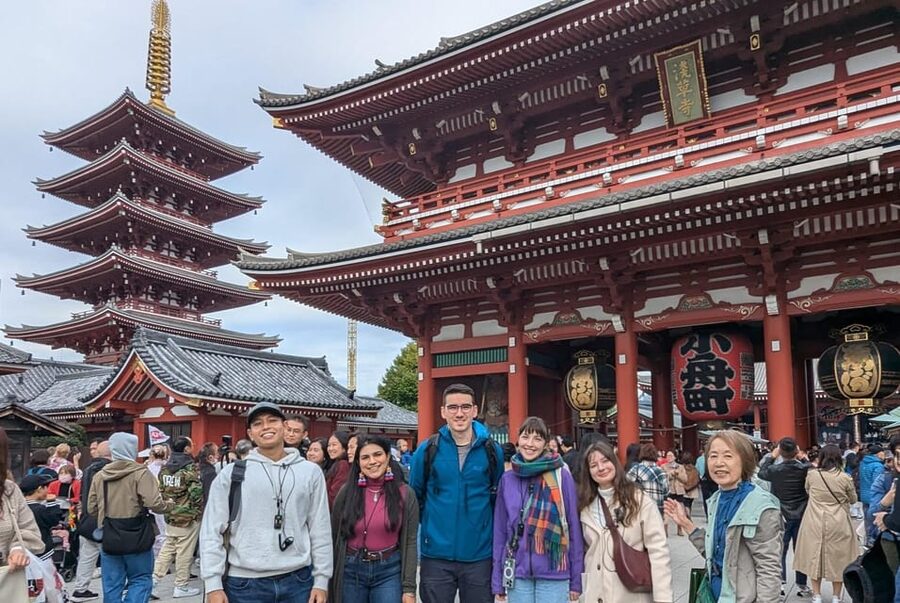
Hōzōmon Gate leads you farther into the temple grounds, followed by about 45 minutes at Sensō-ji. This is the longest stop, and rightly so. Sensō-ji is the center of the Asakusa visit, but the tour asks you to look beyond its striking gates and incense.
The main belief lesson concerns Buddhism and Shinto. You learn how the two traditions developed side by side, why they have often shared the same worshipers, and how each can serve a different purpose in ordinary Japanese life.
That explanation is valuable because Western visitors often expect religions to be separate and competing systems. In Japan, Shinto and Buddhism have commonly overlapped in practice. A person may take part in Shinto customs connected with life and place, while Buddhist temples are linked with memorial and family traditions. The tour gives you a framework for noticing this without forcing the subject into a simple either-or choice.
You also examine the way people in earlier centuries thought about sacred images, nature, protection, and human behavior. The guide’s job here is not just to name architectural parts. It is to show how the building works as a place of worship and as a record of Japanese society.
Expect crowds around the temple. Sensō-ji is not a quiet retreat during the day, and the tour cannot remove that reality. Still, a clear explanation can make the noise less distracting because you know what deserves your attention.
Asakusa Shrine and Yōgō-dō Pavilion
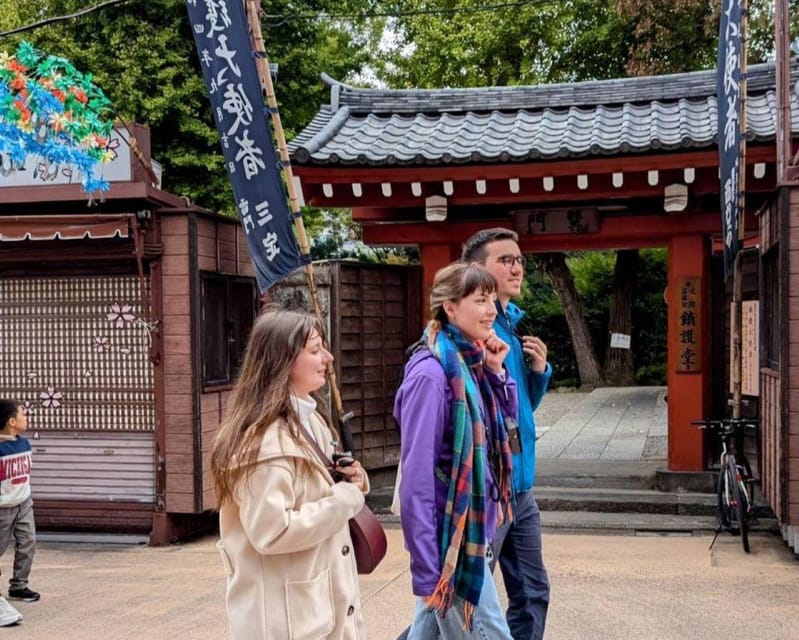
After Sensō-ji, the route turns to Asakusa Shrine for about 15 minutes. This nearby shrine helps make the connection between Shinto and Buddhism more concrete.
The close location is important. You do not need a long ride or a separate visit to compare the two religious settings. Instead, the guide can point out differences in atmosphere, symbols, and use while the details are still fresh in your mind.
The next quarter-hour is spent at Yōgō-dō Pavilion. It is a smaller stop than Sensō-ji, but that can be a strength. Large monuments explain public history; smaller religious buildings help you notice scale, quiet, and the continuing presence of worship away from the main tourist route.
The route moves at a steady pace, so keep your questions ready. The small group makes it easier to ask about symbols, customs, or anything you did not understand at the larger temple.
Nishi-sandō and the Edo-Period Mood
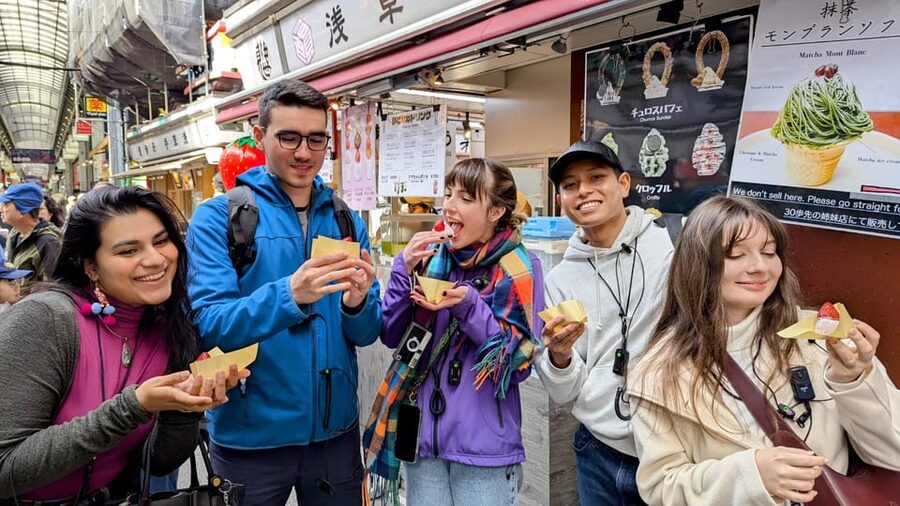
Asakusa Nishi-sandō Shopping Street brings a change of tone. You spend about 15 minutes walking and sightseeing here, with the emphasis on a more nostalgic atmosphere.
This is where the tour reaches back toward Edo-period Japan. The street offers a quieter sense of the past than Nakamise, and you may find it easier to imagine the district as an old movie set. That does not mean every building is untouched or that modern Tokyo has disappeared. The appeal is the mood, the scale, and the contrast with the grand temple approach.
The guide uses this area to discuss nostalgia and the way Japanese people preserve, recreate, and enjoy older styles. I find that more useful than simply labeling a street traditional. You get a chance to consider why certain visual details, shops, and street patterns still carry emotional value.
Asakusa Mokubakan and the Old Entertainment District
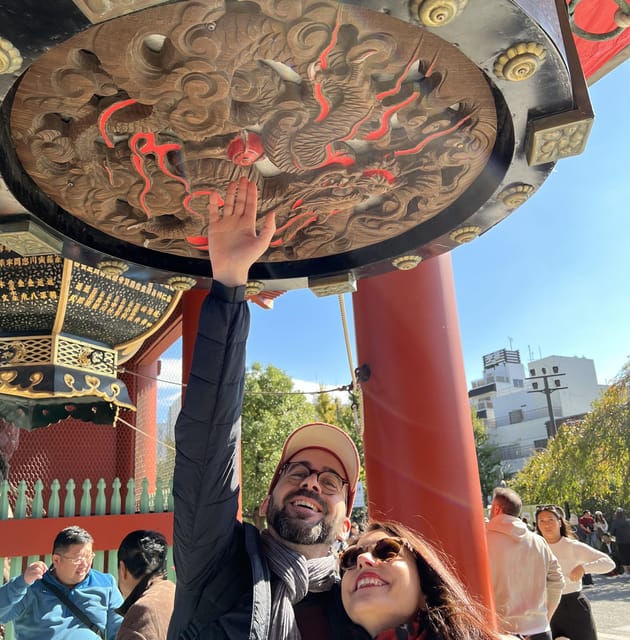
The walk continues to Asakusa Mokubakan, another 15-minute stop. The venue connects the area with performance culture and Asakusa’s earlier role as one of Tokyo’s major entertainment centers.
Before Shinjuku and Shibuya became the city’s best-known nightlife districts, Asakusa drew people to cinemas, vaudeville theaters, performance halls, and other amusements. The tour uses that past to show the secular side of the neighborhood.
This is a useful correction to the idea that Asakusa is only a temple district. People have long come here for pleasure as well as prayer. The same person could visit a sacred site, buy a snack, watch a performance, and meet friends for a drink.
You may find this part especially appealing if you care about urban culture, architecture, or old forms of entertainment. It also gives the tour a human rhythm. History is not just made by leaders and policies. It is made by people looking for work, food, fun, and a place to gather.
Hoppy Street and Working-Class Asakusa
The final stop is Hoppy Street, with around 15 minutes for a guided visit. The narrow lane is known for old-style Japanese pubs and a lively working-class spirit.
You are not given a long meal period here, so think of Hoppy Street as an atmospheric final chapter rather than a dedicated food crawl. It shows you the neighborhood’s postwar resilience and its continuing connection to casual drinking and inexpensive local social life.
The contrast with Sensō-ji is one of the route’s best features. You begin with gates, incense, and sacred buildings. You finish among small pubs and everyday city life. The tour’s central message becomes clear: Japanese culture is not one single mood. It can be disciplined and playful, reverent and practical, old-fashioned and modern at the same time.
If you are not interested in shopping, the guide can keep the focus on architecture, history, gardens, and local life. That flexibility was especially useful for people who wanted to pass through commercial areas without pressure to buy anything.
Guide Quality and Group Comfort
The guide can make or break a history walk, and this experience puts real weight on that role. The named guides include Ai, Yasu, Taka, Yoko, Jun, Satchi, and Akiko. The strongest pattern is clear English, patient explanations, and attention to individual interests.
Taka, in particular, was praised for handling crowds, finding good photo points, pointing out toilets before they became urgent, and adjusting the route discussion for people interested in architecture, history, and gardens. That tells you something practical about the experience: the guide is expected to manage the walk, not simply recite facts.
Ai also showed care when cold rain arrived, which matters because the tour operates in all weather. You should still bring suitable clothing rather than depend on the guide to solve bad weather.
Headsets are included for groups of three or more. A group of eight is small enough for questions, but it is not private. If you want the pace and subject matter shaped entirely around your interests, ask about that before booking rather than assuming a private tour.
Is the $88 Price Fair?
At $88 per person, this is not the cheapest way to see Sensō-ji. You can walk through the temple grounds and Nakamise Street without paying for a tour.
The value comes from the connections. You are paying for 210 minutes with an English-speaking certified guide, a carefully linked route, cultural explanation, headsets when needed, and traditional snacks and sweets. If you would otherwise spend hours trying to understand the history on your own, the price can be reasonable.
The tour is a better buy for a first visit than for someone who already knows Asakusa well. It is also useful near the start of your Tokyo stay because the guide gives you ideas for returning later, including the rooftop view and the old streets around the temple.
Free cancellation up to 24 hours before departure and the reserve-now, pay-later option make the booking less rigid. Hotel pickup is not included, so you must reach the meeting point yourself.
Who Should Book This Asakusa Walk?
I would choose this tour if you want more than landmark photos and prefer a clear explanation of how Japan developed. It suits adults especially well because the history and religion discussions are central, but families are welcome and children under six may join without charge.
It is a good fit for first-time visitors, history fans, architecture fans, and anyone who wants to understand why Asakusa feels so different from Shinjuku or Shibuya. It also works well for people who want a guide to handle the busy temple area while still leaving room for questions.
I would think twice if you dislike walking, need guaranteed step-free access, or want a food-focused tour. Shopping is part of the route, but buying things is not the purpose. The final pub district adds atmosphere, not a full evening of dining.
Should You Book It?
Book this walk if you want Asakusa explained as a complete neighborhood rather than a single temple visit. The strongest reasons are the small group, the thoughtful sequence from river to temple to pub lane, and the guides’ ability to connect broad Japanese history with details you can see in front of you.
Skip it if you only want a quick look at Sensō-ji or if 210 minutes of walking will be difficult. For everyone else, $88 buys useful context, a sensible route, and a much clearer understanding of why Asakusa remains one of Tokyo’s most revealing districts.
FAQ
How long does the Asakusa history walk last?
The tour lasts 210 minutes, or 3.5 hours.
What language is the tour conducted in?
The live tour is conducted in English, and an English audio guide is included.
How many people can join the tour?
The maximum group size is eight participants.
Where is the meeting point?
Meet in front of the Burger King next to Exit 4 of Asakusa subway station, G19, on the Ginza Line. The starting address is 2-chōme-20-6 Kaminarimon.
Are hotel pickup and drop-off included?
No. You must make your own way to the meeting point, and hotel pickup and drop-off are not included.
What should I bring?
Bring comfortable shoes and water. Vending machines are available, but bottled water is recommended.
Does the tour operate in bad weather?
Yes. The tour operates in all weather conditions, so dress appropriately for the forecast.
Is the tour suitable for children or people with mobility issues?
Children younger than six may join without charge, and families are welcome. The tour involves a moderate amount of walking and is not suitable for people with mobility impairments, though you can contact the supplier about mobility concerns in advance.
Newest history tours we have reviewed in Tokyo
- Asakusa: A Big-picture History Walk to Know Japan★ 4.6 · 77 reviews
- From Tokyo: Nikko World Heritage Sight Full Day Private Tour★ 4.9 · 127 reviews
- From Tokyo: Nikko World Heritage Site Private Full-Day Trip★ 4.9 · 243 reviews
- Tokyo: Nikko World Heritage Private Day Trip Hotel Pick-up★ 4.8 · 145 reviews
- Tokyo: The Best of Izakaya in Shinjuku Food & Cultural Tour★ 4.9 · 221 reviews
- Tokyo: 3-Hour Bike/E-Bike Tour of the City’s Hidden Gems★ 5.0 · 47 reviews
- Imperial Palace East Garden and Edo Castle Walking Tour in Tokyo★ 5.0 · 510 reviews
- Tokyo: Shinjuku Historical Walking Tour & Secret Backstreets★ 5.0 · 530 reviews
History Walking Tours, compared.

History and Hauntings of Salem Guided Walking Tour
Read our review →
Freedom Trail History Small Group Walking Tour
Read our review →
Historic Charleston Guided Sightseeing Walking Tour
Read our review →
Tapas Walking Tour with Food, Wine, and History
Read our review →
Savannah History and Haunts Candlelit Ghost Walking Tour
Read our review →
A History of Terror – Belfast City Centre Walking Tour
Read our review →Browse the lists this tour appears in