
Review · TOKYO HISTORY TOURS
Tokyo: Imperial Palace, the history of Japan (ENGLISH GUIDE)
The most memorable part of this tour is seeing Japan’s past in the middle of modern Tokyo. You walk from the Wadakuramon Fountain Park to Otemon, the great main gate, then enter the former Edo Castle grounds, where stone walls, old barracks, gardens, and palace remains explain how power once worked in Japan.
I like the small-group feel reported on one visit, with five people able to ask questions freely. I also like the unusual details: the special koi found only here and trees sent from different prefectures. The main thing to check is the language, since the title refers to English, while the supplied tour details list a French guide and identify French as the available language.
- Former Edo Castle grounds: Walk through the site that once served as the base of Edo Castle more than 350 years ago.
- Otemon entrance: Meet near Wadakuramon Fountain Park, then approach the palace through its large historic gate.
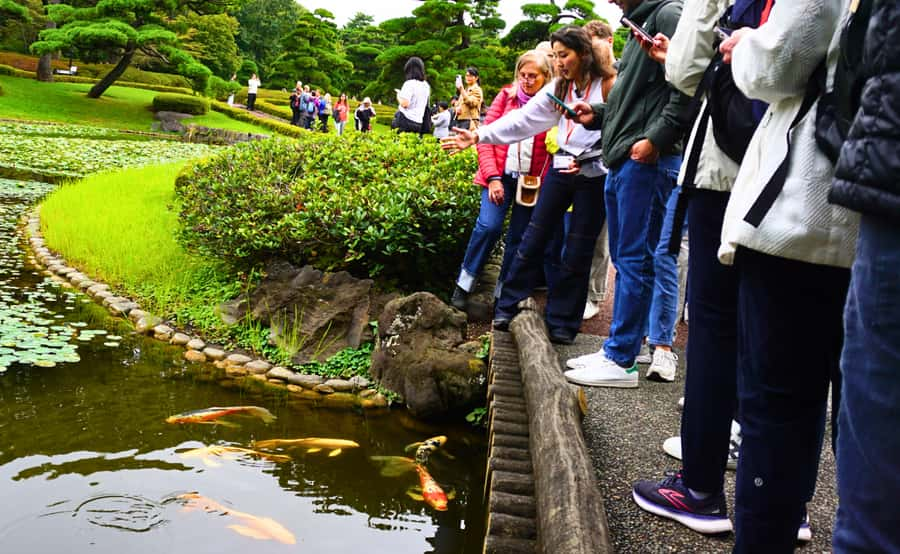
- Special koi: See a distinctive breed of koi that can only be found in the palace grounds.
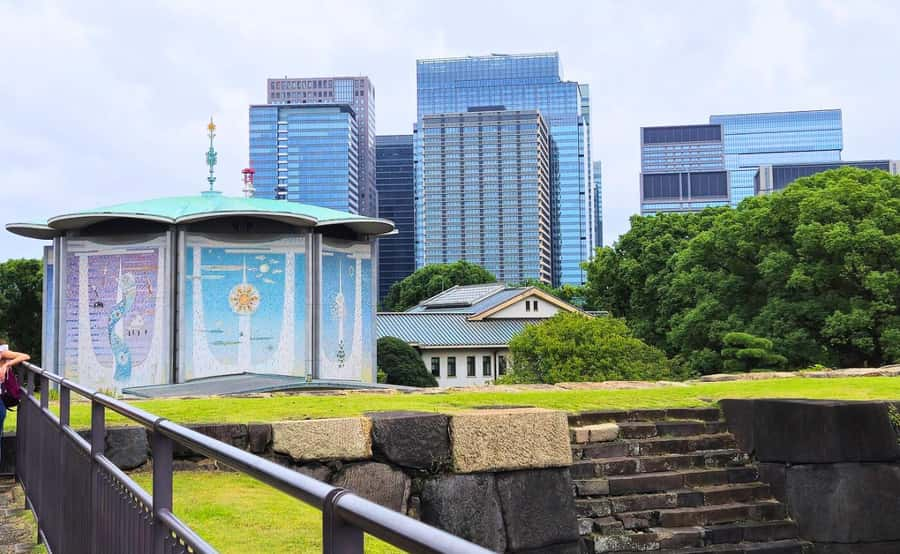
- Miniature palace structure: Get a visual sense of the former palace, even though the main castle no longer survives.
- Questions welcome: The small format can make it easier to discuss Japanese mythology, language, the imperial family, and national history.
- Central Tokyo setting: Reach the meeting point from Tokyo Station or Otemachi Station in about 5 to 10 minutes on foot.
Why the eastern gardens tell Japan’s story
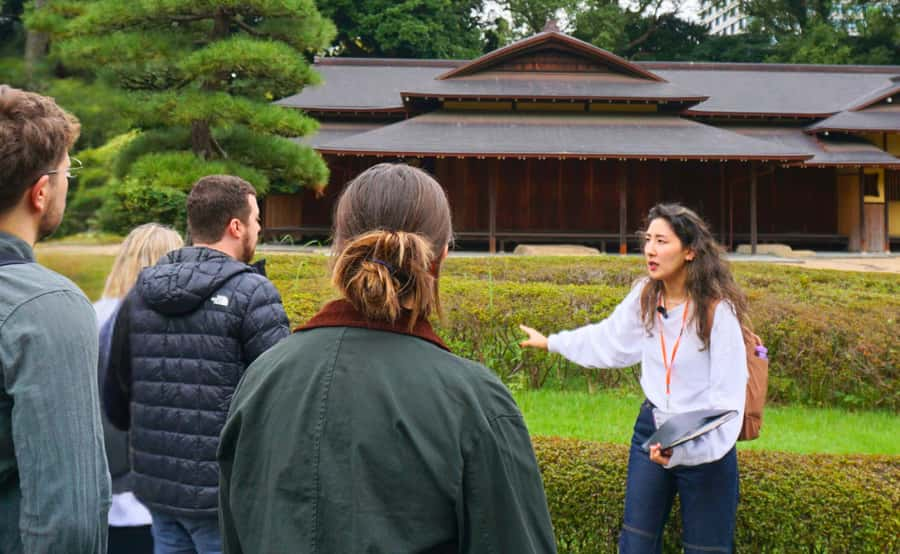
The eastern gardens of the Imperial Palace are more than a pleasant green stop in central Tokyo. They occupy the former Edo Castle grounds, a place tied to the political system that shaped Japan for centuries.
That setting gives the tour a useful focus. Instead of hearing a broad lecture on Japan with no physical reference points, you can connect the story to gates, walls, garden paths, old military spaces, and palace remains. Your guide explains how the country changed over time and how that past connects with Japan today.
The main castle is gone, but that absence becomes part of the story. Your guide explains why it no longer exists, and a miniature structure helps you picture the palace complex that once occupied this site. You do not need to be a specialist in Japanese history to follow the route. The buildings and remains give the discussion a clear shape.
I find this kind of visit especially useful early in a Tokyo trip. Modern Tokyo can seem like a city built almost entirely for the present. A walk here gives you a better sense of the political and imperial forces behind the modern nation.
Meeting at Wadakuramon Fountain Park
The meeting point is near a Starbucks in Wadakuramon Fountain Park, beside the fountain. Your guide waits there with a sign marked SUNRISE ADVENTURE.
You can reach the park from Tokyo Station or Otemachi Station. Allow about 5 to 10 minutes to walk from the station, and give yourself extra time to find the fountain area. Large stations in Tokyo can take longer to navigate than their maps suggest, especially if you arrive with luggage or have not used the underground exits before.
This is a walking tour, so wear shoes you can use comfortably on garden paths and palace grounds. The meeting point is outside the palace, and the tour ends back there, which makes it easy to continue into central Tokyo afterward.
Arrive on time. If you are more than 10 minutes late, the group may leave without you. That rule matters here because the guide must move the group through a set entrance and cannot hold up the walk for a late arrival.
More Castle and Palace History Tours in Japan
- Tokyo: Imperial Palace and Shogun Historical Walking Tour
★ 5.0 · 2,251 reviews - Tokyo Castle & Imperial PalaceーShogun Walking Tour
★ 4.7 · 1,068 reviews - Tokyo: Imperial Palace Japanese History Walking Tour
★ 4.9 · 987 reviews
Passing through Otemon, the great palace gate
From the fountain, you walk with the guide toward Otemon, the main gate. This transition is useful because it moves you from the city into the palace grounds in a clear historical sequence.
A gate is not just a photo stop on this route. It helps explain the separation between the castle compound and the city around it. As you pass through, your guide can place the palace, soldiers, rulers, and ordinary urban life into the same story.
The tour then continues through the eastern garden area. The pace is intended for looking and listening rather than rushing from one attraction to the next. You will have chances to take photos, but the real value is the explanation of what you are seeing.
The supplied information does not give a tour length, so you should check the current booking details before making plans around it. Do not assume you will have a fixed amount of free time or a particular number of stops beyond those described.
Edo Castle ruins and the missing main castle
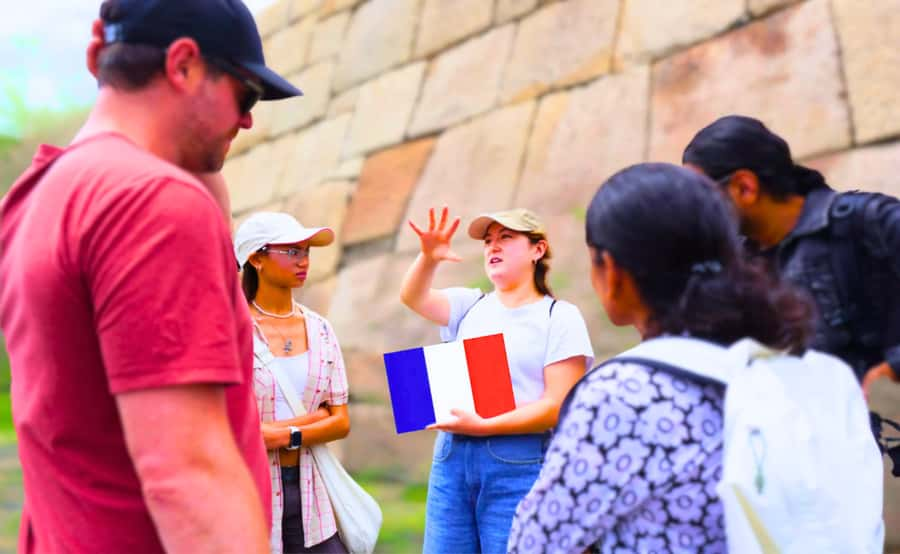
The former Edo Castle is the heart of the visit. You explore the site of the old castle and hear about its role more than 350 years ago.
The most useful feature here is the contrast between what remains and what has disappeared. Palace walls, grounds, and related structures can show the scale and importance of the complex, while the missing main castle raises the obvious question: what happened to it?
Your guide explains the reason. That turns an empty space into part of the tour rather than a disappointment. A miniature model of the former palace also gives you a more complete picture of the site.
Do not book this experience expecting access to rooms inside the working Imperial Palace. Inner palace access is not included. The route focuses on the eastern gardens and former Edo Castle area. For many people, that is enough to understand the place, but anyone hoping to see imperial interiors should choose a different activity.
Barracks, trees, and the quieter side of Tokyo
The route includes the former soldiers’ barracks, another detail that makes the visit more than a garden stroll. The barracks help show how the castle functioned as a working military and political center, not simply as a residence.
You also see trees from different prefectures of Japan. That detail adds a national dimension to the gardens. The site is not only linked to Tokyo or the old Edo government. It also reflects connections across Japan.
I like these smaller stops because they give the guide several ways to explain the country. One point can lead to military history, another to regional identity, and another to the design of Japanese gardens. The walk becomes easier to remember when the story is tied to individual objects and places.
The gardens also offer a calm change from the city streets. You are still in central Tokyo, but the palace grounds create room for a slower pace and more careful observation. The tour highlights good photo locations, so bring a camera or keep your phone ready. The best images may come from the overall setting, the gates, the gardens, and the old stonework rather than from a single grand building.
More Castle and Palace History Tours in Tokyo:
- Tokyo Castle & Imperial PalaceーShogun Walking Tour
★ 5.0 · 724 reviews - Imperial Palace East Garden and Edo Castle Walking Tour in Tokyo
★ 5.0 · 510 reviews - Tokyo: Edo Castle & East Garden of the Imperial Palace Tour
★ 4.7 · 112 reviews - Kyoto: Nijo Castle World Heritage Guided Tour with Admission
★ 4.9 · 37 reviews
The palace koi are a small but memorable stop
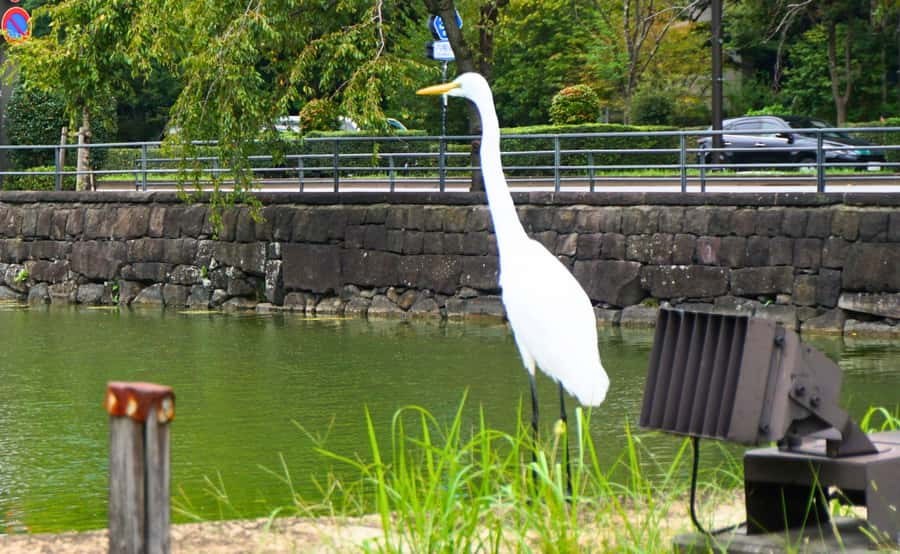
One of the more unusual details on this walk is the koi. You have the chance to see a special breed that can only be found in the palace grounds.
This is not the main reason to book the tour, but it gives the route a pleasant surprise. Historical walks can become a string of dates and names. A living detail such as the fish breaks up the discussion and gives you something easy to spot and remember.
Your guide can also use the koi, gardens, and trees to explain how the palace grounds are cared for and why certain parts of the site matter. The supplied information does not name the breed, so do not expect a specialized fish lecture. Think of it as one distinctive feature within a larger history walk.
A guide-led conversation, not just a scripted route

The strongest part of the experience is the chance to ask questions. A visit with French-Japanese guide Nicolas included discussion of Japanese mythology, the Japanese language, Japan in general, and the imperial family, along with the history of the grounds.
That range matters. You can ask about the point directly in front of you, then broaden the conversation if something catches your attention. A small group of five made that exchange easier, and the visit felt friendly rather than formal.
Group size may vary, so do not assume every departure will have five people. Still, this tour appears best suited to people who want a guide they can talk with, not visitors who prefer to move independently with an audio guide.
The supplied feedback also describes Nicolas as a real fountain of information and praises his command of the site’s history. Since the listing details identify French as the guide language, confirm whether your departure is French-speaking or English-speaking before you pay. The title and the language fields do not match, and this is the most important practical issue to settle.
What the $40 price gets you
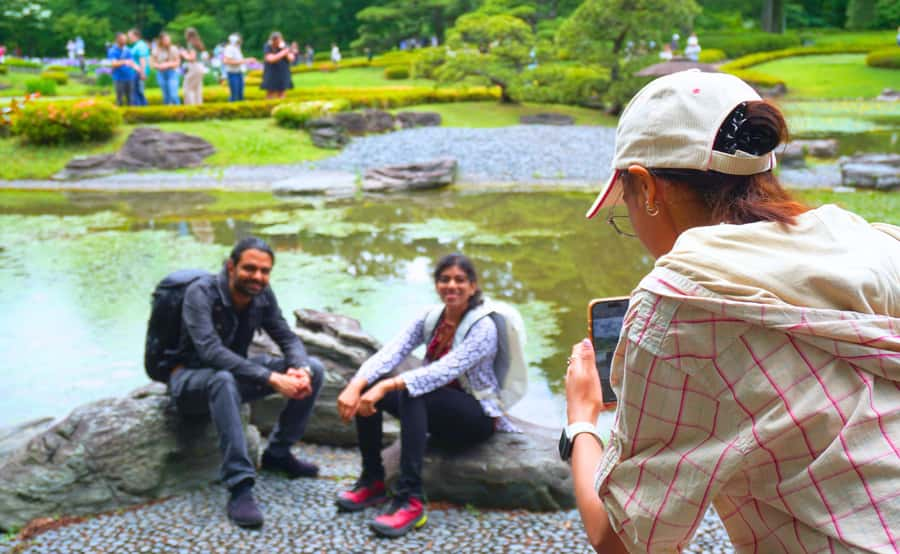
At $40 per person, this is a reasonable price if you want historical context and direct conversation rather than simply walking through the gardens on your own.
The eastern gardens can be appreciated without a guide, but the physical remains do not explain themselves. A wall, barracks site, or open space will mean more when you understand its former role and its connection to Japan’s political changes. The guide is the part you are paying for.
The value is also stronger for first-time visitors to Japan or anyone trying to build a basic understanding of the country. You get a focused introduction to the former Edo period setting, the imperial family, palace history, and the way Japan developed into its present form.
The price is less compelling if you already know the history well, prefer to read at your own pace, or mainly want access to the inner palace. That access is not part of the tour, and no entry to private or interior imperial areas should be expected.
The cancellation terms reduce some booking risk: you can cancel up to 24 hours in advance for a full refund, and you can reserve now and pay later. Keep in mind that the tour runs in good or bad weather, so flexibility with clothing matters more than flexibility with the meeting time.
Weather, clothing, and rules inside the grounds
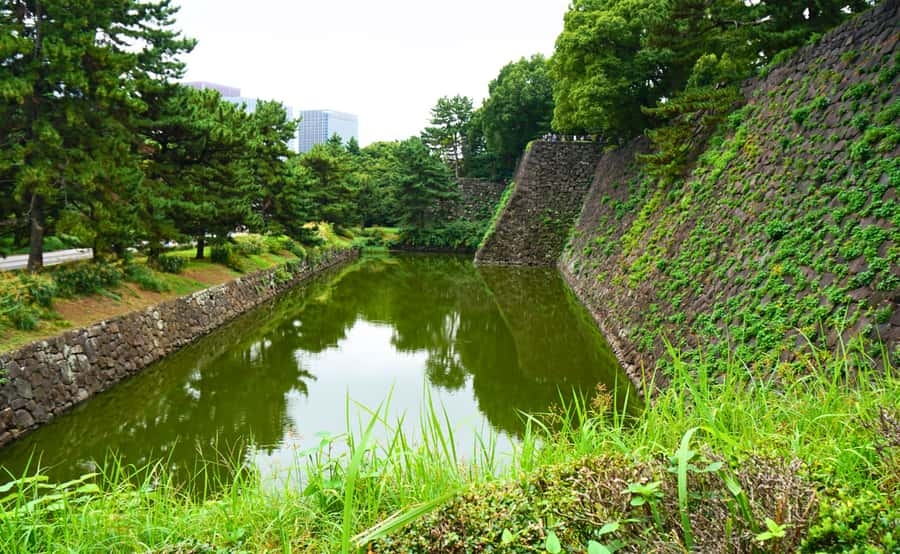
This walk takes place outdoors in all weather conditions. Wear clothing suited to the forecast, and choose shoes that will remain comfortable while walking through the grounds.
Smoking, drones, alcohol, drugs, littering, and skateboards are not allowed. These rules are straightforward, but the drone restriction is worth noting if you carry camera equipment. The palace grounds are a formal historic site, not a place for casual recreational gear.
Rain will change the feel of the visit. Garden paths and open areas may be less comfortable, but the tour still operates in poor weather. If you are deciding between this and an indoor museum on a wet day, check the forecast before committing.
Who should book this Imperial Palace walk?
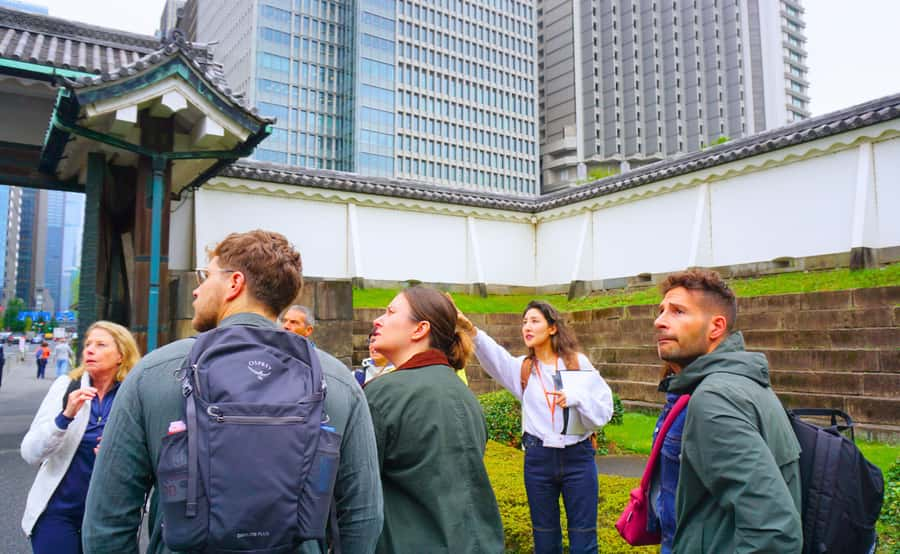
I would recommend this tour to you if you want a clear introduction to Japanese history tied to a real place. It suits people who enjoy asking questions, taking photos, and learning through a guide rather than reading signs alone.
It is also a good fit if you have already seen Tokyo’s modern districts and want a quieter, more historical hour or half-day activity. Families with an interest in castles, gardens, or unusual details such as koi may find the route more engaging than a lecture in a museum.
You may want to skip it if you need an English-speaking guide and cannot confirm the language. The supplied information repeatedly lists French, even though the experience title refers to English. You should also choose another activity if your priority is entering the inner palace or seeing the main castle intact, since neither is offered here.
Should you book it?
Book this walk if you want the former Edo Castle grounds explained by a guide who can connect the ruins, gardens, military spaces, imperial history, and modern Japan. The special koi, regional trees, miniature palace, and photo spots add variety to the route, while the small-group format can make the visit personal.
Before booking, confirm the guide language. That one check will decide if the experience matches your needs. If it does, $40 is fair for a focused historical walk in one of Tokyo’s most important settings, especially when you want context rather than a quick look at the gardens.
FAQ
Where does the tour begin?
Meet near the Starbucks in Wadakuramon Fountain Park, by the fountain. The guide will hold a SUNRISE ADVENTURE sign.
How do I reach the meeting point?
Take the train to Tokyo Station or Otemachi Station. From either station, the meeting point is about a 5 to 10 minute walk away.
Where does the tour end?
The activity ends back at the original meeting point near Wadakuramon Fountain Park.
Is entry to the inner Imperial Palace included?
No. The tour does not include access to the inner palace.
Is the main castle still standing?
No. The main castle no longer exists. Your guide explains why, and you can see a miniature structure of the former palace.
What language is the tour conducted in?
The supplied details list French as the guide language and describe a French-Japanese guide named Nicolas. Because the experience title refers to an English guide, confirm the language for your chosen departure before booking.
Does the tour operate in bad weather?
Yes. The tour takes place in good weather or bad weather, so wear clothing appropriate for the forecast.
What happens if I arrive late?
If you do not arrive within 10 minutes of the meeting time, the group may leave without you.
Newest history tours we have reviewed in Tokyo
- Private Tour Through the Tokyo National Museum & Ukiyo-e★ 4.7 · 17 reviews
- Tokyo: Customized Private Historical Guided Photoshoot Tour★ 5.0 · 25 reviews
- Tokyo: Edo Castle & East Garden of the Imperial Palace Tour★ 4.7 · 112 reviews
- Tokyo: Nagano Snow Monkeys and Zenkoji Tour with Temples★ 4.9 · 19 reviews
- Kyoto: Nijo Castle World Heritage Guided Tour with Admission★ 4.9 · 37 reviews
- Historic Kanda Sake Tasting at Tokyo’s Oldest Shop (1596)★ 4.9 · 33 reviews
- From Tokyo: Private Nikko World Heritage Sights One Day Trip★ 4.7 · 52 reviews
- From Tokyo: Guided Day Trip to Nikko World Heritage Sites★ 4.8 · 51 reviews
Castle & Palace History Tours, compared.
Edinburgh Castle Guided History Tour with Tickets
Read our review →
Madrid Essential: Historic Center, Plaza Mayor & Royal Palace
Read our review →
Venice’s Best: Basilica, Doge’s Palace, Gondola & History Gallery
Read our review →
Imperial Palace and Shogun Historical Walking Tour
Read our review →
Saadian Tombs & Bahia Palace, Medina Guided Tour
Read our review →
Charleston historical walking tour with a Professor of History at The Citadel
Read our review →
Abu Dhabi Grand Mosque, Palace, and Heritage Village
Read our review →
Buda Castle District Dark History, Legends and Vampire Night Tour
Read our review →Browse the lists this tour appears in