
Review · TOKYO HISTORY TOURS
Imperial Palace East Garden and Edo Castle Walking Tour in Tokyo
Tokyo’s Imperial Palace East Garden is not just a patch of green in the middle of the city. It is the former heart of Edo Castle, where shoguns ruled Japan. This tour helps you read the stones, gates, garden paths, and remaining foundations instead of simply strolling past them. I especially like the small maximum of 12 people and the guides’ use of photos and visual aids to explain what has disappeared.
I also like the clear focus on Japanese history and culture. Guides including Kenta, Sato, Kei, Miko, and Glenda have been praised for speaking clearly, answering questions, and making the subject lively. The main drawback is simple: you do not enter the Imperial Palace buildings, and the garden may feel less spectacular if you arrive expecting grand interiors or a burst of flowers.
Key things to know before you go
- The tour begins at Starbucks near Wadakura Fountain Park, a practical meeting point beside the Imperial Palace grounds.
- Edo Castle is the main story, with attention to samurai rule, the shoguns, castle life, and the Imperial family.
- Wadakura Fountain Park takes about 30 minutes, followed by roughly two hours in the East Gardens.
- The experience lasts about two and a half hours, so do not plan it as a quick one-hour visit.
- The group is capped at 12 people, making it easier to hear the guide and ask questions.
- Comfortable shoes matter, since this is an outdoor walking tour with some hills and, in places, steep paths.
Why Edo Castle makes the East Gardens worth your time
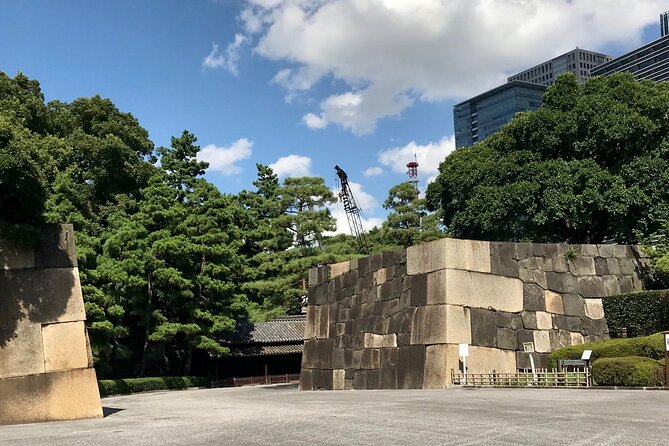
If you walk through the Imperial Palace East Gardens alone, you will see tidy paths, ponds, trees, stone walls, and open lawns. Pleasant, yes. But the meaning of the place can be easy to miss.
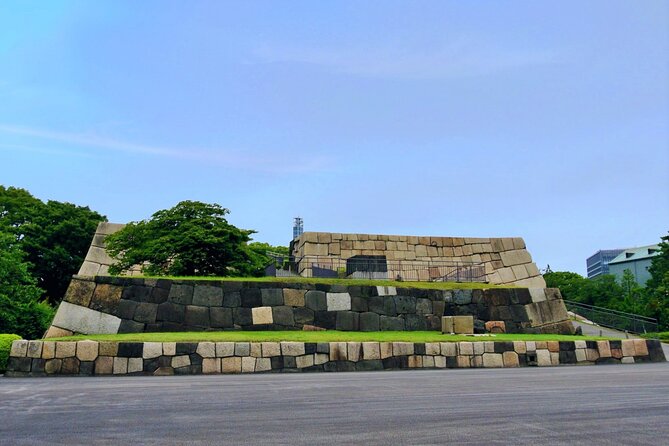
A guide gives the grounds a storyline. This was once Edo Castle, the political center of Japan during the shogun era. The castle itself is gone, but the layout, foundations, stonework, and surviving features help you picture the scale and purpose of the old compound. You learn how the castle functioned, what different sections were used for, and how power shifted from the shoguns to the modern Imperial household.
That context is the chief value of the tour. You are not simply looking at a garden. You are walking through a former seat of government and military power, then comparing that past with the role of the Imperial Palace today.
The tour also connects Japanese history to people and daily life. Guides discuss emperors, shoguns, samurai, and the Imperial family. Several guides use printed photos or other visual material to show how the castle and grounds looked before the present ruins were left behind. That can be particularly helpful when you are standing beside a foundation and trying to understand what once occupied the space.
The tour is rated 4.9 out of 5 from 510 ratings, with 98 percent recommending it. That high score is consistent with the strongest feature of the experience: the quality of the individual guide can turn a quiet garden walk into a memorable history lesson.
More Castle and Palace History Tours in Japan
- Tokyo: Imperial Palace and Shogun Historical Walking Tour
★ 5.0 · 2,251 reviews - Tokyo Castle & Imperial PalaceーShogun Walking Tour
★ 4.7 · 1,068 reviews - Tokyo: Imperial Palace Japanese History Walking Tour
★ 4.9 · 987 reviews
Starting at Wadakura Fountain Park
The meeting point is the Starbucks Coffee at Kokyo Gaien Wadakura Fountain Park, 3-1 Kōkyogaien, Chiyoda City. You begin with about 30 minutes in Wadakura Fountain Park, which sits close to the Imperial Palace.
The park is designed around water features and has a calm, formal feel. It was first built in 1961 to mark the wedding of Emperor Akihito and Empress Michiko. It was redesigned and reopened in 1995 for the wedding of Crown Prince Naruhito and Crown Princess Masako.
That detail gives the opening stop more purpose than a quick photo break. The park reflects a modern chapter of the Imperial family, while the East Gardens reveal older layers of Japanese power. The transition from fountains and contemporary public design to castle ruins sets up the rest of the walk nicely.
Do not expect the fountain park to be the main attraction. It is an introduction and a convenient place to meet, get oriented, and begin the story. The real substance comes after you enter the East Gardens.
Two hours among castle ruins and garden paths
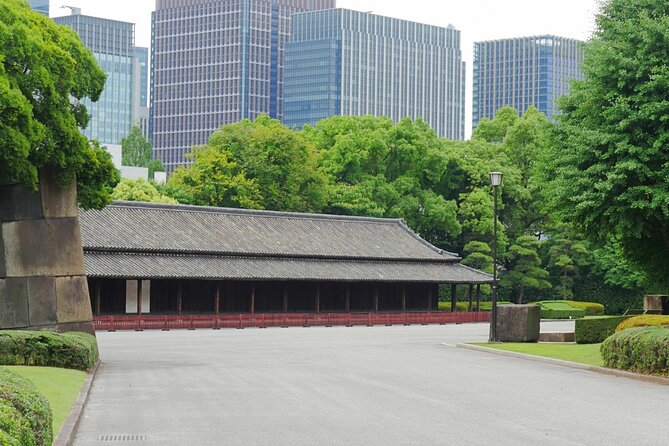
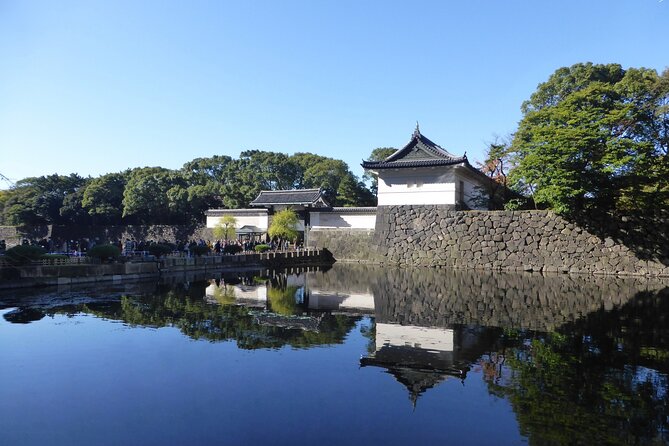
Most of the experience takes place in the East Gardens, where you spend about two hours. The grounds include the former Honmaru area, the Ninomaru Garden, ponds, historic stonework, and remnants of Edo Castle.
The Honmaru area is important because it helps explain the castle’s former central role. The remaining ruins do not provide an intact palace or a dramatic building interior. Instead, you see traces of a much larger complex. A guide is useful here because the physical remains can look modest without explanation.
The Ninomaru Garden offers a different mood. Its traditional Japanese design, water, planted areas, and careful arrangement give you a quieter view of the grounds. The garden changes with the season. Cherry blossoms can add color in spring, while autumn may bring foliage, though you should not book this as a guaranteed flower or fall-color outing.
One guide-led walk took place in October without flowers in bloom or much autumn color. That is a fair warning. The grounds are carefully maintained and attractive, but the exact visual payoff depends on timing. If you want a garden at peak bloom, this tour cannot promise it.
You may also see carp in the ponds. One visitor found the fish especially striking in the sunlight. These small details help break up the historical explanations and give you time to enjoy the setting at your own pace.
The paths are generally manageable, but the walk is not perfectly flat. Some sections are hilly, and one account mentions steep paths. Another describes hills but no stairs. Wear comfortable shoes with a good grip, especially if the weather is wet.
The guides make the history easier to follow
The provider assigns different English-speaking guides, so you cannot assume one particular person will lead your departure. Still, several names appear repeatedly in the feedback, and each is praised for a slightly different strength.
Kenta is described as energetic, funny, and well prepared. He uses visual pages to support his explanations and keeps the historical material moving without drowning you in dates. Miko is praised for clear English and photographs that help explain the gardens, former castle tower, and castle grounds.
Glenda is noted for speaking slowly and clearly while connecting the history of emperors, shoguns, samurai, and the palace. She also gives practical suggestions for other places to see in Tokyo. Kei has been especially thoughtful in rainy conditions, adjusting the pace and choosing spots where the group could talk with some shelter.
Sato is praised for giving the right amount of information and responding to questions. Miki, Miyu, Satoko, Kaz, and Loc also receive warm comments for friendliness, storytelling, and historical detail.
The pattern is clear: this tour depends heavily on the person leading it, but the guide team has a strong record of explaining the setting in accessible English. If you enjoy asking questions, a small group makes that easier. If you prefer to wander silently and take photographs, a guided two-and-a-half-hour walk may feel more structured than you want.
More History Walking Tours in Japan
- Tokyo Castle & Imperial PalaceーShogun Walking Tour
★ 5.0 · 724 reviews - Tokyo: Shinjuku Historical Walking Tour & Secret Backstreets
★ 5.0 · 530 reviews - Asakusa: A Big-picture History Walk to Know Japan
★ 4.6 · 77 reviews - Asakusa: 3.5-hour Big-picture History Walk
★ 4.7 · 39 reviews
What you will not see inside the palace
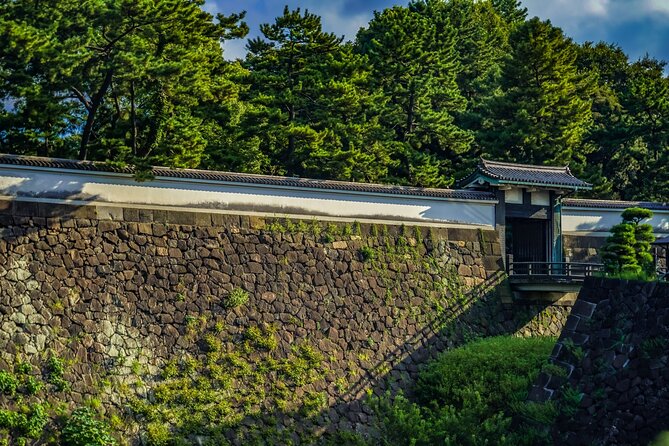
Set your expectations carefully. This tour does not take you into the Imperial Palace buildings. Public access to the palace interiors is not part of the experience, so you should book this for the East Gardens, surrounding grounds, and historical explanation.
That limitation matters because the name Imperial Palace can suggest ornate rooms, throne halls, and indoor collections. You will not get those here. The attraction is outdoor space and the remains of Edo Castle, with photo opportunities and stories supplied by the guide.
For many first visits to Tokyo, that is still a worthwhile introduction. The East Gardens are free to enter, and the tour fee pays for the organization and the guide’s interpretation rather than an admission ticket. If you already know the history and want only a scenic walk, the $25 price may feel unnecessary. If you want help understanding what you are seeing, it is a modest cost for about 150 minutes of company and explanation.
Is $25 a good value?

At $25 per person, this is one of the less expensive guided history walks in Tokyo. There are no separate entrance charges listed, and the price includes fees and an English-speaking local guide. Snacks are not included.
The value comes from three things: time, group size, and interpretation. You get approximately two and a half hours, rather than a rushed circuit. The maximum of 12 people is small enough that the guide can keep the group together and take questions. Most important, the guide explains the historical role of the castle and gardens instead of leaving you to guess.
There is one practical cost that does not appear on the receipt: your schedule. A visitor expected to finish within an hour to an hour and a half and found that the full two-and-a-half-hour length affected the rest of the day. Treat the stated duration as real. It is not a quick stop between major attractions.
The tour ends back at the meeting point, which makes planning easier. You can continue toward another Tokyo sight from the same central area, but allow time for the entire walk and for a slower pace if the group includes children or anyone who tires easily.
Who should book this walk?
I would recommend it to a first-time Tokyo visitor who wants an easy introduction to the Edo period, the shoguns, the samurai, and the Imperial family. It also suits anyone who likes history but does not want a lecture in a museum. The combination of open-air scenery and short explanations keeps the subject grounded.
Families can make good use of it, too. One guide handled children with patience, and the information is delivered in sections as you move through the grounds. Still, two and a half hours on foot may test very young children.
The walk can also suit older adults and people who need a little help, but conditions vary. One guide helped arrange a wheelchair when a participant became tired and dizzy. That shows care, but you should still consider your own walking ability, since the route includes hills and some steep paths.
You may want to skip it if your priority is entering palace buildings, seeing a large collection of interiors, or finding a garden at peak bloom. You may also prefer a self-guided visit if you want to stop whenever you like or move at your own speed.
The tour requires good weather. If poor conditions cause a cancellation, you are offered another date or a full refund. For your own comfort, bring weather-appropriate clothing and do not rely on the walk as an indoor backup plan.
How to get the most from the two-and-a-half-hour route
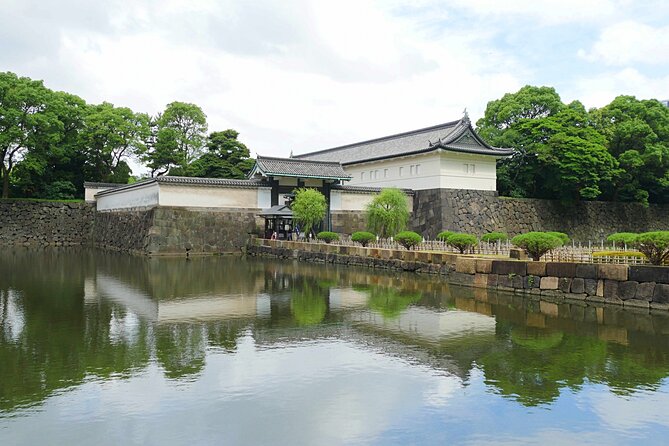
Arrive ready to identify the guide at the Starbucks meeting point. A mobile ticket is provided, and confirmation is sent at booking. Since the group may include up to 12 people, arriving on time matters more than it would on a casual solo visit.
Wear shoes you can walk in for several hours. The grounds are not a difficult hike, but the hills and steep sections are enough to make poor footwear annoying. Carry water and any snack you want, since snacks are not included.
Listen for the guide’s visual explanations. A castle ruin can seem abstract until you compare the present stones with an old image or diagram. Guides such as Kenta and Miko have been praised for bringing pictures, which can make the vanished buildings easier to understand.
Give yourself time after the tour if you want to explore further. The East Gardens are free, and the tour ends where it began. You may want to pause for photographs, revisit a garden section, or simply enjoy the contrast between central Tokyo and the quiet palace grounds.
Should you book the Imperial Palace East Garden tour?
Book it if you want clear historical context, a small group, and an affordable guided walk through one of Tokyo’s most important sites. The strongest part is not a grand building. It is the way a good guide helps you see the former Edo Castle beneath the gardens and ruins.
The main decision is expectation. This is an outdoor history walk, not a palace interior tour. The gardens may be beautiful and serene, but seasonal flowers and fall color are not guaranteed. Allow the full two and a half hours, wear good shoes, and choose this experience for the story of Edo Castle as much as for the scenery.
At $25, it is a sensible choice for a first visit, especially if you can join a guide such as Kenta, Sato, Kei, Glenda, or Miko. It is less useful for someone seeking grand interiors or a short photo stop.
FAQ
Where does the tour begin?
The tour begins at Starbucks Coffee in Kokyo Gaien Wadakura Fountain Park, 3-1 Kōkyogaien, Chiyoda City, Tokyo 100-0002, Japan.
Where does the tour end?
The activity ends back at the meeting point.
How long does the tour last?
The tour lasts approximately two hours and 30 minutes.
Does the tour enter the Imperial Palace buildings?
No. The tour does not enter the Imperial Palace buildings. It covers the East Gardens and surrounding grounds.
What is included in the price?
The price includes all fees and taxes and an English-speaking local guide.
Are snacks included?
No. Snacks are not included.
How large is the group?
The tour has a maximum of 12 travelers.
Is the tour suitable for most people?
Most people can participate, and service animals are allowed. The route includes walking, hills, and some steep paths, so comfortable shoes are important.
Is the tour available near public transportation?
Yes. The meeting area is near public transportation.
What happens if bad weather cancels the tour?
If poor weather causes a cancellation, you are offered a different date or a full refund.
Can I cancel for a full refund?
Yes. You can cancel at least 24 hours before the experience start time for a full refund. Cancellations or changes made less than 24 hours before the start time are not accepted for a refund.
More History Walking Tours in Tokyo
- History and Hauntings of Salem Guided Walking Tour
★ 5.0 · 14,564 reviews - Lisbon: History, Stories and Lifestyle Walking Tour
★ 4.8 · 10,902 reviews - Boston: Freedom Trail History Small Group Walking Tour
★ 5.0 · 6,450 reviews - Historic Charleston Guided Sightseeing Walking Tour
★ 5.0 · 6,216 reviews
More Castle and Palace History Tours in Tokyo
- Edinburgh: Edinburgh Castle Guided History Tour with Tickets
★ 4.8 · 9,933 reviews - Madrid Essential: Historic Center, Plaza Mayor & Royal Palace
★ 5.0 · 6,416 reviews - Venice’s Best: Basilica, Doge’s Palace, Gondola & History Gallery
★ 4.5 · 2,478 reviews - Marrakech: Saadian Tombs & Bahia Palace, Medina Guided Tour
★ 4.6 · 1,989 reviews
Newest history tours we have reviewed in Tokyo
- Asakusa: 3.5-hour Big-picture History Walk★ 4.7 · 39 reviews
- Asakusa: A Big-picture History Walk to Know Japan★ 4.6 · 77 reviews
- Tokyo: Nikko World Heritage Private Day Trip Hotel Pick-up★ 4.8 · 145 reviews
- From Tokyo: Nikko World Heritage Sight Full Day Private Tour★ 4.9 · 127 reviews
- From Tokyo: Nikko World Heritage Site Private Full-Day Trip★ 4.9 · 243 reviews
- Tokyo: The Best of Izakaya in Shinjuku Food & Cultural Tour★ 4.9 · 221 reviews
- Tokyo: 3-Hour Bike/E-Bike Tour of the City’s Hidden Gems★ 5.0 · 47 reviews
- Tokyo: Shinjuku Historical Walking Tour & Secret Backstreets★ 5.0 · 530 reviews
Castle & Palace History Tours, compared.
Edinburgh Castle Guided History Tour with Tickets
Read our review →
Madrid Essential: Historic Center, Plaza Mayor & Royal Palace
Read our review →
Venice’s Best: Basilica, Doge’s Palace, Gondola & History Gallery
Read our review →
Imperial Palace and Shogun Historical Walking Tour
Read our review →
Saadian Tombs & Bahia Palace, Medina Guided Tour
Read our review →
Charleston historical walking tour with a Professor of History at The Citadel
Read our review →
Abu Dhabi Grand Mosque, Palace, and Heritage Village
Read our review →
Buda Castle District Dark History, Legends and Vampire Night Tour
Read our review →Browse the lists this tour appears in