

Review · CHARLESTON HISTORY TOURS
Charleston historical walking tour with a Professor of History at The Citadel
Charleston’s past comes into focus when Eric Lager, Ph.D., a professor of history at The Citadel, connects its streets, churches, politics, and wartime choices. This is not a quick stroll built around a few dates. It is a three-hour lesson on foot, with time to ask questions and follow a subject that catches your interest.
I like the small group limit of 12, which makes it easier to hear and speak with the guide. I also like the route’s range: you move from the colonial era and religious life to the American Revolution, the Constitution, and the first shots of the Civil War. The main caution is simple: this is a full walking tour packed with information, so comfortable shoes, water, and tolerance for a brisk intellectual pace matter.
Key points at a glance
- A real history seminar on foot: Eric Lager brings a Ph.D. background and teaching experience at The Citadel to Charleston’s buildings and streets.
- Small groups make a difference: With no more than 12 people, you can ask questions without shouting across a crowd.
- A broad historic sweep: The walk covers roughly 400 years, from early Charleston through the Revolution, the Constitution, and the Civil War.
- The route ends at the Battery: You finish near Rainbow Row, with a view toward Fort Sumter across Charleston Harbor.
- Two paid sights are only viewed from outside: Admission to the Heyward-Washington House and Old Exchange and Provost Dungeon is not part of the $40 fee.
- Plan around the weather: The experience requires good weather, and you may walk for about three hours with no transportation provided.
Why this Charleston walk feels different
Many city walks give you a string of dates, names, and photo stops. This one is built around explanation. Eric Lager uses buildings as clues, then places them in the political, religious, and architectural story of Charleston.
That approach suits you if you want to understand why the city looks the way it does, not simply identify its prettiest streets. The route includes major landmarks, but the real value comes from the links between them. A former meat market becomes City Hall. A church tells part of the story of Charleston’s religious communities. A square opens a conversation about public memory and monuments.
The group size is one of the strongest practical features. A maximum of 12 people keeps the guide close enough for you to hear, even when the street is active. It also leaves room for questions. Several people who took the walk describe Eric as funny, personable, and willing to follow detailed questions beyond the basic route.
You should know what kind of guide you are getting. This is not a light tour with a few entertaining facts between photo stops. The pace is designed to cover a great deal, and the material can be dense. If you prefer a short, casual introduction, you may find three hours too long. If you enjoy architecture, politics, religion, and military history, the same depth is the main reason to book.
More History Walking Tours in Charleston
- Historic Charleston Guided Sightseeing Walking Tour
★ 5.0 · 6,216 reviews - Hidden Alleyways and Historic Sites Small-Group Walking Tour
★ 5.0 · 2,335 reviews - Charleston: Old Walled City Historical Walking Tour
★ 4.7 · 705 reviews
From Mills House to Dock Street Theater
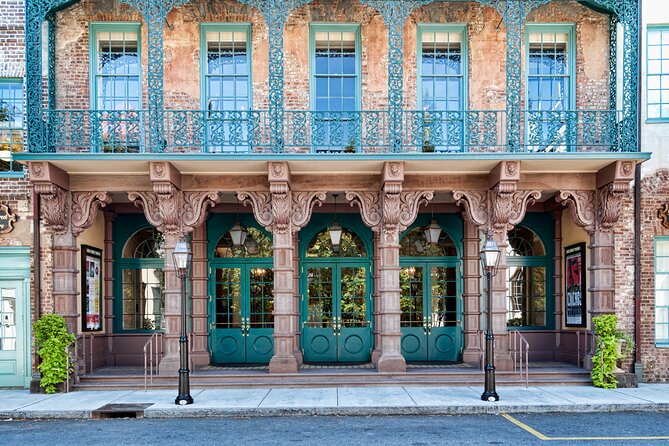
The tour begins at Mills House Charleston on Meeting Street. You spend about 10 minutes here, hearing about the hotel’s role during the early part of the American Civil War. It is a useful opening because it places you in a city already shaped by conflict, commerce, and political tension.
From there, Dock Street Theater provides a different window into Charleston. The stop lasts about 10 minutes and focuses on the first theater built in North America, along with the colorful figures tied to its past. The building gives Eric a chance to move from military events to public entertainment and social life.
This early section sets the tone for the walk. You are not simply collecting buildings. You are looking at how a city’s institutions formed and how different groups used its public spaces. The stops are short, so listen closely and ask questions while the subject is fresh.
The route then pauses at the Pink House Gallery, one of Charleston’s oldest buildings, dating to about 1712. You spend only five minutes here, but the stop helps anchor the city in its early colonial period. It is also a reminder that Charleston’s famous appearance is not the product of one era. Its streets hold layers from the early 1700s onward.
Washington Square and Charleston’s public life
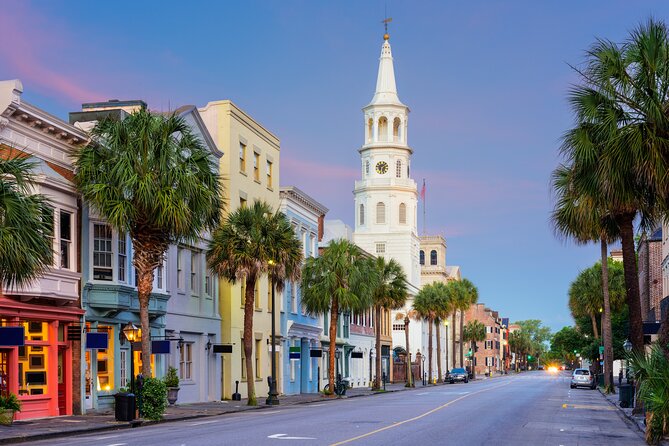
Washington Square receives about 15 minutes, making it one of the longer stops in the first half of the walk. The square contains several monuments, and it opens a useful discussion about how Charleston remembers its past in public spaces.
I value stops like this because monuments are rarely just decoration. They reflect the people, events, and values a community chose to honor. With a history professor leading the conversation, you can ask why certain figures appear in a square, how civic memory changes, and how the city’s past is presented today.
The next stop, Charleston City Hall, adds an architectural and civic twist. The building served first as a meat market and later as a bank before becoming City Hall. That sequence tells you something practical about the city’s growth: public buildings changed jobs as Charleston’s needs changed.
At the Charleston County Courthouse, you learn about a building that once served as the old South Carolina statehouse. This is another short stop, around 10 minutes, but it connects local streets to state politics. If you enjoy the way American government developed through real buildings and institutions, this part of the walk should hold your attention.
St. Michael’s Church and Charleston’s religious story
St. Michael’s Church is one of the route’s key landmarks. Completed in 1761, it is Charleston’s oldest church edifice, and the tour spends about 10 minutes here.
The church gives you a chance to consider more than age and architecture. Religious institutions helped shape Charleston’s neighborhoods, social networks, and civic life. Eric’s teaching style, as described by people who have taken the walk, tends to move between architecture and the larger political or cultural forces behind it.
This stop may also appeal to you if you like seeing how buildings survive changing eras. St. Michael’s links colonial Charleston with the city that later faced Revolution, constitutional debates, and Civil War. The route does not require you to enter every landmark, so the value comes from the explanation and the exterior details you might otherwise pass without noticing.
More History Walking Tours in the USA
- Historic Charleston Walking Tour: Rainbow Row, Churches, and More
★ 5.0 · 691 reviews - Semi-private SMALL group Historic Walking Tours w/certified guide
★ 5.0 · 224 reviews - History and Hauntings of Salem Guided Walking Tour
★ 5.0 · 14,564 reviews - Boston: Freedom Trail History Small Group Walking Tour
★ 5.0 · 6,450 reviews
Heyward-Washington House and the colonial city
The Heyward-Washington House is the next major stop, with about 10 minutes devoted to it. You see the house associated with George Washington’s 1791 visit to Charleston.
Admission is not included, so you should treat this as an exterior visit unless you arrange entry separately. That is an important distinction when comparing this walk with tours that include house museums. The guide gives you context, but the $40 price does not cover a museum admission here.
For many people, the building works best as a starting point for questions. What did a presidential visit mean in the early republic? How did Charleston present itself to national figures? How did private homes function in a city where political and commercial life often overlapped? Eric can address those larger themes while keeping the focus on the street in front of you.
Old Exchange, Provost Dungeon, and the path to the Revolution
At the Old Exchange and Provost Dungeon, the tour pauses for about five minutes. The building was the last public building constructed by the British in North America, and the Constitution was ratified there in 1788.
That is a lot of national history tied to one stop. The site links British rule, the American Revolution, and the creation of the new federal government. It also helps explain why Charleston matters beyond its attractive streets and preserved buildings.
Admission is not included here either. The short stop is best understood as a guided exterior explanation, not a substitute for exploring the interior. If the building catches your interest, you may want to return later, but the tour itself keeps moving.
French Huguenot Church and the French Quarter
The French Huguenot Church receives about 10 minutes. You learn about the French Huguenots in Charleston and see the first church built in the Gothic Revival style.
This stop broadens the city’s story. Charleston was shaped by more than one national or religious tradition, and the Huguenot presence helps explain the city’s social and architectural variety. The church also gives you a specific building through which to consider migration, faith, and identity.
The walk then spends about 15 minutes in the French Quarter. This is one of the most pleasant stretches of the route, but the point is not only visual charm. The guide helps you read the district as a historic part of the walled city, with streets and buildings that reflect Charleston’s long development.
I would pay attention here to the contrast between what you see and what you are told. The French Quarter is easy to treat as a backdrop for photographs. A strong guide turns it into evidence, showing how architecture, religion, trade, and political change left marks on the city.
Hibernian Hall and the road to disunion
Hibernian Hall brings the tour into the tense political years before the Civil War. You learn about the building where the seeds of disunion were sown, along with its connection to Greek Revival architecture.
The stop lasts about 10 minutes and is especially useful if you want more than a battlefield account of the Civil War. Charleston’s role in the conflict developed through arguments, loyalties, institutions, and public choices long before the first shots at Fort Sumter. Hibernian Hall helps connect those ideas to a real place.
Admission to Hibernian Hall is not included. As with the other paid sites, the tour offers context from the outside rather than entry.
This is also where the guide’s academic background matters most. The walk appears designed for people who want to ask how events fit together, not simply memorize what happened. Eric has been praised for answering detailed questions and for handling subjects ranging from the pre-Revolutionary era to the Civil War and beyond.
Fort Sumter from the Battery
The final major stop is the Battery, where you look across Charleston Harbor toward Fort Sumter National Monument. The tour does not travel out to the fort. You view it from the Battery for about 10 minutes.
That limitation is worth stating clearly. If you want to step inside Fort Sumter, you need a separate boat trip and admission plan. This walk gives you the setting and the story of where the first shots of the Civil War were fired, but it does not replace a visit to the monument itself.
Ending at the Battery is practical. You finish at 39 East Battery, near the Rainbow Row section of Charleston, rather than returning to the starting point. That gives you a good place to continue exploring on foot, take photographs, or arrange your next activity. It also leaves the tour on a strong historical note, with the harbor and Fort Sumter in view.
What $40 buys you
At $40 per person, the tour is priced as a focused educational walk rather than a transportation-based sightseeing trip. You receive the guide’s time, all fees and taxes, and roughly three hours of interpretation. You do not receive bottled water, private transportation, or admission to the Heyward-Washington House, Old Exchange and Provost Dungeon, or Hibernian Hall.
I consider the price fair if you value a guide who can handle questions and provide context across several centuries. A large part of the cost is the quality and depth of the explanation, not access to an attraction. The small group cap makes the fee more worthwhile because you are not simply standing behind a large crowd trying to hear.
The value drops if you want interiors, a bus ride, or a relaxed two-hour outing. You will cover a good amount of ground on foot, and the content is intentionally full. Bring water, wear comfortable shoes, and allow time after the tour if you want to enter one of the buildings seen along the route.
Who should book this walk
I would choose this experience early in a Charleston visit if you enjoy history and want a framework for the rest of your stay. The route gives you ideas for places to revisit, including the house museums and Old Exchange, and helps you recognize why the city’s streets and buildings matter.
It suits solo visitors, couples, and small groups who like asking questions. The small cap also works well for people who find large tours impersonal or hard to hear.
You may want another kind of tour if your main goal is food, ghosts, shopping, or a quick overview. This walk is serious about its subject, even when Eric uses humor. Several people have described the three hours as fast-moving because the material is so full, but that same density can feel demanding if you prefer a slower pace.
The experience requires good weather. Free cancellation is available up to 24 hours before the start time, while cancellations or changes within 24 hours are not refunded or accepted. Service animals are allowed, the meeting area is near public transportation, and you should have a moderate level of physical fitness.
My call: book it for substance, not spectacle
Book this tour if you want Charleston explained by a trained historian rather than presented as a string of postcard views. Eric Lager’s strongest qualities are his command of the subject, clear enthusiasm, humor, and willingness to answer questions. The small group makes those strengths easier to enjoy.
Skip it if you want included museum entry, private transport, or a short and easy stroll. For history-minded visitors, though, $40 buys a useful introduction to Charleston’s buildings, institutions, religious communities, and Civil War politics. I would schedule it near the start of your visit, bring water, and keep the rest of the day flexible for returning to the places that catch your attention.
FAQ
How long is the Charleston history walking tour?
The tour lasts approximately three hours.
Where does the tour begin?
It begins at 108 Meeting Street, Charleston, South Carolina 29401.
Where does the tour end?
It ends at 39 East Battery near the Rainbow Row section of Charleston.
How many people can join the tour?
The group is limited to a maximum of 12 travelers.
Who leads the tour?
The tour is led by Eric Lager, Ph.D., a professor of history at The Citadel.
Is Fort Sumter included as a visit?
No. You view Fort Sumter from the Battery across Charleston Harbor. The tour does not travel out to the fort.
Are admission tickets to the historic houses included?
No. Admission to the Heyward-Washington House, Old Exchange and Provost Dungeon, and Hibernian Hall is not included.
Is bottled water provided?
No. Bottled water is not included, so you should bring your own.
What is the cancellation policy?
You can cancel up to 24 hours before the experience for a full refund. Cancellations or changes made less than 24 hours before the start time are not accepted and are not refunded. If poor weather causes the tour to be canceled, you will be offered another date or a full refund.
More Castle and Palace History Tours in Charleston
- Edinburgh: Edinburgh Castle Guided History Tour with Tickets
★ 4.8 · 9,933 reviews - Madrid Essential: Historic Center, Plaza Mayor & Royal Palace
★ 5.0 · 6,416 reviews - Venice’s Best: Basilica, Doge’s Palace, Gondola & History Gallery
★ 4.5 · 2,478 reviews - Tokyo: Imperial Palace and Shogun Historical Walking Tour
★ 5.0 · 2,251 reviews
Newest history tours we have reviewed in Charleston
- Private Morning Sail, Dolphin and History Tour on Mystique★ 5.0 · 84 reviews
- Private Photo Session in Historic Charleston★ 5.0 · 123 reviews
- Private Historic Horse & Carriage Tour of Charleston★ 5.0 · 103 reviews
- Semi-private SMALL group Historic Walking Tours w/certified guide★ 5.0 · 224 reviews
- Charleston’s Best Highlights: History, Culture & Architecture★ 5.0 · 422 reviews
- Charleston Horse & Carriage Historic Sightseeing Tour★ 4.5 · 460 reviews
- Charleston’s Historic Residential Horse and Carriage Tour★ 4.5 · 668 reviews
- Charleston: Old Walled City Historical Walking Tour★ 4.7 · 705 reviews
Castle & Palace History Tours, compared.
Edinburgh Castle Guided History Tour with Tickets
Read our review →
Madrid Essential: Historic Center, Plaza Mayor & Royal Palace
Read our review →
Venice’s Best: Basilica, Doge’s Palace, Gondola & History Gallery
Read our review →
Imperial Palace and Shogun Historical Walking Tour
Read our review →
Saadian Tombs & Bahia Palace, Medina Guided Tour
Read our review →
Abu Dhabi Grand Mosque, Palace, and Heritage Village
Read our review →
Buda Castle District Dark History, Legends and Vampire Night Tour
Read our review →
Tokyo Castle & Imperial PalaceーShogun Walking Tour
Read our review →Browse the lists this tour appears in