
Review · TOKYO HISTORY TOURS
Tokyo: Imperial Palace and Shogun Historical Walking Tour
The most interesting part of this walk is that you are not touring a grand palace interior. You are tracing the old grounds of Edo Castle, where massive stone walls, gates, gardens, and the former keep foundation reveal how power worked in samurai-era Japan. The setting is calm, but the story is not small.
I like the intimate group size, capped at 15, and the way a guide turns an otherwise quiet garden walk into a readable story about shoguns, emperors, and the Imperial family. I also like the easy pace and the chance to ask questions. The main drawback is simple: the East Gardens are free, so you are paying $22 for interpretation rather than admission. Guide quality can also affect the experience, and one poorly managed meeting left a few people struggling to catch up.
Key points at a glance
- Edo Castle beneath modern Tokyo: See stone gates, castle walls, and the foundation of the former keep.
- Ninomaru Garden: Pause among ponds and seasonal flowers shaped by Edo-period garden design.
- Small group format: The maximum group size is 15, a useful balance between company and personal attention.
- Guide-led context: Jim, Tony, Miguel, Izzy, Blake, and others have been praised for connecting buildings, customs, politics, and daily life.
- A real walking tour: Expect slopes, extended stops, and roughly two hours on foot.
- Strong value for history fans: The gardens cost nothing to enter, but the commentary can make the difference between seeing scenery and understanding the site.
Edo Castle’s stones tell Tokyo’s first big story
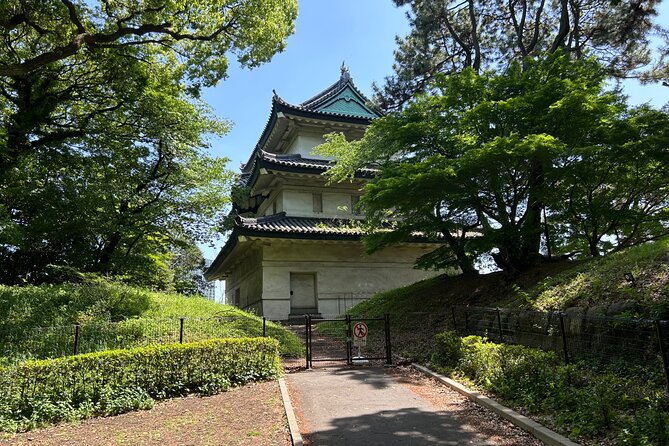
Tokyo’s Imperial Palace can feel distant from ordinary sightseeing. You see broad grounds, formal gates, and quiet greenery, but much of the important story sits under the surface. This walk gives you a way into that story by following the remains of Edo Castle, the military seat of the shoguns before Japan’s imperial era.
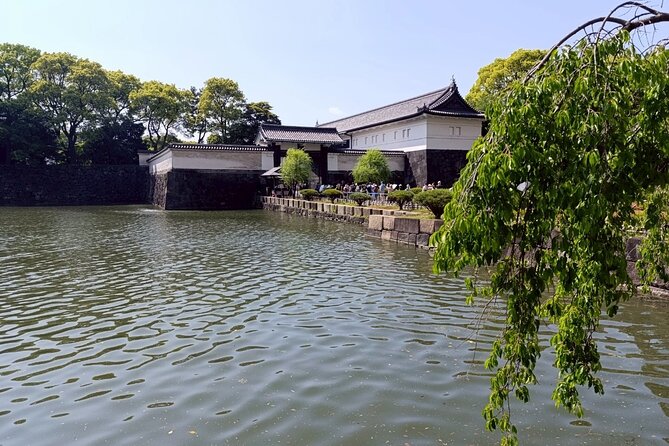
You begin at the Starbucks in Kōkyogaien Wadakura Fountain Park, at 3-1 Kōkyōgaien in Chiyoda City. From there, the guide leads the group toward the East Gardens. The route focuses on the former castle precinct, not an interior tour of the present Imperial Palace.
That distinction matters. You will not be touring royal rooms or seeing the Imperial family’s private life. Instead, you will read the site through its foundations, walls, gates, garden design, and open spaces. For many people, that is more revealing. A bare stone base can show the scale of a vanished castle, while a gate hints at who could enter, who had to wait, and how authority was displayed.
The guide’s job is to connect these physical remains to the shift from shogun rule to imperial government. Jim, Tony, Miguel, Izzy, Blake, and other guides have been praised for making those connections clear and lively. Their approaches vary, but the strongest tours appear to combine dates and names with stories about culture, people, legends, and modern Tokyo.
More Castle and Palace History Tours in Japan
- Tokyo Castle & Imperial PalaceーShogun Walking Tour
★ 4.7 · 1,068 reviews - Tokyo: Imperial Palace Japanese History Walking Tour
★ 4.9 · 987 reviews - Tokyo Castle & Imperial PalaceーShogun Walking Tour
★ 5.0 · 724 reviews
From samurai power to the Imperial family

The East Gardens bring together several chapters of Japanese history. First comes the age of Edo Castle and the shogunate, when military rulers governed Japan through a tightly ordered feudal system. Then comes the change toward imperial rule and the modern state. The gardens today belong to the Imperial Palace complex, so the site also gives you a chance to think about how Japan presents continuity and change.
You do not need to arrive with a textbook in your bag. The tour is designed to explain the setting as you walk. Still, I suggest knowing a few basic terms before you go: shogun, samurai, Edo, emperor, and Imperial family. That small amount of preparation will help you follow the story when the guide moves between centuries.
The best commentary does not stop at dates. It explains why the castle needed such imposing stonework, why gardens were designed with such care, and how the role of the emperor differs from the power once held by the shoguns. Some guides also add practical observations about Japanese culture and how to behave respectfully at important sites.
Jim has been praised for answering questions patiently and for drawing links between Japanese history and present-day customs. Tony has been praised for explaining the Edo period, the shogunate, the emperor, and the Imperial family in a way that gives the site purpose. Miguel and Izzy have also been singled out for clear, engaging instruction. These details matter because a garden tour can become either a pleasant stroll or a useful introduction to Japan. This one aims for the latter.
The former keep foundation gives the walk its strongest moment
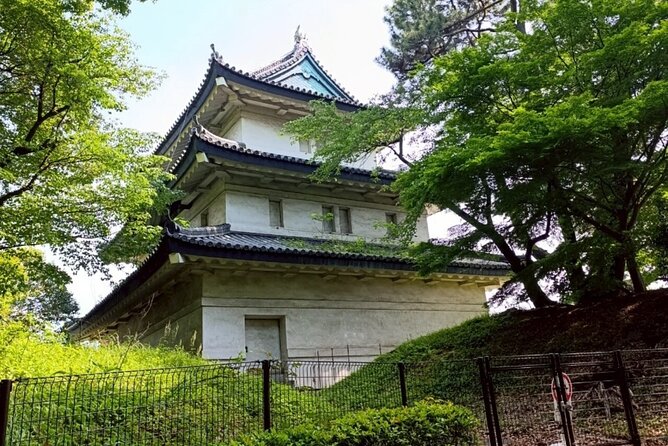
The castle keep no longer rises above the grounds, but its foundation remains. Standing on or near this broad stone base helps you picture the scale of the original stronghold. The site is not a reconstructed showpiece. You are looking at what survived, which gives the visit a more direct connection to the past.
Your guide will likely pause here for an extended explanation. This is one of the places where the tour can feel like a history lesson, in a good way if you enjoy detail. One person found the long stops and repeated explanations a little much, so do not expect a fast-moving sightseeing circuit.
I see the slower pace as a fair trade for understanding the site. You can look closely at the stonework, ask questions, and let the guide explain how the castle grounds were organized. A bus tour could point toward the palace and move on. Walking lets you stand beside the remains and notice their size.
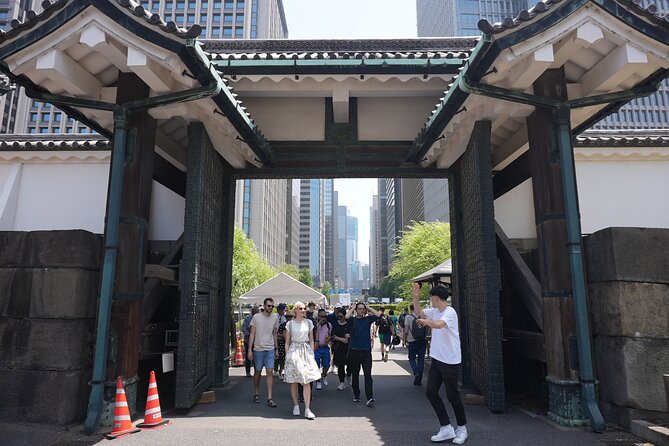
The route also includes majestic stone gates and remnants of tall castle walls. These are not minor decoration. They show how the castle controlled movement and projected authority. Your guide may use the gates to explain the old hierarchy of the castle grounds and the practical role of defenses. The exact emphasis depends on who leads your group, but the site gives any capable guide plenty to work with.
Ninomaru Garden adds a quieter side of Edo
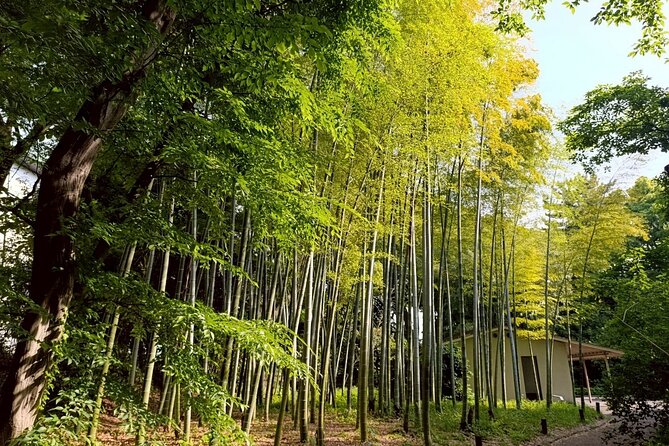
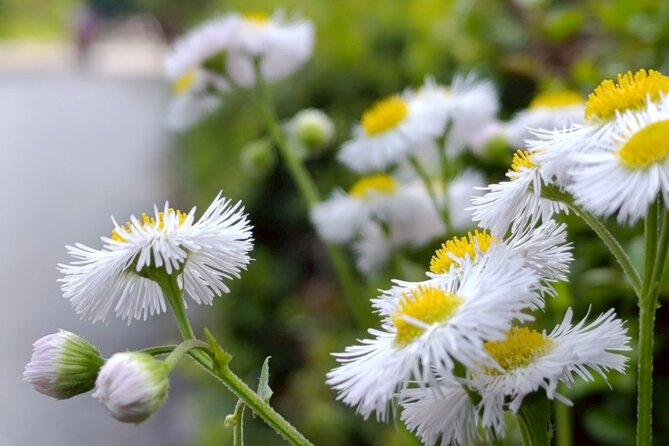
After the castle remains, the mood shifts in Ninomaru Garden. Ponds, seasonal flowers, and carefully arranged plantings show a different side of the Edo period. The castle represented force and control. The garden reflects patience, taste, and the careful shaping of nature.
This is the section where you can slow your eyes down. Look at the relationship between water, paths, plants, and open views. Your guide may explain how garden design expressed ideals of balance and refinement. The walk is not only about military power. It also shows the cultural world that developed around it.
Seasonal changes matter here. Flowers and foliage will vary with the time of year, so the garden will not look exactly the same from one visit to the next. The supplied details do not promise a specific bloom season, so I would treat the garden as a pleasant setting rather than book the tour for one particular flower.
The East Gardens are free to enter, and you can certainly wander them on your own. That option suits anyone who wants quiet scenery and does not care about dates or interpretation. The paid tour makes sense when you want to understand why the garden, castle walls, and Imperial grounds are connected.
More History Walking Tours in Japan
- Tokyo: Shinjuku Historical Walking Tour & Secret Backstreets
★ 5.0 · 530 reviews - Imperial Palace East Garden and Edo Castle Walking Tour in Tokyo
★ 5.0 · 510 reviews - Asakusa: A Big-picture History Walk to Know Japan
★ 4.6 · 77 reviews - Asakusa: 3.5-hour Big-picture History Walk
★ 4.7 · 39 reviews
Small groups make questions easier
The group limit is 15 people. That is not a private tour, but it is small enough for a guide to keep the group together and respond to questions without shouting across a crowd. Tony, for example, has been praised for making sure everyone was present before moving on.
The group size also affects the pace. You will stop at several points, and the guide needs time to explain the site to everyone. If you like a relaxed walk with conversation, this should suit you. If you prefer to cover a large area quickly, the long explanations may test your patience.
Most people can participate, but you should be ready to walk for about two hours. The route includes slopes, and one direct note from the experience is to prepare for some uphill sections. Wear shoes you can comfortably walk in and leave room in your schedule for a pace that is steady rather than hurried.
The walk ends back at the meeting point. That makes it easier to plan another activity afterward, but keep your timing sensible. The advertised duration is approximately two hours, while the detailed garden portion is listed at about one hour and 30 minutes. A guide may run close to schedule, but questions, group movement, and the amount of explanation can affect the finish time.
The meeting point deserves careful attention
The start point is Starbucks Coffee in Kōkyogaien Wadakura Fountain Park. It is near public transportation, but you still need to identify the correct meeting spot before the start time. A communication problem caused one group to miss the initial departure and later meet the guide at a different location. The guide was described as informative once contact was made, but the late start meant the group missed part of the palace grounds before closing.
That is a useful warning. Arrive early, confirm the exact meeting instructions, and keep your phone available. Do not assume that being somewhere in the wider palace area is enough. The tour provider is Traveling Tokyo, and confirmation is sent when you book, so read that information closely.
The mobile ticket is convenient. You do not need to print a paper voucher, but you should have the ticket ready on your phone and know the meeting location before you leave your hotel. This is especially important in central Tokyo, where a short map distance can still involve a busy station, several exits, and a confusing park entrance.
What guide quality means here
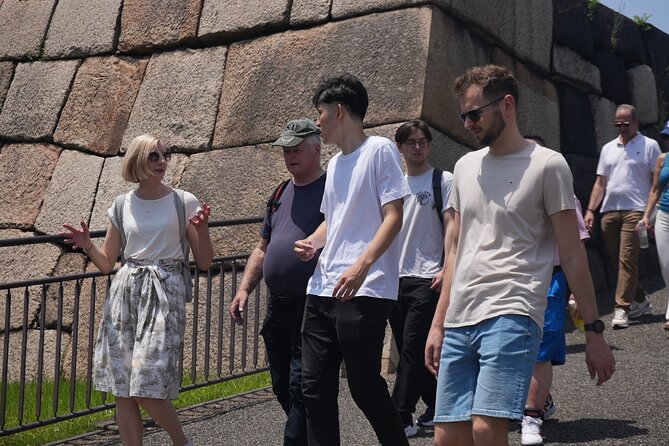
The strongest part of this experience is the guide. That is also the main variable. Jim has been praised for his command of Japanese history and his patience with questions. Tony has been praised for storytelling and for explaining both the castle grounds and the surrounding area. Miguel has been praised for historical facts, modern Tokyo insights, and patience with the group. Izzy has been praised for clear explanations and an enjoyable manner.
Blake has been described as engaging and friendly, while Lasse has been praised for his passion for Japan’s past. Michi has been praised as a strong storyteller. These names give you a sense of the range of guides who may lead the walk, but you cannot choose a particular person from the information provided.
There is also a fair caution. One group felt its guide lacked enough historical preparation and relied on a supervising guide for answers. Another person felt the guide repeated points and spent too long at each stop. The walk is therefore best for someone who values personal explanation but accepts that the tone and depth may vary.
I would not book this if you want a tightly scripted, rapid tour with identical commentary every time. I would book it if you like asking questions and want a human guide to make sense of a complicated site.
Is $22 a fair price?
At $22 per person, the price is modest for a two-hour guided walk in central Tokyo. You are not paying for entry to a major paid attraction, since the East Gardens can be visited free of charge. You are paying for the guide’s time, route planning, historical explanation, and help noticing what the garden and ruins mean.
That value depends on your interests. If you already know Japanese history and prefer exploring at your own pace, save the money and walk the gardens independently. If you see only stones, ponds, and trees without context, the fee can be worthwhile.
The small group helps the price feel fair. A private guide would cost much more, while a large bus tour would not give you the same access to the gates, walls, and garden paths. This is a middle option: affordable, personal enough for questions, and more focused than a general Tokyo sightseeing trip.
The tour also works well early in your stay because it provides a basic framework for Tokyo and Japan. It can work near the end, too, when you have seen modern neighborhoods and want to understand the older political story behind the city.
Who should book this walk?
I would recommend it to first-time visitors who want more than photographs of the Imperial Palace grounds. It is also a good fit for anyone interested in samurai-era Japan, the shogunate, garden design, the emperor, or the shift into modern Japan.
Families and mixed-age groups may like the easy pace, though the amount of spoken history will not suit everyone. People who want to make friends during a small-group activity may enjoy the format. Solo visitors can ask questions without arranging a private guide.
I would think twice if you have limited mobility or dislike slopes and extended periods standing. The information says most people can participate, but this is still a walking tour, not a vehicle-based visit.
I would also skip it if your main goal is to enter the Imperial Palace itself. The route visits the East Gardens and former Edo Castle grounds. The present palace buildings are not the focus.
Should you book the Imperial Palace and Shogun Historical Walking Tour?
Book it if you want the Imperial Palace grounds to make sense. The gardens are free, but a good guide can connect the castle foundation, stone walls, Ninomaru Garden, shogunate, emperor, and modern Tokyo into one readable story. At $22, that is a reasonable price for an intimate introduction to the city’s political past.
Go independently if you want silence, photography, or a flexible schedule. Choose the tour if you want explanation, questions, and a steady route through the site. Arrive early at the Starbucks meeting point, wear good walking shoes, and expect a history-focused outing rather than a palace interior visit.
FAQ
How long does the Imperial Palace walking tour last?
The tour lasts approximately two hours. The detailed visit to the East Gardens and Edo Castle ruins is listed at about one hour and 30 minutes.
What does the tour include?
The tour includes a guided walk through the Imperial Palace East Gardens, the Edo Castle ruins, the former keep foundation, stone gates, castle walls, and Ninomaru Garden. Admission to the garden is included.
Is the Imperial Palace East Gardens entrance free?
Yes. The gardens can be visited without paying admission. The $22 tour fee pays for the guided experience and historical commentary.
Where does the tour begin?
The meeting point is Starbucks Coffee in Kōkyogaien Wadakura Fountain Park, at 3-1 Kōkyōgaien, Chiyoda City, Tokyo 100-0002, Japan.
Where does the tour end?
The activity ends back at the meeting point.
How large is the tour group?
The tour has a maximum of 15 participants.
Is the tour suitable for most people?
The activity information says most people can participate. You should still expect a walking route, some slopes, and extended stops.
Do I need a printed ticket?
No. The tour provides a mobile ticket.
Can I cancel for a full refund?
Yes, if you cancel at least 24 hours before the experience start time. Cancellations made less than 24 hours before the start time are not refunded, and changes within that period are not accepted.
More History Walking Tours in Tokyo
- History and Hauntings of Salem Guided Walking Tour
★ 5.0 · 14,564 reviews - Lisbon: History, Stories and Lifestyle Walking Tour
★ 4.8 · 10,902 reviews - Boston: Freedom Trail History Small Group Walking Tour
★ 5.0 · 6,450 reviews - Historic Charleston Guided Sightseeing Walking Tour
★ 5.0 · 6,216 reviews
More Castle and Palace History Tours in Tokyo
- Edinburgh: Edinburgh Castle Guided History Tour with Tickets
★ 4.8 · 9,933 reviews - Madrid Essential: Historic Center, Plaza Mayor & Royal Palace
★ 5.0 · 6,416 reviews - Venice’s Best: Basilica, Doge’s Palace, Gondola & History Gallery
★ 4.5 · 2,478 reviews - Marrakech: Saadian Tombs & Bahia Palace, Medina Guided Tour
★ 4.6 · 1,989 reviews
Newest history tours we have reviewed in Tokyo
- Asakusa: 3.5-hour Big-picture History Walk★ 4.7 · 39 reviews
- Asakusa: A Big-picture History Walk to Know Japan★ 4.6 · 77 reviews
- From Tokyo: Nikko World Heritage Sight Full Day Private Tour★ 4.9 · 127 reviews
- From Tokyo: Nikko World Heritage Site Private Full-Day Trip★ 4.9 · 243 reviews
- Tokyo: Nikko World Heritage Private Day Trip Hotel Pick-up★ 4.8 · 145 reviews
- Tokyo: The Best of Izakaya in Shinjuku Food & Cultural Tour★ 4.9 · 221 reviews
- Tokyo: 3-Hour Bike/E-Bike Tour of the City’s Hidden Gems★ 5.0 · 47 reviews
- Imperial Palace East Garden and Edo Castle Walking Tour in Tokyo★ 5.0 · 510 reviews
Castle & Palace History Tours, compared.

Edinburgh Castle Guided History Tour with Tickets
Read our review →
Madrid Essential: Historic Center, Plaza Mayor & Royal Palace
Read our review →
Venice’s Best: Basilica, Doge’s Palace, Gondola & History Gallery
Read our review →
Saadian Tombs & Bahia Palace, Medina Guided Tour
Read our review →
Charleston historical walking tour with a Professor of History at The Citadel
Read our review →
Abu Dhabi Grand Mosque, Palace, and Heritage Village
Read our review →
Buda Castle District Dark History, Legends and Vampire Night Tour
Read our review →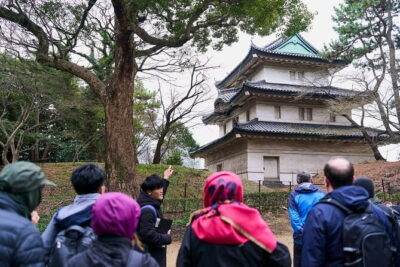
Tokyo Castle & Imperial PalaceーShogun Walking Tour
Read our review →Browse the lists this tour appears in