
Review · SPLIT HISTORY TOURS
Split Walking Tour with Professor of History
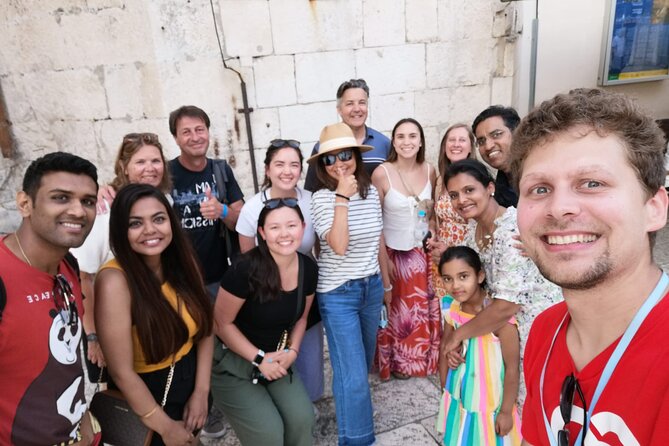
Diocletian’s Palace is not a museum sealed behind glass. It is the heart of Split, with homes, cafés, shops, churches, and narrow lanes built into a Roman complex. This walking tour helps you read that jumble of old and new, with history professor Mario or another trained guide explaining how an emperor’s retirement palace became a living city.
I like the small maximum of 17 people, which gives your guide room to answer questions and find shade when possible. I also like the mix of major sights and local details, from the palace substructures to the Let Me Pass lane, Croatian food tips, and advice about where to eat and which ATMs to avoid. The main drawback is time: the advertised length is about 2 hours 20 minutes, but the guide may continue closer to three hours, and key interiors such as the cathedral are not included.
Key points to know before you book

- A professor leads the history lesson: Mario is frequently praised for clear explanations, humor, myth-busting, and strong knowledge of Split and Croatia.
- The palace is still part of city life: You walk through working streets rather than a separate archaeological park.
- The group is capped at 17 people: That is small enough for questions and easier movement through narrow lanes.
- The tour covers more than Diocletian: You also visit the Riva, Golden Gate, Gregory of Nin, Marmontova Street, Prokurative, and Fruit Square.
- Major indoor admissions are extra: The Cathedral of Saint Domnius and Temple of Jupiter are viewed from outside.
- Allow extra time: The route is scheduled for about 2 hours 20 minutes, but the guide may run over to add stories and practical advice.
Why a history professor makes a difference in Split
Split can be confusing at first. Roman walls meet medieval houses, modern shops occupy ancient rooms, and a fourth-century mausoleum now functions as a cathedral. Without context, you may see attractive stonework but miss the unusual story of how the city grew inside Diocletian’s Palace.
A professor-led walk gives you a clear framework. You learn about Emperor Diocletian, the Roman layout, later Christian use, medieval changes, Napoleon’s influence, and Croatian cultural figures. The strongest guides also connect the past to present-day Split, rather than turning the walk into a string of dates.
Mario is especially associated with this experience. His approach combines academic detail with jokes, questions, local customs, and practical suggestions. Anita is also praised for her warmth, careful handling of a group, and pride in Croatian culture. The exact guide may vary, but you should expect an English-speaking guide who treats the city as both a historical site and a living home.
The teaching style seems interactive rather than purely scripted. You may be asked to look closely, question a familiar story, or think about how a Roman building changed purpose over time. That is useful in Split, where many popular tales need a little sorting before you accept them as fact.
More History Walking Tours in Croatia
- Dubrovnik Old Town History Walking Tour
★ 5.0 · 1,684 reviews - Dubrovnik: Ancient City Walls & Wars Walking Tour
★ 5.0 · 1,270 reviews - Zagreb: City & History Walking Tour & WW2 Tunnels
★ 4.9 · 1,202 reviews
Starting beside the Riva and Diocletian’s sea gate
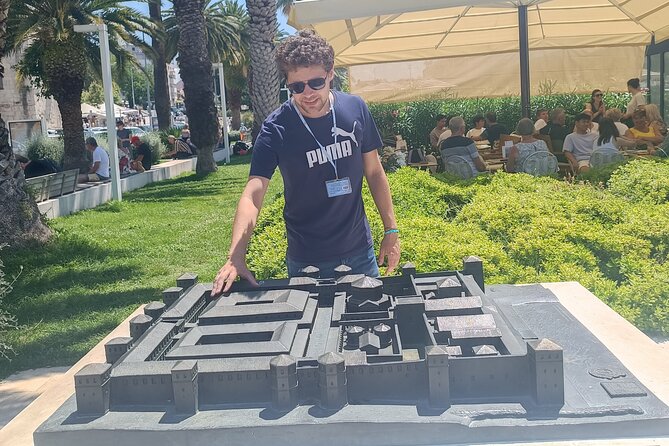
The meeting point is listed at the Brass Gate, also called Porta Aenea, on Obala Hrvatskog narodnog preporoda 22. The opening portion takes place by the Riva, Split’s broad waterfront promenade, near a model of the palace.
The Riva is a good place to begin because it shows modern Split at work. People meet for coffee, sit in the sun, and use the waterfront as a social center. Your guide sets the palace in its urban setting before taking you into the old core.
The contrast matters. Diocletian did not build an isolated country villa. He created a fortified imperial residence on the coast, and the city that grew within and around it still faces the harbor. Starting here helps you understand why the palace remains central to daily life.
Arrive with comfortable shoes and water. The tour is on foot, and several stops involve standing in open squares or moving through narrow stone streets. The listing says most people can participate, and service animals are allowed.
The substructures reveal the palace’s original shape
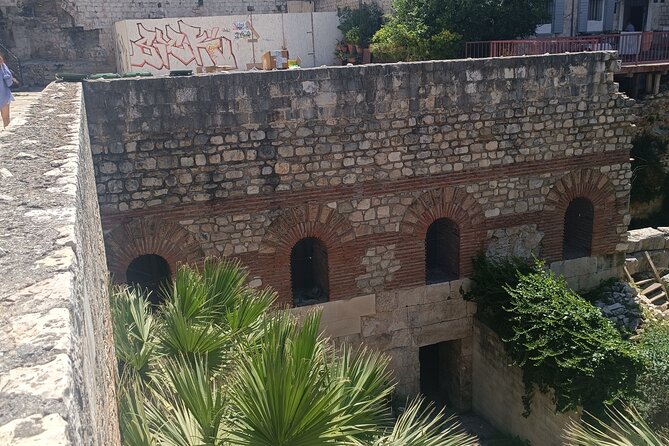
The palace substructures are among the best-preserved ancient complexes of their kind. They supported the upper rooms and helped keep the imperial apartments above them level on sloping ground.
This is one of the most useful stops for understanding the palace plan. The basement spaces echo the arrangement of rooms that once stood above, so your guide can explain the palace as a whole instead of treating each monument as a separate object.
The published timing gives this stop about 15 minutes. That is enough for an orientation and explanation, though not a long independent exploration. Admission is listed as free for the tour, but you should pay attention to any current on-site rules if you plan to return later on your own.
The substructures also explain why Split’s old center earned UNESCO World Heritage status. The value is not just one grand building. It is the survival of a large Roman complex that has been adapted over centuries.
The Peristyle and Vestibule show imperial theater
The Peristyle is the palace’s central ceremonial square. This was where Diocletian appeared as a ruler presented in divine terms, associated with Jupiter and the Roman imperial order.
Your guide can help you picture the choreography. The emperor appeared beneath the central architrave of the Protyron, while subjects approached with gestures of submission. The square was not merely decorative. It was a stage for power.
The stop is brief, about 10 minutes, so expect a focused explanation rather than a long pause. The setting can be busy, and the stone surfaces may be uneven. Stay close enough to hear, especially if other groups are nearby.
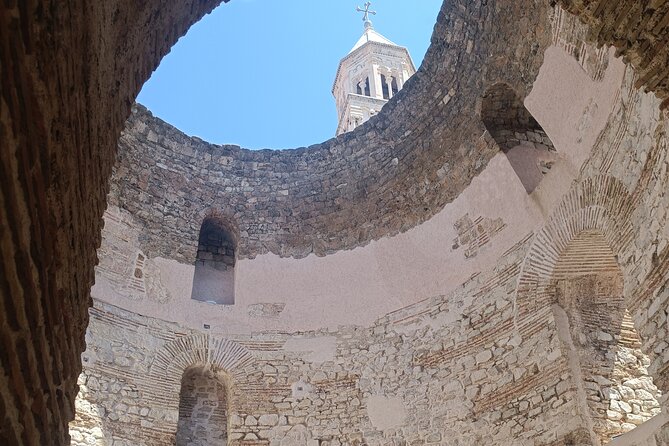
From there, you enter the Vestibule, a round hall that once formed part of the route to the imperial apartments. It was built by the beginning of the fourth century and originally had a dome. The space measures about 17 meters high and 12 meters across, giving it a strong sense of scale even without its original finish.
The Vestibule served as a formal meeting space for selected audiences, including ambassadors. That detail makes the room easier to imagine. You are not simply looking at a circular chamber. You are standing in a controlled approach to the emperor’s private world.
Same streets, a different century:
- Walking Tour of Split with a ‘Magister’ of History
★ 5.0 · 1,122 reviews - Dubrovnik Combo: Old Town & Ancient City Walls
★ 5.0 · 1,019 reviews - Split: History and Heritage Walking Tour
★ 4.9 · 650 reviews - Game of Thrones & History of Dubrovnik Tour
★ 5.0 · 628 reviews
Saint Domnius connects Roman religion to Christian Split
The Cathedral of Saint Domnius is one of the tour’s most striking examples of changed use. The building began as Diocletian’s mausoleum, and the wider complex also includes the remains of a Roman temple. It later became a Christian church.
The tour visits the cathedral from outside. Entrance is not included, but the guide provides information if you want to go in afterward. That arrangement keeps the walk focused and lets you decide if the interior fits your schedule and budget.
I consider this a fair approach for a low-cost walking tour, but you should know what you are buying. You are paying for interpretation and an outdoor route, not a package of museum admissions. If the interior matters to you, set aside extra time and money after the walk.
The cathedral stop lasts about 20 minutes, one of the longer pauses on the route. That gives your guide room to explain the building’s Roman beginning, Christian transformation, and role in the center of Split.
Jupiter’s Temple and the narrowest lane
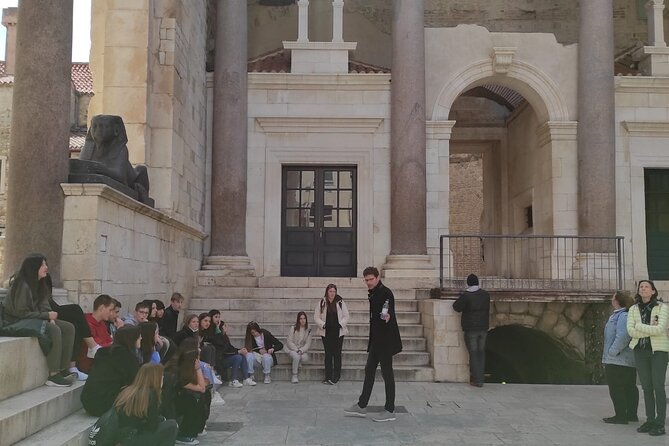
The Temple of Jupiter is another example of religious change. It was built for Jupiter, the supreme god of Roman religion, and later converted into a baptistery dedicated to Saint John the Baptist.
Again, the tour views it from outside. The guide explains the site, but the entrance fee is not part of the experience. This is a helpful stop for comparing Roman and Christian traditions within a few minutes of walking.
The route then passes through a tiny street between the ancient temple and a medieval building. Locals call it Let Me Pass Street, and it is often described as the narrowest street in the world. You do not need to treat that claim as a scientific title to enjoy the moment. It is a memorable example of how old urban spaces still shape daily movement.
The stop is scheduled for about 10 minutes. Keep your expectations realistic: this is a quick look and explanation, not a long temple visit.
The Golden Gate and Gregory of Nin
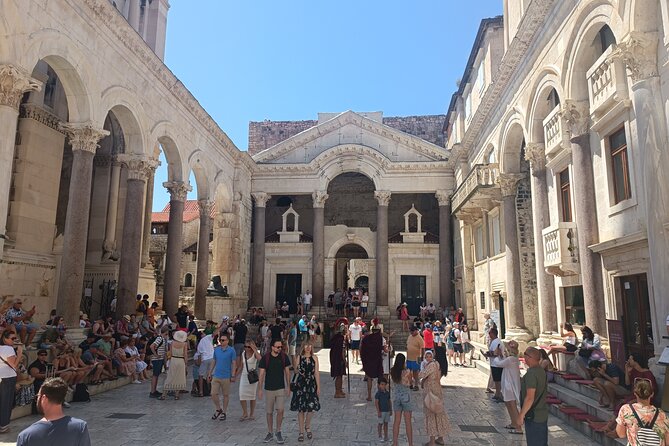
The Golden Gate, or Northern Gate, was one of the palace’s four main entrances. It was designed as the route for the emperor to enter the complex and was more elaborate than an ordinary city gate.
Its later story is just as interesting. The gate was sealed during the Middle Ages and lost much of its decoration before being reopened and repaired in modern times. Your guide can show you how the surviving structure fits into the old city and why this entrance still draws attention.
The route then reaches the statue of Gregory of Nin, created by Croatian sculptor Ivan Meštrović. The statue is about 8.5 meters high, and its polished toe has become a practical bit of Split folklore. Rubbing it is said to bring good luck.
You will likely see people touching the toe, which is now smooth and shiny from years of contact. It is a quick stop, but it adds a local ritual to the architectural history. The guide may also explain Gregory’s place in Croatian culture and church history.
Marmontova Street shows a later chapter
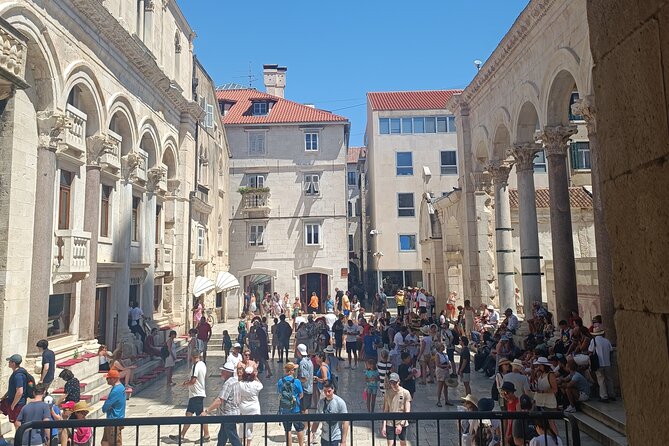
Marmontova Ulica shifts the story away from Roman Split. The street is named for Napoleon’s marshal Marmont, who played a role in the urban development of Dalmatian cities.
That gives your guide a chance to explain how Split changed under later political powers. The city’s character was not formed in a single era. Roman planning, medieval construction, Venetian influence, French administration, and modern Croatian life all left marks.
The stop lasts about 10 minutes. It is less about one monument and more about reading the street as evidence of urban change. If you enjoy connecting politics with architecture, this part adds welcome range to a palace-focused tour.
Prokurative and Fruit Square finish the walk
Republic Square, usually called Prokurative, is an open space framed on three sides by ornate neo-Renaissance buildings. After the tight lanes of the palace, the square feels spacious and more theatrical.
The name and architecture point to a later period of Split’s history. This is a good place to pause and compare the city’s Roman core with its more recent civic spaces. Your guide may also use the square to explain how public life moved between the waterfront, palace streets, and open plazas.
The route is scheduled to finish at Fruit Square, officially Trg Braće Radić. The square takes its common name from the women who once sold fruit there. It is small, attractive, and filled with stories about local trade, food, and culture.
You also learn about Marko Marulić, often called the father of Croatian literature. That makes the final stop a nice change of pace. Instead of ending with another Roman wall, the walk closes with Croatian identity, literature, and gastronomy.
The booking details also say the activity ends back at the meeting point, while the route description names Fruit Square as the final spot. Because those details do not perfectly match, confirm the exact finish with the operator if your onward plans depend on it.
What the $24.19 price gets you
At $24.19 per person, this is a strong value if you want a serious orientation to Split without paying for several separate attractions. You get roughly two hours 20 minutes of guided walking, a small group capped at 17, and a route that covers the city’s major historical layers.
The value comes from the explanation. You could walk past the Peristyle, Vestibule, Golden Gate, and Temple of Jupiter on your own, but you would miss much of the connection between them. A professor can explain why the palace was built, how it was altered, and how ordinary city life developed inside it.
The price does not include drinks or entrance fees for the cathedral and Temple of Jupiter. That is not a problem if you mainly want an outdoor introduction, but budget extra if you want to go inside. The guide may also run beyond the scheduled time, which can be a benefit for curious people and a problem if you have a tight ferry, meal, or excursion schedule.
Who should choose this walk
I would choose this tour for a first visit to Split, especially if you enjoy history but do not want a dry lecture. It suits people who like asking questions, learning the reasons behind what they see, and getting practical suggestions for the rest of the stay.
It also works well for visitors arriving by cruise or with only part of a day in town, provided they allow enough time. The route gives you a map of the old center and helps you decide which interiors or neighborhoods deserve a return visit.
Families and mixed-age groups may appreciate the stories and humor, though the walk still involves standing and walking on old stone surfaces. If you have limited mobility, contact the provider before booking rather than assuming every narrow lane will be easy.
A private upgrade is available if you want more control over the pace or a more personal conversation. The standard option is likely the better deal for most people, but private touring can make sense for a family or group with specific interests.
Booking, cancellation, and practical details
Confirmation is provided at booking, and the tour is offered in English. Public transportation is nearby, and the meeting point is at the Brass Gate by the Riva area.
Free cancellation is available up to 24 hours before the start time. Cancellations or changes made inside that window are not refunded, and poor weather can lead to a new date or full refund.
I would book several weeks ahead if your schedule is fixed. The experience is booked an average of 33 days in advance, which suggests that popular dates can fill before arrival. Wear shoes with a good grip, bring water, and leave room in your plans for the possibility of a longer, more detailed walk.
Should you book the Split history professor tour?
Book it if you want context, humor, and a well-planned introduction to Split rather than a quick photo stop at Diocletian’s Palace. The mix of Roman remains, medieval lanes, Croatian culture, and modern city life gives you a much better sense of place.
Skip it if you only want interior access to the cathedral and palace buildings, since those admissions are not included. Also think twice if you need the tour to end at an exact time. For most first-time visitors, though, the $24.19 price and small group make this a sensible way to get your bearings before exploring Split on your own.
FAQ
How long does the Split walking tour last?
The scheduled duration is approximately 2 hours 20 minutes. The guide may continue longer, with one experience lasting close to three hours.
What language is the tour offered in?
The tour is offered in English.
Where does the tour start?
The meeting point is the Brass Gate, also called Porta Aenea, at Obala Hrvatskog narodnog preporoda 22 in Split.
Where does the tour end?
The activity details say it ends back at the meeting point. The route description identifies Fruit Square as the last sightseeing stop, so confirm the precise finish if you have fixed onward plans.
Are cathedral and Temple of Jupiter entrance fees included?
No. The Cathedral of Saint Domnius and Temple of Jupiter are visited from outside, and admission is not included.
How many people can join the group?
The maximum group size is 17 people.
Is a private tour available?
Yes. You can upgrade to a private tour for a more personal experience.
What is the cancellation policy?
You can cancel up to 24 hours before the start time for a full refund. Cancellations or changes made less than 24 hours before the start time are not accepted for a refund. If poor weather causes cancellation, you will be offered another date or a full refund.
Newest history tours we have reviewed in Croatia
- Dubrovnik: Game of Thrones and History Small Group Tour★ 5.0 · 76 reviews
- Dubrovnik Old Town: Small-Group Walking Tour With A Local★ 5.0 · 123 reviews
- History Split Walking Tour in French -Small group★ 5.0 · 41 reviews
- Split History and Gastro Small-Group Tour with Food and Drinks★ 5.0 · 375 reviews
- Dubrovnik Jewish Heritage Private Walking Tour★ 5.0 · 121 reviews
- Private History Split Walking Tour in English★ 5.0 · 159 reviews
- Split: Historical Tour of Salona, Klis Fortress and Trogir★ 4.1 · 108 reviews
- History & Cultural Walking Tour of Split and Diocletian’s Palace★ 5.0 · 104 reviews
History Walking Tours, compared.

History and Hauntings of Salem Guided Walking Tour
Read our review →

Freedom Trail History Small Group Walking Tour
Read our review →
Historic Charleston Guided Sightseeing Walking Tour
Read our review →
Tapas Walking Tour with Food, Wine, and History
Read our review →
Savannah History and Haunts Candlelit Ghost Walking Tour
Read our review →
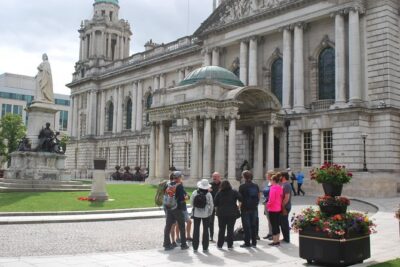
A History of Terror – Belfast City Centre Walking Tour
Read our review →Browse the lists this tour appears in