
Review · SPLIT HISTORY TOURS
Split History and Gastro Small-Group Tour with Food and Drinks
Split’s best food tours do more than move you from one restaurant to the next. This one uses food to explain the city, beginning near Diocletian’s Palace and ending with dessert near the Riva. In three hours, you sample market produce, seafood, pasta, wine, liqueur, and gelato while walking through the old center.
I like the small group limit of 12, which makes it easier to ask questions and keep up in the narrow streets. I also like the broad menu: prosciutto and cheese, soparnik pie, octopus with gnocchi, black risotto, seafood pasta, and traditional sweets give you a useful first taste of Dalmatian cooking.
The main drawback is that seafood takes center stage, and the exact dishes change with the season and tour time. If octopus, anchovies, mussels, or squid are not for you, ask about substitutions before booking. The history can also be lighter than the food on some departures.
Key points to know before booking
- Four distinct food stops take you from Split’s Green Market to taverns, a pastry shop, and the waterfront.
- Afternoon tours may include octopus stew, gnocchi, and liqueur, while the morning market visit focuses more on fresh market tastes.
- The food is substantial, not a few token bites. Several dishes and multiple drinks can add up to a full meal.
- Guides make a major difference, with Ana, Hani, Kristina, Doris, Dubravka, Ela, and Elsa praised for warmth, stories, and local advice.
- The tour costs $139.13 per person, a fair price if you value a meal, drinks, guiding, and an easy introduction to Split in one outing.
- Dietary requests are accepted, including vegetarian, vegan, and gluten-free choices, but you should give advance notice.
A food-first introduction to Diocletian’s Palace
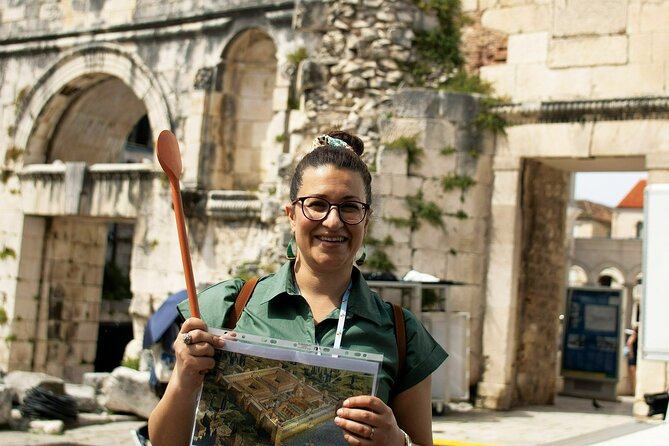
You meet outside Diocletian’s Palace at Hrvojeva 1, looking for a person holding an orange spoon. That simple marker matters in Split, where streets around the palace can feel confusing at first. The tour then moves only short distances, so you spend your time eating and listening rather than finding your way between far-flung sights.
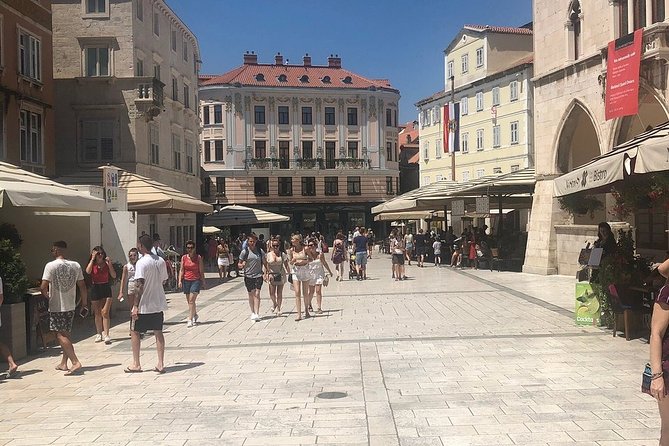
This is not a full archaeological tour of the palace. Instead, the guide threads historical stops between meals. You’ll hear about Split’s long past, see medieval squares, walk along old streets, and learn how food fits into daily life in Dalmatia.
That mix works especially well on a first day in town. You get your bearings, learn a few local dishes, and collect restaurant ideas for later. Several people who took the tour as their first Split activity found it useful for exactly that reason.
The experience is offered in English and lasts about three hours. The walking is moderate, but you should be comfortable on your feet and on old city streets. There is no hotel pickup or drop-off, so plan to reach the starting point on your own.
More Small-Group History Tours in Croatia
- Dubrovnik Old Town: Small-Group Walking Tour With A Local
★ 5.0 · 123 reviews - Dubrovnik: Game of Thrones and History Small Group Tour
★ 5.0 · 76 reviews - History Split Walking Tour in French -Small group
★ 5.0 · 41 reviews
Green Market: Split’s edible starting point
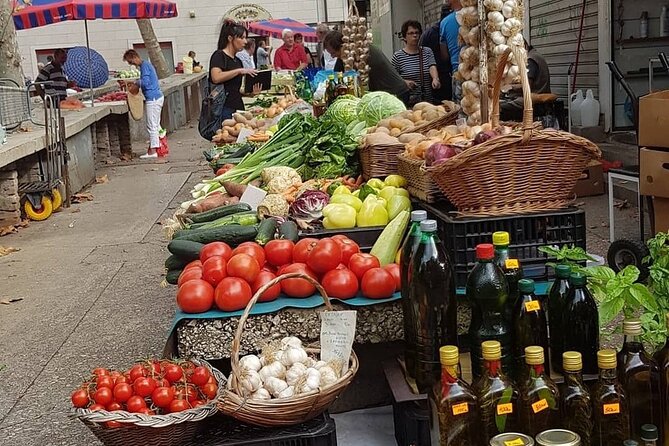
The first stop is the Green Market, known locally as the city’s belly. The market section is scheduled for about 30 minutes and gives you a quick look at the produce and pantry goods that shape everyday cooking in Split.
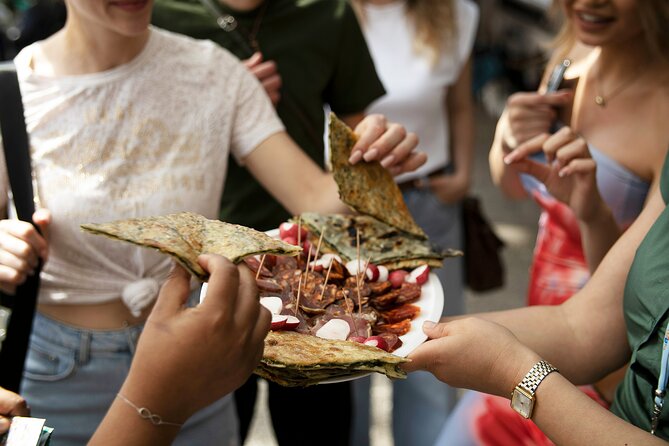
Here you may taste prosciutto, cheese, traditional bread, and soparnik pie. Soparnik is a savory Croatian specialty made with thin dough and greens, and it offers a useful change from the seafood that appears later. You may also hear about seasonal produce, olive oil, cured meats, and the way local ingredients move from market stalls to home kitchens.
This is one of the tour’s most appealing details because the market adds context to the restaurant plates. You are not simply told that Croatian food uses local ingredients. You see the ingredients around you and taste several of them before sitting down to a larger meal.
There is one timing detail to watch. The Green Market is closed in the afternoon, so afternoon departures do not include the market visit itself. The market foods are replaced with similar tastes served in local taverns. That keeps the food component intact, but the atmosphere is different. Morning departures are better if you specifically want to see the market.
Narodni trg and the medieval center
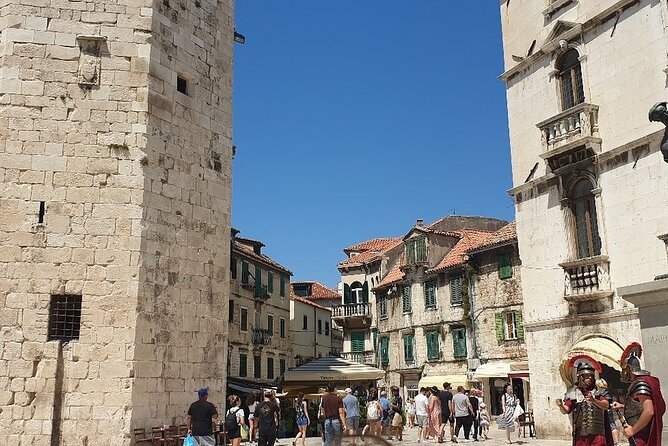
From the market, the group walks into the old town and stops at Narodni trg, the largest medieval square in Split. The visit is brief, about 10 minutes, but it gives the tour a needed pause between tastings.
The square brings together medieval architecture and the daily life of the city. This is the sort of place where a guide can explain how Split developed around the palace and how older buildings were adapted over time. You are not stopping for a long lecture, so this section works best as orientation rather than a full history lesson.
That balance is worth understanding before you book. The tour does include history, but food is the main subject. Guides such as Kristina, Hani, Ana, and Ela have been praised for adding useful stories about Split and Croatian customs. Still, one person found that a particular guide talked more about herself than about the city. If you want a formal, detailed account of Roman and medieval Split, book a dedicated history walk as well.
Marmontova Street: fish, gelato, and a change of pace
Marmontova Ulica is a French-style shopping street and home to Split’s largest fish market. The stop lasts about 30 minutes and combines a look at the city’s seafood culture with dessert.
Gelato is served on both morning and afternoon tours. On afternoon departures, you may also receive octopus stew with gnocchi and a sweet liqueur. The octopus is a strong local flavor, and it will not suit every palate. One group found it less successful than the other dishes, so treat this as an opportunity to try something traditional, not as a guaranteed favorite.
The fish market connection helps explain why seafood appears so often in the meal. Depending on the season and the day, your food may include salted or pickled anchovies, tuna pâté, mussels, shrimp, or other Mediterranean preparations. The menu is not fixed in the way a restaurant tasting menu might be. Croatia’s cooking changes with the catch and the season.
The gelato also breaks up the savory food. It is served from Split’s oldest pastry shop, where traditional sweets made from old family recipes may also appear. Spring and summer may bring gelato, while other seasons may feature a traditional cake. This is a small but welcome reminder that the experience is not only about seafood and wine.
Same streets, a different century:
- Dubrovnik Old Town History Walking Tour
★ 5.0 · 1,684 reviews - Dubrovnik: Ancient City Walls & Wars Walking Tour
★ 5.0 · 1,270 reviews - Zagreb: City & History Walking Tour & WW2 Tunnels
★ 4.9 · 1,202 reviews - Walking Tour of Split with a ‘Magister’ of History
★ 5.0 · 1,122 reviews
Tavern meals: where the tour earns its keep
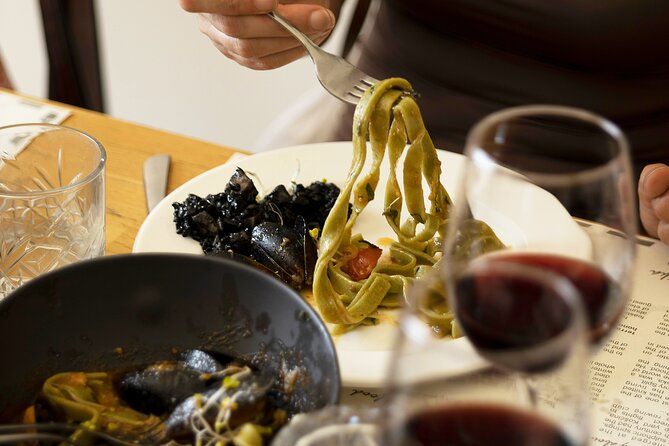
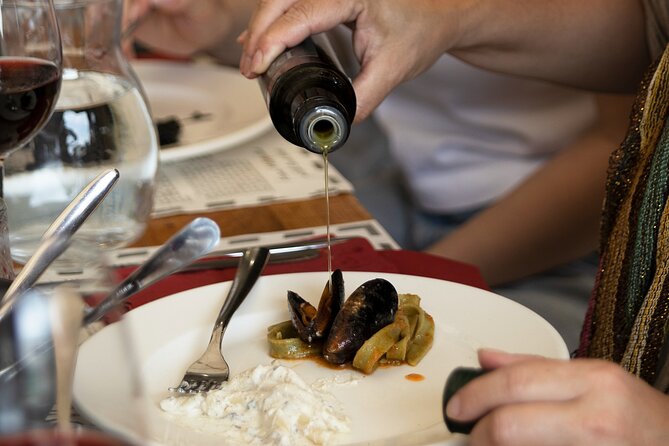
The larger food servings come at local taverns and restaurants. One stop specializes in seafood and pasta, and another meal may include several plates with wine. The sample menu is generous:
- Cured meat, cheese, bread, and local rosé
- Tuna pâté, salted and pickled anchovies, with white wine
- Black risotto
- Noodles with truffles
- Pasta with mussels and shrimp, with red wine
- Octopus stew with gnocchi on afternoon tours
- Traditional cake or gelato
- Croatian liqueur
You should not expect every item on this list at every departure. Ingredients vary by season, and the tour notes that the menu may change in spring, summer, and fall. Still, the format is clear: you taste several small and medium portions across multiple places rather than sit down for one standard lunch.
That variety is a real advantage. Black risotto gives you a taste of the Adriatic tradition of cooking rice with cuttlefish ink. Seafood pasta shows a more familiar preparation, while anchovies and tuna pâté offer salty, sharper flavors. Truffle noodles may appeal if you want something away from seafood, although the tour overall remains strongly Mediterranean.
Portions can be large enough to leave you full. One account described five dishes at four stops and more than enough food. Plan this as a meal, not a snack before dinner. The wine and liqueur are included, too, and the tour specifies that all wine and liqueur are part of the price.
The drinks add value, but they also affect the pace of the afternoon or evening. The minimum drinking age is 18. If you do not drink, clarify your options when booking, since the experience is built around wine pairings.
Trumbićeva obala and the final waterfront stop
The tour ends along Trumbićeva obala, a pleasant promenade lined with taverns and coffee shops. The final food and wine stop lasts about 45 minutes, giving the group time to eat, talk, and finish the experience at a slower pace.
This ending works well because the tour does not finish in the middle of a hurried street crossing. You can sit down, compare favorite dishes with the group, and ask the guide for more ideas. Guides have also shared recommendations for restaurants and things to do after the tour, which can be useful if Split is your base for several days.
The official end point is at Marmontova ul. 2, near the Riva Promenade. That is handy for continuing your evening on foot, though you should not count on transport back to your accommodation. The starting and ending points are separate, but both are in the central area.
How much food and drink do you really get?
At $139.13 per person, this is not a cheap walking tour. The price makes more sense when you count the meal, several glasses of wine, liqueur, dessert, guide, and three hours of city orientation. If you visited several restaurants independently and ordered comparable dishes and drinks, the total could approach the tour price, while you would miss the explanations and coordination.
The value is strongest for first-time visitors who want one well-organized introduction to Split. It is also useful for cruise passengers, since the meeting point is within walking distance of the port area and the tour fits into a short stay. You get a substantial meal without spending time choosing restaurants or guessing at unfamiliar dishes.
The value is weaker if you already know Split’s food scene, do not drink, or prefer to order one large meal at your own pace. A person who considers $139.13 high for a food walk may reasonably prefer a market visit followed by an independent restaurant. This tour charges for the social setting and local guidance as much as for the food itself.
The guide can shape the whole experience
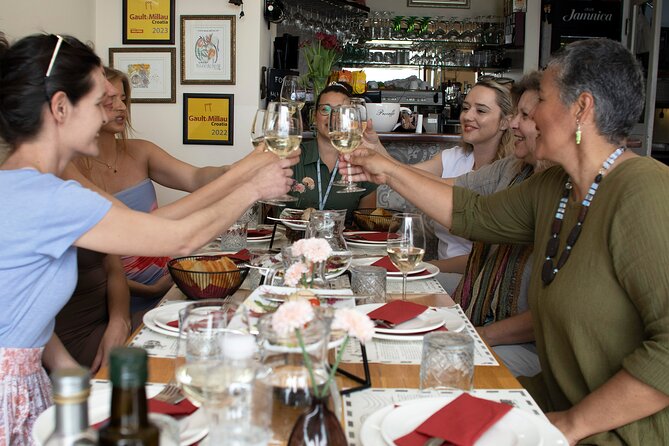
The strongest part of the tour is often the person leading it. Guides named in the feedback include Kristina, Hani, Ana, Doris, Dubravka, Ela, and Elsa. Their styles vary, but the best departures combine food knowledge, local stories, humor, and practical advice.
Kristina has been praised for making the group feel as if they were having lunch with a local friend. Hani has mixed history and cultural details with personal stories, while Ana has been described as both fun and well organized. Doris has been especially appreciated for keeping the food moving and making sure nobody left hungry.
You should keep expectations realistic. The guide is managing restaurant timing, dietary needs, group movement, and several servings in a busy center. That leaves less time for a long explanation at every sight. Some guides may focus heavily on the food, while others give more historical background.
The group size is capped at 12, though some departures may be much smaller. A group of three or six makes conversation easy and lets you ask about dishes or local customs. It also means the social side of the tour depends partly on who else books that day.
Dietary needs and practical planning
Vegetarian, vegan, and gluten-free options are available, but you must provide dietary restrictions or allergies when booking. Ingredients change with the season, so substitutions may not match the standard menu exactly. A guide has accommodated food allergies, but you should still communicate clearly before the tour begins.
Seafood is central to the experience. The standard menu can include anchovies, octopus, mussels, shrimp, black risotto, and seafood pasta. If you dislike seafood, you may still find cured meats, cheese, bread, truffle noodles, sweets, and other alternatives, but this is not the best choice for someone seeking a meat-focused Croatian meal.
Wear comfortable shoes and arrive ready to walk between stops. The tour has no hotel transfers, and children must be accompanied by an adult. Service animals are allowed, and the meeting area is near public transportation.
Free cancellation is available if you cancel at least 24 hours before the start time. Changes made within 24 hours are not accepted, and the experience may be canceled if its minimum group size is not reached.
Who should book this Split food tour?
I would book this tour if you have only a short time in Split, want a proper meal while sightseeing, or feel unsure about ordering Croatian food on your own. It is a particularly good first-night choice because you can ask the guide for restaurant suggestions and learn which dishes deserve another try.
It also suits people who enjoy seafood, wine, small groups, and informal conversation. The combination of market food, taverns, old streets, gelato, and waterfront dining gives you a broad introduction in one compact outing.
I would hesitate if you want a serious architectural tour, dislike group meals, avoid alcohol, or need a fixed menu. I would also choose a morning departure if the Green Market is important to you. For afternoon tours, expect the market foods to move into taverns and expect octopus stew and liqueur to be part of the experience.
Should you book it?
Book it if you want Split’s history served alongside a full meal, not as a separate lecture. The strongest reasons are the small group, generous portions, included wine, and range of local dishes. The guides can make the experience warm and personal, with names such as Kristina, Ana, Hani, Doris, and Ela appearing among the most praised hosts.
Skip it if seafood is a problem or if $139.13 feels too high for a guided meal. For most first-time visitors who want an easy, social way to get oriented, the price is reasonable, especially when you count the food, drinks, dessert, and local advice.
FAQ
How long does the Split History and Gastro Small-Group Tour last?
The tour lasts approximately three hours.
Where does the tour start?
The meeting point is Hrvojeva 1, 21000 Split, Croatia, outside Diocletian’s Palace. Look for a person holding an orange spoon.
Where does the tour end?
The tour ends at POROS D.O.O., Marmontova ul. 2, near Split’s Riva Promenade.
Is the Green Market included on every tour?
No. The Green Market is closed in the afternoon, so afternoon tours replace the market tastings with similar foods served in local taverns.
What food can I expect to taste?
Possible dishes include prosciutto, cheese, traditional bread, soparnik pie, tuna pâté, anchovies, black risotto, seafood pasta, noodles with truffles, octopus stew with gnocchi, traditional cake, and gelato. The menu changes with the season and departure time.
Are wine and liqueur included?
Yes. The tour includes wine and, on the afternoon option, sweet liqueur. The minimum drinking age is 18.
Are vegetarian, vegan, and gluten-free choices available?
Yes. Vegetarian, vegan, and gluten-free options are available. You should provide details about allergies or dietary restrictions when booking because ingredients change seasonally.
What is the cancellation policy?
You can cancel for a full refund up to 24 hours before the experience starts. Cancellations or changes made less than 24 hours before the start time are not accepted for a refund.
Newest history tours we have reviewed in Croatia
- History Split Walking Tour in French -Small group★ 5.0 · 41 reviews
- Dubrovnik: Game of Thrones and History Small Group Tour★ 5.0 · 76 reviews
- Dubrovnik Old Town: Small-Group Walking Tour With A Local★ 5.0 · 123 reviews
- Private History Split Walking Tour in English★ 5.0 · 159 reviews
- Dubrovnik Jewish Heritage Private Walking Tour★ 5.0 · 121 reviews
- History & Cultural Walking Tour of Split and Diocletian’s Palace★ 5.0 · 104 reviews
- Jewish Heritage & Diocletian’s Palace Private Split Tour★ 5.0 · 80 reviews
- Split: Historical Tour of Salona, Klis Fortress and Trogir★ 4.1 · 108 reviews
Small-Group History Tours, compared.

Freedom Trail History Small Group Walking Tour
Read our review →
Madrid Tapas & Taverns Small Group Food & History Tour
Read our review →
Hidden Alleyways and Historic Sites Small-Group Walking Tour
Read our review →
New Orleans Small-Group Haunted History Carriage Tour
Read our review →
Half Day Dominican Republic Cultural Tour : Small Group
Read our review →
Ultimate Seville Tapas, Wine & History Small Group Tour
Read our review →
Vienna Historic Center Small Group Walking Tour
Read our review →Browse the lists this tour appears in