
Review · SPLIT HISTORY TOURS
Split Walking Tour with History Professor
Split is easiest to understand when you see it as more than Diocletian’s Palace. This walk connects the Roman core with medieval and modern Split, while history professor Mario explains how Venetian, Ottoman, and Napoleonic influences shaped the city. You also get local legends, everyday life, and Game of Thrones filming spots along the way.
I like the small-group format, which gives the guide room to ask questions and adjust the conversation. I also like Mario’s teaching style: he uses humor, encourages participation, and explains the past in a way that does not feel like a lecture in a classroom.
The main consideration is physical access. The route includes old stone streets and palace areas, and it is not suitable for wheelchair users. Admission to the Cathedral of Saint Domnius and Temple of Jupiter is also not included, so allow a little extra money if you want to enter.
Key points to know before you book
- A Roman palace is only the beginning: The route continues into medieval, Venetian, Ottoman, Napoleonic, and modern Split.
- History professor Mario leads the walk: He uses questions, humor, and clear explanations rather than simply reciting dates.
- The route covers major sights in about two hours: You will see the Riva, palace cellars, Peristyle, Vestibule, Cathedral, Golden Gate, Marmontova Street, Prokurative, and Fruit’s Square.
- Game of Thrones locations are part of the story: They add a useful modern connection without replacing the city’s real history.
- The price is modest for a guided city introduction: At $23 per person, the walk offers a broad first look at central Split.
- Expect uneven historic streets: Comfortable shoes and clothes matter, and the tour is not suitable for wheelchair users.
Why this Split walk goes beyond Diocletian’s Palace
Many visitors come to Split for the Roman palace and stop there. That would be a mistake. The palace is the city’s great anchor, but Split grew around it for centuries, and the later layers are what make the center feel like a living town rather than a preserved monument.
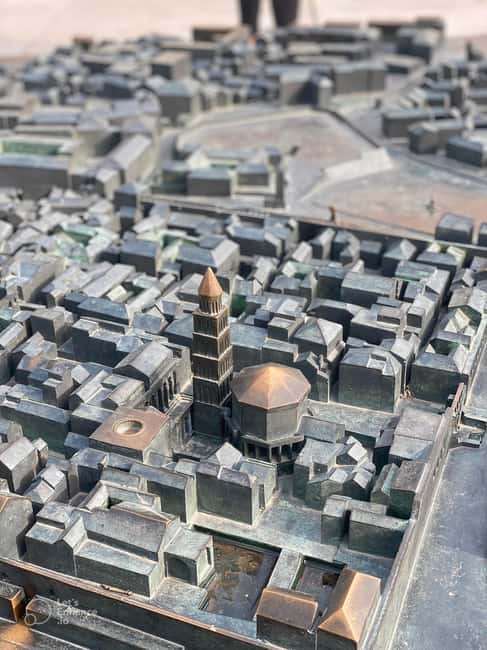
This tour begins at the Riva Harbor, beside a model of Split’s historic core. I like that starting point because it gives you a quick visual guide before you enter the maze of streets. You can see how compact the old center is, where the palace once reached, and how the waterfront now frames the city.
From there, you move through Roman, medieval, and modern parts of Split in one continuous walk. The guide brings in Venice, the Ottoman world, and Napoleon’s period, helping you see that the city’s story did not end when Emperor Diocletian left the scene.
That wider view is the strongest reason to choose this experience. If you only want a quick tour of the palace, a shorter palace-focused walk may be enough. If you want to understand why Split looks and feels the way it does today, this route gives you much more useful context.
More History Walking Tours in Croatia
- Walking Tour of Split with a ‘Magister’ of History
★ 5.0 · 1,122 reviews - Split Walking Tour with Professor of History
★ 5.0 · 926 reviews - Split: History and Heritage Walking Tour
★ 4.9 · 650 reviews
Meeting Mario at the Riva and entering the old city
The meeting point is next to the Brass Gate of Diocletian’s Palace. Since the starting area is busy and the palace has several gates, give yourself time to find the waterfront and locate the guide before the scheduled start.
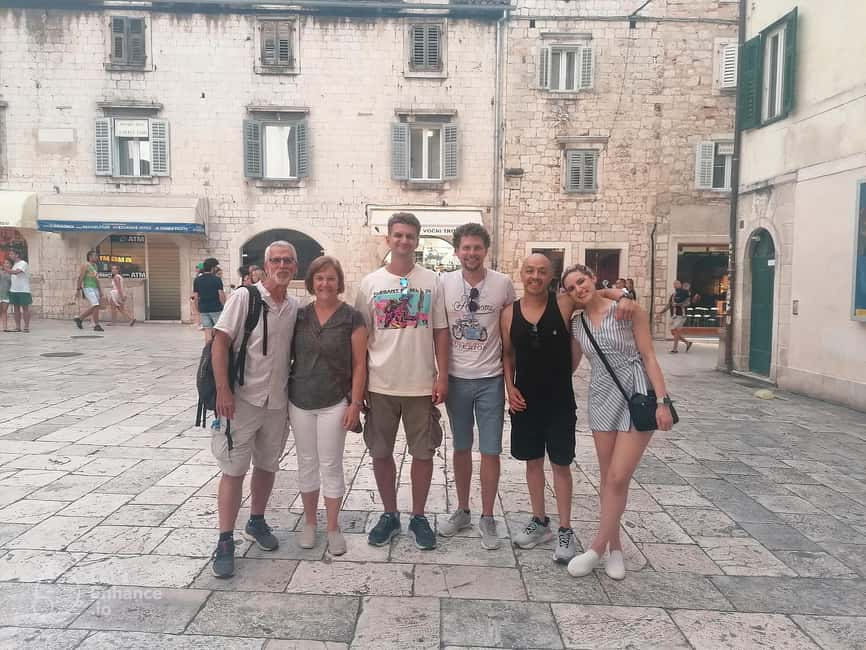
Mario is presented as a local history professor, and his approach is clearly academic without being stiff. He explains historical material in a conversational way, uses humor, and invites questions from the group. One of the most useful details about his method is that he regularly poses questions rather than speaking nonstop.
That matters on a walking tour. You are more likely to remember why a building mattered when you have been asked to think about it, rather than simply hearing a long chain of dates. The tone also suits different ages, since the tour is appropriate for all age groups.
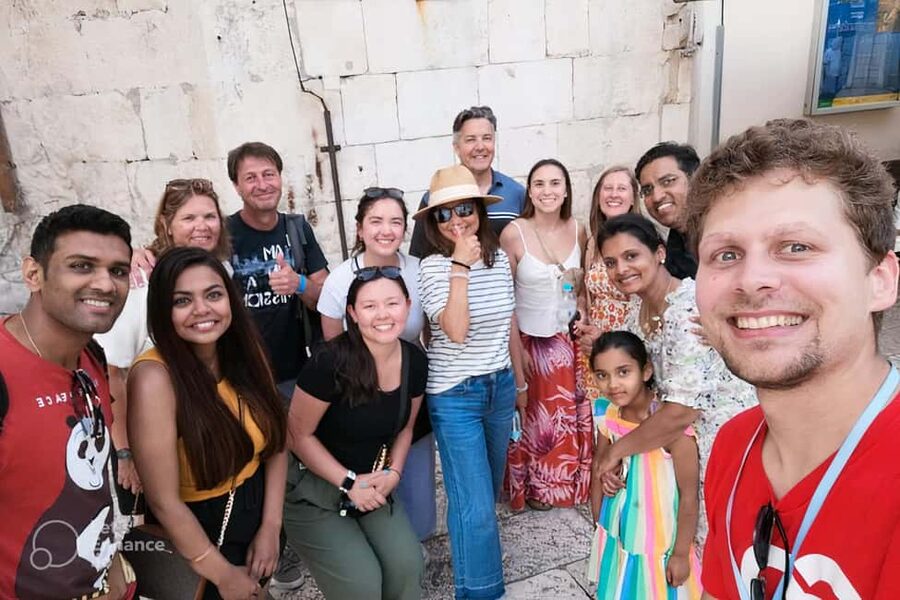
The exact group size is not stated, but the experience is described as a small-group tour, with private tours available by request. A small group usually makes it easier to hear the guide in narrow streets and ask about details that interest you.
Diocletian’s Palace Substructures and the Peristyle
The first major palace stop is the substructures. These underground spaces show the practical side of Diocletian’s enormous residence and help you understand the plan above ground.
The substructures are valuable because they make the Roman layout easier to picture. Once you see the supporting structure below, the palace feels less like a collection of separate courtyards and more like a carefully organized imperial complex.
The route then reaches the Peristyle, the palace’s central ceremonial space. This is one of the places where the scale and purpose of Diocletian’s residence become clear. The stop is scheduled for about ten minutes, long enough for an explanation and a close look, though not so long that the walk loses its pace.
You should expect other people in this area. The tour does not promise private access or an empty palace, so the value comes from knowing what you are looking at and why the space was designed as it was.
The Vestibule follows, with another ten-minute stop. This round chamber provides a useful contrast to the open Peristyle. Mario’s role here is to connect architecture with power, ceremony, and daily use, rather than treating each site as an isolated photo stop.
Cathedral of Saint Domnius and the Temple of Jupiter
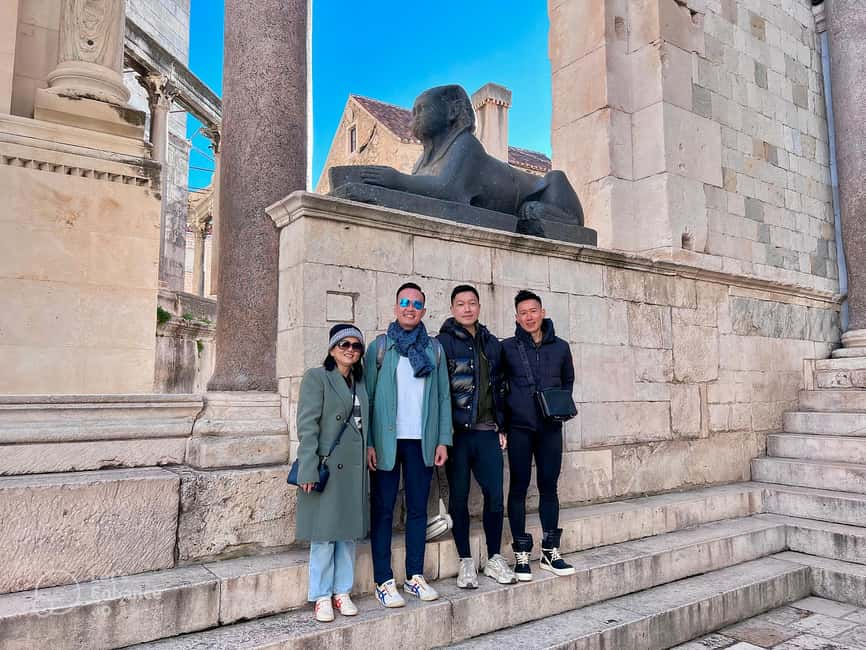
The Cathedral of Saint Domnius is one of the clearest examples of Split’s layered past. Its setting within the former palace shows how later Christian life took root inside the Roman imperial complex.
The scheduled stop lasts about twenty minutes, making it one of the longer pauses on the route. That gives you time to understand the cathedral’s place in the city and to look closely at the building rather than rushing past it.
Admission is not included. The tour still takes you to the site and explains its importance, but you should expect to pay separately if entry is part of your plan. Since the tour price is only $23, this separate charge is worth keeping in mind when you compare the total cost.
The Temple of Jupiter is another ten-minute stop, also with admission excluded. This is a useful companion to the cathedral because it shows the Roman religious side of the palace. Together, these two stops help you see how the same urban space has served different beliefs and communities over time.
I appreciate that the route includes both places. A palace tour that focuses only on imperial living quarters can feel narrow. The cathedral and temple broaden the story into religion, adaptation, and changing power.
More History Walking Tours in Split:
- SPLIT-PRIVATE Walking Tour of Diocletian’s Palace & Old Town
★ 5.0 · 467 reviews - Split: Local History and Culture 90-Minute Walking Tour
★ 5.0 · 194 reviews - Private History Split Walking Tour in English
★ 5.0 · 159 reviews - Split: Walking tour of Split with a ‘Magister’ of History
★ 5.0 · 110 reviews
Golden Gate and Grgur Ninski
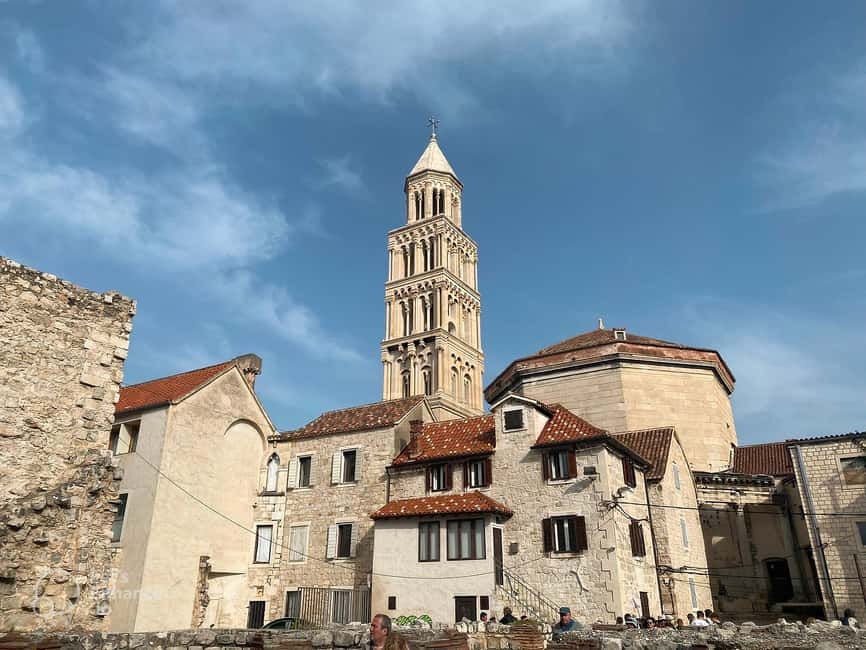
The Golden Gate is one of Split’s best-known entrances, and the ten-minute stop gives you a chance to understand how the palace was connected to the outside world. It is also a practical point for thinking about how people entered, left, and moved through the Roman complex.
The gate is more than a dramatic arch for photographs. Its position helps you read the city’s original plan and notice how later streets and buildings developed around it. Mario’s broader historical approach is especially useful here because the gate links the Roman city to later Split.
The route then continues to the statue of Grgur Ninski, or Gregory of Nin. The ten-minute stop adds a Croatian historical figure to the Roman story and gives the walk a local focus.
This is the sort of stop that makes a city tour more worthwhile than a simple list of famous buildings. You are not only looking at ancient stone. You are also meeting figures and symbols that matter to Croatian identity.
Marmontova Street and Prokurative
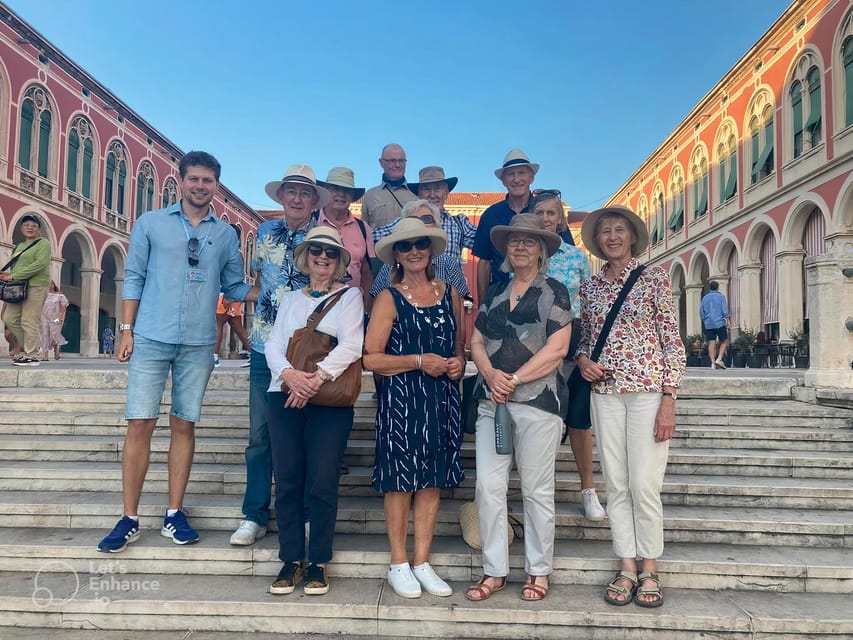
Marmontova Ulica moves the tour into a more modern part of central Split. Its inclusion keeps the walk from becoming a museum visit and shows how the city continues beyond the palace walls.
The tour connects this area with Napoleon’s influence, one of the historical threads highlighted along the route. You also hear about local life, so the focus shifts from emperors and monuments to the streets people use today.
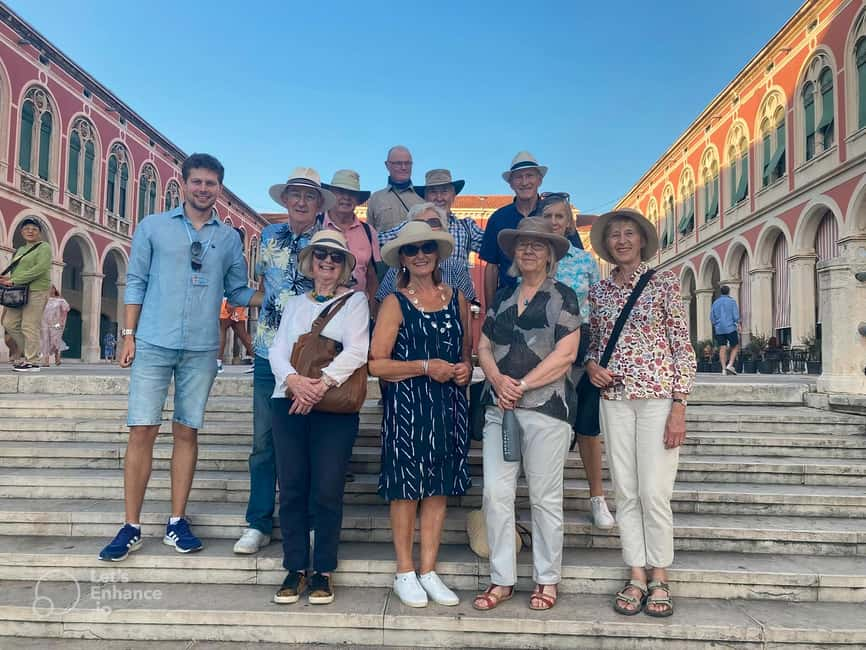
The next stop is Prokurative, officially Trg Republike. The square has a different feel from the tight Roman lanes, giving you a chance to see how later urban planning changed the city’s public spaces.
I like this transition because it helps you reset your sense of time. Within a short walk, you move from Roman foundations to later European influences and then into a more open civic setting. The experience works best when you pay attention to those changes in scale and design.
Fruit’s Square and the modern city
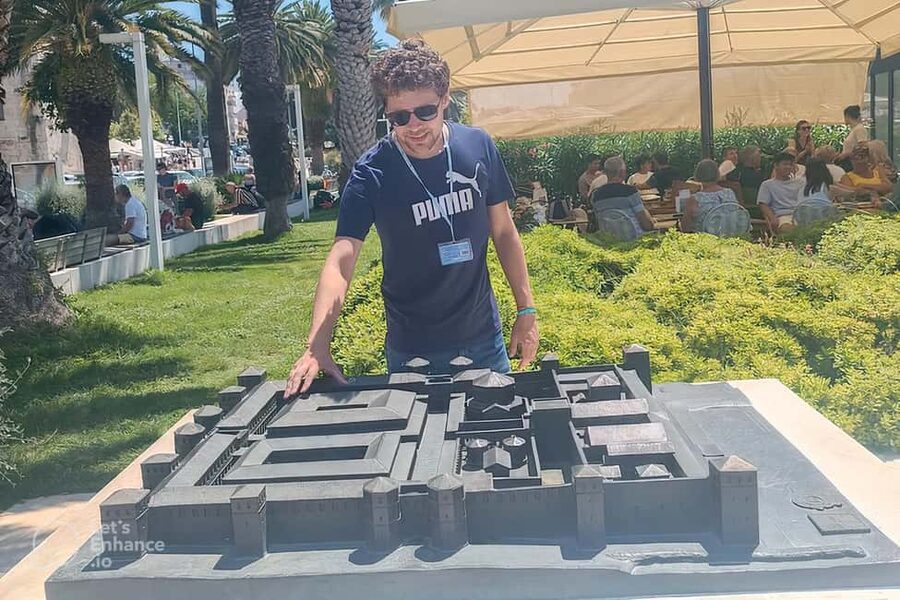
The final listed stop is Fruit’s Square, or Trg Brace Radic, with about fifteen minutes scheduled there. This is a fitting place to end because it brings together historic buildings, public life, and the city you are likely to continue exploring on your own.
By this point, the route has moved from the Riva and palace model through underground Roman structures, ceremonial rooms, religious sites, city gates, monuments, streets, and squares. You finish with a working sense of how the center fits together.
The tour also includes Game of Thrones locations. These references can be useful if you are a fan, but the experience does not depend on the show. The stronger value is that filming sites become an easy way to connect modern popular culture with the older streets around you.
Mario also adds local legends and everyday observations. Those details are often what help a place stick in your mind after the formal facts begin to blur. Just keep in mind that the advertised route is focused on central Split, not on a separate excursion outside the city.
Mario’s teaching style and the value of a small group
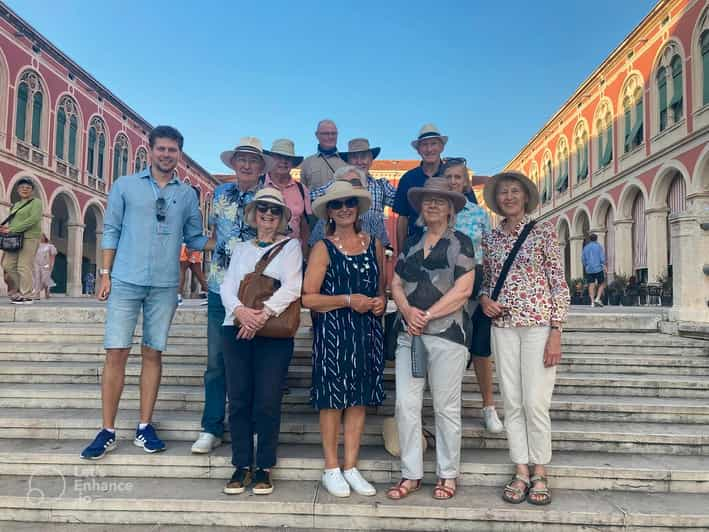
The most praised part of this experience is Mario himself. His strengths are clear: strong command of the subject, an approachable manner, humor, enthusiasm, and active engagement with the group.
The distinction between simply informed and genuinely effective matters here. A guide can know many facts and still make a tour feel flat. Mario’s use of questions and his willingness to encourage discussion give the walk more energy.
I would choose this tour if you enjoy understanding how events connect. You will hear about the Roman palace, but also about the later forces that changed Split. The route is designed to make you think about the city as a series of layers rather than a single ancient attraction.
A small group also helps with practical matters. Narrow streets, courtyards, and busy squares can make it hard to hear a guide in a large crowd. A smaller group gives you a better chance to follow explanations and ask about a detail that catches your eye.
Private tours are available on request through the provider. The supplied information does not give a private-tour price or exact format, so you would need to ask for those details directly.
Is $23 a fair price for two hours in Split?
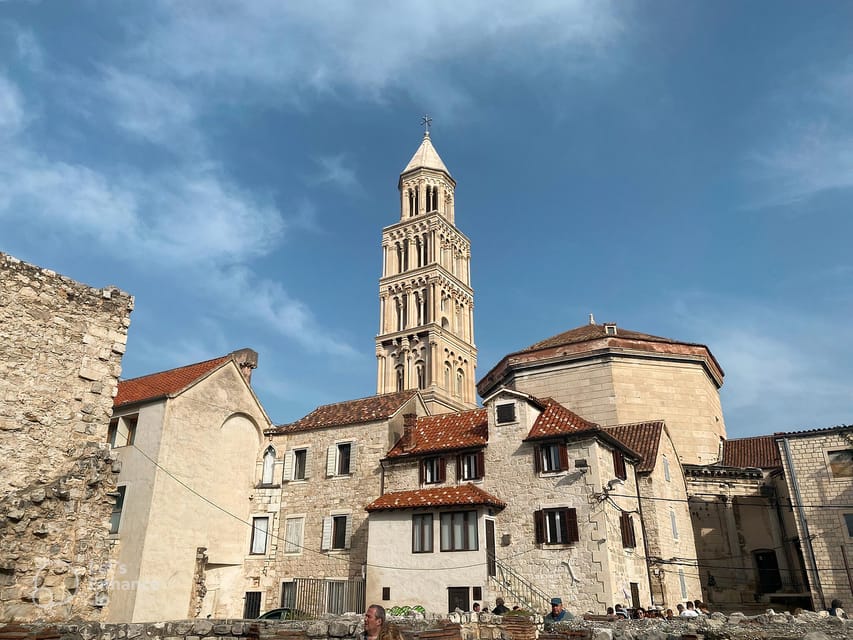
At $23 per person, this is a good value if you want a broad introduction to central Split. You get a live English-speaking guide, a route that covers many major sights, and historical context that would be difficult to assemble on your own during a first visit.
The route is advertised as two hours, while the overall description refers to about two hours and fifteen minutes. The listed stops alone add up to a substantial portion of that time, with the rest used for walking and explanation. Treat it as a compact two-hour-plus orientation rather than a rushed half-hour overview.
The price does not include entry to the Cathedral of Saint Domnius or Temple of Jupiter. That is not unusual for a walking tour, but it changes the final cost if you plan to go inside both sites.
You are paying mainly for interpretation and structure, not admission tickets. I think that is sensible in Split, where the hard part is often understanding what you are seeing among Roman walls, later buildings, shops, and crowded lanes.
Who should book this Split history tour?
I would recommend it to first-time visitors who want to get their bearings quickly and understand more than the palace’s most famous corners. It is also a good fit for people who like history explained with questions, humor, and connections to modern life.
Families can consider it too, since the tour is suitable for all ages. The lively teaching style may work better for older children and teenagers than a dry monument-by-monument talk, though no minimum age is stated.
It suits Game of Thrones fans, but you do not need to know the show to enjoy the walk. The filming locations are one thread in a much larger story.
You may want another option if you use a wheelchair, since the tour is specifically listed as unsuitable for wheelchair users. You should also skip it if you want a long, slow visit inside every monument. This is a moving city walk with selected stops, not a full interior tour of each attraction.
Wear comfortable shoes and clothes. The historic center includes old streets and palace areas, so practical footwear will make the experience easier.
Should you book it?
Book this tour if you want Roman Split plus the city that came after Rome. The route is broad, the price is reasonable, and Mario’s combination of humor, questions, and historical teaching gives the walk a personal feel.
I would especially choose it early in a Split visit. After the walk, the Riva, palace gates, old lanes, squares, and later neighborhoods should make more sense, and you will have a better idea of where to return on your own.
Skip it only if your priority is a short palace-only tour, guaranteed wheelchair access, or included entrance tickets. For most able-bodied visitors who want a thoughtful first look at Split in English, the $23 cost is well spent.
FAQ
Where does the Split walking tour meet?
The guide waits next to the Brass Gate of Diocletian’s Palace.
How long does the tour last?
The activity information lists a duration of two hours, while the description refers to two hours and fifteen minutes. Plan for roughly two hours or slightly longer.
What language is the tour in?
The live tour guide speaks English.
Who leads the tour?
History professor Mario leads the walking tour. Private tours are available on request through the provider.
Are entrance tickets included?
Admission to the Cathedral of Saint Domnius and the Temple of Jupiter is not included.
Is the tour suitable for all ages?
Yes. The activity is described as appropriate for all ages.
Is the tour wheelchair accessible?
No. The tour is listed as not suitable for wheelchair users.
Newest history tours we have reviewed in Split
- Split: Historical & Gastro Treasures Tour with Green Market★ 4.9 · 144 reviews
- Split: Private Walking Tour in the Historical Town Center★ 5.0 · 25 reviews
- Split: Walking tour of Split with a ‘Magister’ of History★ 5.0 · 110 reviews
- Split: Local History and Culture 90-Minute Walking Tour★ 5.0 · 194 reviews
- Experience Split History Walking Tour With Local Historian★ 5.0 · 28 reviews
- Split History and Gastro Small-Group Tour with Food and Drinks★ 5.0 · 375 reviews
- History Split Walking Tour in French -Small group★ 5.0 · 41 reviews
- Private History Split Walking Tour in English★ 5.0 · 159 reviews
History Walking Tours, compared.

History and Hauntings of Salem Guided Walking Tour
Read our review →

Freedom Trail History Small Group Walking Tour
Read our review →
Historic Charleston Guided Sightseeing Walking Tour
Read our review →
Tapas Walking Tour with Food, Wine, and History
Read our review →
Savannah History and Haunts Candlelit Ghost Walking Tour
Read our review →
A History of Terror – Belfast City Centre Walking Tour
Read our review →Browse the lists this tour appears in