
Review · SPLIT HISTORY TOURS
Split: Walking tour of Split with a ‘Magister’ of History
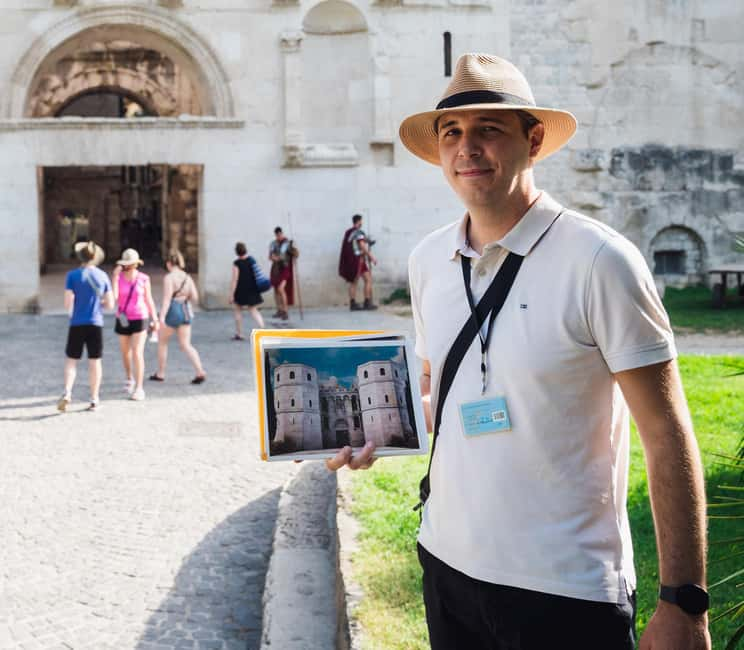
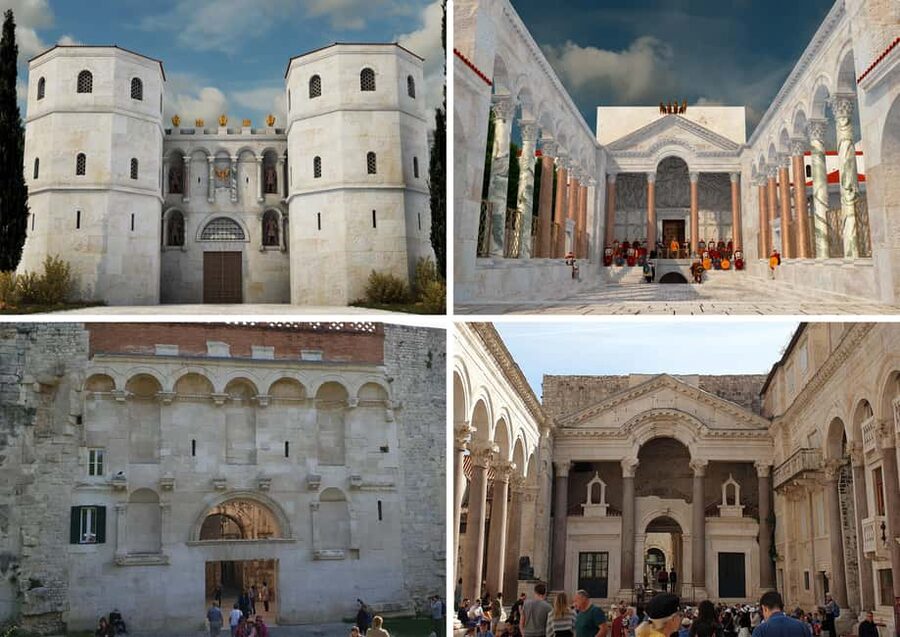
Diocletian’s Palace is not a museum set apart from daily life. It is Split’s Old Town, with cafés, homes, shops, laundry, and narrow lanes tucked inside ancient walls. This walking tour makes sense of that unusual mix with Toni, a local historian and former teacher who has lived in Split all his life. His printed 3D images show the palace as it may have looked in Roman times, then he follows its changes into the medieval, Venetian, and modern eras.
I especially like two things here. First, Toni welcomes questions instead of delivering a fixed speech. Second, the tour moves beyond Roman ruins to explain how later generations reused and reshaped the palace. The main consideration is that you do not enter paid sites or museums, and the route takes place outdoors in all weather, with uneven streets and crowded lanes.
Key points at a glance
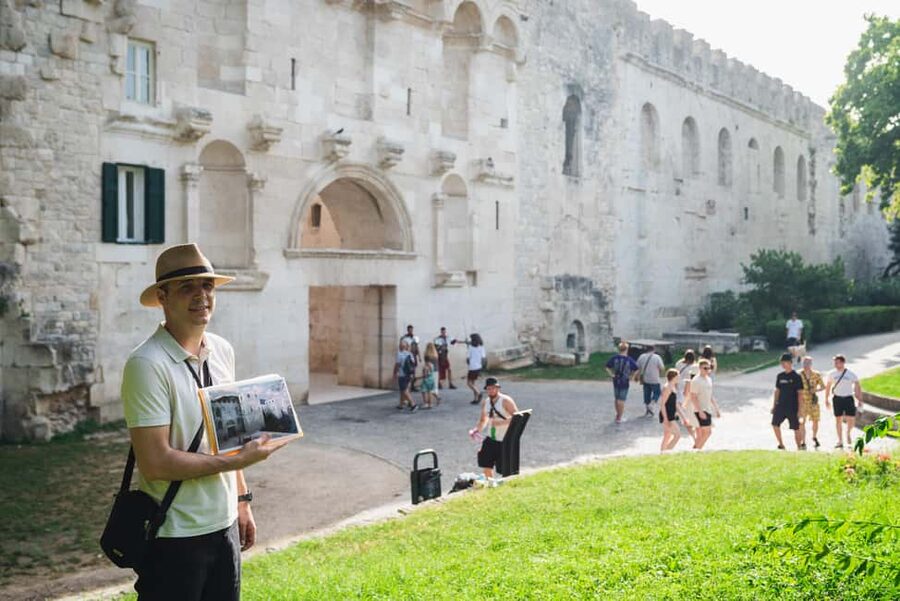
- Toni’s local view: Your guide was born and raised in Split and brings personal knowledge of the city alongside his academic training.
- Roman buildings made clear: 3D reconstructions help you picture the palace before centuries of change altered its appearance.
- A tour through several eras: The route connects Diocletian’s Roman complex with medieval homes, Venetian traces, and present-day Split.
- Questions are part of the plan: The format allows time for conversation, clarification, and follow-up questions.
- A useful first tour: The 110-minute walk gives you a solid map of the Old Town before exploring on your own.
- Morning is smart in high season: The streets can grow much busier during the tour, so an early starting time may be more comfortable.
Why Diocletian’s Palace needs a guide
At first glance, Split’s Old Town can feel like a maze of handsome stone streets. The reason is simple: Diocletian’s Palace did not remain a single palace. Over many centuries, people built homes, churches, passageways, and businesses into and around the Roman structure.
That makes Split fascinating, but it can also make the site hard to read. A column may belong to one period, a wall to another, and a house may sit inside what was once part of an imperial residence. Toni’s job is to separate those layers without making the city feel like a classroom.
His background as a history teacher matters. He does not simply list dates and names. He uses the buildings in front of you, asks you to look closely, and explains how the site changed over time. The tone is educational, but not stiff. Humor, local examples, and room for questions keep the walk moving.
The 3D reconstructions add something you cannot get from bare stone. A ruined or altered building can be difficult to imagine, especially when only fragments remain. Seeing a visual version of the original palace helps you connect the surviving pieces to the larger Roman plan.
Toni is also careful about the difference between evidence and guesswork. That is useful at an ancient site, where attractive stories can sometimes outrun what historians actually know. You get interpretation, but also a clear sense of where the evidence ends.
More History Walking Tours in Croatia
- Walking Tour of Split with a ‘Magister’ of History
★ 5.0 · 1,122 reviews - Split Walking Tour with Professor of History
★ 5.0 · 926 reviews - Split: History and Heritage Walking Tour
★ 4.9 · 650 reviews
Starting beside the Riva at the Bronze Gate
The meeting point is the Bronze Gate, also called the Brass Gate, at Obala Hrvatskog narodnog preporoda 22. It is the southern entrance to the palace from Split’s seafront promenade, known as the Riva.
The easiest approach is to find the Riva first, then walk along the waterfront toward the palace entrance. This is a practical meeting point because the promenade is easy to identify, but give yourself a few extra minutes. The old center has several gates and entrances, and the Bronze Gate is at the seaside, not on the main inland approach.
Beginning here makes historical sense. The Riva is modern Split’s social front porch, while the gate leads directly into the older core. Within minutes, the tour shifts from open waterfront to enclosed Roman spaces.
From the Bronze Gate, you enter the palace basement area. The route includes a short guided portion at the gate and about ten minutes passing through or alongside Diocletian’s cellars. You should not expect a long visit inside a paid archaeological attraction. The point is to understand how the lower level supported the palace above and how these spaces fit into the overall plan.
This is also an early chance to ask questions. If you are unsure about the difference between the palace, the Old Town, and the emperor’s private residence, ask Toni to clarify it here. That basic distinction helps the rest of the walk fall into place.
Peristyle, the palace’s grand central space
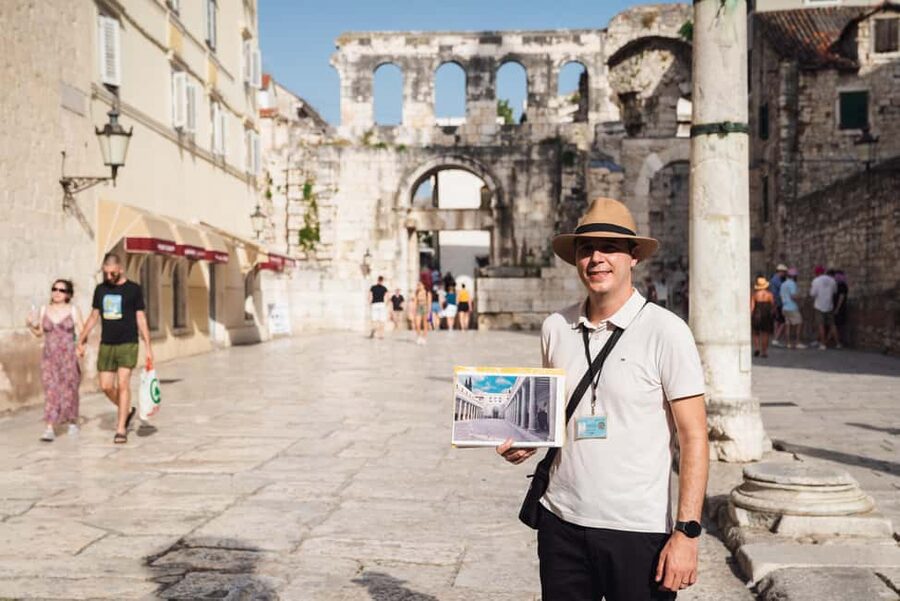
The main portion of the tour takes place within Diocletian’s Palace, with about an hour devoted to walking, sightseeing, and explanation. The centerpiece is Peristyle, the grand square where the palace’s surviving Roman character is easiest to grasp.
Here you see the relationship between the open square and several major structures. The Mausoleum of Diocletian, now connected with the Cathedral of Saint Domnius, is nearby. Jupiter’s Temple and the Vestibule also help show how the complex was organized.
Peristyle is one of those places where a guide can change what you notice. Without context, you may see columns, worn stone, steps, and later buildings. With Toni’s explanation and visual reconstructions, you can picture the square as part of a ceremonial imperial residence rather than an isolated ruin.
The square can be busy, particularly later in the morning and during the summer season. One useful feature of this tour is the effort to use shade and quieter spots when possible. That does not remove the crowds, but it can make a difference during a hot walk.
The pace is not a forced march. It leaves room to look up, listen, and ask questions. Still, this is a walking tour through an active city center, not a private archaeological site. You may need to pause for people moving through the lanes or adjust your position to hear clearly.
The Vestibule and Triklinij
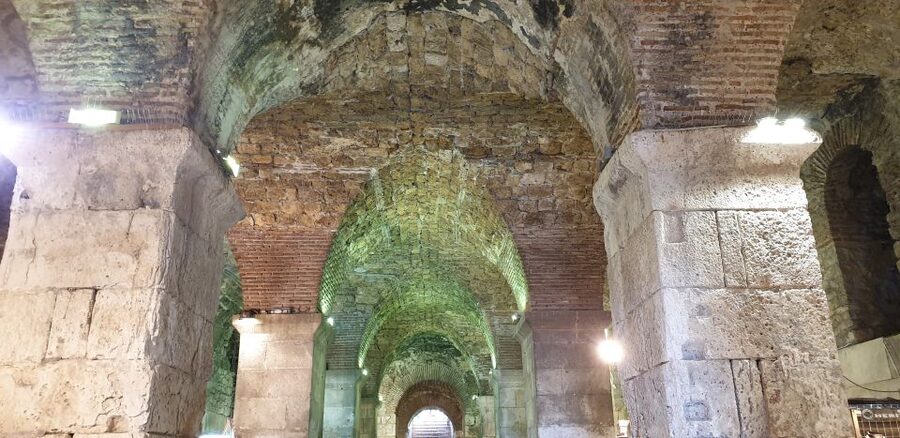
The Vestibule receives a short guided visit of about five minutes. This round chamber once formed part of the approach to the emperor’s private quarters. Its shape and acoustics make it memorable, but the real value comes from understanding its place in the palace plan.
Toni’s 3D images are particularly useful here. The current remains do not present the complete Roman interior, so the reconstruction gives you a better idea of how the space related to the surrounding residence.
The walk then continues to Triklinij, with another brief stop. This was part of the imperial residential area, and it helps explain that Diocletian’s Palace was not only a fortress or administrative compound. It also contained private and ceremonial spaces designed for the emperor and his household.
You will not spend long at each point. That is a strength if you want a broad understanding of Split, but a limitation if you prefer extended time for photography or detailed architectural study. The tour aims to connect many parts of the Old Town rather than examine one monument at length.
More History Walking Tours in Split:
- SPLIT-PRIVATE Walking Tour of Diocletian’s Palace & Old Town
★ 5.0 · 467 reviews - Split: Local History and Culture 90-Minute Walking Tour
★ 5.0 · 194 reviews - Private History Split Walking Tour in English
★ 5.0 · 159 reviews - History & Cultural Walking Tour of Split and Diocletian’s Palace
★ 5.0 · 104 reviews
Cathedral of Saint Domnius and Jupiter’s Temple
The Cathedral of Saint Domnius and Jupiter’s Temple are passed rather than entered. This distinction matters when you compare this walk with tours that include admission to major interiors.
The cathedral occupies the former mausoleum of Diocletian, creating one of Split’s clearest examples of one era being adapted by another. The Roman emperor’s burial place later became a Christian cathedral, and the building’s present identity reflects that long change.
Jupiter’s Temple offers another look at the palace’s religious spaces. Even a short explanation can help you understand how Roman worship, imperial authority, and later Christian use overlap in the Old Town.
Since neither site is entered as part of this experience, you may want to return on your own if you have time and wish to see the interiors. The tour gives you the setting and context, but it is not designed as a full cathedral or temple visit.
From the Silver Gate to the Golden Gate
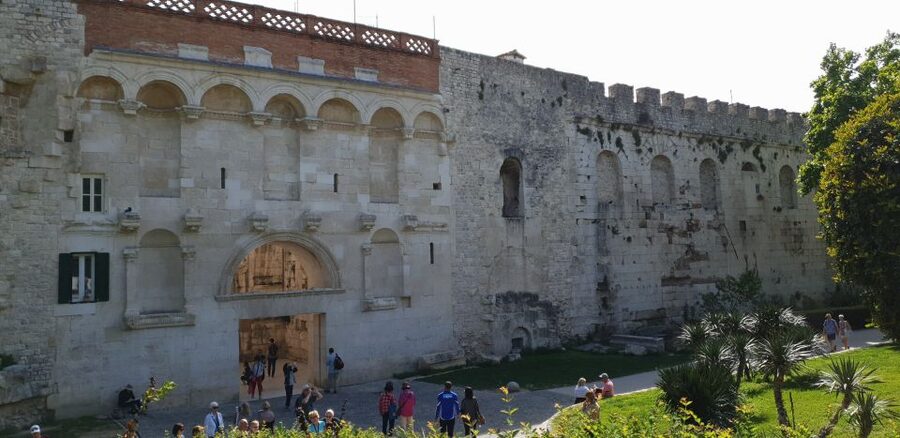
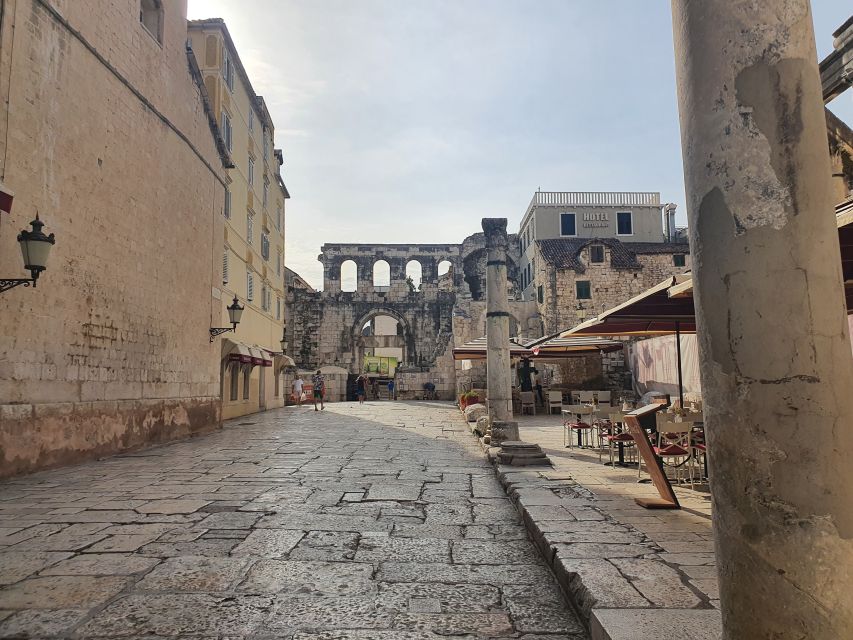
The route continues toward the Silver Gate, where you receive a short guided explanation, then heads toward the Golden Gate on the north side of the palace.
The gates are not just convenient markers. They help reveal the palace as a planned fortified complex, with entrances connected to the city’s wider layout. Moving between the southern and northern sides also gives you a better sense of scale than seeing only one small section.
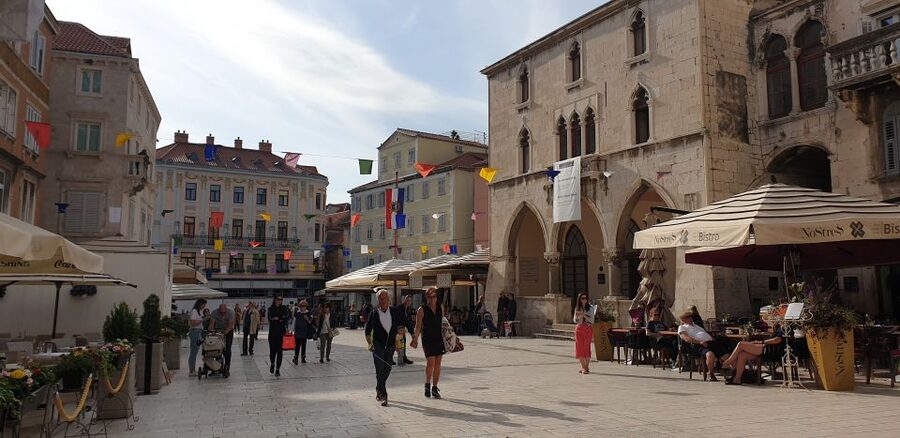
Near the northern wall, you can see the statue of Bishop Gregory of Nin. This is one of Split’s most familiar public monuments, and it adds a medieval and Croatian layer to a route that began with Roman imperial power. The walk then continues toward Piazza Square and finishes at the Golden Gate.
Ending here is practical. You are left in the Old Town rather than returned to the waterfront, so you can continue exploring on foot. You might also use the final stop as a base for returning to places that received only a short explanation, such as the cathedral or Jupiter’s Temple.
What the 3D reconstructions add
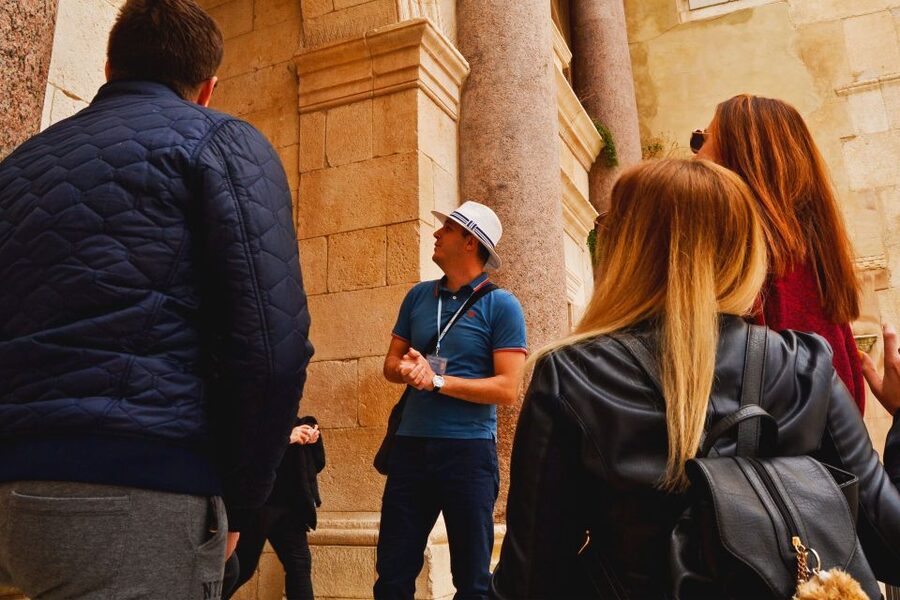
The visual material is one of the clearest reasons to choose this tour instead of simply walking through the palace with a printed map. Toni uses hand-created 3D reconstructions and printed images to show what important parts of the complex may have looked like in Roman times.
This is especially helpful for first-time visitors who struggle to read ruins. A column fragment can seem abstract. Place it beside a reconstruction of a complete colonnade, roofline, or ceremonial space, and the surviving stone becomes easier to understand.
The images also help explain change. You are not shown only an ancient version of Split. Toni connects the original Roman design with the medieval houses and later additions built into the site. That makes the city feel less like a collection of unrelated sights.
You should treat the images as visual aids, not as a promise that every detail is certain. Toni’s approach, as reflected in the way he presents history, includes a willingness to separate established facts from interpretation. For me, that makes the reconstructions more useful, not less.
A tour for questions, not just dates
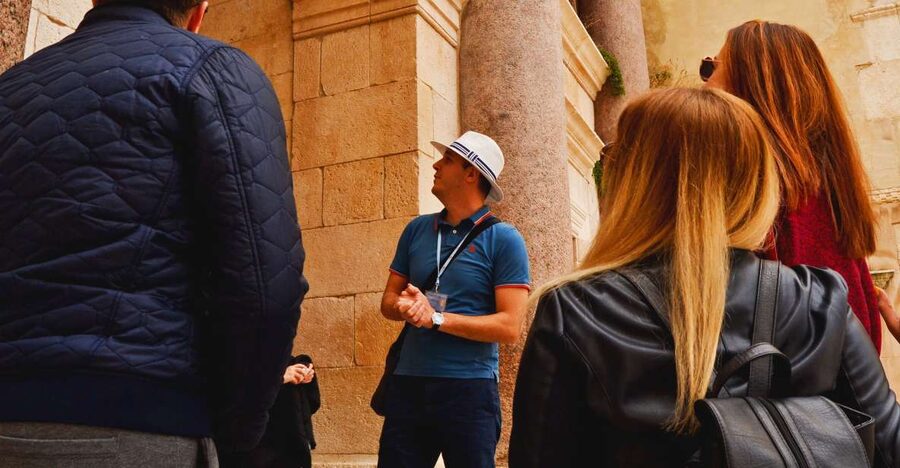
The strongest feature of this experience is its conversational format. Questions are encouraged throughout, and Toni can address Roman, medieval, Venetian, Croatian, and more recent local history.
That flexibility is valuable because Split’s past can lead to unexpected questions. You might begin by asking about a palace wall and end up discussing how historical events shaped the modern city. The tour can also adapt to your interests instead of treating every group exactly the same.
Toni’s former students would recognize the teaching style. He organizes the information, keeps the main story moving, and chooses details that help you understand the place instead of burying you under names and dates.
Families can benefit from this approach, too. A 12-year-old has enjoyed the tour, and the visual material gives younger visitors something concrete to look at. Still, the experience is built around history and explanation, so children who need constant activity may find 110 minutes demanding.
Price, timing, and practical comfort
At $33 per person, this is not the cheapest way to see Split’s Old Town. You can walk through the palace without paying admission, and independent visitors can read signs or use a guidebook.
The value comes from the interpretation. You are paying for a trained guide, a planned route through several periods of history, local perspective, and original visual material. If you want only a quick orientation, the price may feel high. If you want to understand why the Old Town looks the way it does, the added context makes the cost easier to justify.
The tour lasts 110 minutes, long enough to cover the main structure without taking half a day. Wear comfortable shoes and bring a drink. There is no food or drink included, and the walk runs rain or shine.
Summer heat and crowds are the main comfort issues. Shade is used when possible, but you will still spend much of the experience outdoors. I would choose the earliest available time, especially in high season. The streets can become considerably busier by the time the walk ends.
The tour is not suitable for wheelchair users, and the provided information excludes people over 95. The old center includes narrow, uneven routes, so anyone with limited mobility should consider these conditions carefully.
Who should book it
I would book this tour if you are visiting Split for the first time, enjoy asking questions, or want more than a quick photo stop at Diocletian’s Palace. It is also a good choice if you plan to explore independently afterward and want a clear mental map before you begin.
History fans will appreciate the Roman, medieval, Venetian, and modern connections. Families with older children may like the reconstructions and storytelling. The tour also suits anyone who wants a local perspective rather than a guide who treats Split as a set of disconnected monuments.
You may want another option if you need interior access to paid sites, have limited walking ability, or prefer a short, highly visual sightseeing stop with little explanation. You should also think twice about a midday booking in the hottest part of summer.
For $33, the main question is not whether you can enter the palace for free. You can. The question is whether Toni’s teaching, local experience, and visual reconstructions will help you see what is otherwise easy to miss. For most first visits, that added layer earns its place in the budget.
FAQ
Where does the tour meet?
The meeting point is at the Bronze Gate, also called the Brass Gate, at Obala Hrvatskog narodnog preporoda 22. It is the southern seaside entrance to Diocletian’s Palace from the Riva promenade.
How long does the walking tour last?
The tour lasts 110 minutes.
What language is the tour in?
The live tour guide speaks English.
Does the tour enter Diocletian’s Palace?
Entering the palace itself does not require admission, and the route walks through its historic areas. However, the tour does not include entry to paid sites or museums.
Are food and drinks included?
No. Food and drinks are not included. You should bring a drink with you.
What happens if it rains?
The tour takes place rain or shine. Bring suitable clothing for the weather.
Can wheelchair users join?
The tour is not suitable for wheelchair users. It is also listed as unsuitable for people over 95 years old.
Newest history tours we have reviewed in Split
- Split: Private Walking Tour in the Historical Town Center★ 5.0 · 25 reviews
- Split Walking Tour with History Professor★ 5.0 · 23 reviews
- Split: Historical & Gastro Treasures Tour with Green Market★ 4.9 · 144 reviews
- Split: Local History and Culture 90-Minute Walking Tour★ 5.0 · 194 reviews
- Experience Split History Walking Tour With Local Historian★ 5.0 · 28 reviews
- History Split Walking Tour in French -Small group★ 5.0 · 41 reviews
- Split History and Gastro Small-Group Tour with Food and Drinks★ 5.0 · 375 reviews
- Private History Split Walking Tour in English★ 5.0 · 159 reviews
History Walking Tours, compared.

History and Hauntings of Salem Guided Walking Tour
Read our review →

Freedom Trail History Small Group Walking Tour
Read our review →
Historic Charleston Guided Sightseeing Walking Tour
Read our review →
Tapas Walking Tour with Food, Wine, and History
Read our review →
Savannah History and Haunts Candlelit Ghost Walking Tour
Read our review →
A History of Terror – Belfast City Centre Walking Tour
Read our review →Browse the lists this tour appears in