
Review · VIENNA HISTORY TOURS
Vienna Historic Center Small Group Walking Tour
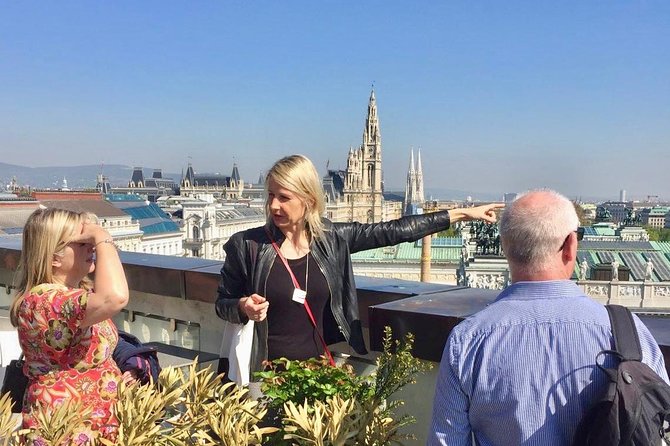
Vienna’s grand center is compact enough to cover on foot, but its layers of emperors, composers, scientists, churches, and political drama can blur together without help. This 2.5-hour walking tour gives you a clear route from Maria-Theresien-Platz to St. Stephen’s Cathedral, with the Ringstrasse, Hofburg, Rathaus, and many lesser-noticed corners along the way. I like the small cap of 15 people and the use of audio devices, which make it easier to hear the guide in busy squares.
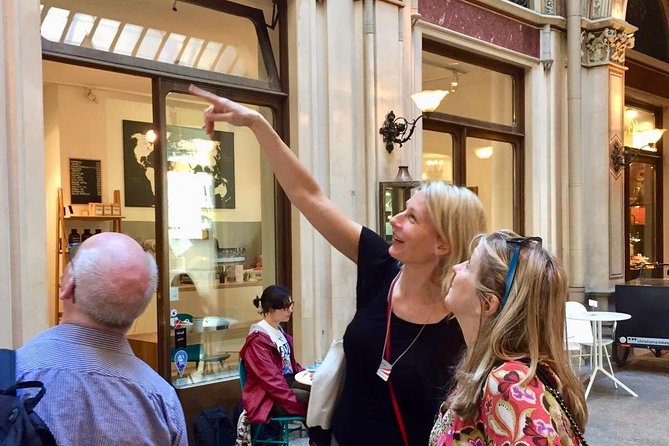
I also like that guides such as Dace, Giselle, Gabriela, and Beatrice bring more than dates and names. Expect humor, old photographs or iPad images, personal recommendations, and, on some departures, brief looks inside places such as a church, palace, university, or café. The main drawback is clear: the tour is mostly outdoors, so you are viewing the major museums and palaces from the street rather than entering them.
Key points at a glance
- From Maria-Theresien-Platz to Stephansplatz: The route links Vienna’s major imperial and civic sights in one logical walk.
- A maximum of 15 people: A small group gives you a better chance to hear the guide and ask questions.
- Mostly an exterior tour: Museum entry is not included, though some indoor stops may occur depending on the day.
- Guides add humor and practical advice: Dace, Giselle, Gabriela, and Beatrice are praised for lively explanations and useful food and sightseeing tips.
- Expect a serious walk: One review counted about 14,000 steps, so wear comfortable shoes and dress for the weather.
- Best as a first-day orientation: The route helps you choose which palaces, museums, cafés, and neighborhoods to explore later.
A smart first look at Vienna’s historic core
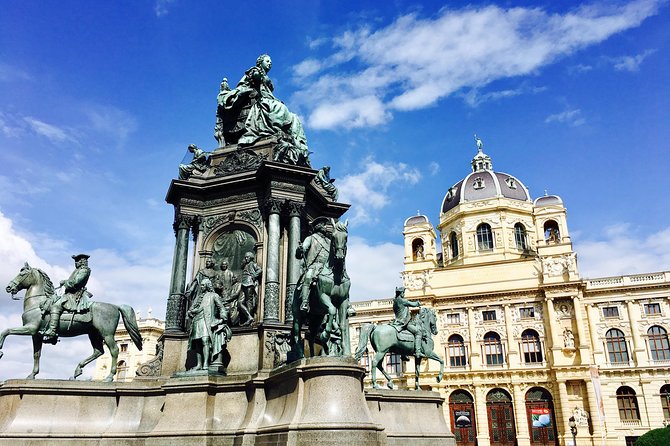
The meeting point is Maria-Theresien-Platz, between the Ringstrasse and the Museumsquartier. This is a fitting place to begin. Two huge, matching buildings face the square: the Kunsthistorisches Museum, home to the former imperial art collection, and the Natural History Museum. Between them, the monument to Empress Maria Theresa fills the center with imperial confidence.
Your guide uses this opening to explain how Vienna’s rulers shaped the city. The square also gives you an early lesson in the tour’s format. You are not simply being marched from one attraction to the next. You are being shown how Vienna’s buildings, rulers, public spaces, and cultural institutions fit together.
The opening stops are short, usually about five minutes each. That keeps the group moving, but it also means you should not expect a long architectural lecture at every building. The value comes from the connections between places.
More Old Town and Historic Centre Walks in the world:
- Madrid Essential: Historic Center, Plaza Mayor & Royal Palace
★ 5.0 · 6,416 reviews - Lisbon: Live Fado Show with Port Wine in Historic Center
★ 4.7 · 4,166 reviews - Valencia Old Town Tour with Wine & Tapas in 11th Century Historic Monument
★ 5.0 · 3,234 reviews
The Ringstrasse and Vienna’s grand public face
From the square, the route reaches the Ringstrasse, the broad boulevard built after Vienna’s medieval fortifications were removed in the 19th century. It circles the old center and gathers some of the city’s most important public buildings in one sweep.
You pass the neo-Gothic Rathaus, or City Hall, where Vienna’s government works and major events are held. The Austrian Parliament Building follows its classical design. The Burgtheater, Vienna State Opera, university, and other major buildings help show how the Ringstrasse became a showcase of imperial Vienna.
I find this part especially useful if you are new to the city. Vienna can look like one long parade of ornate façades. The guide gives you a way to sort them: Gothic for civic drama, classical forms for political authority, and Renaissance or Baroque details for imperial display.
There is little time for close inspection at each building. You will mostly stop, listen, take photos, and continue. If you want to tour the interiors of the Rathaus or Parliament, you will need to arrange that separately.
Burgtor, Hofburg, and the Habsburg center of power
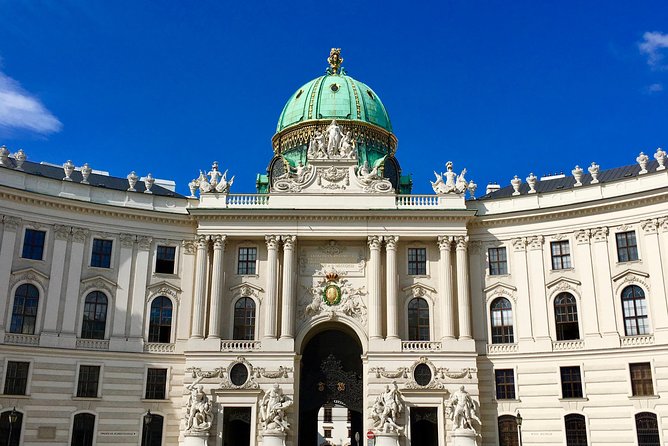
The neoclassical Burgtor marks the approach to the Hofburg. It was built after the Napoleonic Wars and leads into one of Vienna’s most important areas.
The Hofburg was the Habsburgs’ principal palace and remained the center of political power for centuries. Here, the guide explains the palace’s growth, courtyards, façades, emperors, empresses, and court life. The complex now contains museums and public institutions, so it is easy to lose sight of how many different eras are packed into the same place.
The tour also touches on the New Castle, which houses museums including the World Museum, the Imperial Armoury, and the Austrian History Museum. The guide may also point out the balcony connected with Adolf Hitler’s 1938 proclamation of the Anschluss. That detail brings a difficult chapter of Austrian history into the route without turning the walk into a single-topic political tour.
Allow about 20 minutes for the main Hofburg explanation, with another shorter stop later in the itinerary. This is one of the most substantial history sections, and it rewards anyone who wants context before visiting the palace museums on their own.
Nearby, the tour may point out the Austrian National Library and the Baroque Winter Riding School. The latter is associated with the Lipizzan horses and their performances and training. You do not automatically receive a performance or museum admission, but the location helps you understand how court ceremony, scholarship, and public power once operated side by side.
Heldenplatz, Volksgarten, and the city’s public gardens
Heldenplatz, or Heroes Square, opens beside the Hofburg. It was formed after the old bastions were demolished during the Napoleonic period. Today, its broad lawns and monumental buildings create one of Vienna’s most recognizable views.
The nearby Volksgarten offers a welcome change from stone façades and traffic. At its center is the Theseus Temple, a small neoclassical copy of the Hephaisteion in Athens. The park also has a connection to Vienna’s musical life through the former Cortisches coffee house, where Johann Strauss played.
The guide’s comments here show why a walking tour can be more useful than a list of famous buildings. You get small links between architecture, music, court life, and ordinary city routines. Still, the stop is brief, so do not expect time to sit in the gardens or explore every path.
The route also includes Beethoven Pasqualatihaus, associated with one of Ludwig van Beethoven’s former residences. Its position on the old fortification ramp helps explain the changing edge of the medieval city. This is a quick stop, but music lovers will appreciate having the connection pointed out rather than passing it without notice.
More History Walking Tours in the world:
- History and Hauntings of Salem Guided Walking Tour
★ 5.0 · 14,564 reviews - Lisbon: History, Stories and Lifestyle Walking Tour
★ 4.8 · 10,902 reviews - Boston: Freedom Trail History Small Group Walking Tour
★ 5.0 · 6,450 reviews - Historic Charleston Guided Sightseeing Walking Tour
★ 5.0 · 6,216 reviews
Rathaus, Burgtheater, and Vienna’s intellectual life
The Rathaus is one of the route’s strongest photo stops. Its neo-Gothic towers and elaborate façade give Vienna’s civic government a theatrical setting. The guide explains its role as the seat of the city government and as an event venue.
You also pass the Burgtheater, one of Europe’s major theaters. The tour does not include a performance, but the stop adds another piece to Vienna’s cultural identity. The city’s reputation is not based only on imperial palaces and classical music. Theater, opera, cafés, universities, and public debate all belong to the same story.
At the University of Vienna, the discussion shifts toward science and ideas. The guide connects the university’s academic legacy with figures such as Sigmund Freud and Lise Meitner, the Jewish physicist whose work changed modern science. This is one of the more distinctive parts of the route because it broadens the picture beyond Habsburg rulers and composers.
The route may also pass Palais Ferstel, once home to the Austro-Hungarian National Bank and the Stock Exchange. At a nearby historic café, the guide may explain Vienna’s coffeehouse tradition and its links to writers, composers, architects, painters, psychoanalysts, and political thinkers. Some departures include a short café break or an inside visit, but you should not assume that food or a full café stop is included every time.
Freyung, Graben, and the final approach
Freyung is one of the oldest squares in the center. Compared with Heldenplatz, it feels more intimate and enclosed. It is a good place to see how Vienna’s old urban fabric differs from the formal imperial spaces around the Hofburg.
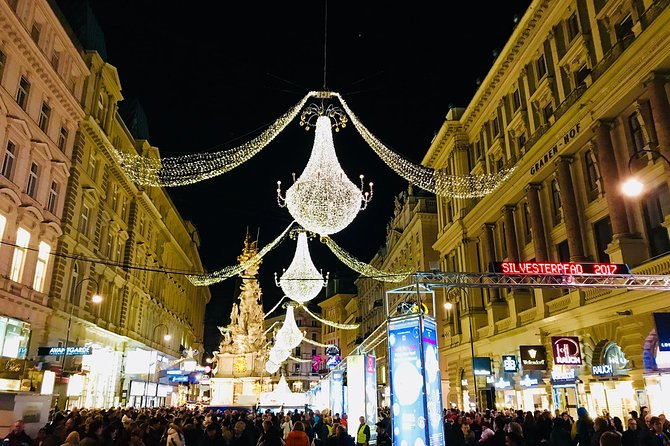
From there, the route moves toward Graben and Kohlmarkt, among Vienna’s most elegant pedestrian streets. These streets are lined with shops and historic façades, and they lead naturally toward Stephansplatz. The tone changes here from imperial ceremony to city-center shopping and daily life.
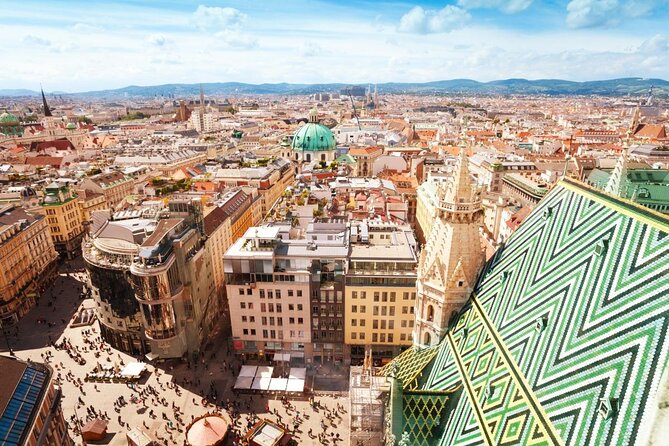
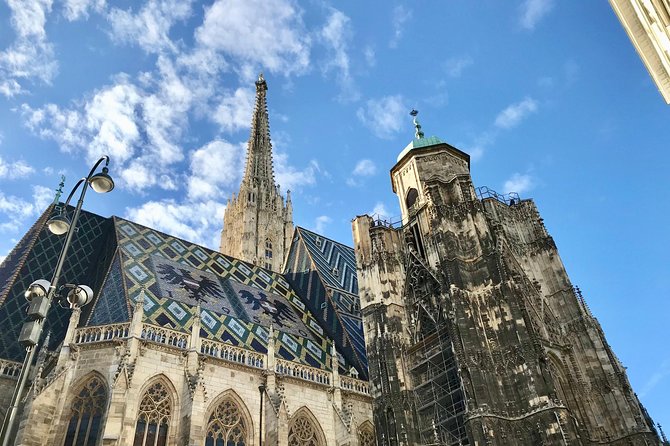
The tour ends at St. Stephen’s Cathedral, Vienna’s best-known landmark. Stephansplatz is the heart of the old center, and ending here is practical. You can continue exploring on your own, visit the cathedral if it is open, or use the central location to reach other parts of Vienna.
The guide usually spends only about five minutes at the cathedral itself. That is enough to explain why it matters and point out major features, but it is not an interior tour. If you want a detailed visit, tower access, or a closer look at the cathedral’s art, plan separate time.
What the two and a half hours feel like
This is an active walk, not a gentle stroll between cafés. One participant estimated roughly 14,000 steps over two hours, which may include the full route and extra movement, but it gives you a useful warning. Comfortable shoes matter.
The route covers many places quickly. Stops range from one minute at Burgtor to about 20 minutes at the Hofburg, with most other explanations lasting around five minutes. You will hear a lot, move often, and spend most of the time on your feet.
The supplied audio devices are a real help. Vienna’s central streets can be crowded, and a guide speaking to 15 people without amplification can be hard to follow. The devices let you look at a building or move slightly aside without losing the explanation.
The tour requires moderate physical fitness and is not recommended if you have walking difficulties. Weather also matters. Several departures describe guides finding places to warm up on cold days, but you should still dress for the forecast. In warm weather, carry water and protect yourself from the sun.
The guide makes the difference
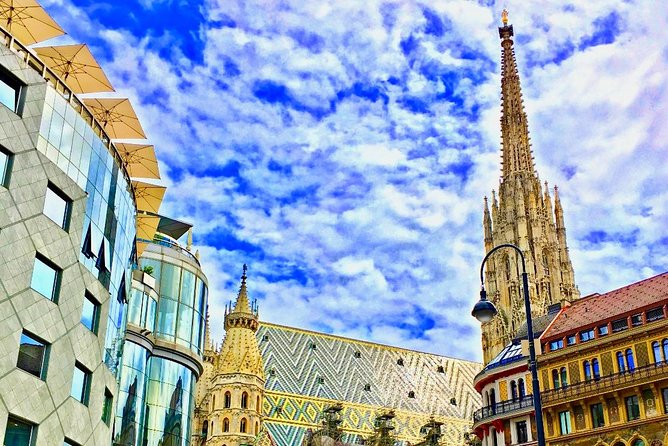
The strongest part of this experience is the guide’s presentation. Dace is praised for clear English, dry humor, personal stories, and the ability to add detail with an iPad. Giselle is described as friendly, passionate, and good at connecting history with modern Vienna. Gabriela is noted for keeping the group comfortable in cold weather while still covering the route. Beatrice is praised for enthusiasm and a lively delivery.
You cannot choose a particular guide from the information provided, so treat those names as examples of the style you may encounter, not a promise. The consistent pattern is clear: the tour depends heavily on a guide who can turn façades and statues into a readable story.
This also explains why some people may find the tour less satisfying. If you want hands-on activities, long interior visits, or plenty of free time at each sight, the format may feel like a lecture while walking. If you enjoy history, architecture, and well-told anecdotes, it should give you a strong framework for the rest of your stay.
What you get for $72.56
At $72.56 per person, this is not the cheapest way to see Vienna’s center. Nearly all the major stops are free to view from outside, and the tour does not include museum admission, palace admission, cathedral admission, food, or drinks.
The value comes from the route, the guide, the small group, and the time saved organizing the city yourself. In two and a half hours, you cover a large number of important places in a sensible order. You also receive restaurant and café suggestions, plus tips about Vienna’s culture, food, and traditions.
I would judge the price by how you use the tour. It makes more sense on your first day, when a clear orientation can prevent wasted time and help you decide which museums or palace rooms deserve a return visit. It is harder to justify if you already know the center well or mainly want to enter attractions.
The 97 percent recommendation rate and 4.9 rating from 1,746 reviews suggest that the format works very well for most people. The one serious criticism is also fair: if you expect admission to the famous sights, you may feel the price is high. Read the inclusions carefully before booking.
Who should book this walk
I would choose this tour if you are visiting Vienna for the first time, have only a short stay, or want a historical framework before exploring alone. It also suits solo visitors and couples who prefer a small group to a large city tour.
It is particularly useful for people interested in imperial politics, architecture, music, science, and the connections between them. The food and café advice adds practical value, especially at the beginning of a visit.
I would look elsewhere if you need step-free or low-walking sightseeing, want extensive time inside museums, or dislike listening to explanations while moving. Families with young children should also consider the length and pace, since the route covers many sites but offers little structured entertainment for children.
Book at least a day ahead if your schedule is tight. The experience is often reserved well in advance, with an average booking lead time of about 39 days. Several start times are offered, which helps you fit it around a museum visit or train arrival.
Should you book it?
Book this walk if you want Vienna explained in one well-organized sweep. You will see the city’s signature sights, hear useful context, and finish in the best possible place for further exploring.
Skip it if you are paying mainly for interior access. This is an outdoor history and orientation tour, not a museum pass. Wear comfortable shoes, bring weather-appropriate clothing, and use the final stop at St. Stephen’s Cathedral as the start of your own afternoon.
FAQ
How long does the Vienna Historic Center Small Group Walking Tour last?
The tour lasts approximately 2 hours and 30 minutes.
Where does the tour begin?
It begins at Maria-Theresien-Platz in central Vienna, Austria.
Where does the tour end?
The tour ends at Stephansplatz, beside St. Stephen’s Cathedral.
What sights are included on the walking route?
The route includes Maria-Theresien-Platz, the Ringstrasse, Burgtor, the Hofburg, Heldenplatz, St. Michael’s Church, Rathaus, Burgtheater, Volksgarten, Beethoven Pasqualatihaus, the University of Vienna, Freyung, Graben, Kohlmarkt, Stephansplatz, and St. Stephen’s Cathedral.
Does the tour enter Vienna’s museums?
No. Museum entry is not included. The tour focuses mainly on exterior views and explanations, though some church, palace, university, café, or other indoor visits may occur depending on the weekday.
How many people can join the tour?
The group has a maximum of 15 people.
Is the tour offered in English?
Yes. The tour is offered in English and includes a local certified guide.
What should I wear for the tour?
Wear comfortable shoes and clothing suited to the weather. The tour requires moderate physical fitness and is not recommended for people with walking disorders.
What is included in the price?
The price includes the certified local guide, the historic-center walking route, audio devices, and recommendations for restaurants, cafés, culture, food, and traditions.
Can I cancel for a full refund?
Yes. You can cancel at least 24 hours before the local start time for a full refund. Cancellations or changes made less than 24 hours before the start are not accepted for a refund.
More Small-Group History Tours in the world
- London Small Group Tour of Historical Pubs
★ 5.0 · 10,422 reviews - Madrid Tapas & Taverns Small Group Food & History Tour
★ 5.0 · 2,664 reviews - Hidden Alleyways and Historic Sites Small-Group Walking Tour
★ 5.0 · 2,335 reviews - New Orleans Small-Group Haunted History Carriage Tour
★ 4.5 · 2,289 reviews
Newest history tours we have reviewed in the world
- Bilbao Historical Tour in small group★ 4.7 · 52 reviews
- Bologna: Street Food Tour in the Historic Center★ 4.8 · 125 reviews
- CEBU: Cebu City Heritage and Uphill Guided Tour★ 4.2 · 31 reviews
- Bishkek : City Tour (History, Architects, Statues & Culture)★ 4.9 · 54 reviews
- Blenheim: Omaka Aviation Heritage Centre Admission Ticket★ 4.9 · 31 reviews
- Berlin: Nazi History Walking Tour★ 4.8 · 33 reviews
- Best of Baku: 4-Hour City Tour Historic and Modern Landmarks★ 4.7 · 63 reviews
- Belfast: Best of Belfast History, Culture & Art Walking Tour★ 4.9 · 158 reviews
Old Town & Historic Centre Walks, compared.
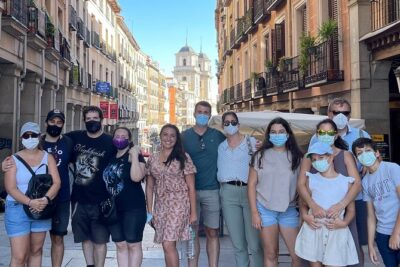
Madrid Essential: Historic Center, Plaza Mayor & Royal Palace
Read our review →
Live Fado Show with Port Wine in Historic Center
Read our review →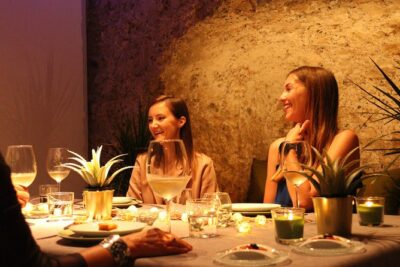
Valencia Old Town Tour with Wine & Tapas in 11th Century Historic Monument
Read our review →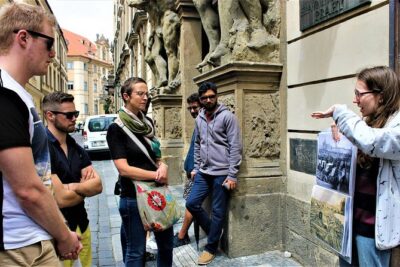
Prague Old Town, Medieval Underground and Dungeon Historical Tour
Read our review →
Cartagena: Historic Center and Getsemaní Shared Walking Tour
Read our review →
Old Town Walking Tour History and Tales in Edinburgh
Read our review →
Philadelphia Old City Historic Walking Tour with 10+ Top Sites
Read our review →Browse the lists this tour appears in