
Review · DUBLIN HISTORY TOURS
Dublin LGBTQ Pride Historical and Cultural Walking Tour
Dublin’s queer story is written into some of its best-known places. This two-hour walk links Temple Bar, the GPO, the Abbey Theatre, Trinity College, Liberty Hall, and Dublin Castle, then adds the people and struggles that a standard city tour usually leaves out. I especially like the human focus, from LGBTQ+ figures connected with the 1916 Easter Rising to activists who helped shape modern Ireland. I also like the route itself: you get familiar Dublin sights while learning why they matter to the city’s queer community.
The main thing to consider is pace. The tour covers a good stretch of central Dublin in about two hours, with roughly ten minutes at each listed stop. The group can reach 100 people, so the experience may not always feel as personal as the small-group format some people hope for. Guides including Helena and Deidre are praised for energy and clear storytelling, but you should still expect a walking tour rather than long visits inside each attraction.
Key things to know before you book
- The route follows queer Dublin from Temple Bar to Dublin Castle, with stops at major civic, cultural, and political sites.
- The GPO and Liberty Hall add serious historical weight, connecting LGBTQ+ lives with the 1916 Rising, early Pride, and trans activism.
- The Abbey Theatre and Trinity College bring in artists, writers, and alumni who shaped Irish public life.
- The George Bar and an early LGBTQ+ headquarters show community life beyond politics, including social spaces, cafés, discos, and cinemas.
- Guides such as Helena and Deidre bring an energetic, personal style, with strong attention to people who might otherwise be forgotten.
- At $29.02 per person, the value is in the storytelling, not admission to paid attractions or a long indoor program.
A queer history walk through central Dublin
This is not a pub crawl with a few historical facts added on. It is a city walk built around people, rights, memory, and the places where Dublin’s LGBTQ+ community gathered and organized.
You begin in Temple Bar, one of Dublin’s most visited districts. That can sound touristy, but it works well as a starting point. The area places you close to the city center, public transport, the River Liffey, and several of the tour’s later stops. You meet at 3 Crown Alley, where the guide gathers the group before setting off.
The opening section helps frame the rest of the walk. Dublin’s queer past is not confined to one neighborhood or one kind of building. It appears in theatres, colleges, political sites, pubs, meeting rooms, and streets that you might otherwise cross without a second thought.
You should arrive ready to walk on city streets for two hours. The activity calls for a moderate level of physical fitness, and there are several crossings and changes of direction as the route loops through the center.
More History Walking Tours in Ireland
- 2-Hour Historical Walking Tour from Dublin
★ 5.0 · 875 reviews - Historical 2-Hour Guided Walking Tour of Dublin
★ 4.7 · 865 reviews - Dublin’s Haunted History Walking Tour
★ 4.3 · 345 reviews
Temple Bar, the Liffey, and the first steps
The tour starts with about ten minutes around Temple Bar before crossing one of Dublin’s most photographed bridges. The bridge itself is not presented as a separate attraction with an admission ticket. Its value is practical and visual: it moves you from the Temple Bar side of the river toward the civic and cultural core of the city.
The River Liffey appears again later, including a section around the Anna Livia, Dublin’s famous river figure. These short river crossings give the walk a useful rhythm. You are not simply moving from plaque to plaque. You are also getting a sense of how Dublin’s neighborhoods connect.
Temple Bar returns near the end of the tour, when the guide points out the site of Ireland’s first bona fide LGBTQ+ headquarters. This was more than a bar. The space included a café, disco, cinema, and other facilities, showing how community institutions can offer friendship, entertainment, advice, and safety in one place.
That detail gives Temple Bar a different meaning. You see a district known today for nightlife and tourism, then connect it with an earlier period when having a dedicated LGBTQ+ base was a major step forward.
The GPO and LGBTQ+ lives in the 1916 Rising
The General Post Office is one of Dublin’s central historic buildings and the best-known setting connected with the Easter Rising of 1916. The tour uses this powerful location to discuss gay figures who played important roles in the events of that week and how those people are remembered.
You will not be spending a long session inside the GPO Museum. The planned stop is about ten minutes, and admission is not included. That is worth knowing if you were hoping to see the museum’s full exhibition. The benefit here is the guide’s added context at the building itself.
This stop makes the tour different from a narrow account of LGBTQ+ rights. It connects queer lives with Ireland’s broader political story. You hear about people who were part of major national events, not only about activists from later decades.
For me, this is one of the most useful ideas in the tour. It pushes back against the habit of treating LGBTQ+ history as a separate subject, detached from the rest of Irish history. The people discussed here were part of the country’s political and cultural life, even when their sexuality or gender identity was ignored, hidden, or treated unfairly.
The Abbey Theatre and public life on the Irish stage
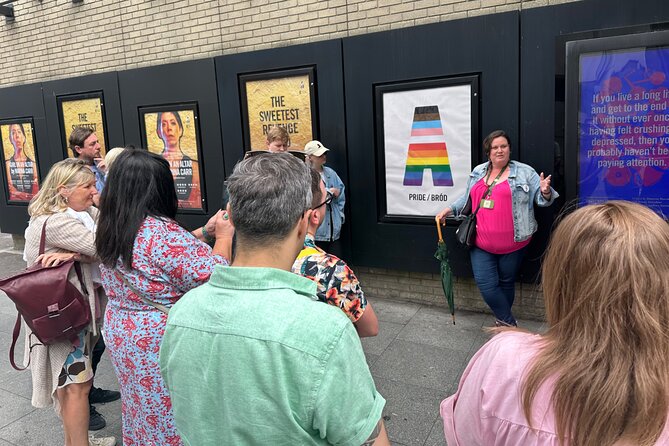
The Abbey Theatre is Ireland’s national theatre, and the tour uses it to introduce a major contemporary gay icon and their effect on Ireland’s modern public life.
You spend about ten minutes at the Abbey. The focus is on storytelling rather than a performance or backstage visit, so the tour suits you best if you want the theatre’s cultural setting and the person-centered history around it. It is not the right choice if your main goal is to tour the building’s interior.
The Abbey adds an artistic side to the route. Political change does not happen only in government offices or protest marches. Theatre, writing, and public performance can change how a country talks about identity and belonging. The guide places LGBTQ+ experience within that wider cultural conversation.
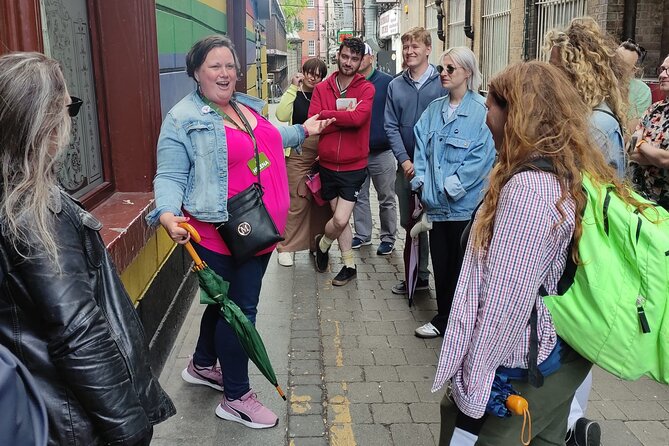
Guides Helena and Deidre are particularly important to the feel of this experience. The tour needs someone who can move between Irish history, LGBTQ+ rights, women’s rights, and individual lives without turning the walk into a lecture. Their style is described as energetic and engaging, which suits a route with many short stops.
More Local Culture and Traditions Tours in Dublin:
- Deliciously Dublin: The Artisan Donut Walking & History Tour
★ 5.0 · 329 reviews - Amsterdam Food and Cultural Tour with Tastings
★ 5.0 · 4,315 reviews - Sevilla Food Tour: Tapas, Wine, History & Traditions
★ 5.0 · 3,468 reviews - Tromsø: Reindeer Camp and Sami Cultural Tour with Lunch
★ 4.7 · 3,326 reviews
Liberty Hall and the hard road to Pride
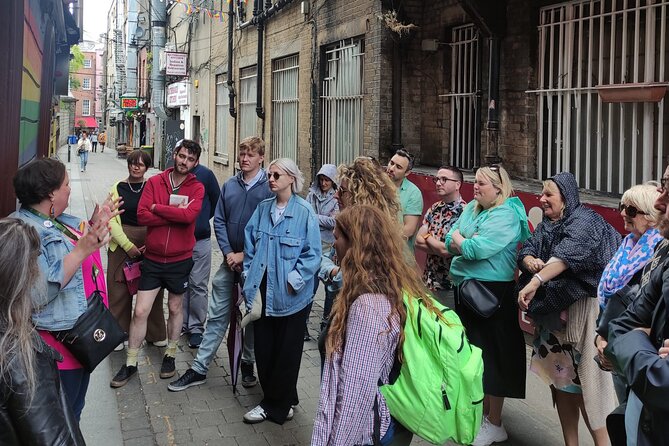
Liberty Hall brings the tour to one of its most serious sections. Here you learn about the difficult circumstances around Ireland’s first gay Pride parade and about an important trans activist.
The subject matter is not light, and that is a strength. A good LGBTQ+ history tour should not reduce the past to cheerful milestones. Progress came through fear, loss, public hostility, political pressure, and the persistence of people who kept organizing anyway.
The ten-minute stop means the guide has to be selective. You will get an overview rather than a full account of Irish Pride history. Still, the location gives the story weight. Liberty Hall is tied to labor and political life, so the discussion helps show that LGBTQ+ rights belong within Ireland’s wider story of social change.
This part may affect you more than the famous sights. The GPO and Trinity College are easy to recognize. Liberty Hall asks you to listen closely and think about how public space, protest, and personal courage shaped the community.
Trinity College and LGBTQ+ alumni
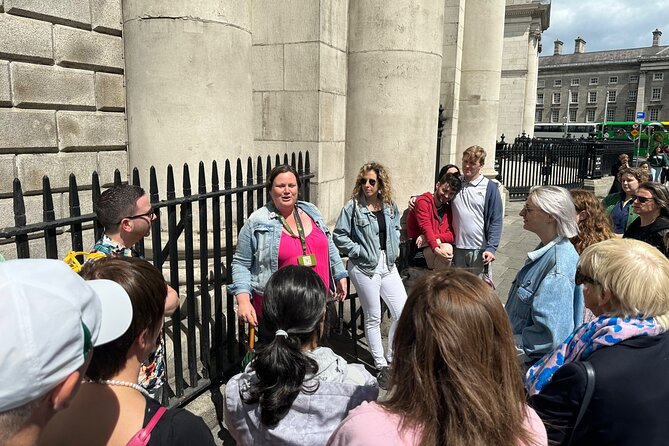
At Trinity College Dublin, the guide discusses LGBTQI+ alumni who passed beneath the college’s old arch, along with the wider College Green area. You do not pay an admission fee as part of the tour, and the stop lasts about ten minutes.
Trinity is one of Dublin’s most recognizable institutions, but the queer-history approach changes what you notice. Instead of hearing only about academic prestige or famous buildings, you consider the people connected with the college and the identities that may have been overlooked in conventional accounts.
This is a good example of the tour’s larger method. It does not take you only to places officially labeled LGBTQ+. It also asks you to look again at major national institutions and consider who studied, worked, socialized, and made a life there.
Because the stop is brief, you should not expect a detailed college tour. You will not cover every building or receive a full explanation of Trinity’s history. Think of it as a focused story in a visually important part of central Dublin.
Meeting House Square and queer Dublin in the 1980s
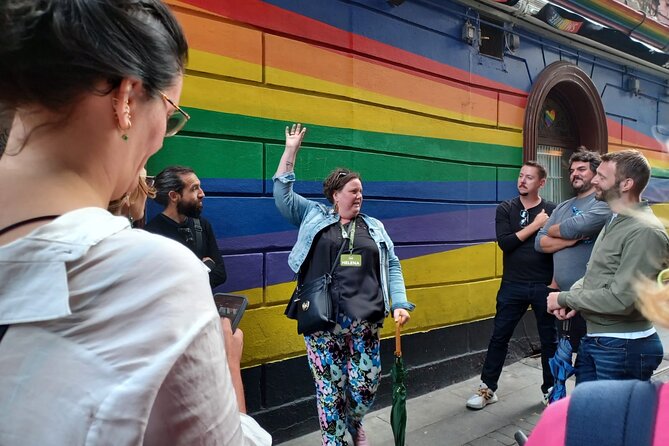
The route loops back toward Temple Bar and reaches Meeting House Square, near the work of Sean Harrington Architects. Here the subject shifts to Dublin in the 1980s, a period of change, organizing, and renewed hope for the LGBTQ+ community.
The guide talks about people who gave support and encouragement during a difficult time, as well as thinkers and change makers who helped move the community forward. This section fills a gap between the earlier political stories and the modern city you see today.
The 1980s are close enough to feel recent, yet distant enough that it can be easy to forget how different public attitudes and legal conditions were. A guide can make that period more understandable by attaching it to real people and actual meeting places.
The walk also returns to the River Liffey around the Anna Livia. This is a modest stop, but it helps you understand Dublin’s layout and keeps the route from becoming a string of indoor institutions. The river crossings add movement and give you a chance to reset between heavier stories.
The George Bar and everyday community life
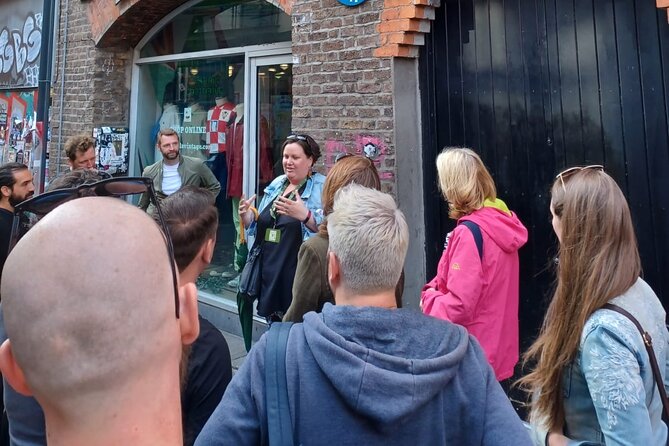
The George Bar is Dublin’s oldest operating gay bar and one of the tour’s clearest links to living community culture. The tour discusses its place at the center of Dublin’s LGBTQ+ life, but it does not promise entry, a drink, or a nightlife session.
That distinction matters. You are visiting as part of a historical walk, not booking a bar tour. The stop helps explain why venues like this matter. A bar can be a social gathering place, but it can also offer continuity, recognition, and a sense of belonging across generations.
The George works well late in the route because it brings the story down to street level. After hearing about political events, theatres, colleges, and activists, you reach a place associated with ordinary social life.
You may also receive suggestions about queer bars and places to visit in Dublin, depending on the guide and the conversation. Do not treat that as a promised evening itinerary, but it can be useful if you want to continue exploring after the tour.
Dublin Castle gives the walk a strong finish
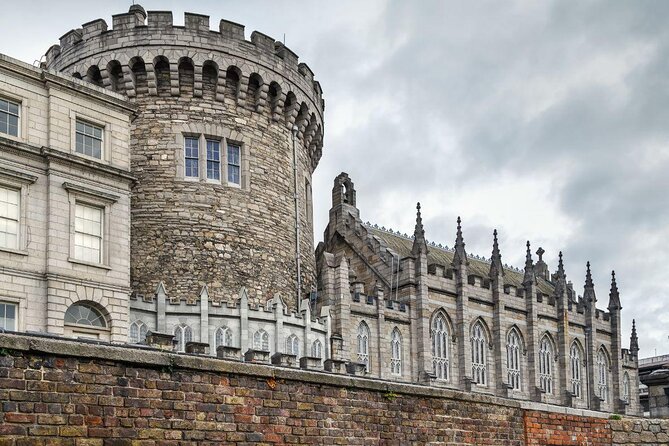
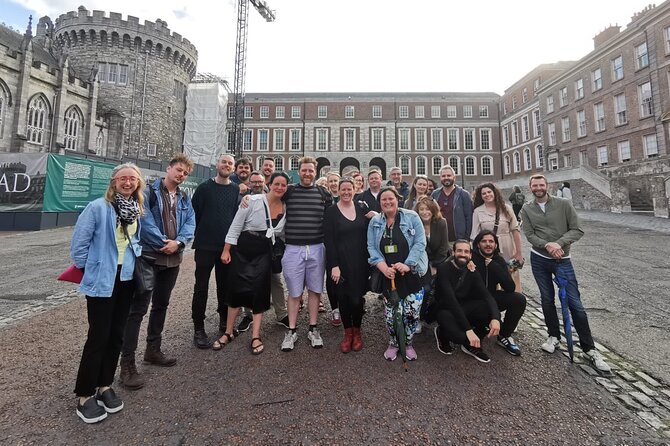
The final stop is Dublin Castle, where the tour ends in the upper courtyard. The castle carries about 1,200 years of history and presents a grand setting for the last discussion.
The ending is practical as well as atmospheric. Dublin Castle sits in the center of the city, close to Temple Bar and other major sights, so you can continue sightseeing or find food afterward. The exact end point is the upper courtyard, surrounded by the castle’s 18th-century buildings.
No admission fee is included, and the tour ends outside rather than providing a full castle visit. If you want to see the interiors, book that separately. The tour’s purpose is to place the LGBTQ+ story within Dublin’s oldest political and civic setting.
Ending here gives the walk a sense of scale. The route has moved from a community headquarters and a gay bar to a building linked with centuries of authority. That contrast is useful. It shows how queer Dublin exists both in dedicated community places and within the city’s major institutions.
Price, group size, and what you receive
At $29.02 per person, this is a fair price for a focused two-hour walking tour in central Dublin. You are paying for a guide, a carefully planned route, and stories that are difficult to find in a standard sightseeing walk. You are not paying for museum entry, a theatre visit, drinks, or transport.
The value is strongest if you already plan to see Temple Bar, the GPO, Trinity College, Dublin Castle, and the Abbey Theatre. The tour connects these sights without asking you to spend another half-day on a separate city tour.
The maximum group size is 100 people. That is a large possible number for a walking experience, although the actual group may be smaller. If you want to hear every detail, stay close to the guide and arrive early enough to get a good position.
The tour is offered in English and uses a mobile ticket. Confirmation arrives when you book. Service animals are allowed, and the route is near public transport. You should still plan for moderate walking fitness and city-center streets.
Free cancellation is available if you cancel at least 24 hours before the start time. Changes or cancellations made less than 24 hours before the start time are not accepted for a refund, and the cut-off uses Dublin local time.
Who will get the most from this walk
I would choose this tour if you want Dublin’s LGBTQ+ story treated as part of the country’s main history, not as a side topic. It suits LGBTQ+ visitors, allies, students of social history, and anyone who wants a more personal account of Ireland’s political and cultural change.
It also works well on a first visit because the route covers several major central sights. You will see the outside of places you may already have on your list, then receive a different reason to care about them.
You may want another tour if you prefer long indoor visits, detailed architectural commentary, or a slow pace with plenty of time at each stop. The route is busy, the stops are short, and much of the value depends on listening to the guide.
Should you book the Dublin LGBTQ+ Pride Historical and Cultural Walking Tour?
Book it if you want a focused, people-centered walk through Dublin’s LGBTQ+ past and you are happy to learn outdoors while moving between major landmarks. Helena and Deidre bring the kind of energy this subject needs, and the route covers an unusually broad range of stories, from the 1916 Rising and Irish theatre to early Pride, trans activism, community spaces, and modern queer Dublin.
Skip it if you need a small, quiet group guaranteed, or if you want admission to the GPO Museum, Dublin Castle, or another attraction included. At $29.02, it is a good buy for context and storytelling. It is not a substitute for full visits to the city’s museums and historic buildings.
FAQ
Where does the tour start?
The tour starts at 3 Crown Alley in Temple Bar, Dublin, D02 CX67, Ireland.
Where does the tour end?
The tour ends in the upper courtyard of historic Dublin Castle in central Dublin.
How long does the tour last?
The tour lasts approximately two hours.
What language is the tour offered in?
The tour is offered in English.
Are attraction admission fees included?
The listed stops are generally free to visit as part of the walk, but admission to Trinity College is not included. The tour also does not provide full indoor admission to the GPO Museum or Dublin Castle.
How far in advance is the tour usually booked?
The experience is booked an average of 25 days in advance.
What is the cancellation policy?
You can cancel for a full refund up to 24 hours before the experience start time. Cancellations or changes made less than 24 hours before the start time are not accepted for a refund.
More History Walking Tours in Dublin
- Hidden Dublin: Haunted History Walking Tour v2.0 2026
★ 4.5 · 188 reviews - Dublin: Macabre History Walking Tour
★ 4.9 · 95 reviews - DayTripper Dublin: A Guided City Walking Tour
★ 5.0 · 90 reviews - Semi-Private (8people max) 2.5 Hr Dublin Walking Tour
★ 5.0 · 69 reviews
Newest history tours we have reviewed in Dublin
- Private Dublin Historical and Heritage Tour by Bike★ 5.0 · 30 reviews
- Historical Walking Tour of Dublin★ 5.0 · 50 reviews
- DayTripper Dublin: A Guided City Walking Tour★ 5.0 · 90 reviews
- Interactive Living History in Dalkey Castle near Dublin City★ 5.0 · 133 reviews
- Interactive Guided Tour of Printing History★ 5.0 · 23 reviews
- Hidden Dublin: Haunted History Walking Tour v2.0 2026★ 4.5 · 188 reviews
- Full-Day Irelands Ancient Boyne Valley Private Guided Tour★ 5.0 · 36 reviews
- Digby Lock Cruise – Explore Ireland’s Historic Grand Canal.★ 5.0 · 66 reviews
Local Culture & Traditions Tours, compared.
Amsterdam Food and Cultural Tour with Tastings
Read our review →
Sevilla Food Tour: Tapas, Wine, History & Traditions
Read our review →
Tromsø: Reindeer Camp and Sami Cultural Tour with Lunch
Read our review →
Half Day Dominican Republic Cultural Tour : Small Group
Read our review →
Ultimate Melbourne Walking Tour: History, Laneways & Culture
Read our review →
Tromsø: Sámi Reindeer Sledding and Sami Cultural Tour
Read our review →
Kyoto Gion: 2-Hour Geisha Culture & History Walking Tour
Read our review →
Marrakech Historical and Cultural Tour – Half Day City Tour
Read our review →Browse the lists this tour appears in