
Review · DUBLIN HISTORY TOURS
DayTripper Dublin: A Guided City Walking Tour
Dublin reveals itself best on foot, where a statue, garden, street corner, or castle wall can open a door to centuries of Irish history. This tour moves from St Stephen’s Green to College Green, linking famous sights with stories about Viking Dublin, Irish music, independence, the Famine, and daily life.
I like the central route, which quickly helps you get oriented, and the chance to ask a local guide where to eat and what to do next. Guides such as Ciarán, Ciaran, Keiron, and Kyron are named in the tour’s feedback, and their personal style appears to be one of its biggest strengths.
The main limitation is that admission to the major interiors is not included. You see St Patrick’s Cathedral, Dublin Castle, Christ Church Cathedral, and Trinity College from outside, so you’ll need separate tickets and extra time if you want to go in.
Key points to know before you book
- A useful first-day route: Cover central Dublin sights without spending time figuring out the map yourself.
- History with a local voice: Expect stories about Viking Dublin, Irish independence, the Famine, music, dance, and working-class life.
- Outdoor sightseeing only: The route visits the grounds, courtyards, streets, and exteriors of major landmarks.
- Personal questions are welcome: Guides are available for practical advice on food, neighborhoods, sightseeing, and the rest of your stay.
- A manageable group size: The maximum is 25 people, though smaller groups can make the discussion more personal.
- Good value for a first look: At $27.82, the tour costs less than many attraction admissions and gives you a useful Dublin overview.
Why this walk works well as your Dublin introduction
This is the kind of tour I would choose early in a Dublin visit. The route is broad rather than slow and specialized. In about two and a half hours, you move through parks, shopping streets, medieval landmarks, political monuments, and cultural districts.
That variety matters. Dublin’s center is compact, but its story is not. You can walk a few minutes from Georgian streets to Viking-era references, then pass sites tied to the Irish struggle for independence. Without some explanation, the city can feel like a pleasant collection of buildings. With a guide, the connections become clearer.
The timing is listed as approximately 2 hours 30 minutes. Some of the tour material also describes a three-hour, history-packed walk, so I would avoid scheduling a train, meal, or paid attraction immediately afterward. The route ends at College Green, close to Grafton Street, with Tara and Pearse stations about a 15-minute walk away.
The experience is offered in English and includes an in-person guide. Lunch is not included, which is no hardship in Dublin, where you can easily continue to a café or pub after the walk.
More History Walking Tours in Ireland
- 2-Hour Historical Walking Tour from Dublin
★ 5.0 · 875 reviews - Historical 2-Hour Guided Walking Tour of Dublin
★ 4.7 · 865 reviews - Dublin’s Haunted History Walking Tour
★ 4.3 · 345 reviews
Starting at Wolfe Tone and St Stephen’s Green

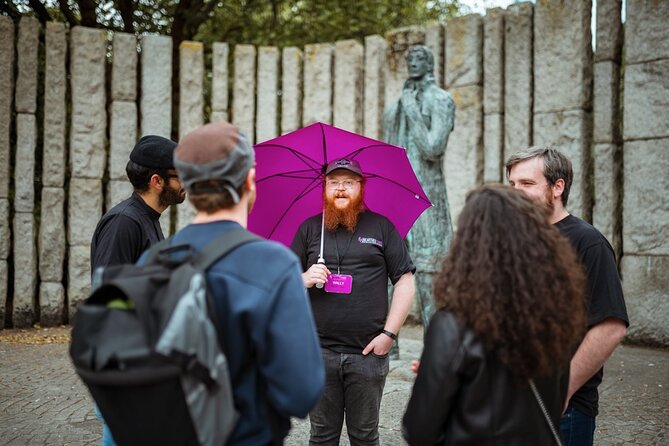
The meeting point is the Wolfe Tone Sculpture at St Stephen’s Green. This is a practical place to begin because it puts you near one of central Dublin’s most recognizable parks and within reach of Grafton Street.
Wolfe Tone is linked to the Society of United Irishmen and the political push that shaped Ireland’s relationship with Britain. Starting here gives the guide a natural way to introduce Irish politics and the long struggle for self-government.
St Stephen’s Green then provides a calmer setting for Irish history and culture. You walk through the park rather than simply pausing for a photograph. The listed stop is about 15 minutes, so expect an introduction rather than a full tour of every corner.
I like this opening because it gives you context before the busier streets begin. It also offers a break from traffic and crowds at the very start. If the group is close to the maximum of 25, stay near the guide so you can hear the stories clearly.
Grafton Street and the story of Molly Malone
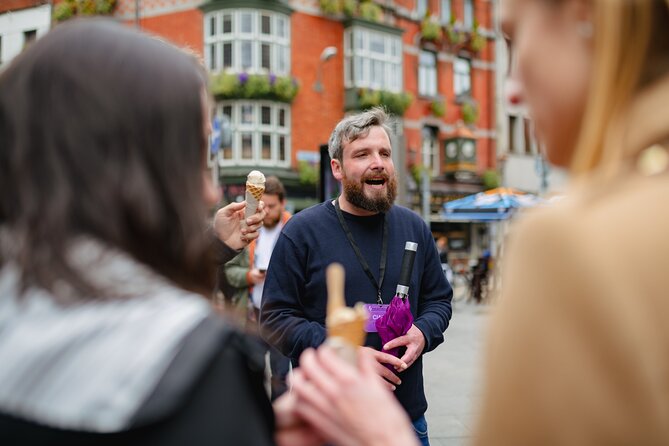
From the park, the walk continues along Grafton Street, one of Dublin’s main shopping streets. The stop is brief, about 10 minutes, but it gives you a feel for the city’s commercial center and its role as a natural link between St Stephen’s Green and College Green.
This is also where the tour brings Irish music and dance into the conversation. Those subjects help explain a part of Dublin that formal monuments cannot. You are not only looking at buildings. You are hearing about traditions that continue to shape how the city presents itself.
The Molly Malone statue follows, with a short talk about working-class Dublin and the figure associated with the song Cockles and Mussels. The stop lasts about 10 minutes. It is a quick introduction, not an extended study of Dublin’s social history, but it adds an everyday human angle to the political stories.
The statue is a popular photo stop, so expect a lively public setting rather than a quiet moment. Your guide’s explanation is the useful part. The monument itself takes only a minute to see.
St Patrick’s Cathedral and Dublin’s early story
At St Patrick’s Cathedral, the guide meets you in the gardens and explains the origins of Dublin City. This is one of the route’s important historical pauses because it connects the modern city to its early religious foundations.
You do not enter the cathedral. The admission ticket is not included, and the visit focuses on the gardens and exterior setting. That keeps the walk moving and keeps the price down, but it also means you will need another visit if the interior is high on your list.
For many people, this outside stop will be enough for an introduction. The guide can explain why the cathedral matters while you take in the architecture and grounds. If you want a detailed look inside, treat this as a preview rather than a substitute.
More History Walking Tours in Dublin:
- Deliciously Dublin: The Artisan Donut Walking & History Tour
★ 5.0 · 329 reviews - Hidden Dublin: Haunted History Walking Tour v2.0 2026
★ 4.5 · 188 reviews - Dublin: Macabre History Walking Tour
★ 4.9 · 95 reviews - Dublin LGBTQ Pride Historical and Cultural Walking Tour
★ 5.0 · 91 reviews
Dubh Linn Gardens and Viking Dublin
Dubh Linn Gardens offers one of the more pleasant pauses on the route. The gardens mark an important location tied to Dublin’s Viking past, and the guide uses the site to explain how the city’s name and early development connect to the Vikings.
This is a good example of why a walking guide adds value. The gardens may not tell the whole story at a glance. A short explanation turns an attractive place into a meaningful stop.
The listed time is about 10 minutes. That is enough to hear the main points and look around, but not enough for a long archaeological discussion. I would pay attention here because Viking Dublin is one of the themes that helps explain why the city developed where it did.
Dublin Castle and the politics of Ireland
The walk continues into the courtyards of Dublin Castle. You do not enter the paid areas, but the courtyards give the guide space to discuss the castle’s political role and the struggles that shaped Ireland, including the history of Northern Ireland.
This is one of the more serious parts of the walk. The tour is not limited to charming streets and literary associations. It addresses conflict, political division, and the difficult path toward modern Ireland.
The stop is scheduled for around 10 minutes, so the discussion will be selective. That is useful for a first orientation, but you should not expect a full lesson on Northern Irish politics. If the subject interests you, this is a good point to ask the guide for suggestions on further reading or places to visit.
There is no included admission to Dublin Castle. You see the courtyards, hear the background, and decide later if you want to return for the interior.
Christ Church Cathedral and the city’s Viking foundations

At Christ Church Cathedral, the group visits the courtyard and looks at the outside architecture. The guide explains the cathedral’s founding and its connection to Viking history.
This stop complements St Patrick’s Cathedral. Seeing both from the outside allows you to compare two major religious sites while hearing how Dublin grew from an early settlement into a city with competing centers of power and worship.
Again, the outside visit is brief, about 10 minutes, and admission is not included. That is a drawback if your main reason for booking is cathedral interiors. It is a benefit if you want a broad city walk without spending the day inside monuments.
A short walk through Temple Bar
Temple Bar receives a shorter stop of about five minutes. The guide walks you through the neighborhood and places it within the central Dublin route.
You should keep your expectations in check here. This is not a pub crawl, food tour, or evening music session. It is a quick orientation to one of Dublin’s best-known areas.
Temple Bar can be crowded and expensive, so a local guide’s advice may be especially useful. Ask where to return for a meal or a drink, and where to look beyond the most obvious tourist choices. The tour does not include lunch or food, so this is a sensible moment to gather ideas for later.
O’Connell Street and the Famine story
O’Connell Street shifts the focus toward modern Irish politics. The guide points out statues and discusses the political changes of the 20th century.
This broad avenue is an effective outdoor classroom because its monuments are tied to public memory. You are not just crossing the street to reach the next stop. You are using the statues to understand how Ireland remembers its leaders and political movements.
The walk also pauses near Trinity College and the Central Bank of Ireland to discuss the Great Irish Hunger, commonly called the Famine, and the history of Trinity. This is an important inclusion. A tour that covers only rebellions and independence can leave out the social and human cost of the 19th century.
The Famine discussion is part of the outdoor walk, not a museum visit. You do not enter Trinity College, and admission is not included. Still, the setting helps connect the subject to the institutions and public spaces of central Dublin.
Ending at College Green near Grafton Street
The tour ends at College Green. This is a convenient finish because you are only about two minutes from Grafton Street and roughly a 15-minute walk from Tara or Pearse railway stations.
The guide also offers recommendations for the rest of your time in Dublin. This is where the tour can become especially useful. You can ask about places to eat, things to do, and local spots you might otherwise miss.
Several guides associated with the experience, including Ciarán, Ciaran, Keiron, and Kyron, are praised for clear explanations, local insight, and a friendly manner. One guide is also described as helping a visitor plan the remainder of a day in port. That kind of practical help is valuable if you have limited time.
The personal element may depend on group size and the individual guide. With up to 25 people, you may have less time for one-to-one questions. Smaller groups can make the walk feel much more tailored, and the guide may be able to spend more time on subjects that interest you, such as women’s history or Irish music.
What the $27.82 price really buys you
At $27.82 per person, the main purchase is not entry to a monument. It is a guided framework for understanding central Dublin.
You are paying for a local voice, a planned route, explanations at 11 main locations, and the chance to ask questions while you walk. You also save the effort of working out how the city’s major sights fit together.
The price is strongest for first-time visitors. If you already know Dublin well, or if you want long visits inside St Patrick’s Cathedral, Dublin Castle, Christ Church Cathedral, and Trinity College, you will need additional plans and tickets.
I consider the value good because the route covers a lot without requiring separate transportation. Just remember that the walk is sightseeing from the outside. Budget extra for any interiors you want to visit later.
Who should book this walking tour?
I would recommend it to first-time visitors, solo travelers, couples, and anyone who wants a quick orientation before exploring alone. It also suits visitors with only a short stay because the route links many central sights in one outing.
The tour is a good fit if you enjoy history explained through streets and monuments. It is less suitable if you dislike walking, want a slow visit inside each attraction, or prefer a narrowly focused subject such as food, architecture, or literary Dublin.
A moderate level of physical fitness is advised. The experience is on foot, and you should wear comfortable shoes. It is near public transportation, service animals are allowed, and the group can contain up to 25 people.
Free cancellation is available up to 24 hours before the start time. If you cancel later, the amount paid is not refunded, and changes made inside that 24-hour window are not accepted.
Should you book DayTripper Dublin?
Book it if you want a strong first look at central Dublin, clear background on Ireland’s political and cultural story, and useful advice for the rest of your visit. The route is broad, the price is reasonable, and the guides can add the personal touch that turns a list of sights into a connected city experience.
Skip it if you mainly want paid entry to the cathedrals, castle, or Trinity College. In that case, plan those visits separately. For most first-time visitors, though, this walking tour is a practical way to get your bearings before setting off on your own.
FAQ
Where does the Dublin walking tour start?
The tour starts at the Wolfe Tone Sculpture at St Stephen’s Green in Dublin.
Where does the tour end?
It ends at College Green. The finish is about a two-minute walk from Grafton Street and around a 15-minute walk from Tara or Pearse Station.
How long does the walking tour last?
The stated duration is approximately 2 hours 30 minutes. Some tour details describe the experience as a three-hour history-packed walk, so allow some flexibility after the scheduled finish.
What language is the tour offered in?
The tour is offered in English.
What is included in the price?
An in-person tour guide is included. Lunch and admission to the attractions are not included.
Do you enter St Patrick’s Cathedral?
No. The guide meets you in the gardens and discusses the cathedral and Dublin’s origins, but the tour does not enter the cathedral.
Do you enter Dublin Castle, Christ Church Cathedral, or Trinity College?
No. The tour visits the courtyards or outside areas and explains their history, but entry to these attractions is not included.
How large can the group be?
The maximum group size is 25 travelers.
Can I cancel for a full refund?
Yes. You can cancel up to 24 hours before the experience starts for a full refund. Cancellations or changes made less than 24 hours before the start time are not accepted for a refund.
Newest history tours we have reviewed in Dublin
- Private Dublin Historical and Heritage Tour by Bike★ 5.0 · 30 reviews
- Historical Walking Tour of Dublin★ 5.0 · 50 reviews
- Dublin LGBTQ Pride Historical and Cultural Walking Tour★ 5.0 · 91 reviews
- Interactive Living History in Dalkey Castle near Dublin City★ 5.0 · 133 reviews
- Interactive Guided Tour of Printing History★ 5.0 · 23 reviews
- Hidden Dublin: Haunted History Walking Tour v2.0 2026★ 4.5 · 188 reviews
- Full-Day Irelands Ancient Boyne Valley Private Guided Tour★ 5.0 · 36 reviews
- Digby Lock Cruise – Explore Ireland’s Historic Grand Canal.★ 5.0 · 66 reviews
History Walking Tours, compared.

History and Hauntings of Salem Guided Walking Tour
Read our review →

Freedom Trail History Small Group Walking Tour
Read our review →
Historic Charleston Guided Sightseeing Walking Tour
Read our review →
Tapas Walking Tour with Food, Wine, and History
Read our review →
Savannah History and Haunts Candlelit Ghost Walking Tour
Read our review →
A History of Terror – Belfast City Centre Walking Tour
Read our review →Browse the lists this tour appears in