
Review · DUBLIN HISTORY TOURS
Historical Walking Tour of Dublin
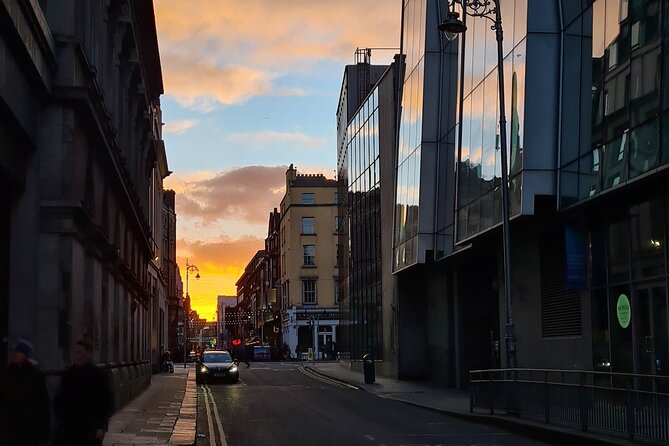
Dublin’s past comes into focus quickly on this small-group walk through the city center. You begin at the Spire on O’Connell Street and follow the story of the 1916 Rising, Trinity College, and Dublin Castle before finishing beside Ha’penny Bridge. Guide Donal brings history to life with humor, personal opinions, poetry, and practical pub and food tips.
I like the easy start and finish, which make this a simple first-day activity, and I like the chance to hear about Dublin from a local who can point you toward places such as O’Neill’s pub or a traditional old pub. The main thing to watch is the admission wording: tickets are not included, and the Trinity College portion is described as an exterior stop, so do not assume the Book of Kells visit is part of the $32.44 price.
Key points to know before booking
- The 1916 Rising begins the story: The General Post Office gives you the clearest setting for understanding Ireland’s fight for independence.
- Trinity College is an outside stop: You learn about the university at College Green, while entry to the Book of Kells and Long Room is not included.
- The group is limited to 15 people: That is small enough for questions and a more personal pace.
- Donal’s style is lively and local: Expect history, jokes, poetry, pub advice, and room for questions.
- The route takes about 1 hour 45 minutes: It starts at 1:00 p.m. and ends near Ha’penny Bridge in Temple Bar.
- Some admission costs are extra: Bring money if you want to add paid sights along the way.
A useful first walk through Dublin
This tour works best as an introduction rather than a full survey of Dublin. In less than two hours, you get a framework for the city’s political past, its university tradition, and its civic center. You also finish in a part of town where you can continue exploring on foot.
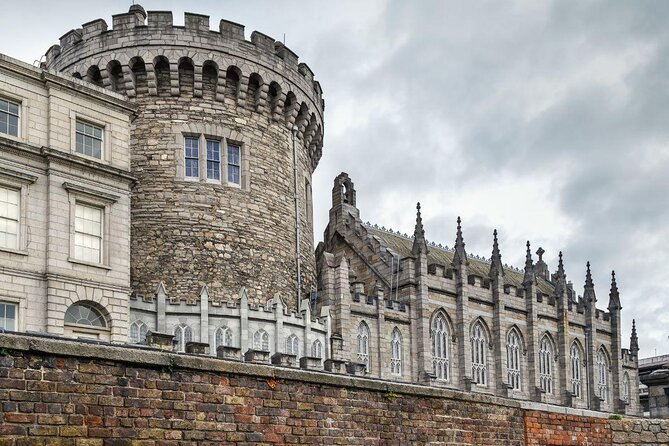
The route links three important places. The GPO tells the story of rebellion and the 1916 proclamation. Trinity College opens a window onto Ireland’s academic and literary past. Dublin Castle connects British administration, Irish government, and the events of the Rising.
That combination gives you more than a list of buildings. You begin to see how Dublin’s streets hold several layers of power: British rule, Irish nationalism, education, religion, commerce, and modern city life.
The experience is priced at $32.44 per person, which is fair for a nearly two-hour guided walk, especially if you want context rather than simply taking photographs outside major sights. The value depends partly on what you want from a tour. If you need admission to the Book of Kells or Dublin Castle, budget for those separately.
More History Walking Tours in Ireland
- 2-Hour Historical Walking Tour from Dublin
★ 5.0 · 875 reviews - Historical 2-Hour Guided Walking Tour of Dublin
★ 4.7 · 865 reviews - Dublin’s Haunted History Walking Tour
★ 4.3 · 345 reviews
Meeting Donal at the Spire
The tour begins at 1:00 p.m. beside the Spire on O’Connell Street Upper. This is an easy place to find, and starting in such a prominent location removes much of the usual first-day confusion.
O’Connell Street is an important setting for the tour because it puts you near the center of Ireland’s political story. From here, the walk moves into central Dublin and begins with the General Post Office. The exact distance between stops is not specified, but the overall activity lasts about 1 hour 45 minutes, so expect a steady city walk rather than a long hike.
Donal’s approach is conversational. You can expect clear explanations of people, dates, and events, along with humor and opinions about Dublin today. He has also recited poetry during walks and welcomed questions, which may suit you if you prefer a guide who talks with the group rather than delivering a fixed speech.
His style may not suit everyone. One piece of feedback described the speech as fast and focused too much on people and dates. If you need a slower pace or have trouble following spoken English, tell the guide early. The group size is limited to 15, so there is a reasonable chance to ask for clarification.
The GPO and the 1916 Rising
The first named stop is An Post General Post Office, usually called the GPO. You spend about 10 minutes here, learning why this building became the headquarters of the 1916 Easter Rising.
The rebels seized the GPO as one of several key locations in Dublin. Patrick Pearse and James Connolly were among the leaders who used the building while proclaiming an independent Irish Republic. The uprising was defeated by British military force and lacked broad public support at the time, but its meaning changed as the consequences unfolded.
That is the important point for you to grasp on this stop. The Rising did not win its immediate battle, yet it helped shape the political path that led to the Irish Free State and later the Republic of Ireland. The GPO is therefore not simply an old post office. It is a place where military defeat and political influence meet.
The stop is brief, so you should expect an introduction rather than a long museum visit. Admission is not included, and the tour information does not promise entry into the building. If you want a fuller treatment of the Rising, you may need to plan a separate visit to a paid attraction.
Still, the GPO is an efficient first stop. It gives the rest of the walk a clear theme: Dublin as a city shaped by the struggle over who should govern Ireland.
Trinity College at College Green
The next stop is Trinity College Dublin, where you spend around 10 minutes learning about Ireland’s oldest university. The tour pauses outside at College Green, so the main value here is the guide’s explanation of the university and its place in Irish culture.
Trinity was founded in 1592. Its campus is known for Georgian buildings, lawns, the Old Library, the Long Room, and the Book of Kells. These names are likely to appear in the conversation, but you should be precise about what this tour includes: the listed stop is outside the college, and admission tickets are not included.
That distinction matters because the Book of Kells is one of Dublin’s most sought-after paid sights. If seeing the manuscript and Long Room is high on your list, treat this walking tour as an introduction, not a substitute for an admission ticket. You may want to arrange that visit separately and allow extra time beyond the 1-hour-45-minute walk.
I like the placement of Trinity in the route. After the political drama of the GPO, the university adds another side of Dublin: scholarship, literature, and centuries of study. It also helps explain why the city attracts visitors interested in Irish writing and culture, not only political history.
Because the stop is short, your guide can help you decide if the interior visit deserves space in your schedule. You can also ask for practical advice about returning to the campus later.
More History Walking Tours in Dublin:
- Deliciously Dublin: The Artisan Donut Walking & History Tour
★ 5.0 · 329 reviews - Hidden Dublin: Haunted History Walking Tour v2.0 2026
★ 4.5 · 188 reviews - Dublin: Macabre History Walking Tour
★ 4.9 · 95 reviews - Dublin LGBTQ Pride Historical and Cultural Walking Tour
★ 5.0 · 91 reviews
Dublin Castle, City Hall, and the changing city
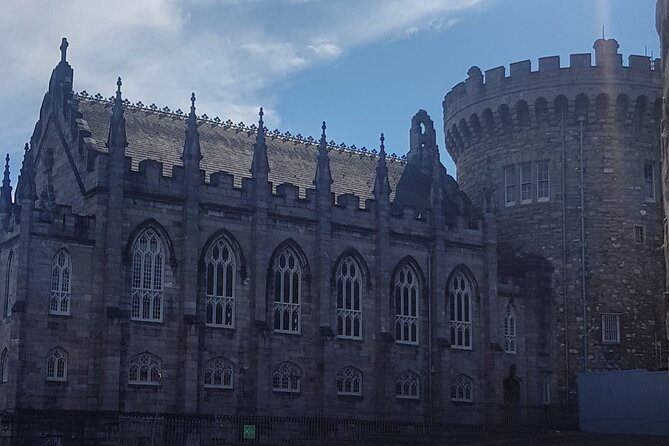
The third named stop is Dublin Castle, with discussion of the castle, City Hall, and their connection to the 1916 Rebellion. You spend about 10 minutes here.
Dublin Castle is especially useful for understanding how British administration operated in Ireland. Its story helps connect the GPO’s armed rebellion with the wider structure of government that the rebels opposed. City Hall adds another civic layer and ties the political story to the city itself.
The walk does not promise a full interior tour of either site. Admission is not included, so you should expect commentary from outside or around the buildings rather than a long visit inside. That keeps the tour moving, but it also means you will need another plan if you want detailed access to the castle rooms.
This stop is likely to be most useful if you enjoy seeing how a major event affected real buildings and institutions. The 1916 Rising was not confined to one heroic location. It involved control of public buildings, roads, communications, and the machinery of government. Dublin Castle and City Hall help broaden the picture.
Finishing near Ha’penny Bridge
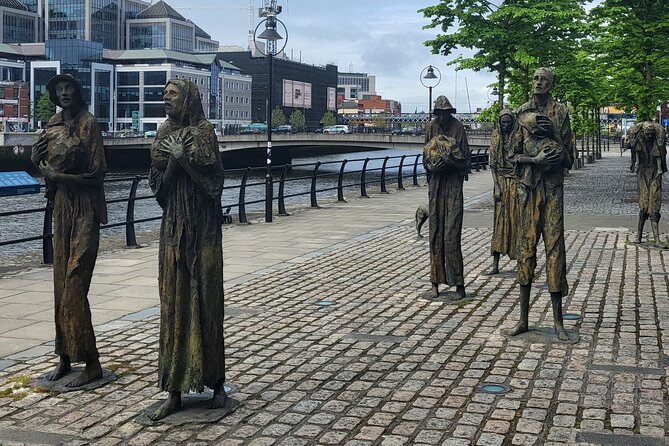
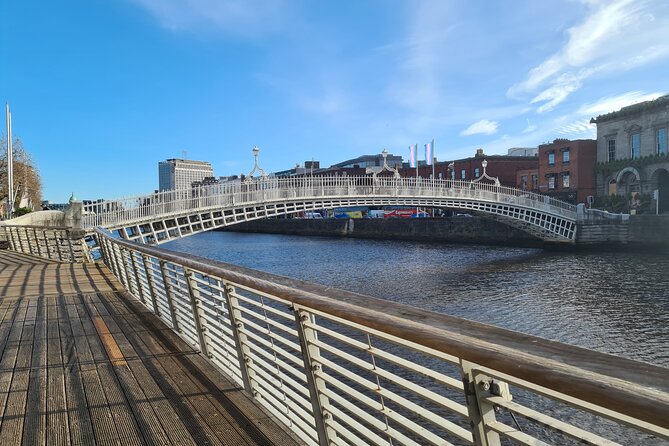
The tour ends at The Ha’penny Bridge Inn on Wellington Quay, right beside the famous bridge. This is a practical finish because you are close to Temple Bar and the River Liffey, with plenty of options for continuing your afternoon.
The ending also fits the tour’s more social side. Several outings with Donal have included pub suggestions, and some have included the chance to pour a pint of Guinness. One past outing even included a look at a pub basement and keg-cooling area. That sounds fun, but it is important to treat it as an occasional extra rather than a guaranteed part of this published walking route.
Donal’s pub advice is one of the tour’s useful bonuses. He has directed people toward O’Neill’s for lunch, where one visitor enjoyed the cottage pie, and toward other Dublin pubs. You get local suggestions you can test for yourself instead of relying only on the most famous Temple Bar addresses.
Since the tour ends at a pub, you can easily continue with a drink or meal. You can also cross Ha’penny Bridge and explore more of the north or south side of central Dublin. The finish is not remote, which is helpful if you have an evening reservation or another city sight planned.
What Donal’s guiding style adds
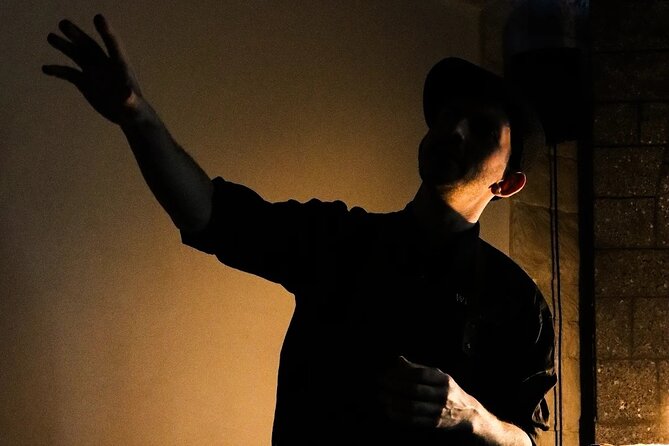
The strongest feature of this experience is the guide’s personality. Donal is described as funny, open to questions, and willing to share personal opinions about pubs and places to eat. He has also used poetry and stories to make the walk feel less like a date-filled lecture.
That approach can make a short tour memorable. Dublin’s past includes many names and turning points, and a guide who connects those facts to people and everyday places can help you remember the story after the walk ends.
You should also know the tradeoff. A personal, story-led tour may include Donal’s own experiences and views, not just a formal account of Dublin. One lower rating felt the talk moved too quickly and covered too much personal material. If you want a strictly academic presentation, this may not be your ideal choice.
For most people, the open format is useful. Ask about a confusing date. Request a pub recommendation. Tell Donal if you want more detail on the Rising, Trinity, or present-day Dublin. The small group gives you more room to shape the conversation than a large coach tour.
Group size, timing, and practical value
The maximum group size is 15 people, which is a good middle ground. You avoid the crowd of a large sightseeing group, but the tour may still have enough people for a social atmosphere. On a quiet date, the group could be much smaller, even close to a private experience.
The published duration is approximately 1 hour 45 minutes. That is long enough to cover the three main stops without taking over your entire day. The 1:00 p.m. start works well after a morning arrival or an early lunch, but you should not schedule a tight paid attraction immediately afterward. Walking times, questions, and city conditions can affect the finish.
The tour is offered in English and uses a mobile ticket. Service animals are allowed, and the activity is near public transportation. Most people can participate, though you should remember that this is a walking tour through central streets, not a seated sightseeing experience.
The cancellation terms are friendly if your plans change. You can receive a full refund by canceling at least 24 hours before the start time. Changes or cancellations inside that window are not accepted for a refund. The walk also depends on suitable weather and a minimum number of participants. If the operator cancels for either reason, you are offered another date or experience, or a full refund.
Who should book this Dublin walk?
I would choose this tour for a first afternoon in Dublin, especially if you want a quick orientation before exploring on your own. It suits people who enjoy local stories, political history, and practical advice about food and pubs.
It is also a good fit for families and mixed-age groups. Donal has shown patience with an active five-year-old and helped a family find a restroom, though you should still be prepared for a walking activity with a set start time.
You may want another option if your main goal is a long visit inside the Book of Kells, a detailed castle tour, or a fully formal presentation. The short stops and extra admission costs mean this experience is best viewed as a guided introduction.
Should you book the Historical Walking Tour of Dublin?
Book it if you want a friendly, compact introduction to central Dublin and appreciate a guide who mixes facts with humor, poetry, personal views, and pub advice. The 4.9 rating from 50 ratings and 98 percent recommendation figure point to a strong level of satisfaction, while the one low rating offers a useful warning about speaking speed and personal storytelling.
At $32.44, the price is sensible for a small-group walk lasting nearly two hours. Just budget separately for paid attractions, especially the Book of Kells and Long Room if you want to go inside Trinity College.
My practical advice is simple: wear comfortable shoes, arrive at the Spire a little early, keep the afternoon flexible, and tell Donal what interests you. If you want an easy way to connect Dublin’s main political sites with local food and pub ideas, this is a good choice.
FAQ
Where does the tour begin?
The tour begins at The Spire on O’Connell Street Upper in North City, Dublin.
What time does the tour start?
The start time is 1:00 p.m.
Where does the tour finish?
The tour ends at The Ha’penny Bridge Inn on Wellington Quay in Temple Bar, beside Ha’penny Bridge.
How long does the walking tour last?
The experience lasts approximately 1 hour and 45 minutes.
Is admission to the Book of Kells included?
No. Admission tickets are not included. The Trinity College portion is described as a stop outside the college at College Green.
How many people can join the tour?
The maximum group size is 15 people.
What happens if the weather is poor?
If the tour is canceled because of poor weather, you are offered a different date or experience, or a full refund.
Newest history tours we have reviewed in Dublin
- Private Dublin Historical and Heritage Tour by Bike★ 5.0 · 30 reviews
- DayTripper Dublin: A Guided City Walking Tour★ 5.0 · 90 reviews
- Dublin LGBTQ Pride Historical and Cultural Walking Tour★ 5.0 · 91 reviews
- Interactive Living History in Dalkey Castle near Dublin City★ 5.0 · 133 reviews
- Interactive Guided Tour of Printing History★ 5.0 · 23 reviews
- Hidden Dublin: Haunted History Walking Tour v2.0 2026★ 4.5 · 188 reviews
- Full-Day Irelands Ancient Boyne Valley Private Guided Tour★ 5.0 · 36 reviews
- Digby Lock Cruise – Explore Ireland’s Historic Grand Canal.★ 5.0 · 66 reviews
History Walking Tours, compared.
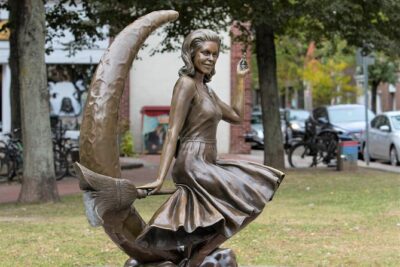
History and Hauntings of Salem Guided Walking Tour
Read our review →
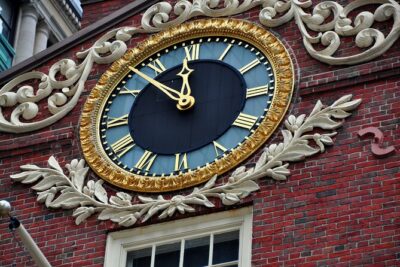
Freedom Trail History Small Group Walking Tour
Read our review →
Historic Charleston Guided Sightseeing Walking Tour
Read our review →
Tapas Walking Tour with Food, Wine, and History
Read our review →
Savannah History and Haunts Candlelit Ghost Walking Tour
Read our review →
A History of Terror – Belfast City Centre Walking Tour
Read our review →Browse the lists this tour appears in