
Review · DUBLIN HISTORY TOURS
Interactive Guided Tour of Printing History
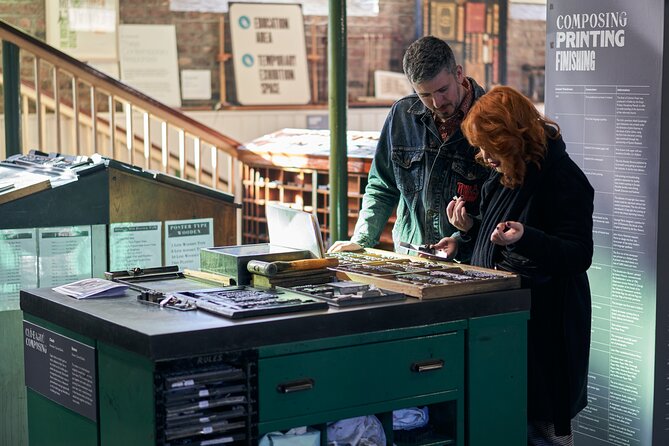
The best part of this Dublin tour is that you do not just look at old machines. You set type and print something yourself, using the same basic process that shaped newspapers, books, political leaflets, and everyday life for centuries. The original 1916 Proclamation adds a strong Irish connection, giving the machinery a clear place in the country’s story.
I like the small maximum of 10 people, which should make it easier to see demonstrations and ask questions. I also like the guide-led approach. Guides including Ciarán, Anne, Ann, and Jacinda bring different touches, from jokes and songs for children to stories about typefaces and phrases such as mind your p’s and q’s.
The one thing to consider is the short length. An hour gives you a lively introduction and a hands-on activity, but anyone fascinated by printing may want extra time for the museum, café, and shop after the tour.
Key points at a glance
- Print your own poster: Set your name in movable type and take home a personal paper souvenir.
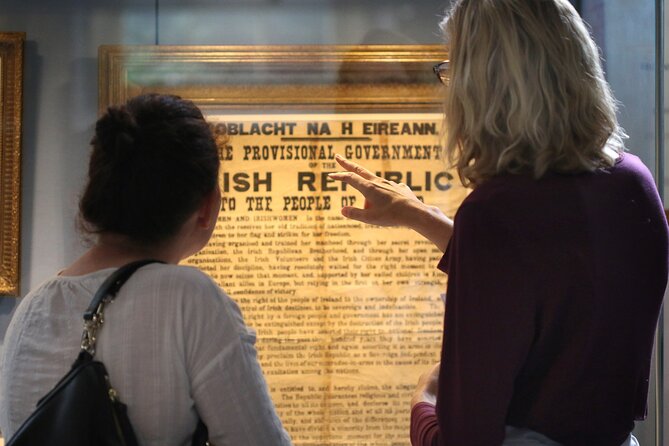
- See the 1916 Proclamation: View Ireland’s most important historical printed document and learn how it was produced.
- Watch working demonstrations: The collection is arranged for use, not simply displayed behind glass or rope.
- A genuinely small group: The tour accepts no more than 10 people, making the practical parts easier to follow.
- Good for families: Ciarán’s playful style, including jokes and songs, has worked well with children as young as four.
- Easy, low-cost addition to Dublin: The experience lasts about one hour, costs $7.20 per person, and ends where it begins.
Why old printing presses still matter in Dublin
Printing can sound dry until you see the physical work involved. Before digital files and instant online publishing, every page had to be planned, assembled, inked, pressed, and checked. The National Print Museum lets you see that process in a setting where the machines are not treated as untouchable furniture.
Your guide begins with the wider story of the printing press, invented by Johannes Gutenberg in 1439. That invention changed how ideas moved. Books, newspapers, public notices, religious texts, and political messages could reach far more people than handwritten copies allowed.
The value of this introduction is practical rather than academic. You are not simply given a list of dates. You can connect the machines in front of you with the printed material that shaped public life. That becomes especially clear when the tour turns to Ireland’s 1916 Proclamation.
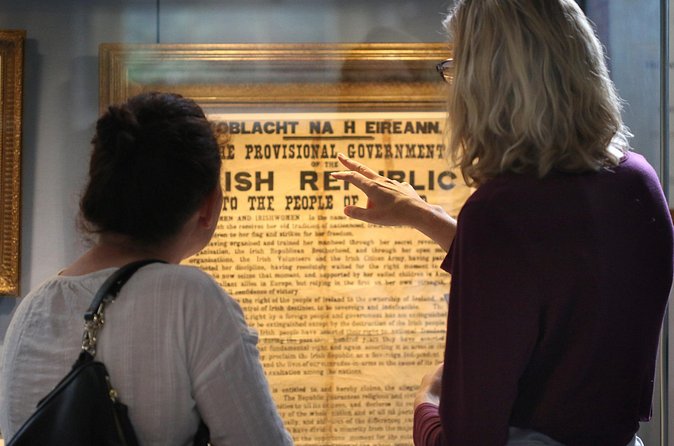
The museum displays an original copy of the Proclamation, one of the country’s most important printed documents. Its importance comes not only from the words on the page, but also from the fact that producing and distributing such a document required planning, equipment, paper, ink, and people who knew how to use them.
I would pay close attention here. It is easy to focus on the political content and miss the practical side of the object. The tour helps you think about the Proclamation as a physical piece of printing, not just as a famous text in a display case.
More Guided Tours in Dublin:
- Historical 2-Hour Guided Walking Tour of Dublin
★ 4.7 · 865 reviews - DayTripper Dublin: A Guided City Walking Tour
★ 5.0 · 90 reviews - Full-Day Irelands Ancient Boyne Valley Private Guided Tour
★ 5.0 · 36 reviews
The 1916 Proclamation gives the visit an Irish focus
Dublin has no shortage of places connected with Irish politics and independence. The National Print Museum offers a different angle. Instead of concentrating only on speeches, leaders, or battle sites, it shows how printed words helped political ideas travel.
Seeing the original 1916 Proclamation also gives the visit more weight than a general look at old machinery. You can examine the document as an artefact with a story of production. The guide explains how it came into being and why printing mattered at a key moment in Irish history.
This is a particularly useful stop if you are already planning to visit literary or historical sites in Dublin. The museum connects naturally with the Book of Kells and Trinity College Library, though the experience is quite different. Trinity gives you grand manuscripts and a famous library setting. Here, you get ink, metal type, working presses, and the chance to make a print with your own hands.
That contrast makes the museum worthwhile. You are not repeating the same museum experience twice. Instead, you see two different sides of the written word: the finished page and the physical labor needed to produce it.
A working collection, not a glass case parade
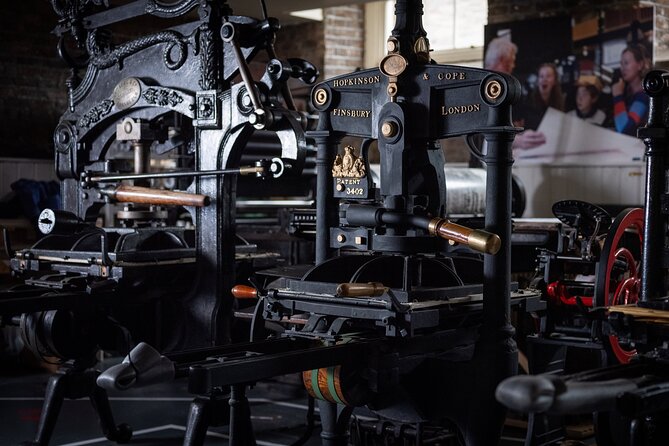
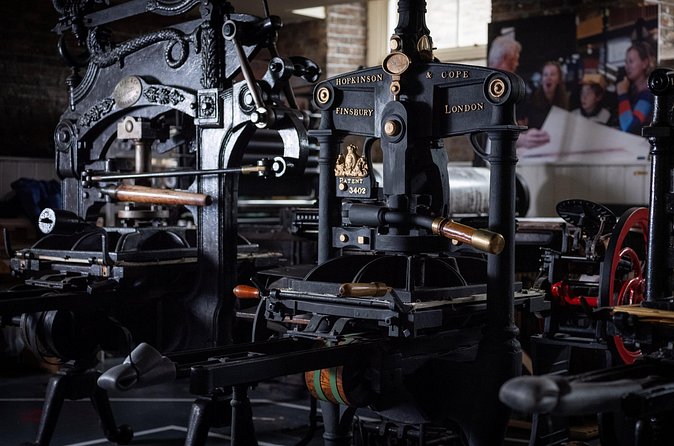
The main collection is arranged as a working collection. Machines and tools are not all sealed away behind glass or blocked by ropes. That matters because printing makes more sense when you can see how its parts fit together.
Your guide demonstrates how printing was carried out through much of the last few centuries. Expect the focus to be on process: arranging type, preparing a press, applying ink, and transferring an image or words onto paper. The demonstrations give you a reason to watch the machines closely instead of treating them as large old objects.
The practical format also helps children. Ciarán has been praised for keeping children aged four and seven involved, and for using jokes and songs to keep the hour light. That does not mean the tour is only for families. Adults interested in literature, politics, design, Irish history, or craft should find plenty to hold their attention.
The experience is most effective when you participate. You may get ink on your hands, and that is part of the point. Printing becomes much easier to understand once you see that the finished page depends on small, exact steps.
Setting type and making your own poster
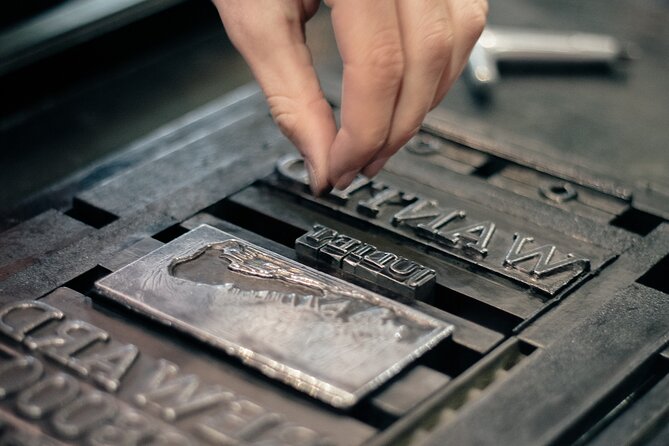
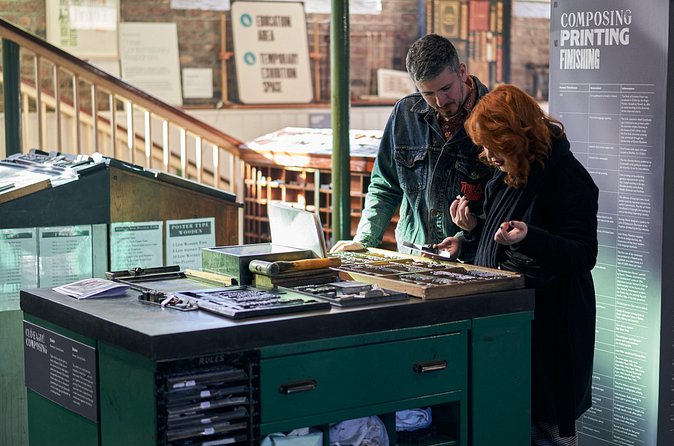
The highlight for many people is the personal printing activity. You compose your own name in type, then use the press to make a personalised poster to take home.
This is a simple idea, but it gives the tour a clear payoff. Instead of leaving with only photographs or general memories, you have a paper object made during your visit. It also lets you experience one small part of the work that professional printers once performed every day.
Pay attention to the typefaces while you work. Ann has shown visitors favourite typefaces, and Jacinda has been praised for helping words jump off the page. These details may appeal most to people who enjoy books, typography, graphic design, or stationery, but the activity is straightforward enough for a first-time visitor.
The hands-on element is also a good reason to choose the guided tour rather than only walking through the museum on your own. A self-guided visit can show you the collection, but the guide gets you involved with the equipment and explains what you are doing.
The personal poster is not a luxury souvenir. It is the lesson. You feel the difference between selecting text on a screen and physically building a page before it can be printed.
More History Tours in Dublin:
- Dublin Historical Centre Food Tour with 8 Food Tastings & Drinks
★ 5.0 · 1,718 reviews - 2-Hour Historical Walking Tour from Dublin
★ 5.0 · 875 reviews - Celtic Boyne Valley & Ancient Sites Day Tour From Dublin
★ 4.5 · 865 reviews - From Dublin: Celtic Boyne Valley and Ancient Sites Tour
★ 4.5 · 618 reviews
Guides who make the hour work
The quality of this experience depends heavily on the guide. The strongest feedback centers on Ciarán, Anne, Ann, and Jacinda, all of whom are described as friendly, enthusiastic, and able to explain the subject clearly.
Ciarán seems especially suited to family groups. His use of jokes and songs keeps the tone relaxed, while his explanations give adults enough substance to stay interested. If you are visiting with young children, this matters. A technical museum can lose a child quickly if the guide talks over their heads.
Anne has been praised for making the tour engaging while giving visitors a chance to try printing and use a perforating machine. That combination of explanation and activity is exactly what you want from a short museum tour.
Ann brings attention to typefaces and the details of the collection. Jacinda has been singled out for her ability to make the printed words feel lively. You may not get to choose your guide, so I would not book based on one name alone. The broader pattern is encouraging: the museum team clearly treats the guided hour as an active demonstration, not a routine talk.
A guide can also explain small points that you might miss on your own. One example is the connection between printing and familiar expressions such as mind your p’s and q’s. These details give you something memorable to carry into the rest of your Dublin visit.
Why this suits families and curious adults
The tour is a good choice for families because it offers movement and participation. Children can see machines operate, handle type under guidance, and create a poster. The reported success with children aged four, seven, and nine suggests that the experience can work across a mixed-age family group.
You should still remember that the visit lasts about an hour and includes historical explanation. A child who needs constant outdoor activity may not enjoy every part. The hands-on sections are the strongest draw, so it helps to frame the tour as making and doing rather than simply visiting a museum.
Adults have plenty of reasons to come too. The museum connects printing with:
- Irish political history
- Literature and books
- Typography and graphic design
- The spread of public information
- The physical work behind newspapers and pamphlets
- Common phrases that grew from printing practices
I especially recommend it if you are tired of museums where everything is behind glass. Here, the equipment is part of the lesson, and the final poster gives you a small reminder of how much effort once went into an ordinary printed page.
Price, time, and what the small group means
At $7.20 per person, this is an inexpensive Dublin activity. Its value is not based on a long schedule. You are paying for a focused guided experience, access to a working collection, demonstrations, and a personal print to take away.
The tour lasts approximately one hour. That makes it easy to fit into a day of sightseeing, but it also limits how much the guide can cover. You will get a clear introduction rather than a full course in printing history.
The group size is capped at 10 people. That is one of the strongest practical features. A small group should give you a better view of the demonstrations and a more reasonable chance to take part in the printing activity. It also makes questions easier than they would be in a large museum talk.
The museum has a café and a gift shop. The café has been described as reasonably priced and pleasant, while the shop carries unusual gifts. You may want to allow extra time after the tour if you like printed goods or want a small souvenir beyond your poster.
The advertised experience is offered in English and uses a mobile ticket. Confirmation arrives at booking. Service animals are allowed, the museum is near public transportation, and most people can participate.
Finding the National Print Museum
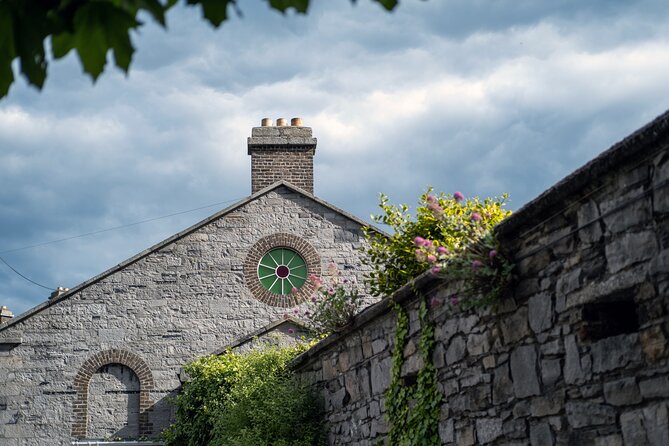
The meeting point is the National Print Museum on Haddington Road in Dublin, postal code D04 E0C9. The tour begins and ends at the museum, so you do not need to plan for a separate drop-off point.
That simple start and finish helps when you are combining this with other Dublin plans. You can treat it as a contained one-hour visit rather than an excursion that takes up half a day.
Since the museum is near public transportation, it should be practical to reach without arranging a special transfer. The supplied details do not specify the best route from your hotel or another attraction, so check your own map and allow enough time to arrive at the Haddington Road meeting point.
The museum’s setting has also been praised for its well-maintained facilities and pleasant grounds. I would not build the whole visit around the outdoor setting, since the presses and guided activity are the main reasons to come, but it adds to the comfort of the stop.
A few limits to keep in mind
The tour is short. If you want a long technical session on every press, typeface, and stage of production, one hour may feel too brief. You can extend your visit with the café, shop, and time to look around, but the guided part itself remains compact.
The experience is also dependent on the guide and the group. A lively guide can make printing feel immediate and fun. A quieter group may move at a different pace. The maximum of 10 helps, but it does not turn the visit into a private tour.
The personal poster is a charming souvenir, though it is also a basic one. You should come for the process and the story, not expect a large professional print or a long workshop.
Finally, the listed price is low, but make sure you judge it as a one-hour activity. It is excellent value if you want a focused, participatory museum stop. It is less suitable if you are seeking a full-day attraction or a major landmark with extensive exhibits.
Should you book the printing tour?
I would book this tour if you like Irish history, books, politics, design, or hands-on museums. It is also a smart family choice when you want something more active than a traditional gallery.
The strongest reasons to go are the original 1916 Proclamation, the working presses, and the chance to make your own poster. The small group and friendly guide style add real value, especially for children and anyone who learns best by trying things.
Skip it if you have almost no time in Dublin and prefer only the city’s biggest landmarks. But if you can spare an hour on Haddington Road, this is a modestly priced experience with more substance than its short duration suggests. Book at least a day ahead if your plans are firm, and remember that free cancellation is available until 24 hours before the start time. A 4.9 score from 23 ratings and a 96 percent recommendation rate fit the practical verdict: this is a small, focused museum tour that earns its place on a Dublin itinerary.
FAQ
How long does the Interactive Guided Tour of Printing History last?
The tour lasts approximately one hour.
Where does the tour begin and end?
It begins at the National Print Museum, Haddington Road, Dublin, D04 E0C9, Ireland, and ends back at the same meeting point.
What language is the tour offered in?
The tour is offered in English.
How many people can join the tour?
The activity has a maximum group size of 10 people.
Can I print something during the visit?
Yes. You can compose your name in type and print a personalised poster to take home.
Will I see the 1916 Proclamation?
Yes. The tour includes viewing an original 1916 Proclamation and learning about its production.
Is the museum accessible by public transportation?
The National Print Museum is near public transportation.
What is the cancellation policy?
You can cancel up to 24 hours before the experience start time for a full refund. Cancellations or changes made less than 24 hours before the start time are not accepted for a refund.
Newest history tours we have reviewed in Dublin
- Private Dublin Historical and Heritage Tour by Bike★ 5.0 · 30 reviews
- Historical Walking Tour of Dublin★ 5.0 · 50 reviews
- DayTripper Dublin: A Guided City Walking Tour★ 5.0 · 90 reviews
- Dublin LGBTQ Pride Historical and Cultural Walking Tour★ 5.0 · 91 reviews
- Interactive Living History in Dalkey Castle near Dublin City★ 5.0 · 133 reviews
- Hidden Dublin: Haunted History Walking Tour v2.0 2026★ 4.5 · 188 reviews
- Full-Day Irelands Ancient Boyne Valley Private Guided Tour★ 5.0 · 36 reviews
- Digby Lock Cruise – Explore Ireland’s Historic Grand Canal.★ 5.0 · 66 reviews
Dublin History Tours, compared.
Dublin Historical Centre Food Tour with 8 Food Tastings & Drinks
Read our review →
Historical 2-Hour Guided Walking Tour of Dublin
Read our review →
Celtic Boyne Valley & Ancient Sites Day Tour From Dublin
Read our review →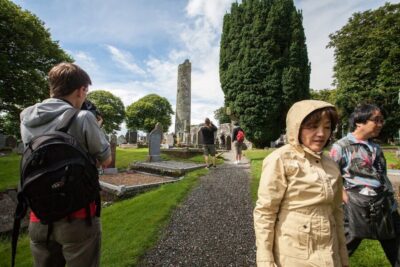
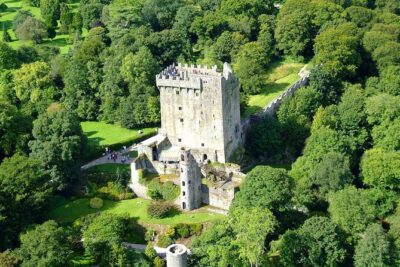
Dublin to Cork, Blarney Castle & Cóbh Heritage Centre by train
Read our review →
Jeanie Johnston Tall Ship Irish Famine History Tour
Read our review →
Browse the lists this tour appears in