
Review · TOKYO HISTORY TOURS
Tokyo: Imperial Palace Japanese History Walking Tour
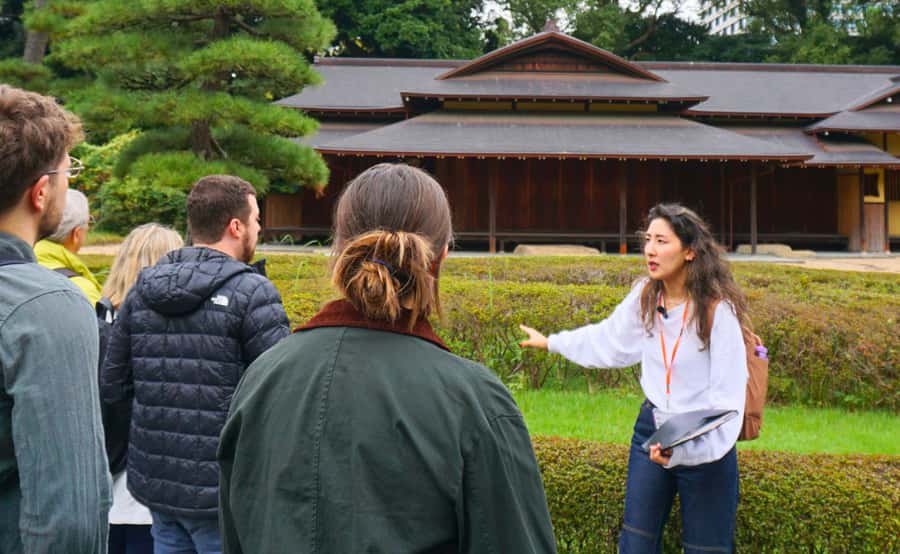
Tokyo’s Imperial Palace is more than a formal residence behind stone walls. In the East Gardens, you walk across the site of Edo Castle, where the shogun once ruled Japan. I like that this tour connects the old social order, from farmer to samurai, daimyo, and shogun, with the modern city outside the gates. I also like the small touches: a model of the former castle, royal koi, bamboo, and trees given to the emperor.
The main consideration is physical comfort. This is a walking tour in an outdoor garden, held rain or shine, and Tokyo’s summer heat can be punishing. The inner palace is not open to the public, so you are booking a history-focused walk through the accessible grounds rather than a palace interior visit.
The guides are the heart of the experience. Mika and Natsumi receive especially warm praise for clear storytelling, while Laki, Lakki, Lucky, Alexandre, and others bring their own style. At $32, this is a sensible way to get context you would likely miss while walking the gardens alone.
Key points at a glance
- Walk where Edo Castle once stood: See stonework, ruins, and the grounds that shaped modern Tokyo.
- Learn the power structure of old Japan: The guide explains the roles of farmers, samurai, daimyo, and shogun.
- Meet at a simple city-center landmark: Find your guide near the Starbucks by the fountain in Wadakuramon fountain park.
- Expect more than a castle lecture: The route includes a bamboo grove, garden views, royal koi, and trees from around Japan.
- Choose this for explanation, not palace access: The inner palace is closed to the public, but the East Gardens offer plenty to see.
- Plan for weather: Bring suitable clothing, water, and sun protection, since the walk continues in rain or heat.
Why Edo Castle matters to your Tokyo visit
Tokyo can feel like a city built from steel, glass, trains, and neon. The Imperial Palace grounds give you a chance to see the older power beneath it all. This was the site of Edo Castle, the stronghold of the Tokugawa shoguns for more than 250 years.
The guide uses the castle site to explain how Japan was organized before the modern era. You hear about the old ranking system, beginning with farmers and moving through samurai and daimyo to the shogun. That framework helps you make sense of Japanese history instead of treating the castle ruins as attractive stones with no story.
I like this approach because the tour is not only about buildings. It explains how authority worked, how the shogun shaped the country, and how the castle later became the emperor’s palace. You leave with a clearer sense of the transition from the Edo period to the Meiji era and the Japan you see today.
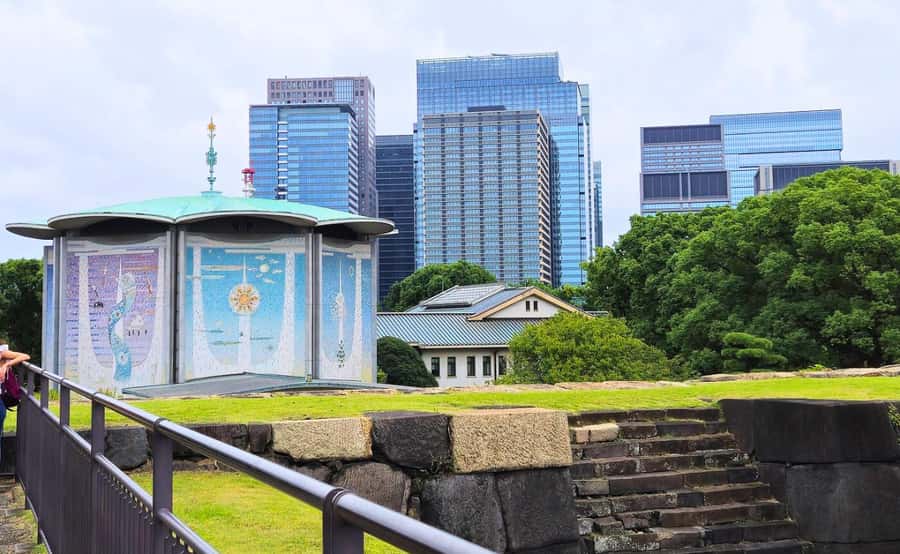
The tour also gives you a useful first look at Tokyo’s past and present. The palace grounds sit close to major stations and modern offices, yet the route can feel calm and spacious once you pass through the gate.
More Castle and Palace History Tours in Japan
- Tokyo: Imperial Palace and Shogun Historical Walking Tour
★ 5.0 · 2,251 reviews - Tokyo Castle & Imperial PalaceーShogun Walking Tour
★ 4.7 · 1,068 reviews - Tokyo Castle & Imperial PalaceーShogun Walking Tour
★ 5.0 · 724 reviews
Meeting at Wadakuramon fountain park
The tour begins near Tokyo Station or Otemachi Station. From either station, allow about five to ten minutes to walk to Wadakuramon fountain park. Look for the Starbucks near the fountain, where your guide waits with a Sunrise Adventure sign.
This meeting point is practical, but Tokyo Station has many exits and can be confusing. Give yourself extra time, especially if you are arriving with luggage or navigating the station for the first time. The guide’s sign should make the final meeting straightforward.
The tour ends back at the same meeting point. That is useful if you want to continue sightseeing from Tokyo Station, find lunch nearby, or return to your hotel by train. Guides also offer suggestions for restaurants, cultural activities, and places to visit. Natsumi, Mika, Alexandre, and others are praised for giving useful recommendations after the walk, not just delivering the planned history talk.
Passing through Otemon Gate
From the fountain park, the group walks toward Otemon Gate, one of the main entrances to the East Gardens. This is where the tour shifts from city streets to the former castle grounds.
Your guide sets the scene before leading you farther inside. The original castle buildings are no longer standing, and that absence is part of the story. You do not get a grand castle interior or a preserved keep. Instead, you see the remains, layout, garden spaces, and visual clues that help you picture the enormous complex that once occupied the site.
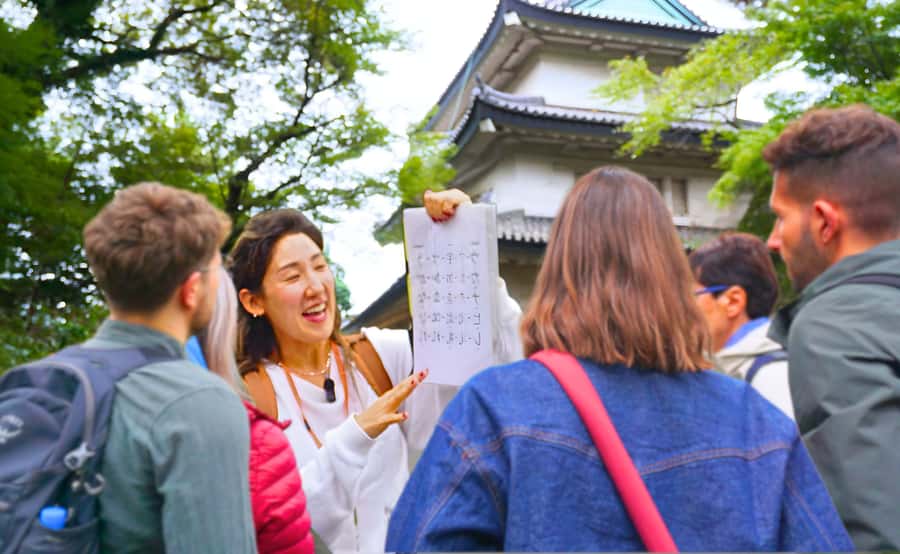
A miniature model shows what Edo Castle looked like in the past. That model is especially useful because the present grounds can otherwise seem too open to imagine as a major seat of power. Look closely as the guide compares the model with what remains around you.
The gate and stone structures also make good early photo stops. Still, this is not a tour built around constant picture-taking. The point is to understand why the gate, walls, and open spaces mattered.
Following the shogun’s footsteps
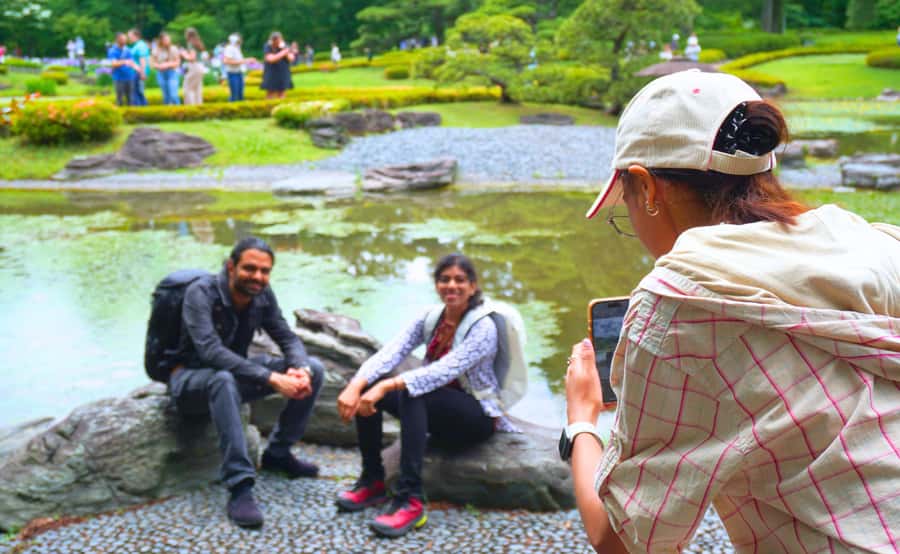
The strongest part of the walk is the explanation of how the castle operated as a political center. Your guide tells the story of the shogun’s authority and the people who supported the system.
You may hear about the duties and rank of samurai, the position of daimyo, and the place of farmers in the old order. A good guide turns these terms into a story you can follow. The most effective guides also ask questions and involve the group rather than speaking nonstop.
That interactive style comes through in the guide team. Natsumi is praised for clear storytelling and for explaining how Tokyo grew into the city you see today. Mika is often described as friendly, easy to understand, and attentive to group needs. Laki and Lakki bring humor and energy, while Alexandre offers the tour in French as well as English.
Guide quality can vary from one departure to the next because each person has a different personality. That said, the repeated strengths are clear: strong command of Japanese history, patient answers, and a willingness to explain beyond the basic route.
If you have questions, ask them. The guides make room for discussion, and several are happy to explain Japanese customs, food, etiquette, and other places to visit. That makes the walk feel more like an introduction to Japan than a narrow castle tour.
More History Walking Tours in Japan
- Tokyo: Shinjuku Historical Walking Tour & Secret Backstreets
★ 5.0 · 530 reviews - Imperial Palace East Garden and Edo Castle Walking Tour in Tokyo
★ 5.0 · 510 reviews - Asakusa: A Big-picture History Walk to Know Japan
★ 4.6 · 77 reviews - Asakusa: 3.5-hour Big-picture History Walk
★ 4.7 · 39 reviews
What remains of the old castle

The old castle is not preserved as a complete building. You will not enter a shogun’s residence or walk through rooms decorated as they were centuries ago. Instead, the guide points out the castle ruins and explains their original purpose.
For some people, that may feel less dramatic than visiting a complete European palace. I think the tradeoff works well in Tokyo because the story of disappearance and change is central to the site. The castle became the emperor’s palace, and the grounds reflect Japan’s move from shogunal rule to imperial government.
The guide’s model and explanations fill in much of what your eyes cannot see. You learn to read the site through its gates, stone foundations, open spaces, and position within the city. Without a guide, you might enjoy the gardens but miss why the ruins matter.
This is also where the tour earns its price. You are paying for interpretation, not an admission ticket to a dramatic interior. At $32 per person, a clear two-hour explanation of one of Tokyo’s most important historic sites is good value for anyone who wants context.
Bamboo, koi, and gifts to the emperor
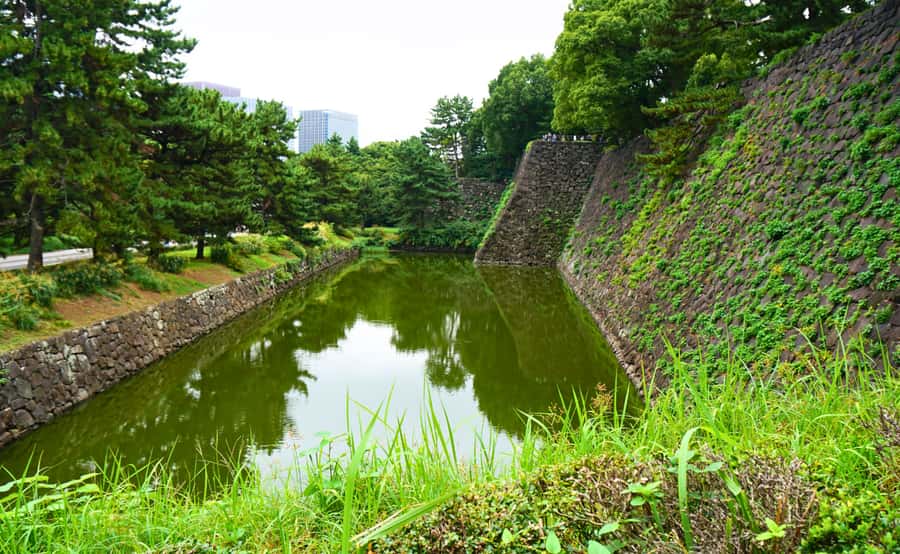
The East Gardens are not only about politics and military power. The route includes quieter garden sections, bamboo, and trees from different parts of Japan that were given to the emperor years ago.
The bamboo grove offers shade and a change of pace after the castle discussion. It is a pleasant photo spot, though the garden paths and natural areas mean you should expect insects. One guide provided mosquito spray during a visit, and that is a useful reminder to bring your own repellent if mosquitoes bother you.
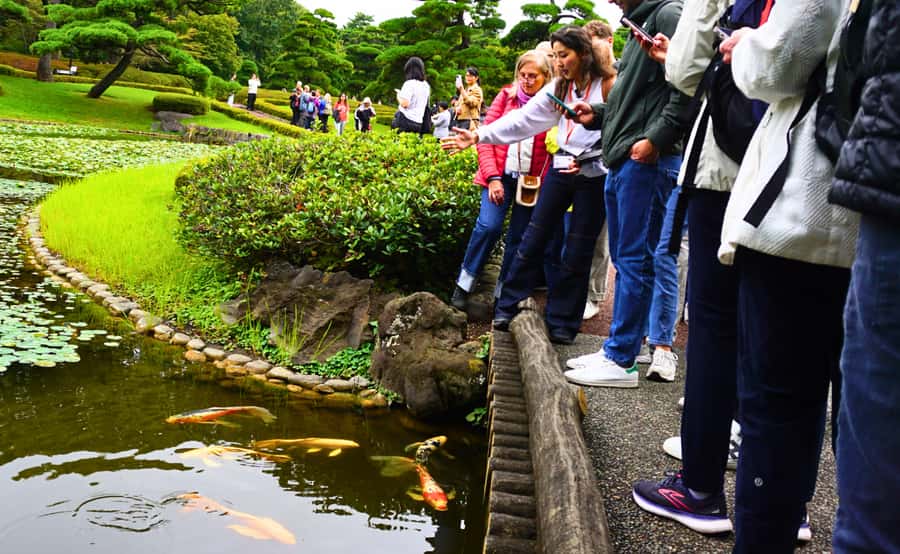
The royal koi are another memorable stop. They add a playful element to a tour that could otherwise feel heavy with dates and political structure. Children often respond well to the fish, models, and questions, while adults get the wider lesson about imperial grounds and garden design.
The gardens are attractive, but their appeal depends on the weather. In summer, the trees offer welcome shade, yet the walk can still feel hot. In rain, the grounds take on a different mood, but paths may be wet and less comfortable. Wear shoes with a good grip and clothing suited to the forecast.
What the guide adds to the experience

The walk is only as useful as the explanation that comes with it. Here, the guide is not simply leading you from one stop to the next. The strongest guides shape the visit around stories, comparisons, and questions.
Mika receives repeated praise for her clear English, friendly manner, and ability to answer detailed questions. Natsumi is frequently singled out for lively stories about the Edo period, palace design, cultural details, and Tokyo’s growth. Laki and Lakki are appreciated for warmth, humor, and a strong grasp of Japanese culture.
Alexandre leads in French as well as English and has been praised for spending extra time on explanations. Hugo is described as easy to follow, with a good mix of historical detail and lighter facts. Other named guides include Arief, Nico, Fei, and Lucky.
You cannot choose a particular guide from the information provided, so book this for the format and subject rather than one individual. Still, the number of positive comments about the guide team is a strong reason to expect a solid introduction to the site.
The guides also take pictures for you, answer practical questions, and suggest places to eat or visit. One guide even offered a private tour with a tea ceremony as an additional option. That is not part of the standard $32 experience, but it shows how the tour can lead into a more tailored cultural visit.
Heat, rain, and walking conditions
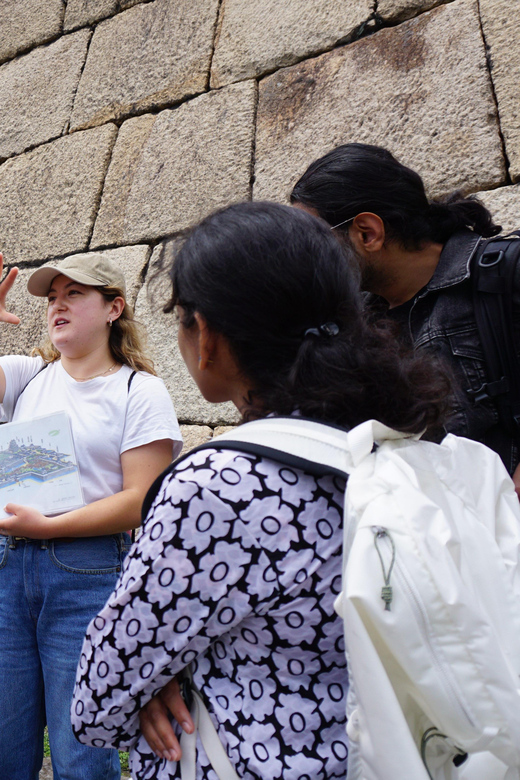
This is an outdoor walk, and the weather matters. The tour operates rain or shine, so check the forecast before you leave your hotel. In hot weather, wear light clothing, use sunscreen, and carry water.
The route includes garden paths and general walking around the palace grounds. It is not suitable for wheelchair users, people with mobility impairments, people with recent surgeries, or those with back, heart, or fitness concerns. Pregnant people are also advised not to book.
That policy may exclude some visitors, but it is useful to know before paying. The tour is not designed as a short, seated palace talk. You should be comfortable walking outdoors for roughly two hours, with stops for explanation and photos.
The guides do try to make the walk manageable. Several descriptions note that they look for shade, speak loudly enough for the group, and pay attention to the heat. Even so, no guide can remove Tokyo’s summer weather from the equation.
Who will get the most from this tour
I would choose this tour if you want an easy-to-follow introduction to Japanese history early in your Tokyo stay. It gives you background that can improve later visits to temples, museums, castles, and historic neighborhoods.
It is also a good fit for families with older children who enjoy questions, visual models, and stories about samurai and shoguns. The koi and bamboo provide variety, so the walk does not rely only on long historical explanations.
History-minded visitors will get the most from it, especially if you want to understand the Edo to Meiji transition. The tour also suits first-time visitors who want a calm garden walk close to Tokyo Station.
I would think twice if you mainly want access to the emperor’s private palace, a preserved castle interior, or a short photo stop. None of those is the focus. You see the public East Gardens and learn how to interpret the ruins.
Is $32 a fair price?
At $32, the value depends on how much explanation you want. The gardens themselves are the setting, but the real product is the guide’s interpretation. You could walk around the grounds independently, yet you would lose the model, the connected story of Edo Castle, and the chance to ask questions in English or French.
The price also includes a local guide who can help with photos and practical Tokyo advice. That is useful on a first visit, particularly when you want restaurant suggestions or help planning the rest of your day.
The tour does not include the inner palace, and that limitation should be clear before booking. You are paying for an outdoor history walk, not full palace access. With that expectation, $32 is reasonable.
You can reserve now and pay later, and cancellation is available up to 24 hours before the tour for a full refund. Those terms help if your Tokyo schedule is still changing.
Should you book the Imperial Palace history walk?
Book it if you want the Imperial Palace to make sense, not just look pleasant. The combination of castle ruins, the shogun’s political world, garden details, bamboo, koi, and a guide’s local advice gives you a useful two-hour introduction to Tokyo.
I would especially recommend it for first-time visitors, families with history-loving children, and anyone interested in how Japan moved from shogunal rule to imperial government. Go prepared for heat, rain, and steady walking.
Skip it if you need indoor access, a complete castle, or a fully accessible route. For everyone else, Sunrise Adventure offers a well-priced way to read the palace grounds with more understanding than you would gain from wandering alone.
FAQ
Where does the Imperial Palace walking tour begin?
Meet your guide near the Starbucks by the fountain in Wadakuramon fountain park. Tokyo Station and Otemachi Station are both about a five to ten-minute walk away. Your guide will hold a Sunrise Adventure sign.
Where does the tour finish?
The walk finishes back at the original meeting point near the fountain and Starbucks.
Is the inner Imperial Palace open during the tour?
No. The inner palace is not open to the public. This experience visits the East Gardens and the former Edo Castle site.
What languages are available?
The tour is offered in English and French.
Does the tour operate in bad weather?
Yes. The tour takes place rain or shine, so wear clothing suited to the weather and prepare for outdoor walking.
Is the tour suitable for wheelchair users or people with mobility concerns?
No. The activity is not suitable for wheelchair users, people with mobility impairments, people with back or heart problems, pregnant women, people with recent surgeries, or people with a low level of fitness.
More History Walking Tours in Tokyo
- History and Hauntings of Salem Guided Walking Tour
★ 5.0 · 14,564 reviews - Lisbon: History, Stories and Lifestyle Walking Tour
★ 4.8 · 10,902 reviews - Boston: Freedom Trail History Small Group Walking Tour
★ 5.0 · 6,450 reviews - Historic Charleston Guided Sightseeing Walking Tour
★ 5.0 · 6,216 reviews
More Castle and Palace History Tours in Tokyo
- Edinburgh: Edinburgh Castle Guided History Tour with Tickets
★ 4.8 · 9,933 reviews - Madrid Essential: Historic Center, Plaza Mayor & Royal Palace
★ 5.0 · 6,416 reviews - Venice’s Best: Basilica, Doge’s Palace, Gondola & History Gallery
★ 4.5 · 2,478 reviews - Marrakech: Saadian Tombs & Bahia Palace, Medina Guided Tour
★ 4.6 · 1,989 reviews
Newest history tours we have reviewed in Tokyo
- Asakusa: 3.5-hour Big-picture History Walk★ 4.7 · 39 reviews
- Asakusa: A Big-picture History Walk to Know Japan★ 4.6 · 77 reviews
- Tokyo: Nikko World Heritage Private Day Trip Hotel Pick-up★ 4.8 · 145 reviews
- From Tokyo: Nikko World Heritage Sight Full Day Private Tour★ 4.9 · 127 reviews
- From Tokyo: Nikko World Heritage Site Private Full-Day Trip★ 4.9 · 243 reviews
- Tokyo: The Best of Izakaya in Shinjuku Food & Cultural Tour★ 4.9 · 221 reviews
- Tokyo: 3-Hour Bike/E-Bike Tour of the City’s Hidden Gems★ 5.0 · 47 reviews
- Imperial Palace East Garden and Edo Castle Walking Tour in Tokyo★ 5.0 · 510 reviews
Castle & Palace History Tours, compared.

Edinburgh Castle Guided History Tour with Tickets
Read our review →
Madrid Essential: Historic Center, Plaza Mayor & Royal Palace
Read our review →
Venice’s Best: Basilica, Doge’s Palace, Gondola & History Gallery
Read our review →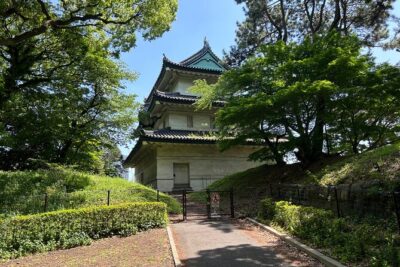
Imperial Palace and Shogun Historical Walking Tour
Read our review →
Saadian Tombs & Bahia Palace, Medina Guided Tour
Read our review →
Charleston historical walking tour with a Professor of History at The Citadel
Read our review →
Abu Dhabi Grand Mosque, Palace, and Heritage Village
Read our review →
Buda Castle District Dark History, Legends and Vampire Night Tour
Read our review →Browse the lists this tour appears in