
Review · BUDAPEST HISTORY TOURS
Communist History Evening Walking Tour of Budapest
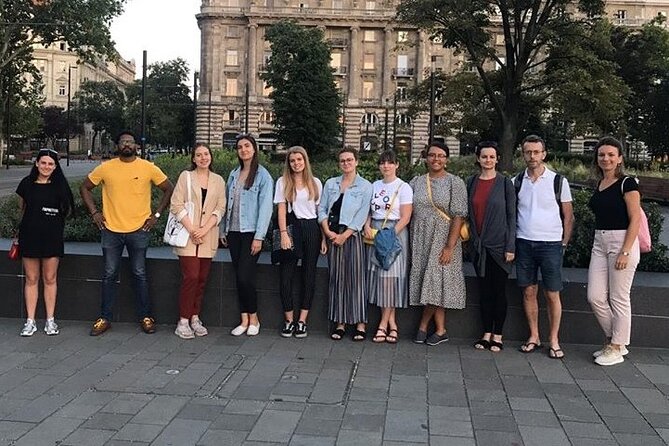
Budapest’s communist past is easiest to grasp on the streets where protests, political control, religious pressure, and resistance actually happened. This two-hour evening walk follows that story from Blaha Lujza tér toward Parliament, with guide Victoria often bringing the subject to life through clear English, humor, and personal insight into modern Hungarian life.
I like the small group of no more than 15 people, which makes it easier to ask questions. I also like the route’s range: you see grand places such as St. Stephen’s Basilica and Parliament, but you also hear about former monuments, closed institutions, bloody protests, and the changes made to central Budapest under communism.
The main drawback is that this is a walking and storytelling tour, not an indoor museum visit. You need to cover about 3 kilometers, some explanations may take place in noisy or crowded spots, and the tour does not include entry to buildings. For a fuller look at the period, pair it with the House of Terror Museum.
Key points to know before booking
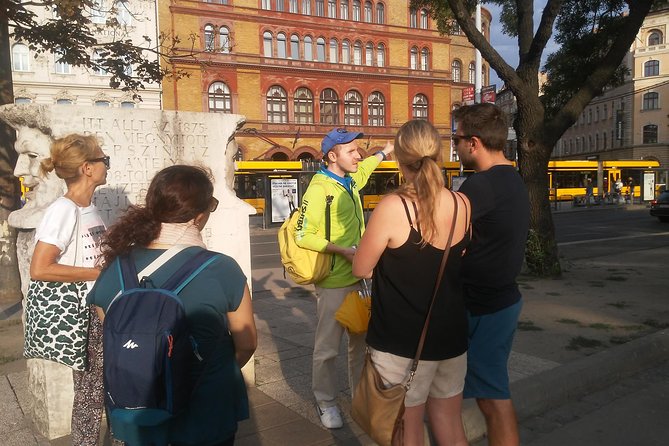
- Follow a 3-kilometer route through central Budapest, beginning at Blaha Lujza tér and ending at Parliament Square.
- Hear how communism affected religion, including the story of football star Ferenc Puskás and his escape from the communist system.
- Explore Liberty Square, a key site for political change, protest, and the closure of the former stock exchange.
- Stand at Parliament, where the 1956 uprising brought deadly violence to the heart of the capital.
- Expect an English-speaking guide such as Victoria, whose university teaching background and clear delivery are major strengths.
- Pay $36.01 per person for about two hours, bottled water, and a small-group format, with free cancellation up to 24 hours before departure.
Why this evening walk gives Budapest more meaning
A normal sightseeing walk can show you Budapest’s grand façades without explaining why certain places matter. This tour takes a different route through the city. It uses central streets and public squares to explain how Hungary moved from the Habsburg era through war, communist rule, the 1956 uprising, and the return to a freer political system.
The subject is not limited to dates and party leaders. You hear how the system affected churches, business, public monuments, sport, and ordinary life. That wider approach is useful because communism did not operate only inside government offices. It shaped what people could own, say, worship, remember, and display in public.
The evening start at 6:00 pm also works well with a Budapest sightseeing day. You can spend the afternoon at a market, museum, or thermal bath, then meet the group for a focused walk as the city cools. The tour ends near Kossuth Lajos tér, close to the red metro line and tram 2, so it is easy to continue your evening from there.
More Cold War and Communism Tours in Budapest:
- Budapest: Communist History Tour with House of Terror Option
★ 4.8 · 182 reviews - Prague: Communism History and Nuclear Bunker Guided Tour
★ 4.7 · 2,417 reviews - Prague Communism History and Nuclear Bunker Tour
★ 5.0 · 1,742 reviews
Starting at Blaha Lujza tér and walking down Andrassy Avenue
The meeting point is Budapest’s Blaha Lujza tér, in the 1085 postal district. From here, the guide leads you toward Andrassy Avenue, explaining how the area and its former monuments changed over time.
This opening section matters because it sets up the main idea of the tour: Budapest’s streets are political records. A monument may have been removed, renamed, or repurposed. A grand building may have served a different institution under communist rule. Even when little physical evidence remains, the guide uses the city plan and surviving public spaces to explain what once occupied them.
You should arrive ready to walk rather than expecting a bus or seated lecture. The route covers roughly 3 kilometers, and the tour is listed as suitable for people who can walk or wheel themselves that distance. Wear comfortable shoes and bring a light layer, especially since the tour relies on outdoor conversation.
St. Stephen’s Basilica and the pressure on religion
The first named stop is St. Stephen’s Basilica, where you spend about 10 minutes learning how communist rule affected the Hungarian church and religious life.
This is a strong early stop because the basilica looks grand and ceremonial, while the subject turns to state pressure and restricted religious influence. The contrast helps you see how a political system can try to control public institutions without erasing their physical presence.
The discussion also includes Ferenc Puskás, Hungary’s famous football player. You learn how he fled the communist system and was later buried at the basilica. That personal story gives the political period a human scale. Instead of hearing only about policies, you connect the system to the choices faced by a well-known Hungarian who left his country and later returned to national memory.
Admission to the basilica is free as part of the walk, although the tour does not promise an extended indoor visit. Think of this stop as an outdoor explanation near one of Budapest’s best-known churches, not as a church tour.
Liberty Square and the physical record of protest
Liberty Square is the most politically layered stop on the route. The walk spends about 15 minutes here, discussing the former stock exchange, its closure at the start of communist rule, and the bloody protests connected with the square.
The square is useful for understanding the link between economics and politics. The former stock exchange represents the end of one kind of public and commercial life, while the protests show how government control could lead to open resistance. You are not simply looking at a pleasant green space. You are standing in a place where competing ideas about Hungary’s future collided.
This is also a good point to ask questions. If you want to understand how communist rule changed property, commerce, or public institutions, Liberty Square gives the guide a clear setting for that discussion.
One practical issue is sound. The tour is conducted outdoors, and one past participant specifically noted that some explanations could be harder to hear when the group stopped near a fountain, a smelly corner, or a busy thoroughfare. That is a minor weakness, but it is worth knowing. Stay close to the guide and speak up if you miss a point.
More History Walking Tours in Budapest:
- Budapest Historical Sightseeing – Free Walking Tour
★ 5.0 · 1,302 reviews - BloodThirsty Hungary: Walking tour & Dark Historical Stories
★ 4.9 · 633 reviews - Budapest Jewish Heritage Memorial Walking Tour & Synagogue Entry
★ 5.0 · 568 reviews - Budapest: Jewish History Guided Walking Tour with Historian
★ 4.8 · 205 reviews
Parliament Square and the violence of 1956
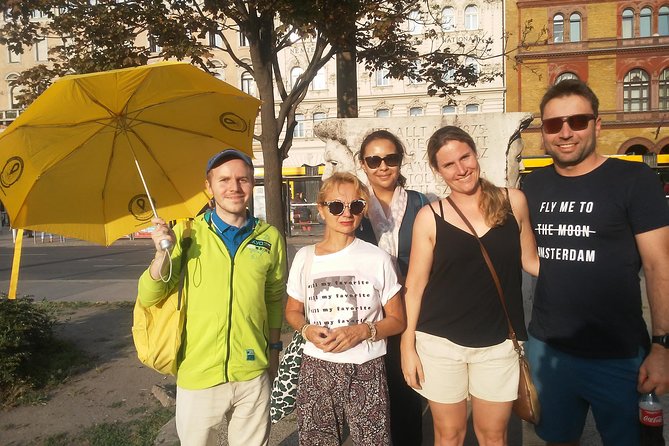
The route ends at Kossuth Lajos tér, the square beside the Hungarian Parliament Building. About 15 minutes is set aside for this stop, which focuses on the 1956 uprising against the ruling communist party and the bloodshed that took place there.
Parliament is one of Budapest’s most striking buildings, but this stop asks you to look beyond the postcard view. The square became a focal point during the uprising, when Hungarians challenged the communist government and paid a heavy price. Hearing about those events while standing at the site makes the political story more concrete.
The ending is well chosen. You finish at a major landmark, with public transport nearby and the Danube close at hand. Kossuth red line metro station and tram 2 make it simple to return to your hotel or continue to another part of the city.
The tour does not enter Parliament. If you want an interior visit, you will need to arrange that separately. The strength here is the location and explanation, not access inside the building.
The guide makes the difference
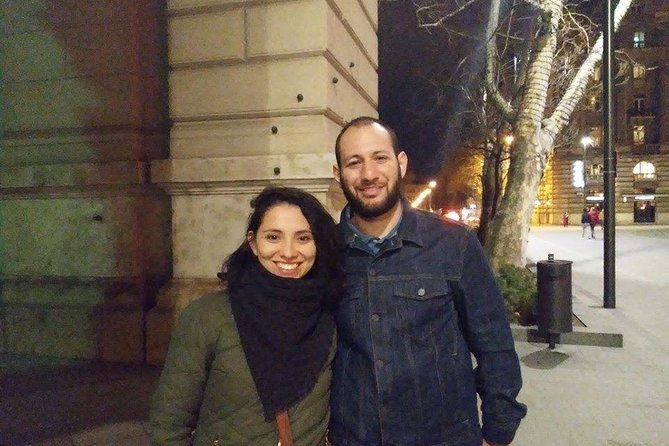
The guide is central to the experience. Victoria is the named guide in the feedback, and the strongest praise focuses on her clear English, sense of humor, enthusiasm, and ability to connect past events with present-day Budapest.
Her background as a university history professor gives the walk a more academic base than a simple monument tour. At the same time, the comments about her style suggest that she explains rather than lectures. That balance matters on a subject that can become dry or overly political.
You can also expect discussion of present-day Hungarian society, not just the communist period itself. That is one of the tour’s most useful features. The legacy of a political system does not vanish when the system ends, and the guide explains how earlier decisions still affect the country.
The tour covers 22 locations and monuments across Budapest’s eighth, seventh, sixth, and fifth districts, although only some of the main stops are listed in detail. That means the route includes more than the three named landmarks. Some locations are beautiful, while others are included because they carry historical weight. Do not book this expecting every stop to be photogenic.
What the $36.01 price gives you
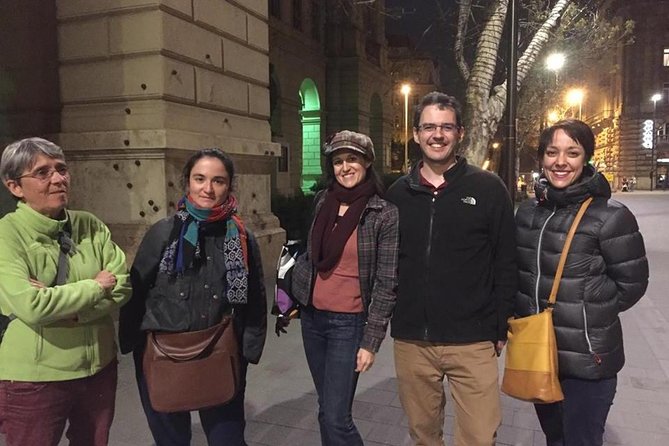
At $36.01 per person, the tour is reasonably priced for a two-hour English-language walk with a group capped at 15 people. You are paying for interpretation and access to a guide’s understanding of Budapest, not for admission tickets or a long list of included attractions.
The bottled water is a small but welcome extra. Alcoholic drinks, parking, and other listed fees are not included, though those exclusions should not affect most people using public transport and walking through central Budapest.
The value is strongest if you want context that you would not get from simply passing the buildings. Several highly positive assessments focus on background information, present-day connections, and answers to questions. If you already know Hungarian communist history well, the tour may feel less essential. If you are starting from scratch, the guide can give your sightseeing a useful framework.
The small group improves that value. With no more than 15 people, you have a better chance of hearing the guide and asking about subjects that interest you. The tradeoff is that the tour may move at the group’s pace, and outdoor stops cannot always offer perfect quiet.
Who should book this walk
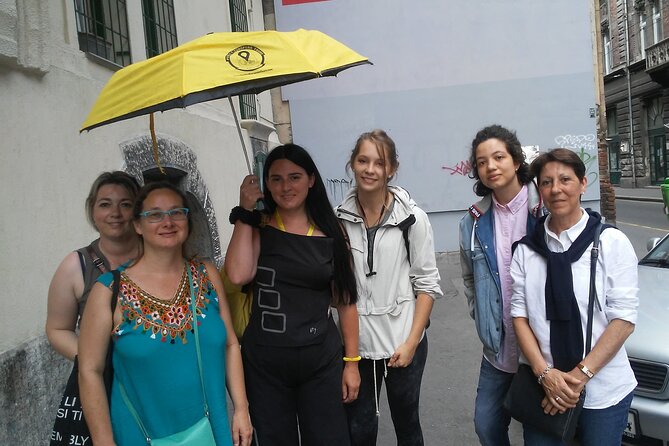
I would recommend this tour to you if you enjoy political history, city walks, and stories tied to real places. It suits anyone who wants more than Budapest’s cafés, churches, and grand architecture, especially if you want to understand why the city looks and feels the way it does today.
It is also a good fit for older children or teenagers interested in history, provided they can manage the distance and subject matter. The story of Puskás, the 1956 uprising, and the city’s changing monuments gives younger visitors several human entry points.
You may want to skip it if you dislike outdoor lectures, already have a detailed understanding of Hungarian communism, or need frequent indoor seating. The tour requires good weather, and the operator may cancel if the minimum number is not reached or conditions are poor.
For a fuller day on the subject, add the House of Terror Museum. The museum can supply exhibits and indoor displays, while this walk shows how the political story played out in public squares and along Budapest’s streets.
Practical details for a smoother walk
The tour begins at 6:00 pm at Blaha Lujza tér and ends at Budapest Parliament Square, Kossuth Lajos tér 1-3. Since the start and finish are in different places, check your route to the meeting point in advance and remember that the return journey begins from Parliament.
You receive confirmation when booking. The experience is offered in English and accepts service animals. It is near public transportation, and most people can participate if they can walk or wheel themselves about 3 kilometers.
Free cancellation is available up to 24 hours before the local start time for a full refund. Changes or cancellations made later are not accepted for a refund. Poor weather or failure to meet the minimum group size can lead to a new date, another experience, or a full refund.
Should you book the Communist History Evening Walking Tour?
Book it if you want Budapest’s famous sights explained through the pressure, protest, and personal choices that shaped modern Hungary. The strongest reason to go is the guide’s ability, especially Victoria’s clear delivery and links between history and life today.
The tour is not a museum replacement, and some outdoor explanations may compete with city noise. But for $36.01, you get a focused two-hour walk, bottled water, a small group, and a route that ends at Parliament after covering religion, business, protest, and resistance.
If those subjects interest you, this is a smart addition to a Budapest visit. Pair it with the House of Terror Museum for a fuller picture.
FAQ
How long is the Communist History Evening Walking Tour?
The tour lasts approximately two hours.
What time does the tour start?
It starts at 6:00 pm.
Where does the tour begin?
The meeting point is Blaha Lujza tér in Budapest, Hungary.
Where does the tour end?
It ends at Budapest Parliament Square, Kossuth Lajos tér 1-3, near Kossuth red line metro station and tram 2.
How far do I need to walk?
You need to be able to walk or wheel yourself about 3 kilometers.
Is the tour offered in English?
Yes. The tour is offered in English.
Is bottled water included?
Yes. Bottled water is included. Alcoholic beverages are not included.
Can I cancel for a full refund?
Yes, if you cancel at least 24 hours before the experience start time. Cancellations made less than 24 hours before the start are not refunded.
Newest history tours we have reviewed in Budapest
- Time Machine Budapest Historical Exhibition Ticket★ 5.0 · 32 reviews
- Jewish Heritage in Hungary with a Historian★ 5.0 · 37 reviews
- Budapest Jewish Heritage: Synagogues, Shoes, Secrets & Flódni★ 5.0 · 47 reviews
- Private Jewish Heritage Tour including Hotel Pickup★ 4.5 · 35 reviews
- Jewish Heritage / Full tour★ 5.0 · 59 reviews
- Michael Jackson History Exhibition Ticket★ 5.0 · 42 reviews
- HOLLÓKŐ UNESCO World Heritage site + Eger Castle Private guided tour★ 4.5 · 18 reviews
- Budapest: Historic Downtown ride on E-Bicycles Buda & Pest★ 5.0 · 227 reviews
Cold War & Communism Tours, compared.
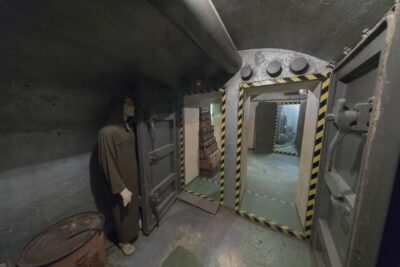
Communism History and Nuclear Bunker Guided Tour
Read our review →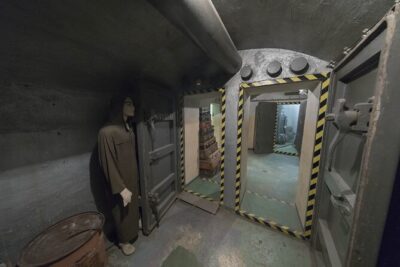
Prague Communism History and Nuclear Bunker Tour
Read our review →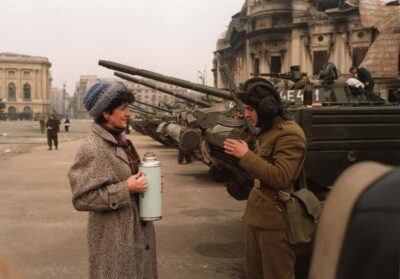
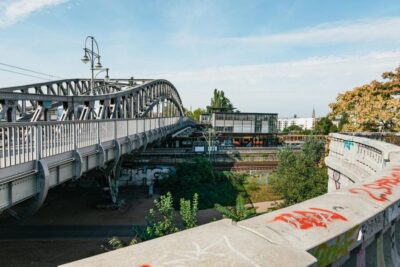
Cold War & Berlin Wall History Guided Bike Tour
Read our review →
Chisinau: Discover Soviet Heritage of Transnistria
Read our review →
Communist History Tour with House of Terror Option
Read our review →
Guided Bike tour of the Berlin Wall and Third Reich
Read our review →
Browse the lists this tour appears in