
Review · BUDAPEST HISTORY TOURS
Time Machine Budapest Historical Exhibition Ticket
Budapest’s past comes alive at Time Machine Budapest, where VR, holograms, projections, mist, and actor-recorded audio replace the usual rows of museum labels. You move through the city’s story from the idea of unifying Buda and Pest to modern times, with revolutions, wars, and ordinary people all part of the tale.
I like the full sensory approach and the thoughtful setting beneath Twentysix restaurant at 26 Király Street. I also like that the 100-minute program gives you more than a quick visual show, with English, German, Spanish, and Hungarian versions available.
The main consideration is that this is a staged, technology-led presentation rather than a traditional museum visit. If you prefer to set your own pace, read original objects, or linger over detailed displays, this format may feel guided and theatrical.
Key points to know before booking
- A 100-minute story of Budapest: The program follows the city from the idea of unification through major conflicts and present-day life.
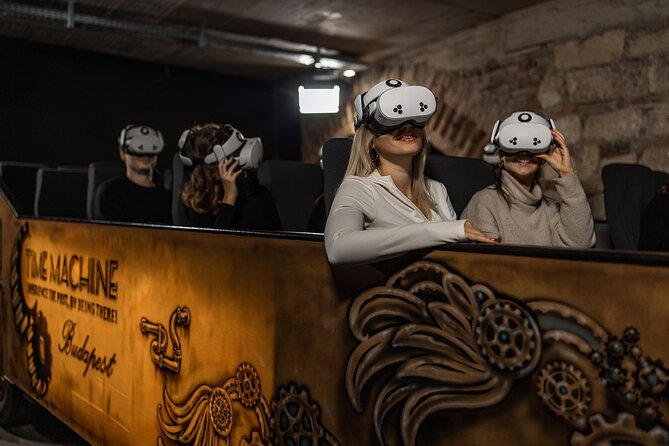
- VR and holographic effects: Expect VR glasses, holographic projection, a holopyramid, and mist screen projection.
- Located at 26 Király Street: The exhibition is beneath the Twentysix restaurant in central Budapest and is near public transportation.
- A strong family option: The experience is recommended for adults and children over eight.
- Four language choices: You can select English, German, Spanish, or Hungarian.
- A flexible booking price: At $25.29 per person, it costs more than a simple museum ticket but includes a full 100-minute production.
Budapest history told through a 1,000-square-meter set
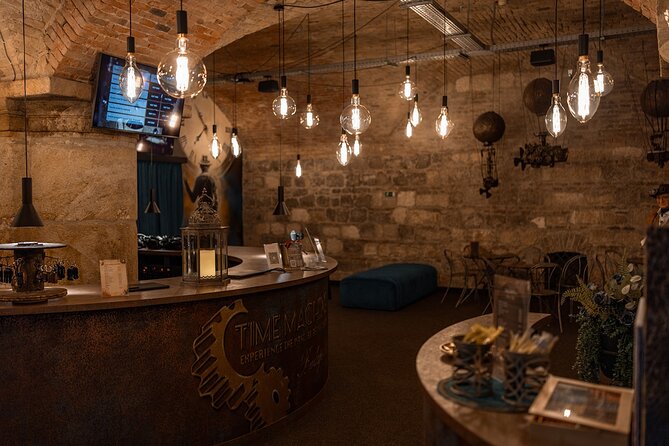
Time Machine Budapest takes place in a 1,000-square-meter space below Twentysix restaurant on Király Street. That location matters because the experience is designed as a contained world. You are not wandering between unrelated rooms or trying to connect scattered objects on wall panels. The setting, sound, projected images, and narration work together to guide you through Budapest’s past.
The story begins with the idea of bringing the city together. From there, it moves through revolutions, wars, personal tragedies, and the lives of everyday heroes before reaching the present day. That broad time span gives the program a clear shape. You are not getting a narrow look at one building or one political event. You are getting a brisk account of how Budapest changed over time.
I find this kind of approach useful at the start of a Budapest visit. The city can feel like a collection of grand sights: the Parliament, Buda Castle, the Danube, bridges, churches, and old streets. A historical presentation helps connect those places to the events and people behind them.
Still, you should know what this experience is trying to do. It aims to make history immediate and emotional, not to function as a research library. The program gives you a guided overview, while museums and historic sites remain better choices for close study.
More Museum and Gallery History Tours in Budapest:
- Michael Jackson History Exhibition Ticket
★ 5.0 · 42 reviews - New York City: American Museum of Natural History Ticket
★ 4.5 · 15,447 reviews - Paris: Louvre Museum Entry with History of Mona Lisa
★ 3.9 · 2,823 reviews
What the 100-minute program feels like
The advertised length is about one hour and 40 minutes. That is long enough to build a sustained story rather than offer a five-minute visual introduction, but short enough to fit into a busy Budapest schedule.
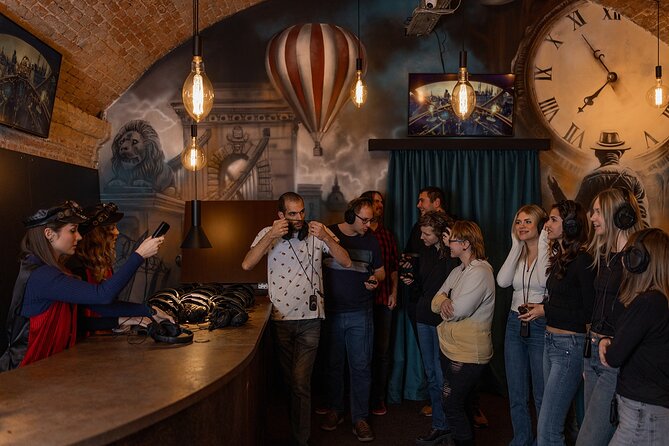
The presentation uses original audio plays performed by professional actors. That detail gives the historical material a human voice. Instead of relying only on dates and explanations, the experience presents scenes and stories through performed audio, making the past feel closer and easier to follow.
The emotional range is broad. You should expect funny moments alongside sad ones, with war and revolution placed beside stories of ordinary life. That variety is important. Budapest’s past is not presented as one smooth march from one famous event to the next. The program includes forgotten destinies and everyday heroes as well as major turning points.
The pace is likely to feel more like a show than an open-ended exhibit. You follow the sequence the creators have arranged, and the atmosphere does much of the teaching. If you enjoy film, theater, and visual effects, that structure should work well. If you need time to stop and read, you may want to allow extra time elsewhere in your itinerary for a more traditional museum.
VR, holograms, mist, and sound effects
The technology is the main reason to choose this experience over a standard history display. Time Machine Budapest combines VR glasses with holographic projection, mist screen projection, and a holopyramid. These are not small add-ons. They shape how the story is presented.
VR can make a historical scene feel close and immediate, while holographic effects create images that seem to occupy the room. Mist screen projection adds another layer, using a fine screen of vapor for visual scenes. The holopyramid provides yet another style of three-dimensional presentation.
The strongest feature is the way these tools are combined with sound and acting. A projection alone can be impressive for a few minutes, but narration and character-based audio give it direction. You are not simply watching effects. You are being led through a historical sequence.
You should also expect some emotional weight. The experience covers war, revolution, loss, and difficult chapters as well as lighter material. The technology may make those scenes feel particularly vivid. Families should keep that in mind when deciding if younger children are ready, even though the recommended minimum age is over eight.
The visual effects will not appeal to everyone. Some people find VR tiring, and some prefer original artifacts to recreated scenes. The available information does not specify how much time is spent using the glasses or how the technology is operated, so you should think of VR as a central part of the format, not an optional extra.
The opening: from two cities toward one Budapest
The first historical idea is the proposed unification of the city. This gives the program a natural starting point because it sets up Budapest as a place shaped by connection, change, and political ambition.
You can expect the exhibition to use projections and performed audio to explain how the city’s identity developed. The point is not simply to memorize a date. It is to see Budapest as a city formed through decisions, conflict, and changing ideas about what the city could become.
This opening should be especially useful if Budapest is new to you. Before visiting famous landmarks, you get a framework for understanding why the city feels divided and connected at the same time. The two sides of the Danube, the bridges, and the major civic buildings become part of a larger story.
Do not expect a detailed architectural lecture here. The attraction is built around an accessible narrative rather than specialist analysis. You receive a broad foundation that can make later sightseeing more meaningful.
More Entry Tickets in Budapest:
- Budapest: Jewish Heritage Guided Tour with Synagogue Ticket
★ 4.8 · 533 reviews - Edinburgh: Edinburgh Castle Guided History Tour with Tickets
★ 4.8 · 9,933 reviews - Taormina: Ancient Theater Skip-the-Line Ticket & Audio Guide
★ 4.5 · 2,412 reviews - Historic Milan Tour with Skip-the-Line Last Supper Ticket
★ 4.5 · 1,976 reviews
Revolutions, wars, and difficult chapters
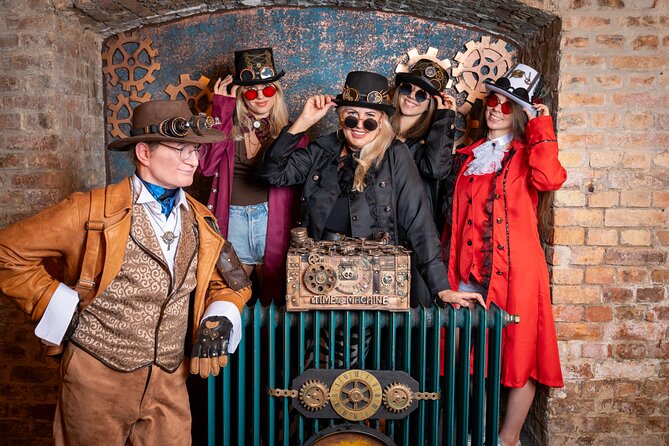
The middle portion deals with the upheavals that shaped Hungary and Budapest. Revolutions and wars are not treated as background decoration. They form a major part of the experience, with the sound, projections, and actor performances helping you feel the seriousness of those periods.
That emotional presentation is one of the program’s clearest strengths. Historical events can seem remote when they are reduced to textbook paragraphs. A staged scene, carefully timed sound, or a realistic VR image can make the human cost easier to grasp.
At the same time, the dramatic format calls for a little judgment. A theatrical presentation simplifies. It has to select scenes, arrange events, and keep the story moving. If you want a complete account of every political cause or military consequence, this will not be enough on its own.
I would treat this part as a primer, not a final word. Let it raise questions, then visit Budapest’s actual memorials, buildings, and museums with those questions in mind. That is where the experience offers real value: it can give emotional context before you see the physical places connected to the story.
Everyday heroes and forgotten destinies
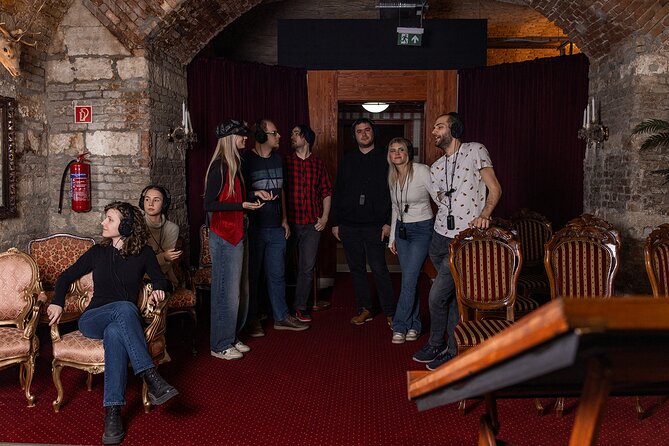
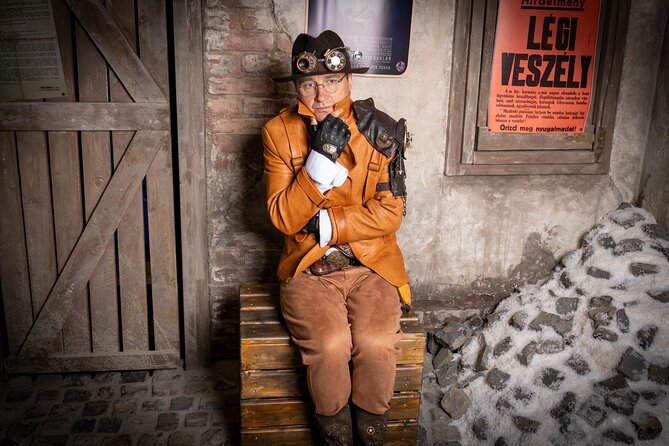
The program is not limited to famous leaders or grand public events. It also includes forgotten destinies and everyday heroes. That choice gives the presentation a more human scale.
I appreciate this focus because cities are not created only by rulers, generals, or celebrated artists. Budapest’s story also belongs to people who worked, suffered, adapted, and carried on through difficult times. Bringing those lives into the narrative helps prevent the experience from becoming a parade of dates and monuments.
These smaller stories may be the moments that stay with you. Large historical events explain how a city changed, but personal stories show what those changes meant to real people. The combination of public events and private lives also makes the presentation suitable for families, since children often connect more easily with individual experiences than with political history alone.
The attraction does not provide a detailed list of specific historical figures in the information available, so you should not book it expecting a named-character walking tour. Its strength is the overall atmosphere and storytelling structure.
Why the location on Király Street is convenient
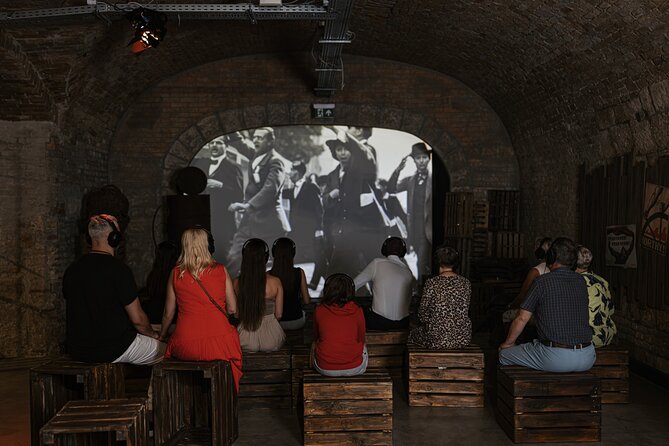
The entrance is beneath Twentysix restaurant at 26 Király Street. The central location makes this an easy activity to pair with other time in Budapest, especially if you are already exploring the city center.
It is also near public transportation, which matters if you are trying to fit the exhibition between sightseeing stops. You do not need to set aside an entire day. The scheduled experience lasts about 100 minutes, leaving room for a meal, a walk, or another attraction before or afterward.
The restaurant setting may make the entrance less obvious than a large museum facade. Check your booking details carefully so you know you are looking for the Time Machine venue at the correct address. The supplied information does not state whether there is a separate street entrance or describe the exact arrival procedure.
The compact duration is one of the practical advantages. Budapest sightseeing can involve plenty of walking, and this gives you a seated or contained change of pace, although the exact amount of sitting is not specified. It also works on a rainy day, when an indoor activity is welcome.
Is $25.29 a fair price?
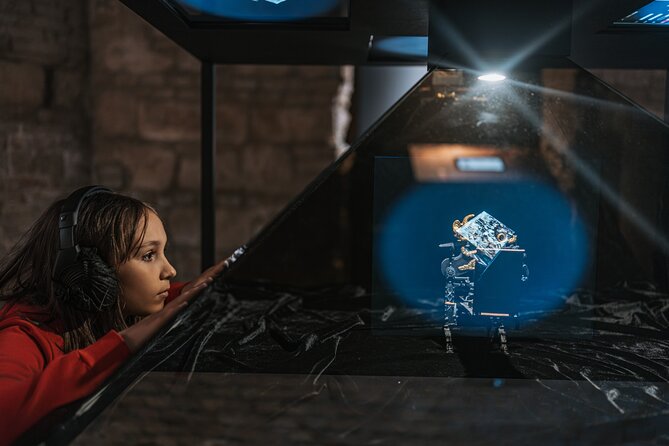
At $25.29 per person, Time Machine Budapest is not the cheapest way to learn about the city. You can find lower-cost museum admissions, and many historic sights can be appreciated from outside without paying anything.
The comparison is not quite direct, though. This ticket pays for a 100-minute production using VR, holographic projection, mist screens, a holopyramid, professional audio performances, and a large atmospheric space. If you want an interactive, technology-based presentation, the price is reasonable for the amount of time and equipment involved.
The value is strongest for three types of people. First, you get a lot from it if you want a quick orientation to Budapest before exploring the city. Second, it works well if your family needs history presented in a lively way. Third, it makes sense if you have already seen the main sights and want a different way to think about the city.
The value is weaker if your main goal is access to original objects, rare documents, or quiet study. In that case, put your money toward a conventional museum or guided visit to a historic site.
Languages, families, and the right audience
The experience is offered in English, German, Spanish, and Hungarian. That makes it practical for international visitors and local residents alike. English is available, so you can book without needing to follow Hungarian narration.
The recommended age is over eight. That does not mean every child above that age will enjoy it equally. The mix of VR, sound, staged scenes, and serious historical material will suit children who like visual storytelling and can stay focused for 100 minutes.
Adults may appreciate the program for different reasons. You can use it as a fast introduction, a rainy-day activity, or a break from walking tours. It also offers a shared experience for a family or group, rather than sending everyone through a quiet museum at different speeds.
Most people can participate, according to the available information. Specific details about wheelchair access, seating, hearing assistance, or the precise VR equipment are not provided, so contact the operator directly if any of those points matter to you.
What the praise gets right, and what to keep in mind
The strongest positive themes are clear: the atmosphere, the projections, the sound, the VR, and the sense that the scenes feel unusually real. The 100-minute length is also viewed as worthwhile because the program keeps adding to the story rather than stopping after a quick effects show.
The family appeal comes up repeatedly in the feedback. That fits the design. The attraction combines information with entertainment, so you do not need to persuade every member of your party to enjoy a conventional history lecture.
The main caution is not a reported problem but a matter of taste. The more you value theatrical effects, the better this will suit you. The more you value independent exploration and original objects, the more limited it may feel.
I would also avoid treating the high satisfaction level as proof that every person will love VR. Technology can be exciting, but it can also feel artificial or intense. Know your own preferences before booking.
Booking and cancellation details
You receive confirmation when you book, and the ticket is mobile, so you can keep it on your phone. The experience is generally booked well ahead, with an average booking time of 59 days in advance. That does not mean you must reserve two months ahead, but it is a useful sign that popular dates may fill early.
Free cancellation is available if you cancel at least 24 hours before the local start time. If you cancel less than 24 hours before the start, you will not receive a refund, and changes made inside that window are not accepted.
Who should book Time Machine Budapest?
Book it if you want Budapest’s story presented as a visual and emotional production rather than a quiet museum visit. It is particularly suitable for families with children over eight, first-time visitors who want historical context, and anyone looking for an indoor activity near central Budapest.
I would also choose it after several days of traditional sightseeing. The VR, projections, audio plays, and atmospheric staging offer a change from churches, viewpoints, and walking routes.
Skip it if your ideal history experience means original artifacts, long written explanations, or total control over your pace. For everyone else, $25.29 buys a well-defined 100-minute program that can help the city’s complicated past feel more immediate. Just go in expecting a theatrical history experience, not a conventional museum.
FAQ
Where is Time Machine Budapest located?
It is located beneath the Twentysix restaurant at 26 Király Street in Budapest, Hungary.
How long does the experience last?
The experience lasts approximately 1 hour and 40 minutes, or about 100 minutes.
What languages are available?
The exhibition is available in English, German, Spanish, and Hungarian.
Is admission included with the ticket?
Yes. Admission to Time Machine Budapest is included.
What technologies are used?
The experience uses VR, holographic projection, mist screen projection, and a holopyramid, along with original audio plays performed by professional actors.
What historical period does the exhibition cover?
It follows Budapest’s story from the idea of unifying the city through revolutions, wars, forgotten destinies, everyday heroes, and the present day.
Is the experience suitable for children?
It is recommended for adults and children over eight years old.
Is the venue near public transportation?
Yes. The venue is near public transportation.
Will I receive confirmation after booking?
Yes. Confirmation is received at the time of booking, and the ticket is available on a mobile device.
Can I cancel for a refund?
Yes, if you cancel at least 24 hours before the experience’s start time. Cancellations made less than 24 hours before the start time are not refundable, and changes within that period are not accepted.
Newest history tours we have reviewed in Budapest
- Jewish Heritage in Hungary with a Historian★ 5.0 · 37 reviews
- Budapest Jewish Heritage: Synagogues, Shoes, Secrets & Flódni★ 5.0 · 47 reviews
- Private Jewish Heritage Tour including Hotel Pickup★ 4.5 · 35 reviews
- Jewish Heritage / Full tour★ 5.0 · 59 reviews
- Michael Jackson History Exhibition Ticket★ 5.0 · 42 reviews
- Communist History Evening Walking Tour of Budapest★ 4.5 · 23 reviews
- HOLLÓKŐ UNESCO World Heritage site + Eger Castle Private guided tour★ 4.5 · 18 reviews
- Budapest: Historic Downtown ride on E-Bicycles Buda & Pest★ 5.0 · 227 reviews
Museum & Gallery History Tours, compared.
Louvre Museum Entry with History of Mona Lisa
Read our review →
Venice’s Best: Basilica, Doge’s Palace, Gondola & History Gallery
Read our review →
American Museum of Natural History Admission Ticket
Read our review →
Guided African American History Tour with Reserved Museum Entry
Read our review →
POLIN Museum of the History of Polish Jews Ticket
Read our review →
Bell Tower & St Mark’s Square History Gallery Ticket
Read our review →
Field Museum of Natural History Ticket or VIP Tour
Read our review →Browse the lists this tour appears in