
Review · WARSAW HISTORY TOURS
Warsaw: POLIN Museum of the History of Polish Jews Ticket
POLIN is not simply a Holocaust museum. Its eight galleries trace 1,000 years of Jewish life in Poland, from the first communities and medieval trade networks to political change, daily life, the Holocaust, and cultural renewal after World War II. Artifacts, paintings, sound, films, and hands-on displays make the story easier to follow than a wall of dates ever could.
I like the excellent audio guide, which can identify where you are and provide the right narration, and I like the museum’s effort to show Jewish life before the Holocaust, not only its destruction. The main drawback is time: two hours gives you a useful visit, but three to five hours is a more honest plan if you want to read the displays and use the interactive features.
Key points
- A full story, not only a Holocaust exhibit: The galleries place the Holocaust within centuries of Jewish settlement, work, religion, politics, and family life.
- Audio guide included: The Polish or English guide gives clear explanations, and the system can connect narration to your position in the museum.
- Interactive presentation: You’ll find artifacts, paintings, films, sound, reconstructed spaces, and activities rather than display cases alone.
- Plan more time than you think: The official estimate is about two hours, but many visitors spend three to six hours inside.
- Easy to fit into a day: You may leave for lunch and return the same day, as long as admission is still open.
- A serious but balanced visit: The Holocaust section is painful, yet the museum also gives proper weight to centuries of Jewish contribution and community life.
Why POLIN begins long before World War II
The strongest idea here is simple: Polish Jewish history did not begin with persecution, and it did not end in 1945. The museum gives you the setting needed to understand why Jewish communities became such an important part of Polish society over many centuries.
The early galleries cover the arrival and growth of Jewish communities in Poland. You’ll encounter the foundations of communal life, religious practice, work, trade, education, and relations with the wider society. This material can feel dense, especially if you are mainly interested in the 19th and 20th centuries, but it explains how Poland became a major center of Jewish life.
I recommend moving at a steady pace through the early rooms. You do not need to read every word to understand the main story. The audio guide helps by giving you a clear outline, while the objects and reconstructions add human scale to broad historical changes.
More Museum and Gallery History Tours in the world:
- New York City: American Museum of Natural History Ticket
★ 4.5 · 15,447 reviews - Paris: Louvre Museum Entry with History of Mona Lisa
★ 3.9 · 2,823 reviews - Venice’s Best: Basilica, Doge’s Palace, Gondola & History Gallery
★ 4.5 · 2,478 reviews
Eight galleries that build the story step by step
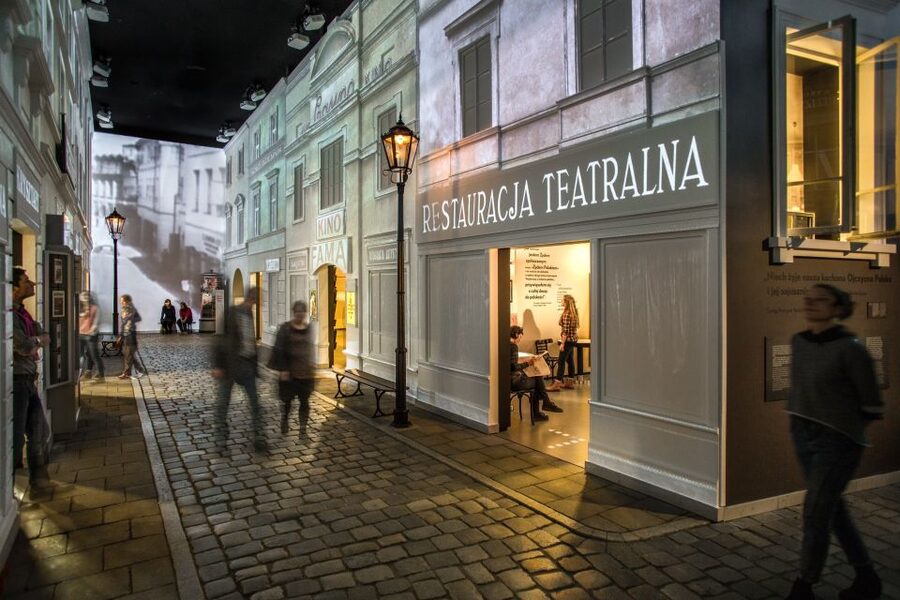
The exhibition is arranged as a long historical journey. Each gallery covers a different period or theme, so the order matters. You can enter at your own convenience, but following the route gives you a better sense of cause and effect.
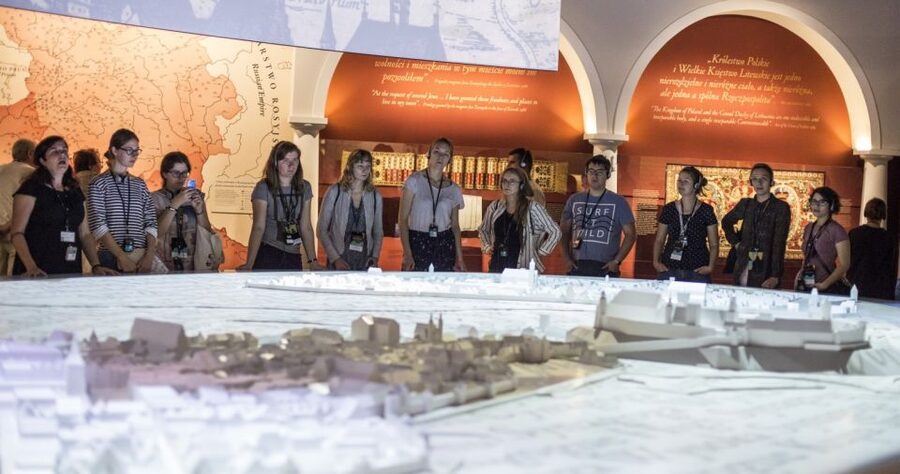
You’ll begin with the first Jewish communities and the conditions that allowed them to settle in Poland. Later sections look at community organization, religious practice, individual Jewish figures, political movements, modernization, and the changing role of Jews in Polish society.
The presentation is not just a line of kings and wars. It asks how people lived, worked, worshipped, raised families, and responded to pressure from changing governments and social movements. That makes the museum useful even if your main interest is general Polish history rather than Jewish history alone.
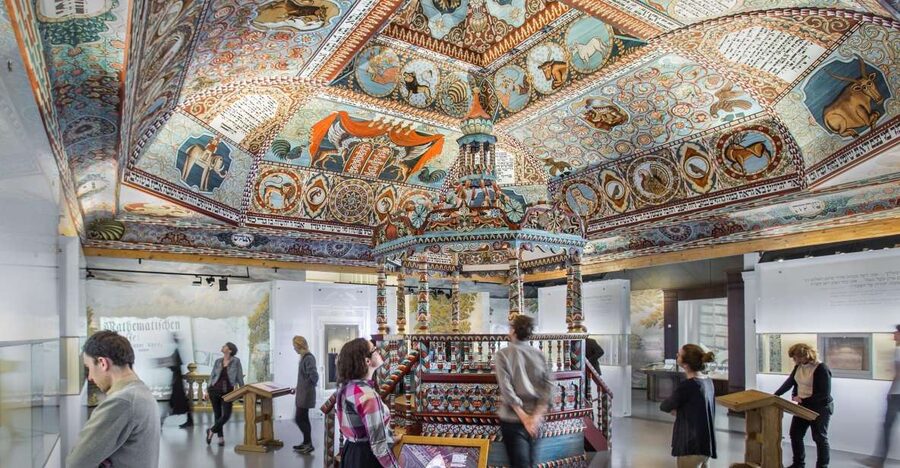
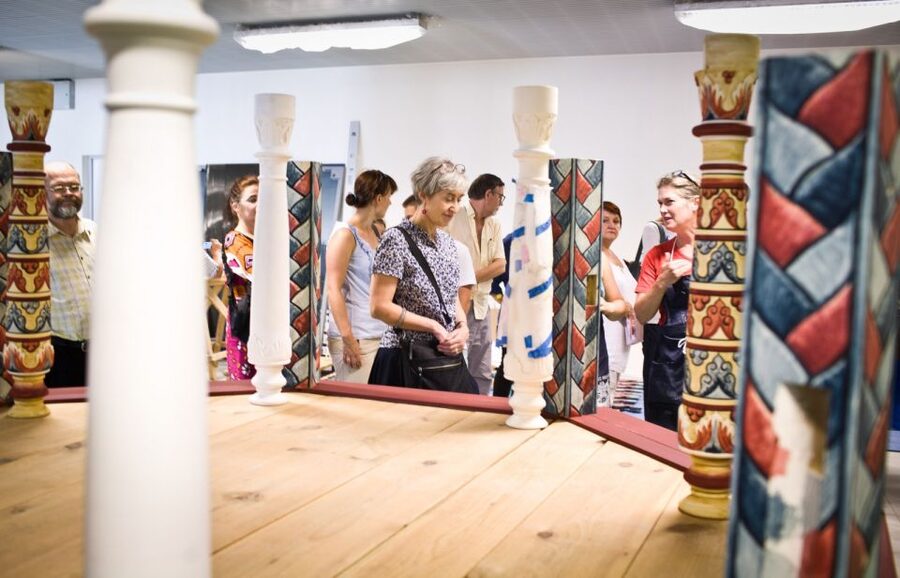
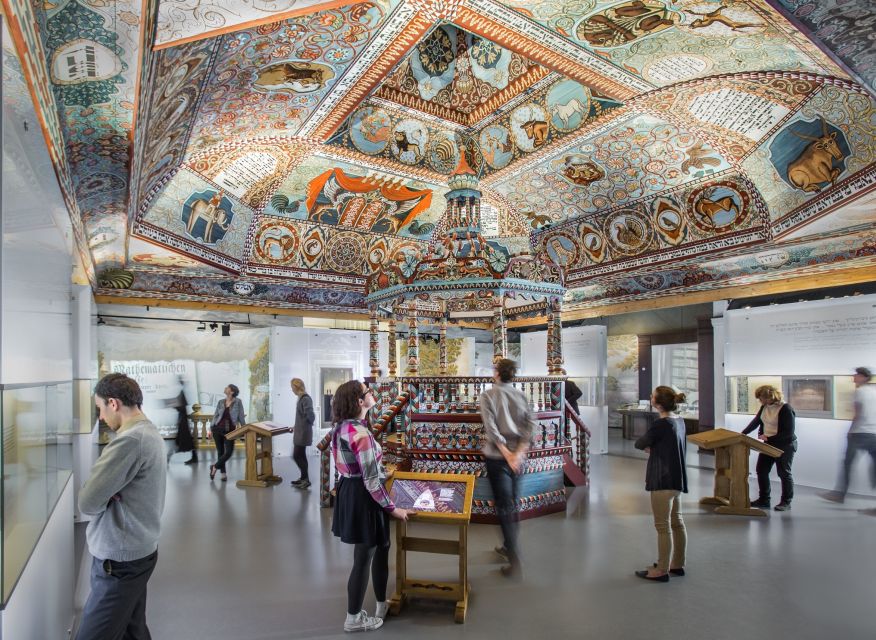
Some sections use reconstructed spaces and large-scale visual design. A reconstructed synagogue ceiling is one of the memorable features, giving you a physical sense of Jewish religious and artistic life. It is far more effective than seeing a small photograph in a standard case.
Daily life gives the museum its human scale
I especially appreciate the attention to ordinary life. The museum looks at Jewish people as workers, parents, students, shopkeepers, religious leaders, political thinkers, and neighbors. That balance keeps the exhibition from treating an entire population only as victims of later events.
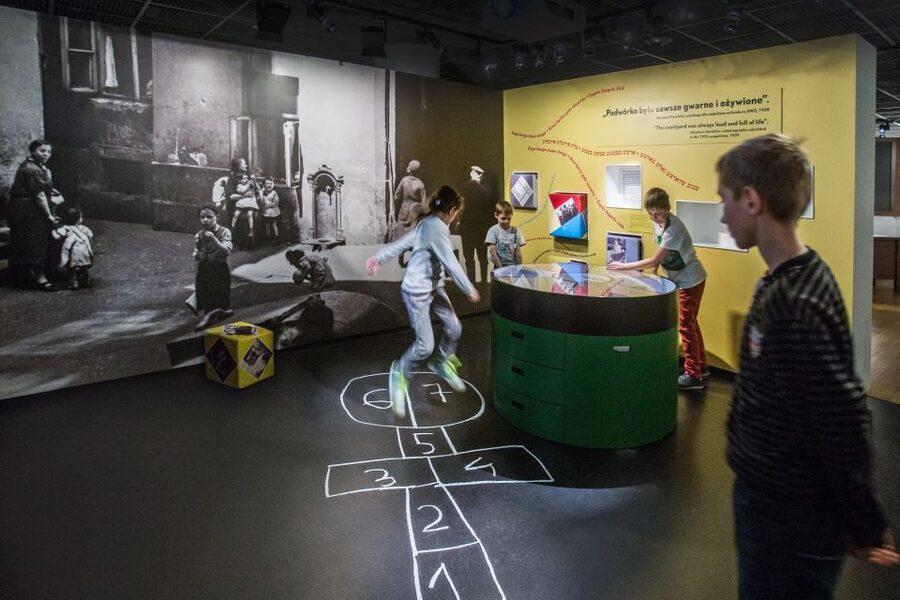
Artifacts and paintings help make the story personal. Interactive elements invite you to examine information at your own pace, while audio and video add voices and context. Some displays ask you to consider competing views about modernization, identity, religion, and political participation.
This section can take longer than expected because the material is broad. You might arrive expecting a quick orientation and find yourself reading about urban growth, education, immigration, and the ways Jewish communities responded to Polish political change.
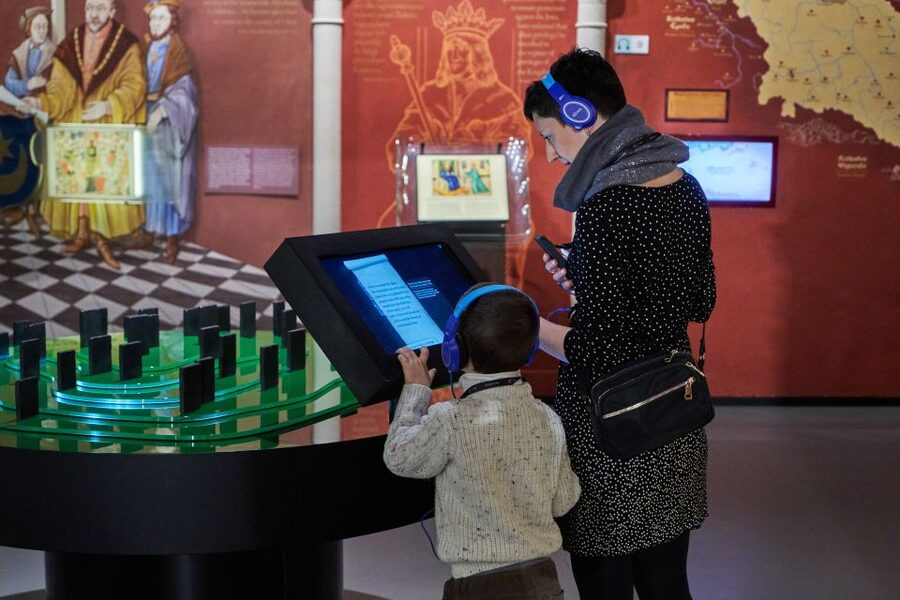
If you are visiting with children, the interactive design may help hold their attention, but the subject matter becomes increasingly serious. Children aged 12 or younger must remain supervised by an adult, and children aged 7 or younger may enter free of charge.
The 19th and early 20th centuries need extra attention
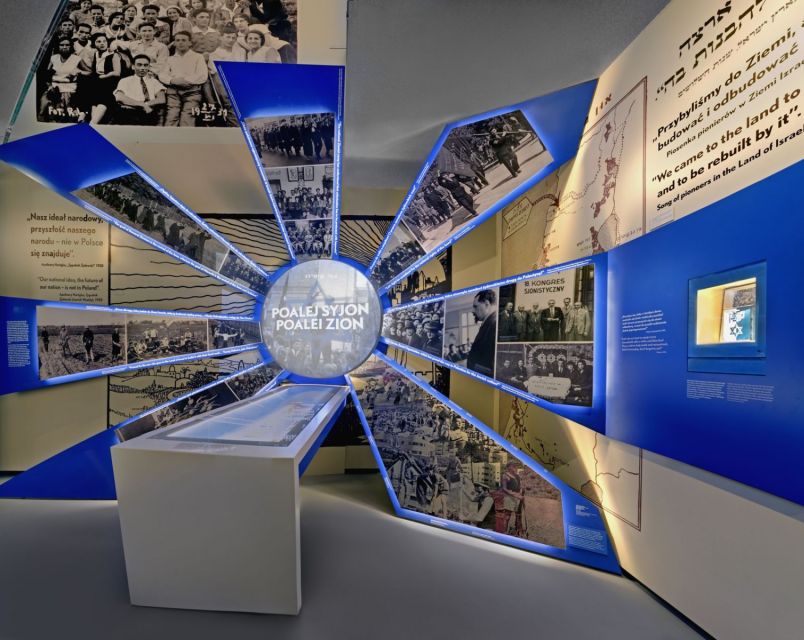
The later prewar galleries explain the pressures that shaped Jewish life before the Holocaust. Industrialization, urban growth, political movements, migration, and debates about identity all receive attention.
This is one place where rushing causes a problem. If you spend too long on the earliest centuries, you may reach the modern sections tired. One practical approach is to use the audio guide for orientation, then choose the displays that interest you most for closer reading.
I found the value of this section lies in its complexity. Jewish communities were not politically or culturally uniform. People held different ideas about religious practice, assimilation, socialism, Zionism, Polish patriotism, and community identity. The museum shows that diversity instead of presenting one simple version of Jewish life.
You will also gain a better understanding of Poland’s wider history. Government policy, urban development, and social change affected Jewish communities, just as Jewish citizens helped shape the country’s economic, intellectual, and cultural life.
More Entry Tickets in the world:
- Edinburgh: Edinburgh Castle Guided History Tour with Tickets
★ 4.8 · 9,933 reviews - Taormina: Ancient Theater Skip-the-Line Ticket & Audio Guide
★ 4.5 · 2,412 reviews - Historic Milan Tour with Skip-the-Line Last Supper Ticket
★ 4.5 · 1,976 reviews - American Museum of Natural History Admission Ticket
★ 4.0 · 1,931 reviews
The Holocaust section is powerful, but not the whole museum
The Holocaust gallery is intense and may be the part you remember most. It explains how Nazi persecution destroyed Jewish communities in Poland and how the Holocaust changed the country’s political, social, and religious life.
The museum does not need theatrical effects to make this section difficult. Its strength comes from the information, personal stories, objects, and the knowledge of what had existed before. The earlier galleries matter because they show the scale of what was lost.
You may want to slow down here. There are places to sit, and the museum provides enough room to pause between sections. Bring emotional energy as well as physical energy. This is not a quick stop to fit between two sightseeing appointments.
The presentation is direct rather than designed only to provoke shock. That makes it suitable for visitors who want historical context, though it does not make the material easy. You should allow time afterward before moving straight into another demanding activity.
One limitation is that some people may want more survivor video testimony. The museum uses audio and visual material, but the balance of media will not suit every visitor. If personal testimony is your main interest, check the temporary exhibition program as well.
The postwar section asks what survived
The final part looks at Jewish life after World War II and at efforts to revive Jewish culture. This section is important because the story does not stop with destruction.
You’ll see how memory, identity, community, and public culture continued to change after the war. The displays help you consider what it means to rebuild a community after most of its people have been killed or displaced.
This is also where the full structure of the museum pays off. After seeing religious life, family life, political arguments, artistic work, and community institutions in earlier galleries, you can better understand the scale of the postwar break and the significance of later cultural renewal.
The museum gives you a picture of continuity and loss at the same time. That is more useful than a visit focused only on tragedy, because it recognizes the Jewish contribution to Poland as something much larger than the events of World War II.
The audio guide is worth using, with one small catch
The included audio guide is one of the best reasons to buy this ticket rather than rely only on labels. It is clear, detailed, and available in Polish and English. The system can recognize your position and play the relevant narration, which saves you from constantly searching for the correct track.
I like using it first as a framework. Listen to the main explanation, then read or explore the displays that catch your attention. This approach keeps the visit from becoming an exhausting attempt to absorb every sentence.
There is one tradeoff. The museum contains a lot of written material, and listening while reading can split your attention. You may prefer to pause the audio in sections where you want to study documents, paintings, or long text panels.
If you are part of a group, consider moving at your own pace rather than trying to stay together at every station. The audio guide makes independent visiting easy, and you can meet again in seating areas or at the museum restaurant.
How long should you allow?
The official estimate for the core exhibition is about two hours. That is enough for a brisk visit, especially if you listen to selected audio sections and do not read every panel.
For a fuller visit, I would allow three to four hours. Several people have spent five or six hours inside, particularly when they read the detailed material, use every interactive display, or include a temporary exhibition.
Here is a practical timing guide:
- Two hours: A focused overview of the main route.
- Three hours: A solid visit with time for audio, selected reading, and pauses.
- Four to five hours: A careful visit that gives the galleries proper attention.
- Six hours or more: Possible if you read extensively, take breaks, and include temporary material.
You can leave for lunch and return the same day. That flexibility matters because the museum can become mentally tiring even when the displays keep you interested.
Lunch, seating, and physical comfort
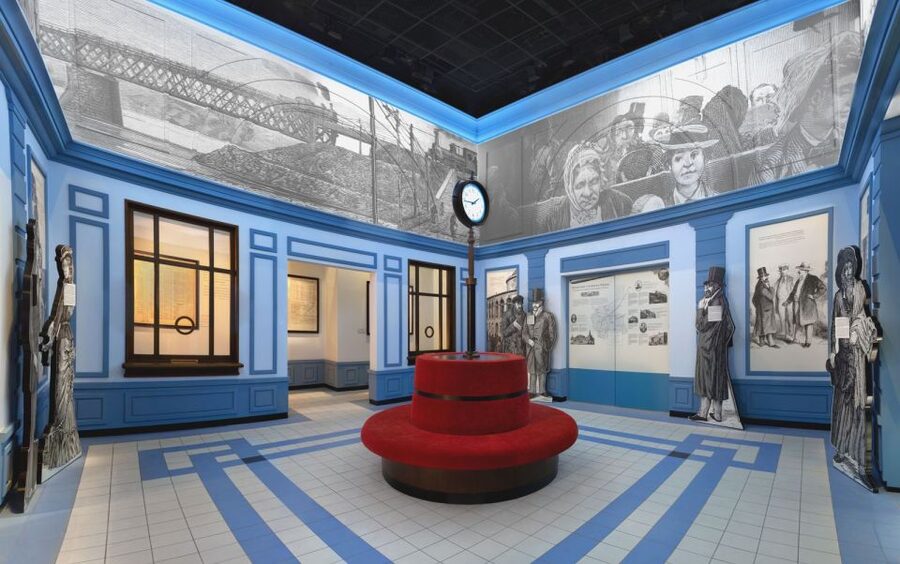
This is a large museum experience, so comfortable shoes are sensible. Seating is available along the route, and portable chairs can help if you prefer to sit while reading or need more frequent rests.
The museum restaurant has informal cafeteria-style service, with generous portions and good quality food. You do not need to treat lunch as an afterthought. A break can help you return to the later galleries with more attention.
Oversize luggage is not allowed. Security scanning is required before entering the core exhibition, so allow a little extra time at the entrance. The museum is wheelchair accessible.
The lower sections may include low ceilings, and school groups can make some areas noisy. That is not a constant problem, but it can affect your concentration at busy times.
Price, booking, and practical details
At about $12 per person, this is strong value if you give the museum enough time. A two-hour visit makes the ticket reasonable, while a half-day visit makes it one of Warsaw’s better cultural buys.
Your admission covers the permanent exhibition, a temporary exhibition if one is available, and the audio guide. A guided tour with a live guide is not included. Polish and English are the stated languages for the activity.
The ticket is valid for one day, and you may enter at your convenience during that day. Admission closes two hours before the museum’s closing time, so do not arrive near the end of the day expecting to see everything.
The museum is closed on Tuesdays. You can cancel up to 24 hours before the visit for a full refund, and the reserve now, pay later option can help if your schedule is still shifting.
Who will get the most from this visit?
I recommend POLIN to anyone interested in Polish history, Jewish history, World War II, museums, religion, migration, or the way societies change over time. It works especially well for visitors who want context before or after visiting Holocaust sites elsewhere in Poland.
It is also a good choice if you dislike passive museums. The displays use sound, images, objects, reconstructed interiors, and interactive stations, so you are not simply walking past rows of cases.
Families can make use of the visual and hands-on material, but adults should decide how much of the Holocaust section is suitable for younger children. History students and museum enthusiasts could easily spend most of a day here.
You may want to skip it if your Warsaw schedule allows only a quick hour, or if you prefer a short, tightly focused exhibit. POLIN rewards patience. Its strength is the full arc of the story, and that takes time.
Should you book the POLIN Museum ticket?
Yes, if you can set aside at least three hours and want more than a narrow account of wartime persecution. The museum’s strongest feature is its balance: it shows centuries of Jewish life, achievement, argument, worship, work, and family before confronting the Holocaust and its aftermath.
Book it if you value clear storytelling, interactive displays, and the freedom to move at your own pace. The $12 price is modest for the amount of material, and the included audio guide adds real value.
Go in with realistic expectations. Two hours is a useful minimum, not the ideal visit. Bring comfortable shoes, avoid carrying oversize luggage, and plan a food or rest break if you want to give the later galleries the attention they deserve.
FAQ
Where is the POLIN Museum ticket used?
Present your voucher at the POLIN Museum of the History of Polish Jews in Warsaw, in Poland’s Mazovia Province.
What does the ticket include?
The ticket includes access to the permanent exhibition, access to a temporary exhibition if one is available, and an audio guide.
Is a live guided tour included?
No. A guided tour is not included. The ticket provides an audio guide instead.
What languages are available?
The activity information lists Polish and English. The audio guide is available in those languages.
How long does the museum visit take?
The estimated time for the core exhibition is two hours. Plan three to five hours if you want to read more displays, use the interactive material, and take breaks.
Can I leave the museum and return?
Yes. You may leave for lunch and return on the same day.
Is the museum open every day?
No. The museum is closed on Tuesdays.
Can children visit for free?
Children aged 7 or younger may enter free of charge. Children aged 12 or younger must be supervised by an adult at all times.
Is the museum wheelchair accessible?
Yes. The activity is wheelchair accessible. Oversize luggage is not allowed, and every guest must undergo electronic scanning before entering the core exhibition.
Newest history tours we have reviewed in the world
- Bilbao Historical Tour in small group★ 4.7 · 52 reviews
- Bologna: Street Food Tour in the Historic Center★ 4.8 · 125 reviews
- CEBU: Cebu City Heritage and Uphill Guided Tour★ 4.2 · 31 reviews
- Bishkek : City Tour (History, Architects, Statues & Culture)★ 4.9 · 54 reviews
- Blenheim: Omaka Aviation Heritage Centre Admission Ticket★ 4.9 · 31 reviews
- Berlin: Nazi History Walking Tour★ 4.8 · 33 reviews
- Best of Baku: 4-Hour City Tour Historic and Modern Landmarks★ 4.7 · 63 reviews
- Belfast: Best of Belfast History, Culture & Art Walking Tour★ 4.9 · 158 reviews
Museum & Gallery History Tours, compared.
Louvre Museum Entry with History of Mona Lisa
Read our review →
Venice’s Best: Basilica, Doge’s Palace, Gondola & History Gallery
Read our review →
American Museum of Natural History Admission Ticket
Read our review →
Guided African American History Tour with Reserved Museum Entry
Read our review →
Bell Tower & St Mark’s Square History Gallery Ticket
Read our review →
Field Museum of Natural History Ticket or VIP Tour
Read our review →
Madrid in a Day Tour:Royal Palace, Historic Center & Prado Museum
Read our review →Browse the lists this tour appears in