
Review · DUBLIN HISTORY TOURS
Dublin: LGBT Pride Walking Tour with Queer History
Dublin’s queer story is written into ordinary streets, pubs, universities, and civic buildings. This two-hour walk connects those places with the people who pushed Ireland from exclusion and abuse toward legal recognition, including Panti Bliss, Dr Lydia Foy, and early Pride campaigners. The past feels close at hand, not locked away in a museum.
I like two things in particular. First, the route links queer history with the wider story of Irish revolution and civil rights. Second, the guide brings warmth and humor to difficult subjects. Helena, also referred to as Helene, is praised for her personal stories, easy conversation, and ability to make a serious subject welcoming. The main drawback is its narrow focus: if you want Dublin Castle interiors or broad sightseeing, this is not that tour.
Key points at a glance
- Liberty Hall connects directly to Dublin’s first Pride protest, giving the movement a clear physical starting point.
- The General Post Office adds revolutionary context, including stories of queer figures linked to Ireland’s political past.
- Trinity College introduces the Sexual Liberation Movement, showing how social change reached student and civil rights campaigns.
- Diceman’s Corner and the George reveal Dublin’s social history, with the George identified as Ireland’s most iconic LGBTQ venue.
- Helena’s style is personal and conversational, with humor, anecdotes, and time for questions.
- The $27 price covers two hours with a live English-speaking guide, and the walk returns to its starting point.
Why this Dublin queer history walk matters
This is not simply a tour of LGBTQ venues. It is a walk through the changing laws, attitudes, and public arguments that shaped modern Ireland. You hear about revolutionaries, civil rights campaigners, Pride pioneers, and people who challenged official ideas about gender identity.
That range gives the tour its value. You are not handed a single story of suffering or a simple tale of progress. Instead, you follow the community through setbacks, public protest, legal battles, and hard-won changes. The movement’s path from exclusion to marriage equality becomes easier to understand when you attach it to real streets and buildings.
I also like that the experience places queer history inside Irish history as a whole. The tour does not treat LGBTQ life as a side note. It connects it with the 1916 revolutionary period, student activism, public protest, civil rights, and the changing social mood of the country.
The subject can be personal and at times painful. That is part of the point. You should expect stories about discrimination and the long fight for recognition, balanced by humor, resilience, and the personalities who helped move the conversation forward.
More History Walking Tours in Ireland
- 2-Hour Historical Walking Tour from Dublin
★ 5.0 · 875 reviews - Historical 2-Hour Guided Walking Tour of Dublin
★ 4.7 · 865 reviews - Dublin’s Haunted History Walking Tour
★ 4.3 · 345 reviews
Meeting at the Old Storehouse
The walk begins directly outside the Old Storehouse Bar & Restaurant. Look for the guide carrying a green umbrella. That detail matters in central Dublin, where a small landmark can save you from circling the same block while watching several groups gather.
Arrive ready to walk rather than expecting a seated presentation. Comfortable shoes are the only item specifically recommended, and you will be moving between stops across central Dublin for about two hours.
The activity ends back at the meeting point. That makes it easy to continue with dinner or a drink nearby, and it also keeps the tour simple to fit into a day of sightseeing. Check the available starting times when booking, since the exact departure depends on the date you choose.
The tour is wheelchair accessible. Still, because this is a city walk, anyone concerned about pace or street conditions should confirm that the planned route suits their needs before setting out.
The General Post Office and queer revolutionaries
The General Post Office is one of Dublin’s best-known political landmarks, but this tour uses it for a more specific purpose. Here, the story turns toward revolutionary queer figures, including Panti Bliss.
That pairing is useful. You are not just looking at a famous building and hearing its standard national-history explanation. Instead, the stop asks you to consider who gets included in Ireland’s public story and how LGBTQ people have shaped it.
Panti Bliss is an especially effective figure for this discussion because her public work brought questions of prejudice, identity, and equality into everyday conversation. The tour uses personalities such as Panti to show how activism can happen on a stage, in the media, and in public debate, not only in formal political rooms.
This part of the walk is likely to suit you if you enjoy history told through people rather than dates. Helena’s approach, according to the information available about her guiding style, includes wit and personal anecdotes, which should keep the political material from becoming dry.
Liberty Hall and Dublin’s first Pride protest
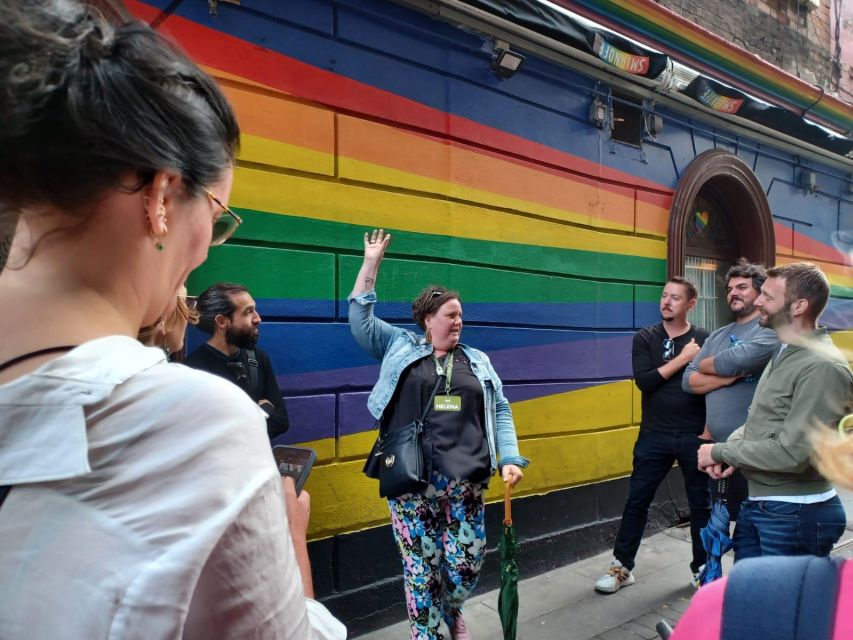
Liberty Hall marks one of the most important stops on the route. You hear about the first Pride protest there and gain a clearer sense of how public LGBTQ activism began to take shape in Dublin.
The word protest is important. Pride is often presented today as a celebration, but its roots are tied to public demands for safety, dignity, and equal treatment. Standing at Liberty Hall helps bring that earlier, more confrontational stage into view.
I like this stop because it gives the tour a strong link between place and action. You are not only hearing that a first protest took place. You are standing at the location where people made themselves visible in a period when that visibility carried real risk.
The guide also places this event within Ireland’s wider political story. That makes Liberty Hall more than a photo stop. It becomes a reminder that social change often begins with a small group willing to occupy public space and insist that the country recognize them.
More History Walking Tours in Dublin:
- Deliciously Dublin: The Artisan Donut Walking & History Tour
★ 5.0 · 329 reviews - Hidden Dublin: Haunted History Walking Tour v2.0 2026
★ 4.5 · 188 reviews - Dublin: Macabre History Walking Tour
★ 4.9 · 95 reviews - Dublin LGBTQ Pride Historical and Cultural Walking Tour
★ 5.0 · 91 reviews
Trinity College and the Sexual Liberation Movement
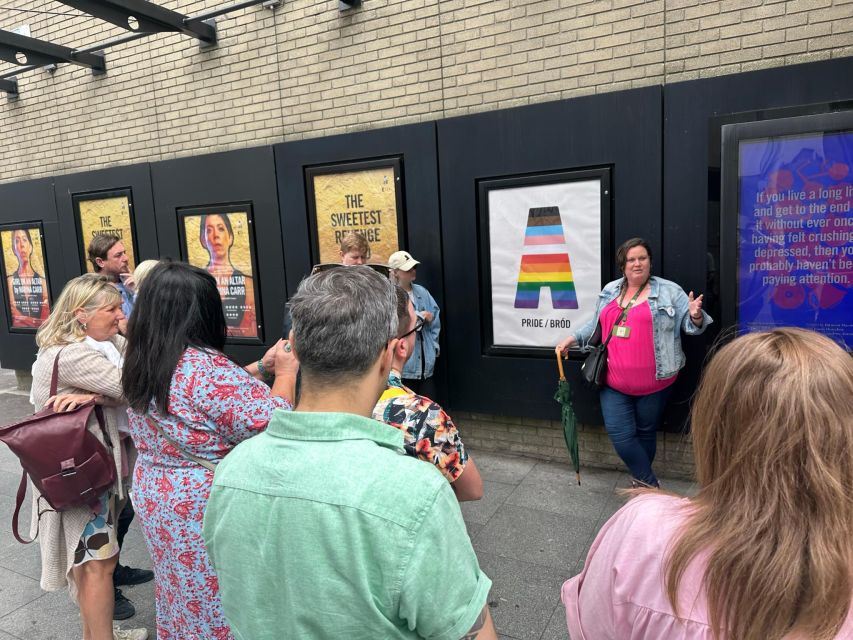
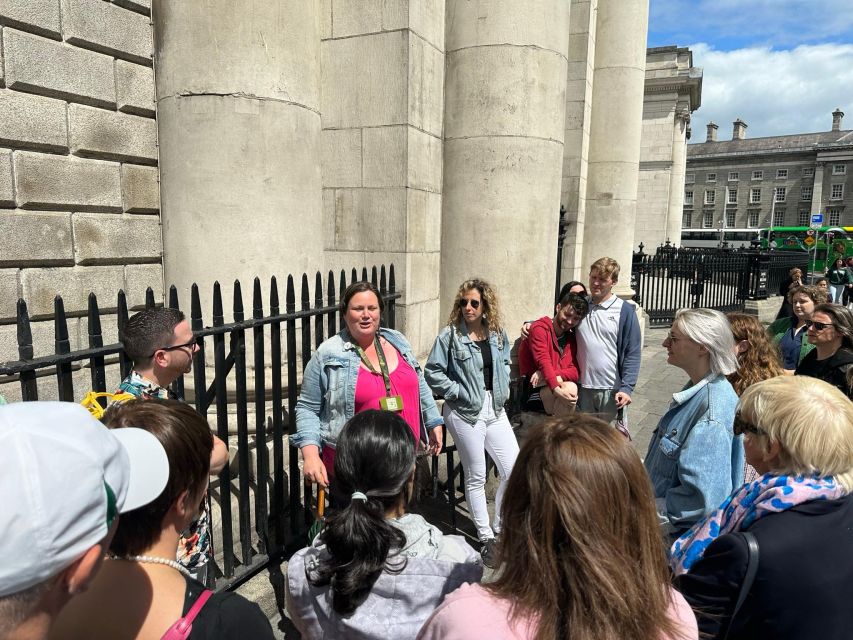
The walk continues past Trinity College, where the discussion shifts toward the Sexual Liberation Movement. The setting is fitting: a university offers a natural way to talk about changing ideas, student action, civil rights, and challenges to old social rules.
This section gives the tour a wider reach. You are no longer looking only at a protest or a particular venue. You are considering how movements grow through debate, education, organizing, and public pressure.
The Trinity stop may be particularly useful if you already know something about Dublin’s general history and want to see how queer activism fits into it. It also helps explain why the campaign for equality was not one single event. Different people pushed on different fronts, including public acceptance, legal identity, sexual freedom, and protection from discrimination.
Do not expect an interior visit or a standard college tour here. The attraction is the conversation connected to the location, not an extended look inside the university. If you want a formal Trinity College sightseeing experience, pair this walk with a separate visit.
Dr Lydia Foy and the fight for legal identity
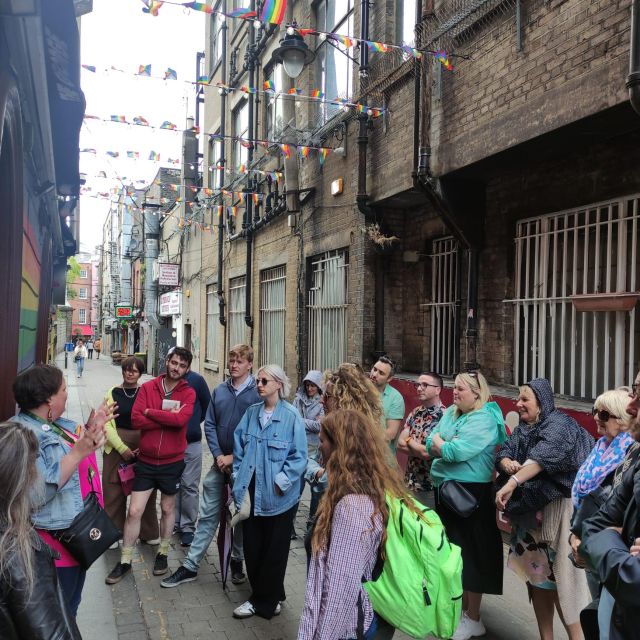
Dr Lydia Foy’s story brings the tour to the question of gender recognition. You learn about her work and the Gender Recognition Act, a subject that shows how legal change can take years of persistence.
This is one of the most useful parts of the experience because it moves beyond general statements about equality. Legal recognition affects documents, public identity, daily safety, and a person’s ability to be treated properly by institutions. The story makes those questions concrete.
The tour presents Ireland’s progress as something achieved through effort, not as an automatic change in public opinion. That distinction matters. Marriage equality and gender recognition are major developments, but they came after long campaigns and difficult arguments.
You can also expect the guide to connect earlier struggles with ongoing challenges facing the LGBTQ community. The walk does not suggest that legal progress has ended every problem. Instead, it gives you a clearer view of how rights are won and why continued attention matters.
Diceman’s Corner and the George
Diceman’s Corner is another important location on the route. The supplied details do not assign one single story to the stop, so the guide’s explanation becomes especially valuable here. Expect the place to be used as part of the wider account of Dublin’s queer social and political life.
The route then includes the George, described as Ireland’s most iconic LGBTQ venue. This changes the mood from protest and law to community and everyday social life.
A venue such as the George matters because history is not made only in government offices or courtrooms. People also build community in places where they can meet, celebrate, organize, and feel less alone. Including the George helps show the human side of the story.
You should not treat this as a pub crawl. The experience includes the location as part of a historical walking route, and the included elements are the walk and guide. The value is the explanation of why the place matters, not a promise of a drink or a night out.
Helena’s guiding style
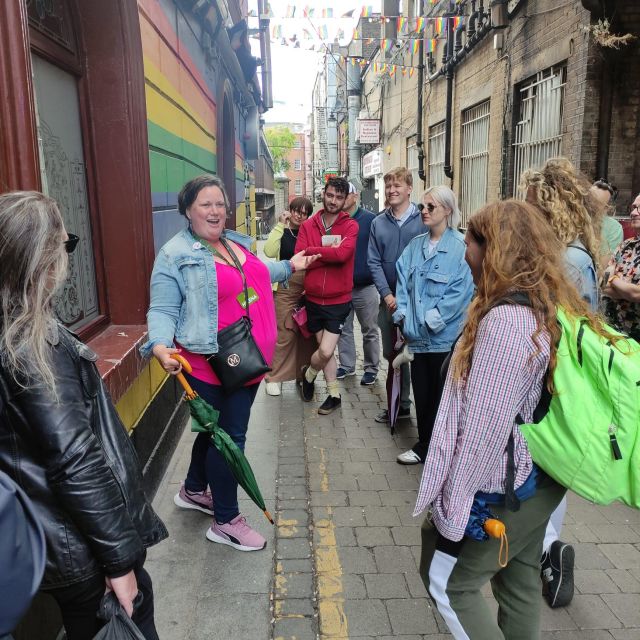
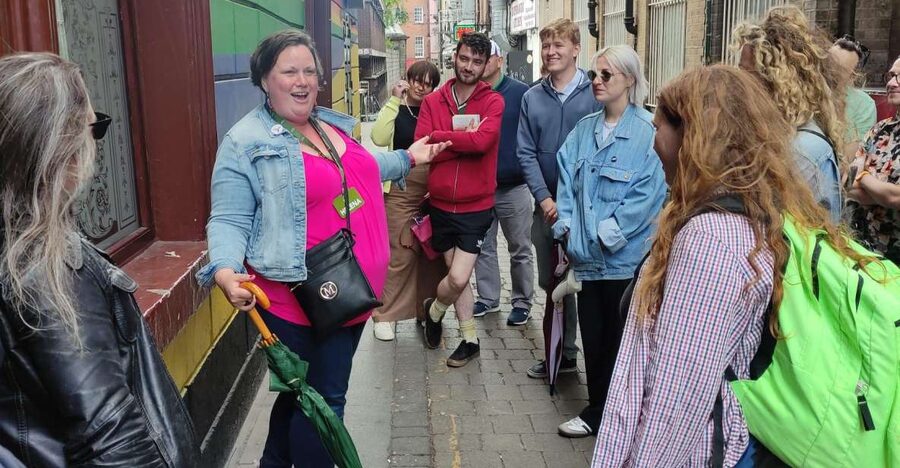
The guide can make or break a history walk, and Helena is the person most often identified with this experience. Her strengths are described in practical terms: warm, energetic, funny, open to questions, and able to combine serious history with personal anecdotes.
That matters here because the subject calls for judgment. A guide must give difficult stories their proper weight without making the walk feel like a lecture. Helena’s style appears to lean toward conversation, with time to chat between stops rather than rushing from one speech to the next.
You may hear her name written as Helena or Helene in booking material. The guide praised by name is the same person described as welcoming, genuine, and down to earth.
The personal touch seems to be a real part of the experience. One account even notes that Helena helped with a lift back to a hotel after the activity, though you should not treat that as a standard tour service. What you can reasonably expect is a guide who is willing to engage with questions and add personal context.
The English-only format is worth noting. The live guiding is provided in English, so you should choose this tour only if you are comfortable following a spoken history discussion in that language.
What the $27 price gets you
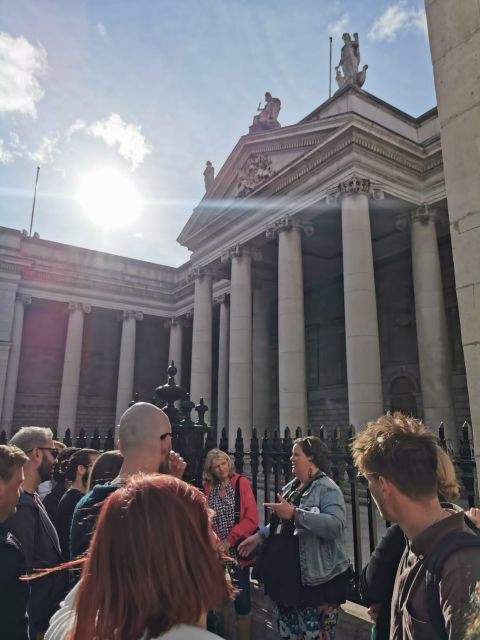
At $27 per person, this is priced as a focused city walking tour rather than a full-day attraction. The fee covers two hours with a live guide, and the route includes several locations that would be easy to pass without understanding their connection to queer Dublin.
The value comes from interpretation. You could walk past Liberty Hall, Trinity College, the General Post Office, Diceman’s Corner, and the George on your own. You would not automatically know which stories to connect to each place, or how those stories fit together.
I think the price is reasonable if you want a specialized subject and an active introduction to Dublin’s LGBTQ past. It is less useful if you are mainly looking for a general orientation walk or a list of famous sights.
The two-hour length is another advantage. It is long enough to develop a clear story but short enough to fit before dinner, after a morning attraction, or between other central Dublin plans. Since the tour returns to its starting point, you do not need to arrange transport from a distant finish.
Free cancellation up to 24 hours before departure and the option to reserve now and pay later add useful flexibility. Those are practical benefits if your Dublin schedule is still changing.
Who should book this walk
I would recommend it to anyone who wants to understand modern Ireland through LGBTQ history rather than only through famous buildings. It suits visitors who enjoy politics, social history, civil rights, personal stories, and guided discussion.
It is also a good choice for local residents or repeat visitors who already know central Dublin’s basic sights. The route gives familiar places a different meaning, especially the GPO, Trinity College, and Liberty Hall.
Families can decide based on the age and interest of their children. One account describes the walk as enjoyable for a parent and teenage son, but the subject includes discrimination, abuse, sexuality, and legal struggles. Older teenagers who are comfortable with those themes may find it thoughtful and engaging.
You should be less likely to book if you want a fast-paced sightseeing tour, a pub crawl, or a broad introduction to all of Dublin. This is a focused history experience. Its strength is depth of subject, not the number of attractions covered.
Practical ways to get more from the experience
Wear comfortable shoes and leave room in your schedule for conversation. The guide’s style is not limited to a fixed speech, so you will get more from the walk if you are willing to ask questions.
Keep an open mind about the tone. Some moments are uplifting, while others deal with exclusion and abuse. The balance is important, since a cheerful Pride story without the difficult years would give you a poor understanding of what changed.
If you have a particular interest in Panti Bliss, Dr Lydia Foy, the Sexual Liberation Movement, or the Gender Recognition Act, bring those questions with you. The available information suggests that Helena is happy to discuss the subject and answer questions.
Finally, look at the starting times before building the rest of your day. The meeting point is clear, the activity lasts two hours, and the walk finishes where it begins, but the exact departure time varies by availability.
Should you book the Dublin LGBT Pride Walking Tour?
Book it if you want a personal, place-based account of Ireland’s LGBTQ past and present. The route gives you concrete stops, important names, and a clear account of the road from protest to marriage equality. Helena’s warm, humorous approach should make the subject approachable without smoothing away its difficult parts.
Skip it if you want interiors, broad Dublin sightseeing, or entertainment without serious historical discussion. For $27, it offers good value to the right audience: anyone who wants to see Dublin through the people and campaigns that changed its understanding of equality.
FAQ
How long is the Dublin LGBT Pride Walking Tour?
The walking tour lasts two hours.
What language is the tour conducted in?
The live tour guide speaks English.
Where does the tour start?
Meet your guide directly outside the Old Storehouse Bar & Restaurant. Look for someone carrying a green umbrella.
Where does the tour end?
The activity ends back at the meeting point.
Which Dublin locations are included?
The route includes Liberty Hall, the General Post Office, Trinity College, Diceman’s Corner, and the George, along with other locations connected to Dublin’s queer history.
Who are some of the people discussed?
The tour covers figures including Panti Bliss and Dr Lydia Foy, as well as other important people in Ireland’s LGBTQ history.
Is the walking tour wheelchair accessible?
Yes, the activity is listed as wheelchair accessible.
Newest history tours we have reviewed in Dublin
- Private Dublin Historical and Heritage Tour by Bike★ 5.0 · 30 reviews
- Historical Walking Tour of Dublin★ 5.0 · 50 reviews
- DayTripper Dublin: A Guided City Walking Tour★ 5.0 · 90 reviews
- Dublin LGBTQ Pride Historical and Cultural Walking Tour★ 5.0 · 91 reviews
- Interactive Living History in Dalkey Castle near Dublin City★ 5.0 · 133 reviews
- Interactive Guided Tour of Printing History★ 5.0 · 23 reviews
- Hidden Dublin: Haunted History Walking Tour v2.0 2026★ 4.5 · 188 reviews
- Full-Day Irelands Ancient Boyne Valley Private Guided Tour★ 5.0 · 36 reviews
History Walking Tours, compared.

History and Hauntings of Salem Guided Walking Tour
Read our review →

Freedom Trail History Small Group Walking Tour
Read our review →
Historic Charleston Guided Sightseeing Walking Tour
Read our review →
Tapas Walking Tour with Food, Wine, and History
Read our review →
Savannah History and Haunts Candlelit Ghost Walking Tour
Read our review →
A History of Terror – Belfast City Centre Walking Tour
Read our review →Browse the lists this tour appears in