
Review · DUBLIN HISTORY TOURS
Dublin: Macabre History Walking Tour
Dublin’s darker past comes alive in its lanes, riverfront, old walls, and cathedral quarter. This two-hour walking tour links public executions, medieval disease, grave robbing, mummified corpses, and the legend of man-eating rats, all with a strong storytelling angle. I like the way it takes you to places you might pass without a second glance, and I like the small-group feel reported by several guests, sometimes with only three people.
Guides Peter and Rob are repeatedly praised for their humor, dramatic delivery, and willingness to answer questions. The main consideration is tone: this is macabre rather than a serious academic tour, and one guest found it less bloody than expected. Anyone under 18 should choose another activity.
Key points at a glance

- Cuchulainn’s death: Hear the grisly end of the legendary Irish warrior and the raven connected with his death.
- Grave robbing near the mortuary: Learn how 19th-century Dublin turned the demand for bodies into a business.
- Old city back streets: Visit lesser-known corners and areas close to the former city walls.
- Dark stories with humor: Peter and Rob use drama, jokes, and lively acting to keep the material moving.
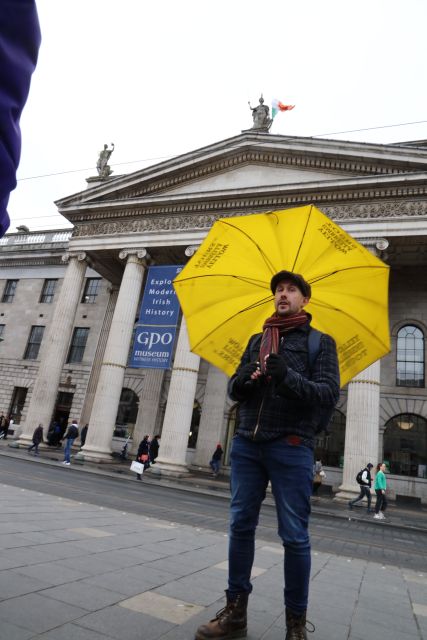
- Simple central meeting point: Find the yellow umbrella beside the Spire on O’Connell Street.
- Good value for a focused walk: At $19, you get two hours with a live English-speaking guide and no transport padding.
Starting beneath the Spire on O’Connell Street

The tour starts beside the Spire, the tall needle in the middle of O’Connell Street. Look for the yellow umbrella. This is an easy place to reach in central Dublin, though the street can have more than one yellow umbrella, so check that you have the right group before setting off.
There is no hotel pickup. You make your own way to the meeting point, then return there at the end. That arrangement keeps the price down and makes the tour easy to fit into a day of sightseeing, but you should allow enough time to find the guide before the start.
The walk covers both sides of the River Liffey and moves through the old city center. You are not being driven between set pieces. The city itself becomes the backdrop, so comfortable shoes and a rain jacket make sense in Dublin’s changeable weather. The information provided confirms wheelchair access, though the route’s suitability can still depend on the exact streets and conditions on the day.
The group size may vary. Some departures feel almost private, while others are larger. That matters here because the guide’s storytelling and interaction are a major part of the experience. With a small group, it is easier to ask questions and hear every detail. With more people, you may need to stay close to the umbrella and guide.
More History Walking Tours in Ireland
- 2-Hour Historical Walking Tour from Dublin
★ 5.0 · 875 reviews - Historical 2-Hour Guided Walking Tour of Dublin
★ 4.7 · 865 reviews - Dublin’s Haunted History Walking Tour
★ 4.3 · 345 reviews
Cuchulainn and the raven at the start of Dublin’s darker story
One of the tour’s early stories concerns Cuchulainn, the mighty warrior of Irish legend. The tale includes his death, his eyes being pecked out by the raven on his shoulder, and the statue associated with that final scene.
This is a useful opening because it shows that the tour is not limited to documented crime. It mixes mythology, folklore, social history, and stories that have grown in the telling. If you want only firmly documented events, you should keep that distinction in mind. If you enjoy the way legends reveal what a city fears, remembers, and retells, this approach adds character.
The guide’s delivery is important here. Peter is praised for acting out parts of the stories and making the scenes easy to follow. Rob receives similar praise for a personable style and a good sense of humor. You can expect a performance as well as a street explanation, with the guide changing pace and tone to suit the tale.
That style works best if you enjoy a little theatrical flair. It may feel less suitable if you prefer dates, archival evidence, and long discussions of political history. The walk aims to entertain while teaching, rather than function as a formal lecture.
Grave robbers and the business beside the mortuary
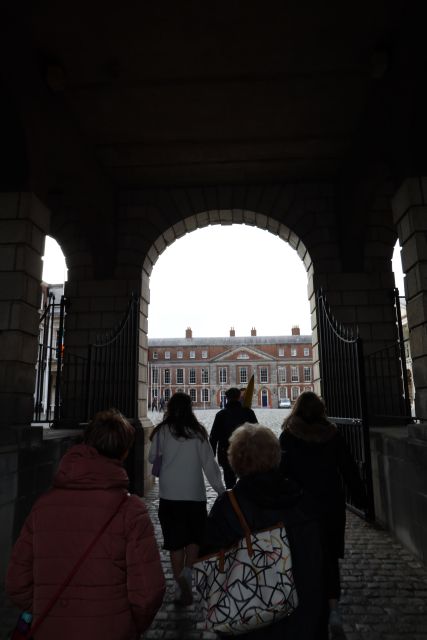
The 19th-century grave-robbing story gives the tour some of its strongest social history. You hear how stealing bodies became a business near the city mortuary, a subject that connects medicine, poverty, death, and the public demand for human remains.
This part is valuable because it moves beyond the easy shock of murder stories. It explains how a city’s institutions and markets could create grim opportunities. The detail also helps you picture Dublin as a working city with difficult conditions, not just a collection of elegant streets and pub scenes.
You should expect the guide to provide the context in a compact, story-led way. The tour covers many subjects in two hours, so it will not offer a full account of 19th-century medical practice or Dublin’s mortuary system. Instead, you get a memorable doorway into the topic and a reason to notice the surrounding streets differently.
I like this balance. The darker material has more value when it tells you something about how people lived, worked, suffered, and died. The tour uses the macabre as a way into the city’s social past, not simply as an excuse for shock.
Old walls, mummified corpses, and a legless killer
Near the old city walls, the stories turn toward mummified bodies and a legless serial killer. These are exactly the sort of subjects that suit a walking tour because the streets provide a physical setting for tales you might otherwise hear in isolation.
The old walls also give the guide a chance to explain how Dublin changed over time. You may not get a full architectural tour, but you will hear stories connected to the parts of the old city that are easy to overlook. Several guests specifically liked being shown places they would have walked past without noticing.
The legless-killer story is likely to be one of the tour’s most memorable stops, especially for anyone who enjoys crime history and unusual characters. It is also a reminder that the walk is designed for adults. The activity is not suitable for children under 18, and the subject matter includes death, murder, bodies, executions, and disease.
The mummified-corpses material adds a different kind of unease. Rather than focusing only on violence, it explores what happens to bodies after death and how physical remains become part of a city’s stories. The guide’s tone helps keep the subject from becoming relentlessly grim.
More History Walking Tours in Dublin:
- Deliciously Dublin: The Artisan Donut Walking & History Tour
★ 5.0 · 329 reviews - Hidden Dublin: Haunted History Walking Tour v2.0 2026
★ 4.5 · 188 reviews - Dublin LGBTQ Pride Historical and Cultural Walking Tour
★ 5.0 · 91 reviews - DayTripper Dublin: A Guided City Walking Tour
★ 5.0 · 90 reviews
Medieval quarantines and the fear of disease
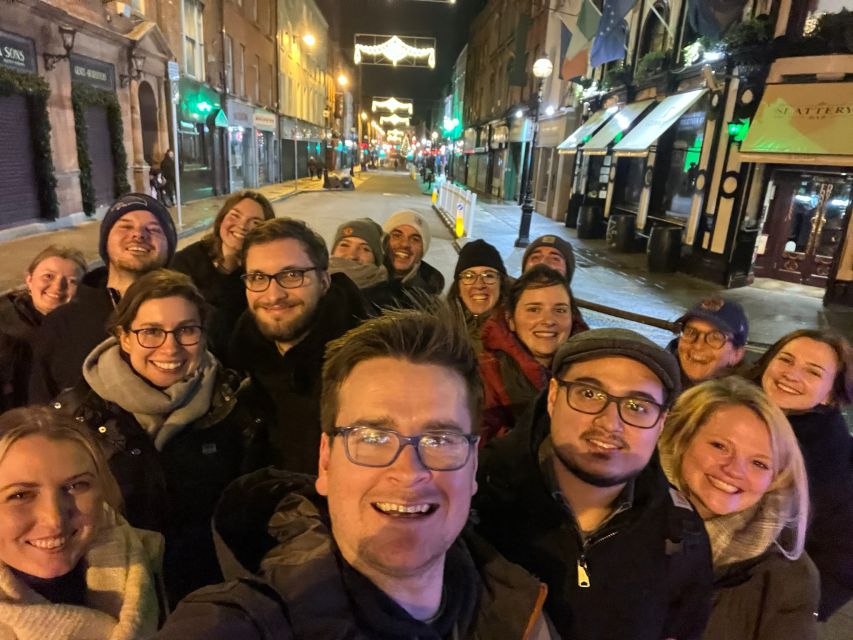
The tour also covers medieval quarantines. This section widens the focus from individual crimes to public fear and the way communities responded to illness.
That is one of the more useful parts for understanding the city’s past. A quarantine story lets you think about crowded urban life, limited medical knowledge, and the hard choices faced during outbreaks. The guide presents it within the walk’s macabre theme, but the subject has real historical weight beyond the spooky details.
You should expect a concise account rather than a medical history of Dublin. The walk has to keep moving, and its strength lies in linking short stories to specific places. If you ask questions, the guides are described as happy to slow down, explain a point again, or discuss Irish history and daily life.
That flexibility is especially useful if English is not your first language. The tour is conducted in English, and one guest praised Peter for checking that everyone understood and adjusting his pace when needed. Still, the storytelling style can be lively and fast, so ask the guide to repeat anything you miss.
Public executions and the city’s public face
Public executions form another major part of the route. These stories show how punishment once took place in front of a crowd and how death could become a public event.
I find this subject more revealing than a simple list of famous criminals. It raises questions about justice, entertainment, fear, and authority. The tour’s macabre angle gives you a way to consider how Dublin’s streets once served purposes very different from today’s shopping, commuting, and sightseeing.
The guide’s humor needs a light touch here, and the feedback about Peter and Rob suggests that they generally keep the tone engaging rather than cruel. You should still expect jokes around grim topics. That will suit you if you enjoy dark humor, but it may not be right if you want a solemn memorial-style experience.
The route’s movement through lesser-known areas is part of the appeal. You are not only hearing about executions in the abstract. You are standing in the old center, crossing between parts of the city, and seeing how ordinary urban spaces can carry disturbing stories.
Man-eating rats and the final story by the cathedral
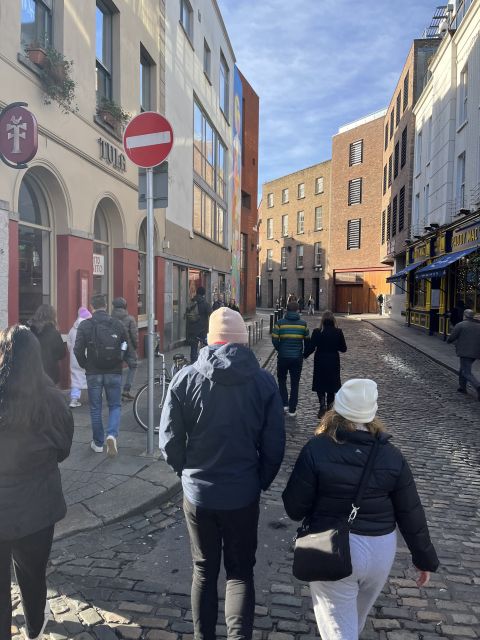
The walk includes tales of man-eating rats, one of the more lurid details in the program. Treat this as part of Dublin’s folklore and macabre storytelling rather than a promise that you will encounter anything like it today.
The final section takes place beside the cathedral and concerns Dublin’s most famous brothel keeper, whose life ended by fire at the stake. This gives the tour a dramatic finish and brings together crime, sex work, punishment, and public spectacle.
The cathedral setting is a fitting place to end because it adds atmosphere without requiring a staged attraction. You are hearing the story in the old city rather than in a theater or museum. The activity then returns to the starting point, so you can continue exploring central Dublin or head back to your accommodation.
The ending is also practical. Since the walk finishes at the same place where it begins, you do not need to arrange transport from an unfamiliar district. That is useful if you have evening plans, though you should confirm the exact start time when booking because departures vary.
What the guides add to the experience
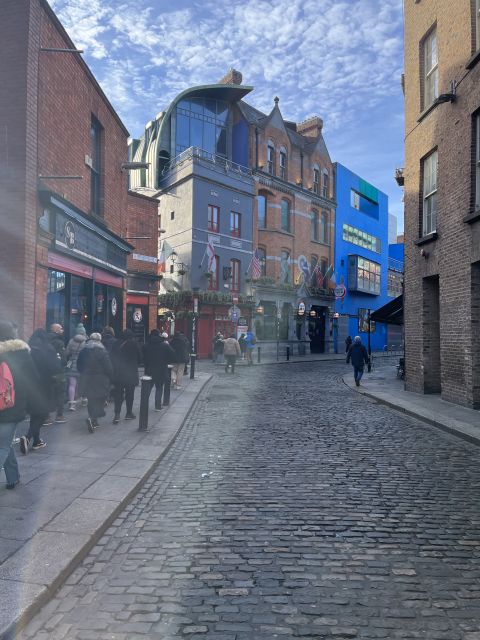
The guide is the tour’s biggest factor. Peter is repeatedly singled out for passion, clear explanations, dramatic storytelling, local tips, and an easy manner. Rob is also praised for his delivery, humor, and ability to make the stories feel personal.
You can expect the guide to:
- Act out parts of the stories rather than simply recite facts
- Mix documented events with folklore and unusual details
- Answer questions about Dublin, Irish history, and local life
- Adjust the pace when someone needs clarification
- Point out places that are easy to miss on a standard city walk
That approach makes the tour feel more like a lively conversation than a memorized script. It also means the experience may vary slightly depending on who leads your departure. The core subjects remain the same, but the jokes, examples, and emphasis may change.
The strong overall rating of 4.9 from 95 reviews supports the view that guide quality is consistent enough to be a major selling point. Still, you should book it for the format as much as for the rating: this is a live storytelling walk, not a museum audio guide.
Is $19 a fair price for two hours?
At $19 per person, the tour offers solid value if you want a focused introduction to Dublin’s darker stories. The fee covers the two-hour walk and live guide, with no extra attraction ticket or transport cost built in.
I especially like that the route adds material you are unlikely to get from a basic orientation walk. You hear about grave robbing, quarantines, mummified corpses, public executions, and local legends while moving through the city itself. That makes the price feel reasonable for a first or second day in Dublin.
The value is less clear if you dislike theatrical storytelling or already know the city’s crime and folklore material well. You are paying for the guide’s presentation and route, not for entry to a historic building. The quality of the experience depends on your interest in the subject and the guide’s connection with the group.
Free cancellation up to 24 hours before the tour and the option to reserve now and pay later make it easier to fit into a changeable schedule. Those terms are useful in Dublin, where weather or a delayed arrival can disrupt a tightly planned day.
Who should book this macabre Dublin walk?
I would choose this tour if you want to see central Dublin from a less familiar angle. It suits adults who enjoy crime stories, folklore, legends, unusual history, and guides who tell a story with energy.
It is also a good choice for solo visitors. A small departure can feel comfortable, and the guide’s questions and local tips give you an easy way to engage with the group. Couples and friends who want something different from a pub crawl or standard sightseeing walk should find the theme a good fit.
The tour is less suitable for children, anyone uncomfortable with stories about death and bodies, or anyone seeking a quiet architectural walk. It may also disappoint you if the word macabre makes you expect graphic detail at every stop. One guest specifically wanted the tour to be darker and bloodier, so the material is better described as eerie, gruesome, and story-led than extreme.
Practical details before you book
The activity lasts two hours, with starting times shown according to availability. It is conducted in English by a live guide. The meeting point is beside the Spire, the big needle in the middle of O’Connell Street, and the walk ends back there.
Hotel pickup and drop-off are not included. You need to reach O’Connell Street yourself and look for the yellow umbrella. The tour is listed as wheelchair accessible, but you may still want to confirm route details if you have particular mobility needs.
The tour is for adults aged 18 and over. Wear shoes suited to walking and bring weather protection. You may be outdoors for the full two hours, and the riverside portions can feel exposed in poor weather.
Should you book it?
Book this walk if you want Dublin’s streets to become part of the story, not just a route between major sights. Peter and Rob bring warmth, humor, and drama to material that includes serious history as well as folklore. The $19 price is fair for two hours of guided walking, especially when the route takes you to places you might otherwise ignore.
Skip it if you want a strictly academic account, a family-friendly activity, or a horror show built around graphic gore. For most adults who enjoy unusual city stories, this is a smart, affordable way to see Dublin’s old center from its grimmer side.
FAQ
Where does the Dublin Macabre History Walking Tour start?
It starts beside the Spire, the big needle in the middle of O’Connell Street in Dublin. Look for the yellow umbrella.
Where does the tour end?
The activity ends back at the meeting point beside the Spire.
How long does the tour last?
The walking tour lasts two hours. Starting times depend on availability.
What language is the tour conducted in?
The tour is conducted in English with a live guide.
What stories are included?
The tour covers Cuchulainn’s death, medieval quarantines, public executions, grave robbing, mummified corpses, a legless serial killer, man-eating rats, and Dublin’s famous brothel keeper who died by fire at the stake.
Is the tour suitable for children?
No. The activity is not suitable for children under 18.
Is the walking tour wheelchair accessible?
Yes, the activity is listed as wheelchair accessible.
Is hotel pickup included?
No. You must make your own way to the Spire on O’Connell Street.
Can I cancel for a refund?
Yes. You can cancel up to 24 hours in advance for a full refund.
Can I reserve the tour without paying immediately?
Yes. Reserve now and pay later to keep your plans flexible.
Newest history tours we have reviewed in Dublin
- Private Dublin Historical and Heritage Tour by Bike★ 5.0 · 30 reviews
- Historical Walking Tour of Dublin★ 5.0 · 50 reviews
- DayTripper Dublin: A Guided City Walking Tour★ 5.0 · 90 reviews
- Interactive Living History in Dalkey Castle near Dublin City★ 5.0 · 133 reviews
- Dublin LGBTQ Pride Historical and Cultural Walking Tour★ 5.0 · 91 reviews
- Interactive Guided Tour of Printing History★ 5.0 · 23 reviews
- Hidden Dublin: Haunted History Walking Tour v2.0 2026★ 4.5 · 188 reviews
- Full-Day Irelands Ancient Boyne Valley Private Guided Tour★ 5.0 · 36 reviews
History Walking Tours, compared.
History and Hauntings of Salem Guided Walking Tour
Read our review →

Freedom Trail History Small Group Walking Tour
Read our review →
Historic Charleston Guided Sightseeing Walking Tour
Read our review →
Tapas Walking Tour with Food, Wine, and History
Read our review →
Savannah History and Haunts Candlelit Ghost Walking Tour
Read our review →
A History of Terror – Belfast City Centre Walking Tour
Read our review →Browse the lists this tour appears in