
Review · GERMANY HISTORY TOURS
Bremen: Walking Tour of Historic Schnoor District
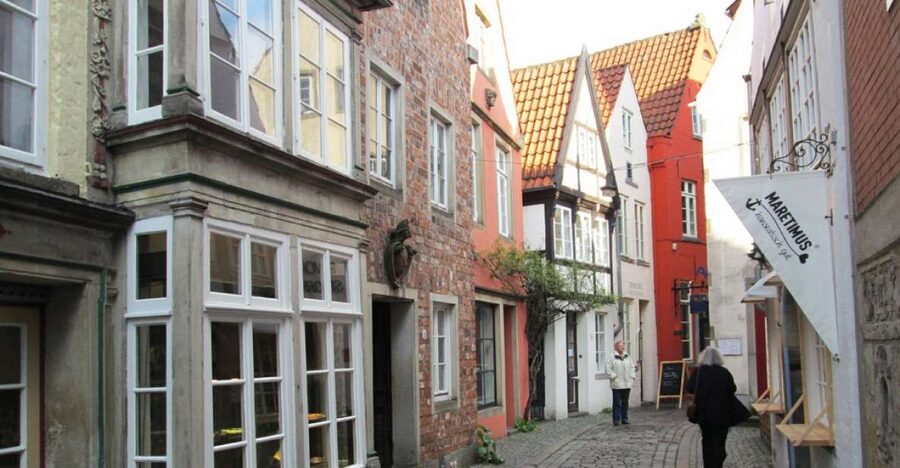
Bremen’s Schnoor quarter is a pocket of crooked lanes and tiny old houses, where buildings seem strung together like pearls. This one-hour walk brings the details into focus, from the redbrick Gothic St. John’s Church to old facades, half-timbered homes, and small craft shops.
I like the low price and the tight focus. For $14, you get a guided introduction without giving up half a day. I also like the local storytelling, especially when guide Sönke leads with his warm Bremen humor and lively stories. The main drawback is simple: the tour is in German, lasts only an hour, and every building is viewed from the outside.
Key points at a glance
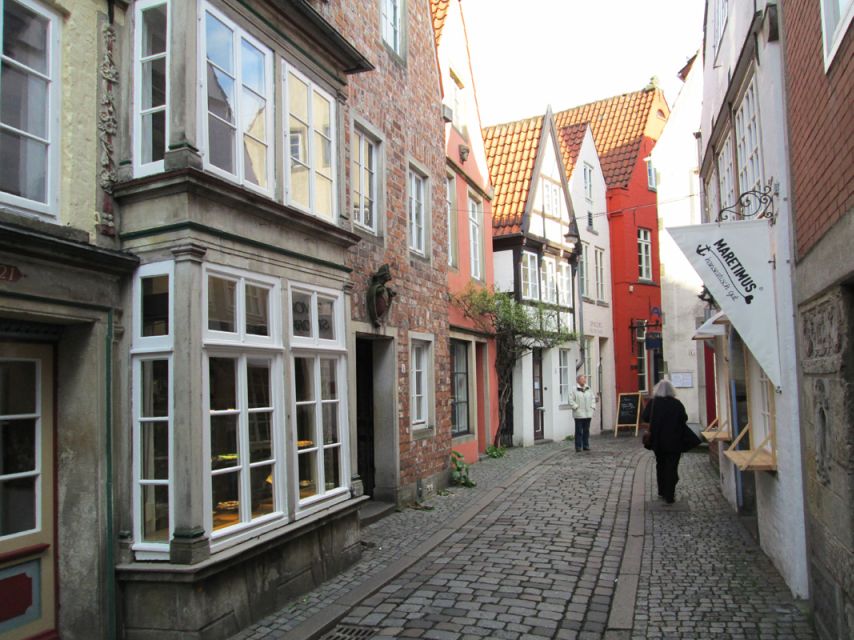
- Schnoor’s narrow lanes: Walk through Bremen’s oldest-feeling quarter, with small houses packed closely along winding passages.
- Fourteen-century architecture: See old homes and St. John’s Church, plus later Baroque, Renaissance, classicist, and historicist details.
- Rare surviving buildings: Look for Haus Schnoor 15, also called Brasilhaus, and Packhaus Schnoor 2.
- German-language guiding: Expect architectural details, local stories, and humor rather than an English tour.
- One-hour format: A useful choice before or after seeing Bremen’s central sights.
- Private option: You can choose a private group instead of the shared tour.
Entering Bremen’s Schnoor quarter
The meeting point is in front of Die Glocke concert hall at Domsheide 6. Your guide waits with a sign reading Bremen Tour Guide, which makes the starting point easy to spot.
From there, the walk heads toward Schnoor, Bremen’s best-known old quarter. The name is linked to the district’s former rope-making trade, and the shape of the neighborhood helps explain its character. Narrow lanes and tightly packed houses give the area a compact, almost miniature feel.
You will not be walking along broad avenues or covering a large part of Bremen. This is a close look at one small district. That is useful if you want to notice doorways, construction details, old facades, and changes in building style that can be missed when you wander alone.
The first written reference to Schnoor dates to the 13th century. A Franciscan monastery was built on the edge of the area around that time, and the monastery church is the remaining piece of that early religious presence.
The quarter also contains many houses from the 17th and 18th centuries that have been preserved in their original form. As you walk, the guide explains how the district changed over time and how its residents shaped the narrow neighborhood.
More History Walking Tours in Germany
- Leipzig: 1.5-Hour Historical Walking Tour in German
★ 4.7 · 2,217 reviews - Berlin: History of the Third Reich Guided Walking Tour
★ 4.7 · 791 reviews - Trier: Guided Old Town Highlights and History Walking Tour
★ 4.7 · 687 reviews
St. John’s Church and the medieval setting
One of the main sights is Catholic St. John’s Church, built in the 14th century in redbrick Gothic style. Its brickwork gives you a clear sense of northern Germany’s architectural tradition, where brick often replaced the stone used in other parts of Europe.
The church is part of the tour’s outdoor route, so you should expect to see it from the street rather than enter for a full interior visit. That distinction matters. If you want to study the church inside, you will need to make separate plans.
The church helps anchor the story of Schnoor. This is not just a collection of pretty old houses. Religious buildings, homes, workshops, and commercial spaces developed close together, producing the tight pattern you see today.
I find this kind of explanation especially useful in a small historic district. Without context, Schnoor can look like a charming set of lanes made for photographs. With a guide, the buildings become clues to how the quarter worked and how Bremen grew around it.
Haus Schnoor 15 and Packhaus Schnoor 2
The walk includes some of the oldest surviving secular buildings in Schnoor. Two important examples are Haus Schnoor 15, also known as Brasilhaus, and Packhaus Schnoor 2. Both date to the 15th century.
These buildings are valuable stops because they show that Schnoor’s story is not limited to churches and grand civic buildings. Ordinary houses, storage buildings, and work spaces also preserve the shape of the old quarter.
The term secular simply means nonreligious, and that contrast is worth keeping in mind as you walk. St. John’s Church represents the spiritual side of the neighborhood. Haus Schnoor 15 and Packhaus Schnoor 2 point toward daily work, trade, and domestic life.
The guide also points out buildings rebuilt according to historical specifications. Some structures now consist only of facades and once stood elsewhere. That can be surprising if you expect every old-looking building to remain in its original location.
Here, the tour offers a useful lesson in preservation. A historic appearance does not always mean an entirely untouched building. Some parts of Schnoor have been reconstructed or relocated, while others remain in their original state. The guide helps you tell the difference.
A close look at half-timbered houses
Schnoor is especially appealing if you enjoy small-scale architecture. Half-timbered houses crowd the lanes, with visible timber frames, narrow fronts, and upper floors that often seem to lean over the passage below.
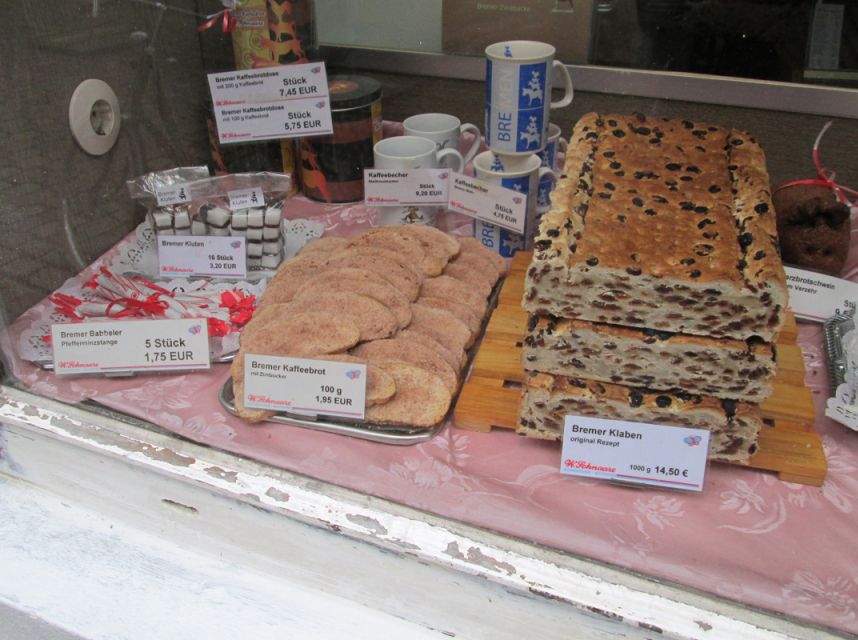
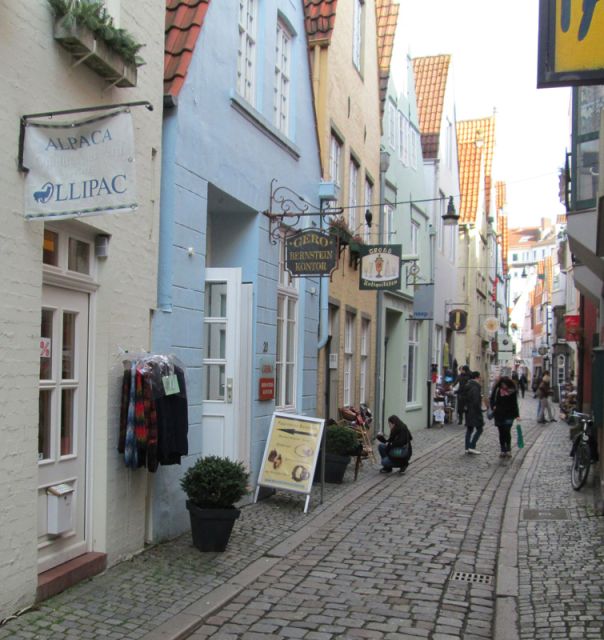
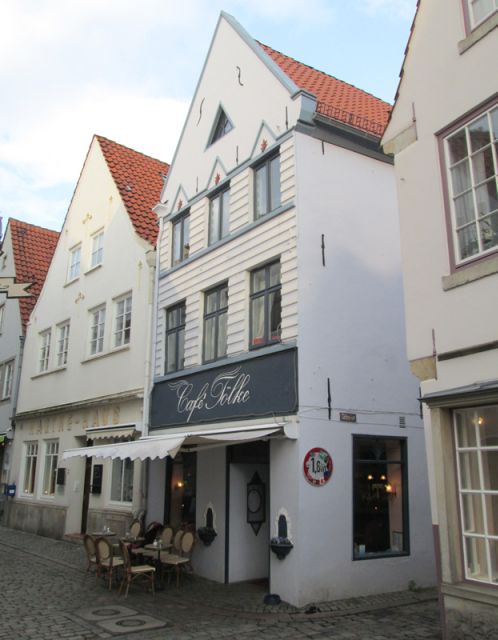
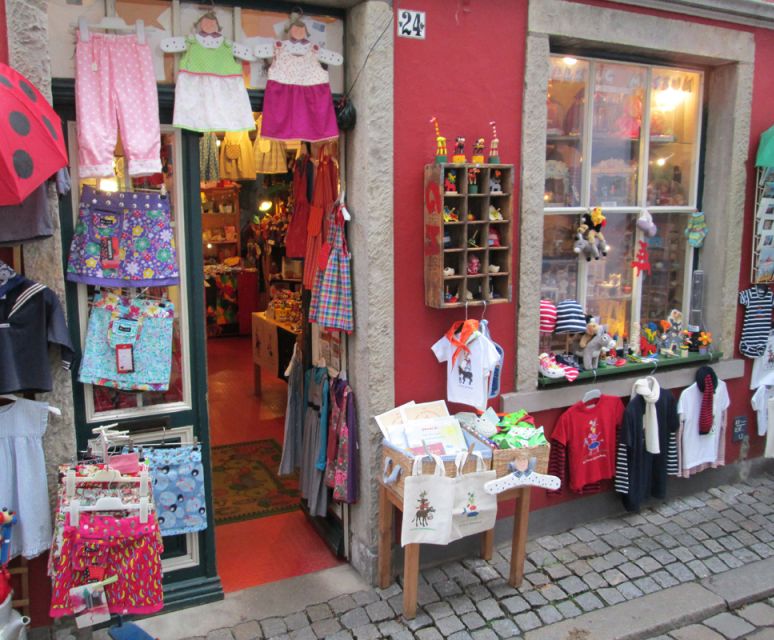
One half-timbered house contains a tea room, adding another layer to the neighborhood’s present-day character. You will also pass goldsmiths and shops selling local handicrafts. These businesses keep the quarter connected to making and selling things, even as the surrounding buildings preserve older forms.
The shops are part of the atmosphere, but this is not presented as a shopping tour. You should see them as details along the route rather than expect time set aside for browsing or buying.
The narrow lanes also affect the pace. The walk is designed for looking up, pausing, and listening, not for covering distance quickly. Wear comfortable shoes, as requested for the tour, and expect uneven or confined walking conditions typical of an old quarter. Wheelchair users should note that this activity is not suitable for them.
Same streets, a different century:
- Leipzig: City History Canal Sightseeing Tour on a Motorboat
★ 4.7 · 7,671 reviews - Berlin: 3-Hour World Heritage Cruise to Potsdam
★ 4.5 · 1,569 reviews - Heidelberg: Night Watchman Historic Adventure Tour
★ 4.7 · 1,186 reviews - The Local Tour of Hamburg Historic Centre
★ 5.0 · 1,058 reviews
Baroque, Renaissance, classicist, and historicist details
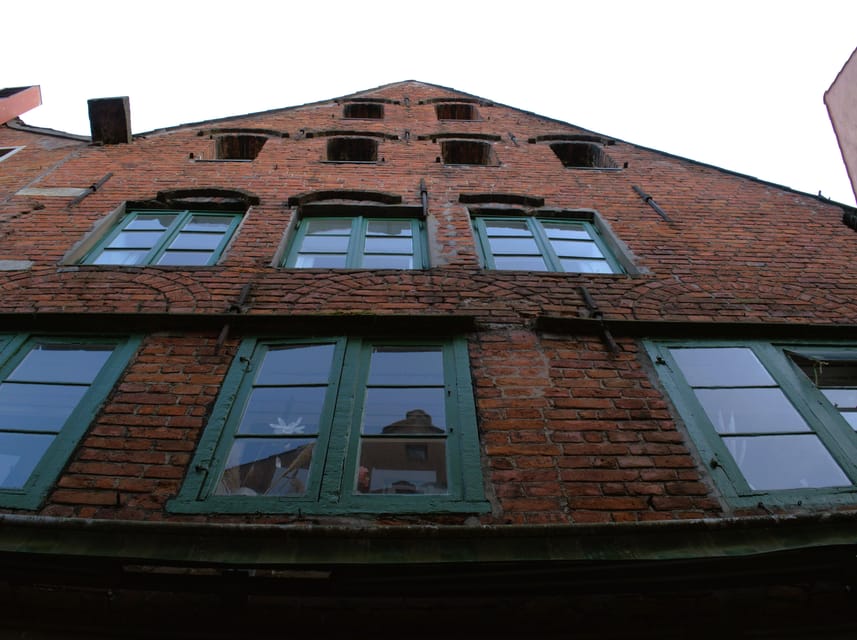
Schnoor’s appeal comes from variety as much as age. Along the route, the guide discusses Baroque and Renaissance influences, as well as classicism and historicism.
You may not see each style in the form of a large, instantly recognizable monument. Instead, the differences appear in facades, proportions, decoration, windows, and the way buildings were altered over time. A guide is useful here because the changes can be easy to miss when you are simply strolling through the lanes.
The mix also keeps the quarter from feeling like a single preserved set piece. Some houses date back centuries, some have been recreated, and others show later architectural ideas. Together, they create a visual record of changing tastes and practical needs.
I like that the tour treats architecture as part of ordinary life. You are not only told when a building was constructed. You also learn about Schnoor and its inhabitants, which gives the houses a human scale.
What the guiding is really worth
At $14 per person, this is one of the easier Bremen activities to fit into a day. The price is modest enough that you are paying mainly for interpretation, not for admission to a major monument.
That distinction helps you judge the value. If you already know architectural terms and enjoy reading signs on your own, you could walk through Schnoor independently. The lanes are the main attraction, and you do not need a ticket simply to see the quarter from outside.
The tour earns its price when the guide points out overlooked structures and explains how the neighborhood developed. Haus Schnoor 15, Packhaus Schnoor 2, reconstructed buildings, old facades, and the monastery connection all add more when placed in context.
The strongest guiding style seems to combine facts with humor. Sönke, a Bremen guide described as a local character with plenty of witty stories, is especially associated with that approach. His storytelling can make the hour feel less like a list of dates and more like a conversation about the people who lived and worked here.
You should not assume Sönke will lead every departure. Still, the experience is built around a live guide, not an audio recording or printed route. The tour is conducted in German, so you will get the most from it if you understand German comfortably.
Shared walk or private group
You can book a shared tour or select a private group. The shared option is the practical choice for keeping the cost low and hearing a guide explain the quarter to a small gathering of visitors.
A private tour may suit you better if you want a more personal pace or are visiting with family and friends. The supplied details confirm that private groups are available, but they do not promise a different route or extra interior access. The main advantage is the private format itself.
The one-hour length works well in either case. You can fit it between other Bremen plans without committing a whole morning or afternoon. It also makes a sensible introduction to Schnoor before returning on your own to revisit a shop, church, or lane.
The short duration has a tradeoff. The guide cannot spend long at every building, and there is no stated time for food, drinks, shopping, or entering attractions. Think of this as a focused orientation walk rather than a full-day cultural program.
Practical details before you book
The tour includes the guided walk. Food and drinks are not included, so plan those separately before or after the route.
Bring comfortable shoes. The old quarter’s narrow passages are the setting, and the activity is not suitable for wheelchair users.
All buildings are viewed from the outside. This is the most important expectation to set before booking. You will see historic facades, churches, houses, and shops, but the tour does not promise entry into private homes, museums, or every building mentioned along the way.
The guide’s language is German. There is no English option stated in the tour details, so this should be a deciding factor rather than a minor footnote.
The meeting point at Die Glocke is central and clearly identified. Look for the guide holding the Bremen Tour Guide sign. Starting at Domsheide also gives you a straightforward place to gather before the walk begins.
You can cancel up to 24 hours in advance for a full refund, and the reserve-now, pay-later option keeps your plans flexible. Those terms are useful if your Bremen schedule is still changing.
Who will enjoy this Schnoor walk most
I would choose this tour if you like old buildings but want someone to explain what you are seeing. The route is a good match for visitors who prefer a compact walk with a clear subject rather than a broad city tour.
It also suits anyone curious about how historic districts are preserved. The mix of original houses, reconstructed buildings, relocated facades, and later architectural styles gives the hour more substance than a simple photo stop.
German speakers will benefit most from the storytelling. If you understand only a little German, the visual setting may still be enjoyable, but the main value comes from the guide’s explanations and local anecdotes.
Families and small groups may appreciate the short length, particularly if younger members are not ready for a long walking tour. Private groups have more control over the social setting, while the shared option keeps the cost at $14 per person.
I would not pick this as your only Bremen activity if you want interior visits, food tastings, or a long historical program. The buildings are seen from outside, the route lasts one hour, and the focus stays firmly on Schnoor.
Should you book the $14 Schnoor tour?
Book it if you want a concise, affordable introduction to Bremen’s oldest quarter and you understand German. The price is fair because the guide adds detail to buildings that you could otherwise pass without noticing, including the 15th-century Brasilhaus and Packhaus Schnoor 2.
The tour is particularly worthwhile when you value local stories and humor. A guide such as Sönke can bring personality to the lanes while still explaining architecture, preservation, and the people of Schnoor.
Skip it if you need an English-language tour, wheelchair access, or entry into historic buildings. In that case, an independent visit may suit your plans better.
For most German-speaking visitors who want one well-focused hour in Bremen, this is an easy recommendation. Put on comfortable shoes, meet the guide at Die Glocke, and pay attention to the small details above the shopfronts and along the lanes.
FAQ
How long is the Schnoor walking tour?
The tour lasts one hour.
How much does the tour cost?
The listed price is $14 per person.
Where does the tour meet?
Meet in front of Die Glocke concert hall at Domsheide 6, Bremen, 28195. The guide will hold a sign saying Bremen Tour Guide.
What language is the tour conducted in?
The live tour guide speaks German.
Is a private tour available?
Yes. You can choose a private group option.
Are food and drinks included?
No. Food and drinks are not included.
Can I enter the historic buildings?
No. The buildings viewed during the tour are seen from the outside only.
Is the tour suitable for wheelchair users?
No. The activity is not suitable for wheelchair users.
Newest history tours we have reviewed in Germany
- Berlin: Nazi History Walking Tour★ 4.8 · 33 reviews
- Berlin: History and Sightseeing with Kids (Free for Kids)★ 4.9 · 19 reviews
- Berlin: Historical Sights & Berlin Wall Tour with a Berliner★ 5.0 · 62 reviews
- Berlin: Urbex Abandoned Places & History Tour★ 4.8 · 18 reviews
- Berlin (E)Bike Tour Historical Highlights in Small groups★ 4.5 · 24 reviews
- East Berlin Food & History Tour with Eating Europe★ 4.8 · 20 reviews
- Berlin: Historic Center Walking Tour with a Real Berliner★ 5.0 · 134 reviews
- Berlin: Guided Craft Beer & Cultural Tour With Snacks★ 5.0 · 68 reviews
History Walking Tours, compared.

History and Hauntings of Salem Guided Walking Tour
Read our review →
Freedom Trail History Small Group Walking Tour
Read our review →
Historic Charleston Guided Sightseeing Walking Tour
Read our review →
Tapas Walking Tour with Food, Wine, and History
Read our review →
Savannah History and Haunts Candlelit Ghost Walking Tour
Read our review →
A History of Terror – Belfast City Centre Walking Tour
Read our review →Browse the lists this tour appears in