
Review · HIROSHIMA HISTORY TOURS
Miyajima Half-day Trip Historical Walking Tour
Miyajima is easy to visit on your own, but it is much easier to understand with a guide who can explain why the island’s shrine sits over the tide, how Buddhist and Shinto traditions meet here, and where to eat without wasting half the day. This small-group tour of up to six people packs the island’s main sights, a local lunch, and plenty of photo stops into about five and a half hours.
I like the ferry ride across the Seto Inland Sea and the chance to see the Otorii Gate from the water before walking up to it. I also like the mix of famous places and quieter corners, especially Daishoin Temple, which several guides, including Hika, Eri, Shun, and Kiki, have helped visitors appreciate beyond the usual shrine photos.
The main drawback is the pace. You cover a lot of ground, including hills and stairs, in half a day. Summer heat can be severe, food substitutions are limited, and the ferry costs an additional 500 yen round-trip. One serious booking error has also been reported, so confirm your meeting details before setting out.
Key points to know before booking
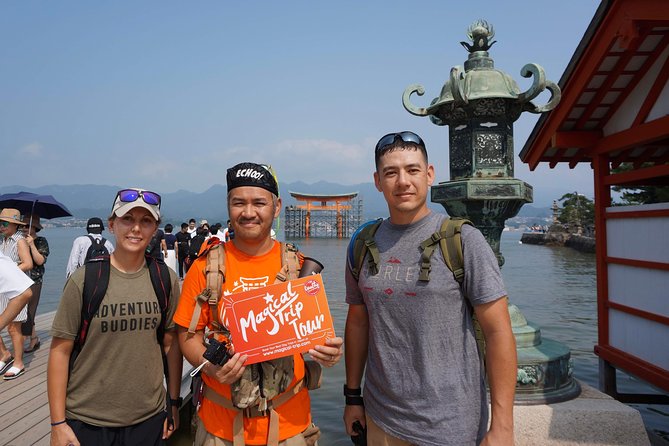
- The group is limited to six people, though some departures may become private if few people book.
- The ferry fee is extra, at 500 yen round-trip, while shrine, temple, and museum admissions are included.
- Daishoin Temple is a highlight, with Buddhist statues, hillside paths, and a calmer feel than the main shrine area.
- Lunch includes Hiroshima specialties, such as fresh or grilled oysters and momiji dumplings, depending on the food stops.
- The walking is real, with stairs and hills, so bring comfortable shoes and water.
- Guides add cultural context, photo help, food suggestions, and flexibility when weather or personal interests call for a change.
Why a guide helps on Miyajima
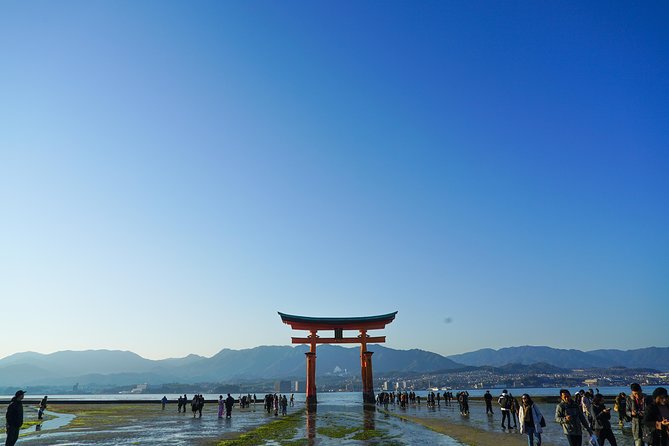
Miyajima is one of those places where the postcard view is only the beginning. You can see the red torii, take a picture at Itsukushima Shrine, feed your camera a few deer shots, and head back to Hiroshima. But without context, the island can feel like a string of attractive buildings rather than a sacred place shaped by centuries of religious practice.
This tour gives you a guide for that context. The focus is Japanese spirituality, with explanations of Shinto shrine customs, Buddhist temple life, and the island’s religious importance. At Daishoin, guides explain the statues and the role of the temple within the Omuro school of Shingon Buddhism. At Itsukushima Shrine, they point out how the buildings were designed to work with the changing tide.
The small group matters. A guide can answer questions without trying to manage a crowd, and you can ask for a photo, a snack stop, or a little more time at a favorite place. The experience is not private by default, but the six-person limit gives it a more personal feel than a large coach excursion.
The guide names vary by departure. Past tours have included Hika, Hiro, Eri, Yuji, Kaori, Kiki, Shun, Mariko, Meri, and Tomohiro, also called Tommy. The strongest pattern is clear: the guide is a major part of the experience. Good guides explain what you are looking at, take photos, answer questions, and adjust the pace when needed.
More History Walking Tours in Japan
- Tokyo: Imperial Palace and Shogun Historical Walking Tour
★ 5.0 · 2,251 reviews - Kyoto Gion: 2-Hour Geisha Culture & History Walking Tour
★ 5.0 · 1,186 reviews - Tokyo Castle & Imperial PalaceーShogun Walking Tour
★ 4.7 · 1,068 reviews
Meeting at Miyajimaguchi and crossing the Seto Inland Sea
You meet at 1-chōme-3-26 Miyajimaguchi in Hatsukaichi, Hiroshima, near public transportation. From there, the group boards the ferry to Miyajima. The round-trip ferry fare is not included and costs 500 yen.
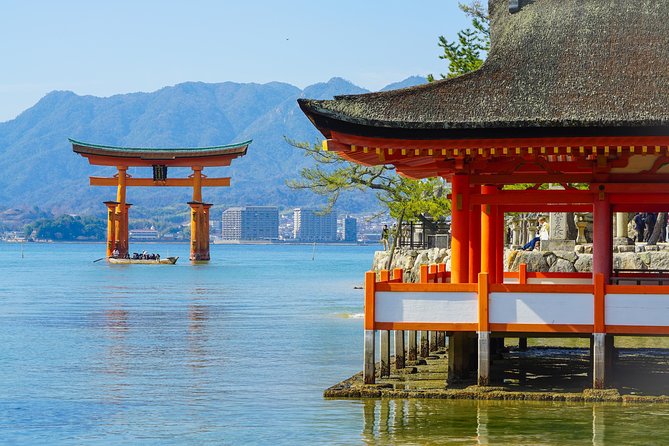
The crossing is more than a transfer. It gives you views over the Seto Inland Sea and your first sight of the Otorii Gate, Miyajima’s most recognizable symbol. Seeing the gate from the boat helps you understand the island’s setting before you begin walking. The shrine and gate are not isolated monuments. They are part of a coastal religious site shaped by water, mountains, and tides.
The ferry portion also helps the tour start at a natural pace. You leave the mainland behind, get your camera ready, and arrive with the major sights still ahead. Keep your ticket and payment ready, and allow enough time to reach the meeting point. Since the meeting point and ferry arrangements matter, I would check the confirmation carefully before the tour day.
Walking along the coast to the Otorii Gate
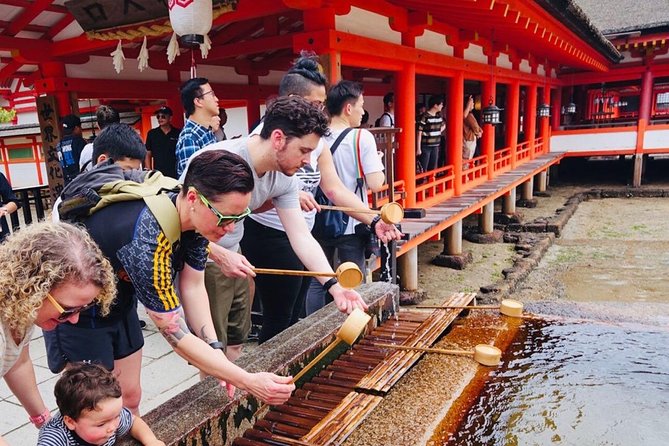
After arriving, the group walks along the coast toward the Otorii Gate. The route gives you changing views of the water, shrine buildings, and gate. Depending on the tide, you may see the torii standing in the water or find the beach exposed below it.
One particularly memorable possibility is visiting at low tide, when you may be able to walk right up to the gate. The exact tide conditions are not guaranteed, but the changing water is part of what makes Miyajima unusual. The gate’s relationship with the sea is not just a good photo trick. It reflects the old idea of entering a sacred place by passing through a boundary between the ordinary world and the religious site.
This is one of the tour’s best photo sections. Your guide can take pictures and suggest angles, which helps if you are traveling alone or want a photo of the whole group. Still, do not expect unlimited time for every picture. The tour has several stops to cover, so you may need to choose your favorite views and keep moving.
Itsukushima Shrine and architecture built for the tide

Itsukushima Shrine is the central cultural stop. The complex dates to the Heian period, from 794 to 1192, and its distinctive design is built around the movement of the tide. The buildings, walkways, and sea-facing views give the shrine a look unlike ordinary land-based temples and shrines.
Your admission is included, and the guide explains the site as you walk through it. This is where a guide adds real value. Instead of simply seeing red pillars and polished floors, you learn how the shrine’s position and design relate to the island’s sacred status.
Allow time for photographs, but also look beyond the famous gate. The shrine’s beauty comes from its repeated lines, open spaces, and connection to the sea. Weather can change the mood dramatically. Sun brings sharp color and reflections, while cloud or rain can make the place feel quieter and more solemn. Several tours have gone ahead in rain, so poor weather does not automatically ruin the experience, though it does make walking surfaces and photography less convenient.
Same streets, a different century:
- Kyoto: Fushimi Inari, Kinkakuji, Bamboo Grove 1 Day Bus Tour
★ 4.8 · 4,316 reviews - World Heritage Shirakawa-go and Experience Tours from Kanazawa
★ 5.0 · 4,049 reviews - World Heritage Kyoto & Nara Uji Authentic Matcha Experience
★ 5.0 · 1,573 reviews - Kanazawa: World Heritage Shirakawa-go Morning Guided Tour
★ 4.9 · 988 reviews
Daishoin Temple, the cultural high point
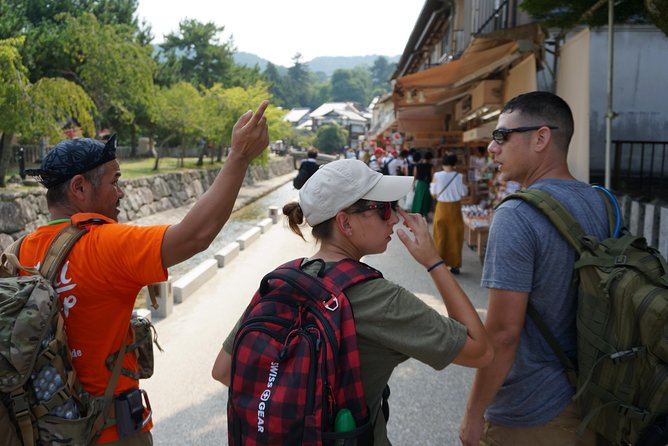
For many people, Daishoin Temple becomes the surprise favorite. It is the main temple of the Omuro school of Shingon Buddhism and sits on the lower slopes of Mount Misen. The visit lasts about 30 minutes, but the impression can last much longer.
Your guide explains Buddhist practice and the many statues found around the temple. The setting is more peaceful than the main shrine area, and the religious details reward a slower look. You may notice rows of small figures, distinctive devotional objects, and a more intimate atmosphere than at the island’s headline sight.
The temple visit does involve stairs and uphill walking. Eri has been praised for allowing enough breaks on hills and stairs, and that is good advice for everyone. You do not need to climb Mount Misen on this tour, but Daishoin is not a flat stop. Wear shoes with good support, especially if you have already spent the morning sightseeing in Hiroshima.
If you want a tour that is only about quick photographs, this stop may feel slow. If you want a better sense of Miyajima as a place of worship, it is one of the strongest reasons to book.
Momijidani Park and the quieter side of the island
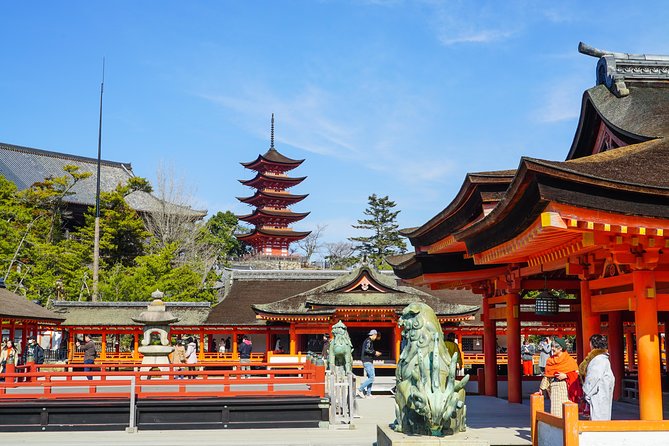
Momijidani Park provides a change of pace after the shrine and temple. The scheduled visit is about 30 minutes, mainly for photographs. Its name refers to autumn maple leaves, but the park is useful in any season as a break from the denser streets near the waterfront.
The value here is not a major monument. It is the chance to enjoy the island’s natural setting and take a breath. The tour keeps the stop fairly short, so do not expect a long nature walk. You will get a pleasant pause and a different set of pictures before returning to the historical sights.
The park also reinforces one of Miyajima’s strengths: the island combines religious buildings, forested slopes, shoreline views, and a compact town. You get a little of each without needing to plan separate routes.
Senjokaku and Toyokuni Shrine
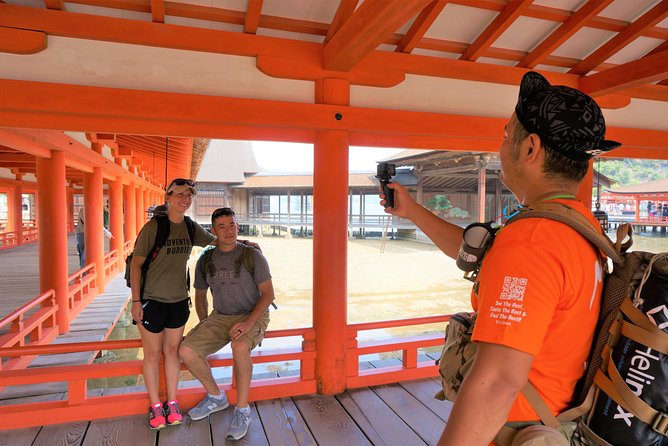
Senjokaku is the common name for the main hall of Toyokuni Shrine, also called the Terminal Shrine of Itsukushima Shrine. The building is known for its broad, open interior and elevated position, giving you another useful view over the island and surrounding area.
The stop includes an explanation of the site rather than a long activity. It works well as part of the larger story of Miyajima’s religious buildings. After seeing the tide-based design of Itsukushima Shrine and the Buddhist character of Daishoin, Senjokaku helps show the range of sacred architecture on one small island.
Because the tour includes several 30-minute visits, you should expect highlights rather than extended study at every place. If one building catches your attention, ask your guide what details matter most. The limited group size makes that easier.
Omotesando Street and a useful food stop
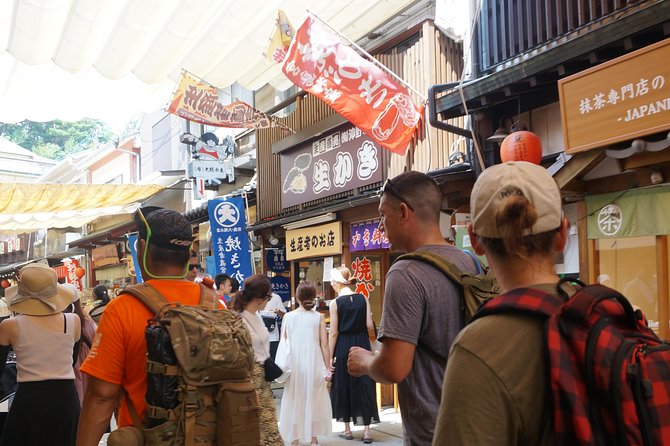
Omotesando Shopping Street is the liveliest part of the walking route. It is lined with food stalls, souvenir shops, and places selling Miyajima specialties. This is where you get a taste of the island as a working tourist town rather than only a religious site.
The included Hiroshima local lunch is a major part of the value. Food can include fresh or grilled oysters and momiji dumplings, the maple-leaf-shaped cakes associated with Miyajima. Other tour meals have included items such as unagi, and guides may suggest additional snacks or a favorite café. Extra food and drinks are available for purchase, but they are not included.
A guide is especially helpful here because the street offers many choices and not all stops serve the same food. You get to try regional specialties without spending much time guessing. You should still keep expectations practical. This is a walking tour with a local lunch, not a dedicated food tour with a long series of tastings.
Food restrictions need careful planning. Vegetarian and vegan options are available but limited. Gluten-free lunch is not available, and the operator cannot guarantee allergy-free preparation because the food comes from independent kitchens. Tell the operator about allergies or dietary needs at least one day ahead. Same-day requests may not be possible, and substitutions cannot always be arranged.
Price, group size, and what the $109.43 covers
At $109.43 per person, this is not the cheapest way to see Miyajima. You can reach the island independently for the ferry fare and visit some places without a guide. The question is what you want your money to do.
The price includes a certified MagicalTrip guide, admission to the shrines, temples, and museum included in the route, tour photos, and a Hiroshima-style lunch. The ferry is extra, but the 500 yen charge is modest. You are mainly paying for organization, explanations, food guidance, and the convenience of moving from one important site to the next without building the route yourself.
The value is strongest for a first visit, a solo visitor who wants company and photos, or anyone interested in religious history but unsure how to read the sites. It is also appealing for families. One family group of five had a private departure with Hika, including lunch and soft-serve ice cream.
If you are an independent visitor who enjoys researching shrine customs, planning food stops, and walking at your own speed, the cost may be harder to justify. You will give up some freedom because the tour has a set route and a five-and-a-half-hour schedule.
Weather, walking, and practical comfort
Summer in Japan can be hot and humid, with temperatures sometimes reaching 40°C. Winter conditions can also be severe, with lows listed as low as -5°C. Bring water, wear a hat in hot weather, and dress for the season.
Comfortable walking shoes are essential. The route includes a coastal walk, shrine grounds, temple paths, park paths, and shopping streets. Daishoin includes stairs and hills, and the whole experience is more enjoyable if you are ready to walk steadily for several hours.
Rain does not stop the tour automatically. Guides have handled wet days with indoor shrine and temple visits, food stops, and flexible pacing. You should bring rain protection and accept that the Otorii Gate may be less photogenic in poor weather. On the other hand, a rainy day can reduce the sense of congestion and give the island a quieter mood.
The activity ends back at the meeting point. All ages are welcome, and most people can participate, but the supplied information does not promise a fully accessible route. If stairs, hills, heat, or long periods of walking are concerns, ask before booking.
The one booking concern to take seriously
There is one important operational warning. A participant was left at the meeting point after the operator failed to check the reservation system. The issue appears to have been a booking-handling error, not a problem with the island route itself, but it is serious enough to mention.
You should save the confirmation, check the meeting location and start time, and contact the operator promptly if anything looks unclear. The experience offers free cancellation up to 24 hours before the start time. Cancellations made inside that window are not refundable, and changes are not accepted less than 24 hours ahead.
Who should book this Miyajima tour?
I would book this tour if you are visiting Miyajima for the first time and want the major sights explained in a single half-day. It is particularly useful if you want help with photographs, local food, shrine customs, and the difference between Buddhist and Shinto sites.
It also suits solo visitors, couples, and families who prefer a small group over a large bus. A departure with only two people can feel almost private, while a full group still never exceeds six.
I would hesitate if you need a gluten-free meal, want to spend most of the day hiking, or prefer complete control over every stop. I would also avoid squeezing this into an already exhausting day, since the walking, heat, and stairs can wear you down.
Should you book it?
Book it if you want Miyajima to make sense, not just look beautiful. The Otorii Gate and Itsukushima Shrine provide the famous images, but the guide’s explanations, Daishoin Temple, local lunch, and small group turn the visit into a fuller introduction to the island.
The $109.43 price is fair when you use the included admissions, meal, guide, and photos. Bring water, good shoes, and realistic expectations about the pace. Confirm your reservation details, prepare for the weather, and tell the operator about dietary needs early. For a first Miyajima visit, this is a well-organized choice with a few practical limits worth knowing in advance.
FAQ
How long does the Miyajima walking tour last?
The tour lasts approximately 5 hours and 30 minutes.
Where does the tour meet?
The meeting point is 1-chōme-3-26 Miyajimaguchi, Hatsukaichi, Hiroshima 739-0411, Japan.
Does the tour include the ferry to Miyajima?
The ferry is part of the route, but the 500 yen round-trip ferry fee is not included in the tour price.
What places does the tour visit?
The route includes Miyajima, the Otorii Gate, Itsukushima Shrine, Daishoin Temple, Momijidani Park, Senjokaku, and Miyajima Omotesando Shopping Street.
Is lunch included?
Yes. Hiroshima local lunch is included, with specialties such as fresh or grilled oysters and momiji dumplings. Additional food and drinks cost extra.
Are admission fees included?
Yes. Entrance fees to the shrines, temples, and museum included in the tour are covered.
How many people can join the tour?
The maximum group size is six people.
Are vegetarian, vegan, or gluten-free meals available?
Vegetarian and vegan options are available but limited. Gluten-free lunch is not available. Dietary requests and allergies must be given at least one day before the tour, and allergy-free preparation cannot be guaranteed.
Can I cancel for a full refund?
You can cancel for a full refund up to 24 hours before the experience begins. Cancellations or changes made less than 24 hours before the start time are not accepted for a refund.
More Day Trips in Japan
- From Tokyo: Nikko World Heritage Site Private Full-Day Trip
★ 4.9 · 243 reviews - Tokyo: Nikko World Heritage Private Day Trip Hotel Pick-up
★ 4.8 · 145 reviews - 1-Day Tour from Nagoya: Hiking the Historic Nakasendo Trail
★ 4.9 · 34 reviews - From Bangkok: Ayutthaya Historical Park Guided Day Trip
★ 4.6 · 3,020 reviews
More Half-Day Tours in Japan
- Nara: Half-Day UNESCO Heritage & Local Culture Walking Tour
★ 4.8 · 250 reviews - Lima’s Vibrant Heritage: Exploring the City’s Landmarks Half-day
★ 4.5 · 581 reviews - From Ho Chi Minh: Cu Chi Tunnels Half-Day History Tour with Guide
★ 5.0 · 480 reviews - Naxos: Half-Day Guided History and Culture Sightseeing Tour
★ 4.7 · 435 reviews
Newest history tours we have reviewed in Japan
- Authentic Sapporo: Nijo Market Seafood Lunch & History Tour★ 4.8 · 20 reviews
- Asakusa: 3.5-hour Big-picture History Walk★ 4.7 · 39 reviews
- Asakusa: A Big-picture History Walk to Know Japan★ 4.6 · 77 reviews
- 2.5-Hour Nagoya Tour: Castle History, Local Food & City View★ 4.5 · 36 reviews
- 1-Day Tour from Nagoya: Hiking the Historic Nakasendo Trail★ 4.9 · 34 reviews
- From Tokyo: Nikko World Heritage Site Private Full-Day Trip★ 4.9 · 243 reviews
- Tokyo: Nikko World Heritage Private Day Trip Hotel Pick-up★ 4.8 · 145 reviews
- 2.5 Hour Private History and Culture Tour in Himeji Castle★ 5.0 · 185 reviews
History Walking Tours, compared.

History and Hauntings of Salem Guided Walking Tour
Read our review →
Freedom Trail History Small Group Walking Tour
Read our review →
Historic Charleston Guided Sightseeing Walking Tour
Read our review →
Tapas Walking Tour with Food, Wine, and History
Read our review →
Savannah History and Haunts Candlelit Ghost Walking Tour
Read our review →
A History of Terror – Belfast City Centre Walking Tour
Read our review →Browse the lists this tour appears in