
Review · JAPAN HISTORY TOURS
Tokyo: Asakusa & Sensoji ー Oldest Temple Walking Tour (2hrs)
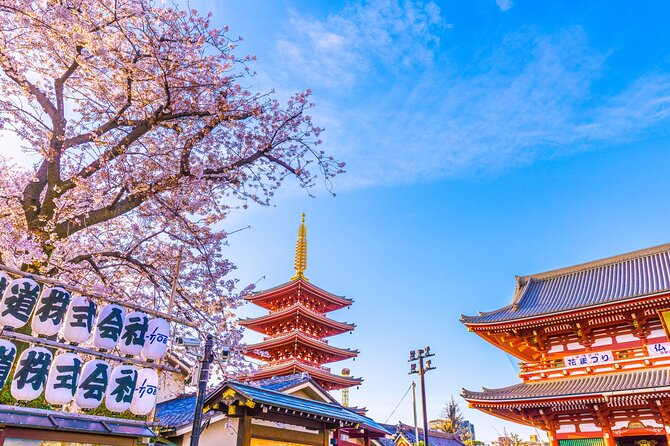
Asakusa gives you old Tokyo in a compact walk: the giant Thunder Gate, incense drifting around Sensoji, snack stalls, matcha sweets, sword shops, and a supermarket where locals buy everyday food. This two-hour tour helps you read the symbols, customs, and storefronts instead of simply passing through with a camera.
I like the hands-on temple customs, including purifying your hands, trying a fortune, enjoying the incense smoke, and making a traditional prayer. I also like the mix of sights beyond Sensoji, from a pro knife shop and samurai goods to melon bread, menchi-katsu, and Japanese groceries.
The main caution is the food tasting. It is included in the experience description, but one participant said it did not happen, so you should treat tastings as possible rather than guaranteed. The walk is also short and fairly gentle, but Asakusa has many shops and crowds to navigate.
Key points about this Asakusa walk
- Kaminarimon starts the story: Learn the gate’s proper name, history, and meaning before entering Sensoji.
- Sensoji customs are part of the tour: Wash your hands, use the incense, draw a fortune, and learn how to pray.
- Local food is built into the route: Look for matcha desserts, melon bread, skewers, menchi-katsu, and possible tastings.
- The route goes beyond the temple: See Hoppy Street, traditional storefronts, knife shops, sword stores, and kimono shops.
- The small group matters: The maximum is 15 people, and some bookings may be handled privately when few people sign up.
- The ending is practical: A local supermarket offers a useful stop for Japanese snacks and souvenirs.
Why this two-hour Asakusa tour works
Asakusa is easy to reach, but it is not always easy to understand. The main temple area looks simple on a map: one gate, one shopping street, one temple. In practice, the symbols, rituals, side streets, food stalls, and old businesses can blur together.
That is where this walk earns its price of $19.90. You are not paying for entry tickets, since the listed stops are free. You are paying for a guide who explains what you are seeing and points out details you could miss on your own.
The route also gives you more than the standard temple visit. You move from the famous Kaminarimon gate through Nakamise Street, into the Sensoji grounds, and then toward food shops, Hoppy Street, traditional stores, and a supermarket. That combination gives you both the postcard Asakusa and the working neighborhood around it.
I would not call this a full food tour or a long historical walk. It is a compact orientation to one of Tokyo’s best-known districts, with enough snacks and shopping to keep the temple visit from feeling like a single-stop attraction.
More History Walking Tours in Japan
- Tokyo: Imperial Palace and Shogun Historical Walking Tour
★ 5.0 · 2,251 reviews - Kyoto Gion: 2-Hour Geisha Culture & History Walking Tour
★ 5.0 · 1,186 reviews - Tokyo Castle & Imperial PalaceーShogun Walking Tour
★ 4.7 · 1,068 reviews
Starting at Kaminarimon and Nakamise Street
Meet at the Kaminarimon Police Box at 1-chome-3-1 Asakusa. This is a practical meeting point because it places you right beside the outer gate of Sensoji, one of Tokyo’s most recognizable entrances.
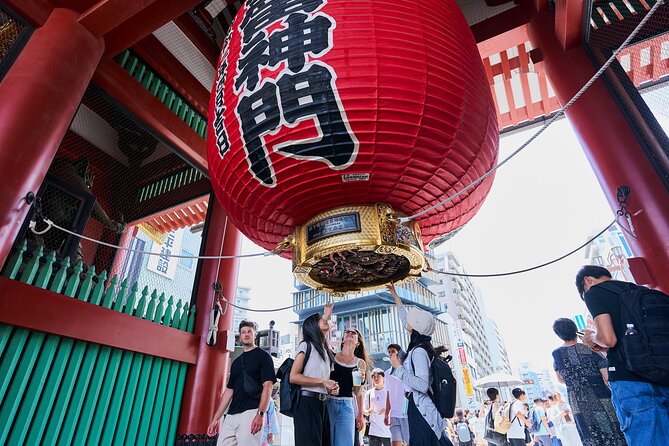
Your guide begins with the gate itself. You learn its real name, the story behind it, and what its famous features represent. That opening is useful because Kaminarimon is often treated as a photo stop, yet it is also the first piece of the temple complex’s visual language.
After the gate, you enter Nakamise Shopping Street. The walk here takes about 20 minutes, with time for souvenir browsing and street food. The shops sell the sort of items many people want from Tokyo, including traditional gifts, small keepsakes, and edible souvenirs.
This is also one of the busier sections of the route. If you want photographs without feeling rushed, keep your camera ready but follow the group closely. Nakamise is a shopping street, not a quiet museum corridor, and the crowds can make a short distance take time.
Your guide’s value here is practical. You can ask what is worth buying, which food is easy to eat while walking, and how the shops fit into Asakusa’s older commercial life. The tour’s food stops may include local specialties, but the exact tasting experience can vary.
Entering Sensoji, Tokyo’s oldest temple
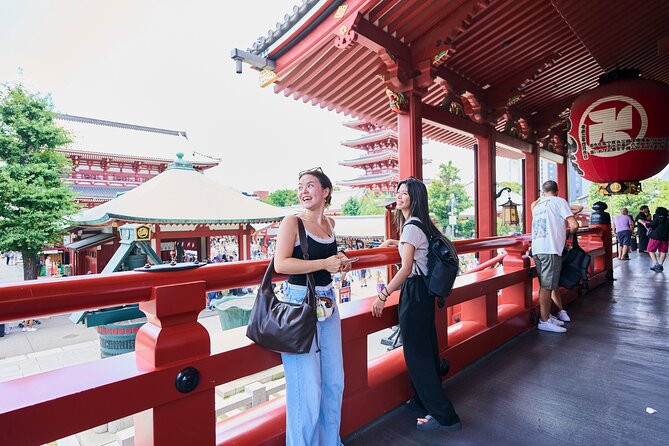
Sensoji gets about 20 minutes on the scheduled route, which is enough for a first look and basic temple customs. It is not enough for every hall, side path, and photo angle, so you should see this tour as an introduction rather than a complete temple visit.
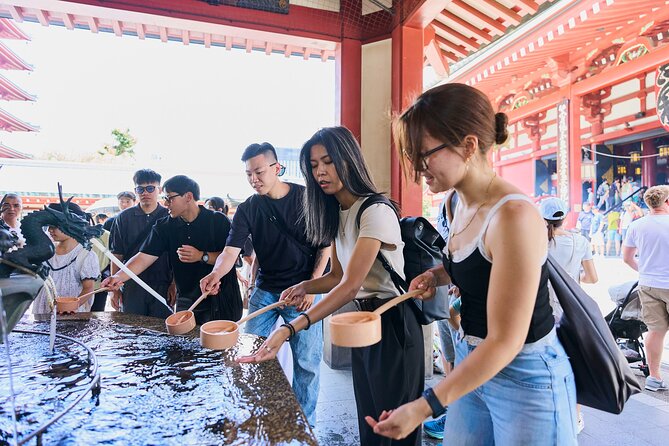
Your guide shows you how to purify your hands with water, use the incense smoke, draw a fortune, and make a traditional prayer. These details turn the visit from simple sightseeing into participation. You do not need prior knowledge of Buddhist practice, and the guide can help you understand the order and purpose of each action.
Sensoji is Buddhist, while nearby Asakusa also includes Shinto traditions. The experience highlights a rare place where a Buddhist temple and Shinto shrine coexist. That pairing helps explain an important part of Japanese religious life, where different traditions can share a neighborhood and often coexist in everyday practice.
The fortune-drawing ritual is one of the more memorable moments for many first-time visitors. If you receive an unfavorable fortune, you can learn what to do with it rather than simply wondering if you have had bad luck. The tour gives you context without making the ritual feel like a performance.
The incense smoke is another small but important detail. You can enjoy its scent and observe how people use the space respectfully. A guide is helpful here because temple behavior can feel unfamiliar, and a few clear instructions let you take part without hesitation.
Yogodo, koi, Jizo statues, and a quieter pause
The Sensoji Yogodo area receives about five minutes. That sounds brief, but it gives the route a useful change of pace after the gate, shopping street, and main temple area.
You can see the goshuin desk, where visitors may obtain a temple seal, along with a pond containing koi fish. Rows of Jizo statues add another layer of meaning and come with a well-known local story that your guide can explain.
This is also described as a popular photo spot. Keep your expectations sensible: five minutes is enough for a quick look and a few photographs, not for a long, quiet exploration. Still, this stop helps show that Sensoji is more than its main entrance and central worship area.
I like this part of the route because it gives you smaller details after the major sights. You get a glimpse of the temple’s visual rhythm: water, statues, seals, gardens, and people moving through familiar rituals.
More Architecture and Landmark Tours in Japan:
- Tokyo: Nagano Snow Monkeys and Zenkoji Tour with Temples
★ 4.9 · 19 reviews - Venice: St. Mark’s Basilica Guided Tour & VR History Intro
★ 3.9 · 4,880 reviews - Venice’s Best: Basilica, Doge’s Palace, Gondola & History Gallery
★ 4.5 · 2,478 reviews - Córdoba: Skip-the-Line Great Mosque-Cathedral History Tour
★ 4.7 · 1,690 reviews
Matcha at Kaminari Issa
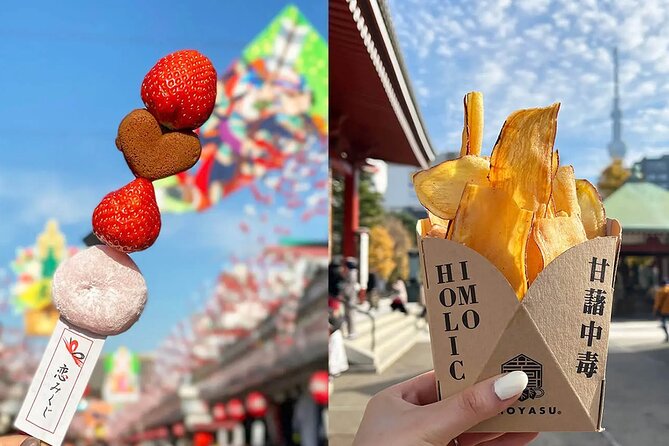
Kaminari Issa is a local sweets shop specializing in matcha flavors. The scheduled stop is about five minutes, so this is a quick taste or browsing break rather than a full dessert session.
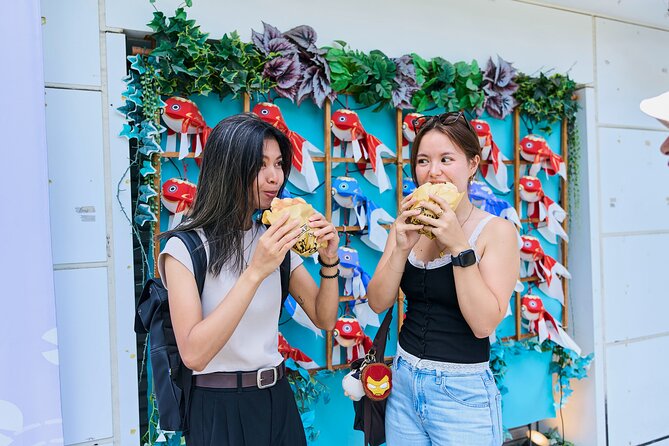
You might find matcha soft serve, matcha truffles, and seasonal sweets. Matcha has a wide range of flavors, from creamy and sweet to distinctly bitter, and trying it in dessert form gives you an easy way to sample a familiar Japanese ingredient without committing to a formal tea experience.
This is one of the places where the tour’s food focus becomes most concrete. If you have a sweet tooth, it is a welcome change after the temple rituals. If you do not want dessert, you can still use the stop to see how local shops turn traditional flavors into modern snacks.
The short timing means you may need to choose quickly. If a particular sweet catches your eye, ask your guide for help deciding rather than trying to inspect every option.
Edo-style streets, melon bread, and savory snacks
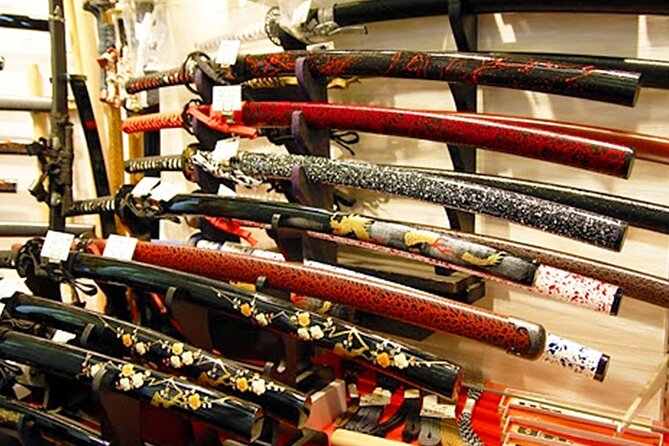
The walk continues through local shopping streets lined with snack stands, souvenir shops, and traditional storefronts. The route includes famous melon bread, street food, and smaller shops that are easy to miss if you are only walking between the station and Sensoji.
Melon bread is a sweet, crisp-topped bun with no melon required. It is a classic Japanese bakery snack and a simple choice if you want something portable. You may also encounter menchi-katsu, a fried minced-meat cutlet, along with skewers and other street foods.
This is where the walk becomes especially useful for a first visit. Asakusa has many side streets, and the best choice depends on what you want: sweets, savory food, souvenirs, kitchen goods, or old-fashioned storefronts. A local guide can point you toward the right stretch instead of leaving you to wander every block.
You should remember that food availability can change. Some shops may be closed, seasonal items may disappear, and the tasting mentioned for the experience does not always seem to take place. Come ready to buy a snack, but do not book this solely for included food.
Hoppy Street and old Asakusa businesses
Hoppy Street gets about 10 minutes. The area is known for daytime drinking and casual local eateries, giving you a glimpse of Asakusa after the temple crowds thin or move on.
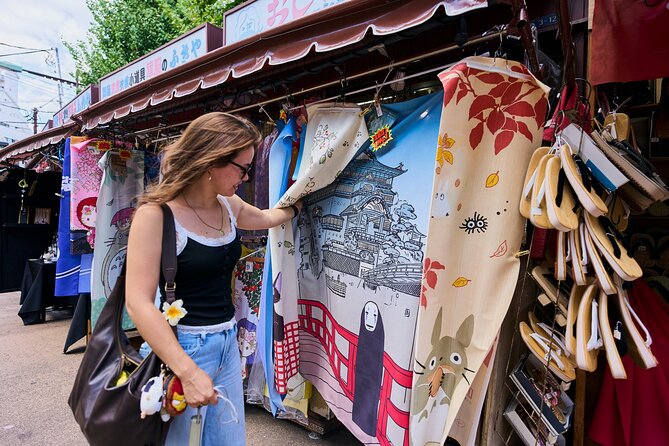
The route also points out businesses that recall the Edo period, including sword stores and kimono shops. You may see traditional goods in places that have continued serving the neighborhood for years. The tour also includes a samurai sword and ninja gear store, which adds a playful historical angle to the walk.
I like this section because it keeps the experience from becoming only a religious-site tour. Asakusa is also a commercial district, a food district, and a place where old-style shops continue beside modern tourism.
The stop is short, so do not expect a long shopping session or a detailed lesson in sword collecting. Instead, use it to note places you can return to after the tour. The guide may also introduce a local knife shop where you can see traditional sharpening in action. Japanese knives are known for precision and craftsmanship, and this can be a particularly good lead if you cook or want a useful souvenir.
Finishing at a neighborhood supermarket
The tour ends at Ozeki Asakusa Kaminarimon Grocery and Supermarket, back near the meeting area. This is a smart final stop because supermarkets often offer a more grounded look at daily Japanese food than souvenir shops do.
You can browse everyday groceries and pick up unusual snacks or gifts. Prices and choices vary, but the stop gives you a chance to compare ordinary packaged food with the more polished souvenirs along Nakamise Street.
For me, this is a useful way to finish. You have seen temples, traditional shops, and street food, then end with the kind of place where local shopping happens. If you are looking for edible gifts, the supermarket may be more practical than a shop aimed mainly at sightseers.
Guides, group size, and pace
The tour allows up to 15 people. That is small enough for a guide to answer questions, though the experience can feel different depending on the final group size. One booking became a private tour when the person was alone, and the guide continued rather than canceling.
Several guides are named in the available information, including Keiko, Yui, Josh, Nono, Nanami, Naoto, Naruto, and Aiko. The strongest pattern is guide-led explanation, friendly pacing, and attention to individual needs. Nono, for example, adjusted the walk for a mother and daughter dealing with jet lag, while Josh was noted for clear English and local insight.
You should still remember that the guide shapes the experience. The route is set, but the balance between temple history, food, shopping, and questions may vary. If you care about a particular topic, ask about it early.
The pace is described as manageable, with not too much walking. Most people can participate, and the tour is near public transportation. Wear comfortable shoes anyway, since you will be on your feet through shopping streets and temple grounds.
Is $19.90 good value?
At $19.90 per person, this is a low-cost guided introduction to Asakusa. The admission price for the listed stops is free, so the value depends on how much you want interpretation and local direction.
I think the price is fair if you are visiting Asakusa for the first time and want the customs explained. It is also useful if you have limited time and want a route that combines Sensoji with food streets, Hoppy Street, specialty shops, and a supermarket.
The value is weaker if you already know Sensoji well or prefer to wander alone. You can enter the temple area without paying for a tour, and two hours does not allow for long shopping or a full food crawl.
The biggest price-related question is the tasting. Because one person did not receive the food tasting described, I would view any sample as a bonus, not the reason to book. The guide’s route planning and explanations are the more dependable part of what you are buying.
Who should book this walk?
I would choose this tour for a first-time Tokyo visitor, a family wanting a simple introduction to temple customs, or anyone who likes food and shopping mixed with history. It also suits tired arrivals because the walk is short, near transportation, and can be adjusted by a considerate guide.
It is a good fit if you want more than a photo at Kaminarimon but less than a full-day cultural tour. You get a clear route, a small group limit, and a useful list of places to revisit.
I would skip it if your main goal is guaranteed food tasting, extensive temple study, or serious shopping time. In those cases, visit Sensoji independently and spend the rest of the day choosing your own shops and restaurants.
Should you book the Asakusa Oldest Temple Walking Tour?
Book it if you want a friendly, compact introduction to Sensoji and the surrounding streets, with temple customs, local snacks, matcha, old-style shops, and everyday groceries in one route. The guides, including Keiko, Yui, Josh, Nono, and Nanami, are a major part of the experience, and the small group limit keeps the walk manageable.
Go in with realistic expectations. The food tasting may not always happen, and the two-hour schedule gives you highlights rather than a full study of Asakusa. At $19.90, though, it is a sensible way to get your bearings, learn how to behave at the temple, and leave with ideas for what to explore next.
FAQ
How long is the Asakusa and Sensoji walking tour?
The tour lasts approximately two hours.
What is the tour price?
The listed price is $19.90 per person.
Where does the tour meet?
The meeting point is Kaminarimon Police Box at 1-chome-3-1 Asakusa, Taito City, Tokyo 111-0032, Japan.
Where does the tour end?
The activity ends back at the meeting point.
Is Sensoji Temple admission included?
The listed stops have no admission charge. Sensoji Temple is visited as part of the walking route.
What food might I try?
Possible food and dessert stops include melon bread, matcha soft serve, matcha truffles, menchi-katsu, skewers, seasonal sweets, and other street foods. Food tasting may vary, so it is not guaranteed.
How large can the group be?
The maximum group size is 15 people.
Can most people take part?
The activity is near public transportation, and most people can participate. The walk is described as not involving too much walking.
What is the cancellation policy?
You can cancel at least 24 hours before the start time for a full refund. Cancellations or changes made less than 24 hours before the start time are not accepted and are not refunded.
Newest history tours we have reviewed in Japan
- [30 minutes] Rickshaw tour around Asakusa [History, sightseeing, Tokyo Skytree]★ 5.0 · 38 reviews
- Private sake pairing@ancient underground★ 5.0 · 27 reviews
- Private Tour Through the Tokyo National Museum & Ukiyo-e★ 4.7 · 17 reviews
- Tokyo: Customized Private Historical Guided Photoshoot Tour★ 5.0 · 25 reviews
- Tokyo: Imperial Palace, the history of Japan (ENGLISH GUIDE)★ 5.0 · 77 reviews
- (Ticket Included) Explore Osaka Castle & Museum of History★ 4.8 · 21 reviews
- Tokyo: Edo Castle & East Garden of the Imperial Palace Tour★ 4.7 · 112 reviews
- The history of Hiroshima “the event that shape the history”★ 4.9 · 18 reviews
Architecture & Landmark Tours, compared.
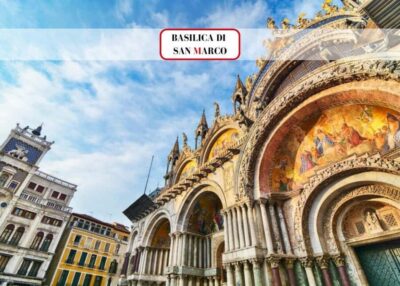
St. Mark’s Basilica Guided Tour & VR History Intro
Read our review →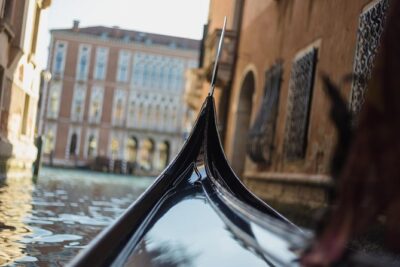
Venice’s Best: Basilica, Doge’s Palace, Gondola & History Gallery
Read our review →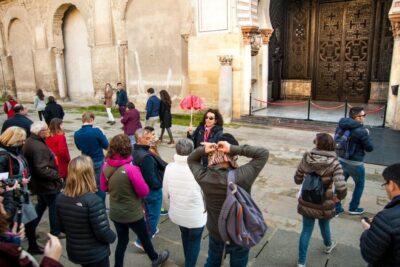
Córdoba: Skip-the-Line Great Mosque-Cathedral History Tour
Read our review →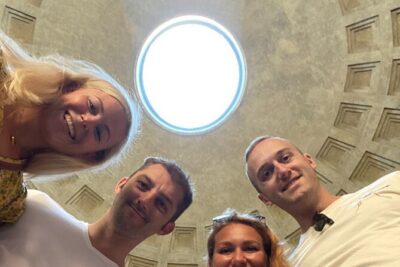
Pantheon Elite Guided Tour – Rome’s Iconic Ancient Temple
Read our review →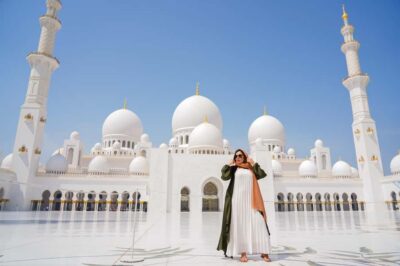
Abu Dhabi Grand Mosque, Palace, and Heritage Village
Read our review →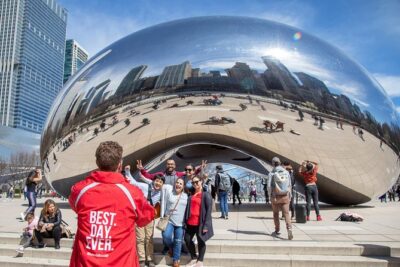
Chicago in a Day: Food, History & Architecture Walking Tour
Read our review →

Colosseum Special Access Tour, with Ancient Temples & Tombs
Read our review →Browse the lists this tour appears in