
Review · HIROSHIMA HISTORY TOURS
Hiroshima: Miyajima Half-day Historical Walking Tour
Miyajima’s great appeal is that its famous red torii gate is not just a photo stop. The ferry ride, tidal shrine, mountain temples, tame deer, food stalls, and quiet forest paths all form one compact island visit. This tour gives you a guide to connect those pieces, rather than leaving you to wander between them with only a map.
I like the small group of up to seven and the generous food component. You get a local lunch, oysters, fried momiji dumplings, and a drink or tea stop, while guides such as Yuji, Kiki, Eri, Shun, and Kaz add useful context about Shinto, Buddhism, Japanese customs, and everyday island life.
The main drawback is the pace. Six hours of walking, stairs, hills, ferry travel, and food stops can be tiring, especially in Japan’s hot summer weather. The tour also does not suit visitors with low fitness, back or heart problems, gluten intolerance, or a strong tendency toward seasickness.
Key points to know before you book
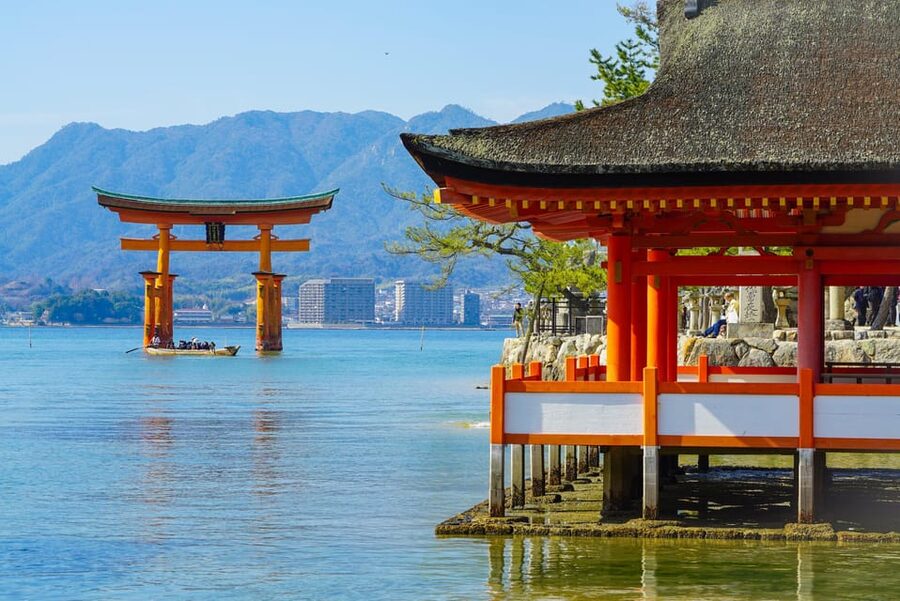
- The tide changes the view: You may see the O-Torii surrounded by water and later walk near it at low tide, depending on the schedule.
- Daisho-in gets proper time: The oldest temple on Miyajima receives about an hour, enough for its statues, grounds, and mountain setting.
- Food is part of the tour: Local lunch and Miyajima specialties, including oysters and fried momiji dumplings, are included.
- Small groups make a difference: With no more than seven people, it is easier to ask questions and adjust the pace.
- The tour covers more than the famous shrine: You also visit the museum, Momijidani, Senjokaku Pavilion, and less obvious corners of the island.
- Bring cash and sturdy shoes: The ferry is extra, and some paths may be muddy or uneven in wet weather.
Why this Miyajima tour works well
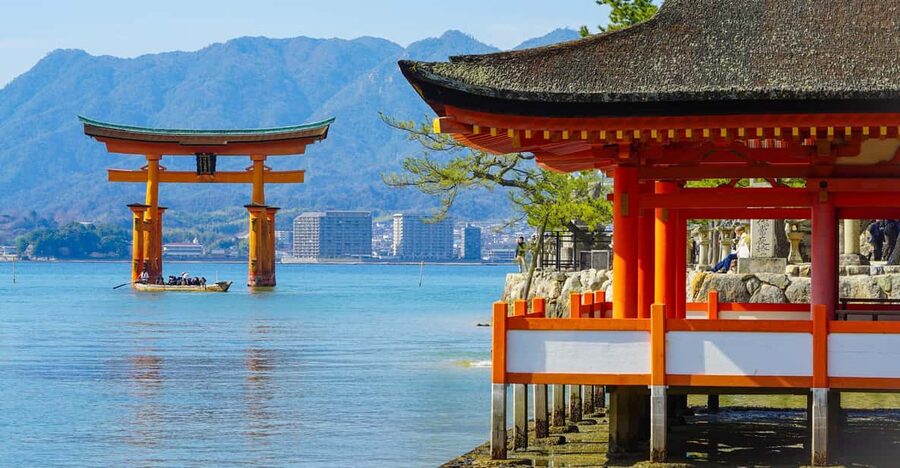
Miyajima is one of Japan’s easiest day trips to recognize and one of the easiest to misunderstand. Most people know the floating torii gate. Fewer realize that the island is also a place of pilgrimage, old streets, forested hills, temples, seafood, and long-held customs.
This 330-minute walking tour is useful because it gives you a clear route through that mix. You meet at the coin-operated lockers outside JR Miyajimaguchi Station, take the ferry, walk through the main sights, eat lunch, and return to the same area. From JR Hiroshima Station, the train ride to Miyajimaguchi takes about 30 minutes on the JR Sanyo Line.
At $106 per person, this is not the cheapest way to visit Miyajima. You are paying for a live English-speaking guide, entrance fees to the shrines, temples, and museum, local lunch, tour photos, and a small group. The value is strongest if you want explanations, help finding food, and a well-paced route instead of handling every detail yourself.
The ferry ticket is not included. The supplied booking information gives both JP¥360 and JP¥500 as possible ferry costs, so confirm the current fare before you go and bring cash. Extra snacks and drinks also come out of your pocket.
More History Walking Tours in Japan
- Tokyo: Imperial Palace and Shogun Historical Walking Tour
★ 5.0 · 2,251 reviews - Kyoto Gion: 2-Hour Geisha Culture & History Walking Tour
★ 5.0 · 1,186 reviews - Tokyo Castle & Imperial PalaceーShogun Walking Tour
★ 4.7 · 1,068 reviews
Crossing the Seto Inland Sea by ferry
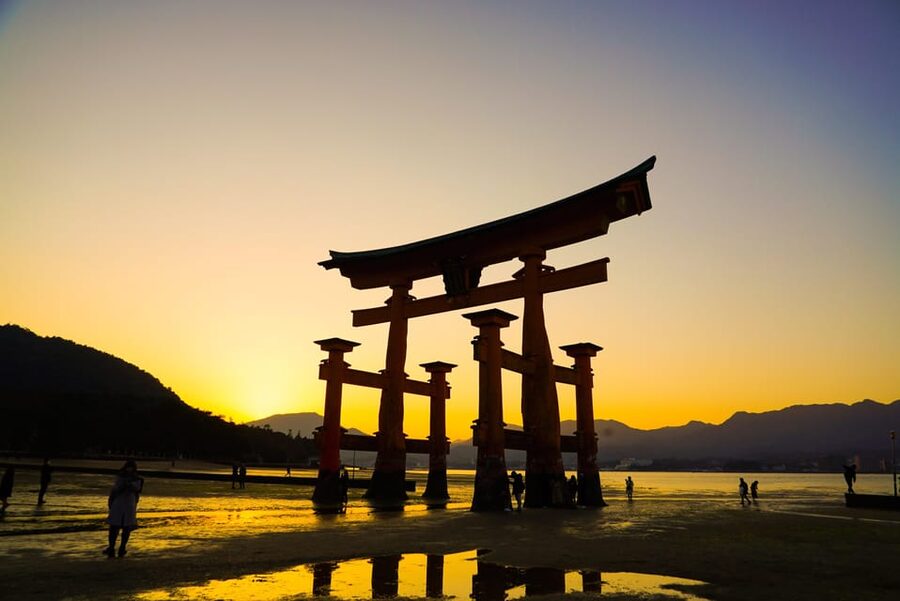
The trip starts before the main sightseeing begins. The ferry gives you broad views across the Seto Inland Sea, with Miyajima and its large torii gate coming into view as you approach. This short crossing helps explain why the island feels separate from Hiroshima even though it is easy to reach.
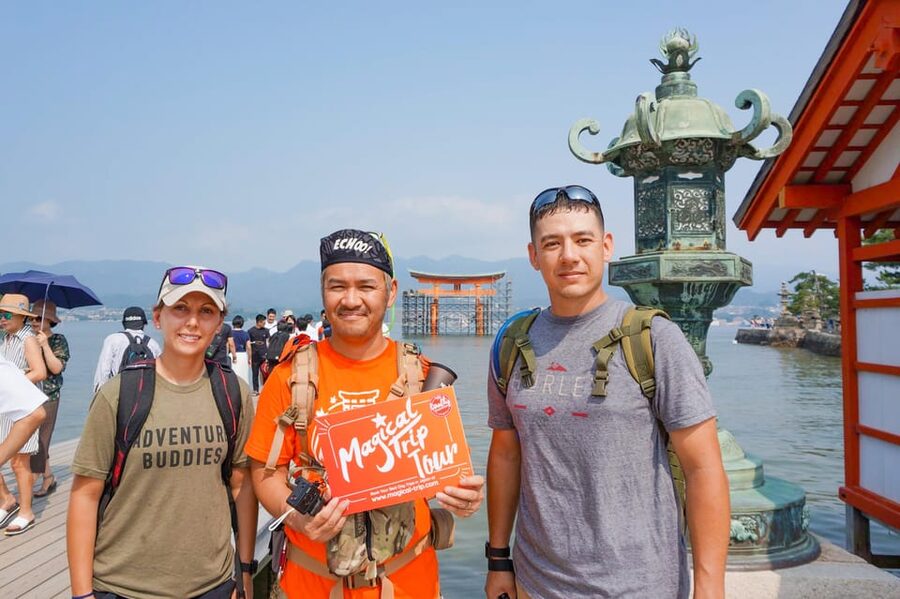
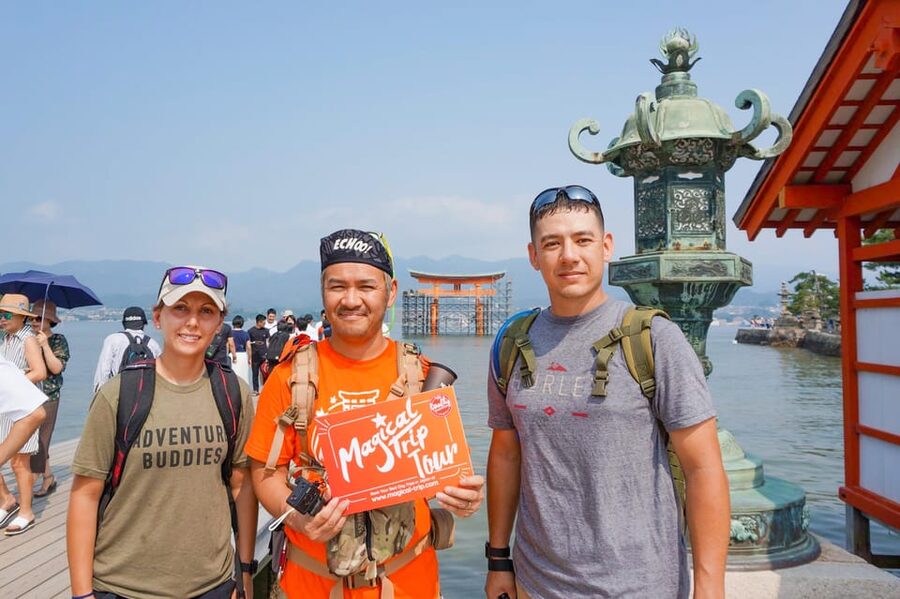
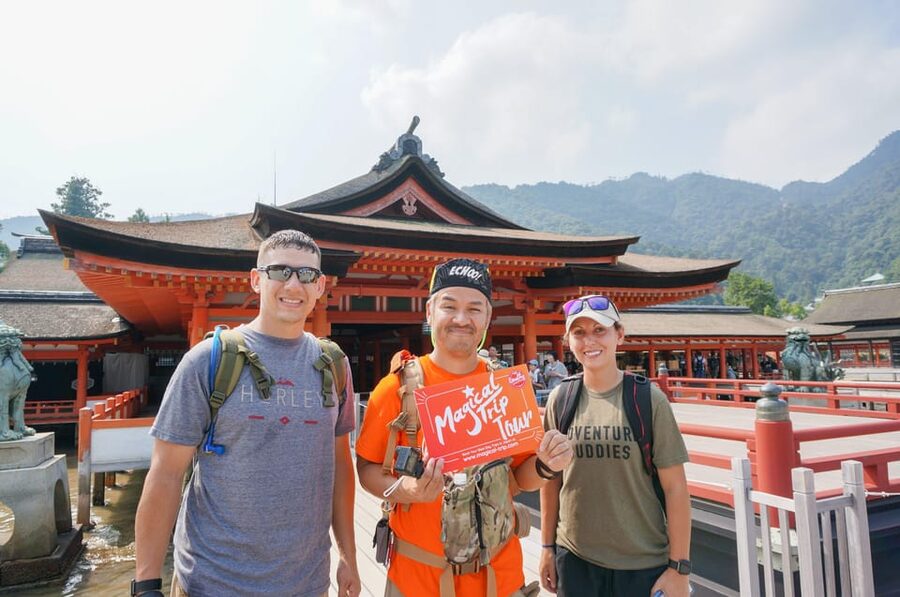
The guide meets you before boarding, holding a Magical Trip sign. That matters at a busy station, where several tour groups may be gathering and the ferry terminal is not the place to discover you have gone to the wrong exit.
Once you reach the island, deer are likely to be among your first greetings. They are part of Miyajima’s familiar scene, but remember that they are still wild animals. Keep food and paper away from them, and follow local guidance.
The ferry itself is usually simple, not a special sightseeing vessel. Its value is the view and the transition. If you are prone to seasickness, the tour’s own restrictions are worth taking seriously.
The O-Torii and Itsukushima Shrine
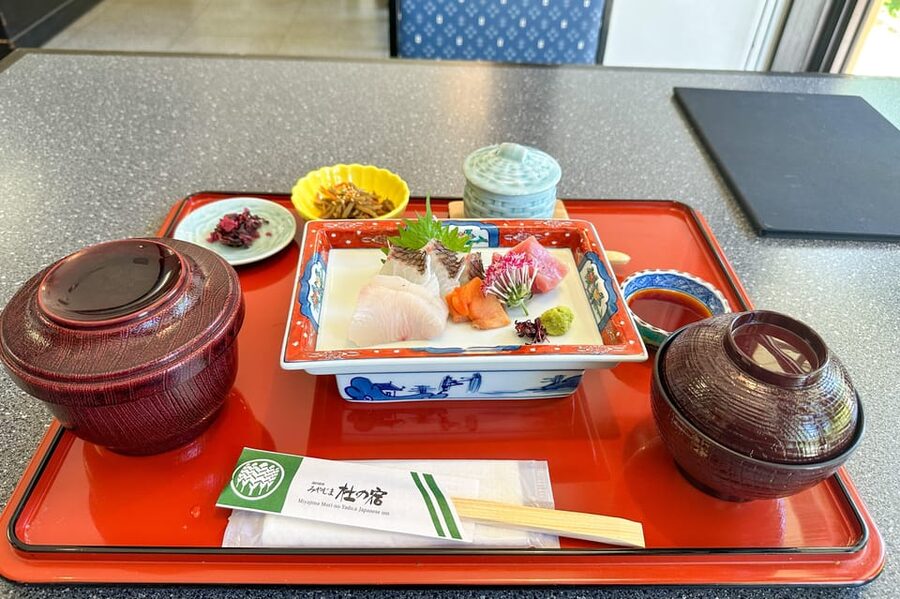
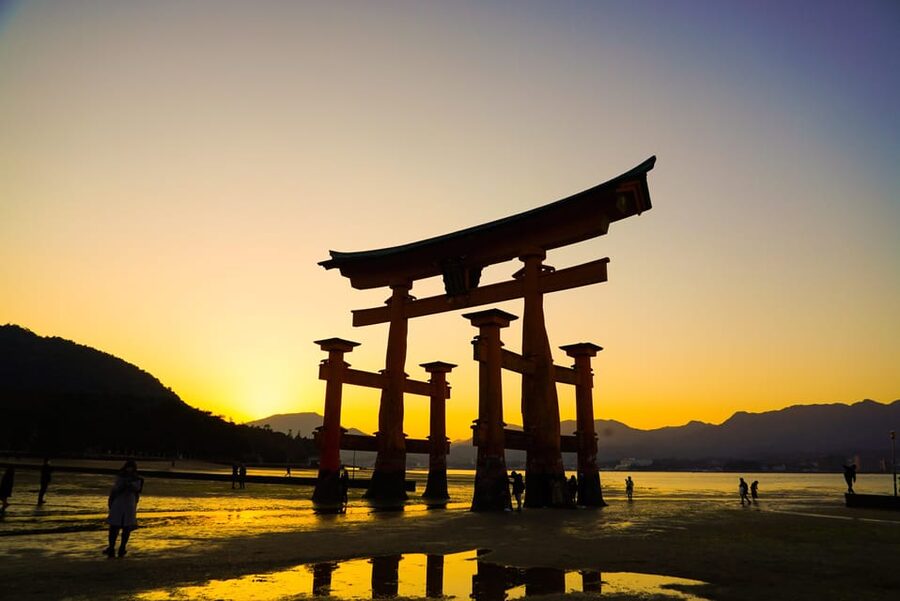
The red O-Torii is Miyajima’s visual signature, but the tide gives it a changing role. At high water, it appears to float offshore. At low water, you may be able to walk out toward it across the exposed shore. One useful detail from the tour is that the schedule may let you see the gate in both conditions, though the exact experience depends on the day’s tide and timing.
From the coast, you continue to Itsukushima Shrine. Built during the Heian period, from 794 to 1192, the shrine’s design is closely tied to the water around it. Its raised buildings, long corridors, and red paint are not simply decorative choices. The structure was designed to work with the island’s tidal setting.
Your guide can make the architecture easier to read. Without help, it is easy to take a few photographs and move on. With context about Shinto practice, the island’s sacred status, and the effect of the tides, the shrine becomes a place with a clear purpose rather than a striking backdrop.
The shrine visit lasts about 40 minutes. That is enough for an introduction, though not enough for a slow study of every building during a very busy period. Summer heat, festival crowds, or a low tide schedule may affect how leisurely the stop feels.
Local food, oysters, and a practical lunch break
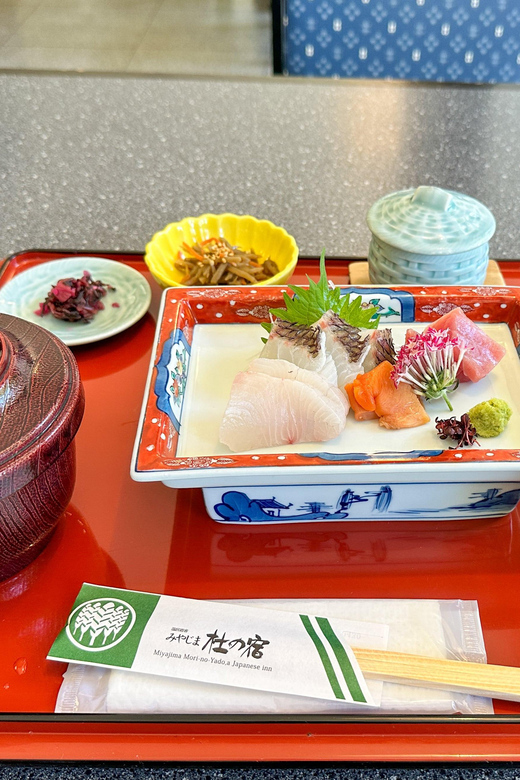
Food is one of the stronger reasons to choose this tour. Hiroshima Prefecture is known for oysters, and Miyajima offers them in several forms. You may be served fresh or grilled oysters, depending on the restaurant and menu, along with other local dishes.
Fried momiji dumplings are another island specialty. They take the maple-leaf shape associated with Miyajima and turn it into a warm snack. This is the sort of small local detail that is easy to miss if you only walk from the shrine to the shopping street.
The tour includes lunch made with ingredients from Hiroshima Prefecture. Several people specifically enjoyed the oyster dishes, and one meal included a fresh lemon squash. An ice cream stop has also been included for some groups, though you should not treat that as guaranteed unless it is confirmed for your date.
Lunch is also a useful cultural lesson. One guide helped explain how to eat and finish a Japanese meal, which can be more useful than a formal lecture. You get a chance to ask questions in a relaxed setting and to understand what you are eating.
Vegetarian and vegan choices are available, but limited. The operator cannot guarantee an allergy-free meal or meet every dietary restriction because the food is prepared in outside kitchens. Gluten intolerance is listed among the reasons not to book, so you should not rely on last-minute substitutions.
Same streets, a different century:
- Kyoto: Fushimi Inari, Kinkakuji, Bamboo Grove 1 Day Bus Tour
★ 4.8 · 4,316 reviews - World Heritage Shirakawa-go and Experience Tours from Kanazawa
★ 5.0 · 4,049 reviews - World Heritage Kyoto & Nara Uji Authentic Matcha Experience
★ 5.0 · 1,573 reviews - Kanazawa: World Heritage Shirakawa-go Morning Guided Tour
★ 4.9 · 988 reviews
The island museum and everyday Miyajima
The museum visit adds a needed human scale to the tour. Shrines and temples show public religion and formal architecture, but the museum helps you think about people who lived and worked on the island.
The tour is designed to explain daily life from the Edo period to the present. That can include the way island customs changed, how religious sites shaped local life, and how Miyajima developed as a place visited by people from outside the island.
This stop is especially useful if you have already seen major Japanese temples elsewhere. It shifts attention away from grand buildings and toward ordinary life, local work, food, and customs. The museum visit lasts about an hour in the published route, though the exact time may change with restaurant service or the group’s pace.
Daisho-in, the calmest major stop
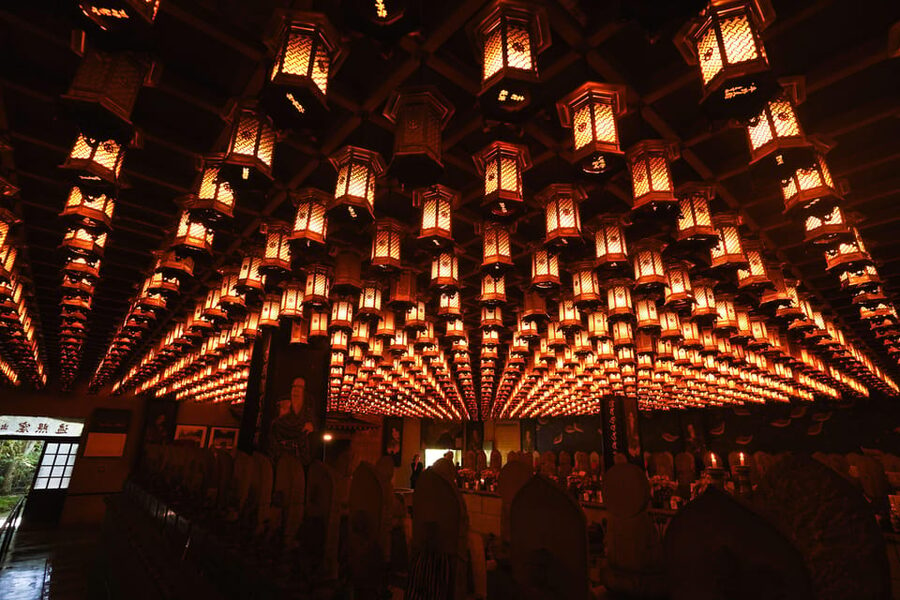
Daisho-in is the tour’s longest single sightseeing stop, at about one hour, and that is a good choice. It is Miyajima’s oldest temple, with about 1,200 years of history, and it sits on a mountain path above the busiest streets.
The approach gives you a change of mood. Instead of shop signs and food stalls, you get trees, slopes, stone steps, gardens, and temple buildings. The walk is peaceful, but it is not flat. Wear shoes with a good grip, especially after rain.
Daisho-in has numerous statues and small religious details. A guide can explain how Buddhism developed on Miyajima and how faith on the island changed over time. The tour also gives you a chance to ask about the difference between Buddhist and Shinto practices, a subject that can otherwise feel confusing.
This is where guides such as Yuji, Eri, Hika, Kiki, and Shun have received especially strong praise for their explanations and easy conversation. Their role is not just to name buildings. It is to help you understand why this temple feels different from Itsukushima Shrine.
Momijidani and Senjokaku Pavilion
Momijidani receives a shorter visit of about 10 minutes. The name points to the maple trees that color the area in autumn, but the stop works in other seasons too as a break from the denser town streets. It is a good place to notice how quickly Miyajima changes from commercial lanes to wooded paths.
Senjokaku Pavilion, also called the Hall of a Thousand Tatami Mats, receives about 20 minutes. Its wide, open structure gives you a different view of traditional Japanese architecture and a chance to slow down after the shrine and food stops.
These shorter stops are not major standalone visits. Their value comes from the way they fill out the island experience. You are not simply being driven from one famous building to another. You are walking through the spaces between them and seeing how the town, woods, religious sites, and coast fit together.
A final tea stop and time for questions
Near the end, you stop for tea or coffee in a quieter setting before finishing on the souvenir shop street. This is a modest part of the tour, but it serves a practical purpose. You can rest, look back over the day, and ask the guide about anything that was unclear.
Several guides have been praised for not rushing the group and for making the day feel like an outing with a local friend. That depends on the guide assigned to your date, but a small group gives the guide room to respond to questions and individual interests.
The route can sometimes run longer than the planned schedule if restaurant service is slow. Japan’s restaurant industry is still dealing with staffing problems, and the operator warns that food service may extend the day. If you have a train reservation immediately afterward, leave a generous buffer.
Walking demands, weather, and group size
This is called a half-day tour, but 330 minutes is five and a half hours. You will combine a ferry, long stretches of walking, hills, temple paths, standing at major sights, and time in restaurants.
The route is not suitable for wheelchairs or strollers at some locations. People with back problems, heart problems, high or low blood pressure, low fitness, or babies under one year should choose a different way to visit Miyajima.
Summer in Japan can be hot and humid. Bring water, wear a hat, and use shoes suited to uneven or muddy ground. One useful tip from the experience is to wear shoes that can handle several kinds of weather. Spring and autumn are likely to feel easier for long walks, while autumn adds the possibility of maple color around Momijidani.
The group limit of seven is a real advantage. You can hear the guide more easily, ask follow-up questions, and avoid the anonymous feel of a large coach tour. Some bookings may be even smaller, including private-feeling outings for one person or a family.
Who should book this Miyajima experience?
I would choose this tour if you have one day for Miyajima and want more than the torii gate and a quick shrine visit. It suits first-time visitors, couples, families with fit older children, and solo travelers who like conversation and local food.
It also works well if you want a guide who can explain Japanese religion and daily customs in clear English. The strongest part of the experience is not the ferry or any single photo stop. It is the connection between the shrine, temple, museum, food, and island life.
I would skip it if you want free time for shopping, a slow private photo walk, or a climb up the mountain at your own pace. The tour covers a lot, and lunch timing, tide conditions, and restaurant service shape the day.
Should you book it?
Book this Miyajima tour if you value context, local food, and a carefully planned route more than the lowest possible price. The $106 cost is reasonable when you count the guide, entrance fees, lunch, photos, and small group, but the ferry and extra refreshments are still additional.
It is especially appealing with a guide such as Yuji, Eri, Kiki, Shun, Kaz, or Hika, all names linked with strong explanations and warm group handling. You cannot always request a particular guide, so book for the structure of the tour rather than a promised personality.
Skip it if mobility is limited, dietary restrictions are serious, or you dislike fixed schedules. For everyone else, this is a practical way to see Miyajima’s famous sights while also learning why the island matters.
FAQ
Where does the Miyajima tour meet?
Meet in front of the coin-operated locker outside JR Miyajimaguchi Station. Your English-speaking guide will hold a board marked Magical Trip.
How long does the tour last?
The scheduled duration is 330 minutes, or five and a half hours. Food service delays may sometimes make the tour run longer.
Is the ferry ticket included?
No. The ferry ticket is extra. The supplied booking information lists a fare of JP¥360 in one section and JP¥500 in another, so confirm the current price and bring cash.
What food is included?
The tour includes a local lunch using ingredients from Hiroshima Prefecture. You may try Miyajima specialties such as oysters and fried momiji dumplings. Extra food and drinks are not included.
Are vegetarian and vegan meals available?
Vegetarian and vegan options are available but limited. Allergy-free meals and all dietary substitutions cannot be guaranteed because the food is prepared in outside kitchens.
Is the tour suitable for wheelchair users or strollers?
Some parts of the route are not accessible to wheelchairs or strollers. The tour also involves substantial walking and mountain paths, so it is not recommended for people with low fitness or certain health conditions.
More Half-Day Tours in Japan
- Miyajima Half-day Trip Historical Walking Tour
★ 5.0 · 284 reviews - Nara: Half-Day UNESCO Heritage & Local Culture Walking Tour
★ 4.8 · 250 reviews - Shirakawa-go UNESCO Half-Day Tour from Takayama
★ 4.6 · 47 reviews - Lima’s Vibrant Heritage: Exploring the City’s Landmarks Half-day
★ 4.5 · 581 reviews
Newest history tours we have reviewed in Japan
- [30 minutes] Rickshaw tour around Asakusa [History, sightseeing, Tokyo Skytree]★ 5.0 · 38 reviews
- Tokyo: Asakusa & Sensoji ー Oldest Temple Walking Tour (2hrs)★ 5.0 · 213 reviews
- Private sake pairing@ancient underground★ 5.0 · 27 reviews
- Private Tour Through the Tokyo National Museum & Ukiyo-e★ 4.7 · 17 reviews
- Tokyo: Customized Private Historical Guided Photoshoot Tour★ 5.0 · 25 reviews
- Tokyo: Imperial Palace, the history of Japan (ENGLISH GUIDE)★ 5.0 · 77 reviews
- Tokyo: Edo Castle & East Garden of the Imperial Palace Tour★ 4.7 · 112 reviews
- (Ticket Included) Explore Osaka Castle & Museum of History★ 4.8 · 21 reviews
History Walking Tours, compared.

History and Hauntings of Salem Guided Walking Tour
Read our review →
Freedom Trail History Small Group Walking Tour
Read our review →
Historic Charleston Guided Sightseeing Walking Tour
Read our review →
Tapas Walking Tour with Food, Wine, and History
Read our review →
Savannah History and Haunts Candlelit Ghost Walking Tour
Read our review →
A History of Terror – Belfast City Centre Walking Tour
Read our review →Browse the lists this tour appears in