
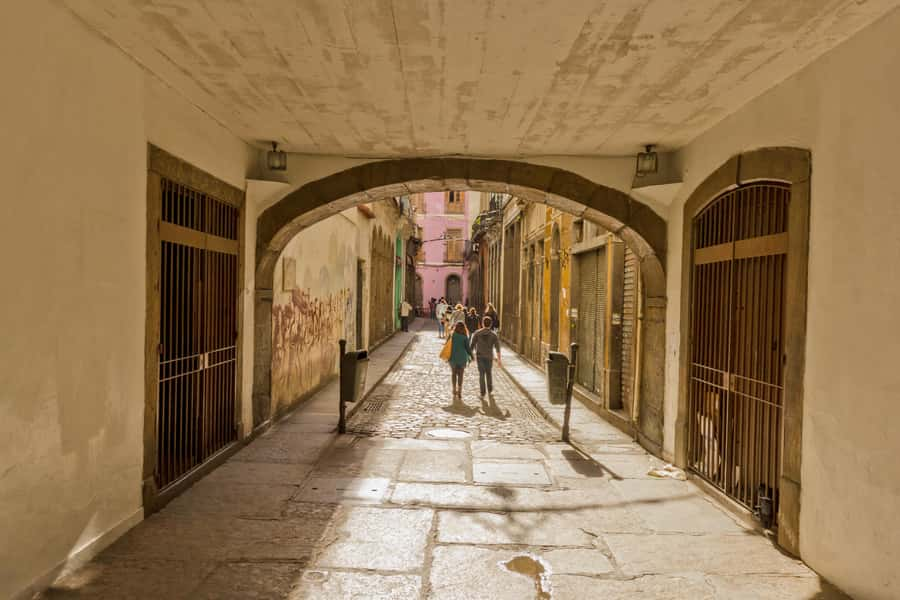
Review · RIO DE JANEIRO HISTORY TOURS
Rio: Historical Walking Tour
Rio’s most rewarding history lesson happens at street level. This four-hour walk links grand public buildings, colonial churches, old squares, and narrow lanes in central Rio, with the subway ride from Copacabana giving you a useful look at how the city moves.
I like the small-group format, which gives your guide room to answer questions, and I like the mix of famous sights and easy-to-miss details such as Mestre Valentim’s Fountain, Teles Arch, and Carmen Miranda’s former residence. The main drawback is the amount of walking on uneven streets, so this is not a good choice if you have mobility difficulties.
Key points at a glance

- Subway connection: Ride from Copacabana to Cinelândia, then explore central Rio mostly on foot.
- Strong architectural focus: See French-influenced buildings, churches, palaces, and cultural centers.
- Historic café stop: Visit Confeitaria Colombo, opened in 1894, one of the city’s best-known old institutions.
- Broad central-Rio route: Cover Cinelândia, Carioca Square, Praça XV, Travessa do Comercio, and Candelaria.
- Flexible language choice: Live guiding is available in English, Spanish, or Portuguese.
- Good guide track record: Past departures have included Lucien, Monique, Ernani, and Mathilda, with especially strong praise for historical explanations and personal attention.
Why central Rio deserves a walking tour
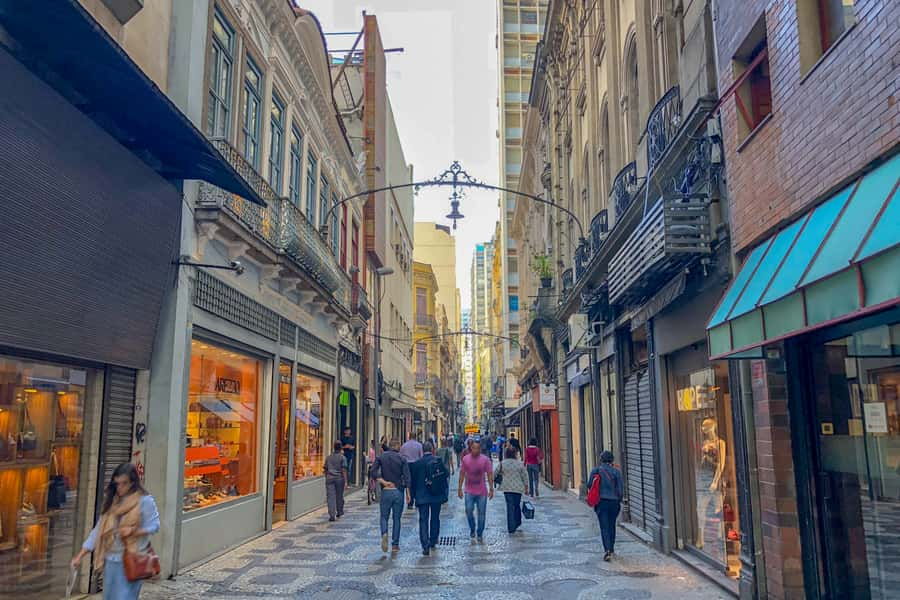
Rio is often sold through its beaches and mountains, but downtown explains how the city became Brazil’s political and cultural center. The route moves through the old core of the former national capital, where government buildings, churches, commercial streets, and public squares sit close together.
That closeness is important. You do not spend the afternoon looking at isolated monuments from a vehicle. You walk between them and see how the city’s layers overlap. A grand state building may face a modest old street. A church may sit beside a modern cultural center. The contrast is part of the lesson.
The tour begins with a subway ride from Copacabana toward the center. That is more than a practical transfer. It places you in the city’s everyday rhythm before the walking portion begins. You meet the guide at one of the stated starting points, including the Copacabana Palace, and the exact meeting details depend on the option you reserve.
The overall rating is 4.7 from 32 reviews, and the strongest pattern in the feedback is the quality of the explanations. Guides have been praised for covering history, politics, economics, and culture rather than simply naming buildings. That makes this a useful first or second-day activity if you want context for the rest of your time in Rio.
More History Walking Tours in Brazil:
- Rio de Janeiro: Little Africa Heritage Walking Tour
★ 4.9 · 177 reviews - Paraty: Historic Centre Walking Tour & Cachaça Tasting
★ 4.8 · 96 reviews - Salvador Historic Walking Tour – Pelourinho
★ 4.8 · 62 reviews
Cinelândia and the French influence
You arrive at Cinelândia Station, a fitting place to begin because the area carries some of the clearest signs of Rio’s early twentieth-century ambition. The square and its surrounding buildings reflect a period when Brazilian leaders wanted the capital to look modern, grand, and internationally polished.
Your guide introduces the area before leading you toward Carioca Square. This is where a live guide matters. Architectural details can be easy to miss when you are walking alone, especially when traffic, shops, and city noise compete for your attention. A good explanation helps you see why a facade looks the way it does and how the building fits into Rio’s past.
The route includes the Naval Club, the Monastery Church of Santo Antônio, and the Ordem Terceira de São Francisco da Penitência. These stops give you a quick lesson in the city’s religious and civic architecture.
The churches are especially useful counterpoints to Cinelândia’s more formal public buildings. Their age, decoration, and religious role tell a different story about Rio. You should expect exterior viewing as part of the walk, with access dependent on opening conditions and the guide’s route that day.
Carioca Square and the old city center
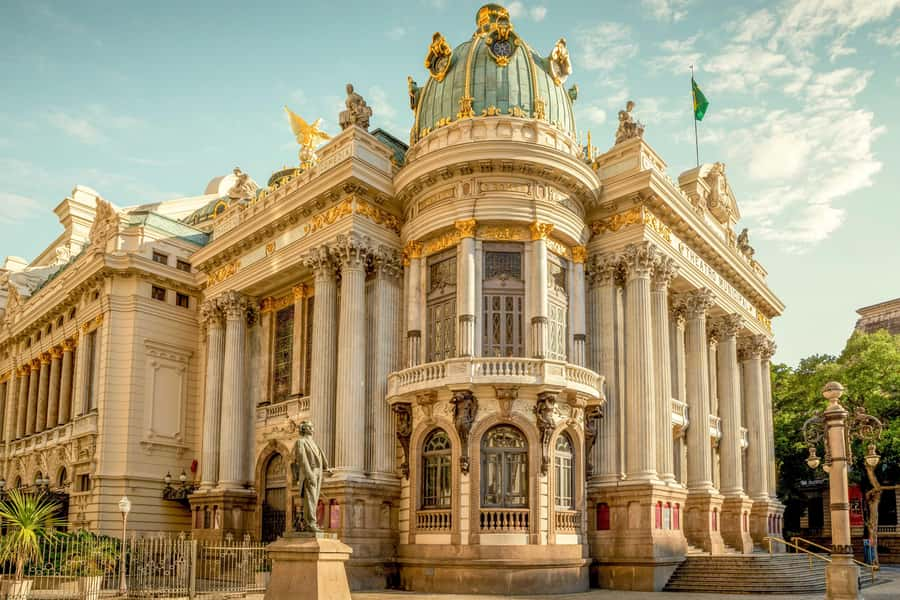
Carioca Square acts as a bridge between major public spaces and the smaller historic streets ahead. This part of downtown can feel busy and practical rather than polished, which is exactly why it works well on foot. You see central Rio as a working city, not just as a collection of preserved monuments.
The route then reaches Confeitaria Colombo, built in 1894. This old café is one of the tour’s most appealing stops because it connects architecture with daily life. The building is known for its period character, but it was also created as a place where people met, ate, conducted business, and watched city life unfold.
Entrance fees are included, but drinks and meals are not. Do not assume a café visit means a full refreshment stop. If you want to order something at Confeitaria Colombo, plan to pay separately and keep the four-hour schedule in mind.
I like this stop because it gives the route a human scale. Palaces and churches can explain power and religion. A café explains how people socialized and experienced the city. It also offers a change of pace after the first stretch of walking.
Tiradentes Palace and Praça XV
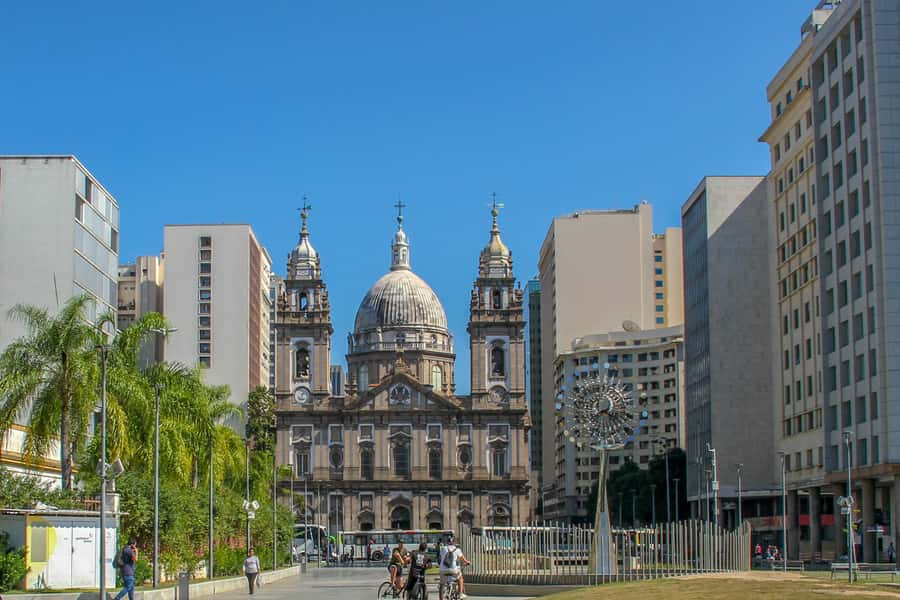
From there, the walk continues toward Tiradentes Palace, identified as the State Hall, and Praça XV. This section brings you into the political heart of old Rio.
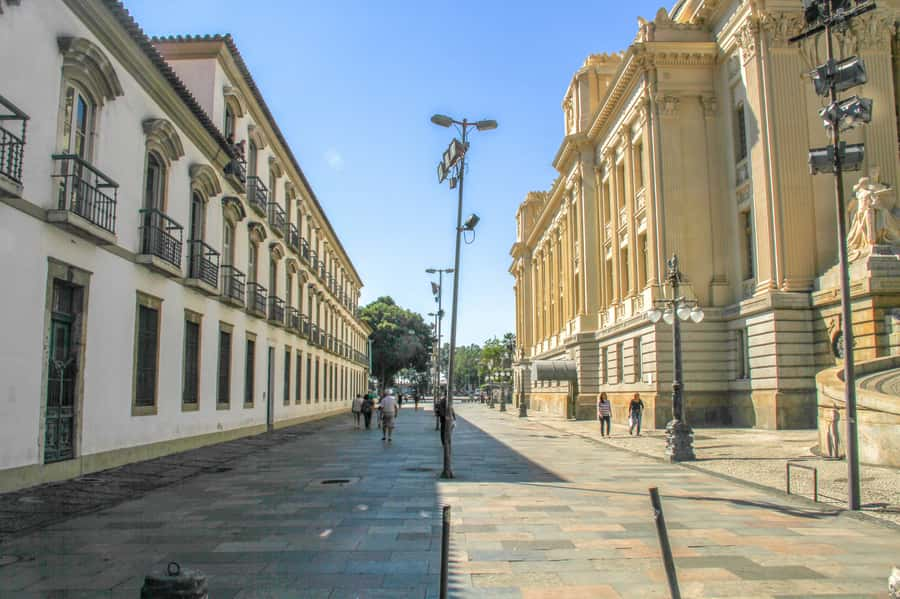
Tiradentes Palace is a major civic landmark, while Praça XV gathers several reminders of Brazil’s imperial period. The square includes the Imperial Palace, so this is one of the best places to connect Rio’s street plan with the country’s former royal and political life.
The route also points out the statue of General Osório and Mestre Valentim’s Fountain. These are the kinds of details that can disappear into the background if you are moving quickly between major attractions. Your guide’s commentary gives them a reason to pause.
Praça XV is not simply a pretty open space. It is a place where official power, public memory, transport, and commerce have met over time. I would pay attention to how your guide explains the relationship between the square and the surrounding buildings. That wider context is more useful than memorizing dates.
Expect the walk to remain active here. There are several stops, but this is not a sit-down museum tour. You will spend much of the time standing, walking, and looking upward at facades.
More History Tours in Brazil:
- Maria Fumaça – Wines and History
★ 4.0 · 242 reviews - Rio de Janeiro: Historic Rio and Santa Teresa Half-Day Tour
★ 4.4 · 228 reviews - São Paulo: Downtown Historical Bike Tour
★ 4.9 · 191 reviews - Scenic Train ride to historical cities of Morretes and Antonina
★ 4.0 · 188 reviews
Teles Arch and Travessa do Comercio
One of the more enjoyable transitions comes at Teles Arch, which leads toward the cobblestoned Travessa do Comercio. The change in scale is striking. After large squares and formal buildings, the route narrows into a smaller historic passage with a very different feel.
Cobblestones are part of the charm, but they also make this section less comfortable for anyone who has trouble walking. The tour specifically is not recommended for people with walking difficulties, and wheelchair users should not book it. You need to be comfortable with several hours on foot and uneven surfaces.
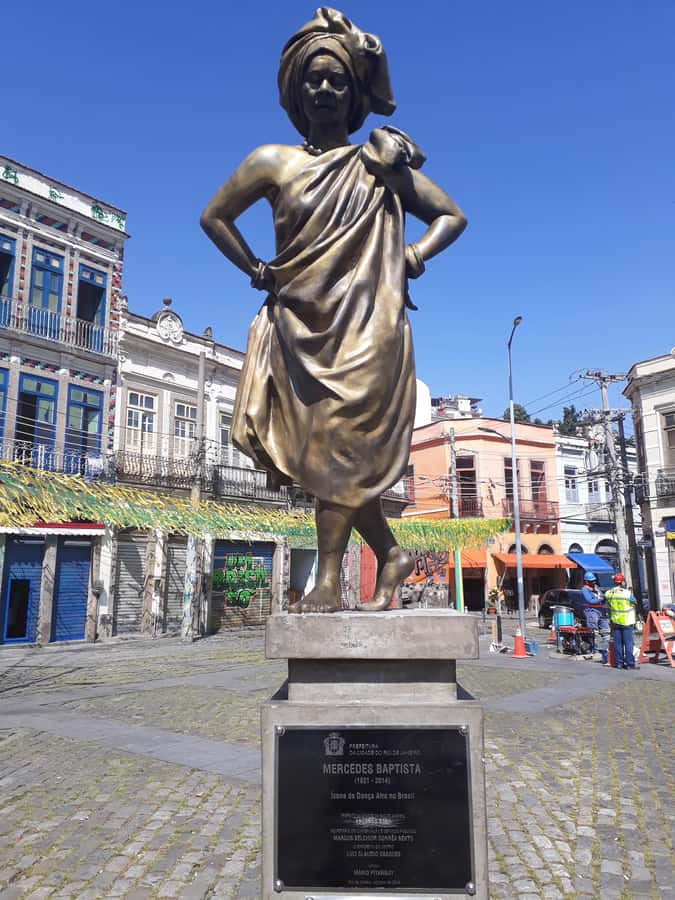
Travessa do Comercio also brings the route closer to personal stories. The walk passes the former residence of Carmen Miranda, the Brazilian-born entertainer who became internationally famous. You do not need to be a devoted fan to appreciate the stop. It adds a direct human link to the city’s cultural history.
This is the kind of detail I value in a walking route. It is not the largest or most famous building on the schedule, yet it gives you a memorable point of connection between Rio and a figure known around the world.
Churches, cultural centers, and Candelaria
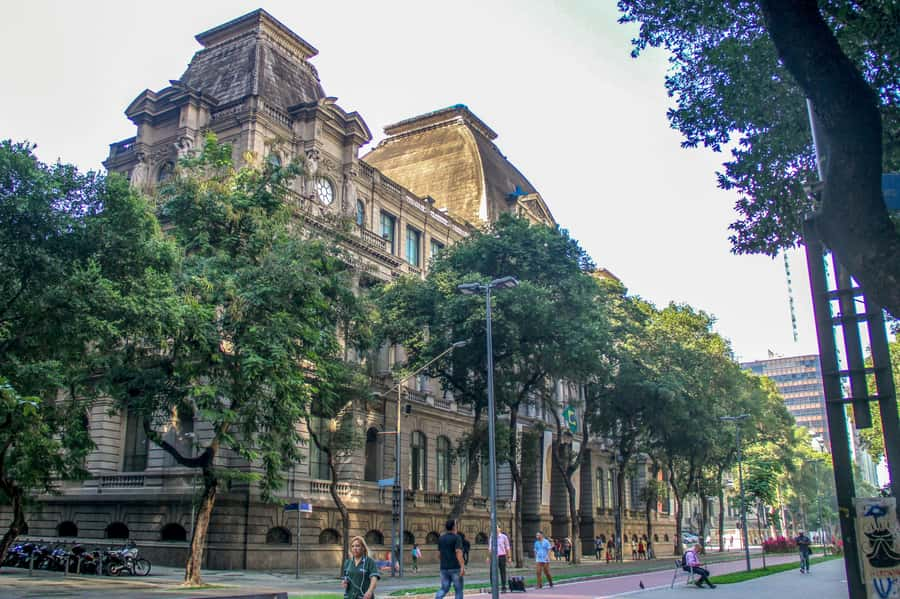
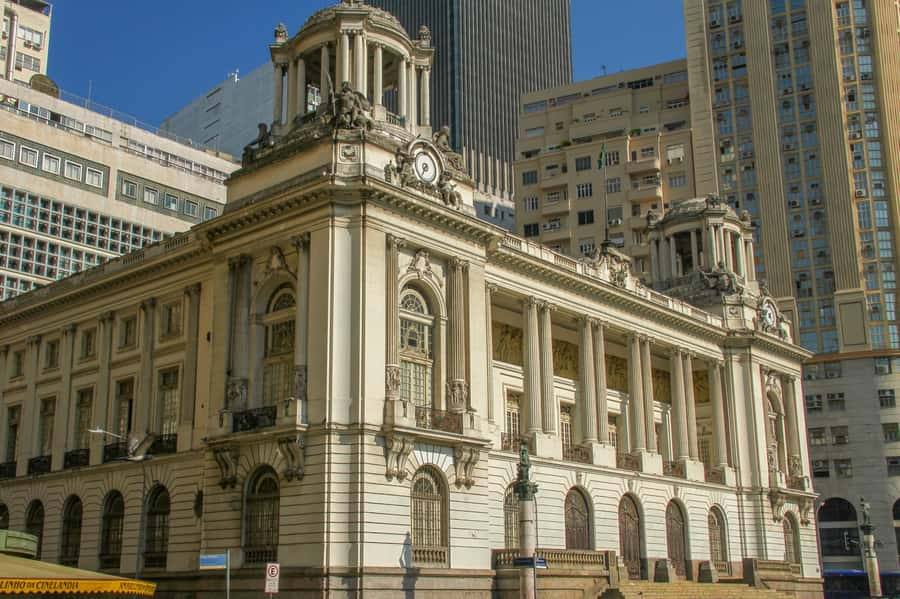
The next section includes the Church of Our Lady of the Merchants, the Post Office Cultural Center, France-Brazil House, the Bank of Brazil Cultural Center, and Candelaria Church. Together, these stops show how old religious and commercial buildings now share space with cultural institutions.
The Church of Our Lady of the Merchants adds another religious layer to the route. Its name points to the connection between faith and commerce in the old center, where merchants, sailors, officials, and residents all used the same streets.
The cultural centers are useful because they show that downtown Rio is not frozen in the past. The Post Office Cultural Center and Bank of Brazil Cultural Center occupy historic central settings while presenting cultural programming. France-Brazil House is also included when open.
That last condition matters. Opening hours can affect what you enter and what you see from outside. The same applies to Candelaria Church. The route includes these places when open, but you should treat interior visits as subject to operating conditions rather than guaranteed access at every departure.
Candelaria Church is the final major landmark listed on the route. Its size and position give the ending a strong architectural focus. From there, you return to your hotel by subway, completing the same practical city connection that began the tour.
What the guide adds to the experience
The quality of this tour depends heavily on the guide. The route has plenty of attractive buildings, but a guide turns them into a connected story.
English, Spanish, and Portuguese are offered. Past guide assignments have included Lucien, Monique, Ernani, and Mathilda. Lucien was singled out for excellent guiding, while Mathilda was praised for adapting the route for a very small group and showing places the pair would not have found alone.
That flexibility is worth noting. A small group can make it easier to ask questions about Brazilian history, politics, and economics. One departure had only two participants, which allowed the guide to follow their interests while still covering the main route.
You should not expect the same guide every time, and no tour can promise an identical experience for every group. Still, the available feedback points to a useful strength: the guides do more than recite building names. They answer questions and adjust the level of detail to the people in front of them.
Is $79 a fair price?
At $79 per person, this is not the cheapest way to see downtown Rio. You could ride the subway independently and walk past many of these places without paying for a guide.
The value comes from the combination of transport, a four-hour route, entrance fees, and interpretation. You do not have to work out the central-Rio sequence yourself, and you gain explanations about buildings that might otherwise look like attractive but unrelated facades.
The small-group format also matters. A private guide would normally cost more, while a large group can make it harder to hear or ask questions. This tour aims for the middle ground.
Meals and drinks are extra, so budget separately if you want something at Confeitaria Colombo. Also remember that the price does not turn the walk into a vehicle-based sightseeing tour. You are paying for access and guidance, but the main activity is walking.
I consider the price reasonable for visitors who want historical context and prefer a structured route. It is less compelling if you only want quick photographs or if you already know downtown Rio well.
Timing, effort, and practical tips
The experience lasts four hours, including the subway connection and walking route. Starting times vary, so check availability before booking.
Wear comfortable shoes with good support. The route includes cobblestones, squares, sidewalks, and long periods of standing. Bring water, since drinks are not included, and keep your schedule open enough that you are not rushing to another fixed appointment.
The meeting point may vary depending on the option you book. One listed starting point is the Copacabana Palace, and the tour ends at the Copacabana Palace. Confirm the exact meeting instructions attached to your booking rather than relying only on the hotel name.
The activity is not suitable for wheelchair users or people with mobility impairments. That is not a minor footnote. The route’s value comes from walking through several connected areas, so limited mobility would make much of the experience difficult.
Cancellation is flexible up to 24 hours before the start time for a full refund. You can also reserve now and pay later, which helps if your Rio plans are still shifting.
Who should book this downtown Rio walk?
I would choose this tour if you want to understand central Rio rather than simply pass through it. It suits first-time visitors, architecture fans, history readers, and anyone who enjoys asking a guide why a place matters.
It is also a good choice if you are staying near Copacabana and want a clear subway introduction to the downtown area. The ride and walking route give you a better sense of the city’s structure than a short taxi trip between isolated attractions.
You may want to skip it if your priority is beach time, if you dislike long walks, or if you need guaranteed interior access at every stop. The cultural centers and churches are visited when open, so the outside architecture remains an important part of the experience.
Should you book the Rio Historical Walking Tour?
Book it if you want a guided introduction to old central Rio with strong architectural detail, a practical subway connection, and enough time for questions. The combination of Cinelândia, Confeitaria Colombo, Praça XV, Travessa do Comercio, and Candelaria gives you a broad look at the city’s civic, religious, and cultural past.
The best reason to go is the guide-led interpretation. Past departures have included guides such as Mathilda, Lucien, Monique, and Ernani, with especially strong praise for detailed cultural and historical commentary.
Skip it if four hours of walking sounds tiring or if uneven pavement is a serious concern. For everyone else, $79 buys a well-organized way to see the downtown sights that many beach-focused visits leave out.
FAQ
How long does the Rio Historical Walking Tour last?
The tour lasts four hours, including the subway ride and the guided walking portion in downtown Rio.
Where does the tour start and finish?
One starting option is the Copacabana Palace, A Belmond Hotel, at Av. Atlântica, 1702. The tour finishes at the Copacabana Palace, though the exact meeting point may vary by booking option.
Which languages are available?
Live guiding is available in English, Spanish, and Portuguese.
Is transportation included?
Yes. Subway transportation is included for the journey to downtown Rio and the return to the hotel area.
Are food and drinks included?
No. Entrance fees, the professional guide, small-group format, and subway transport are included, but drinks and meals are not.
Is the tour suitable for wheelchair users or people with walking difficulties?
No. The tour is not suitable for wheelchair users or people with mobility impairments because it involves several hours of walking, including cobblestoned streets.
Can I cancel the tour for a full refund?
Yes. You can cancel up to 24 hours in advance for a full refund. You can also reserve now and pay later.
Newest history tours we have reviewed in Brazil
- Scenic Train ride to historical cities of Morretes and Antonina★ 4.0 · 188 reviews
- Germanic Route – Cultural and historical in Ilhota, Blumenau and Pomerode★ 4.5 · 67 reviews
- Rio: Olympic Boulevard, Museum of Tomorrow & History Tour★ 4.1 · 47 reviews
- Rio de Janeiro: Historical Downtown and Lapa Walking Tour★ 4.4 · 32 reviews
- Salvador Historic Walking Tour – Pelourinho★ 4.8 · 62 reviews
- Historic City Tour Manaus by car with 3 stops.★ 4.9 · 18 reviews
- From Foz do Iguazu: Triple Frontier Landmark Ticket★ 4.4 · 136 reviews
- Florianopolis: Walking Tour – History, Art and Gastronomy★ 5.0 · 21 reviews
History Walking Tours, compared.

History and Hauntings of Salem Guided Walking Tour
Read our review →

Freedom Trail History Small Group Walking Tour
Read our review →
Historic Charleston Guided Sightseeing Walking Tour
Read our review →
Tapas Walking Tour with Food, Wine, and History
Read our review →
Savannah History and Haunts Candlelit Ghost Walking Tour
Read our review →
A History of Terror – Belfast City Centre Walking Tour
Read our review →Browse the lists this tour appears in