
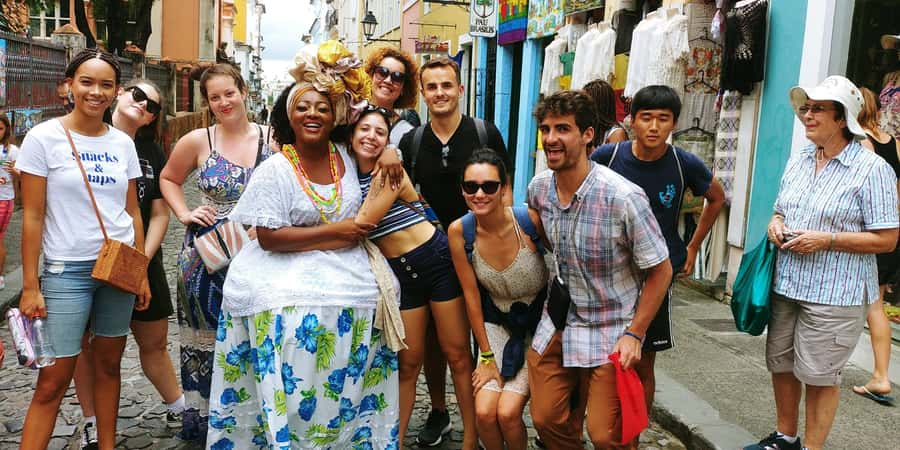
Review · BRAZIL HISTORY TOURS
Salvador Historic Walking Tour – Pelourinho
Salvador’s old center packs Brazil’s colonial past, Afro-Brazilian culture, dramatic sea views, and everyday city life into a walk of just 2.5 hours. This tour begins near Praça Castro Alves, then moves through the upper city toward Pelourinho, where colorful 17th and 18th-century buildings frame some of Salvador’s most famous streets.
I like the small group limit of 10 people, which gives the guide room to answer questions and adjust the walk to your interests. I also like the route’s mix of famous sights and less obvious context, especially the first section before Pelourinho, where you can see how the historic center is changing.
The main consideration is value. At least two people felt the walk covered too few sights for its cost, so you should book it for the guide’s explanations and cultural insight, not simply for a long checklist of attractions.
Key points
- A 2.5-hour route through Salvador’s upper city and Pelourinho
- Stops at Rio Branco Palace, Lacerda Elevator, and Cruz Caída Square
- Baroque São Francisco Church and the Largo do Pelourinho
- Ocean views from Praça da Cruz Caída
- English, Spanish, and Portuguese guides
- Small groups capped at 10 participants
Starting at Praça Castro Alves
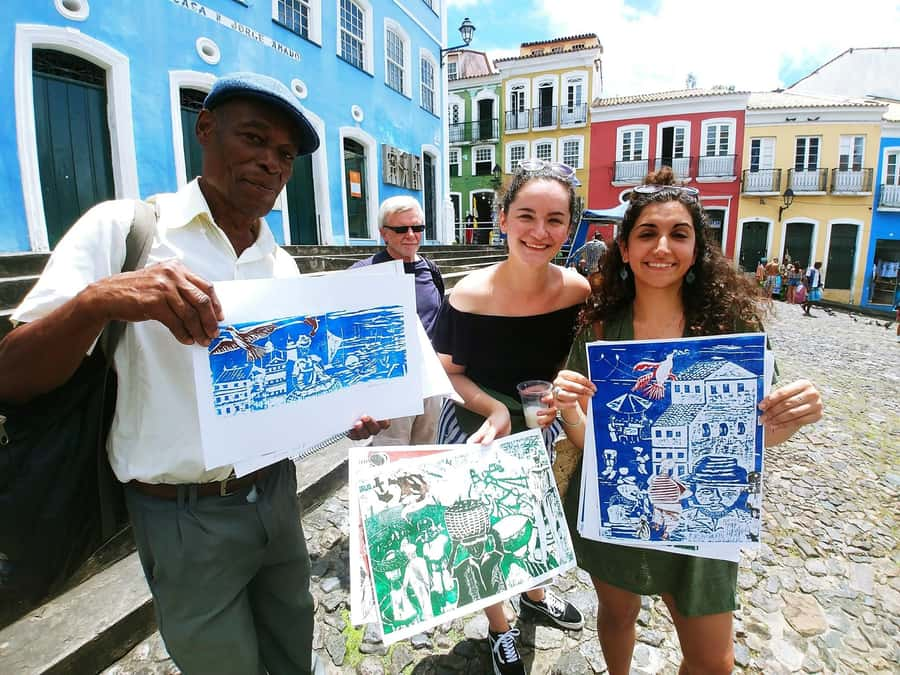
Your meeting point is in front of Cine Metha at Praça Castro Alves, at coordinates -12.97721862792969, -38.51432800292969. This places you near one of the main gateways into Salvador’s historic center and makes the opening easy to identify if you are already in the central area.
The tour is led in English, Spanish, or Portuguese. That choice matters in Salvador because the story here is not only about old buildings. The city’s past involves colonial power, African heritage, religion, music, social change, and the way these forces still shape daily life.
The group is limited to 10 participants. I consider that a useful size for a walking tour in a busy old quarter. You are less likely to lose the guide in a narrow street, and it is easier to ask about food, churches, local customs, or what to see after the walk.
The route is described as a free walking tour, but booking conditions allow you to reserve ahead and pay later. Since no fixed tour price is supplied here, check the current amount before committing. The value will depend heavily on how much you want interpretation rather than independent sightseeing.
More History Walking Tours in Brazil:
- Rio de Janeiro: Little Africa Heritage Walking Tour
★ 4.9 · 177 reviews - Paraty: Historic Centre Walking Tour & Cachaça Tasting
★ 4.8 · 96 reviews - Rio: Historical Walking Tour
★ 4.7 · 32 reviews
Rio Branco Palace and the upper city
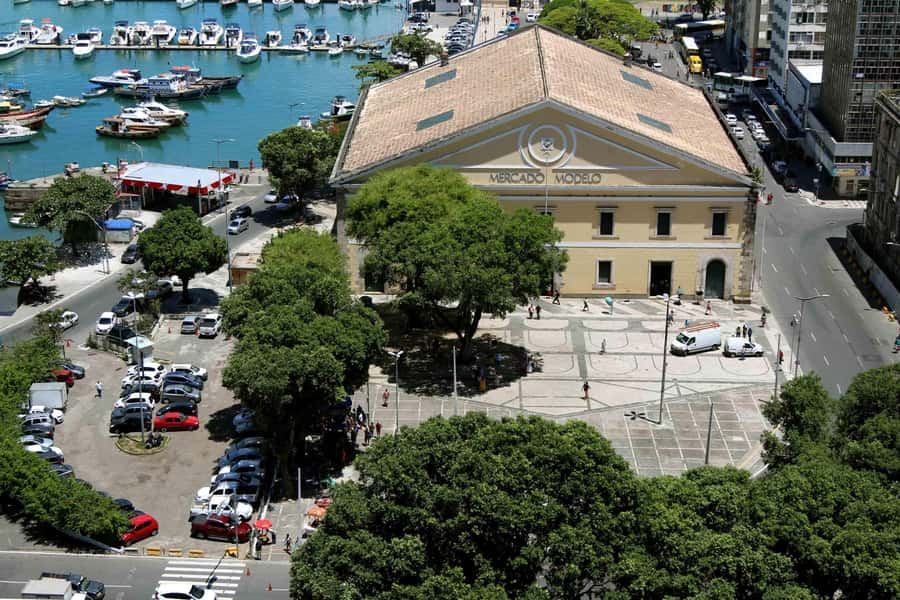
The walk moves first through Salvador’s upper city, beginning with major civic landmarks such as Rio Branco Palace. This opening gives the tour a useful frame. Instead of dropping you straight into Pelourinho’s colorful façades, it introduces the political and colonial center of Salvador.
Rio Branco Palace is one of the city’s key historic buildings, and the guide’s role here is important. A photograph can show you the exterior, but it cannot explain why this part of the city was built as it was, how power operated from the upper city, or how Salvador’s past connects to its present.
The first section may be the most useful part for repeat visitors and curious first-time visitors alike. One person specifically valued seeing the area just before Pelourinho because it revealed how the neighborhood is changing. That is a good reason not to judge the tour only by its number of famous stops.
You are not racing from one monument to the next. This is a guided orientation walk, with time for explanation and questions. If your ideal tour means entering many interiors, covering a large area, or ticking off every major sight, the pace may feel too gentle.
Lacerda Elevator and Salvador’s two levels
The route also takes in the Lacerda Elevator, one of Salvador’s most recognizable landmarks. The elevator links the Cidade Alta, or Upper City, with the Cidade Baixa, or Lower City. Even if you have seen photographs of it, its role makes more sense once you understand Salvador’s steep urban layout.
This is one of the stops where geography and history come together. The elevator is not simply an unusual piece of city transport. It helps explain why Salvador developed in two distinct levels and why the upper historic center has such commanding views over the lower city and the water.
Your guide can also help connect the structure to the broader city, rather than leaving it as a quick photo stop. The strongest guides on this walk appear to be those who adapt to questions and personal interests. Maria, Eduardo, Lara, Aldison, and Edval are among the guides praised by name, with several descriptions pointing to clear explanations, useful advice, and an easy manner.
The exact guide is not guaranteed, so you should not book solely for one person. Still, the range of languages and the small group format give the experience a personal feel that a large coach tour cannot match.
Ocean views at Praça da Cruz Caída
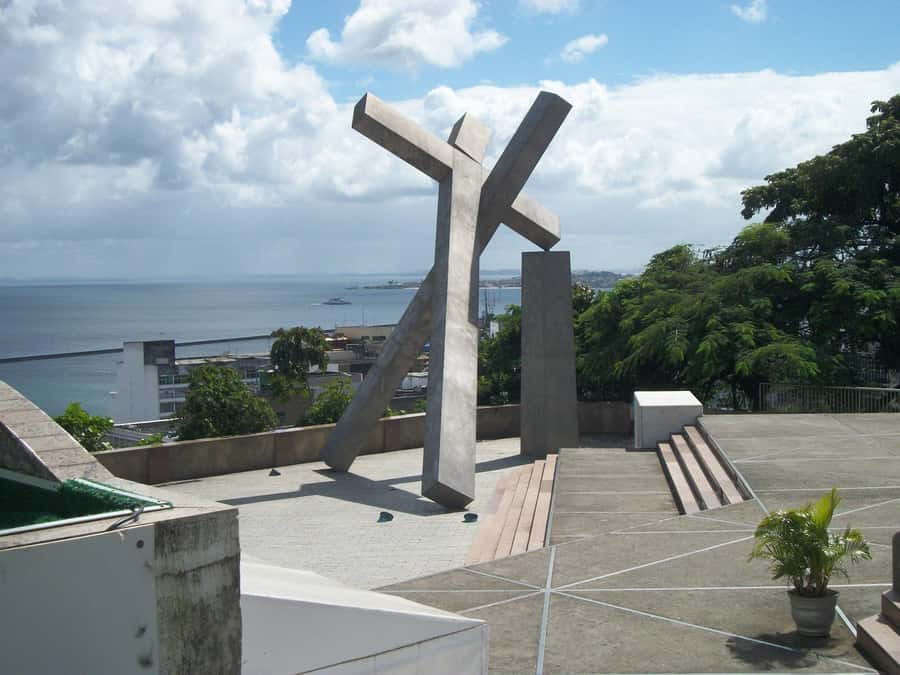
A stop at Praça da Cruz Caída brings an open view of the ocean. After walking through dense historic streets, this is a welcome pause and a chance to understand Salvador’s position on the coast.
The square is also a useful visual break in the route. You can look outward toward the water, then back toward the old center and see how tightly the historic district fits into the city. Bring your camera, but do not rush the stop. The view helps you read Salvador as a place shaped by both the sea and its colonial street plan.
This is also where a guide can add social and historical context that you would miss alone. The tour focuses on ethnic mix, culture, and beliefs, so the view is not treated only as scenery. It forms part of the explanation of why Salvador feels different from other Brazilian cities.
The tour description does not promise a long stop here or a particular sunset view, so keep expectations modest. You will get the viewpoint as part of the walking route, not a dedicated photography session.
More History Tours in Brazil:
- Maria Fumaça – Wines and History
★ 4.0 · 242 reviews - Rio de Janeiro: Historic Rio and Santa Teresa Half-Day Tour
★ 4.4 · 228 reviews - São Paulo: Downtown Historical Bike Tour
★ 4.9 · 191 reviews - Scenic Train ride to historical cities of Morretes and Antonina
★ 4.0 · 188 reviews
Entering Pelourinho’s colonial streets
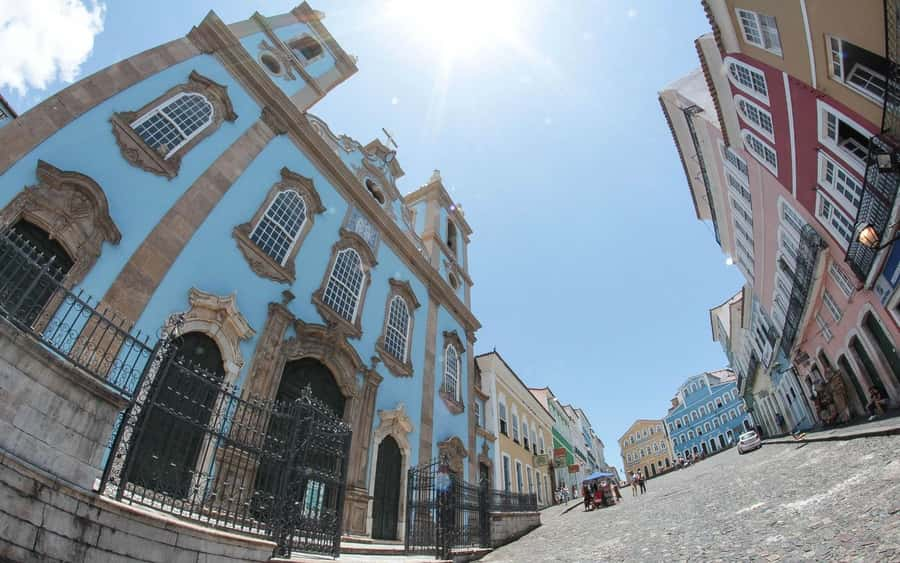
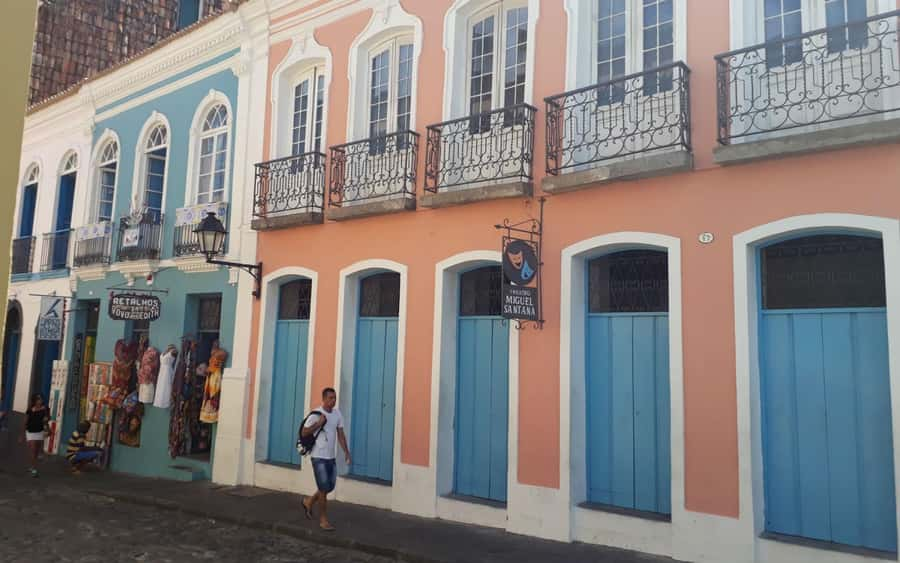
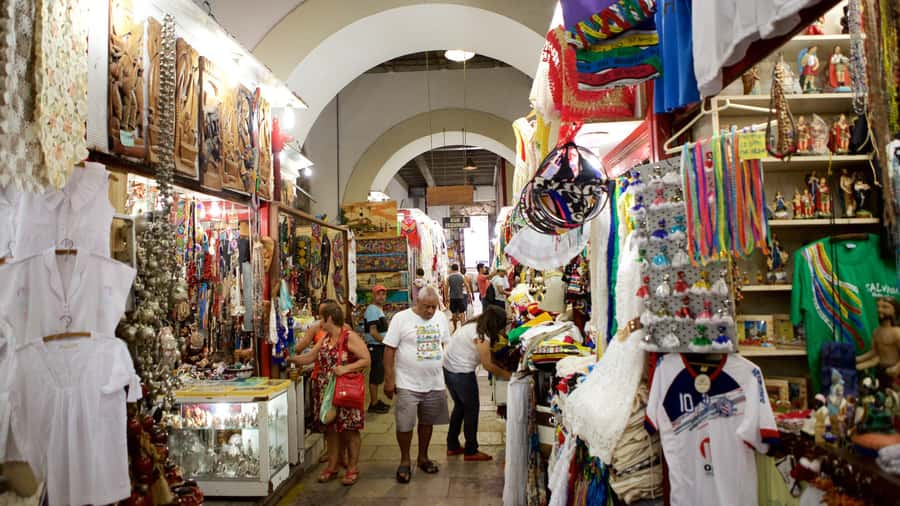
From the upper city, the walk continues into Pelourinho. This is Salvador’s best-known historic quarter, filled with restored and weathered mansions from the 17th and 18th centuries. Their façades, colors, balconies, and tightly packed streets give the district its famous look.
UNESCO recognition is part of the story, but the real value comes from understanding what you are seeing. A guide can point out how the buildings relate to colonial society, explain changes in the area, and help you separate the polished postcard view from the neighborhood’s more complicated past.
I especially like that the route does not treat Pelourinho as a decorative film set. The walk is designed to discuss Salvador’s culture, faiths, and African influence. That makes the district more meaningful than a simple stroll for photographs.
You may recognize some of these streets from Michael Jackson’s video for They Don’t Care About Us. That connection is interesting, but it should be treated as one small part of the neighborhood’s story. Pelourinho existed long before the video, and its importance reaches far beyond popular culture.
The streets are historic and attractive, but the district can also feel uneven from block to block. The supplied information does not promise a specific safety briefing or shopping stop, so ask your guide for practical advice during the walk. Several guides are noted for giving useful suggestions about what to do afterward.
São Francisco Church at Largo do Pelourinho
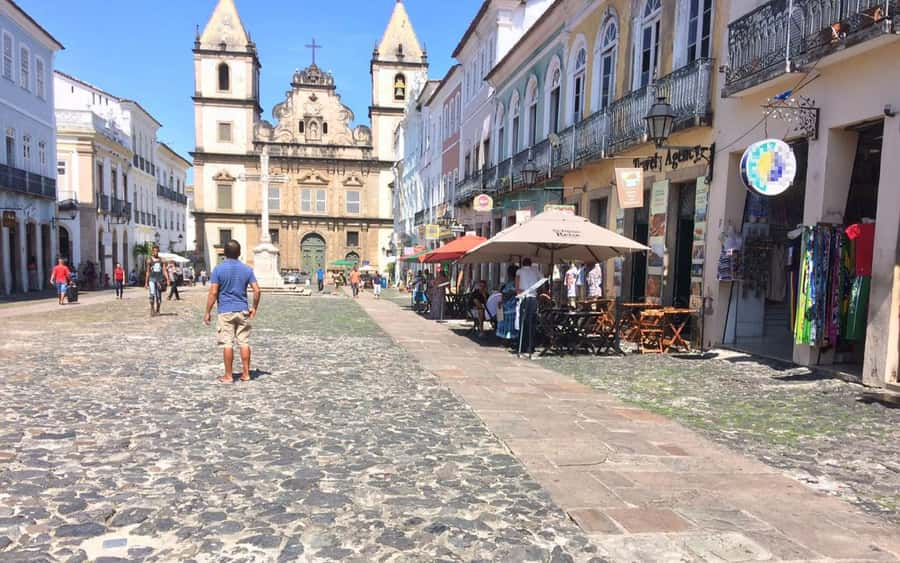
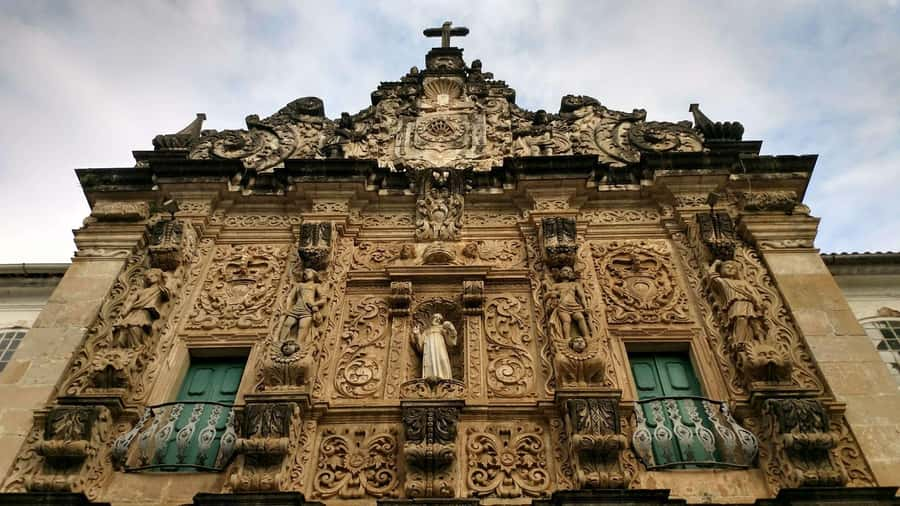
The tour continues to Largo do Pelourinho, one of the district’s most recognizable squares. Here you encounter São Francisco Church, a baroque landmark known for its elaborate decoration.
This is a place where having a guide makes a real difference. Church interiors and colonial art can be hard to read without context. A good explanation can help you understand the relationship between Catholic devotion, colonial wealth, artistic display, and the wider religious culture of Salvador.
The tour also presents Salvador’s mix of beliefs as part of the city’s identity. That is a valuable approach because the historic center is not only a collection of Portuguese-era buildings. It is also a place shaped by African traditions, Catholicism, local customs, and ongoing cultural change.
The information provided does not clearly state whether the tour includes paid entry inside São Francisco Church. You should confirm that before booking if seeing the interior is essential to you. The route does promise the church as a landmark, but landmark viewing and interior admission are not always the same thing.
Food, drinks, and local conversation
One guide, Maria, included several food and drink tastings during a tour. That suggests your experience may include chances to taste local items, but it is not listed as a guaranteed feature for every departure.
If tasting is included, it adds a useful layer to the walk. Salvador’s culture is not something you should experience only through buildings and dates. Food and drink can open a conversation about African influence, local ingredients, celebration, religion, and daily life.
Do not book this as a food tour, though. The central purpose is the historic center and Pelourinho, with cultural interpretation along the way. Any tasting should be viewed as an extra part of the guide’s approach, not the main product.
The same applies to personal recommendations. Eduardo is noted for tailoring the walk to individual interests and offering tips for making the most of a short stay. Another guide helped a participant with plans on the following day. That kind of practical help can be worth a lot if Salvador is only one stop on a larger Brazil itinerary.
What the guide quality means for you
The strongest pattern in the feedback is guide quality. Maria is praised for waiting when a cruise ship arrival ran late and for adding food and drink. Eduardo is described as friendly and helpful with extra suggestions. Lara is associated with a full explanation of Salvador’s place in Brazilian history. Aldison is praised for good English and clear discussion of history, culture, and religion.
That range tells me the guide is the heart of this experience. The buildings provide the setting, but the quality of the interpretation determines whether the walk feels worthwhile.
The languages are English, Spanish, and Portuguese. If you are choosing between language options, use the one in which you can ask detailed questions. This tour deals with subjects that are easy to flatten into simple facts, so strong communication matters.
The small group helps, but it cannot guarantee the same style from every guide. You may receive a very tailored walk, or a more standard overview. If you have a strong interest in Afro-Brazilian culture, architecture, music, religion, or recent neighborhood change, tell the guide early. The format appears to allow some adjustment.
Is two and a half hours enough?
Two and a half hours is a sensible length for a first look at Salvador’s historic center. You can cover the main route without giving up an entire day, and you still have time afterward for more exploring.
The tradeoff is coverage. Two people felt the tour did not include enough sights for the price, with one describing the value as roughly half of what was charged. That criticism is fair if you expect a packed itinerary.
I would judge the length this way: the tour works best as an introduction, not as a complete survey of Salvador. You will see important landmarks, learn how the upper city and Pelourinho fit together, and receive ideas for the rest of your stay. You will not see every church, museum, square, or district in the historic center.
A leisurely pace may also suit you if you prefer time for questions and photographs. If you want speed, volume, and many entries, choose a longer or private city tour instead.
Who should book this Salvador walk?
I would choose this tour if you are visiting Salvador for the first time and want a clear starting point. It is especially useful if you care about history, architecture, religion, Afro-Brazilian culture, and the way an old district functions today.
It also suits cruise passengers and short-stay visitors. The meeting point is central, the walk lasts 2.5 hours, and the route includes major sights without requiring a full-day commitment.
You may want something else if you have already explored Pelourinho in detail, dislike guided interpretation, or expect extensive interior access. The cost may feel high when measured only by the number of places visited.
Free cancellation up to 24 hours before the start and the option to reserve now and pay later make planning easier. A small group of up to 10 is another practical advantage. Check the current price, starting time, guide language, and whether tastings or church admission are included before you book.
Should you book it?
Book it if you want context, conversation, and a well-shaped introduction to Salvador rather than a fast sightseeing sprint. The best reason to go is the chance to connect Rio Branco Palace, Lacerda Elevator, Cruz Caída Square, Pelourinho, and São Francisco Church into one understandable story.
I would be more cautious if the price is close to that of a private tour or if you want a fuller list of sights. The route is relatively compact, and its value depends on how much you appreciate a good guide’s explanations.
For a first morning in Salvador, this is a practical choice. Use the walk to get oriented, ask for local suggestions, and then return to the places that deserve more time.
FAQ
How long does the Salvador Historic Walking Tour last?
The tour lasts 2.5 hours.
Where is the meeting point?
Meet in front of Cine Metha at Praça Castro Alves in Salvador. The listed coordinates are -12.97721862792969, -38.51432800292969.
Which landmarks are included?
The route includes Rio Branco Palace, Lacerda Elevator, Praça da Cruz Caída, Largo do Pelourinho, and São Francisco Church.
Does the tour visit Pelourinho?
Yes. Pelourinho is a central part of the route, including its 17th and 18th-century mansions and Largo do Pelourinho.
Does the tour include ocean views?
Yes. The route stops at Praça da Cruz Caída, where you can enjoy views of the ocean.
Which languages are available?
The live guide is available in English, Spanish, and Portuguese.
How large is the group?
The tour is limited to 10 participants.
Is food or drink tasting included?
Food and drink tastings were included by one guide, Maria, but the supplied details do not confirm that tastings are guaranteed on every departure.
Can I cancel the booking?
You can cancel up to 24 hours in advance for a full refund.
Can I reserve now and pay later?
Yes. The booking option allows you to reserve your place and pay later.
Newest history tours we have reviewed in Brazil
- Scenic Train ride to historical cities of Morretes and Antonina★ 4.0 · 188 reviews
- Germanic Route – Cultural and historical in Ilhota, Blumenau and Pomerode★ 4.5 · 67 reviews
- Rio: Historical Walking Tour★ 4.7 · 32 reviews
- Rio: Olympic Boulevard, Museum of Tomorrow & History Tour★ 4.1 · 47 reviews
- Rio de Janeiro: Historical Downtown and Lapa Walking Tour★ 4.4 · 32 reviews
- Historic City Tour Manaus by car with 3 stops.★ 4.9 · 18 reviews
- From Foz do Iguazu: Triple Frontier Landmark Ticket★ 4.4 · 136 reviews
- Florianopolis: Walking Tour – History, Art and Gastronomy★ 5.0 · 21 reviews
History Walking Tours, compared.
History and Hauntings of Salem Guided Walking Tour
Read our review →
Freedom Trail History Small Group Walking Tour
Read our review →
Historic Charleston Guided Sightseeing Walking Tour
Read our review →
Tapas Walking Tour with Food, Wine, and History
Read our review →
Savannah History and Haunts Candlelit Ghost Walking Tour
Read our review →
A History of Terror – Belfast City Centre Walking Tour
Read our review →Browse the lists this tour appears in