
Review · BRAZIL HISTORY TOURS
Florianopolis: Walking Tour – History, Art and Gastronomy
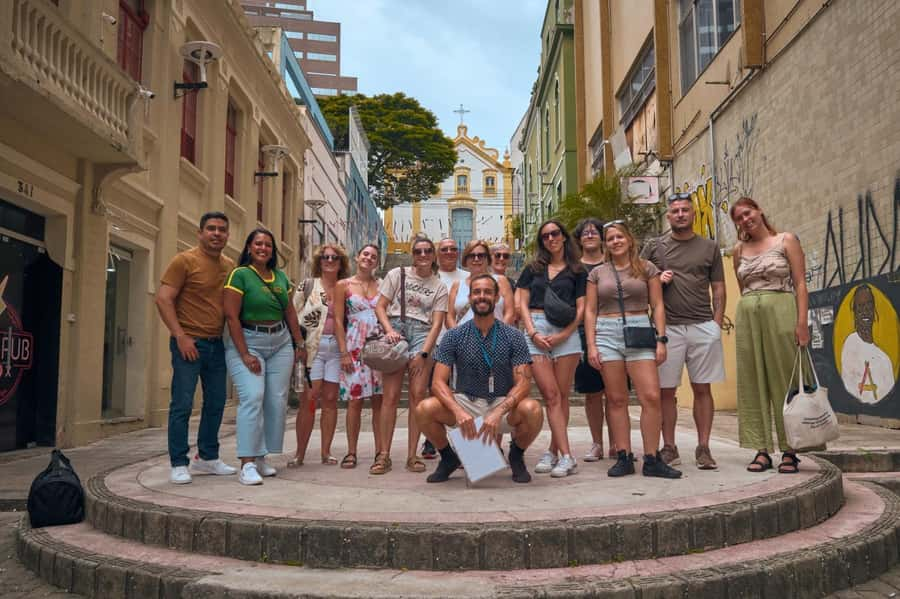
Florianópolis reveals its character best on foot, and this tour links the city’s colonial monuments with its Indigenous, African and Portuguese past. You’ll move from the cathedral and Cruz e Sousa Palace to the Public Market, stopping for local food and drinks along the way. The history lesson is not confined to grand buildings. It also covers the landmarks important to the Black community.
I like the clear historical storyline, which begins with the Indigenous peoples of Santa Catarina Island and continues through Portuguese colonization and African enslavement. I also like the food-and-drink finish, where you can try pastéis, coxinhas, sugar cane juice or a local beer instead of simply listening to another final speech.
The main consideration is pace. You’ll walk for around two hours, and the full schedule can run from two hours to 150 minutes. Comfortable shoes matter, and food and drinks cost extra. Still, at $18 per person, the tour offers a useful introduction to central Florianópolis at a fair price.
Key points before you book
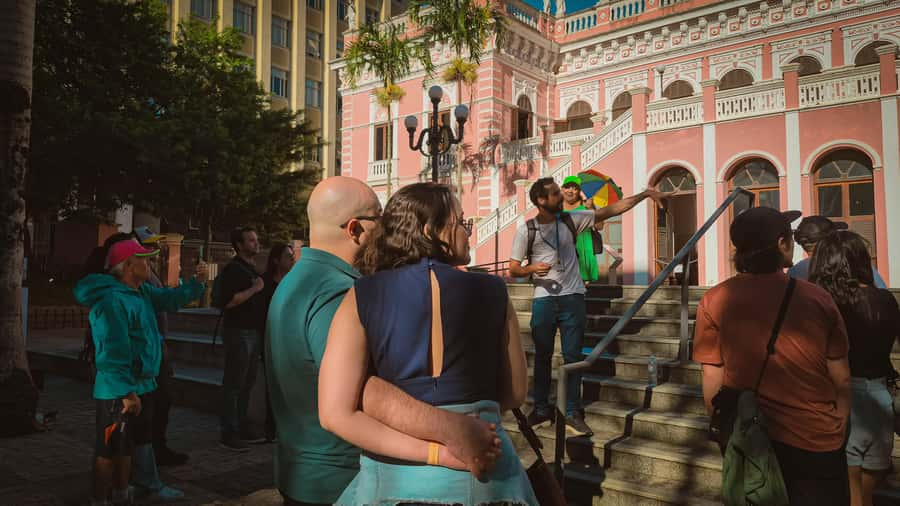
- History beyond the postcard sights: Learn how Indigenous, Portuguese and African communities shaped Florianópolis.
- A guide who explains things clearly: Isaac is praised for his easy-to-follow English and practical tips about bars and food.
- Several food stops in one short walk: Expect chances to try pastéis, coxinhas, sugar cane juice and local beer.
- Strong focus on Black heritage: The route includes important places connected with Florianópolis’s Black community.
- A social way to see the center: The tour brings together people from different countries in a small-group walking setting.
- Good value at $18: The price covers the guided experience, a city map and rain protection, but not food or drinks.
Meeting at Largo da Alfândega
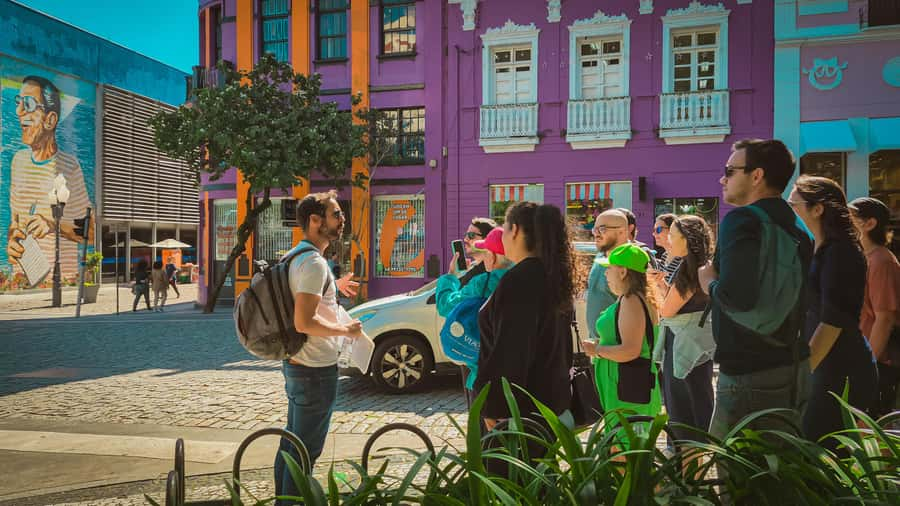
The tour begins outside Café|Bar do Largo da Alfândega, a convenient place to arrive a little early. You can use the restroom or buy a coffee before setting off. Look for the guide in a white T-shirt marked The Best of Florianopolis, with a guide credential and a small colorful umbrella.
That meeting detail is useful in a busy central area. You will not need to search for a tour desk or wait inside a hotel lobby. The guide’s clothing and umbrella should make the meeting point easy to spot.
The guide speaks English, Portuguese and Spanish. Isaac led at least some recent tours, and his English was praised as clear and easy to understand. His approach seems to mix formal history with local advice, including suggestions for food and bars after the walk. That is especially handy if Florianópolis is new to you and you want more than a list of monuments.
The route is described as wheelchair accessible, but comfortable clothing and shoes are still recommended. You are walking from one central stop to another, with time at several sites and a longer food-and-drink pause near the end.
More History Walking Tours in Brazil:
- Rio de Janeiro: Little Africa Heritage Walking Tour
★ 4.9 · 177 reviews - Paraty: Historic Centre Walking Tour & Cachaça Tasting
★ 4.8 · 96 reviews - Salvador Historic Walking Tour – Pelourinho
★ 4.8 · 62 reviews
The cathedral and the making of Desterro
The first major stop is the Metropolitan Cathedral of Florianópolis, also known by its long name, Nossa Senhora do Desterro and Santa Catarina de Alexandria. You have about 20 minutes here, making it one of the more substantial monument stops on the route.
This is a useful opening because the cathedral gives the tour a clear point of entry into the city’s colonial story. The guide connects the building and surrounding area with the arrival of Portuguese colonizers in the 17th century. You also learn about the Indigenous groups who occupied Santa Catarina Island before that period.
I appreciate this order. It avoids treating Portuguese settlement as the beginning of the island’s story. You first hear about the people already living here, then move into the social and economic changes brought by colonization and the arrival of enslaved Africans.
Do not expect a long formal church visit. The scheduled stop is about 20 minutes, so the focus is likely the cathedral’s place in the city rather than an exhaustive architectural study. That suits you if you want context without spending half a day inside one building.
Cruz e Sousa Palace and Praça XV
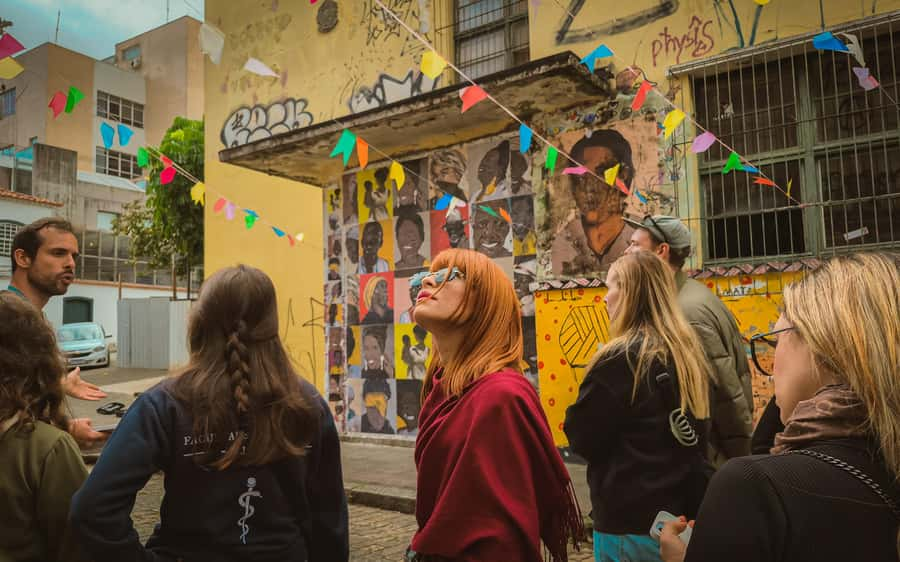
The walk continues to Cruz e Sousa Palace, with around 10 minutes of guided attention. The palace is tied to Florianópolis’s political and cultural center, and its name also points toward Cruz e Sousa, one of Brazil’s important Black literary figures.
The tour uses this stop to add depth to the city’s social story. You are not simply being shown a handsome historic building. You are encouraged to consider who had power, who was excluded and how Black identity has been remembered in Florianópolis.
Next comes Praça XV de Novembro, a central square with another 10-minute explanation. Squares such as this help you understand how a city organizes public life. Here, the guide connects the physical center of town with the people and institutions that shaped it.
I would pay close attention to the transitions between stops. Much of the value comes from hearing how the cathedral, palace and square relate to one another. On your own, you might photograph each place and move on without understanding the links.
Fernando Machado Square and Black history
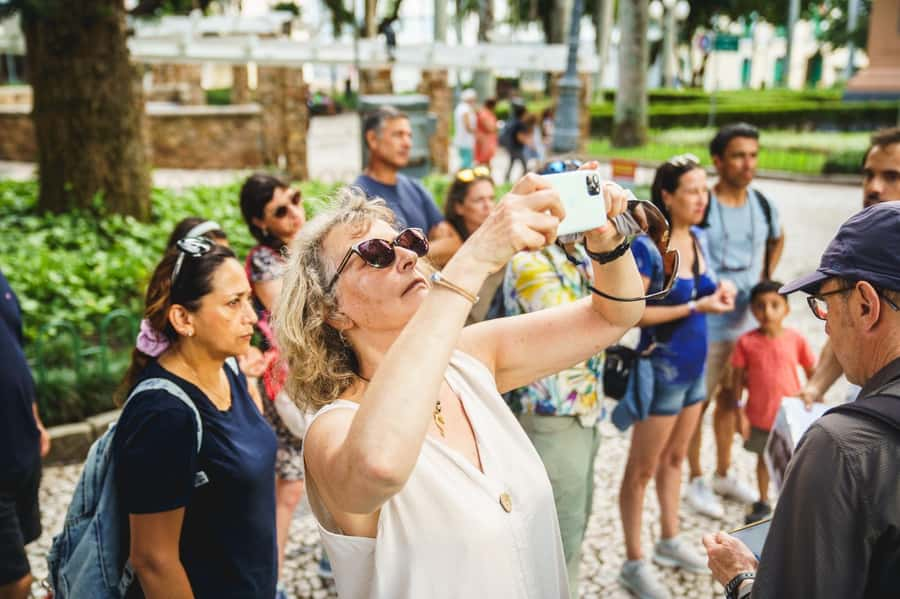
Praça Fernando Machado is another 10-minute stop. The route gives particular attention to sites connected with the Black community in Florianópolis, which is one of its strongest features.
Many city walks focus on colonial architecture and leave the history of enslaved people, Afro-Brazilian communities and racial inequality in the background. This tour puts those subjects into the main story. That makes the experience more useful for anyone who wants to understand how Brazil developed socially and economically, not just admire old facades.
The precise landmarks and stories discussed can depend on the guide and the group’s questions. Still, the stated focus is clear: you will learn about important places for Florianópolis’s Black community and how those places fit into the city’s past.
I like the balance between famous sights and less obvious social history. You get the familiar central squares, but you also hear whose work and presence helped form the city. That gives the walk more substance than a simple architecture circuit.
More History Tours in Brazil:
- Maria Fumaça – Wines and History
★ 4.0 · 242 reviews - Rio de Janeiro: Historic Rio and Santa Teresa Half-Day Tour
★ 4.4 · 228 reviews - São Paulo: Downtown Historical Bike Tour
★ 4.9 · 191 reviews - Scenic Train ride to historical cities of Morretes and Antonina
★ 4.0 · 188 reviews
The Public Market and a taste of local life

The Mercado Público de Florianópolis receives about 30 minutes of guided time and is also the ending point. This is one of the best places on the route for the tour’s history, food and everyday life to meet.
The guide gives you a little tour of the market and includes a surprise. The exact nature of that surprise is not specified, so you should not book expecting a particular dish or included tasting. You can, however, expect the market to be part of the food conversation and a useful place to continue exploring after the guide says goodbye.
The suggested local snacks include pastéis and coxinhas. A pastel is a crisp pastry usually filled with savory ingredients, while a coxinha is a popular fried snack with a chicken filling. Sugar cane juice offers a nonalcoholic option, and local beer is available if you want something cold at the end of the walk.
None of the food or drinks is included. A pint costs about $4 on average, so a snack and beer will add a manageable amount to the $18 tour price. If you are watching your budget, you can simply listen to the recommendations and decide later what to order.
The market is also where the route finishes, so you do not have to rush away to find your way back to the starting point. You receive a city map with local recommendations, which can help you plan the rest of your day.
Álvaro de Carvalho Theatre and Avenida Hercílio Luz
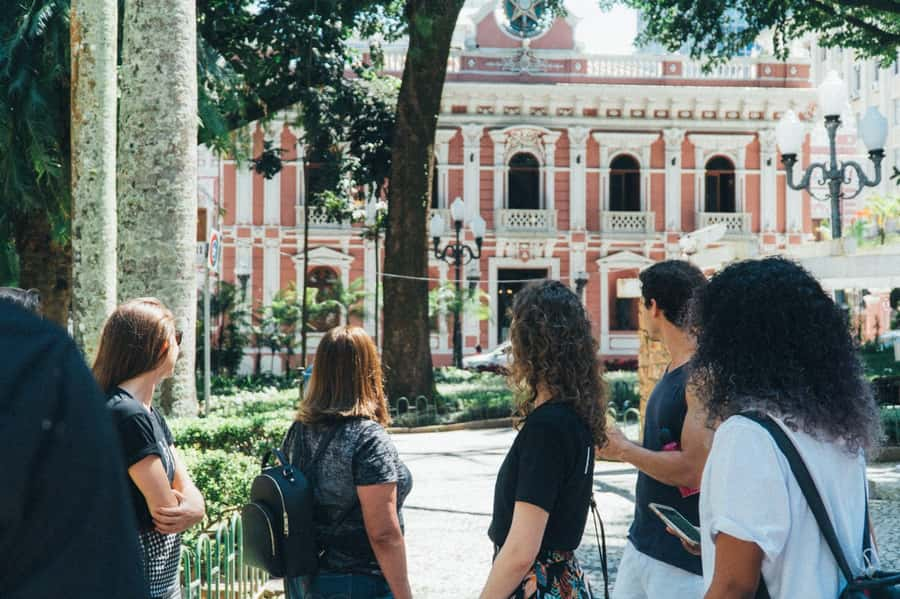
The Álvaro de Carvalho Theatre gets around 10 minutes. It is presented as one of the city’s most beautiful monuments, but the visit is brief. You should think of this as an informed look at the building and its place in Florianópolis rather than a theater performance or extended interior tour.
That short stop works well in a walking route. You see an important cultural building without losing the momentum of the day. If theater history is your main interest, you may want to ask the guide questions while you are there, since the allotted time is limited.
The route then reaches Avenida Hercílio Luz for another 10-minute explanation. This adds a broader city view to the central historic streets. The guide continues to connect streets and public spaces with the growth of Florianópolis, rather than treating each stop as an isolated attraction.
The tour’s strength is this running commentary. The buildings matter, but the guide also explains how the city formed around them. You come away with a better sense of the relationship between public squares, religious buildings, government spaces, cultural institutions and markets.
Forte de Santa Bárbara and the final bar stop

Forte de Santa Bárbara receives roughly 10 minutes. This stop adds a defensive and military note to a route otherwise centered on churches, palaces, squares and food.
The visit is brief, so you should not expect a long fortress tour. The guide’s role is to explain why the fort belongs in the story of Florianópolis and how it fits into the city’s development. It is a useful change of subject before the final social part of the experience.
The last stop listed is Bar do Noel, with about 40 minutes. This is the longest single stop after the market and gives the group time to relax, talk and try drinks or snacks at their own expense. The advertised highlights include pastéis, coxinhas, sugar cane juice and local beer, but you should budget separately because nothing consumed here is included.
This final stop is where the tour becomes less formal. You can compare notes with people from different countries, ask the guide for restaurant and nightlife ideas, and decide how to spend the evening. The guide may even join you at one of the city’s bars after the official tour, though you should treat that as a possibility rather than a promised part of the booking.
What the $18 price really covers

At $18, this is a good-value introduction to central Florianópolis. You are paying for a multilingual live guide, a route covering major monuments and public spaces, local historical context, a market visit, a city map and raincoats if the weather turns wet.
The price does not cover food or drinks. That is common for a walking tour, but it matters here because eating and drinking are part of the experience. Plan to spend extra if you want a beer, snack or juice at the market or Bar do Noel. With an average pint around $4, even a modest food stop should not transform this into an expensive outing.
The value is highest if you are visiting Florianópolis for the first time. A guide can give you the city’s basic framework in one morning or afternoon, then point you toward places worth returning to on your own. It is less suitable if you want a deep architectural tour of every building or a long, formal museum visit.
The booking terms are traveler-friendly. You can cancel up to 24 hours before the tour for a full refund, and you can reserve now and pay later. Availability depends on the starting time shown when you book.
Who will get the most from this walk

I would choose this tour if you want a first look at the historic center and prefer a guide who explains social history as well as buildings. It suits solo visitors, couples and small groups who like meeting people from different countries while walking.
It is also a good pick if food is part of your sightseeing. You have several chances to ask what to try, then make your own choices at the market or bar. The map and local recommendations add value after the tour ends.
The experience may be less satisfying if you dislike walking, want every stop to be leisurely or expect meals to be included. The route covers many places in a limited time, so some visits are short. Wear comfortable shoes, bring an appetite if you plan to snack, and leave room in your schedule for up to 150 minutes.
Rain is not an automatic dealbreaker because raincoats are provided. You should still wear practical clothing, since the experience takes place outdoors as you move between the historic center’s stops.
Should you book the Florianópolis walking tour?
Book it if you want history, local food and social context in one compact outing. The strongest parts are the Indigenous, Portuguese and African history, the attention to Black heritage, Isaac’s clear English and the relaxed finish around the Public Market and Bar do Noel.
I would not choose it for a museum-style deep study of one monument. The schedule moves steadily, and several stops last only 10 minutes. But for $18, you get a friendly orientation to central Florianópolis, useful local suggestions and a better understanding of the people and events behind the city’s most familiar places.
FAQ
Where does the Florianópolis walking tour begin?
It begins outside Café|Bar do Largo da Alfândega. You can arrive early to buy coffee and use the restroom.
Where does the tour finish?
The official finish is at the Mercado Público de Florianópolis.
How long does the tour last?
The duration is listed as two hours to 150 minutes. You should allow up to two and a half hours.
Which languages does the guide speak?
The tour is available in English, Portuguese and Spanish.
Are food and drinks included?
No. Food and drinks are purchased separately. The average price for a pint is about $4.
What should I bring?
Wear comfortable clothes and shoes. You will walk for around two hours. Raincoats are provided if it rains.
Is the tour wheelchair accessible?
Yes, the activity is listed as wheelchair accessible.
Newest history tours we have reviewed in Brazil
- Scenic Train ride to historical cities of Morretes and Antonina★ 4.0 · 188 reviews
- Germanic Route – Cultural and historical in Ilhota, Blumenau and Pomerode★ 4.5 · 67 reviews
- Rio: Historical Walking Tour★ 4.7 · 32 reviews
- Rio: Olympic Boulevard, Museum of Tomorrow & History Tour★ 4.1 · 47 reviews
- Rio de Janeiro: Historical Downtown and Lapa Walking Tour★ 4.4 · 32 reviews
- Salvador Historic Walking Tour – Pelourinho★ 4.8 · 62 reviews
- Historic City Tour Manaus by car with 3 stops.★ 4.9 · 18 reviews
- From Foz do Iguazu: Triple Frontier Landmark Ticket★ 4.4 · 136 reviews
History Walking Tours, compared.

History and Hauntings of Salem Guided Walking Tour
Read our review →

Freedom Trail History Small Group Walking Tour
Read our review →
Historic Charleston Guided Sightseeing Walking Tour
Read our review →
Tapas Walking Tour with Food, Wine, and History
Read our review →
Savannah History and Haunts Candlelit Ghost Walking Tour
Read our review →
A History of Terror – Belfast City Centre Walking Tour
Read our review →Browse the lists this tour appears in