
Review · CROATIA HISTORY TOURS
Pula: Historic Sites Guided Walking Tour
Pula packs Roman monuments, Venetian defenses, Austro-Hungarian traces, and everyday city life into a compact old center. This 90-minute walking tour links the big sights in a sensible order, beginning at the Arena and ending at the Twin Gate, with the castle providing a fine high point along the way. The guide, often identified as Sini, Sinisha, or Sinsije, brings the history to life in clear English.
I like two things especially: the tour gives you a quick grasp of Pula’s layout, and it mixes famous monuments with smaller clues such as Roman mosaics and tucked-away remains. At $20 per person, it is a good deal for a first look. The main drawback is its brisk format: you see many places, but entry tickets are not included, and the tour is not suitable for people with mobility impairments.
Key points to know before booking
- The Pula Arena is your starting lesson: You get an informative introduction to the city’s most famous Roman monument before setting off.
- The Venetian castle adds a change of pace: Built in the 17th century, it offers history, former occupants, and panoramic views from above.
- Roman Pula comes in layers: The Forum, Augustus Temple, mosaics, Hercules Gate, and Sergii Arch show how much ancient material survives in the modern city.
- The route ends at Twin Gate: You finish near another Roman-era gateway rather than returning to the Arena.
- The guide is the main value: Sini and guides also identified as Sinisha or Sinsije are praised for strong English, humor, answers to questions, and broad knowledge of ancient history.
- Plan for outdoor conditions: The tour runs rain or shine, and video recording is not allowed.
Why this short Pula tour works so well
Pula is easy to underestimate. You can walk past the Roman Arena, a classical temple, a medieval cathedral, and a Venetian fortress in one afternoon, yet the monuments do not explain themselves. A stone wall may belong to a Roman gateway, a medieval rebuilding, or a later repair. The guide’s job is to connect those layers.
This tour is built for that first explanation. In 90 minutes, you get a city orientation and a basic timeline, from Roman Pula through the Venetian period and into the later life of the old town. The pace is described as leisurely, but the route covers several sites, so expect steady walking and frequent stops rather than a long pause at each monument.
I would use it near the beginning of a Pula visit. Once you know where the Forum, market, castle, cathedral, and gates fit together, you can return later to the places that deserve more time. The tour also helps you decide which paid attractions are worth entering, since admission is not part of the $20 price.
The guide makes a real difference here. Sini is repeatedly singled out for friendly delivery, strong English, humor, and the ability to answer questions. One useful feature is the opening look at a town diorama, which helps you see the planned route before walking it. That small orientation can save you from treating Pula’s old center as a random collection of ruins.
More History Walking Tours in Croatia
- Dubrovnik Old Town History Walking Tour
★ 5.0 · 1,684 reviews - Dubrovnik: Ancient City Walls & Wars Walking Tour
★ 5.0 · 1,270 reviews - Zagreb: City & History Walking Tour & WW2 Tunnels
★ 4.9 · 1,202 reviews
Starting beside the Pula Arena
Meet your guide at Istarska ul. 50, in front of the Amphitheater entrance. Look for a blue card around the guide’s neck and an umbrella. Those details matter at a busy monument, especially if several groups are gathering nearby.
The Arena is the right place to begin because it immediately gives you Pula’s scale and importance in Roman times. Your guide starts with a brief explanation of the amphitheater, its place in the city, and the main features you are about to see elsewhere. The introduction is designed to be informative without using up the whole tour.
You should not assume that this walking experience includes an interior visit. Entry tickets are not included, so the Arena is primarily the opening stop and subject of the guide’s talk unless you arrange admission separately. If entering the amphitheater is a priority, check ticket details before booking or plan a separate visit.
The opening can feel quick if you want a long archaeological lecture. That is the tradeoff. You get a useful overview, then move on to cover a large part of the center within the allotted time.
The Venetian castle and Pula from above
From the Arena, the route continues to Pula Castle. The fortress was built by the Venetians in the 17th century, giving you a clear shift from ancient Rome to the later military history of Istria.
The castle stop is more than a change of scenery. It shows how Pula remained useful and strategic long after the Roman period. Your guide explains the building’s past and its former inhabitants, helping you see the fortress as part of the city’s changing political story rather than just an old stone structure.
You also get panoramic views from the castle. This is one of the tour’s best practical features because it lets you understand Pula’s layout from above. After walking through the old center, a higher viewpoint gives the streets and monuments a clearer relationship.
The castle does require walking, and the experience is not designed for people with mobility impairments. The supplied information does not give a detailed breakdown of steps, slopes, or surfaces, so ask the operator if you need precise access information before reserving.
Cathedral, Forum, and the Augustus Temple
The next section brings you to the Cathedral and then the Roman Forum. The Forum is the historical heart of the route, where ancient civic life and present-day city life meet.
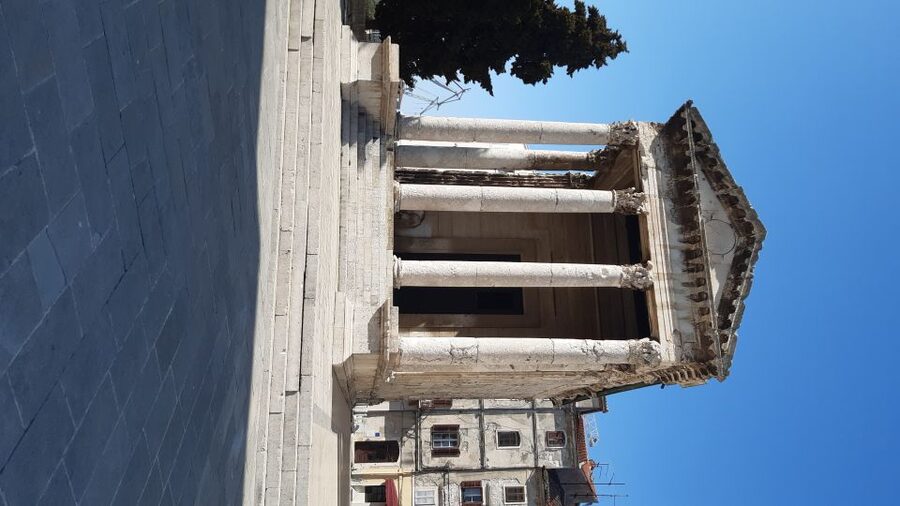
The Augustus Temple is the showpiece here. Around 2,000 years old, it gives you a direct look at Roman religious architecture in the middle of modern Pula. Your guide explains its place in the Forum and points out details that are easy to miss if you only stop for a photograph.
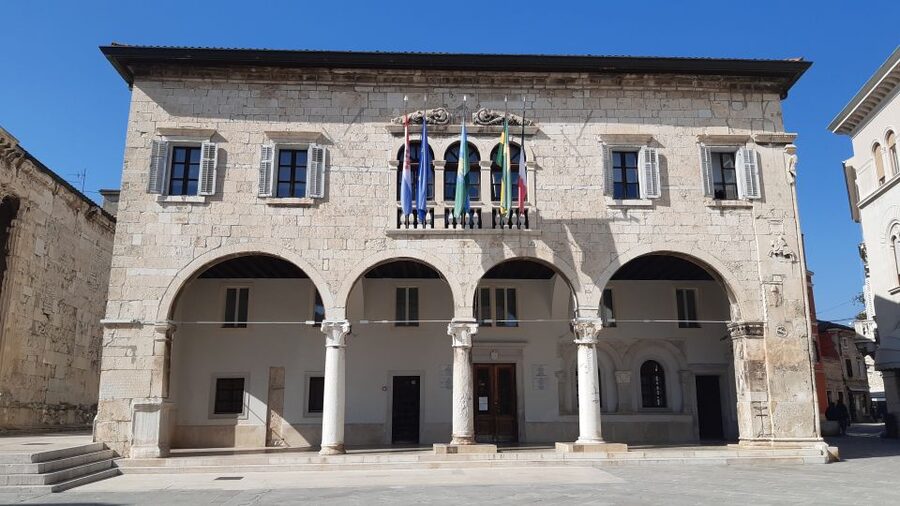
City Hall sits in the same area, creating a useful comparison between ancient public life and later civic government. The value of having a guide is clearest at this point. Without context, you see a temple and a municipal building. With context, you can understand how the Forum has continued to function as a public center across very different periods.
The Cathedral adds another layer. It moves the story away from Roman religion and into the city’s Christian past. The tour does not treat Pula as a single-period archaeological site. Instead, it shows how Roman, religious, Venetian, and modern civic traces occupy the same compact center.
Do not expect a long interior visit at every building. The tour is mainly a guided walk, and the 90-minute schedule favors explanation from the streets and squares. If you want detailed time inside the Cathedral or Temple, allow for a separate visit.
Same streets, a different century:
- Walking Tour of Split with a ‘Magister’ of History
★ 5.0 · 1,122 reviews - Dubrovnik Combo: Old Town & Ancient City Walls
★ 5.0 · 1,019 reviews - Split Walking Tour with Professor of History
★ 5.0 · 926 reviews - Split: History and Heritage Walking Tour
★ 4.9 · 650 reviews
Roman mosaics and the Arch of Sergii
Between the major stops, your guide points out Roman mosaics. These smaller remains are important because they make ancient Pula feel less like a set of isolated monuments. Roman life survives in fragments along the route, sometimes in places you might pass without noticing.
The Arch of Sergii is another major stop. This Roman gateway gives the tour a strong architectural example outside the Forum area. The guide can explain what the arch commemorated and how it fits into the old city’s street pattern, while you get a sense of how Roman public monuments were placed along important routes.
This is where the tour’s focus on hidden traces of the Romans earns its keep. The Arena and Temple are obvious. Mosaics and city gates reward a slower eye. You leave better prepared to spot ancient details during the rest of your stay, even when no sign explains them.
The route is also a pleasant way to see how Pula’s old streets connect. Several people who took the tour found the leisurely pace comfortable, and the monuments are close enough together to avoid long stretches of walking between stops. Still, comfortable shoes are sensible because this is a city-center walking experience, not a coach tour.
Pula Market and the final Roman gate
The Pula Market, established in the early 1900s, gives the tour a welcome everyday pause. After ancient temples and military fortifications, the market shows a more recent side of city life.
This stop helps keep the experience from becoming a parade of ruins. You see how Pula developed as a lived-in town, not only as an archaeological site. The market also gives you a useful place to return for local shopping or a closer look after the tour, though the activity itself is focused on the guide’s commentary rather than a dedicated food visit.
The walk finishes at the ancient Gate of Hercules, near Twin Gate. Ending here makes sense: the gate provides one last Roman marker and leaves you in a useful part of the old center for further exploring.
Because the tour does not loop back to the Arena, plan your afternoon with the finish in mind. The exact finishing point is Twin Gate, not the original meeting place. That is easy to manage in Pula’s compact center, but it is worth remembering if you have a timed reservation or transport waiting by the amphitheater.
What the guide adds to the experience
The strongest part of this tour is the guide’s interpretation. The feedback repeatedly praises Sini, Sinisha, or Sinsije for broad knowledge, excellent English, friendly manner, humor, and a willingness to answer questions. The names appear in slightly different forms, so the exact guide may vary by departure.
I like the reported tone: informative, engaging, and not overly formal. That matters on a short city walk. A guide who only lists dates can make even a remarkable temple feel flat. A guide who tells stories without explaining the buildings leaves you entertained but lost. This experience aims for a useful middle ground.
You can ask questions during the walk, especially about ancient history, architecture, Istria, and local culture. The guide’s ability to handle questions is important because Pula’s monuments raise obvious puzzles. Why is a Roman temple still standing? How did a Venetian fortress fit into an ancient city? Why do modern buildings sit so close to Roman remains? The tour is designed to address that kind of curiosity.
The 4.8 rating from 78 reviews supports the idea that the guiding is consistently strong, though no short tour can satisfy every interest. If you want an intensive archaeological study, private access, or long interior visits, this is not that. It is a well-paced introduction with a strong human voice.
Is $20 good value for 90 minutes?
At $20 per person, the price is reasonable for a guided walk through several of Pula’s key historic areas. You are paying for local interpretation and route planning, not admission to monuments. That distinction matters.
The value is highest if this is your first time in Pula, if you have only a few hours, or if you prefer a clear introduction before exploring independently. The tour covers the Arena, castle, Cathedral, Forum, Augustus Temple, City Hall, mosaics, Arch of Sergii, market, and Hercules Gate. Seeing this range alone would be useful, but understanding how the pieces connect is the real benefit.
The value is lower if you have already studied Pula’s ancient sites or want to spend an hour inside one monument. You may prefer to buy individual entry tickets and explore at your own pace. The tour does not include those tickets, and 90 minutes leaves limited time for extended photography or quiet contemplation.
Booking flexibility is helpful. You can reserve now and pay later, and cancellation is free up to 24 hours before the start time. Check available departure times when booking, since the duration is fixed but the starting time can vary.
Who should book this Pula walk?
I would recommend it to first-time visitors, cruise or short-stay visitors, history fans who want a structured overview, and anyone who likes learning the story behind a city’s stones. It is also a good choice for people who want to see the main historic sights without spending a full day on a formal excursion.
Families with older children may find the compact format manageable, but the supplied information does not specify a children’s program or special activities. People with mobility impairments should choose another option or contact the operator first, since this tour is specifically marked as unsuitable for them.
Bring weather-appropriate clothing. The walk runs rain or shine, with no promise of indoor shelter for the full route. Video recording is not allowed, so plan to listen, take notes, and use still photography only if permitted in each location.
You do not need to be an ancient-history expert. The guide’s role is to give you the basic timeline, point out the important details, and make the city easier to read. That makes the tour useful even if you know little about Roman or Venetian history.
Should you book it?
Book this tour if you want a fast, well-explained introduction to Pula and value a guide who can connect Roman remains with the city’s later history. The $20 price is fair, the route covers the essential historic center, and the reported guiding is consistently praised for clear English, humor, and strong answers to questions.
Skip it if you need step-free access, want long visits inside monuments, or prefer to explore without a fixed route. For most first visits, though, this is a practical way to get your bearings and see why Pula is much more than its famous Arena.
FAQ
How long does the Pula historic sites tour last?
The tour lasts 90 minutes, or one and a half hours.
Where does the tour begin?
Meet in front of the Pula Amphitheater entrance at Istarska ul. 50.
How can I identify the guide?
The guide will have a blue card around their neck and hold an umbrella.
Where does the tour finish?
The walking tour finishes at Twin Gate.
What language is the tour conducted in?
The live tour guide conducts the tour in English.
Are entry tickets included?
No. Entry tickets are not included in the tour price.
Is the tour suitable for people with mobility impairments?
No. The tour is listed as not suitable for people with mobility impairments.
What happens if it rains?
The tour takes place rain or shine. Video recording is not allowed.
Newest history tours we have reviewed in Croatia
- Enjoy Ancient Mostar★ 4.0 · 45 reviews
- Dubrovnik by Night, History, Wine & Bites★ 5.0 · 41 reviews
- Ancient Old City– Finest tour of Dubrovnik★ 5.0 · 64 reviews
- Split: Historical & Gastro Treasures Tour with Green Market★ 4.9 · 144 reviews
- Split: Private Walking Tour in the Historical Town Center★ 5.0 · 25 reviews
- Split Walking Tour with History Professor★ 5.0 · 23 reviews
- Split: Walking tour of Split with a ‘Magister’ of History★ 5.0 · 110 reviews
- Split: Local History and Culture 90-Minute Walking Tour★ 5.0 · 194 reviews
History Walking Tours, compared.

History and Hauntings of Salem Guided Walking Tour
Read our review →

Freedom Trail History Small Group Walking Tour
Read our review →
Historic Charleston Guided Sightseeing Walking Tour
Read our review →
Tapas Walking Tour with Food, Wine, and History
Read our review →
Savannah History and Haunts Candlelit Ghost Walking Tour
Read our review →
A History of Terror – Belfast City Centre Walking Tour
Read our review →Browse the lists this tour appears in