
Review · DUBROVNIK HISTORY TOURS
Dubrovnik Combo: Old Town & Ancient City Walls
Dubrovnik’s best introduction comes from seeing it at street level, then looking down on it from the ancient city walls. This combo pairs a 1.5-hour Old Town walk with a roughly 2-hour circuit of the fortifications, making good use of a half-day in the city.
I like the easy meeting point under the orange umbrella near Pile Gate, and I like the way the guides connect grand events with personal stories from Croatia’s more recent past. Audio headsets help you follow along, even when the group reaches a busy square.
The catch is cost: the advertised $52 does not include the city walls entrance fee, which is €40 per person. You’ll also face a serious workout, with steep stone steps, hot sun, wind, and more than one review describing the walls as a 2-kilometer hike with over 1,000 steps.
Key points to know before booking
- Two essential walks in one half-day: See the main Old Town sights, then trace the full defensive circuit.
- A guide with real local perspective: Goran, Gorun, Mara, Lana, Antun, and Andrea are among the guides associated with these tours.
- The walls fee is extra: Budget €40 per person, or arrange a Dubrovnik Pass in advance if it covers your visit.
- Expect a workout: The Old Town is manageable, but the walls involve many stairs, uneven stone, and exposed sections.
- Audio headsets improve the experience: Groups of four or more use headsets so you can hear the commentary clearly.
- Timing matters in summer: An early walls departure can mean less heat and fewer people on the circuit.
Why this Dubrovnik combination works
Dubrovnik can feel confusing on a first visit. The Old Town is compact, but every church, palace, fountain, and lane carries a name and a story. The walls are just as important, yet they make more sense after you understand the city inside them.
This tour gives you both views. On the ground, you pass through the city’s public heart and see how Dubrovnik functioned as a medieval republic. On the walls, you understand its geography, military planning, and relationship with the sea.
I especially like this pairing for a short stay. You do not have to arrange separate guides, find a second meeting point, or work out how the wall entrances fit with the Old Town. The two walks are linked by the same operator, though the exact order and break between them can vary by departure schedule.
The combined duration is about 3 hours and 30 minutes. That is long enough to feel substantial without swallowing your whole day. Still, do not mistake it for a gentle sightseeing stroll. The walls portion is physically demanding, and the stone streets can become tiring in hot weather.
More Old Town and Historic Centre Walks in Croatia
- Dubrovnik Old Town History Walking Tour
★ 5.0 · 1,684 reviews - Dubrovnik: Ancient City Walls & Wars Walking Tour
★ 5.0 · 1,270 reviews - Dubrovnik: Old Town History Walking Tour
★ 4.9 · 474 reviews
Meeting near Pile Gate and Brsalje
The meeting point is at the Dubrovnik Walks orange umbrella on Brsalje Street 8, close to Pile Gate. This is a practical place to begin because Pile is the main western entrance to the Old Town and is near public transportation.
Look for the orange umbrella rather than wandering around the square searching for a shop or museum entrance. The guide introduces the tour, gives a short outline, and leads the group through the gate.
The start is useful for anyone arriving by bus or approaching from the western side of the city. One particularly helpful detail is that the Old Town and walls tours finish near the old port, while the listed meeting point remains the main reference point for both. Check your voucher carefully for the assigned time and exact order.
Groups can reach a maximum of 35 people. That is not intimate, but the headsets make a real difference. For groups of four or more, the guide uses audio equipment so you can hear without crowding around the speaker.
The Old Town walk: 1.5 hours of essential sights
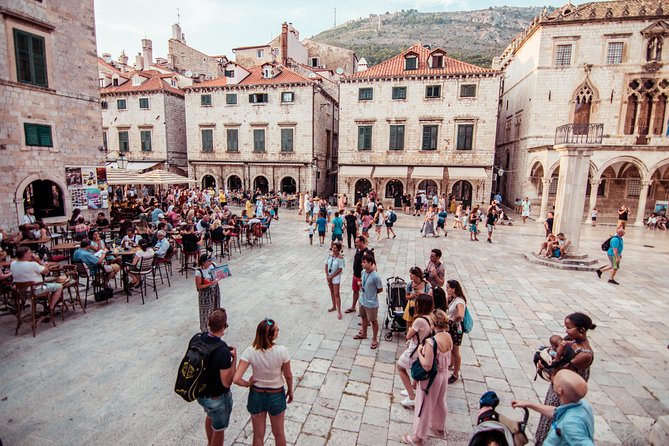
The first walk introduces Dubrovnik through its stone streets and major public buildings. It covers about 1.5 hours, with much of the route on fairly level pavement, although you should still expect uneven limestone and some steps.
At Pile Gate, you enter the historic center through the city’s main western entrance. This is a good place to hear how the walls controlled access and why Dubrovnik’s position between the mainland and the Adriatic mattered.
The route continues past the Franciscan Monastery, one of the Old Town’s key landmarks. The complex is associated with a Pieta sculpture and one of Europe’s oldest pharmacies still in operation. The tour does not promise a full interior visit, so think of this as an exterior stop and historical explanation rather than a museum tour.
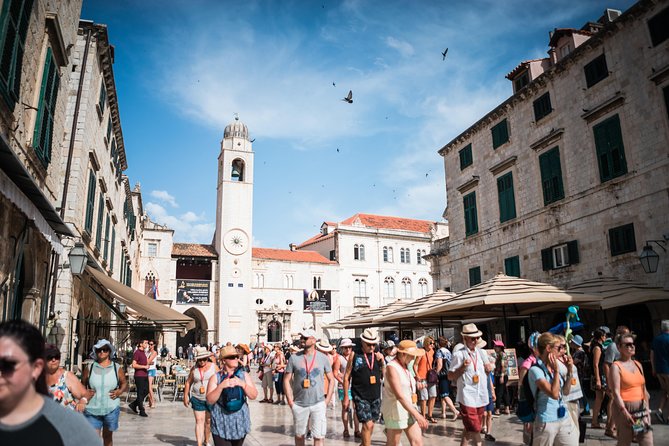
You then reach the Stradun, Dubrovnik’s broad central thoroughfare. Its pale limestone surface catches the light and gives the Old Town much of its famous appearance. The street is not simply a pretty promenade. It is the city’s main organizing line, linking the western entrance with Luza Square.
At the western end, Onofrio’s Fountain offers a useful lesson in practical medieval engineering. Built in 1438, it marked the end of an aqueduct roughly 12 kilometers long, bringing water into the city. That detail helps explain how Dubrovnik supported urban life inside its fortified walls.
The walk continues toward Luza Square, the city’s main civic space. Here the guide discusses several buildings and symbols close together: St. Blaise’s Church, Orlando’s Column, Sponza Palace, the Small Onofrio’s Fountain, and the bell tower.
Orlando’s Column is more than a decorative monument. It reflects Dubrovnik’s long concern with freedom and sovereignty. This is one of the places where a good guide can connect architecture with the political character of the old republic.
Nearby, Sponza Palace and Rector’s Palace show the city’s administrative and commercial importance. The guide also covers the Cathedral of the Assumption, a Baroque church built after the destructive earthquake of 1667.
The strength of this part is context. You are not merely ticking off famous facades. Guides such as Goran, Gorun, Mara, Lana, Antun, and Andrea have been praised for explaining Croatian history, the war, religion, architecture, and present-day life in a way that gives the streets meaning.
The possible weakness is that the commentary can feel more like a history class than a casual city stroll. If you want mostly quick photo stops and restaurant tips, a very talkative guide may feel slow. If you want to understand why Dubrovnik looks and functions as it does, that depth is the point.
The pause between tours matters
The two walks may not run as one continuous block. The schedule can include a break, and one common arrangement places the walls walk first, followed by the Old Town walk later.
That break is useful. You can get water, find a restroom, eat something, or adjust your pace before taking on the next section. It also means you should not book a restaurant reservation too close to the advertised finish time.
One practical pattern is to do the walls early, when the stone is cooler and the circuit may be less crowded, then explore the shaded lanes of the Old Town around midday. If your schedule offers the reverse, carry water and prepare for more heat on the walls.
The tour operator allows you to choose a departure time, which helps if you are working around a cruise arrival, a hotel check-in, or another Dubrovnik visit. Confirm the order at booking, since the description allows for both arrangements.
More Ancient History Tours in Croatia:
- Colosseum: Underground and Ancient Rome Tour
★ 4.7 · 12,691 reviews - Colosseum & Ancient Rome with Arena Floor Option I Max 6 People
★ 5.0 · 3,306 reviews - Rome: Colosseum, Ancient Rome Tour or AudioGuided Tour
★ 4.4 · 2,879 reviews - Colosseum Underground & Ancient Rome Guided Tour
★ 4.5 · 2,590 reviews
Walking Dubrovnik’s 2-kilometer walls
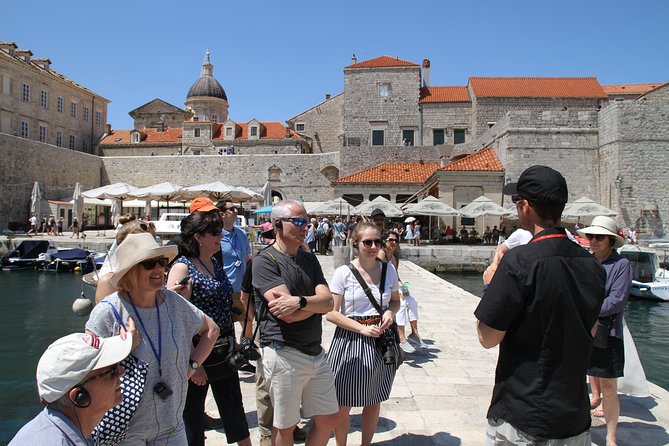
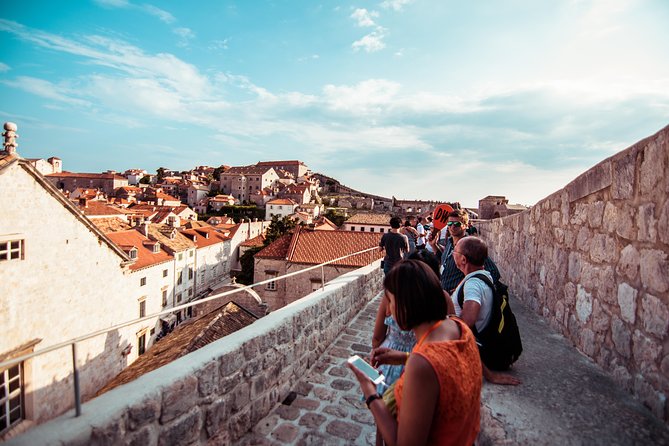
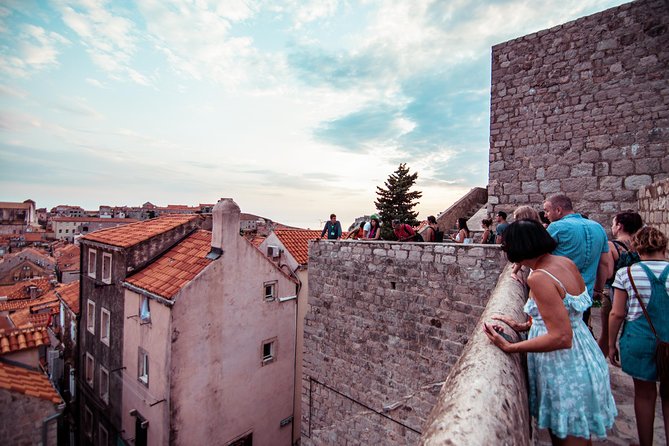
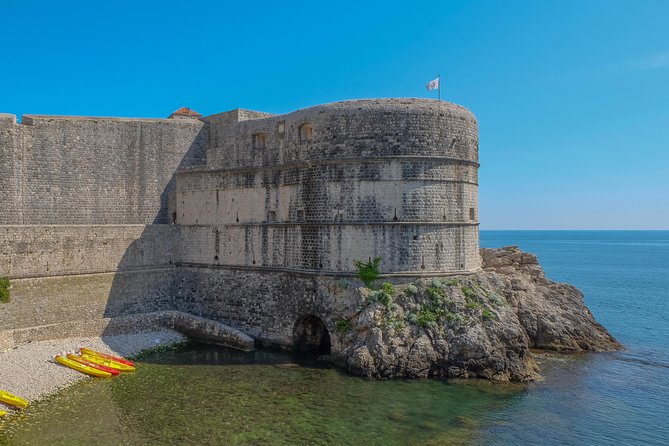
The walls are the physical highlight of the combo. The full circuit covers about 2 kilometers and gives you changing views of the Old Town, harbor, rooftops, fortifications, and Adriatic.
You first stop to purchase or present your city walls admission. This fee is not included in the $52 tour price. The stated entrance cost is €40 per person, and children aged seven and older are also charged an entrance fee.
That extra cost changes the value calculation. Without a Dubrovnik Pass, the tour is effectively the $52 booking price plus €40 for the walls, making it a costly half-day. If you already plan to visit museums and other included sites, the Dubrovnik Pass may be a better deal, but it must be purchased and collected in advance to cover the wall visit.
Once inside, you follow the fortifications rather than simply viewing one short section. The guide explains how the defensive system developed from the 12th century onward and how Dubrovnik used walls, towers, diplomacy, and geography to protect its independence.
The circuit includes views toward Minceta Tower and Fort Revelin, both important defensive structures. Minceta is especially striking from the upper wall, while Revelin helps you understand how the city guarded its eastern approach.
You also see Fort Lovrijenac, which belongs to the wider city wall experience but is physically separate from the main circuit. The tour finishes near the old port, and the fort is included with the city walls ticket. The route description does not promise a separate guided visit inside it, so allow extra time if you want to explore it on your own.
The wall walk is where Dubrovnik’s layout becomes clear. From above, you see how tightly the houses fill the Old Town, how the harbor fits into the defensive plan, and how little room there is between the city and the sea. The views are excellent, but the route is exposed, and the stone can become hot.
Fitness, heat, wind, and footwear

You need moderate physical fitness for this experience. The Old Town portion is the easier half, but the walls require sustained walking, stairs, and uneven stone.
One review describes more than 1,000 steps. That number gives you the right idea even if the exact count varies by route and pace. Railings are present along much of the wall, but comfortable shoes remain essential.
Wear shoes with a firm sole. Bring water, a hat, and sun protection in summer. The guides sometimes look for shade and allow the group to pause, but you should not count on the day feeling cool.
Wind can be strong on exposed sections. Hold onto hats and loose items, especially near the sea-facing side. Rain creates a different problem: ponchos may help, but wet stone and poor visibility can spoil the walk.
The experience requires good weather. If the operator cancels for bad conditions, you can accept another date or receive a full refund. The standard cancellation rule allows a full refund when you cancel at least 24 hours before the start time. A late cancellation or late change is not accepted under the stated policy.
The guides and the style of commentary

The guide is a major part of the experience. The listed guides include Goran, Gorun, Mara, Lana, Antun, and Andrea, though you cannot assume a specific person unless your booking confirms it.
The strongest guide style here is passionate and story-driven. Guides explain the medieval republic, the earthquake of 1667, wars, religious buildings, defensive planning, and Croatia’s more recent history. Some also share personal stories connected with the war, which can give the city’s past a direct human angle.
That approach will suit you if you enjoy asking questions and want more than a list of dates. It may not suit you if you prefer silence, quick sightseeing, or a guide who keeps commentary very brief.
The English-language tours are supported by headsets for groups of four or more. This is especially valuable on the walls, where wind and distance can make ordinary speech hard to follow.
Is $52 a fair price?
At $52 per person, the two guided walks are reasonably priced only if you account for what is and is not included. The local English-speaking guide and headsets are included, but the €40 city walls admission is not.
That means the total can feel expensive for a walking tour, especially if you only want a short introduction to Dubrovnik. On the other hand, you are receiving about 3.5 hours of guided time, two major sights, historical interpretation, and route planning in one booking.
The Dubrovnik Pass can improve the value if you intend to visit its other covered attractions. It includes one city walls visit, but you need to buy and collect it in advance. Do the arithmetic for your own plans instead of assuming the pass is automatically cheaper.
I would not book this combo only for the discount claim. I would book it because the two walks work well together and because a good guide makes Dubrovnik’s buildings and fortifications much easier to understand.
Who should book this tour?
I would choose it for a first visit, a short stay, or a day when you want a structured introduction before exploring alone. It is also a good fit if you like history, architecture, local stories, and clear recommendations for food or other sights.
It suits active adults and older children who can manage a long walk and many stairs. Service animals are allowed, but the physical demands remain important.
I would think twice if you dislike group tours, have difficulty with steps, or want a relaxed introduction with plenty of free time. The city walls are not optional decoration here. They are half the experience and the most strenuous part.
A cruise stop can also work, but allow plenty of margin for transport and delays. The tour requires a minimum of four people to operate and can hold up to 35, so confirm the departure before building an unforgiving schedule around it.
Should you book the Dubrovnik Old Town and Walls combo?
Book it if you want the clearest first picture of Dubrovnik in a limited amount of time. The Old Town walk explains the city from the inside, while the walls show its scale, defenses, rooftops, harbor, and sea setting from above.
Before paying, add the €40 walls fee to the advertised price and check the Dubrovnik Pass. Choose an early start when possible, wear proper shoes, and leave room for a break between the two walks.
If those costs and the workout fit your plans, this is a strong introduction to Dubrovnik, especially with guides such as Goran, Mara, Lana, or Antun leading the conversation. If you want only a light stroll, book the Old Town portion alone instead.
FAQ
How long does the Dubrovnik combo tour last?
The combined experience lasts about 3 hours and 30 minutes. It includes approximately 1.5 hours in the Old Town and about 2 hours on the city walls, with the schedule potentially including a break between sections.
Is the city walls entrance fee included?
No. The city walls entrance fee is listed separately at €40 per person. Children aged seven and older also require a city walls ticket.
Can the Dubrovnik Pass cover the walls entrance?
Yes. The Dubrovnik Pass covers one visit to the city walls, but you must purchase and collect it in advance.
Where does the tour meet?
The meeting point is the Dubrovnik Walks orange umbrella at Brsalje Street 8, near Pile Gate in Dubrovnik. Both tours finish near the Old Town port, according to the stated meeting information.
Is the tour physically demanding?
Yes. You should have moderate physical fitness. The walls involve about 2 kilometers of walking, many stone steps, uneven surfaces, and exposed areas that can be hot or windy.
What happens if the weather is bad?
The experience requires good weather. If the operator cancels because of poor conditions, you will be offered another date or a full refund. You can also cancel for a full refund up to 24 hours before the start time.
Newest history tours we have reviewed in Croatia
- Dubrovnik: Game of Thrones and History Small Group Tour★ 5.0 · 76 reviews
- Dubrovnik Old Town: Small-Group Walking Tour With A Local★ 5.0 · 123 reviews
- History Split Walking Tour in French -Small group★ 5.0 · 41 reviews
- Split History and Gastro Small-Group Tour with Food and Drinks★ 5.0 · 375 reviews
- Dubrovnik Jewish Heritage Private Walking Tour★ 5.0 · 121 reviews
- Private History Split Walking Tour in English★ 5.0 · 159 reviews
- Split: Historical Tour of Salona, Klis Fortress and Trogir★ 4.1 · 108 reviews
- History & Cultural Walking Tour of Split and Diocletian’s Palace★ 5.0 · 104 reviews
Ancient History Tours, compared.
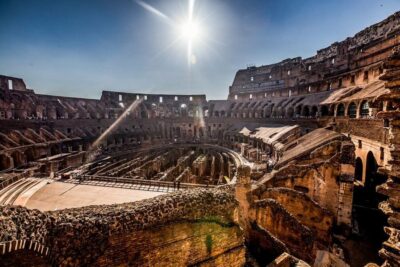
Colosseum: Underground and Ancient Rome Tour
Read our review →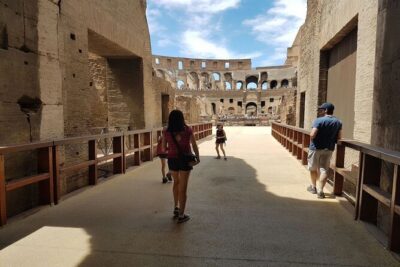
Colosseum & Ancient Rome with Arena Floor Option I Max 6 People
Read our review →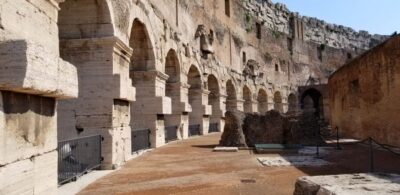
Colosseum, Ancient Rome Tour or AudioGuided Tour
Read our review →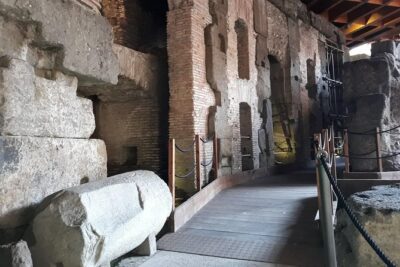
Colosseum Underground & Ancient Rome Guided Tour
Read our review →

Taormina: Ancient Theater Skip-the-Line Ticket & Audio Guide
Read our review →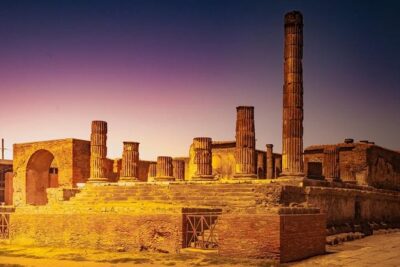
Discover the Ancient Ruins of Pompeii: Day Trip from Rome
Read our review →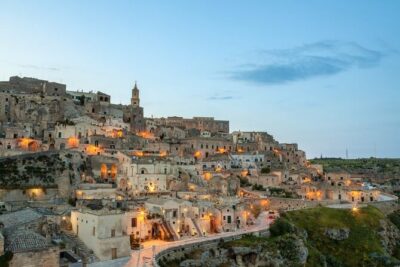
Discover Matera, the ancient city – English tour
Read our review →Browse the lists this tour appears in