Review · ROME HISTORY TOURS
Private Rome Food Tour in the Historic Centre with 8+Tastings
Rome’s best food tour moments often happen between the monuments, not inside them. This private walk links eight or more tastings with Campo de’ Fiori, the Jewish Ghetto, Piazza Navona, and Largo di Torre Argentina, giving you a useful first look at central Rome through both its cooking and its streets.
I like two things here. First, your guide chooses the food, so you can spend your time tasting rather than decoding a menu. Second, the private format lets you ask for restaurant and market advice suited to your own trip. The main caution is the price: at $405.14 per person, this is a serious splurge for three and a half hours, especially when compared with less costly group food walks.
Key points to know before booking
- Eight or more tastings: Expect two kinds of homemade pizza, supplì, cold cuts, cheeses, two Roman pastas, cannoli, gelato, and a secret dish.
- A useful central Rome route: The walk connects Piazza Navona, Campo de’ Fiori, the Jewish Ghetto, and Largo di Torre Argentina.
- Private English-language format: Only your group takes part, and your guide selects the dishes for you.
- Strong guide-led storytelling: Guides such as Rocio, Ludovica, Massi, and Robbie have been praised for humor, local tips, and food knowledge.
- A filling three-and-a-half hours: Wear comfortable walking shoes and arrive hungry.
- Menu flexibility is limited: Contact the company before booking about dietary needs, since some restrictions may not be possible to accommodate.
Why this Rome food walk works well
This is not simply a meal broken into several courses. It is a moving introduction to central Rome, with food used as the thread connecting churches, fountains, ancient ruins, old neighborhoods, and modern eating habits.
You start at Sant’Agnese in Agone on Piazza Navona and finish at Largo di Torre Argentina. That route matters. You are not being driven from restaurant to restaurant or sent far across town. The food stops are folded into a walk through some of the city center’s most recognizable areas.
The private setup also changes the tone. Your group is the only group on the activity, so you can ask why a Roman pasta is prepared a certain way, request ideas for another dinner, or slow down for a question about a neighborhood. The guide can focus on your pace rather than managing a large crowd.
The English-language format removes one common source of stress. You do not need to guess what to order or worry about choosing the least interesting item on a menu. The guide selects the dishes, which is particularly useful if you are new to Roman food.
More Food and History Tours in Rome
- Rome Food Tour in the Historic Centre with 8+ Food Tastings
★ 5.0 · 1,000 reviews - Rome: Ultimate Street Food Tour in the Old Town by Do Eat Better
★ 5.0 · 73 reviews - Rome: Trastevere street food and history tour – small group
★ 5.0 · 58 reviews
Starting at Piazza Navona and Sant’Agnese in Agone
The meeting point is Sant’Agnese in Agone, at Piazza Navona, 14. Piazza Navona is one of Rome’s great urban rooms, with a long, open shape created on the footprint of an ancient stadium. It is also a practical place to begin because the square gives you a clear landmark in the middle of the historic center.
The itinerary includes a look at the 17th-century Fountain of the Four Rivers. Designed as a tribute to four major rivers, it features a Roman obelisk topped by a dove. Your guide can connect the fountain to Rome’s grand Baroque style, then shift naturally from architecture to food and daily life.
Starting here gives the tour an immediate sense of place. You are not beginning in an anonymous restaurant. You are beginning among fountains, churches, open space, and the steady movement of central Rome.
There is one practical point to remember: Piazza Navona is large, and the meeting point is specifically at Sant’Agnese in Agone, not simply somewhere in the square. Give yourself a little time to locate the church entrance and guide.
Pizza, supplì, and the first Roman flavors
The tasting menu includes two different types of homemade pizza. In Rome, pizza is not one fixed style. The texture, thickness, toppings, and way it is served can change from one shop to another. Having two versions gives you a better comparison than trying one slice and treating it as the whole story.
You will also try supplì, fried risotto balls. This is a classic Roman snack, with a crisp outside and a soft rice filling inside. It is exactly the sort of food that makes a walking tour worthwhile: portable, filling, and tied to the city’s everyday eating culture.
The early tastings are useful for setting your appetite and expectations. They are not delicate little samples meant to disappear in one bite. Pizza, fried rice balls, cheese, and cold cuts add up quickly. I would eat only a light breakfast or lunch before the tour.
The supplied information does not name every restaurant or shop in advance, and the menu can change with location availability, weather, and other conditions. That is normal for a food walk, but it means you should book for the style of experience rather than for one exact dish at one exact address.
Campo de’ Fiori and the changing city center
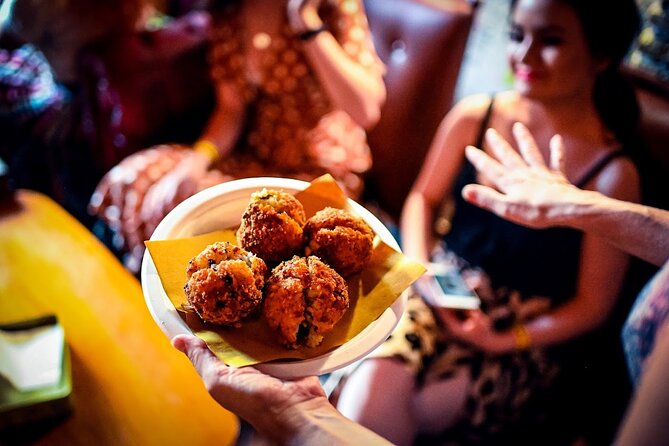
Campo de’ Fiori is a rectangular square south of Piazza Navona. Its name translates as field of flowers, a reminder that Rome’s street names often preserve traces of an earlier city.
The square is a useful food-tour stop because it connects public space, shopping, history, and eating. Your guide can use the area to explain how central Rome functions today, then point you toward dishes and food customs that make more sense after seeing the neighborhood itself.
This is also a place where timing and atmosphere can change the experience. The tour description does not promise a particular market setup or opening schedule, so do not book it expecting one specific stall. The route and tastings may shift when local conditions require it.
I like this part of the walk because it gives context to the food. A plate of pasta has more meaning when you have just crossed an old Roman neighborhood and heard how the center developed around its squares and lanes.
More Old Town and Historic Centre Walks in Italy
- Rome in a Day Tour with Vatican, Colosseum and Historic Center
★ 4.5 · 1,042 reviews - Genoa: 2-Hour Guided Walking Tour of the Historical Center
★ 4.2 · 605 reviews - Guided Tour, Historic Center Sassi Rock Churches and Cave House
★ 5.0 · 461 reviews - Naples: Historic Center and Sansevero Chapel Walking Tour
★ 4.8 · 208 reviews
The Jewish Ghetto, where food and memory meet
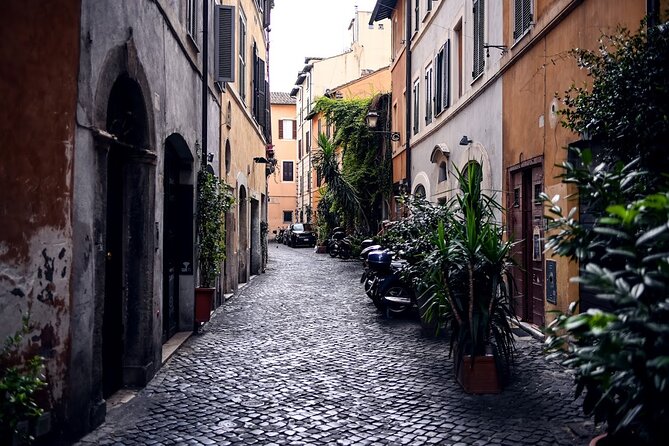
The route continues into Rome’s Jewish Ghetto, established in 1555 in the Rione Sant’Angelo. This is one of the city’s most distinctive neighborhoods, and it brings a different historical layer to the tour.
Food is especially useful here because cuisine can show how communities preserve traditions, adapt to local ingredients, and pass recipes through generations. The exact tastings can change, but the stop gives your guide a strong setting for discussing Roman culture beyond the postcard sights.
The neighborhood is also a reminder that Rome is not just a collection of ancient ruins and Baroque fountains. Its identity has been shaped by religious communities, political decisions, migration, and daily life. A guide who can connect the meal to the street around you adds real value.
You should expect walking on old city pavement and through narrow areas. Comfortable shoes are not a minor suggestion here. The activity runs a little over three hours, with food stops mixed into a continuous city walk.
Pasta, cold cuts, cheese, and the meal’s center
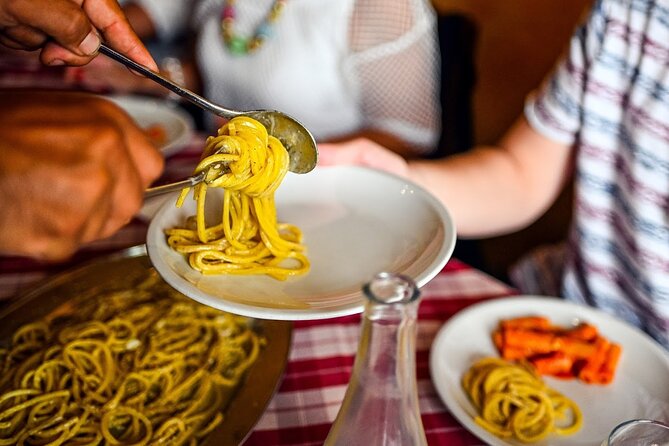
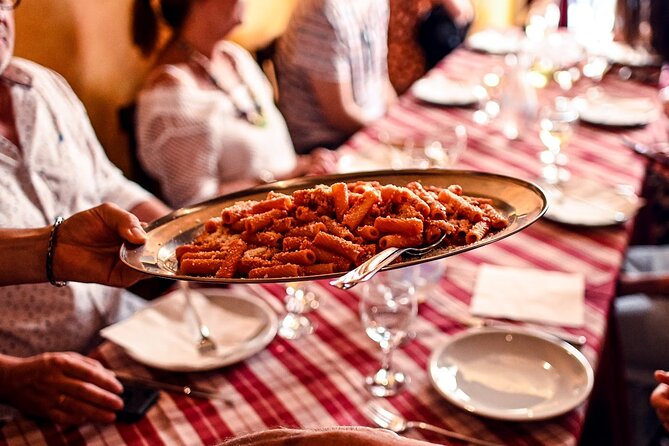
The menu includes Italian cold cuts and cheeses, followed by two Roman pastas. These courses provide the heart of the tasting experience.
Trying two Roman pasta dishes is more useful than sampling one generic Italian pasta. It lets you compare different sauces, textures, and ways of building flavor. The exact dishes are not guaranteed, so I would not book this expecting a named recipe. Still, the format gives you enough range to see how Roman pasta fits into the city’s food culture.
Cold cuts and cheeses help fill out the meal and slow the pace. They also give the guide room to explain how Italians combine simple ingredients without turning every course into a complicated production.
This is where the tour’s appetite warning becomes important. Pizza, supplì, cold cuts, cheese, and two pastas make for a substantial amount of food. If you have a large dinner planned immediately afterward, you may not need it.
Palazzo Farnese and Rome’s grander side
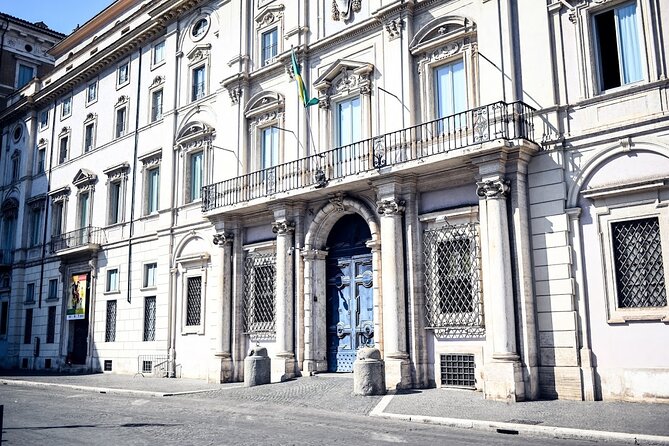
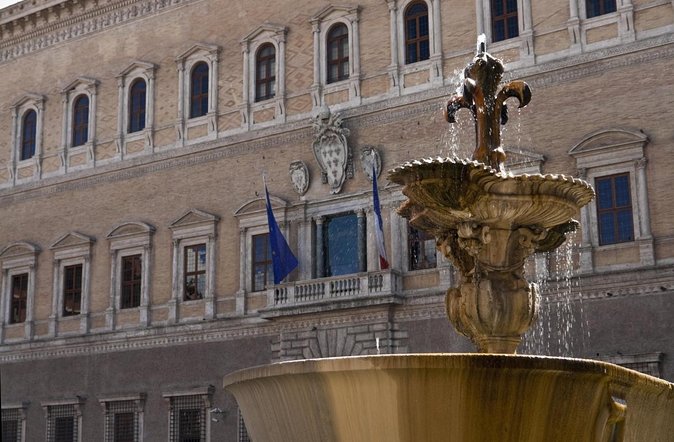
The itinerary includes Palazzo Farnese, one of the key High Renaissance palaces in Rome. It now houses the French Embassy in Italy.
You should expect to see and discuss the exterior rather than enter the building as part of the food tour. Because it serves as an embassy, access is not presented as an included feature. The value here is the guide’s explanation of the palace and its place in Rome’s architectural story.
This stop helps keep the activity from becoming a string of meals. You are given visual landmarks and historical context between bites, which makes the walk feel like sightseeing with a strong culinary focus rather than a restaurant crawl.
Ancient temples at Largo di Torre Argentina
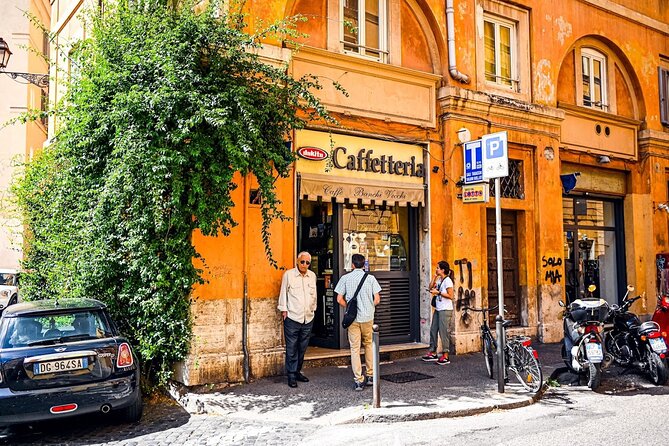
The route ends at Largo di Torre Argentina. The square contains four Roman Republican temples and remains of Pompey’s Theatre, in the area once known as the ancient Campus Martius.
It also includes the remains of an ancient walkway originally built in the second century B.C. to connect two Roman temples. These fragments are easy to overlook if you are hurrying through the city, so having a guide point them out can change the way you see the square.
Largo di Torre Argentina is a fitting endpoint because it brings the food walk back to Rome’s oldest layers. The tour does not include hotel drop-off, and the stated finish is here, so plan your next move from central Rome rather than expecting a ride back to your accommodation.
Cannoli, gelato, and the secret dish
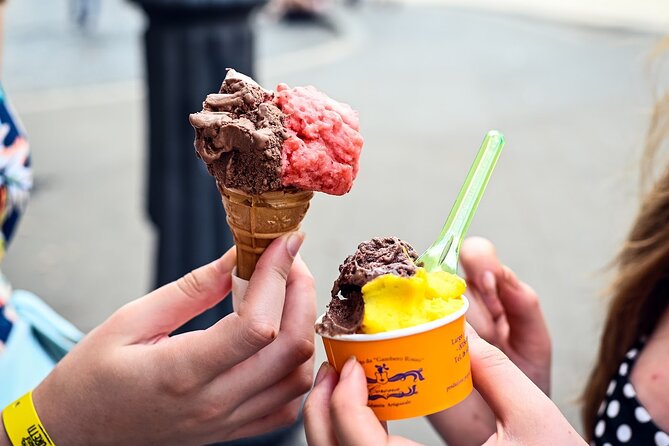
The sweet portion includes cannoli and artisanal gelato. Cannoli gives you a crisp pastry shell with a creamy filling, while gelato offers a cool finish after several savory tastings.
You also receive a secret dish. The point is not to predict it, since the menu can change. Instead, treat it as a small surprise built into the tour. It may be the item that gives the guide room to show you something outside the expected pizza, pasta, and dessert sequence.
The dessert stops also help pace the afternoon or evening. You are not eating eight items in one sitting. You are walking, pausing, listening, and eating over roughly three and a half hours.
Guides, private attention, and the human side
The guide can make or break a food tour. Names associated with this experience include Rocio, Ludovica, Massi, and Robbie, though the specific guide depends on the date and availability.
Rocio has been praised for humor, clear English, food knowledge, local geography, and history. Ludovica has been noted for practical recommendations that encouraged people to return to markets and shops after the tour. Massi has been described as enthusiastic and funny, while Robbie has led a mix of history, food, and drinks.
Those details matter because the tour’s value is not only in the food included. A strong guide helps you understand what you are eating and gives you ideas for the rest of your time in Rome. The private format makes that exchange easier, since you are not competing with a large group for attention.
The tour is offered in English. It is also listed as suitable for most participants and near public transportation, but you should still expect a fair amount of walking.
Is $405.14 per person a fair price?
At $405.14 per person, this is expensive. You are paying for a private experience, an English-speaking guide, at least eight tastings, route planning, and the convenience of having someone choose and explain the food.
The price makes more sense for a small family or group that values privacy and wants a guided introduction without having to research Rome’s restaurants. It is also easier to justify if you treat the tour as both a meal and a sightseeing experience.
For a couple or solo visitor watching costs, the price may be hard to defend. You could eat well in Rome for much less, and a group food tour would usually spread the guide cost across more people. The key question is not simply how much food you receive. It is how much you value personal attention, local recommendations, and a planned route through central Rome.
Group discounts are available, so check the final price for your party before deciding. Gratuity is not included, and hotel pickup and drop-off are also excluded.
Who should book this experience?
I would recommend it to first-time Rome visitors who want food and sightseeing in the same block of time. It suits people who like to ask questions, prefer a private guide, and want help choosing what to eat rather than studying menus on their own.
It is also a good fit for families and small groups. The private format gives you a chance to control the conversation and the pace more easily than a large shared tour.
I would think twice if you have strict dietary restrictions. You must contact the company in advance, and some restrictions may not be possible to accommodate because the menu is designed as a balanced food experience.
You should also skip it if you dislike walking, want a single seated meal, or need a fully fixed menu. The itinerary and dishes can change because of weather, availability, and other conditions.
My verdict on this private Rome food tour
Book this tour if you want a food-centered introduction to central Rome with a private English-speaking guide and enough tastings to replace a full meal. The combination of pizza, supplì, Roman pasta, sweets, and historic sights gives you a useful first orientation.
Skip it if the price is your main concern. At $405.14 per person, the private format is the reason to buy, not a bargain. Contact the company first about dietary needs, wear sturdy walking shoes, arrive hungry, and leave room in your schedule for the guide’s restaurant suggestions.
FAQ
How long does the Rome food tour last?
The tour lasts approximately three hours and thirty minutes. It runs a little over three hours and includes walking between food stops and historic sights.
Where does the tour begin?
The meeting point is Sant’Agnese in Agone, Piazza Navona, 14, 00186 Rome.
Where does the tour end?
The tour ends at Largo di Torre Argentina in central Rome. Hotel drop-off is not included.
What food is included?
The tastings include two types of homemade pizza, supplì, Italian cold cuts and cheeses, two Roman pastas, cannoli, artisanal gelato, and a secret dish.
Is this a private activity?
Yes. Only your group takes part in the private tour.
Is the tour offered in English?
Yes. The tour is offered in English.
Do I need to wear comfortable shoes?
Yes. Comfortable walking shoes are strongly advised because the experience lasts more than three hours and includes walking through central Rome.
Can dietary restrictions be accommodated?
You should contact the company before booking with your dietary requirements. Some restrictions may not be possible to accommodate because of the planned food experience.
What is the cancellation policy?
You can cancel up to 24 hours before the start time for a full refund. Cancellations or changes made less than 24 hours in advance are not accepted for a refund. If poor weather or an insufficient minimum number of participants causes cancellation, you will be offered another date or experience, or a full refund.
More Old Town and Historic Centre Walks in Rome
- Madrid Essential: Historic Center, Plaza Mayor & Royal Palace
★ 5.0 · 6,416 reviews - Lisbon: Live Fado Show with Port Wine in Historic Center
★ 4.7 · 4,166 reviews - Valencia Old Town Tour with Wine & Tapas in 11th Century Historic Monument
★ 5.0 · 3,234 reviews - Prague Old Town, Medieval Underground and Dungeon Historical Tour
★ 4.5 · 3,227 reviews
More Private History Tours in Italy
- Ancient Ostia Antica Semi-Private Day Trip from Rome by Train with Guide
★ 4.5 · 579 reviews - Colosseum & Ancient Rome Semi-Private Tour
★ 5.0 · 208 reviews - Ancient Appian Way PRIVATE Bike Tour
★ 5.0 · 89 reviews - Ancient Pompeii Private Tour: Skip the Line & Kid-Friendly Option
★ 5.0 · 167 reviews
Newest history tours we have reviewed in Rome
- Ancient Rome: Archeological area Largo Argentina★ 3.9 · 49 reviews
- Ancient Rome Half-Day Segway Tour★ 4.8 · 25 reviews
- Colosseum Forum Ancient Rome Small Group Tour for Kids Families★ 5.0 · 198 reviews
- VIP Colosseum Underground and Ancient Rome Small Group Tour★ 4.5 · 332 reviews
- Colosseum & Ancient Rome Semi-Private Tour★ 5.0 · 208 reviews
- Small-Group Rome to Pompeii & Amalfi: Day of History & Sea★ 5.0 · 239 reviews
- Colosseum & Ancient Rome Guided Walking Tour★ 5.0 · 332 reviews
- Ancient Rome at Twilight Walking Tour★ 5.0 · 276 reviews
Old Town & Historic Centre Walks, compared.
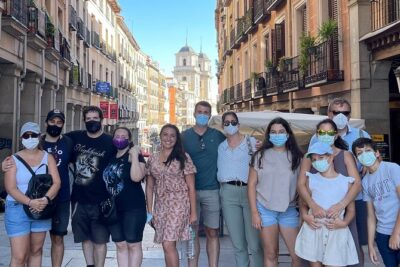
Madrid Essential: Historic Center, Plaza Mayor & Royal Palace
Read our review →
Live Fado Show with Port Wine in Historic Center
Read our review →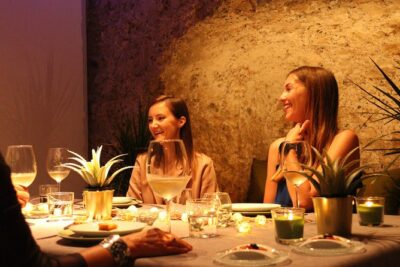
Valencia Old Town Tour with Wine & Tapas in 11th Century Historic Monument
Read our review →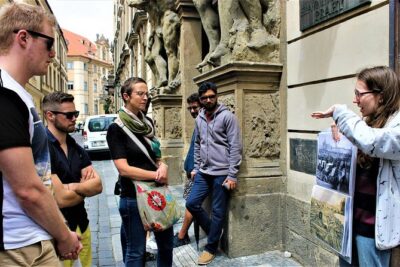
Prague Old Town, Medieval Underground and Dungeon Historical Tour
Read our review →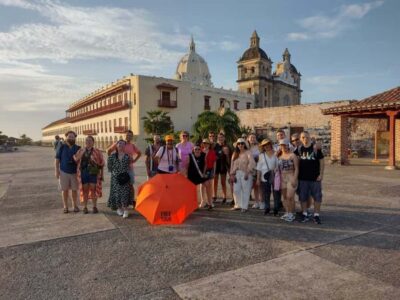
Cartagena: Historic Center and Getsemaní Shared Walking Tour
Read our review →
Old Town Walking Tour History and Tales in Edinburgh
Read our review →