
Review · ROME HISTORY TOURS
Rome Secrets: Dark History & Tasty Bites Tour
Rome’s darker side comes alive on this two-hour walk from the Jewish Ghetto to Ponte Sant’Angelo. You’ll hear about the Golem, Kabbalah, condemned heretics, poisoners, secret passages, and Rome’s notorious executioner, with plenty of food to keep the mood from getting too grim.
I like the mix of lesser-known history and folklore, especially at Santa Maria dell’Orazione e Morte and the Passetto del Biscione. I also like the smart food breaks: Roman pizza early on, then ciambelline and wine later. The main consideration is pace. Two hours covers a lot of ground, and some stops are brief rather than full visits.
The strongest part is the guiding. Simona, Daniele, Daniel, Sylvia, and others have been praised for lively storytelling, humor, and a real feel for Rome. If you want major monuments or long church visits, choose another tour. If you want unusual stories with a bite to eat, this is a fine first-night introduction.
Key points to know before you book
- The route links Rome’s Jewish Ghetto, Campo de’ Fiori, Via Giulia, and Ponte Sant’Angelo in a compact evening walk.
- The stories are darker than a standard city tour, covering ghosts, forbidden beliefs, executions, murder, and poison.
- Food is part of the experience, with Roman pizza, local sweets, one beer, and one glass of wine included.
- Santa Maria dell’Orazione e Morte is the most striking stop, with skulls, bones, and memorials to people pulled from the Tiber.
- The guides are the tour’s biggest asset, with Simona and Daniele receiving especially warm praise for their delivery and command of Rome’s past.
- This is a small-group or private experience, offered in English, French, Spanish, or Portuguese.
Rome after dark, with a plate of pizza first
Many Rome walking tours give you emperors, popes, and grand fountains. This one takes a side road. Its subject is the city’s uneasy undercurrent: beliefs that were punished, people who disappeared, crimes that became legend, and small streets that once carried secrets.
The mood begins at the Portico d’Ottavia, in the Jewish Ghetto. Meet in front of the porch ruins, a useful landmark in an area where narrow streets and busy evening foot traffic can make a vague meeting point frustrating. From here, the guide sets up the first stories about Jewish traditions, mysticism, Kabbalah, and the Golem.
You’ll also hear about the number seven and its place in Roman mystery. Some of this material is documented history, while some belongs to the world of legend. That blend is central to the tour, so you should come expecting interpretation and storytelling, not a dry lecture with every tale neatly separated from folklore.
The first food stop helps. Roman pizza gives you something hot and familiar before the tour moves into more disturbing material. The tasting is listed as about ten minutes, so think of it as a snack rather than a full meal. If you are hungry enough for dinner, plan to eat separately before or after the walk.
The food is also a good way to settle into the group. Recent tour experiences have included enthusiastic reactions to the pizza, and some accounts also mention gelato. The stated inclusions are Roman pizza, one glass of beer, one glass of wine, and local sweets, so the exact sweet tasting may be worth confirming when you book.
More Dark History and Haunted Tours in Rome:
- Rome: Guided Bar Crawl with Drinks & Dark History
★ 4.9 · 444 reviews - Secrets of Rome: Historical True Crime Small Group Tour
★ 4.9 · 85 reviews - Savannah History and Haunts Candlelit Ghost Walking Tour
★ 5.0 · 3,235 reviews
The Jewish Ghetto and the Golem’s shadow
The Jewish Ghetto is an ideal opening setting because it already rewards close attention. The Portico d’Ottavia is not just a meeting point. Its weathered stones frame a neighborhood shaped by religion, restrictions, trade, memory, and changing rule.
Here, the guide explains local ideas tied to Kabbalah and mysticism. The Golem legend adds a darker note, with its familiar theme of creating life through sacred knowledge and then losing control of what has been made. You will not get a long academic treatment of Jewish theology in ten minutes, but you will get a story-led introduction to a part of Rome many standard sightseeing routes pass by.
This is one reason I would choose the tour early in a Rome visit. It trains you to look at side streets and worn facades as places with stories, not just gaps between famous attractions. Sylvia was praised for linking folklore with history, and that approach fits this opening well.
The drawback is that the tour’s subject matter can move quickly. If you want to stop for detailed architecture or spend time inside every location, you may find the schedule tight. The payoff is variety.
Passetto del Biscione and Rome’s small sacred images
The route next reaches the Passetto del Biscione, a narrow, frescoed corridor that feels very different from Rome’s grand squares. It is associated with secret meetings, forbidden romances, and quick escapes. The passage is also one of the most photogenic places on the walk, so keep your camera ready.
The guide adds the story of Rome’s Madonnelle, the small sacred images placed in corners, above doorways, and along streets. These modest images are easy to miss if you hurry toward a famous monument. Here they become part of the tour’s larger lesson: Rome’s character often sits at eye level, tucked into a wall or squeezed into a passage.
This stop rewards curiosity more than specialist knowledge. You do not need to know the city beforehand. You simply need to notice details and let the guide explain why an apparently ordinary corner mattered to the people who passed through it.
Because the passage is narrow and the stop is short, the group format matters. A private group gives you more room to ask questions and take photographs. In a small group, listen closely and stay near the guide so you do not miss the quieter parts of the story.
Campo de’ Fiori and the uneasy statue of Giordano Bruno
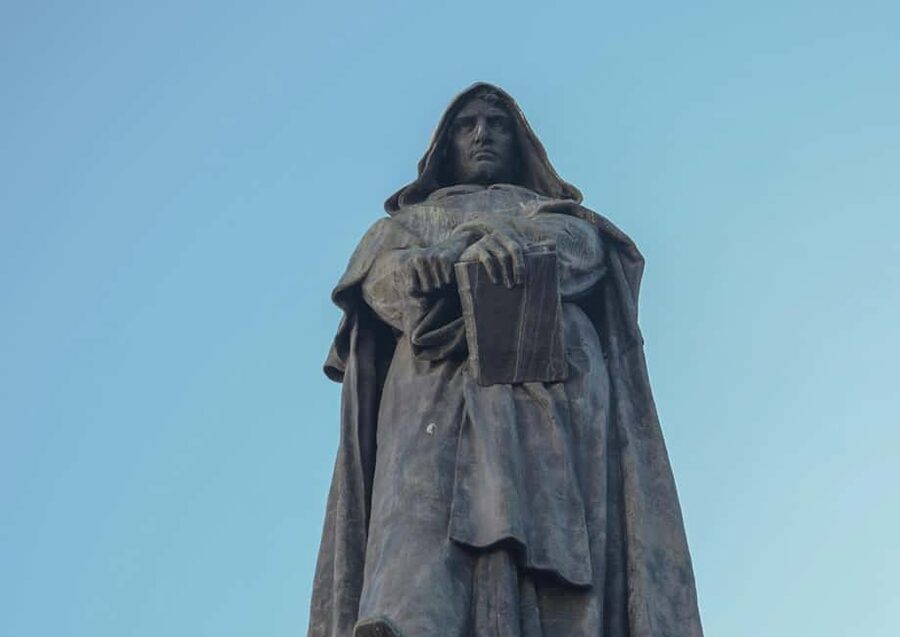
Campo de’ Fiori is one of Rome’s most famous public spaces, but this tour gives it a darker reading. In the center, Giordano Bruno’s bronze statue looks across the square with a fixed, defiant expression.
Bruno was burned alive for heresy in 1600. His story brings questions of free thought, forbidden knowledge, religious authority, and punishment into the open. The statue’s location makes the subject especially powerful. A place that can feel social and cheerful during the day takes on a colder tone as evening arrives.
The guide does not need a long stop here to make the point. The value is in knowing what happened on the ground beneath your feet and why Bruno remains such a charged figure. Daniele was particularly praised for making difficult subjects engaging without losing the human side of the story.
This is also a good example of the tour’s balance. You will not only hear about monsters and ghosts. You will hear about real people who challenged power, and about the price they paid.
More History Tours in Rome:
- Colosseum: Underground and Ancient Rome Tour
★ 4.7 · 12,691 reviews - Rome: Colosseum with Arena, Roman Forum and Palatine Guided Tour
★ 4.0 · 5,598 reviews - Colosseum with Arena, Roman Forum and Palatine Hill Guided Tour
★ 4.5 · 3,526 reviews - Colosseum & Ancient Rome with Arena Floor Option I Max 6 People
★ 5.0 · 3,306 reviews
Santa Maria dell’Orazione e Morte and the faces of death
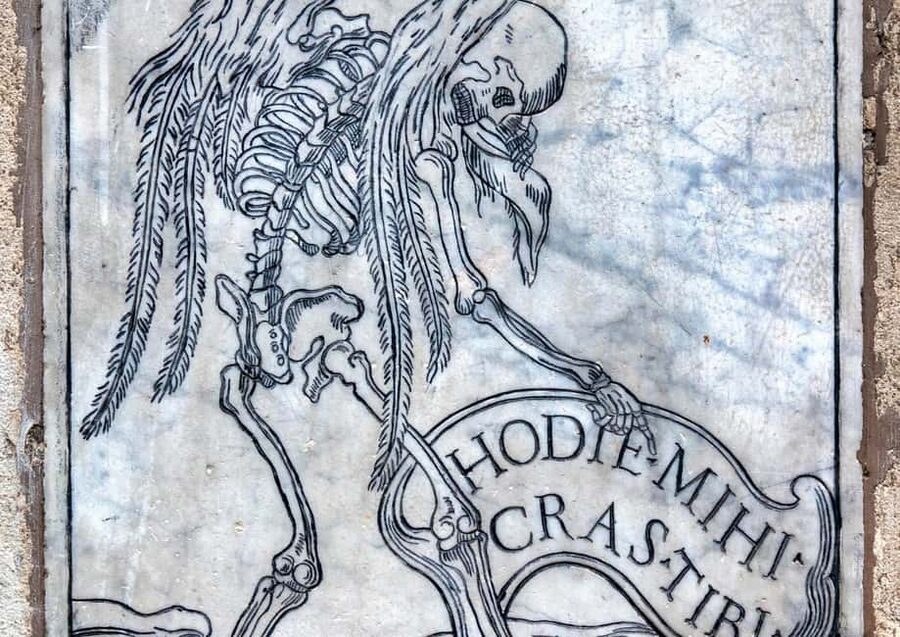
For many people, the most memorable stop is the church of Santa Maria dell’Orazione e Morte. Its name means Saint Mary of Prayer and Death, and its decoration does not soften the message. Skulls, bones, and macabre inscriptions appear on the baroque facade and inside its visual program.
The church was connected with the nameless dead recovered from the Tiber. That fact changes how you read the skulls. They are not simply theatrical decoration. They point to a religious duty: honoring people whose names and families were unknown.
The scheduled stop is about ten minutes and is described as a photo stop, so you should not expect a long guided church visit. The exterior itself offers the strongest visual impact. If the church is accessible during your visit, entry conditions may affect what you see, but the activity information does not promise an extended interior visit.
This is where the tour’s dark theme becomes most direct. Some people will find the imagery fascinating; others may find it uncomfortable. Families with older children may appreciate the history, but the skulls, executions, and poison stories make this a better fit for people who are comfortable with macabre subjects.
Via Giulia and the story of Aqua Tofana
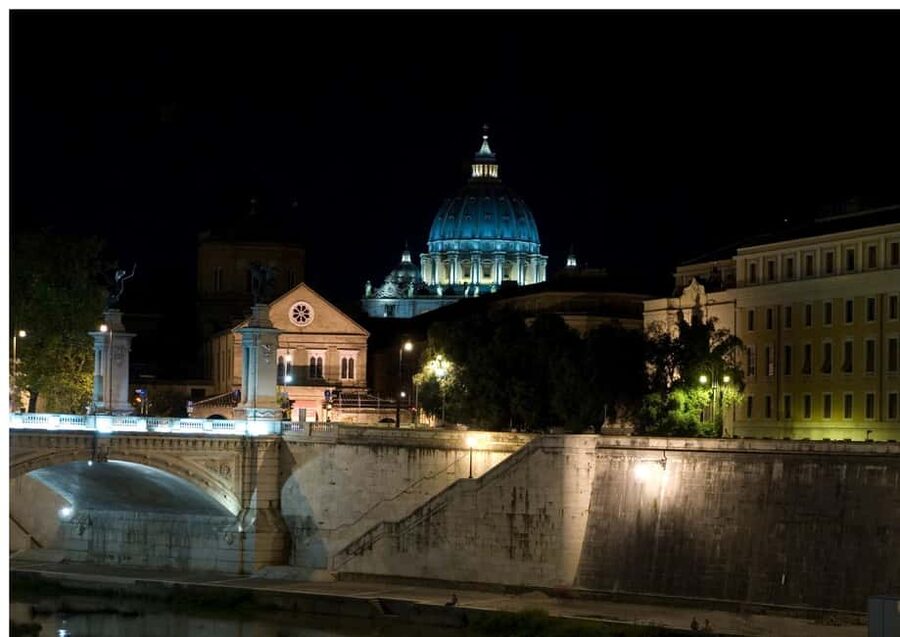
Via Giulia brings a change of setting. The street is elegant and composed, yet the story attached to it concerns Giulia Tofana, a seventeenth-century poisoner associated with Aqua Tofana.
According to the tale presented on the tour, Tofana sold the poison to women seeking a way out of unhappy marriages. The story raises uncomfortable questions about domestic control, desperation, crime, and the limited choices available to women in that period.
This is a strong stop because the setting does not advertise the drama. You walk along smooth cobblestones and handsome streets while hearing about betrayal and lethal schemes. Rome often works this way. The most polished corner can carry the ugliest story.
The guide’s role matters here. A flat list of crimes would feel sensational. A good narrator places the story in its social setting and lets you consider why such a poison might have found buyers. Daniele’s background in archaeology was praised for adding depth to the walk, while other guides, including Simona and Sylvia, have been noted for connecting historical facts with memorable storytelling.
Arco dei Banchi and the city behind the city
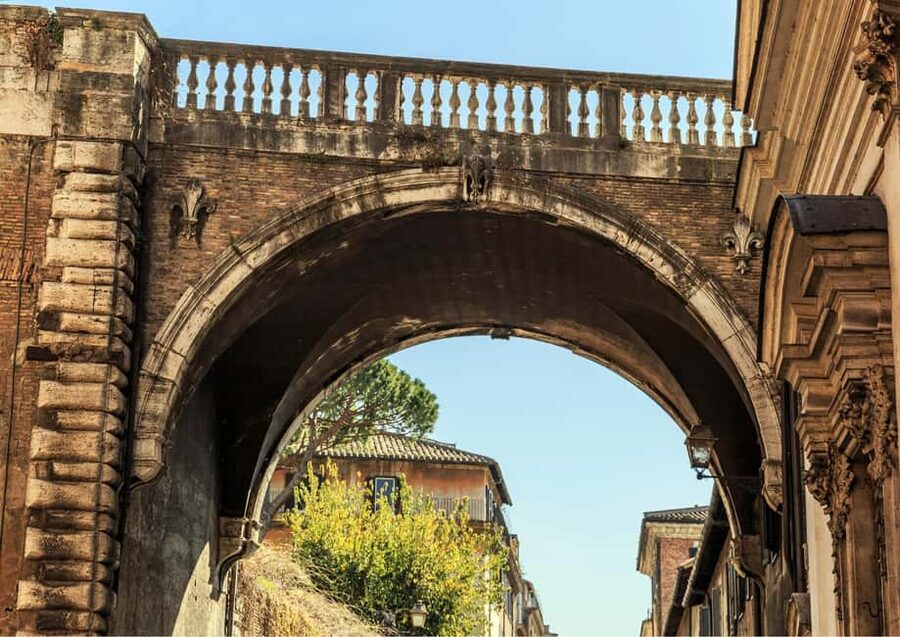
The Arco dei Banchi is one of the tour’s most unusual passages. It once allowed bankers, spies, and priests to move between the Vatican and central Rome without being seen. The arch gives you a glimpse of a city organized around access, secrecy, and quick movement.
This is not a grand monument in the Colosseum sense. That is exactly why it works. You pass through a space that can feel like a shortcut, then learn that it once had a practical role in the city’s private business and political life.
The route uses several places like this. You are not collecting famous buildings. You are learning how Rome’s streets functioned for people with different levels of power and different reasons to avoid public view.
A camera is useful here, but do not let photography take over. The corridor and arch are best understood while the guide explains who used them and why.
Ciambelline, wine, and a lighter pause
The second food break softens the darker material. Ciambelline al vino are traditional ring-shaped biscuits made with wine, and the tour pairs them with a glass of wine. Their simple, dry sweetness suits an evening walk and gives you a taste of Roman food culture beyond pasta and gelato.
One glass of beer is also listed among the inclusions. The information describes the food package as Roman pizza, local sweets, one beer, and one wine. Some recent accounts refer to pizza and gelato, so do not treat every food mention as a guaranteed separate course. The safest expectation is a snack-sized tasting with drinks, not a progressive dinner.
I like this part because food keeps the experience from becoming one-note. A tour devoted only to executions and poison could grow heavy. A biscuit, a drink, and a short rest make the next story easier to absorb.
If you have allergies or dietary restrictions, ask the provider before booking. The supplied details do not give ingredient lists or alternatives.
Ponte Sant’Angelo and Mastro Titta’s grim finale
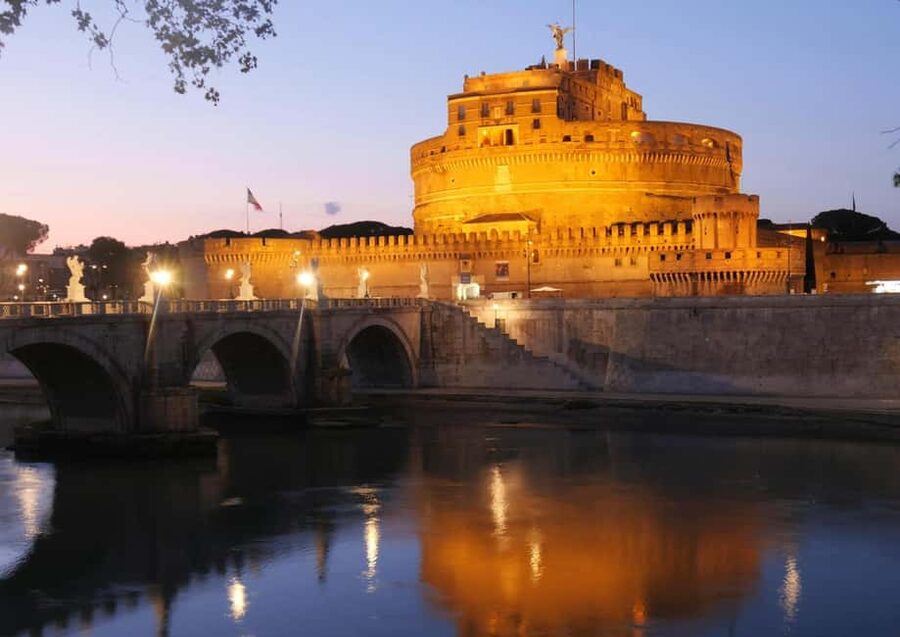
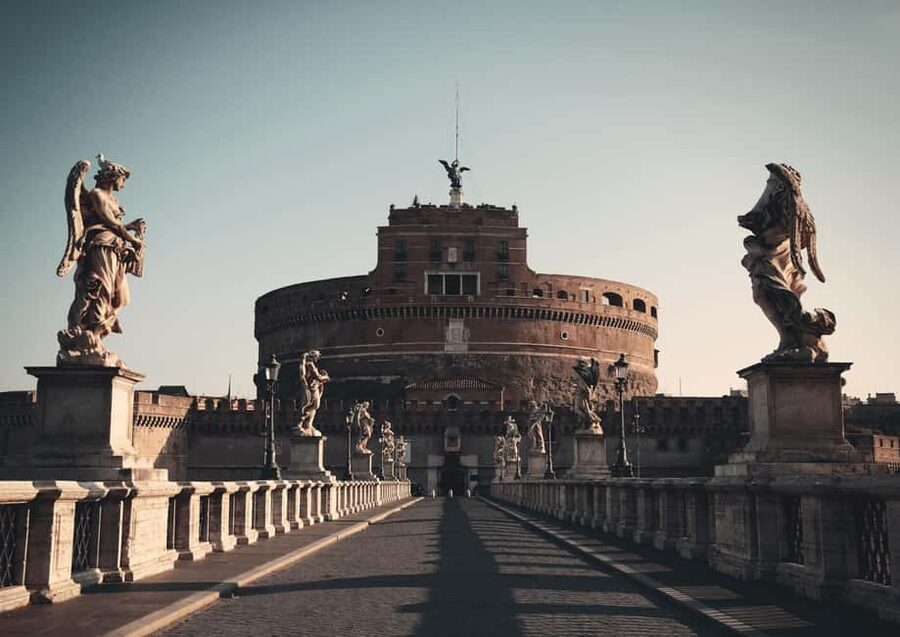
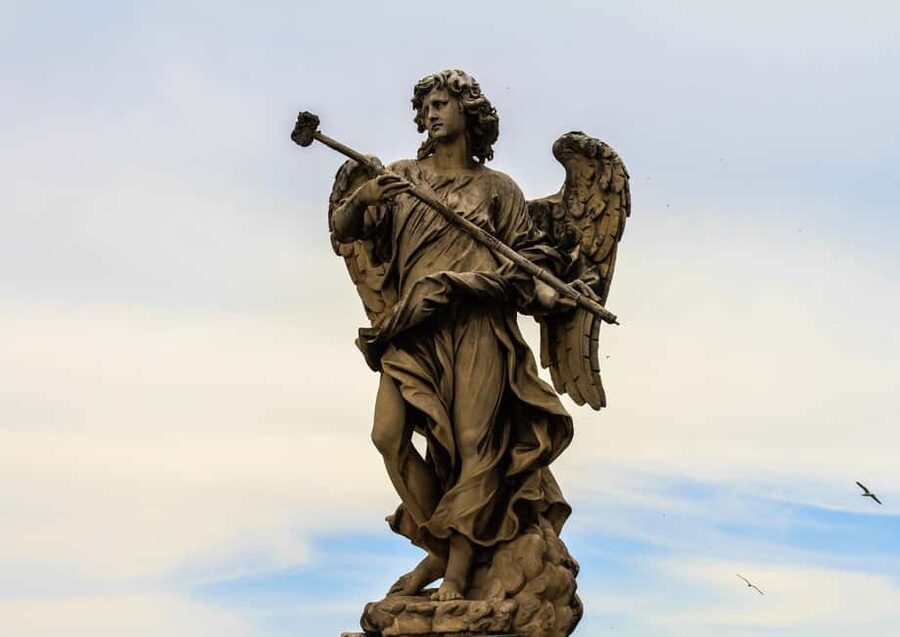
The walk ends near Ponte Sant’Angelo, with a photo stop of about five minutes and a final story about Mastro Titta, Rome’s best-known executioner. His work was gruesome, but the tour also presents him as a more complicated figure than a simple villain.
This is a fitting endpoint. The bridge and the area around Castel Sant’Angelo offer a dramatic setting, especially as daylight fades. One especially effective account described the route beginning in daylight and ending beneath a moonlit Castel Sant’Angelo. That changing light adds something to the storytelling without requiring any theatrical tricks.
The finish is on Via del Banco di Santo Spirito, close to the Ponte Sant’Angelo area. Since the final stop is short, you may want to remain nearby afterward for photographs or an evening walk. The tour does not include a full visit to Castel Sant’Angelo, so plan a separate ticket if that monument is on your list.
Is the $40 price fair?
At $40 per person, the tour offers a solid bundle for two hours: a live guide, several historic locations, Roman pizza, a beer, wine, and sweets. The value depends less on the food quantity than on the guide’s ability to connect places that you could otherwise walk past.
The food alone would not justify the price. The storytelling can. Guides such as Simona and Daniele have received especially warm praise for passion, humor, and clear explanations. One especially enthusiastic account even wished the tour lasted another two hours, which tells you where the experience earns its keep.
Private and small-group options are available, though the price structure for those formats is not provided. If you choose a private outing, you are paying for flexibility and questions as much as for the route itself.
The tour also offers free cancellation up to 24 hours before the start and a reserve-now, pay-later option. Those terms are useful if your Rome schedule is still shifting. Starting times vary, so check availability for the evening you want.
Who should book this Rome walk?
I would choose this tour if you:
- Want Rome stories beyond the Colosseum, Trevi Fountain, and Vatican highlights
- Enjoy folklore mixed with documented events
- Like walking through atmospheric streets and small passages
- Want a first-night activity with food built in
- Appreciate guides who tell stories with humor and feeling
- Are comfortable with skulls, executions, poison, and unsettling subjects
I would skip it if you need a slow pace, a substantial dinner, or long interior visits. The tour covers several neighborhoods and themes in only two hours. It is a sampler of Rome’s darker corners, not a full treatment of Jewish history, baroque churches, Giordano Bruno, or Mastro Titta.
The route also involves ordinary city walking on cobblestones. Wear comfortable shoes, and keep the group within sight in narrow passages and busy squares.
Final decision: book it for stories, not monuments
Book Rome Secrets if you want a lively introduction to the city’s strange and less familiar side. The best parts are the guide-led connections between small places: a corridor used for secret meetings, a statue recalling a public execution, a church decorated for the nameless dead, and an arch built for discreet movement.
The food makes the experience friendlier, but the guides are the main reason to go. Simona, Daniele, Daniel, and Sylvia have each been praised for turning facts and folklore into an engaging evening. If you want to get your bearings through unusual stories on your first night, this is a smart choice. Just keep your expectations clear: you are buying a compact, atmospheric story walk with tastings, not a full meal or a series of lengthy monument visits.
FAQ
How long does the Rome Secrets tour last?
The tour lasts two hours.
Where does the tour begin?
It begins at the Portico d’Ottavia, in front of the ruins of the porch.
Where does the tour finish?
It finishes on Via del Banco di Santo Spirito, near Ponte Sant’Angelo.
What food and drinks are included?
The activity includes Roman pizza, local sweets, one glass of beer, and one glass of wine. The tour description also specifically mentions ciambelline al vino, and some tour accounts mention gelato.
Which languages are available?
The tour is offered in English, French, Spanish, and Portuguese.
Is this a private tour or a group tour?
You can book it as a private experience or as a small-group tour.
Can I cancel the booking?
You can cancel up to 24 hours in advance for a full refund. A reserve-now, pay-later option is also available.
Newest history tours we have reviewed in Rome
- Rome: Colosseum and Ancient Rome Guided Walking Tour★ 4.5 · 95 reviews
- Secrets of Rome: Historical True Crime Small Group Tour★ 4.9 · 85 reviews
- Rome: Private Colosseum Experience and Ancient Ruins Tour★ 4.6 · 25 reviews
- Rome: Guided Tour of Colosseum and Ancient Rome★ 4.9 · 74 reviews
- Rome: Rome at Night Evening Historical Walking Tour★ 4.9 · 24 reviews
- Rome: Introduction to the Colosseum and Ancient City Tour★ 4.8 · 75 reviews
- Rome: Guided Group Colosseum & Ancient City Tour★ 4.8 · 62 reviews
- Rome: Food Tour of the Historic Center with Rooftop Spritz★ 4.7 · 43 reviews
Dark History & Haunted Tours, compared.

Savannah History and Haunts Candlelit Ghost Walking Tour
Read our review →
New Orleans Small-Group Haunted History Carriage Tour
Read our review →
Genteel and Bard’s Savannah Dark History and Ghost Encounter Walking Tour
Read our review →
Shadows of York: Ghost Walk and Horrible History.
Read our review →Browse the lists this tour appears in