
Review · ITALY HISTORY TOURS
Genoa: 2-Hour Guided Walking Tour of the Historical Center
Genoa’s caruggi, the narrow lanes of its old center, are the real reason to take this tour. They twist between churches, grand aristocratic residences, small squares, and traces of a medieval port city that can be hard to read on your own. A guide helps you see the city behind the weathered walls.
I like the way the tour connects the Palazzi dei Rolli with Genoa’s political and commercial past, rather than treating the palaces as pretty façades. I also like the built-in museum admission, which lets you return to the Strada Nuova and Sant’Agostino collections after the walking portion.
The main consideration is the bilingual format. The guide explains everything in English and Italian, so some of your two hours will be spent listening to the other language. Most guides handle this well, but a single-language tour would give you more time for detail.
Key points to know before booking
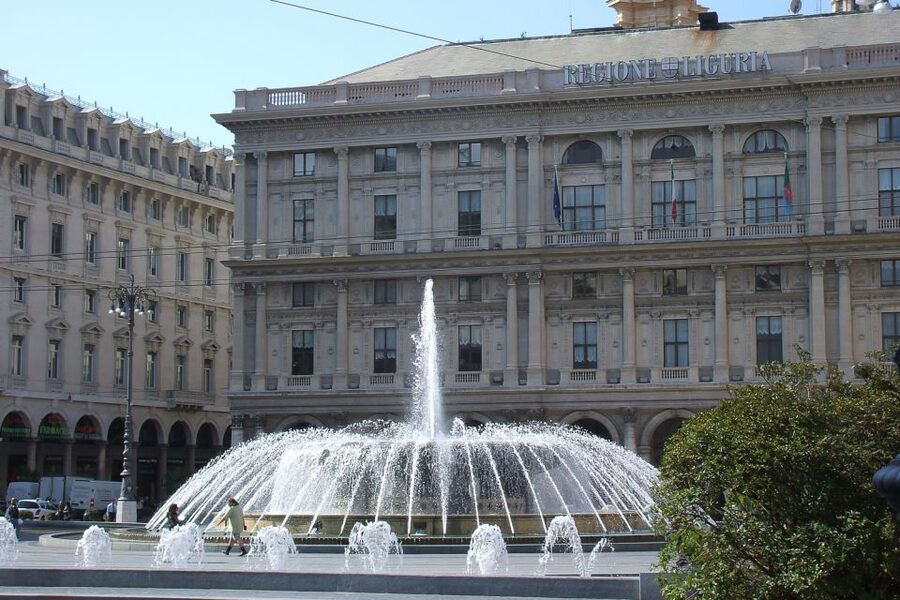
- The caruggi are the main event: You walk through Genoa’s maze-like medieval center, where a map alone will not reveal the best route.
- UNESCO sights come early: The Rolli palaces along Via Garibaldi and the Strada Nuova form one of the tour’s most important historical threads.
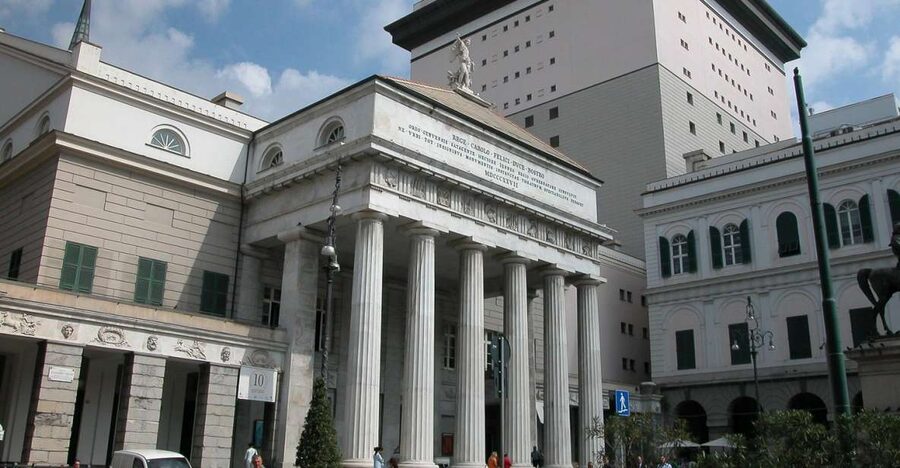
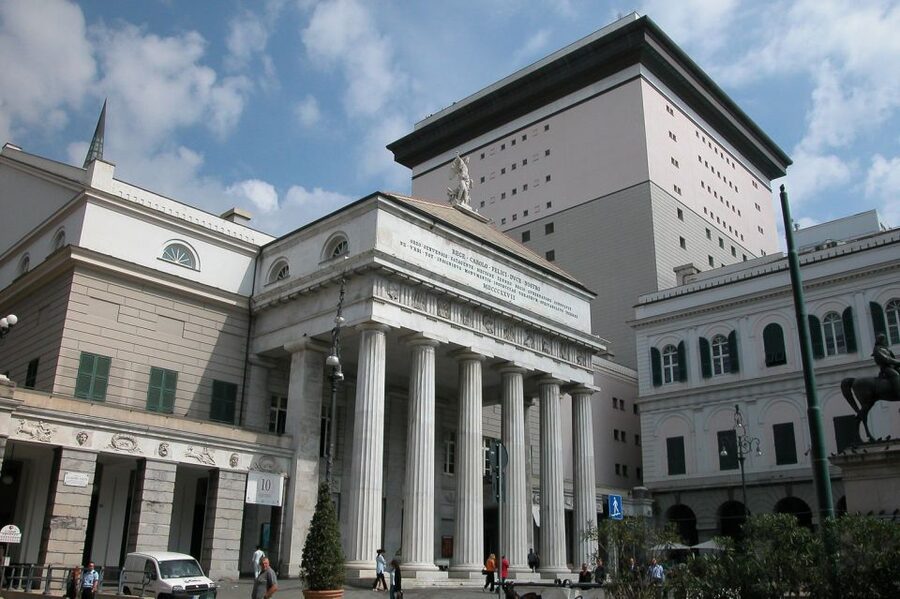
- Major landmarks are included: Expect San Lorenzo Cathedral, San Matteo Square, the Doge’s Palace, and the Opera House.
- Museum entry adds real value: Your ticket includes the Strada Nuova Museums and Sant’Agostino Museum for an independent visit on the same day.
- The guide speaks two languages: English and Italian are used together, with the guide repeating the explanation for both groups.
- The pace is manageable: The walk covers the historic center rather than a large part of modern Genoa, and past guides have adjusted the pace for the group.
Start on Via Garibaldi among Genoa’s Rolli palaces
The meeting point is the Tourist Information Center at Via Garibaldi 12red. This puts you directly on the city’s famous palace street, not at a distant transport hub or generic starting point. Arrive ready to walk, since the old center quickly changes from broad ceremonial streets to tight passages.
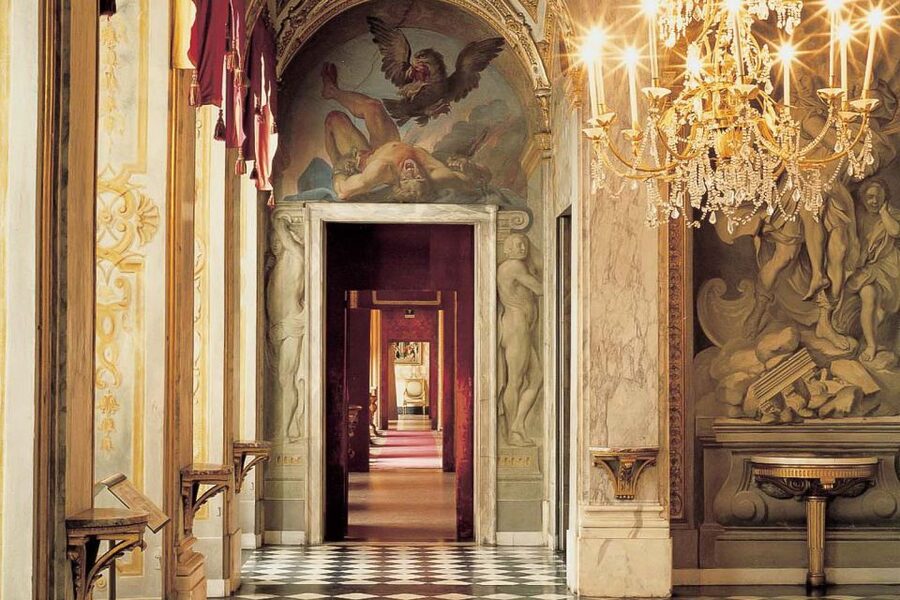
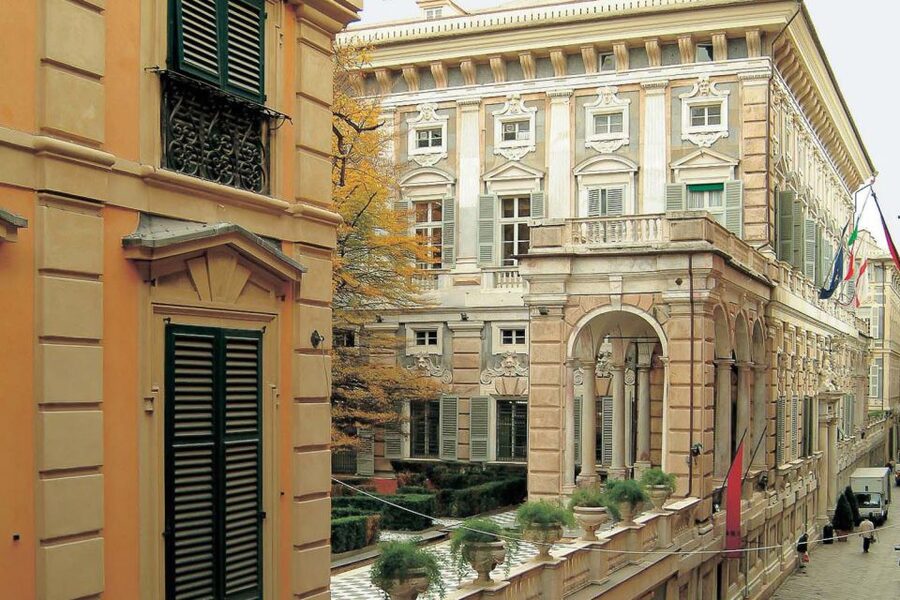
Via Garibaldi was once called Strada Nuova, or New Street, even though its grand buildings date mainly from the 16th and 17th centuries. The name reflects Genoa’s period of expansion and confidence. The city’s most powerful families built large residences here, and the Rolli system designated certain palaces for hosting important official visitors.
The clever part of this system was practical as well as political. The republic did not rely on one royal palace to receive dignitaries. Instead, selected aristocratic homes were placed on an official list, or rolli, and families were assigned hosting duties according to the visitor’s status.
You will not simply see a row of handsome buildings. The guide explains how these homes expressed power, wealth, and competition between Genoese families. Look up as you walk. The narrow streets can make the façades feel close, and the upper levels often reward a slower glance.
The Strada Nuova Museums occupy three of these palaces: Palazzo Rosso, Palazzo Bianco, and Palazzo Doria Tursi. The guided walk introduces this museum area, but the gallery visit itself happens independently after the tour. That division matters. You get a clear introduction from the guide, then the freedom to inspect the paintings at your own pace.
More History Walking Tours in Italy
- Venice: City Center Historical Guided Walking Tour
★ 4.2 · 1,873 reviews - Palermo: Street Food and History Walking Tour
★ 4.9 · 1,486 reviews - Verona: History and Hidden Gems Guided Walking Tour
★ 5.0 · 1,379 reviews
Follow the caruggi into Genoa’s medieval core
From the polished palace street, the route moves into the caruggi. These lanes are one of Genoa’s defining features. They were shaped by a dense port city where space was limited and daily life took place in a tight network of passages, small courts, churches, workshops, and residences.
This is where the tour earns its low price. You can walk the broad streets alone, but the narrow lanes are easier to appreciate when someone explains what you are seeing. The route is designed to reveal small squares and less obvious connections between the main monuments.
Do not expect a long-distance city march. One past participant described the tour as covering limited ground but delivering plenty of information. That is a fair way to think about it. You are not checking off every corner of Genoa. You are learning how the historic center fits together, then choosing where to return later.
The caruggi also require practical attention. Keep your group in sight, listen carefully when the guide stops, and wear comfortable shoes. The information provided does not describe a difficult hike, and several guides have kept the pace moderate, but old lanes are not the place for unstable footwear or a hurried schedule.
The bilingual format is most noticeable here. A guide such as Barbara, Anna, or Paola has been praised for giving English and Italian groups equal attention. You may wait through the Italian explanation before hearing the English version, but this also gives you a moment to look at the buildings and take photographs.
San Matteo Square and the Doria family
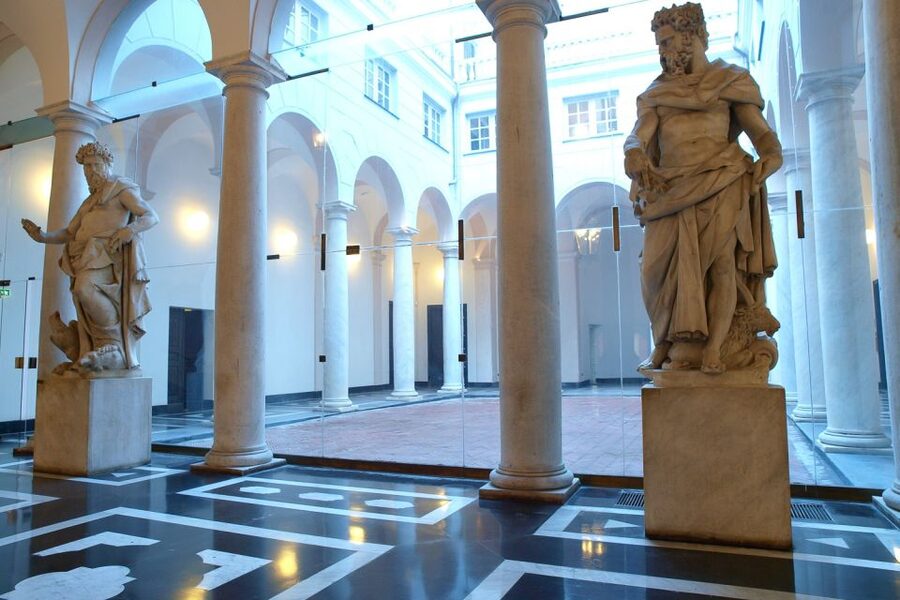
San Matteo Square is a compact stop with an unusually strong connection to Genoa’s ruling class. It was associated with the Doria family, one of the city’s most important political and naval families.
The square helps explain how power operated in medieval and early modern Genoa. Rather than being an isolated monument, it is a family setting, with architecture that ties public life to private influence. The guide’s explanation gives you a better sense of why certain buildings mattered beyond their appearance.
This is also the kind of stop that benefits from a local guide. Genoa can feel visually crowded, with layers of stone, marble, painted façades, and narrow openings competing for attention. A good explanation gives you a sequence: who built here, how the city grew, and how Genoa’s trading and maritime role shaped its center.
The tour has also included stories about Genoa’s port connections, the city’s medieval commercial power, the first Banco di San Giorgio, and Marco Polo’s imprisonment. These details help turn a route through old streets into a connected story. Exact emphasis depends on the guide, but past guides have been praised for adding local facts rather than reciting only dates.
San Lorenzo Cathedral and the city’s religious treasures
San Lorenzo Cathedral is one of the tour’s major landmarks. Its Gothic character gives you a sharp contrast with the palaces on Via Garibaldi and the rougher texture of the caruggi.
The cathedral is important not only for its architecture. It houses religious objects connected to Genoa’s long trading and maritime past. The city’s position on Mediterranean routes brought wealth, visitors, and sacred objects from far beyond Liguria.
One story often associated with the cathedral concerns relics connected with Saint John the Baptist, brought to Genoa during the Crusading period. A guide can place that story within the city’s larger habit of linking commerce, military ventures, faith, and civic pride.
You should allow yourself a moment to look beyond the headline features. The value of a short tour is not that it gives you a full cathedral study. It gives you the context to recognize why San Lorenzo matters, then lets you return later if you want a closer look.
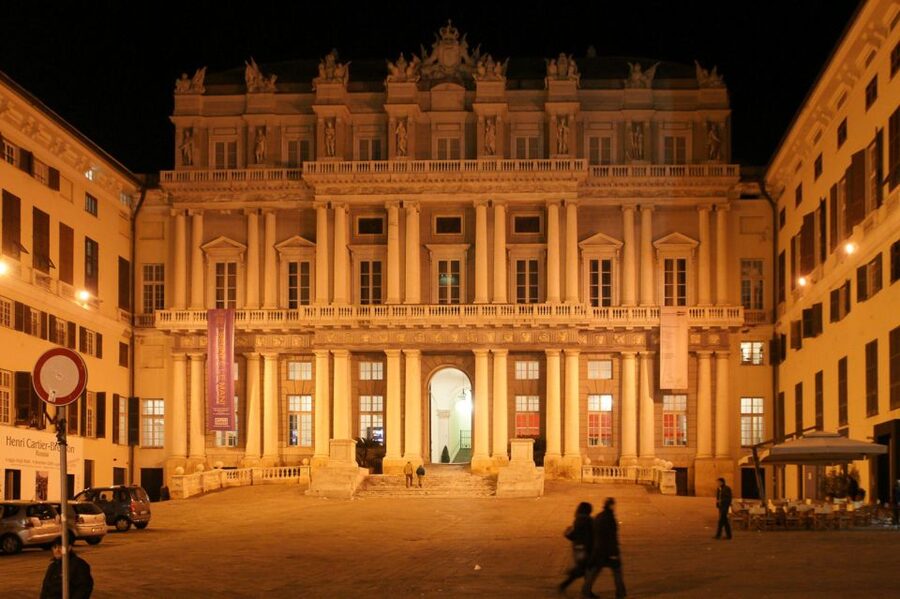
The route also points out the Doge’s Palace. In Genoa, the title doge referred to the elected head of the republic, not a hereditary king. Seeing the palace in relation to the cathedral and surrounding lanes helps you picture the old center as a working seat of government, religion, and trade.
More Old Town and Historic Centre Walks in Italy
- Rome in a Day Tour with Vatican, Colosseum and Historic Center
★ 4.5 · 1,042 reviews - Rome Food Tour in the Historic Centre with 8+ Food Tastings
★ 5.0 · 1,000 reviews - Guided Tour, Historic Center Sassi Rock Churches and Cave House
★ 5.0 · 461 reviews - Naples: Historic Center and Sansevero Chapel Walking Tour
★ 4.8 · 208 reviews
The Doge’s Palace and Opera House in one compact route
The Doge’s Palace is another useful stop because it broadens the story beyond aristocratic homes. The Rolli palaces show private wealth and social rank. The Doge’s Palace represents civic government and the republic’s public authority.
The Opera House adds another layer. It belongs to a later cultural tradition, showing that the historic center is not frozen in one period. Genoa’s old streets contain several centuries at once, and the guide’s job is to help you read those changes without turning the walk into a list of unrelated buildings.
This is a good tour for first-time visitors who want an orientation before choosing longer museum visits or independent walks. Past participants have used it to decide which palaces, galleries, and squares deserved a second look. That is a sensible strategy in Genoa, where the most rewarding places are often close together but easy to miss.
The route is especially useful if you arrive by cruise ship. The meeting point is about a kilometer from the port area according to one detailed account, though your exact walking time will depend on your ship’s berth and your pace. Do not cut the timing too close if your ship has a strict departure schedule.
Your museum visits continue after the guide leaves
The museum benefit is easy to misunderstand, so plan for it properly. The guide introduces the Strada Nuova Museums during the walk, but you visit them on your own after the guided itinerary. Sant’Agostino Museum is also included, and both visits should be completed on the same day.
The Strada Nuova Museums form Genoa’s main museum center. Their collection covers Italian and foreign art from the 15th through the 19th centuries, with notable works from the Genoese and Flemish schools. The setting is part of the attraction: you view art inside the grand palaces that once belonged to Genoa’s elite.
This arrangement suits independent visitors. You receive the historical explanation first, then you can spend as long as you like with a painting or move quickly through rooms that interest you less. It is not ideal if you want a guide beside you in every gallery, since the included museum visit is independent.
Sant’Agostino offers a different atmosphere. The museum uses a triangular cloister and the largest preserved Gothic church in the complex to present important medieval works from Genoa. After the polished palaces of Via Garibaldi, this visit gives you a stronger sense of the city’s religious and medieval side.
Because the museum visits must happen on the same day, do not schedule the walking tour at the end of a packed Genoa itinerary. The walk lasts two hours, and the galleries deserve additional time. If you have only a short stop in port, check the tour start time and leave room for the museums, food, and your return to the ship.
What the bilingual format feels like in practice
The tour is offered in English and Italian with one bilingual guide. This is not a small footnote. It affects the rhythm of the experience.
The guide normally explains a sight in one language, then repeats the material in the other. Past guides have been praised for giving both groups the same information, and names associated with especially well-received tours include Irene, Roberta, Daniel, Marina, Barbara, Anna, Paola, and Vittoria. The guide assigned to your date may be different.
You will spend some time waiting for the second language, but you can use that pause to take photos or study the building in front of you. One practical complaint has been that a guide can become harder to hear while facing a building, especially in a narrow street with other sounds around you.
Group size can change the experience. Some tours have been small, including a group of six or even only two English-speaking participants. Other groups have been larger. A small group gives you more opportunity to ask questions, while a larger bilingual group may require you to stay close and listen carefully.
The guides are local professionals working for the Genova Tourism Board, and the strongest tours have combined historical facts with useful local suggestions, including places for chocolate, gelato, focaccia, and meals. Those tips are a bonus rather than a guaranteed part of every departure, but they can help you plan the rest of your day.
Is $16 a good value for two hours?
At $16 per person, this is inexpensive for a guided introduction to Genoa’s historic center. The price includes the live guide and admission to two museum centers, which changes the calculation. You are not paying only for a walk around the outside of monuments.
The best value comes if you actually visit both museums on the same day. If you finish the walk and leave Genoa without using the admissions, the tour becomes a straightforward orientation walk at a still-reasonable price, but you lose the strongest extra benefit.
The tour also compares favorably with a large cruise excursion when you want a more focused city-center experience. It does not attempt to cover all of Genoa, and it does not include transport, a meal, or a guided museum visit. For those needs, you would need a different product.
Free cancellation up to 24 hours before the start gives you some flexibility, and you can reserve now and pay later. Check the available start time before booking, especially if you are coordinating the walk with a cruise arrival or a same-day train schedule.
Who will get the most from this Genoa walk?
I would choose this tour for a first visit, especially if you want the old center explained before exploring alone. It suits people who enjoy architecture, urban history, religious art, and stories about merchant families.
It is also a good fit if you have only one day in Genoa. The route gives you a working map of the main historic sights, and the museum admission helps you turn a two-hour introduction into a fuller cultural visit.
Families can consider it too, since past guides have kept a comfortable pace for groups with different physical abilities. Still, children who dislike stops and historical explanation may find the bilingual format slow.
Independent art lovers should appreciate the museum arrangement. You get a guided framework, then time to choose your own pace. If you want every painting explained by a specialist, this is not the right format.
I would be more cautious if you dislike bilingual tours, have limited time before a ship departure, or want a private experience. In those cases, the repeated explanations and fixed route may feel less efficient.
Should you book this tour?
Book it if you want a low-cost introduction to Genoa’s old center that combines the caruggi, Rolli palaces, San Matteo Square, San Lorenzo Cathedral, the Doge’s Palace, and the Opera House. The museum admission makes the $16 price particularly attractive, provided you use both entries that day.
Skip it if you already know the historic center well or want an entirely English-only, private, or museum-led experience. For most first-time visitors, though, this is a practical way to get your bearings, hear the city’s complicated story in plain terms, and find the places worth revisiting on your own.
FAQ
How long does the guided walking tour last?
The guided walk lasts two hours.
How much does the tour cost?
The listed price is $16 per person.
Where does the tour begin?
The meeting point is the Tourist Information Center at Via Garibaldi 12red.
Which languages are available?
The live guide speaks English and Italian. The tour takes place in both languages with a bilingual guide.
What sights are included on the walking route?
The route includes the Palazzi dei Rolli, the caruggi of the historic center, San Matteo Square, San Lorenzo Cathedral, the Doge’s Palace, the Opera House, and Via Garibaldi, also known as Strada Nuova.
Are museum tickets included?
Yes. Admission to the Strada Nuova Museums and Sant’Agostino Museum is included.
Is the museum visit guided?
No. The guide introduces the Strada Nuova Museums at the end of the walking route, then you continue through the museums independently.
When must I visit the museums?
You should visit both the Strada Nuova Museums and Sant’Agostino Museum on the same day as the walking tour.
Can I cancel or pay later?
You can cancel up to 24 hours in advance for a full refund. The reserve-now, pay-later option lets you book without paying immediately.
More Two-Hour Tours in Italy
- Palermo in 2 hours Main monuments and historic markets
★ 5.0 · 136 reviews - 2-Hour Gettysburg Battlefield Guided History Bus Tour with a National Park Guide
★ 4.5 · 2,201 reviews - Kyoto Gion: 2-Hour Geisha Culture & History Walking Tour
★ 5.0 · 1,186 reviews - 2 Hour LoDo Historic Walking Tour in Denver
★ 5.0 · 1,106 reviews
Newest history tours we have reviewed in Italy
- Bologna: Street Food Tour in the Historic Center★ 4.8 · 125 reviews
- Asti Historic Town Walking Tour★ 4.5 · 82 reviews
- Ancient Rome: Archeological area Largo Argentina★ 3.9 · 49 reviews
- Ancient Rome Half-Day Segway Tour★ 4.8 · 25 reviews
- Alghero: Historic Center Walking Tour with A Local Guide★ 4.8 · 120 reviews
- Alghero: walking tours around the ancient city★ 4.6 · 30 reviews
- Amalfi Organic Lemon Tour & Tasting in the Historical Garden★ 4.9 · 46 reviews
- Alba: History Walking Tour and Food Tasting with a Local★ 4.8 · 20 reviews
Old Town & Historic Centre Walks, compared.
Madrid Essential: Historic Center, Plaza Mayor & Royal Palace
Read our review →
Live Fado Show with Port Wine in Historic Center
Read our review →
Valencia Old Town Tour with Wine & Tapas in 11th Century Historic Monument
Read our review →
Prague Old Town, Medieval Underground and Dungeon Historical Tour
Read our review →
Cartagena: Historic Center and Getsemaní Shared Walking Tour
Read our review →
Old Town Walking Tour History and Tales in Edinburgh
Read our review →
Philadelphia Old City Historic Walking Tour with 10+ Top Sites
Read our review →Browse the lists this tour appears in