
Review · ITALY HISTORY TOURS
Best of Bologna in one day : Food, architecture, art and history
Bologna’s great strength is not one famous monument, but the way art, food, university life, and medieval streets fit together. This full-day tour brings them into one story, from Piazza Maggiore and the city’s painted palaces to the Anatomical Theatre, hidden canals, Renaissance chapels, and a generous tasting at Bruno e Franco.
I like the private format, since Riccardo Bacchi can adjust his explanations to your interests. I also like the unusual mix of major sights and less obvious corners, especially the Oratory of Santa Cecilia, the Moline canal, and the old university buildings. The main drawback is the pace: seven hours of walking and dense commentary can feel like a lot, so bring good shoes and an appetite for history.
Key points at a glance
- A private seven-hour tour with Riccardo Bacchi: Your group receives focused attention rather than joining a large walking crowd.
- Bologna’s art in real places: See works connected with Michelangelo, Raphael, Giotto, Titian, Carracci, Guercino, and Nicolò dell’Arca.
- The University of Bologna up close: Visit the Archiginnasio, its frescoed rooms, historic library, and remarkable wooden Anatomical Theatre.
- Churches with very different personalities: Compare San Domenico, Santo Stefano, San Giacomo Maggiore, Santa Maria della Vita, and San Petronio.
- A serious taste of Emilia-Romagna: Try culatello, mortadella, tagliatelle with ragù, green lasagna, Parmigiano Reggiano, and aged balsamic vinegar.
- A practical final lesson: Make fresh egg pasta and learn how it becomes tagliatelle, tortellini, lasagna, tortelloni, and other local shapes.
Why this one-day Bologna tour works
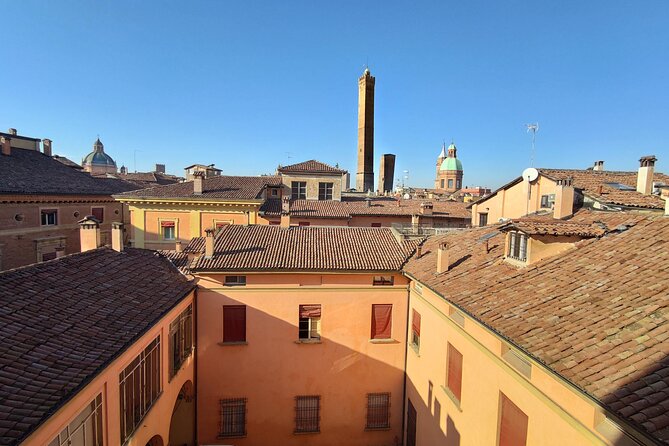
Bologna can be hard to read at first. Its arcades make the center easy to walk, but the city’s treasures are spread among churches, university rooms, narrow lanes, grand civic buildings, and small food shops. A good guide gives those pieces a clear order.
This tour starts in the city’s civic heart, moves through religious and academic Bologna, pauses for food, then returns to the city’s older churches and waterways. You are not simply checking off monuments. You are following the story of a place shaped by medieval government, Catholic devotion, trade, scholarship, and the cooking traditions of Emilia-Romagna.
Riccardo Bacchi is presented as an art historian and university professor, and that background shapes the day. His explanations reach beyond dates and names. He connects architecture with politics, sculpture with religious feeling, and food with local identity. That is a real advantage if you want to understand what you are seeing rather than just photograph it.
The tone is best suited to an active, curious visitor. The material is substantial, and the day moves quickly. One person described needing to listen closely because Riccardo can go well beyond the basics. That is a compliment, but also fair warning: this is not a light stroll with a few entertaining facts.
More Architecture and Landmark Tours in Italy
- Venice: St. Mark’s Basilica Guided Tour & VR History Intro
★ 3.9 · 4,880 reviews - Venice’s Best: Basilica, Doge’s Palace, Gondola & History Gallery
★ 4.5 · 2,478 reviews - Pantheon Elite Guided Tour – Rome’s Iconic Ancient Temple
★ 5.0 · 1,447 reviews
Piazza Maggiore and Bologna’s civic center
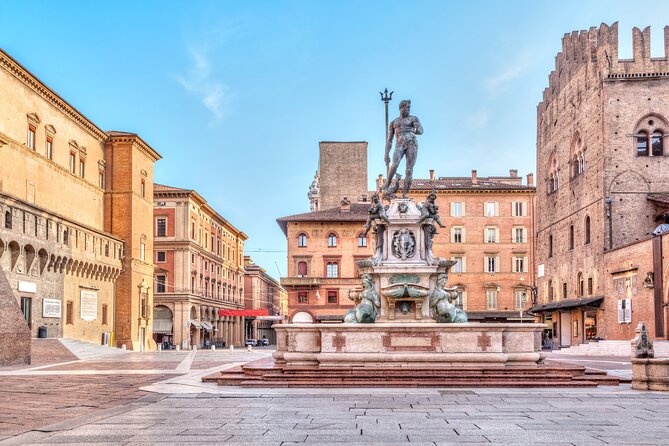
Meet at Bar Vittorio Emanuele beside Piazza Maggiore. The square gives Riccardo a strong opening because several of Bologna’s main forces meet here: city government, religious power, public sculpture, and medieval urban ambition.
You will look at the Fountain of Neptune, the Palazzo Comunale, and the enormous Basilica of San Petronio. The square also contains terracotta work by Nicolò dell’Arca, whose sculpture becomes a recurring thread later in the day at Santa Maria della Vita.
The visit includes frescoed rooms inside Palazzo Comunale and the grand staircase associated with Bramante’s horses. These interiors are easy to miss if you only cross the square on your way to somewhere else. The forty-minute visit is short enough to keep the day moving, but long enough to give you a framework for Bologna’s public life.
This is one of the tour’s most useful stops for first-time visitors. You learn where the historic center fits together before moving into smaller streets and buildings.
Santo Stefano and the city’s early medieval layers
Piazza Santo Stefano is not a single church in the usual sense. It is a complex of early medieval and Romanesque buildings, later Gothic additions, frescoed spaces, porticoes, and stairways. The setting feels more like a small religious district than one isolated monument.
The tour highlights the unusual mixture of periods. You might move from an early medieval interior to a Gothic palace, then toward a terrace with a view over Bologna and its towers. There is also a specialized art museum within the complex.
The twenty-minute time listed for this stop suggests a focused introduction rather than a full study of every room. That is useful if you have only one day, though art lovers may wish they had longer here. Later, the tour returns to the Basilica-Santuario di Santo Stefano for another forty-minute visit, so the complex receives attention in two stages rather than all at once.
Terracotta drama at Santa Maria della Vita
Santa Maria della Vita is a Baroque church with one of Bologna’s most affecting works, Nicolò dell’Arca’s Lamentation. The sculpture is made of terracotta, a material closely tied to the artistic tradition of the region.
This is a brief stop, but it has emotional weight. The figures are not merely decorative church furnishings. Their expressions and movement give the scene a human force that can be missed without explanation.
I like the way this visit complements the opening look at Nicolò dell’Arca’s work. You see how the same artist’s name fits into Bologna’s wider artistic culture, rather than treating the sculpture as an isolated attraction.
Same streets, a different century:
- Colosseum: Underground and Ancient Rome Tour
★ 4.7 · 12,691 reviews - Rome: Colosseum with Arena, Roman Forum and Palatine Guided Tour
★ 4.0 · 5,598 reviews - Colosseum with Arena, Roman Forum and Palatine Hill Guided Tour
★ 4.5 · 3,526 reviews - Colosseum & Ancient Rome with Arena Floor Option I Max 6 People
★ 5.0 · 3,306 reviews
The Archiginnasio and Bologna’s medical past
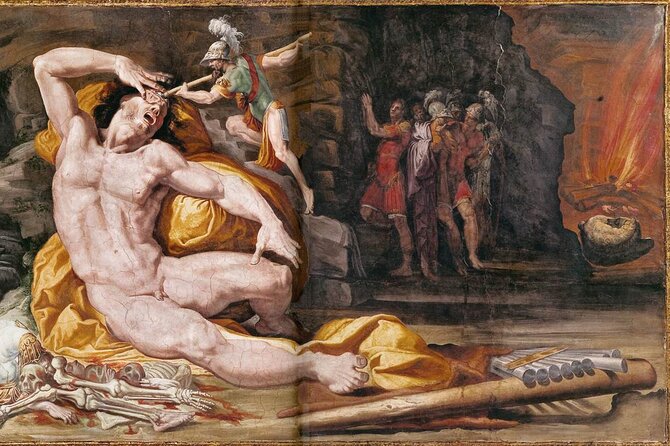
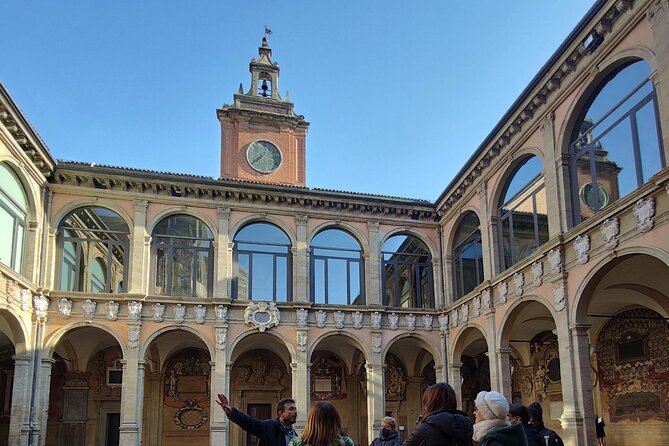
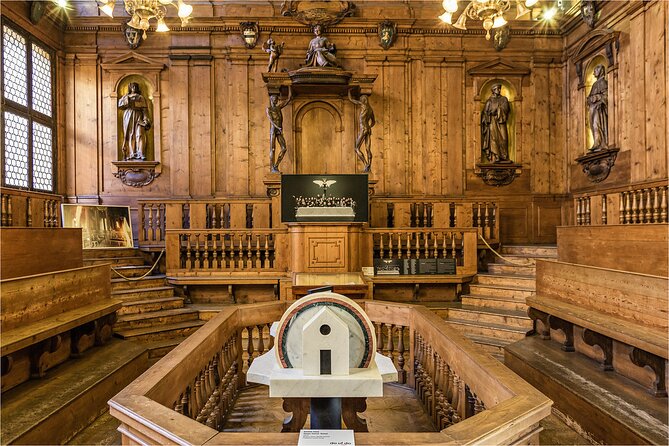
The Archiginnasio is one of the day’s strongest stops. This Renaissance and Baroque palace once belonged to the University of Bologna, one of Europe’s oldest universities. Its walls are covered with painted decorations, coats of arms, and reminders of generations of students and teachers.
The highlight is the wooden Anatomical Theatre. It is a striking room built for the study of the human body, with carved wood, a formal teaching layout, and a very different atmosphere from the city’s churches.
You will also see historic books and the old library spaces. This part of the tour adds science and medicine to the more familiar subjects of painting and religion. One guest specifically found the anatomy school a surprise highlight, and I can see why. It changes the day’s rhythm and shows Bologna as a place of research, not only worship and civic display.
The Archiginnasio is also a good example of why a guide matters. The room itself is memorable, but its purpose and setting make much more sense when placed in the story of university Bologna.
Paintings from Giotto to the Bolognese masters
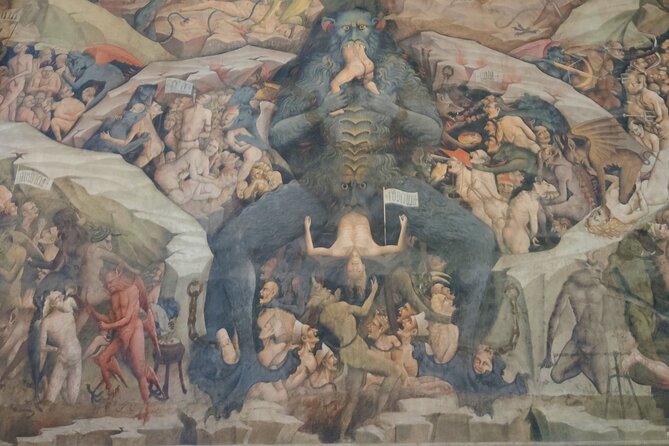
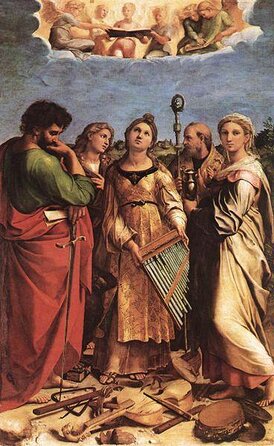
The Pinacoteca Nazionale di Bologna brings a formal museum stop into an otherwise street-based day. Its collection covers major periods of Italian painting, including works associated with Giotto, Raphael, Titian, Guido Reni, Ercole de’ Roberti, the Carracci, Guercino, Vitale da Bologna, and Parmigianino.
Forty minutes is enough for a guided survey, not enough for every gallery. That is an important expectation to set. You will get a map of the collection and a way to recognize key works, but anyone with a strong interest in painting may want to return on another visit.
This stop is valuable because Bologna’s art is sometimes overshadowed by Florence, Venice, or Rome. The museum makes clear that the city developed its own powerful traditions and artists. The tour also reaches works from different centuries, so you can see the changes in style rather than studying one narrow period.
The Quadrilatero and the edible side of Bologna
The Quadrilatero is the old market area near the city center, filled with traditional food shops, stalls, taverns, and narrow lanes. Here the tour shifts from looking at art to understanding how Bologna eats.
This is not a token snack stop. At Bruno e Franco, La Salumeria, the tasting can include figs with Parma ham, culatello, salami, mortadella, pasta, Bolognese-style meatballs with peas, tagliatelle with ragù, three- or four-year-aged Parmigiano Reggiano, traditional green lasagna, and Modena balsamic vinegar aged as long as 24 years.
The range matters. You are comparing cured meats, cheese, pasta, sauce, and vinegar rather than sampling one famous item and moving on. The food also gives context to the city’s art and architecture. Bologna is not only a place of old stones. Its local identity is carried through markets, recipes, and small specialist shops.
The meal-like tasting can be filling, so plan accordingly. The supplied schedule gives one hour for the food portion, which makes it an important part of the day rather than a rushed bite between monuments.
San Giacomo Maggiore and Santa Cecilia
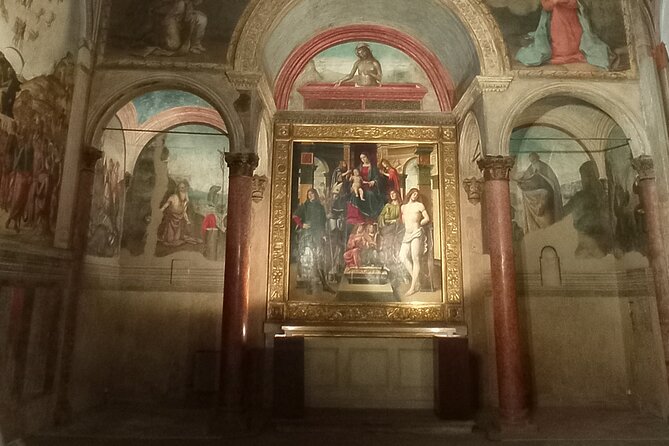
San Giacomo Maggiore is another church where a short visit can reveal several layers of Bologna’s art. The famous Bentivoglio Chapel is a major Emilian Renaissance work, while the nearby Oratory of Santa Cecilia contains frescoes and spaces connected with music.
This stop suits visitors who enjoy details. It is easy to enter a church, glance toward the altar, and leave. Here, Riccardo can point you toward the chapel, fresco cycle, and musical setting so the building becomes easier to read.
The forty-minute allocation gives the visit more room than the shortest church stops. It is also one of the places that helps the tour feel less like a standard central-square walk. You are still close to the center, but the focus shifts toward a specific family chapel, local art, and performance culture.
The Moline canal in five minutes
The Canale delle Moline receives only five minutes, so think of it as a quick glimpse rather than a full canal walk. The stop points toward Bologna’s older waterways, medieval houses, arcades, towers, palaces, staircases, frescoed rooms, and oratories.
That may sound brief, but the canal helps you picture a side of Bologna that is easy to miss from the main squares. The city’s waterways supported work and movement, while the surrounding buildings reveal how closely practical and noble life once sat together.
If you enjoy photography, this is a good moment to ask Riccardo about picture opportunities. One useful feature of his guiding style is that he points out small visual details and places where the city opens up in unexpected ways.
San Domenico and the art of remembrance
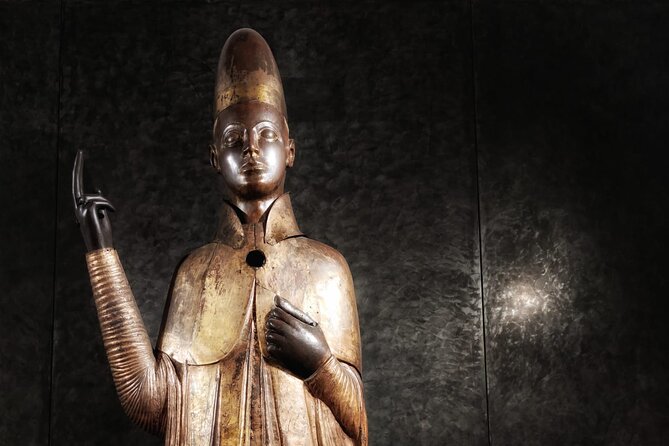
The Basilica of San Domenico is one of the day’s richest church visits. Its artistic highlights include the tomb of Saint Dominic, associated with Nicola Pisano, Nicolò dell’Arca, and Michelangelo. You will also see an elaborate wooden choir linked to alchemical imagery, Mozart’s favorite organ, and a Renaissance cloister.
The stop works because it gathers several centuries and artistic forms in one place. Sculpture, woodwork, music, architecture, and religious memory all meet inside the basilica.
Forty minutes allows for a measured explanation, but the church contains enough material to reward a second visit. I would pay special attention to the sculpture around the saint’s tomb. The connection with Michelangelo is particularly striking for visitors who assume his work in Italy is concentrated in Florence and Rome.
Returning to Santo Stefano
The second visit to Santo Stefano gives the complex more time than the earlier twenty-minute introduction. Built in the image of Jerusalem’s Holy Sepulcher, the basilica has an unusual early medieval character and a strong sense of religious symbolism.
The two-stage approach makes practical sense. You first encounter the piazza as a group of buildings and views, then later return to look more closely at the basilica itself. Still, the day includes many churches, so if sacred architecture is not your main interest, the sequence may feel repetitive.
For art and history lovers, the repetition is useful. It lets you compare early medieval forms with the later Baroque, Renaissance, and Gothic work seen elsewhere in Bologna.
Fresh pasta and a final taste of Emilia-Romagna
The day ends back at Bruno e Franco with a short pasta-making class. You work with egg pasta used for tagliatelle, tortellini, lasagna, balanzoni, tortelloni, and passatelli.
Thirty minutes is enough for an introduction, not a full cooking course. You should expect practical exposure to the basic idea of Bolognese pasta rather than mastery of every shape. Its value is cultural as much as culinary: you see how one dough can become several dishes central to the region.
The combination of tasting and pasta-making gives the tour a satisfying finish. After a day of churches, paintings, university rooms, and civic buildings, you end with something hands-on and local.
Price, pace, and who gets the best value
At $174.69 per person, this is not a bargain walking tour. The value rests in the private format, the guide’s art and history background, the number of included admissions, the museum and university access, and the substantial food tasting with pasta instruction.
It makes the most sense if you have about two days in Bologna and want a strong first-day overview. Several people who had limited time found the tour useful because it showed them what deserved a longer return visit. It can also suit repeat visitors who want a more scholarly route through the city.
The price is harder to justify if you prefer a slow day with long meals, independent museum time, or only a few major sights. The tour covers a lot. You will walk between stops, listen closely, and keep moving.
Wear trainers or other comfortable walking shoes. The group is private, service animals are allowed, public transportation is nearby, and most people can participate. Confirmation is provided at booking, and free cancellation is available up to 24 hours before the start time.
Should you book this Bologna experience?
Book it if you want one concentrated day of Bologna’s art, history, architecture, and food, especially if Riccardo’s professor-like teaching style appeals to you. He is the central reason this experience feels more substantial than a basic city walk.
Skip it if you want a relaxed food tour, a short introduction, or plenty of unscheduled time. The day is full and the commentary can be demanding.
For first-time visitors with limited time, I would choose this tour early in the trip. It gives you a clear sense of the city and leaves you with useful ideas for a second day, from returning to the Pinacoteca to exploring more of the food quarter at your own pace.
FAQ
How long does the Bologna tour last?
The experience lasts approximately seven hours.
Where does the tour start?
It starts at Bar Vittorio Emanuele, Piazza Maggiore 1, Bologna.
Where does the tour end?
The activity ends back at the meeting point.
Is this a private tour?
Yes. Only your group participates.
Is the food included?
The tasting at Bruno e Franco, La Salumeria, is listed as included, along with a short pasta-making class.
What foods may be included in the tasting?
The tasting may include Parma ham with figs, culatello, salami, mortadella, pasta, Bolognese-style meatballs with peas, tagliatelle with ragù, Parmigiano Reggiano, green lasagna, and traditional Modena balsamic vinegar.
What is the cancellation policy?
You can cancel for a full refund up to 24 hours before the experience starts. Cancellations or changes made less than 24 hours before the start time are not accepted for a refund.
More Day Trips in Italy
- Discover the Ancient Ruins of Pompeii: Day Trip from Rome
★ 3.5 · 2,247 reviews - Ancient Ostia Antica Semi-Private Day Trip from Rome by Train with Guide
★ 4.5 · 579 reviews - Kyoto: Fushimi Inari, Kinkakuji, Bamboo Grove 1 Day Bus Tour
★ 4.8 · 4,316 reviews - From Bangkok: Ayutthaya Historical Park Guided Day Trip
★ 4.6 · 3,020 reviews
Newest history tours we have reviewed in Italy
- Guided Cultural Tour of the Godfather Film in Messina★ 5.0 · 31 reviews
- SU NURAXI BARUMINI Unesco World Heritage Site★ 5.0 · 129 reviews
- Picnic aperitif in the vineyard of an ancient trullo in Martina Franca★ 5.0 · 21 reviews
- Brescia the Unexpected: History, Local Stories & a drink★ 5.0 · 31 reviews
- Bologna historical art walking tour with hidden gems and tastings★ 5.0 · 108 reviews
- Bolognese Cooking Class with Margherita in the Historic Center★ 5.0 · 26 reviews
- Private or semi-private tour of the historic center of Bologna★ 5.0 · 34 reviews
- Tuk Tuk tour in Bergamo, Città Alta and the ancient Venetian walls★ 5.0 · 32 reviews
Architecture & Landmark Tours, compared.
St. Mark’s Basilica Guided Tour & VR History Intro
Read our review →
Venice’s Best: Basilica, Doge’s Palace, Gondola & History Gallery
Read our review →
Córdoba: Skip-the-Line Great Mosque-Cathedral History Tour
Read our review →
Pantheon Elite Guided Tour – Rome’s Iconic Ancient Temple
Read our review →
Abu Dhabi Grand Mosque, Palace, and Heritage Village
Read our review →
Chicago in a Day: Food, History & Architecture Walking Tour
Read our review →
Colosseum Special Access Tour, with Ancient Temples & Tombs
Read our review →Browse the lists this tour appears in