Review · TBILISI HISTORY TOURS
Mtskheta, Jvari, gori, uflistsikhe, history and panorama (group tours)
The most rewarding part of this $19 day trip from Tbilisi is the sweep of Georgian history packed into one outing. You move from sixth-century Christianity at Jvari and Mtskheta to the pagan cave city of Uplistsikhe, with Gori and its Stalin Museum added along the way.
I like the fine views from Jvari and the chance to see several major sites without arranging separate transport. I also like the contrast between the ornate Svetitskhoveli Cathedral and the bare stone rooms of Uplistsikhe. The main drawback is that guide quality and the balance between English and Russian explanations can vary sharply.
Key points to know
- Jvari gives you the day’s best panorama: The monastery looks across the meeting point of the Aragvi and Kura rivers toward Mtskheta.
- Svetitskhoveli is the strongest church visit: Expect a major Georgian Orthodox cathedral with important religious traditions and centuries of national history.
- Uplistsikhe requires walking: The ancient cave city has uneven stone paths, exposed areas, and little shelter from the weather.
- Gori and the Stalin Museum may be optional: The museum visit is described as available at the group’s request, with an extra ticket charge.
- English service is not always consistent: Some guides receive warm praise, while other visitors report short English explanations and much more Russian.
- Check ticket costs before departure: The supplied details list Uplistsikhe and the Stalin Museum at either 15 or 17 GEL, so confirm the current price.
A full day of Georgia beyond Tbilisi
This is an ambitious route for a low-cost group excursion. Starting at 9:00 a.m. from 3 Vakhtang Gorgasali Street in Tbilisi, you spend about nine hours on the road and at historic sites. The group is limited to 15 people, at least in the stated maximum, which should feel more manageable than a large coach tour.
The route works because each stop tells a different part of Georgia’s story. Jvari and Mtskheta introduce the country’s Christian identity. Uplistsikhe takes you far earlier, to a cave settlement connected with pagan worship and trade. Gori adds a difficult modern chapter through the life of Joseph Stalin.
You should think of this as a survey tour, not a slow archaeological or religious study. The route covers a lot, and the time at each place is limited. That is the trade-off for seeing four important destinations in one day.
More History Tours in the world:
- New York City: American Museum of Natural History Ticket
★ 4.5 · 15,447 reviews - History and Hauntings of Salem Guided Walking Tour
★ 5.0 · 14,564 reviews - Colosseum: Underground and Ancient Rome Tour
★ 4.7 · 12,691 reviews
Jvari Monastery and the view over two rivers
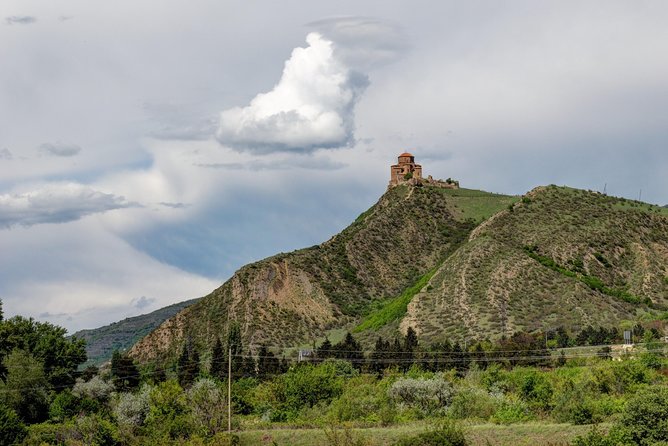
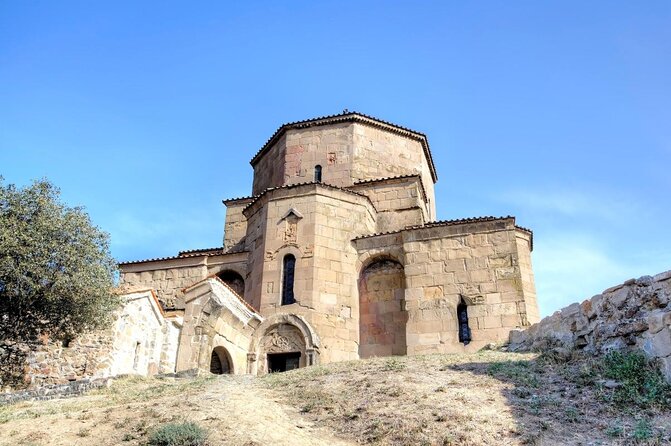
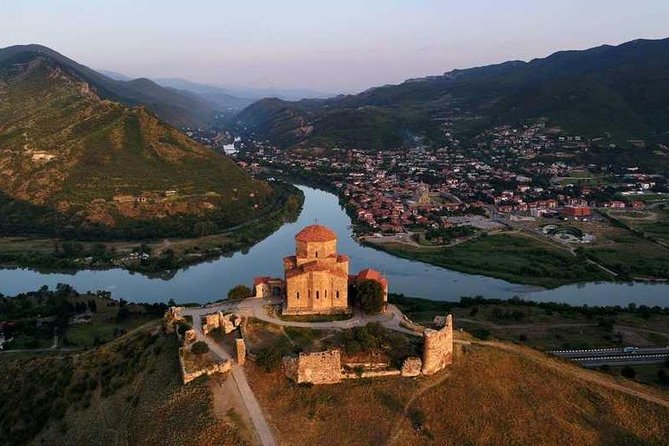
Jvari is usually the first stop, and it is a smart opening. The monastery sits high above Mtskheta, giving you an immediate sense of the region’s geography. Below, the Aragvi and Kura rivers meet, and Mtskheta spreads across the valley.
The sixth-century church is simple in form but powerful in setting. The hilltop position also connects the place with Georgian literature. The route description refers to the scenery associated with Mikhail Lermontov’s poem Mtsyri, as well as visits by famous writers and artists including Pushkin, Tolstoy, Dumas, and Tchaikovsky.
You get about an hour here, with admission listed as included. Use part of that time outdoors. The view is the reason to come up the hill, and it is easy to spend too long inside the church while missing the broad panorama.
Bring shoes with a firm sole. The site involves walking, and the route may feel less comfortable in slick footwear. If the weather turns wet, the exposed hilltop can also be less pleasant. The tour requires good weather and may be moved or canceled if conditions are poor.
Mtskheta and the cathedral at the center of Georgian Christianity
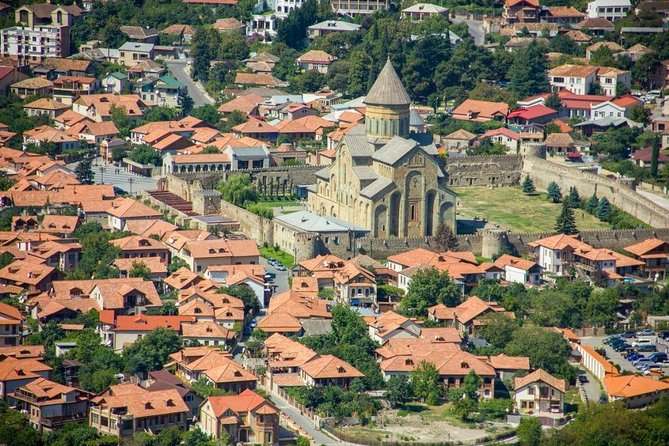
From Jvari, the route continues to Mtskheta, one of the country’s key religious centers. The main visit is Svetitskhoveli Cathedral, also called the Pillar of Life-Giving. You get roughly an hour here.
This is likely to be the most satisfying church visit of the day. The cathedral is the patriarchal seat of the Georgian Orthodox Church, and its importance is not only architectural. Georgian Christian tradition connects the cathedral with the tunic of Jesus Christ, the mantle of Elijah the Prophet, and relics associated with Saint Andrew the First-Called.
You do not need to be Orthodox, or even especially religious, to appreciate the visit. The cathedral helps explain why Mtskheta matters to Georgia. Your guide can also give the buildings context that you would miss by simply taking photographs and moving on.
One practical point is worth noting: the itinerary appears to place Mtskheta after Uplistsikhe in one section, while the overall route and several descriptions place the cathedral visit later in the day. The exact order may depend on the day’s traffic, group wishes, or guide. Ask at the start so you know when the church visit is scheduled.
Mtskheta is also connected with the food stop. The description allows time at a local restaurant, where you can try Georgian products. The meal is not included, and the quality may depend on the restaurant used that day. One account found the food too oily, while other comments treated the stop as a welcome part of the outing. I would approach it as a convenient group lunch rather than a carefully selected dining destination.
Uplistsikhe, a stone city cut into the rock
Uplistsikhe is the tour’s most unusual stop. This ancient cave complex dates from the end of the second millennium to the beginning of the first millennium BC, according to the supplied description. Its rooms, passageways, storage areas, and ritual spaces were carved into rock and adapted over a long period.
The site helps you picture Georgia before its Christian era. The guide is meant to explain pagan practices, the settlement’s trade with Urartu and Media, and its rise and decline. You can walk through stone corridors and open chambers, then look out across the Kura Valley.
The tour allows about two hours and 20 minutes for Uplistsikhe and the restaurant stop combined. That sounds generous until you account for walking, gathering the group, explanations, and lunch. If Uplistsikhe is your main reason for booking, tell the guide early that you want enough time to see more than the easiest path.
This is not a smooth museum floor. Expect uneven stone, steps, narrow passages, and exposed sections. Comfortable shoes and practical clothing are essential. The site can be especially challenging in rain, and a sunny day makes the open views much better.
The entrance fee is not included. The supplied information gives two different figures, 15 GEL in one place and 17 GEL in another. Treat the current charge as separate and confirm it before you go. The same advice applies to the Stalin Museum.
Same streets, a different century:
- Lisbon: History, Stories and Lifestyle Walking Tour
★ 4.8 · 10,902 reviews - London Small Group Tour of Historical Pubs
★ 5.0 · 10,422 reviews - Prague: Oldtown, Medieval Underground & Dungeon History Tour
★ 4.3 · 10,277 reviews - Charleston’s Old South Carriage Historic Horse & Carriage Tour
★ 5.0 · 10,023 reviews
Gori and the complicated Stalin Museum stop
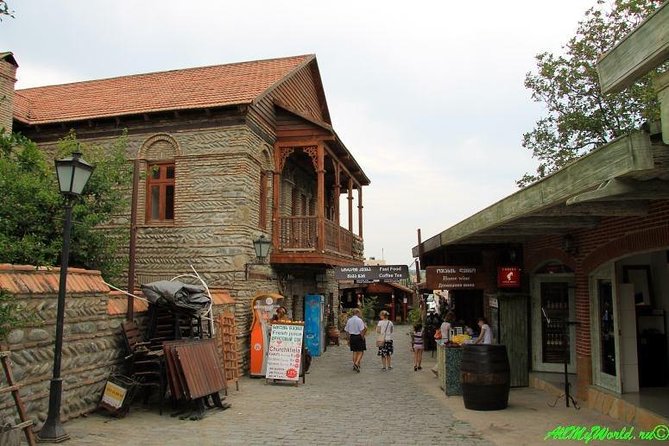
Gori is Joseph Stalin’s birthplace, and the museum presents his life through personal objects, furniture, sculpture, and a museum guide’s presentation. The visit is listed as optional or dependent on group preference, with about an hour allowed.
This stop can be interesting, but it is not a simple celebration of Georgian culture. Stalin was a Georgian-born Soviet dictator responsible for mass suffering and repression. The museum’s presentation may feel more admiring or carefully framed than some visitors expect. If you want a critical discussion of Soviet history, ask your guide how the visit will be handled.
The attraction is not for everyone. One person found the museum difficult to understand in light of Stalin’s crimes, while others accepted it as an unusual historical stop. I would choose it if you are interested in twentieth-century politics, museums of contested memory, or the way a birthplace presents a notorious figure.
The ticket is extra, and the supplied information again lists both 15 and 17 GEL in different places. Confirm the amount on the day. If the group skips the museum, you may have more time for another part of Gori, but the exact alternative is not specified.
How the guiding can shape the whole day
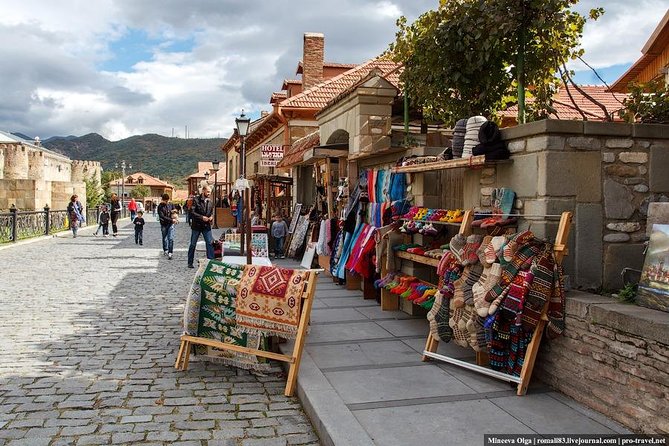
A good guide makes this route much better. Luka received especially warm praise for bringing each site to life with clear historical explanations. Paata was praised for a smooth, comfortable day and an easygoing manner. Tornike was noted for explaining a lot in simple language, while Emilia and George also received strong approval.
That is useful information, but it does not guarantee a particular guide. Assignments can change, and the experience appears to depend heavily on who leads the group. Some English-speaking visitors received only brief explanations while Russian commentary was much longer. A few accounts describe rude service, poor group control, or safety concerns related to driving.
The advertised language is English. Since the operation also serves Russian-speaking groups, ask at the meeting point how much time will be given to each language. If the English explanation is important to you, make that clear before the vehicle leaves Tbilisi.
I would also pay attention to the guide’s instructions at Uplistsikhe. The site has branching paths, and the group can spread out quickly. Stay aware of the meeting point and keep your phone charged. That is sensible on any group outing, especially when the route includes open archaeological ruins.
Transport, timing, and the real value of $19
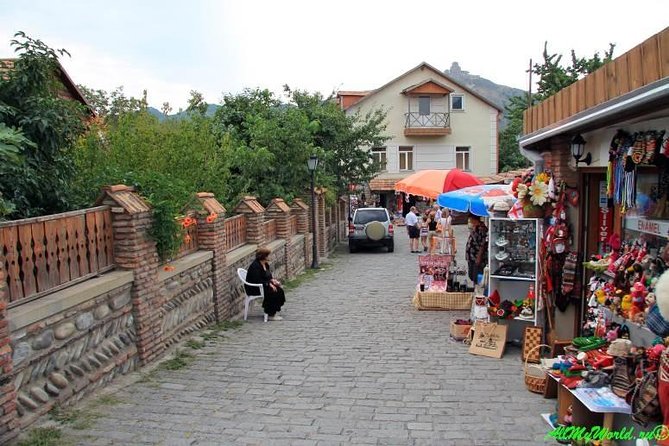
At $19 per person, the value is strong if the tour runs as advertised. You are paying for transport from Tbilisi, a driver-guide, and a full day covering sites that would take planning and separate fares to visit independently. The low price is particularly attractive for a solo visitor or anyone who does not want to rent a car.
The price does not cover dinner, lunch, the Uplistsikhe ticket, or the Stalin Museum ticket. The wording about the entrance fees is inconsistent, so budget extra Georgian lari rather than assuming the advertised inclusions are exact.
The nine-hour schedule also has a cost: time. You will spend a substantial part of the day in the vehicle, and the route may feel rushed if traffic slows the group. One account found the trip long on the return to Tbilisi. That is normal for a route stretching across Mtskheta, Gori, and Uplistsikhe, but it matters if you prefer a relaxed pace.
The group maximum is 15. That is small enough for a guide to answer questions, though actual comfort depends on the vehicle and how well the group keeps to time. The tour begins and ends at the stated meeting point rather than offering a separate finish in Gori.
Who should book this Georgian history route?
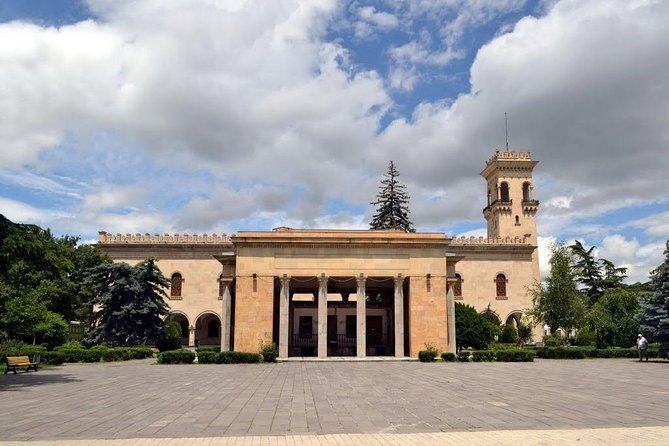
I would recommend it to a first-time visitor staying in Tbilisi who wants a broad introduction to central Georgia. You get religious sites, ancient archaeology, river views, a local meal stop, and a modern political museum in one day.
It suits people who value coverage over a leisurely pace. It is also a practical choice if you are traveling alone, do not drive, or want a guide to connect the sites into a single story.
I would be more cautious if you need polished English interpretation, strict historical depth, or a very relaxed schedule. The mixed feedback about guide language is the biggest issue here. If the tour operator can confirm an English-focused guide such as Luka, Paata, Tornike, Emilia, or George, I would feel better about booking, though no specific guide is guaranteed.
Book at least a day ahead, and note that the average booking lead time is about 20 days. Free cancellation is available up to 24 hours before the start time. Changes made inside that window are not accepted, and poor weather can lead to a new date or a full refund.
Should you book it?
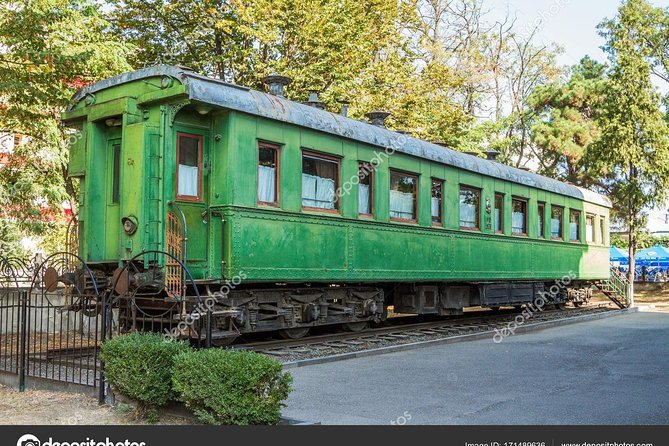
Book this tour if you want maximum historical variety for a low price and can accept a group pace. Jvari’s view, Svetitskhoveli Cathedral, and Uplistsikhe are the strongest reasons to go.
Before paying, confirm three things: that the guide will conduct full explanations in English, which entrance fees are current, and whether the Stalin Museum is part of your group’s plan. If those answers are clear, this is a useful day outside Tbilisi. If you want long visits, guaranteed guide quality, or a fully English-only outing, a private tour may be worth the extra cost.
FAQ
How long does the tour last?
The tour lasts approximately nine hours and begins at 9:00 a.m.
Where does the tour begin?
The meeting point is 3 Vakhtang Gorgasali Street in Tbilisi, Georgia.
Where does the tour end?
The activity ends back at the meeting point in Tbilisi.
What language is offered?
The tour is offered in English. The company also has guides who speak Russian, so confirm the language balance before departure.
How many people can join the group?
The stated maximum is 15 participants.
Is transportation included?
Yes. The tour includes comfortable service and a driver-guide.
Is lunch included?
No. Dinner is specifically excluded, and the restaurant stop is paid separately. Lunch is not listed as included.
Is the Uplistsikhe entrance fee included?
No. The entrance fee is listed separately. The supplied information gives both 15 GEL and 17 GEL, so confirm the current price.
Is the Stalin Museum included?
No. The museum visit is listed with an additional ticket charge, and the supplied information gives both 15 GEL and 17 GEL. The visit may also depend on the group’s request.
Can I cancel for a refund?
You can cancel up to 24 hours before the start time for a full refund. If poor weather causes the activity to be canceled, you will be offered another date or a full refund.
Newest history tours we have reviewed in the world
- Bilbao Historical Tour in small group★ 4.7 · 52 reviews
- Bologna: Street Food Tour in the Historic Center★ 4.8 · 125 reviews
- Bishkek : City Tour (History, Architects, Statues & Culture)★ 4.9 · 54 reviews
- Blenheim: Omaka Aviation Heritage Centre Admission Ticket★ 4.9 · 31 reviews
- CEBU: Cebu City Heritage and Uphill Guided Tour★ 4.2 · 31 reviews
- Berlin: Nazi History Walking Tour★ 4.8 · 33 reviews
- Best of Baku: 4-Hour City Tour Historic and Modern Landmarks★ 4.7 · 63 reviews
- Belfast: Best of Belfast History, Culture & Art Walking Tour★ 4.9 · 158 reviews
Tours, compared.
History and Hauntings of Salem Guided Walking Tour
Read our review →
Colosseum: Underground and Ancient Rome Tour
Read our review →

Oldtown, Medieval Underground & Dungeon History Tour
Read our review →
Charleston’s Old South Carriage Historic Horse & Carriage Tour
Read our review →
Edinburgh Castle Guided History Tour with Tickets
Read our review →