Review · TBILISI HISTORY TOURS
Tbilisi: Guided Walking Tour of Historic City
Old Tbilisi is at its best when you connect the sights rather than simply tick them off. This three-hour walk moves from a square shared by several faiths to old trading lanes, the sulfur baths, Metekhi Church, and the Mtkvari River. The main pleasure is context: a church, mosque, synagogue, bridge, bathhouse, and street legend all become part of one city story.
I like the small-group size, limited to 10 people, and the practical advice built into the walk. Guides such as Sally and Nick explain the past, answer questions, and point you toward food, wine, shopping, and places to visit later. The $14 price is especially fair for a first look at central Tbilisi.
The main consideration is the ground under your feet. This is a real walking tour, not a gentle stroll on smooth pavement. Stairs and uneven surfaces appear along the way, and the rain-or-shine format means you need sensible shoes and weather-ready clothing.
Five things that make this Tbilisi walk useful
- A city built around coexistence: Five Religions Connecting Square introduces Tbilisi through its churches, mosque, and synagogue.
- Old Tbilisi’s best-known sights in one route: You see Meidan Bazaar, Jan Shardeni Street, the Bridge of Peace, Metekhi Church, Abanotubani, and more.
- Stories instead of bare facts: Devil Street, the Tamada sculpture, and the Berlin Wall Stone add local color to the walk.
- A helpful first-day orientation: Guides offer advice on Georgian food, wine, shopping, other parts of the country, and common tourist scams.
- A small, flexible group: With no more than 10 participants, you have a better chance to ask questions and stop for photos.
- Good value at $14: Three hours of guiding and sightseeing costs less than many short city tours.
Why this is a smart first look at Tbilisi
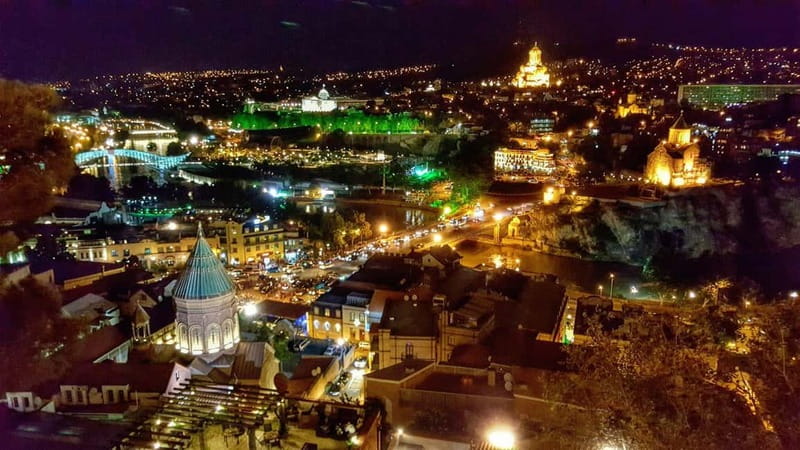
Tbilisi can feel confusing at first. Its old center folds around hills, courtyards, bridges, churches, bathhouses, and the Mtkvari River. The best feature of this tour is that it gives you a map in your head before you set off on your own.
You meet in front of the Magti Office at 20 Shota Rustaveli Avenue. From there, the route works toward the old city and finishes at 1 Samghebro Street. The walk lasts about three hours, with time for explanations, photos, and questions rather than a nonstop march.
I would book it early in your stay. The guides do more than explain monuments. Sally, in particular, is often praised for useful recommendations about Georgian food, wine, shopping, and things to do after the walk. That kind of advice can save you from spending your first evening in a place chosen only because it sits near your hotel.
The guides speak English and Russian. English is the normal language for the tour, while other languages may be possible if arranged ahead of time. The small-group format matters here because Tbilisi’s old streets are narrow, and a group of 10 is easier to manage than a large crowd.
More History Walking Tours in the world:
- History and Hauntings of Salem Guided Walking Tour
★ 5.0 · 14,564 reviews - Lisbon: History, Stories and Lifestyle Walking Tour
★ 4.8 · 10,902 reviews - Boston: Freedom Trail History Small Group Walking Tour
★ 5.0 · 6,450 reviews
Five Religions Square and the city’s shared center
The route begins with one of the most meaningful ideas in Tbilisi: different religious traditions living close together. Five Religions Connecting Square brings churches, a mosque, and a synagogue into the same conversation.
This is a strong opening because it gives you a useful way to read the city. Tbilisi is not presented as one fixed culture with a single story. Instead, you begin with the layers that shaped its streets, buildings, customs, and daily life.
I like this stop for another reason. It is not only about taking a photograph. A good guide can explain what you are looking at and why the setting matters. You can ask questions early, which helps you judge how much detail you want for the rest of the walk.
The tour then reaches Meidan Bazaar, once a key commercial point in the old city. Its connection to Silk Road trade helps explain why Tbilisi became a meeting place for goods, languages, faiths, and people moving between regions.
Expect a photo stop and a guided visit rather than a long shopping session. If you are looking for a market tour, this is not that. Its value is historical and geographical: you begin to see how trade helped shape Old Tbilisi.
Jan Shardeni Street, Devil Street, and the Tamada

Jan Shardeni Street brings you into one of the old town’s more atmospheric lanes. The route also includes Devil Street, a place tied to local legends. This is where the tour shifts from major landmarks to the smaller stories that make a city memorable.
I prefer this part of a walking tour to a list of famous buildings. A street name with a strange story gives you something to remember, and it may make you look more closely at walls, doorways, and bends in the lane.
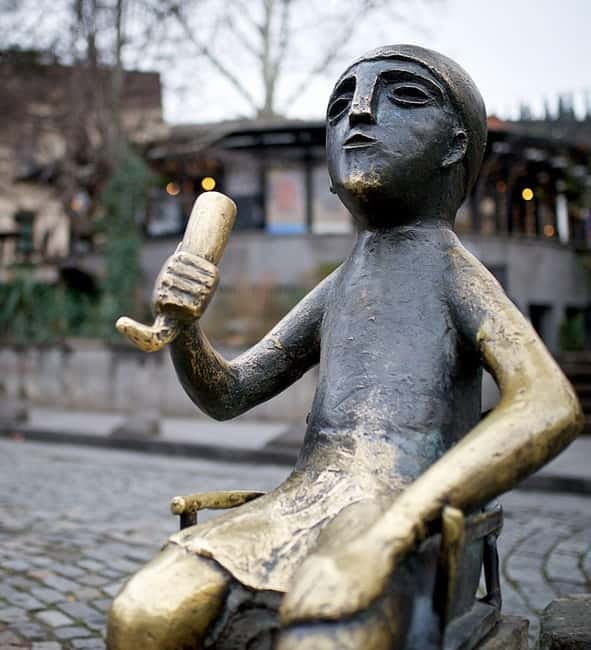
The Tamada sculpture is another short but worthwhile stop. The tamada is the toastmaster, a central figure in Georgian hospitality and the country’s famous tradition of long, thoughtful toasts. The sculpture connects public art with a custom you may encounter at a Georgian meal.
This is also a good moment to ask your guide about food and wine. The tour includes recommendations, and optional wine tasting or lunch can be arranged in advance. Those additions are not part of the basic $14 booking, so confirm the cost and details before adding them.
The Bridge of Peace and Rike Park

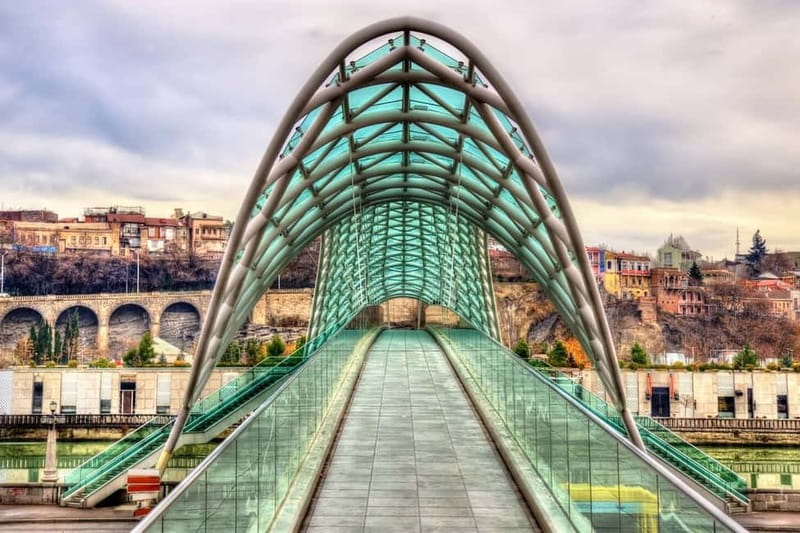
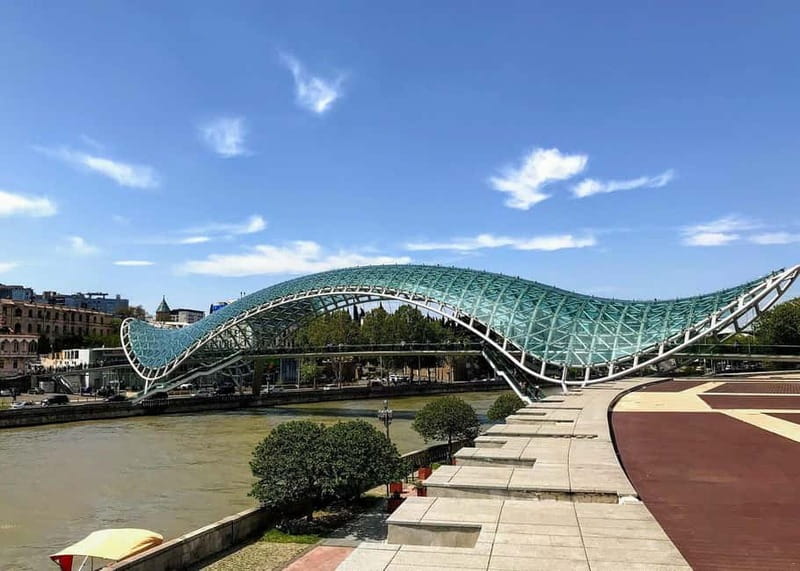
The Bridge of Peace is one of the clearest modern contrasts on the route. Its contemporary design crosses the Mtkvari River beside the older streets and buildings of Tbilisi.
You do not need to be an architecture specialist to appreciate the change in mood. One minute you are in a narrow historic lane, and soon you are looking at a modern crossing and open public space. It makes the city’s past and present visible in one frame.
Rike Park continues that change. The park and Europe Square give the walk more room after the tight lanes of the old center. You will have time for photographs and a chance to ask about the city beyond the monuments.
The Berlin Wall Stone is another unusual stop. It is small, but its meaning reaches far beyond Tbilisi. The monument brings the subject of freedom into a route otherwise focused on local history. It also gives the guide a chance to connect Georgia’s past and present without turning the walk into a lecture about one period alone.
Some people may find the number of stops hard to absorb. One person described the presentation as almost too much information, a fair warning if you prefer a very light introduction. You can help by asking your guide to slow down or focus on subjects that interest you most.
More Guided Tours in the world:
- Edinburgh: Edinburgh Castle Guided History Tour with Tickets
★ 4.8 · 9,933 reviews - Historic Charleston Guided Sightseeing Walking Tour
★ 5.0 · 6,216 reviews - Rome: Colosseum with Arena, Roman Forum and Palatine Guided Tour
★ 4.0 · 5,598 reviews - Venice: St. Mark’s Basilica Guided Tour & VR History Intro
★ 3.9 · 4,880 reviews
Metekhi Church and King Gorgasali above the river
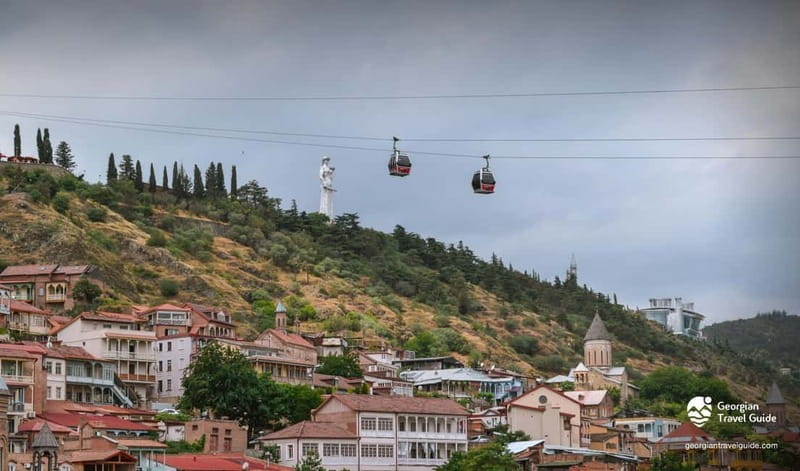
Metekhi St. Virgin Church is one of the route’s major landmarks. The church sits above the Mtkvari River, and the setting gives you both a historic building and a strong view across the city.
Nearby, the statue of King Vakhtang Gorgasali recalls the traditional founder of Tbilisi. The story of the king and the city’s origins is central to understanding why this place developed where it did.
This stop rewards patience. Do not rush straight from the statue to the next point. Look at the church’s position above the water and notice how the river, hill, and old streets fit together. Your guide can explain the history and answer questions, while you take in the setting.
The tour is not designed as a private church art visit. It includes guided visits and photo stops, and a flexible guide may add time inside churches when possible. One participant specifically appreciated a guide adjusting the route to include church interiors and a quick wine tasting. That kind of flexibility depends on the group and timing, so treat it as a possibility, not a promise.
Abanotubani and the sulfur bath district
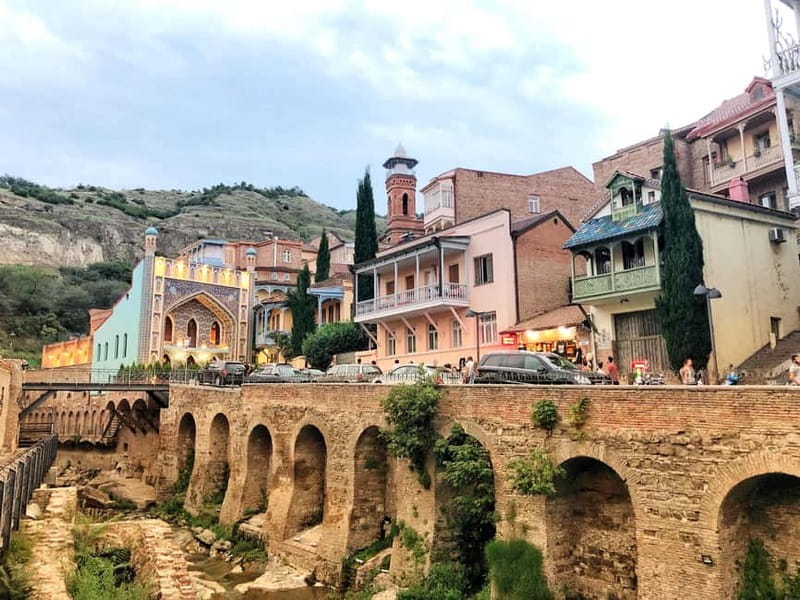
Abanotubani is one of the most recognizable parts of Old Tbilisi. Its domed brick roofs belong to the city’s old sulfur bath district, known for naturally heated, mineral-rich waters.
The bathhouses are important for more than their appearance. They reflect a long social tradition in Tbilisi, where bathing was part of city life and hospitality. The district also helps explain the city’s name and its connection to warm springs, though your guide should provide the local version of the story.
This is a good place to ask about booking a bath for another day. The walking tour only visits the district, so do not assume a bath session is included. If that experience interests you, ask for practical advice on choosing and arranging one.
Abanotubani can be busy and photographic, but the tour’s pace gives you time to notice the brick domes and the older street plan. The tradeoff is that the area may feel less quiet than Samghebro Street later in the walk.
Leghvtakhevi Waterfall and the quieter lanes
The route includes Leghvtakhevi Waterfall, an unexpected natural feature within the city. It gives the walk a change of pace after churches, bridges, monuments, and bathhouses.
You will want comfortable shoes here. The route includes uneven surfaces and stairs, and the waterfall area is not the place for smooth-soled dress shoes. The activity is listed as wheelchair accessible, but the separate warning about stairs and uneven paths matters. If you use a wheelchair or have limited mobility, contact the provider before booking so you can confirm which sections are practical for you.
The walk also reaches Samghebro Street, a less-traveled path with stories in its walls. This quieter section helps balance the famous stops. It is not simply a route between attractions. It shows you how Old Tbilisi feels away from its main photo points.
The finish is at 1 Samghebro Street near the historic Armenian Church. This final stop returns to the city’s multicultural character. After starting with several faiths gathered close together, you finish with another reminder that Tbilisi’s identity was shaped by communities living side by side.
What the $14 price really buys you
At $14 per person, this tour offers strong value if you want an introduction rather than a specialist study. You get three hours, a local guide, a small group, major sights, stories, and practical suggestions for the rest of your time in Georgia.
The value is greatest for a first visit. You can use the tour to decide which places deserve a second look, where to eat, and how to plan your next day. The advice about food and wine may be as useful as the formal sightseeing.
The price does not include a meal, wine tasting, bath visit, or transport. Optional wine tasting or lunch may be arranged in advance, but treat those as extras. You also need to bring your own water.
Free cancellation up to 24 hours before the start and reserve-now, pay-later booking make it easier to fit the walk into a changing schedule. Arrive 10 minutes early, since the group begins at a specific meeting point and the tour needs to keep moving.
Who will enjoy this walk most
I would recommend this tour to first-time visitors, history lovers, culture seekers, and anyone with only one day in Tbilisi. It is also useful for families. One guide kept children aged 11 and 13 engaged with stories and regular stops, though younger children may find three hours of walking tiring.
You will get the most from it if you ask questions. Sally is often praised for her warmth, patience, humor, and practical advice, while Nick is described as clear and well informed. The precise guide depends on the date, but the best part of this format is the chance to speak directly with someone who knows the city.
You should think twice if you dislike uneven ground, stairs, or a steady walking pace. The group may also feel too talkative if you want a silent photo walk. And if you already know Old Tbilisi well, the sights themselves may be familiar. In that case, book for the stories and local perspective, not for new landmarks.
Should you book the Old Tbilisi walking tour?
Yes, if you want an affordable and useful first day in the city. The route covers the essential old center while adding less obvious details such as Devil Street, the Berlin Wall Stone, the Tamada sculpture, and Leghvtakhevi Waterfall.
I especially recommend it for anyone arriving without a firm plan for food, wine, or sightseeing. A guide such as Sally can help you turn three hours of orientation into better choices for the rest of your stay.
Skip it if you want a private, highly specialized tour or if stairs and rough surfaces are a serious problem. Otherwise, $14 is a sensible price for a small-group introduction to Tbilisi’s streets, stories, faiths, and everyday character.
FAQ
How long is the Tbilisi walking tour?
The tour lasts three hours.
What is the price?
The cost is $14 per person.
Where does the tour begin?
You meet in front of the Magti Office at 20 Shota Rustaveli Avenue.
Where does the tour finish?
The walk finishes at 1 Samghebro Street.
Which languages are available?
The tour is conducted in English and Russian. Other languages may be available on request with advance notice.
What sights are included?
The route includes Five Religions Connecting Square, Meidan Bazaar, Jan Shardeni Street, the Tamada sculpture, the Bridge of Peace, Rike Park, Europe Square, Metekhi Church, Abanotubani, the Bridge of Love, Leghvtakhevi Waterfall, and the historic Armenian Church.
Is the tour suitable for wheelchair users?
The activity is listed as wheelchair accessible, but some sections include stairs and uneven surfaces. Contact the provider before booking to confirm which parts of the route are suitable for your needs.
What should I bring?
Bring water and wear comfortable shoes. The tour runs in all weather, so dress for the conditions. Arrive 10 minutes before the scheduled start.
Newest history tours we have reviewed in the world
- Bilbao Historical Tour in small group★ 4.7 · 52 reviews
- Bologna: Street Food Tour in the Historic Center★ 4.8 · 125 reviews
- CEBU: Cebu City Heritage and Uphill Guided Tour★ 4.2 · 31 reviews
- Bishkek : City Tour (History, Architects, Statues & Culture)★ 4.9 · 54 reviews
- Blenheim: Omaka Aviation Heritage Centre Admission Ticket★ 4.9 · 31 reviews
- Berlin: Nazi History Walking Tour★ 4.8 · 33 reviews
- Best of Baku: 4-Hour City Tour Historic and Modern Landmarks★ 4.7 · 63 reviews
- Belfast: Best of Belfast History, Culture & Art Walking Tour★ 4.9 · 158 reviews
History Walking Tours, compared.

History and Hauntings of Salem Guided Walking Tour
Read our review →

Freedom Trail History Small Group Walking Tour
Read our review →
Historic Charleston Guided Sightseeing Walking Tour
Read our review →
Tapas Walking Tour with Food, Wine, and History
Read our review →
Savannah History and Haunts Candlelit Ghost Walking Tour
Read our review →